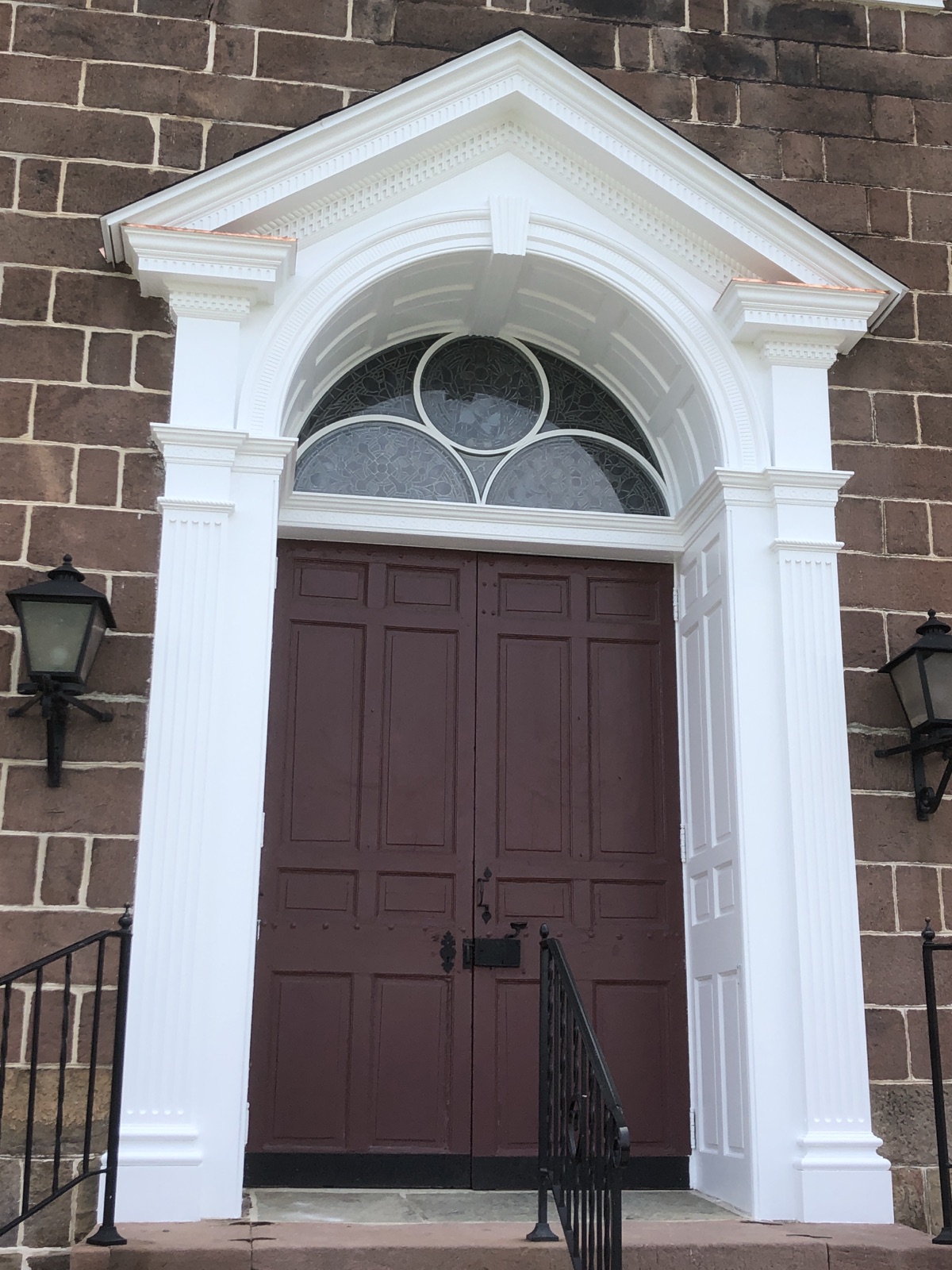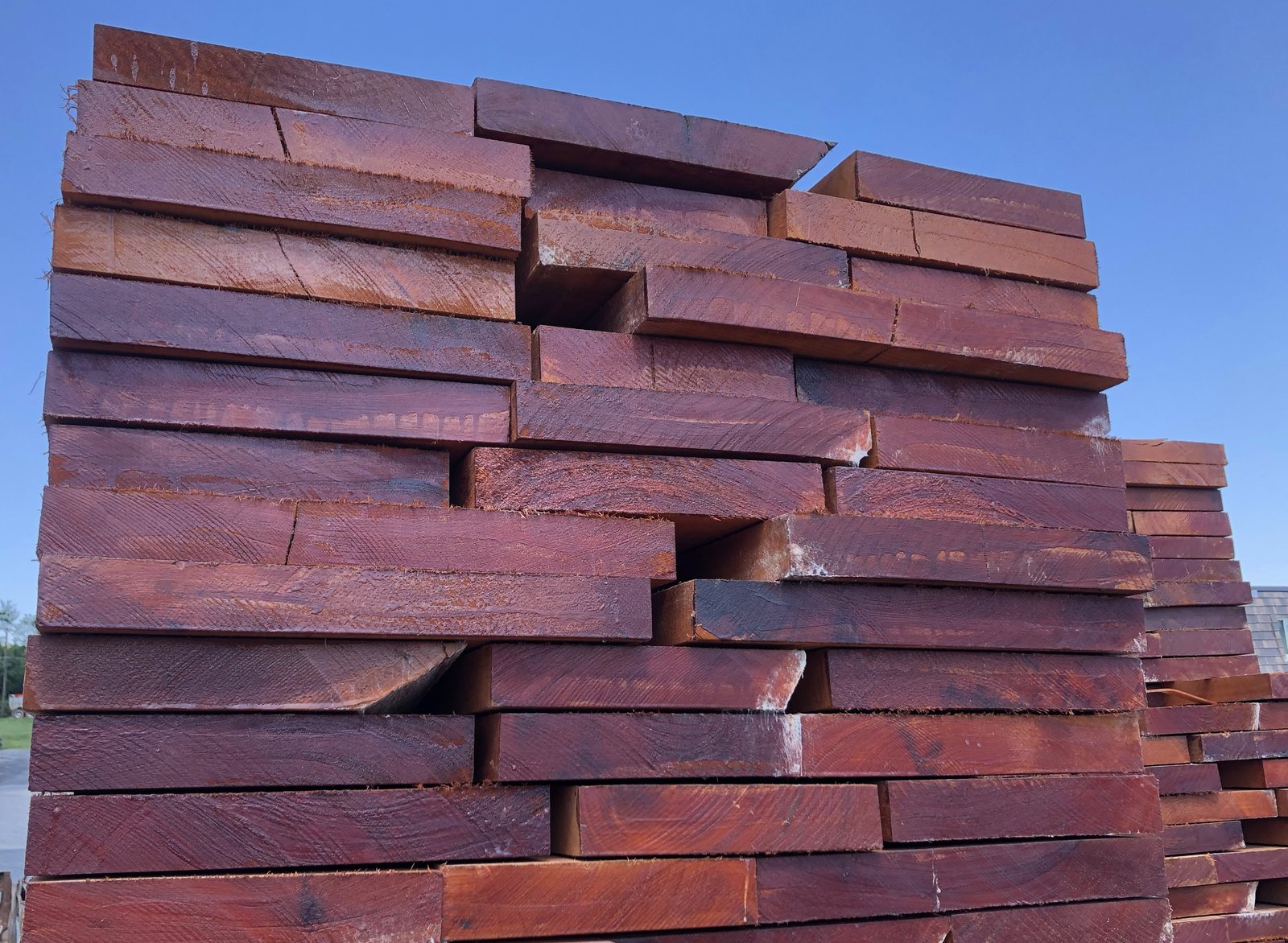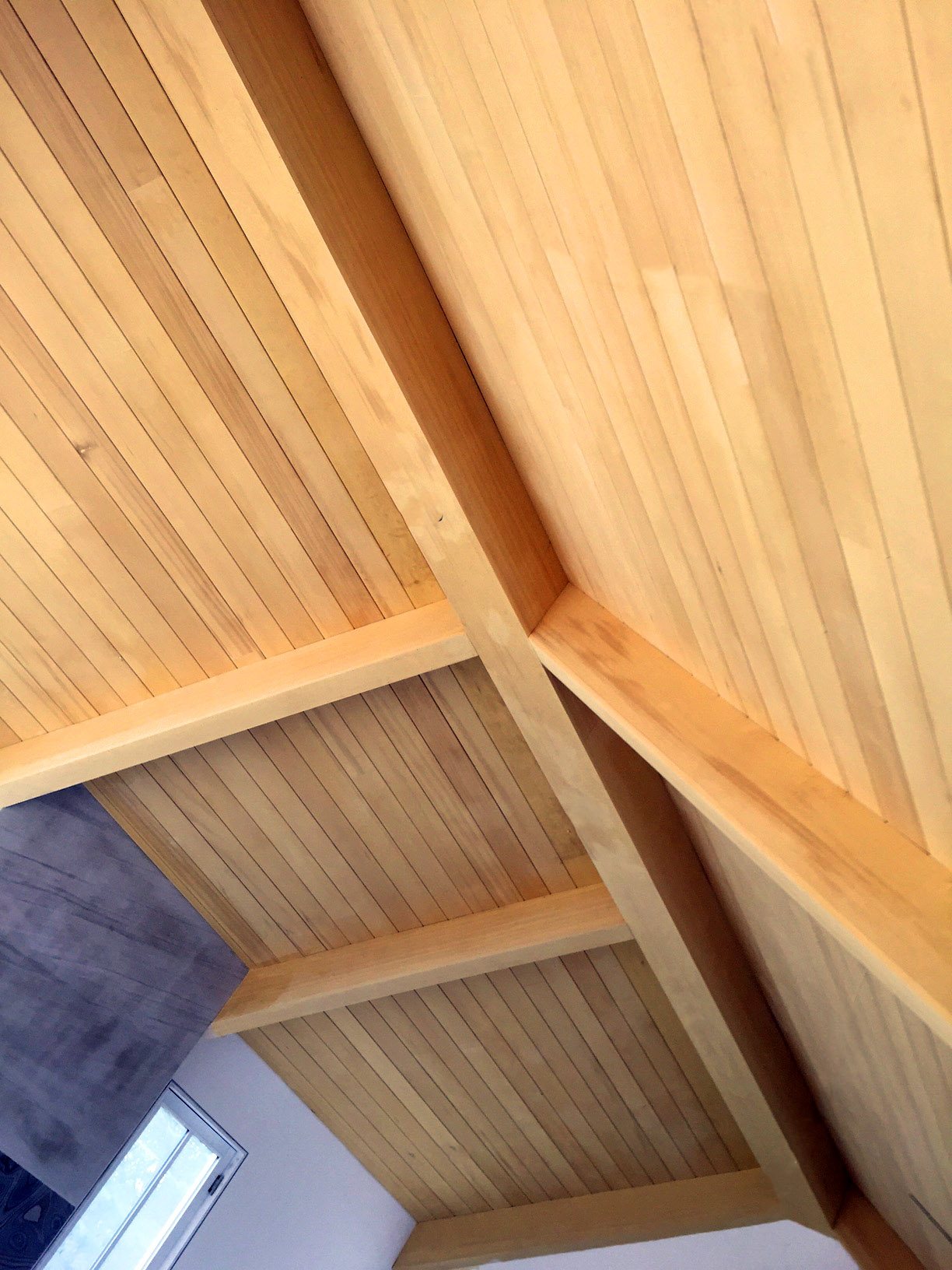
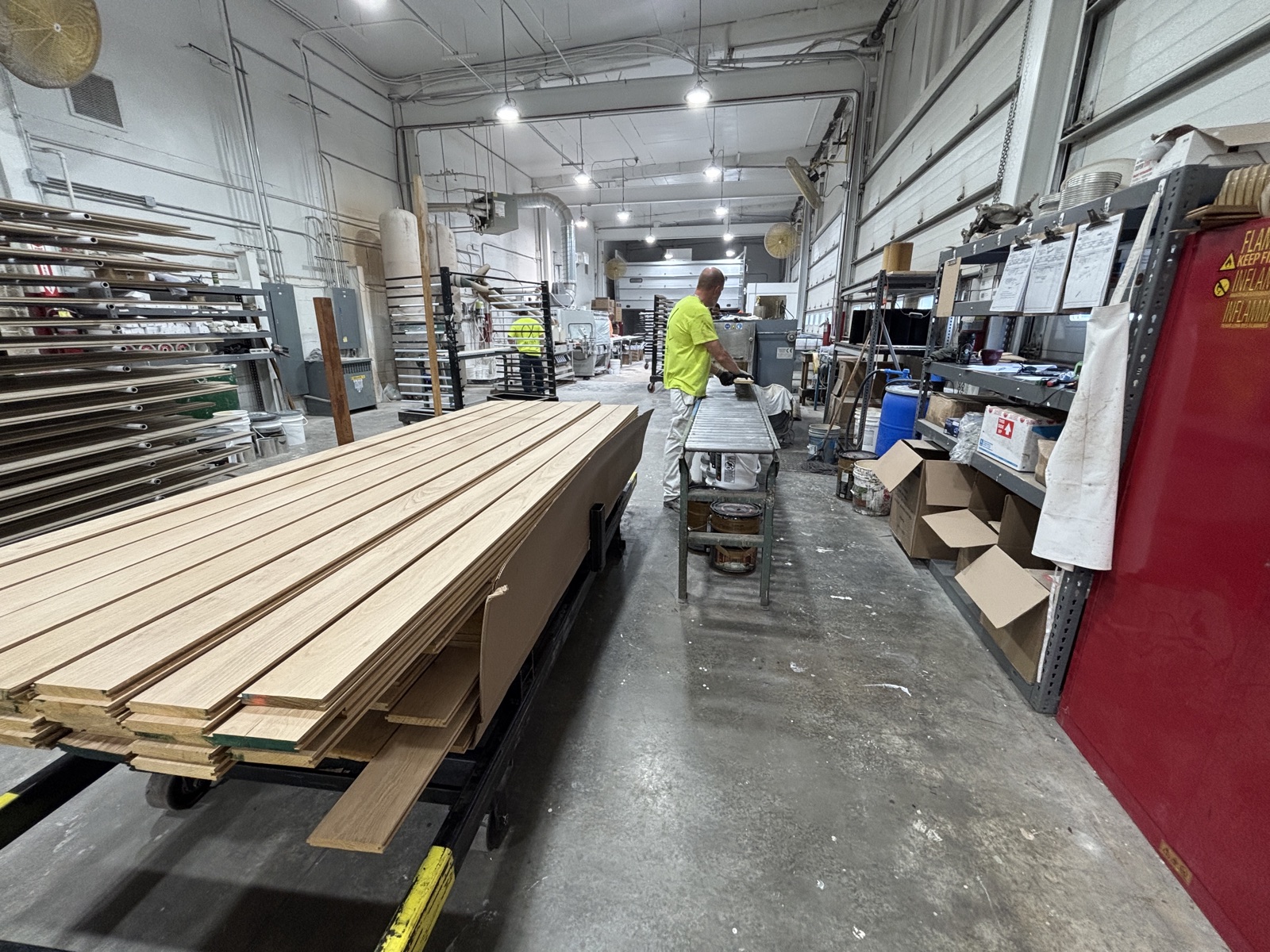
What a single source millwork package actually takes off the schedule
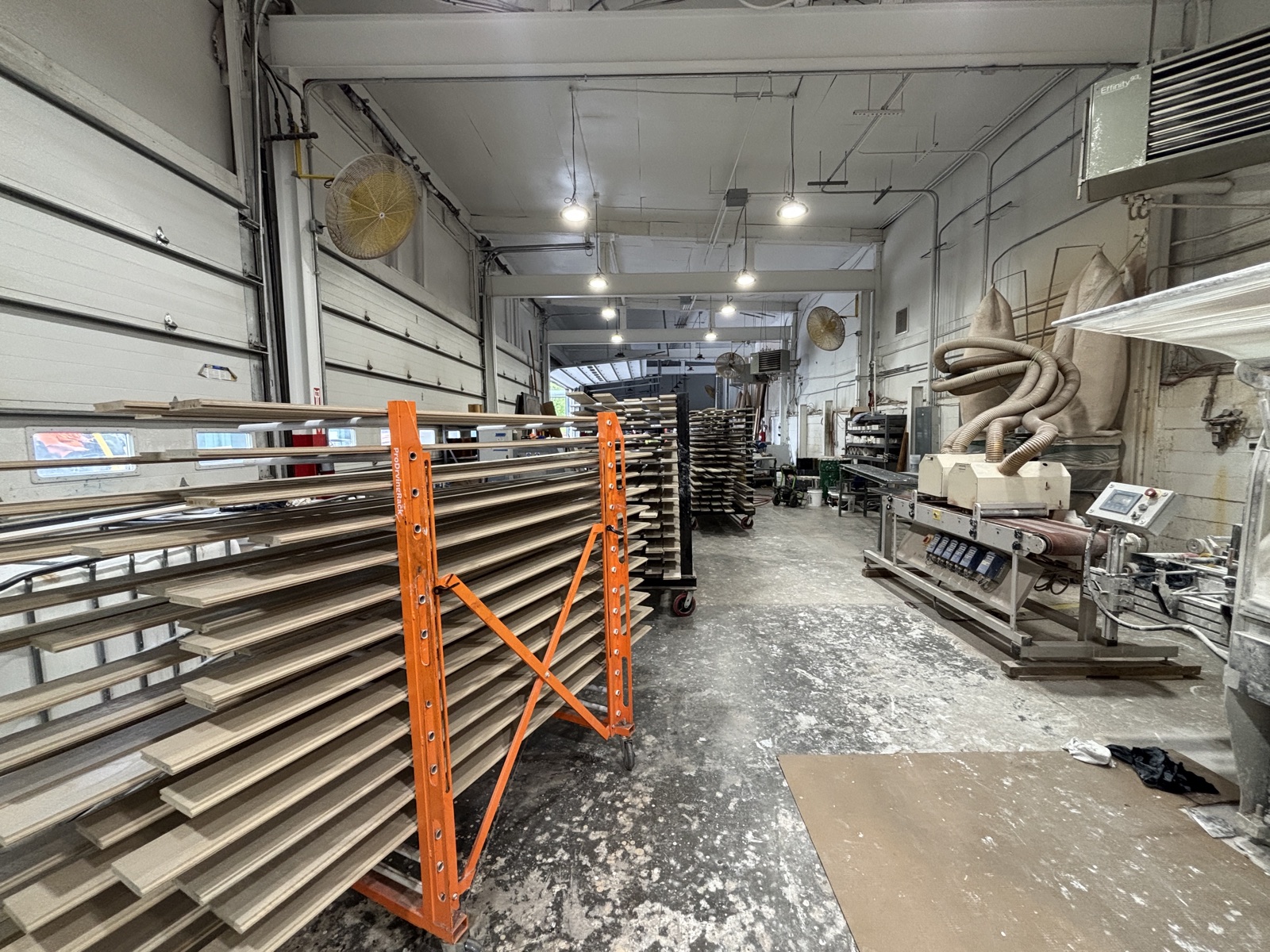
A single source architectural millwork package removes the four schedule items a general contractor has the least control over on a multi-vendor job, which are material availability, profile and knife lead time, moisture conditioning and finish sequencing. Those four are where millwork slips. Not the machining. The machining is fast once the material is in the building and the knife is ground.
Think about how a conventional package moves. A lumber wholesaler sells rough stock to a millwork shop. The millwork shop grinds or buys knives, runs the profile, and ships to a finisher. The finisher primes and ships to the jobsite, or to a warehouse, or back to the millwork shop. Every one of those transfers is a date on your schedule that belongs to somebody who does not answer to you and does not see the other three schedules. When the wholesaler is short on 16 foot Sapele, the millwork shop does not find out until the truck arrives light. When the finisher decides the primer needs another day, the trim delivery moves and the painter's crew sits.
A single source package collapses those transfers into one production sequence under one roof, with one date to manage. J. Gibson McIlvain mills linear trimwork, finished cladding and primed trim on its own moulders, and its architectural millwork division, ICD, builds the true custom work that has to be planned around a specific space. The company has been importing and milling hardwood since 1798 and ships nationwide, including regular runs to California.
The real cost of a multi-vendor package is the number of handoffs, not the number of vendors
Each handoff between a supplier, a mill and a finisher adds a queue, an inspection and a re-handling risk that a general contractor pays for in float, not in line items. Count them on your own job. Four vendors on a millwork scope usually means six or seven physical transfers of material, and each transfer resets somebody's production queue.
The queue is the part estimators miss. A millwork shop does not begin your run the hour material lands. It begins when your job reaches the front of the machine queue, and that position was set weeks earlier based on a promised material date. Material lands three days late and the job does not slip three days, it slips to the next open window, which can be two weeks. Same with the finisher. Same with the truck.
Re-handling risk compounds it. Milled trim that moves between shops gets banded, loaded, unloaded and stacked repeatedly, and each cycle is a chance for edge damage on a crisp arris or a moisture swing in an unconditioned trailer. A single source package moves material between machines inside one building instead of between buildings.
| Package stage | Multi-vendor sequence | Single source sequence |
|---|---|---|
| Species and sizes | Availability confirmed after shop drawings are approved, so a shortage forces a redraw | Availability confirmed against real inventory before the drawing set locks |
| Profiles and knives | Knife grinding quoted and scheduled as a separate lead time by an outside grinder | Knives ground in house every week against a library of thousands of existing profiles |
| Moisture conditioning | Assumed, rarely measured, discovered on site when joints open | Milled to an in-service target for interior or exterior use before it leaves the shop |
| Priming and finish | Separate shop, separate queue, separate freight leg after milling | Primed in the same building the trim was moulded in, in oil or water based systems |
| Assemblies | Beams, gates and shutters arrive as parts for field assembly by the installer | Beams, gates and shutters arrive assembled and ready to set |
| Delivery and storage | Full package dumped early and stored by the general contractor at job risk | Finished millwork stored at the shop and released against the build sequence |
Sourcing decided before the drawing set locks is the single biggest schedule saver
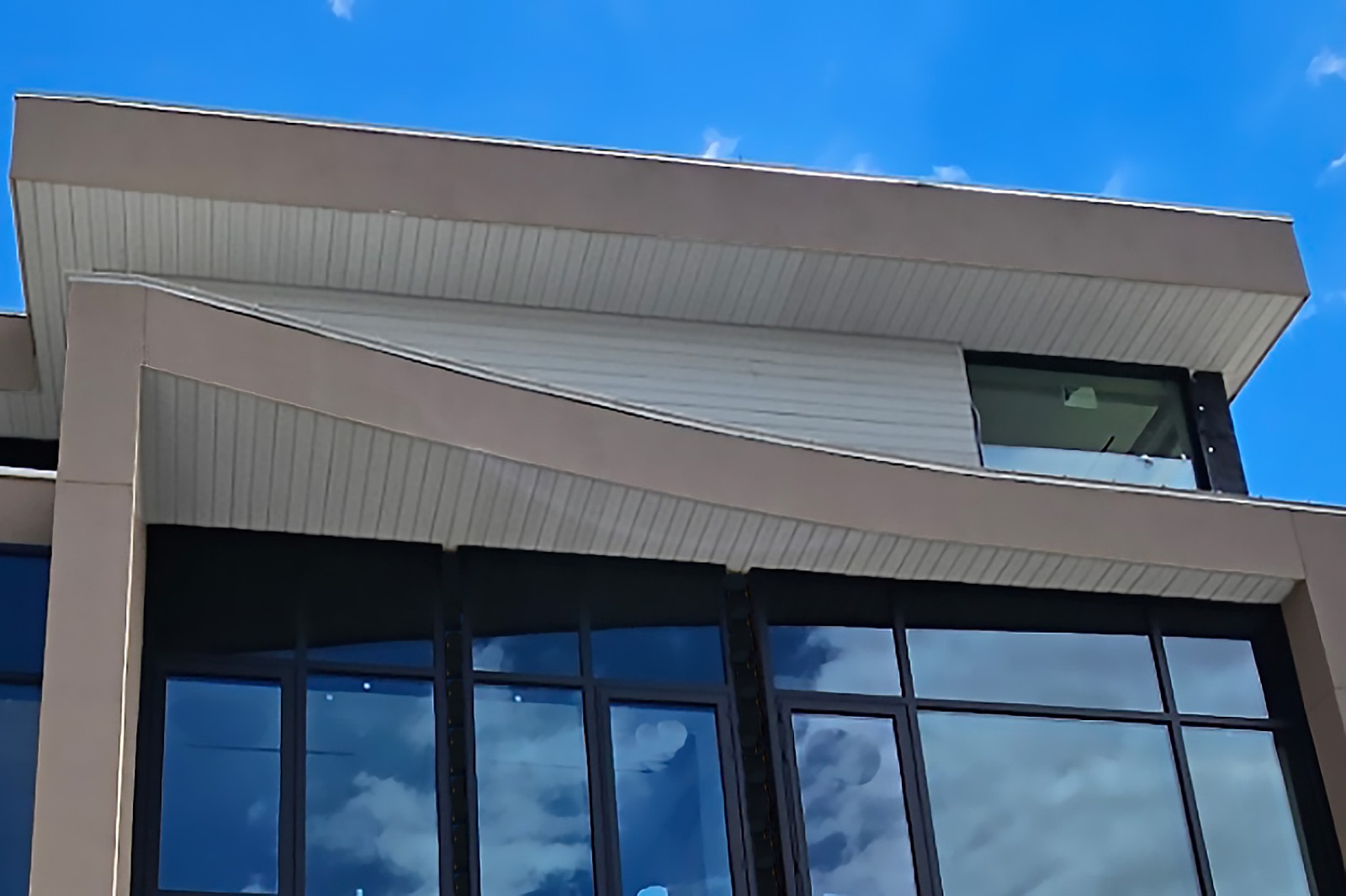
Most millwork delays trace back to a drawing that specified a size or a length the market cannot supply in that species. An architect draws a 20 foot run of exterior cladding with no joint. A designer calls out 1x8 Sapele for painted exterior trim. Both are reasonable on paper. Both create a problem the general contractor inherits.
Take the second one. Sapele is the right call over Genuine Mahogany for painted exterior trim, since it holds paint better and comes in a wider size range and longer lengths, and it runs around 1,410 lbf on the Janka scale against roughly 800 lbf for Genuine Mahogany. Sapele is not milled 1x8 for exterior use though. That width will not stay stable in a painted exterior application. Catching that during specification costs a phone call. Catching it after approved shop drawings costs a resubmittal cycle.
Length limits work the same way. Modified woods top out around 16 feet, and most are sold on metric lengths just under 16 feet, because that is the size of the kiln. Thermally modified Ash is not available wider than 8 inches, so a wide modified board means Accoya or Abodo Vulcan. J. Gibson McIlvain carries both Thermory and Abodo Vulcan, along with Accoya, which lands near 1,600 lbf and whose acetylation gives dramatically reduced shrinkage and swelling. Those modified products carry manufacturer warranties. Solid unmodified wood does not, and no honest supplier will offer one, since wood is an organic material that keeps responding to its environment after it leaves the building.
The millwork palette itself is narrower than the yard's full species list for good reason. Sapele, Utile, Iroko, Afrormosia and Teak machine cleanly, glue reliably and hold a moulded edge, which is what a shop needs for trim, doors, beams, shutters and cabinet components. The tropical decking species, Ipe (Tabebuia spp), Cumaru, Garapa, Jatoba and Red Balau, are extremely hard and carry high oil content that makes them difficult to glue, so a millwork house reaches for them far less than the decking side does. Where a species falls under CITES control, documentation and chain of custody travel with the material, and FSC certified stock is available on request. Grading language matters here too, since a package written against NHLA rules removes an argument later about what FAS actually means.
An in-house profile library and weekly knife grinding remove the longest hidden lead time in millwork
Outsourced knife grinding is the lead time nobody puts on the schedule, and it routinely adds weeks to a custom trim package. The shop quotes the run. The grinder quotes the knife. The two quotes are not on the same calendar, and the general contractor sees one date.
J. Gibson McIlvain holds a moulding profile library of thousands of profiles and grinds new knives in house every week. If your profile is already in the library, the knife exists and the run schedules against machine time alone. If it is not, it gets ground to match, including difficult historical restoration work where the replacement has to read identically to the original under a raking light, and including contemporary profiles with tight reveals and sharp fillets that punish a dull knife. ICD publishes a sense of the range on its trim profiles page.
Historical matching is where this earns its keep. A commission with jurisdiction over a district under National Park Service preservation standards will reject a close approximation, and a rejection at that stage sends the trim back to a shop that has already released the knife. Getting a rubbing or a salvaged section into the grinder before production starts is a two week problem solved for the cost of a shipping tube.
Radius trimwork and radius millwork run through the same logic with less forgiveness. Curved head casing, radius jamb and segmental crown all need the profile and the radius resolved together, and a shop that grinds its own knives can adjust a profile to survive the bend instead of telling you it cannot be done.
Moisture content is a schedule item, and a split package almost never tracks it
Interior millwork should reach the site near 6 to 8 percent moisture content and exterior work near 12 to 16 percent, and material that arrives outside those bands will move after installation no matter how well it was machined. Joints open. Painted caulk lines crack. Panel fields telegraph.
Here is what a multi-vendor chain does to that. The wholesaler kiln dries to a broad commercial target. The mill runs the profile without reconditioning. The finisher stores it in an unheated bay for two weeks in February. The trim shows up at 11 percent for an interior application in a building that will run at 6 percent, and it starts giving up water the day it is nailed up. The USDA Forest Products Laboratory Wood Handbook remains the reference on equilibrium moisture content, and Building Science Corporation has published extensively on what interior conditions actually do to wood assemblies.
Species selection interacts with it. Quartersawn and rift stock moves less across its width than plainsawn, which is why it gets specified where a painted or panelized surface has to stay flat. A single source package can make that call at the log breakdown stage instead of hoping the wholesaler's plainsawn pack behaves.
Shop priming in the same building removes an entire freight leg and a painter's crew day
Priming is the finish step with the largest schedule payoff on a trim package, and it is the one most commonly farmed out to a fourth vendor. J. Gibson McIlvain primes wood in three levels, in both oil based and water based systems, as part of its millwork service.
What that buys the general contractor is straightforward. Trim arrives sealed on all faces, including the back face that the painter will never reach again after installation. Exterior primed trim should carry a fungicide additive, which is a shop decision made once rather than a field decision made never. Open-grained and oily species absorb a great deal of finish, and a primer coat evens that absorption out so the eventual painted surface reads uniformly instead of blotching along the more porous growth rings.
There is a machining benefit too. Sanding or buffing after priming knocks back the grain raising that the first coat causes, and doing it in a shop with proper dust collection keeps the moulded detail crisp. A field crew sanding primed crown on a ladder rounds over the very fillets you paid to have ground into the knife.
Finished cladding follows the same reasoning. Cladding primed on six sides before it ships is protected during the gap between delivery and topcoat, which on most jobs is longer than anyone plans for.
Assemblies that arrive assembled convert field labor into shop labor
Every beam, gate, shutter and railing assembled in the shop is field labor removed from the critical path and performed instead under controlled conditions by people with the right machines. This is the core of what ICD, the architectural millwork division of J. Gibson McIlvain, does, and its custom work is planned to fit a specific space rather than adapted from a catalog.
Box beams are the clearest example of a real choice with schedule consequences. Butt joints give the most minimal profile, the fastest turnaround and the easiest on site assembly, but they leave visible seams and visible end grain and they are the weakest option. Dado joints are strong and still easy to assemble on site, though seams and end grain still show. Lock miter joints show no visible seams and are the strongest, and they demand shop machining that no field crew is going to replicate on a scaffold. Pick the joint against how the beam will be viewed and how much site work you want.
Gates run from pedestrian, garden and courtyard scale up to estate entry gates. Large driveway swing gates are an engineering problem before they are a craftsmanship problem, since size and weight drive the frame, the joinery and the hardware, and a gate that sags in year two was decided in the shop drawing.
Wood shutters come in louver and panel styles, with complete historical matching available for both style and species, which is what a historic district review needs when it requires like for like replacement. Rafter tails, pergolas, benches and railings round out the exterior millwork scope. Railings in particular are worth resolving early, since guard and handrail geometry answers to the adopted building code and to accessibility guidelines, and the wood shop should be building to a dimension the design team has already confirmed. Connection design for exterior structural elements sits with the project engineer under American Wood Council standards.
Custom cabinetry planned around the room removes the punch list items modular casework creates
Filler strips, mismatched face frames and a dishwasher that will not clear its own door are not installation failures, they are the predictable result of assembling a kitchen out of standard modules. J. Gibson McIlvain's architectural millwork division, ICD, builds kitchen cabinetry and case work engineered around how a specific space is used, which is a different starting point from selecting the nearest stock width and shimming the difference.
That approach handles the things every renovation has. Storage worked around plumbing stacks and mechanical obstacles instead of pretending they are not there. Specialty drawers sized to what the client actually stores. Construction detailed for the countertop material being carried, since a thick stone slab and a wood top ask different things of the cabinet below them. The cabinets and case work page and the working process page both walk through how a job moves from measurement provided by the project team to finished units. Custom doors and windows follow the same path through the custom doors side of the shop.
Quality expectations should be written down before any of it starts. Referencing Architectural Woodwork Institute standards in the specification settles what a grade actually requires, and WMMPA publishes the moulding industry conventions that keep profile and grade language consistent between the design team and the shop.
Storage and released deliveries are the part of single sourcing that general contractors underuse
The most common way a millwork package gets damaged is early delivery into an unfinished building. Trim delivered before the building is dried in and conditioned absorbs moisture, gets stacked against a wall by another trade, and gets walked on.
J. Gibson McIlvain stores finished millwork for inventory control, which means the package can be produced complete and released in the sequence the site actually needs. First floor casing now. Second floor and the stair parts in three weeks. Exterior shutters when the scaffold comes down. That is one supplier holding one inventory against one job number, not four vendors each holding a portion and each requiring separate coordination.
"The contractors who get the most out of a single source package are the ones who call us before the drawings are stamped, not after. We can tell them in one conversation which lengths and widths are real in the species they picked, and we can hold the finished material here and ship it in the order their crews need it. That is usually worth more to their schedule than anything that happens at the machine."
Norm Moton, Director of Sales, J. Gibson McIlvain
What stays with the general contractor, stated plainly
J. Gibson McIlvain supplies and mills, and it does not install, coordinate installation or perform field measurement. Saying that clearly is more useful than implying otherwise, since a package built on a bad assumption about scope is worse than a package with an honest gap in it.
Field dimensions come from the project team. Shop drawings are built against those dimensions, and the accuracy of what arrives is only as good as what was provided. Installation is performed by the buyer's own carpenters or a millwork installer they contract, and site protection after delivery is theirs as well.
A few field decisions carry more weight than the shop decisions that precede them. Cupping in cladding and exterior trim is driven by installation and back ventilation, not by species, so a rainscreen gap and a fastening pattern that lets the board move will do more for long term flatness than any species swap. Acclimation on site inside a conditioned building, before installation, is likewise the installer's responsibility. The shop delivers material at the right moisture content. Keeping it there until it is fastened is a site practice.
How J. Gibson McIlvain Would Specify This
Write the millwork package so that species, sizes, profiles, moisture target, primer system and delivery sequence are all settled in one document before shop drawings are issued for approval. That is what makes single sourcing pay, and it takes about a week of front end work.
Start with species and confirm real availability in the sizes drawn. Sapele, Utile, Iroko, Afrormosia and Teak cover most exterior and painted millwork, and White Oak covers most interior work where a stained hardwood is wanted, at roughly 1,360 lbf. Ask the supplier to confirm maximum length and width in the actual species before the elevations are finalized, and specify quartersawn or rift where a painted or panelized surface has to stay flat.
Name the profile next. Send the profile drawing, a rubbing or a physical sample early enough that a knife can be ground and a sample run produced for approval. Approve off a milled sample, not a drawing.
State the moisture target in the specification, near 6 to 8 percent for interior and near 12 to 16 percent for exterior work. State the primer system, oil based or water based, the number of coats, and the fungicide additive for exterior primed trim. Specify back priming for cladding and exterior trim.
Call out assemblies as assemblies. For box beams, name the joint, butt, dado or lock miter, against the sightline and the strength you need. For gates, flag anything at driveway scale early so engineering runs in parallel with millwork. For shutters in a regulated district, get the historical match approved before production. For cabinets and case work, hand ICD the room, the appliances, the countertop material and the obstacles, and let the design come from the space.
Finally, write the delivery schedule as releases tied to construction milestones rather than one bulk drop, and confirm the supplier will store the balance. Then call 800-638-9100 and put a real person on the job before the drawings are stamped. J. Gibson McIlvain ships nationwide and the conversation costs nothing.
Frequently Asked Questions
What does "single source" actually mean on a millwork package, and what does it not cover?
It means one company sources the lumber, mills the profiles, builds the assemblies, primes what needs priming, stores the finished work and ships it against your build sequence, under one job number and one production schedule. What it does not cover at J. Gibson McIlvain is installation, installation coordination and field measurement. The company supplies and mills. Verified opening sizes, wall to wall runs and ceiling heights come from your own installer or general contractor, and the millwork is built to the numbers you provide.
How much schedule does in-house knife grinding really save?
It removes an entire outside lead time that most schedules never show. When knife grinding is subcontracted, the mill run and the knife are on two different calendars and the contractor only sees one promised date. J. Gibson McIlvain keeps a moulding profile library of thousands of profiles and grinds new knives every week, so many submittals resolve by pulling an existing profile. Where nothing matches, including historical restoration profiles, the knife is ground to match in house.
Which species should I write into a millwork package for painted exterior trim?
Sapele is the better call than Genuine Mahogany. It holds paint better, comes in a wider range of sizes and longer lengths, and runs around 1,410 lbf on the Janka scale against roughly 800 lbf for Genuine Mahogany. One limit to know is that Sapele is not milled 1x8 for exterior use, since that width will not stay stable. Utile, Iroko, Afrormosia and Teak round out the millwork palette. The tropical decking species like Ipe (Tabebuia spp) and Cumaru are extremely hard and oily, which makes them difficult to glue, so a millwork shop uses them far less than the decking side does.
Can I get a warranty on a solid wood millwork package?
No, and any supplier offering one on solid unmodified wood is overpromising. Wood is an organic material that keeps responding to temperature and humidity after it is installed. Warranties exist on modified products, which is where Accoya, Thermory and Abodo Vulcan come in. Those modified woods top out around 16 feet, most sold on metric lengths just under 16 feet because of kiln size, and thermally modified Ash is not available wider than 8 inches, so a wide modified board means Accoya or Abodo Vulcan.
Which box beam joint should I specify?
It depends on sightline, strength and how much site work you want. Butt joints give the most minimal profile, the fastest turnaround and the easiest on site assembly, but they leave visible seams and visible end grain and are the weakest. Dado joints are strong and still easy to assemble on site, though seams and end grain still show. Lock miter joints show no visible seams and are the strongest, and they require shop machining rather than field work.
Why does the moisture content matter more on a split package than a single source one?
In a split package nobody owns the number. The kiln dries to a broad commercial target, the mill runs the profile without reconditioning, and the finisher may store the material in an unconditioned bay for weeks. Interior millwork should reach the site near 6 to 8 percent and exterior work near 12 to 16 percent. Material outside those bands moves after installation, which shows up as open joints, cracked caulk lines and telegraphing panel fields. Quartersawn and rift stock moves less across its width than plainsawn, which is why it gets specified where a painted or panelized surface has to stay flat.
Can the shop hold my millwork instead of delivering the whole package at once?
Yes. J. Gibson McIlvain stores finished millwork for inventory control, so the package can be produced complete and released in the order the site needs it. That avoids the most common damage scenario on a job, which is a full trim package delivered into a building that is not yet dried in or conditioned. The company ships nationwide, including regular runs to California. Call 800-638-9100 to set up a release schedule tied to your construction milestones.
What has to be settled before shop drawings are issued for approval?
Species and confirmed availability in the sizes actually drawn, profile drawings at full scale with a knife path resolved, the moisture target for interior or exterior service, the primer system including the fungicide additive on exterior trim, the joinery on any assemblies such as box beams, and the delivery release schedule. Settling those in one document before the drawings lock is what makes single sourcing pay. Fixing any of them after approval costs a resubmittal cycle.
Sources and Standards Referenced
- USDA Forest Products Laboratory
- Architectural Woodwork Institute
- Wood Moulding and Millwork Producers Association
- National Hardwood Lumber Association
- National Park Service Technical Preservation Services
- Building Science Corporation
- CITES
- Forest Stewardship Council
- American Wood Council Codes and Standards
- Accoya
- Thermory
- Abodo Vulcan
- J. Gibson McIlvain Millwork Service