What a Sill Horn Actually Does
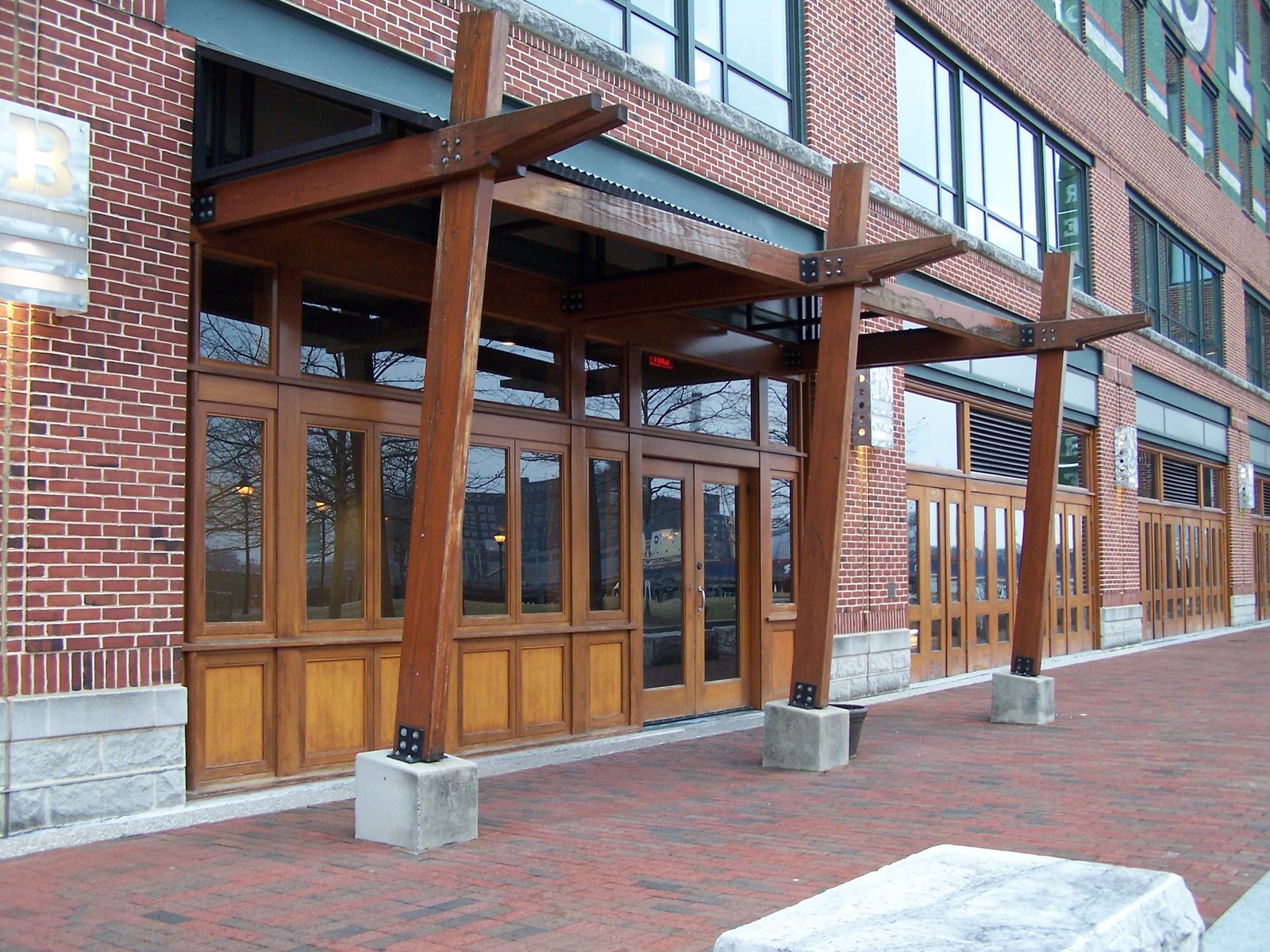
A sill horn is the length of sill that runs past the jamb and bears on the masonry, and it is the detail that decides whether water leaves the opening or works its way behind the wall. Carpenters call it a horn, an ear, or a sill extension. Stone masons work from the same idea and call their version a lug sill, as against a slip sill that stops inside the opening. The wood horn does three jobs at once. It gives the sill bearing outside the rough opening, it covers the vertical joint where the frame meets the masonry return, and it throws runoff past that joint instead of onto it.
Cut the horns off and the sill stops dead at the jamb line. Every drop that sheets down the glass and across the wash now arrives at the one corner where frame, casing and brick reveal all converge. That corner is a sealant joint. Sealant joints are the shortest-lived part of the whole assembly, and they are the first thing a building envelope consultant points at when the plaster inside starts to stain.
Horn length is not a styling preference. It comes out of the wall section, meaning reveal depth, the masonry course under the opening, the plane of the finished cladding, and the thickness of whatever casing or brick mould lands on the sill. Two windows on the same elevation can need two different horn lengths if one sits in a recessed reveal and the other sits flush.
Where the Horn Meets Brick, Stone and Stucco
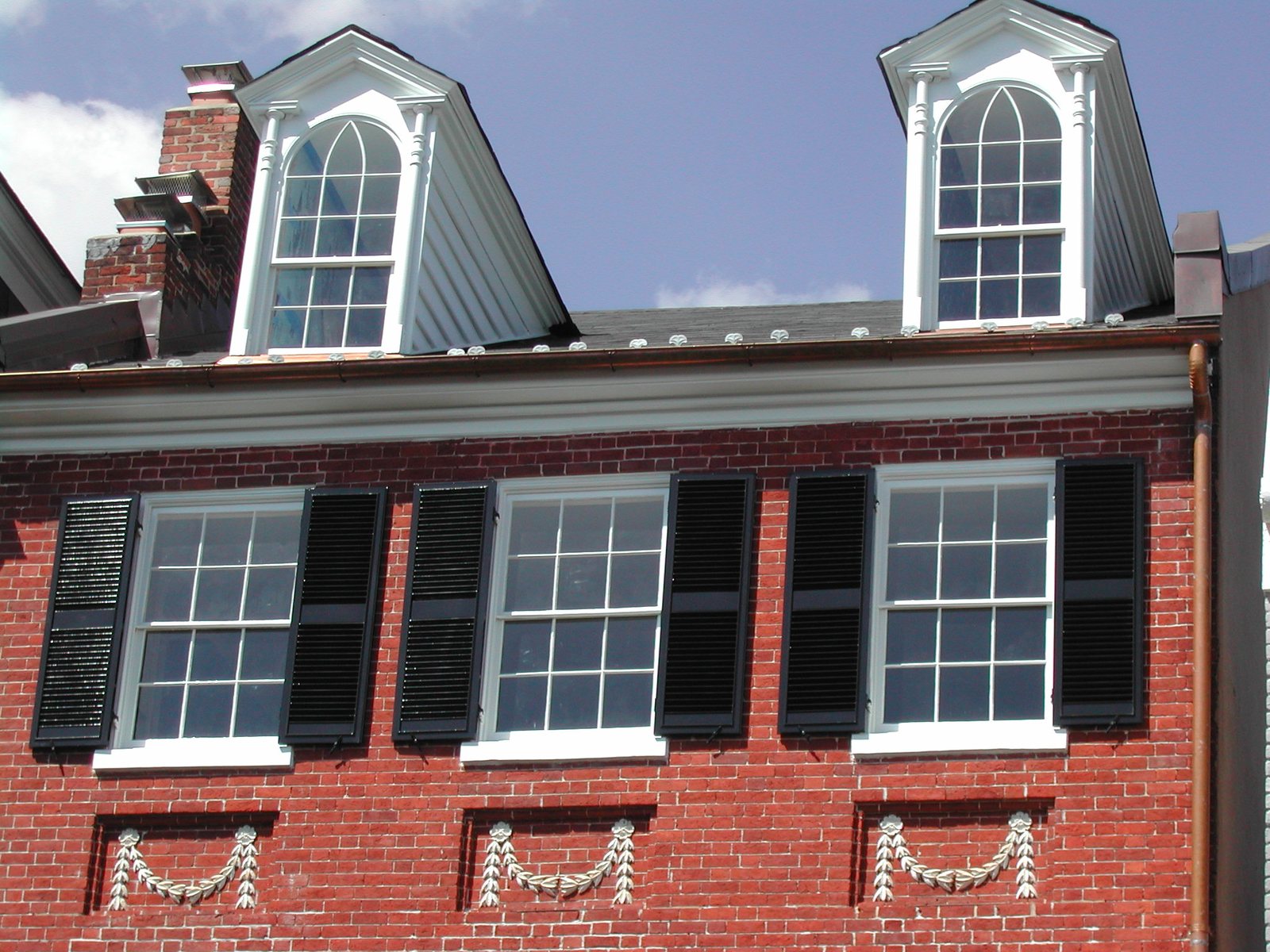
The masonry sets the horn length, not the window. In a brick wall the sill usually lands on a rowlock or soldier course, and the horn has to reach past the vertical mortar joint at the jamb line so that water coming off the wash lands on brick rather than on the head of that joint. A horn that stops short of the reveal face is worse than no horn at all, since it concentrates runoff at one point.
Stone openings behave differently. Where a jambstone is pocketed to receive the sill, the horn dies into the pocket and needs a shoulder, so the visible reveal line stays clean while the buried end sits in stone. That pocket is also a moisture trap, which changes what the shop does to the end of the horn before it ships.
Stucco and stone veneer add a thickness nobody on the drawing set has finalized on day one. The horn has to clear the finished plane of the cladding plus the screed stop, with room left for a sealant joint that has real bearing on both sides. Get that dimension from the wall section rather than the window schedule, and confirm it before knives go on the moulder.
Movement runs in opposite directions at that junction. Masonry is dimensionally stable through the seasons and wood is not, though the movement that matters is across the width of the sill rather than along its length. The horn stays roughly the length it was milled. The sill breathes across its wash. Details that pin the sill hard at both horns and leave no room across the width are the ones that split.
Sill Width, Projection and the Wash
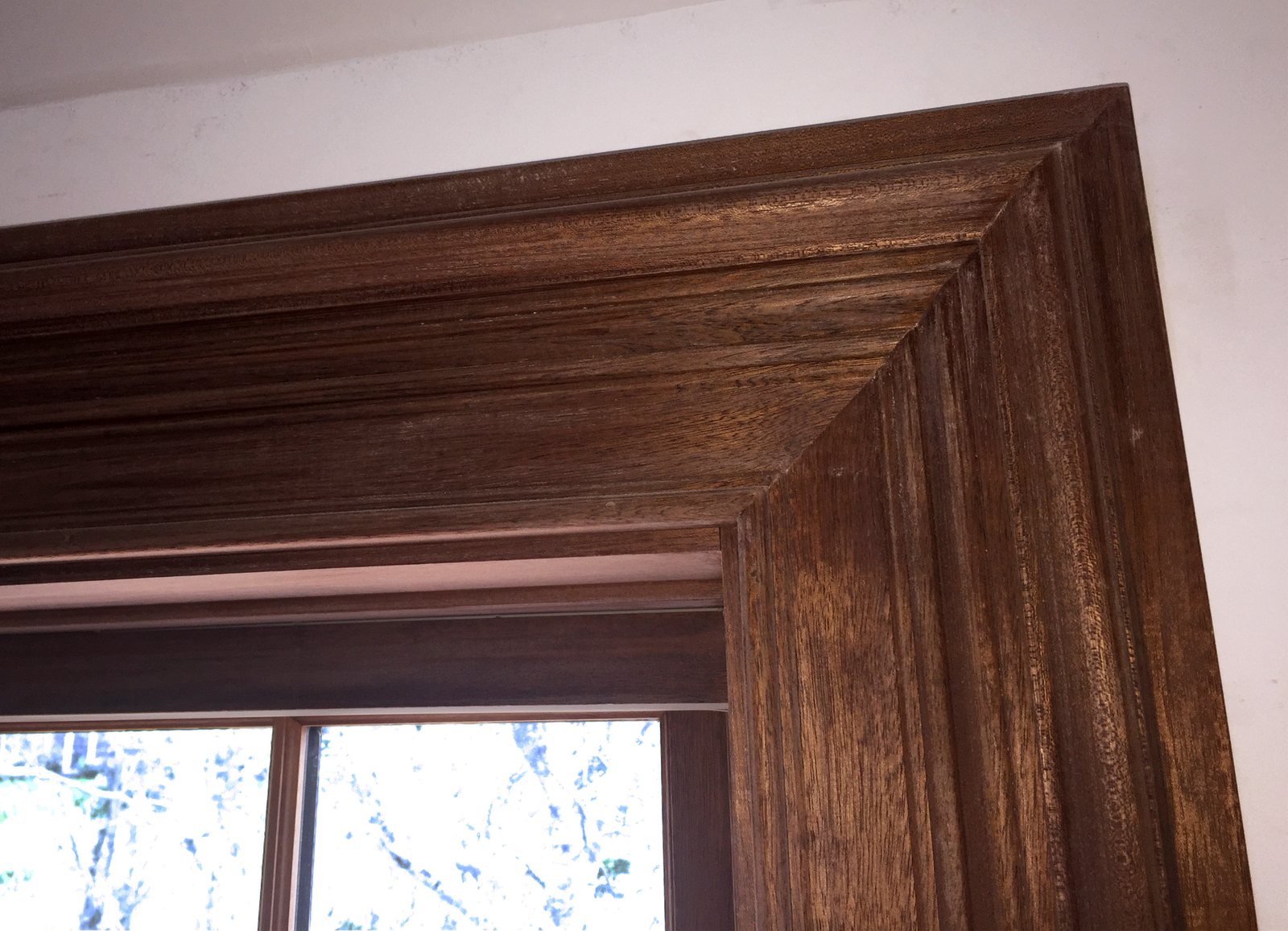
Three numbers have to be settled before a knife touches steel, the overall sill width, the projection past the finished wall face, and the wash angle. Everything else on the profile is detail work arranged around those three.
The wash is the sloped top face. It has to drain, and it has to keep draining after coating builds up in the corner where the sash sits. Many architects draw the wash at 1 in 12 or steeper on a traditional exterior sill, which follows the rain control logic Building Science Corporation lays out for shedding surfaces. A near-flat wash on a wide sill holds standing water at the glass line, and a coating fails there first.
Projection is where new construction and replacement diverge. New work can hold the projection the architect drew. Replacement has to match what is already there, since the flashing, the existing casing reveal and often a painted shadow line on the brick all record where the old sill stopped. Field dimensions come from the buyer's own installer or fabricator, and the shop mills to the numbers on the order.
Width drives stock thickness more than most specifiers expect. A sill is not a 1x part. A sill wide enough to carry a sash, a wash and a nosing comes out of 6/4 or 8/4 stock, and once it is carrying a mulled unit or a deep reveal it goes thicker still.
Drip Kerfs, Back Bevels and End Grain at the Horn
The drip kerf has to run all the way through the horn, not stop at the jamb line. A kerf that dies where the horn begins delivers the water it collected to the end of the sill and lets it wrap around onto the underside.
A drip kerf is a small groove, commonly on the order of 1/4 to 3/8 inch wide and a similar depth, set back from the outer edge on the underside of the nosing. It breaks surface tension so water drops clear instead of tracking back along the soffit of the sill toward the wall. The dimension belongs on the drawing. ICD, the architectural millwork division of J. Gibson McIlvain, runs the kerf continuously through both horns in the same pass that cuts the profile.
End grain at the horn end is the fastest route water has into a sill. There are three honest ways to handle it. A square-cut end gets sealed and primed before it goes in the wall. A back-bevel sheds off the end instead of holding a bead. A mitered nosing return carries the profile around the end of the horn so the visible face is long grain, which is the traditional answer and the one historic districts expect.
The sill to jamb connection deserves the same scrutiny. Whether the jamb is housed into the sill, tenoned, or set on a rabbeted shoulder, that joint sits directly above the masonry and directly below the sash. ICD mills the sill and its horns from a single blank wherever length allows, so no glue line sits in the wettest inch of the assembly.
Species That Survive Sitting on Masonry
The millwork palette for sills is Sapele, Iroko, Afrormosia, Teak and Utile, and each earns its place for reasons a sill specifically cares about. All five machine cleanly, hold a crisp arris on a nosing, glue predictably and take a coating without fighting it.
Sapele is the workhorse for painted exterior sills, at roughly 1,410 lbf on the Janka scale, and it beats Genuine Mahogany at roughly 800 lbf for this use on two counts. It holds paint better, and it comes in a wider range of sizes and longer lengths, which matters the moment a sill has to run continuously under a mulled unit. One limit worth stating plainly, Sapele is not milled 1x8 for exterior use, since that section is too wide to stay stable in that thickness. Wide sills come out of thicker stock.
Iroko and Afrormosia both bring high natural durability and very good dimensional stability, which is what a part locked between masonry and a sash needs. Teak remains the reference for sash and sill in severe exposure where the specification calls for it. Utile machines much like Sapele and covers wide widths well.
Tropical decking species are a different tool. Ipe, botanically Tabebuia spp, along with Cumaru, Garapa, Jatoba and Red Balau, are extremely hard and carry high oil content, which makes them difficult to glue and hard on knives. A millwork shop reaches for Sapele, Iroko, Afrormosia, Teak or Utile instead and saves the decking species for decking.
Cedar is a legitimate default for a sill and always has been. Specify CVG, clear vertical grain, where the face will be painted or where a clean uninterrupted surface matters, and understand that STK, select tight knot, is a different product for a different use. Cedar's lower density means a horn edge marks more easily than Sapele under a ladder foot, which is a handling matter rather than a durability one.
Where a modified product is wanted, Accoya sits at roughly 1,600 lbf with acetylation giving dramatically reduced shrinkage and swelling, a strong argument for a painted sill in a wet exposure. Thermory and Abodo Vulcan are both carried as well. Two limits are absolute. Modified woods top out around 16 ft, most of them sold on metric lengths just under 16 ft because of kiln size, and thermally modified Ash is not available wider than 8 inches, so a wide sill in a modified product means Accoya or Abodo Vulcan. Warranties exist only on the modified products. It is not possible to warranty solid unmodified wood, an organic material responding to its environment.
Sapele and Afrormosia are among the species where CITES listing applies, and documentation and chain of custody travel with the material on those orders.
Horn Terminations Compared
Five terminations cover nearly every sill that meets masonry, and they differ less in appearance than in where water goes at the last inch. Pick the termination first, then the profile, because the termination changes how the blank is laid out.
| Termination | Exterior appearance | Water behavior at the end | What the shop mills | What the installer has to get right |
|---|---|---|---|---|
| Full horn, mitered nosing return | Traditional, profile wraps the end, no end grain in view | Best. Long grain on the exposed face, kerf runs through | Extra blank length, return mitered and glued, kerf continuous | Sealant joint at the reveal, back ventilation under the sill |
| Full horn, square cut end | Plain, end grain visible at both ends | Acceptable when the end is sealed and primed before it is set | Ends sanded, sealed and primed on all faces | Never shortening the horn on site without resealing |
| Full horn, back-beveled end | Subtle undercut, reads as a shadow line | Good. The end sheds rather than holding a bead | Bevel cut to a stated angle, kerf through the bevel | Bevel facing out, not reversed |
| Horn housed into a stone pocket | Cleanest reveal line, end fully concealed | Depends entirely on the pocket staying drained | Shoulder cut to the pocket depth, buried end fully primed | Capillary break and drainage in the pocket itself |
| Separate subsill under the frame | Two-piece look, deeper shadow under the sash | Strong. The drainage plane moves out and down, away from the frame | Two profiles, matched wash angles, mating rabbet | Flashing lapped correctly over the subsill |
"The question I get on a sill order is almost never about the profile. It is how far the horn has to run and what happens to the end of it. Once somebody sends me the wall section instead of just the window size, we can grind the knife and get it right the first time."
Norm Moton, Director of Sales, J. Gibson McIlvain
Moisture Content and Grain Orientation Against a Wet Wall
Exterior sill stock is milled to an in-service moisture content near 12 to 16 percent, while the interior stool and apron on the other side of the same opening go to 6 to 8 percent. J. Gibson McIlvain mills to the number the part's service environment calls for, and a window opening is the one place in a building where both numbers show up inches apart.
Masonry is a reservoir. A brick wall holds water for days after rain and releases it slowly in both directions, which means the underside of a sill can sit against a damp surface long after the visible face has dried. The Wood Handbook from the USDA Forest Products Laboratory is the standard reference on how wood equilibrates against that kind of exposure and what the resulting dimensional change looks like.
Grain orientation is the cheapest insurance on a wide sill. Quartersawn and rift stock moves less across its width than plainsawn, which is exactly why it gets specified where a painted or panelized surface has to stay flat. On a sill that is both wide and painted, that belongs in the written specification.
Cupping is a separate conversation from species. It is driven by installation and back ventilation, not by which tree the board came from. A sill bedded solid in sealant with no path for the underside to dry will cup whatever it is made of, and a sill with air behind it stays flat in species people claim are unstable.
Priming Before the Sill Goes Near the Wall
A sill has to arrive primed on all six faces, including both horn ends, because once the horns are in the masonry nobody can reach them again. J. Gibson McIlvain primes wood in three levels, in both oil-based and water-based systems, and exterior primed trim carries a fungicide additive.
Open-grained and oily species absorb a great deal of finish, so a primer coat evens out the eventual painted surface rather than leaving a patchy field where the topcoat sinks in unevenly. Sanding or buffing after priming knocks back grain raising while keeping the moulded detail crisp, which on a sill means the nosing arris and the kerf edge stay sharp instead of going soft under the coating.
Sequence matters at the horn. End grain on a horn destined for a stone pocket gets sealed and primed before it ever leaves the shop, and any site cut that shortens a horn has to be resealed before it is buried. That is the single most common failure on otherwise well-built sills.
Replacement Sills in Historic Masonry Openings
A replacement sill in a historic opening is a profile-matching job first and a species job second. The masonry is staying. The sill has to fit what the masonry already has, including the pocket, the reveal and the wash angle the original mason built to.
J. Gibson McIlvain holds a moulding profile library of thousands of profiles and grinds new knives every week, and when a profile is not already in the library it gets ground to match, including difficult historical restoration profiles and contemporary ones. A short length of the original sill, a rubbing, or a measured section of the nosing is usually enough to work from. Once that knife exists it stays on file, which is what keeps phase two of a multi-year restoration matching phase one.
The National Park Service preservation briefs on wooden windows and on repointing mortar joints are the documents most review boards work from, and they are worth reading before the shop drawing is issued rather than after.
Where shutters are part of the same opening, ICD builds wood shutters in louver and panel styles with complete historical matching for both style and species, which is what a historic district asks for when it requires like-for-like replacement.
The Inside Face, Stool Ears and the Apron Return
The interior counterpart of the horn is the stool ear, and it answers to plaster and casing rather than to brick. The ear projects past the casing by a stated amount, and the apron returns underneath it so no end grain shows on the room side.
Interior parts get milled to 6 to 8 percent, and they follow a different profile logic. The stool carries a rabbet or a bevel matching the sill's wash where it laps the exterior sill, then runs flat into the room. Where the ear meets the casing, the reveal dimension is what the eye actually reads, so it goes on the drawing as a number and not as a note. ICD mills stool and apron as a matched set with the exterior sill on the same order, so the wash angles and the lap agree.
How J. Gibson McIlvain Would Specify This
Send the wall section, not just the window size, and the rest of the order writes itself. Horn length, projection and wash angle all come out of that drawing, and none of the three can be inferred from a window schedule.
For a painted exterior sill on brick in a mixed climate, the specification would read Sapele out of 8/4 stock, rift or quartersawn, milled to 12 to 16 percent, wash at the drawn angle, drip kerf continuous through both horns, horns mitered with a returned nosing, primed in the specified level with the exterior fungicide additive on all six faces including the horn ends. Where the exposure is severe or the sill is going into a stone pocket, Accoya or Teak enter the conversation, and Accoya is the one product in that group that carries a warranty.
A historic replacement adds a profile match taken from a sample, the species matched to the original, and a note that the knife stays on file for later phases. J. Gibson McIlvain grinds that knife and mills the run off it, and ICD handles the frame, custom door and radius trimwork on the same opening where the job calls for it. Both sides of the business come off one order, which is why linear trimwork, finished cladding and primed trim can ship alongside true custom components rather than on a separate schedule.
Field measurement, flashing and setting belong to the buyer's installer. What the shop controls is everything upstream of that, and getting it right upstream is what makes the install uneventful. Reference material on profile conventions is available through the Wood Moulding and Millwork Producers Association and on quality tiers through the Architectural Woodwork Institute, while structural questions about bearing route back to the American Wood Council standards and test methods to ASTM Committee D07. Acetylation data for modified stock is published by Accoya.
J. Gibson McIlvain ships milled and primed sill stock nationwide, including regularly to California. To get a sill, stool and apron package scheduled off your wall section, call 800-638-9100 or start with the millwork services page, and for true custom frames, doors and radius work on the same opening see ICD exterior millwork and its trim profile work.
Frequently Asked Questions
How long does a sill horn need to be?
Long enough to carry runoff past the vertical joint where the frame meets the masonry, which means the dimension comes off the wall section rather than the window size. On a brick opening that usually means clearing the reveal face and landing on the rowlock or soldier course below. On a stucco or stone veneer wall it means clearing the finished cladding plane plus the screed stop, with room left for a sealant joint that has bearing on both sides. Two openings on the same elevation can need different horn lengths if one is recessed and one is flush, so horn length is stated per type on the order rather than assumed.
Should the drip kerf continue through the horn or stop at the jamb line?
It should run continuously through both horns. A kerf that stops where the horn begins collects water along the length of the sill and then hands it to the end of the part, where it wraps onto the underside and tracks back toward the wall. The kerf is a small groove, commonly on the order of 1/4 to 3/8 inch wide and a similar depth, set back from the outer edge on the underside of the nosing, and it gets cut in the same pass as the profile.
Which species should be specified for a painted exterior sill bearing on brick?
Sapele is the default. It sits at roughly 1,410 lbf on the Janka scale, holds paint better than Genuine Mahogany at roughly 800 lbf, and comes in a wider range of sizes and longer lengths, which matters when a sill has to run continuously under a mulled unit. Note that Sapele is not milled 1x8 for exterior use because that section is too wide to stay stable in that thickness, so wide sills come out of 6/4 or 8/4 stock. Iroko, Afrormosia, Teak and Utile all work as well, and CVG cedar remains a legitimate choice where a clean painted face is wanted. Accoya is the choice where a warranted modified product is wanted.
Why not use Ipe or another tropical decking species for a sill?
Ipe, botanically Tabebuia spp, along with Cumaru, Garapa, Jatoba and Red Balau, are extremely hard and carry high oil content, which makes them difficult to glue and hard on knives. A sill is a moulded, often glued and jointed component, so a millwork shop reaches for Sapele, Iroko, Afrormosia, Teak or Utile instead. Those species get chosen for decks for good reasons, and a sill is not a deck.
Is a separate subsill worth specifying under the window frame?
Where the exposure is severe or the flashing detail is tight, yes. A subsill moves the drainage plane out and down, away from the frame joint, and gives the flashing a clean surface to lap over. It adds a second profile and a mating rabbet, and the two wash angles have to agree, which is why both parts are best milled on one order rather than sourced separately.
How is an existing historic sill profile matched for a replacement?
From a physical sample. A short length of the original sill, a rubbing of the nosing, or a measured section is enough to work from. J. Gibson McIlvain holds a moulding profile library of thousands of profiles and grinds new knives every week, and if the profile is not already in the library it gets ground to match, including difficult historical restoration profiles. Once the knife exists it stays on file, which is how a later phase of the same building keeps matching the first.
Is there a warranty on a solid wood sill?
No. Warranties exist only on the modified products such as Accoya. It is not possible to warranty solid unmodified wood, an organic material that responds to its environment. What can be controlled is the moisture content it is milled to, near 12 to 16 percent for exterior work, the grain orientation, and the priming it arrives with. Cupping in service is driven by installation and back ventilation rather than by species, so a sill bedded solid with no drying path on the underside will cup regardless of what it is made of.
Sources and Standards Referenced
- Wood Handbook, Wood as an Engineering Material (FPL-GTR-282), USDA Forest Products Laboratory
- BSD-013 Rain Control in Buildings, Building Science Corporation
- Preservation Brief 9, The Repair of Historic Wooden Windows, National Park Service
- Preservation Brief 2, Repointing Mortar Joints in Historic Masonry Buildings, National Park Service
- Afrormosia wood properties, The Wood Database
- Wood Moulding and Millwork Producers Association
- Architectural Woodwork Institute
- ASTM Committee D07 on Wood
- Accoya acetylated wood
- J. Gibson McIlvain Millwork Services