What the Joint Profile Actually Controls
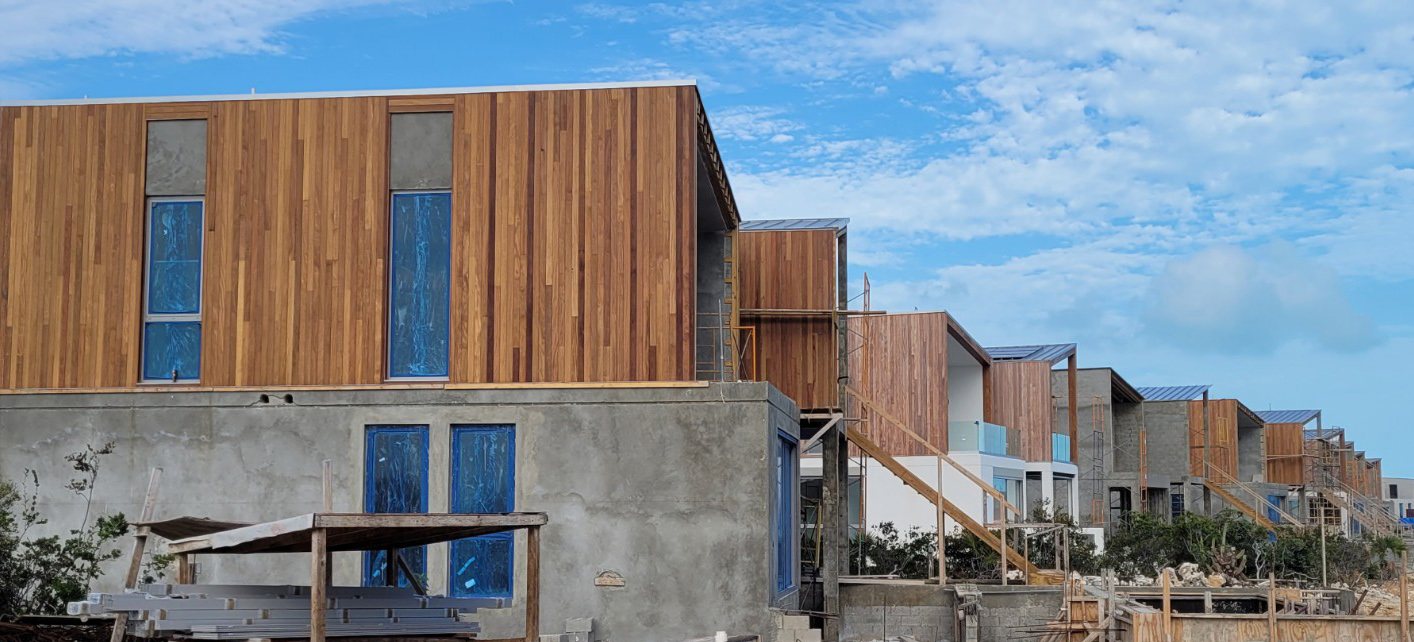
The joint between two cladding boards decides how water leaves the wall, how much seasonal movement the assembly absorbs before it telegraphs, how each board gets fastened, and how much of the board a coating has to protect. Everything else in a cladding order follows from that one choice. Species, width, length, finish level, back relief, all of it sits downstream. Pick the joint first and the rest of the specification stops fighting itself.
Three families cover almost all milled wood cladding. Shiplap carries a rabbet on each edge so adjacent boards overlap. Tongue and groove uses a machined tongue that seats into a matching groove, locking the boards into a continuous plane. Open joint leaves a deliberate gap between boards and hands the water barrier entirely to the layer behind them.
Each family loads a different part of the wall. A shiplap rabbet sheds water at the lap and swallows movement inside the overlap. A tongue-and-groove joint hides the fastener and closes the face, which is what makes it read as one surface and what makes it unforgiving when the wood arrives at the wrong moisture content. An open joint asks nothing of the cladding as a weather barrier and everything of the membrane and furring behind it.
ICD, the architectural millwork division of J. Gibson McIlvain, mills all three on the same order, off the same lot, to the reveal dimension on the drawing rather than to a stock catalog number. That matters most on elevations that change profile partway up, a shiplap field with an open joint screen above a soffit line, for example, where the two profiles have to come out of matched material or the color break reads as a mistake.
Shiplap and the Rabbet That Does the Work
Shiplap is the most forgiving exterior joint in wood cladding because the overlap keeps shedding water after the boards shrink. The rabbet is usually cut to roughly half the board thickness on opposing faces, so the two halves nest. Seasonal shrinkage widens the visible gap. It does not open a path straight through the wall, which is exactly why the profile has survived three centuries of coastal building.
Lap depth is the number worth arguing about. A shallow rabbet looks cleaner and wastes less stock, but it gives the board less room to move before the lap disengages. On wide boards in a high-exposure elevation, a deeper lap buys margin. ICD grinds the rabbet to whatever depth the detail calls for and keeps the shoulder square so the shadow line stays crisp instead of rounding over after two coats of finish.
Nickel gap is the same joint with a deliberate reveal machined into the lap, typically around an eighth of an inch, so the gap you see is the gap that was designed rather than the gap that appeared. It ends the argument about installer spacing. The reveal is milled, not gapped by eye on the wall, and it stays consistent from the first course to the last.
Coverage width is where cladding take-offs go wrong. A nominal one by six shiplap does not cover six inches. It covers the face width minus the lap, and on a nickel gap profile minus the reveal as well. Order to coverage, not to nominal, and confirm the number against the milled sample before the full run is cut.
Tongue and Groove and Its Movement Limit
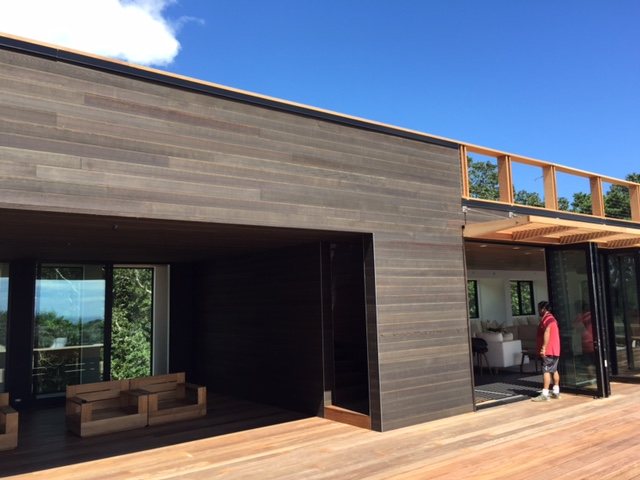
Tongue and groove gives the tightest, flattest face of the three profiles and the least tolerance for moisture error, which makes it a better interior and soffit profile than a wide exposed wall profile. The tongue locks the plane. It also means any shrinkage shows up as an unfinished stripe where the tongue pulls out of the groove, unless the boards were coated on every face before assembly.
That stripe is the single most common complaint on stained tongue-and-groove siding, and it is entirely preventable at the mill. Coat the tongue. Coat the groove walls. The wood that emerges during the first dry winter then matches the wood that was visible on day one.
Groove depth should exceed tongue length by a small margin so the joint can close without bottoming out during the humid half of the year. A tongue driven hard into the bottom of its groove has nowhere to expand and will push the whole course, cup the face, or split the groove lip. J. Gibson McIlvain mills exterior tongue-and-groove cladding to a 12 to 16 percent in-service moisture content and interior stock nearer 6 to 8 percent, which is the difference between a joint that closes seasonally and a joint that fails once.
Cupping gets blamed on species far more often than it deserves. It is driven by installation and back ventilation. A board with a wet back and a dry, sun-loaded face will cup in any species on the list, which is why the furring and cavity detail behind tongue and groove matters more than the wood invoice does.
Open Joint Cladding and the Layer Behind It
Open joint cladding is not a siding profile at all, it is a screen, and it only works when the drainage plane behind it is specified as the actual weather barrier. Water passes the gap on purpose. The membrane, the furring, the flashing and the insect screening carry the whole load, and the boards become a UV screen and a rain-energy breaker rather than a seal. Building Science Corporation's rain control digests lay out that logic plainly, and the detail fails whenever a designer treats the wood as the barrier.
Gap width has to be set against the movement of the species and the width of the board, not chosen for looks alone. A narrow reveal on a wide plainsawn board can close in August and gape in February. Quartersawn and rift stock moves less across its width than plainsawn, which is why specifiers reach for it whenever a reveal has to stay visually even.
Every face of an open joint board is exposed. Edges, back, ends, all of it can be seen at an angle or reached by wind-driven water, so the finishing scope is larger than any lapped profile. The membrane behind the gap also has to be rated for UV exposure, because it will be looked at, and that specification belongs to the wall assembly rather than the lumber order.
Edge crispness decides whether the shadow line looks intentional. Species with even density and fine, interlocked grain hold a machined arris far better than coarse, ring-porous stock, and that single property drives more open joint species decisions than durability rating does. ICD machines open joint boards with eased or square arrises to the elevation drawing and keeps the reveal dimension consistent across every course in the run.
Matching the Joint to the Wall Condition
The right profile is chosen from exposure, wall height, finish system and who is fastening it, not from a preference for how the elevation looks in a rendering. A protected soffit and a west-facing three-story wall are different problems. The table below sets the three families against the four variables that actually change the outcome.
| Joint profile | Drainage behavior at the joint | Movement tolerance | Fastening and finish exposure |
|---|---|---|---|
| Shiplap rabbet | Overlap sheds water even as the gap widens seasonally | High, movement is absorbed inside the lap | Face fastened, fastener heads visible, lap faces need coating |
| Nickel gap shiplap | Same overlap, with a milled reveal that stays constant | High, the designed reveal masks seasonal change | Face fastened, reveal walls fully visible and must be finished |
| Tongue and groove | Closed face, relies on the coating and the cavity behind | Low, shrinkage exposes the tongue as a stripe | Blind nailed through the tongue, tongue and groove walls must be coated |
| Open joint screen | Water passes through by design, membrane behind is the barrier | Highest, the gap is sized to the expected movement | Exposed or concealed clip systems, every face finished including the back |
One pattern shows up on nearly every project. Shiplap for the tall exposed field, tongue and groove for soffits and protected porch ceilings, open joint for the screen walls and feature elevations where a designer wants depth. Mixing them is fine. Mixing them across two different lots of lumber is what causes trouble.
The Species Palette for Milled Cladding
Sapele, Utile, Iroko, Afrormosia and Teak are the working palette for milled exterior cladding, and Western Red Cedar remains a legitimate default that should be specified by grade rather than by name alone. These species machine cleanly, hold a rabbet shoulder, and glue and coat predictably, which is what a millwork house needs from a cladding blank.
Sapele runs roughly 1,410 lbf on the Janka scale, takes paint better than Genuine Mahogany at roughly 800 lbf, and comes in a wider range of sizes and longer lengths, which is why it is the better call for painted exterior work. One limit is worth stating up front. Sapele is not milled 1x8 for exterior use. It is too wide at that thickness to stay reliably stable outdoors, so a wide-board look in Sapele means a different thickness or a different profile.
Utile behaves much like Sapele with a slightly more open figure. Iroko carries strong natural durability and weathers to a settled gray without a finish. Afrormosia is dense, fine-textured and holds a machined edge about as well as anything on the list. Teak is the premium choice where a silvered, low-maintenance exterior is the design intent and the budget supports it.
Cedar deserves a clearer specification than it usually gets. Clear vertical grain cedar, CVG, is quartersawn, quiet in figure, stable across its width and the right call for a finished or stained plane where flatness matters. Select tight knot, STK, is a knotty flat-sawn grade with a completely different visual character, and it is the correct choice when the design wants that character. Writing just cedar on a drawing invites two different walls.
The tropical decking species, Ipe (Tabebuia spp), Cumaru, Garapa, Jatoba and Red Balau, are extremely hard and carry high oil content, which makes them difficult to glue and slow to machine. A millwork shop reaches for Sapele, Iroko, Afrormosia, Teak or Utile instead for anything milled, glued or profiled. Save the decking species for decking.
J. Gibson McIlvain holds over seven million board feet of exotic and domestic lumber at its Maryland yard, which is what makes a lot-matched cladding run possible on a wall that needs consistent color across several thousand feet. Where a CITES-listed species is involved, documentation and chain of custody travel with the material, and J. Gibson McIlvain is an FSC certified importer and miller, so a specification with sourcing requirements can be satisfied on paper as well as in the truck.
Modified Wood and the Length Ceiling
Modified woods solve dimensional stability better than any unmodified species, and they come with a hard length ceiling of about 16 feet that has to be designed around before the elevation is drawn. Kiln size sets that ceiling. Most modified stock is sold on metric lengths just under 16 feet, and no supplier can exceed it.
Accoya, acetylated at around 1,600 lbf Janka, gives dramatically reduced shrinkage and swelling, which is the single most useful property in an open joint wall where a consistent reveal is the whole design. Thermory and Abodo Vulcan are the other two modified products carried, and both behave well on a cladding wall.
Thermally modified Ash is not available wider than 8 inches. If the design wants wide boards in a modified product, the answer is Accoya or Abodo Vulcan, and that decision is better made at drawing stage than after a submittal is rejected.
One more point that clients hear too late. Warranties exist only on modified products. It is not possible to warranty solid unmodified wood, which is an organic material responding to its environment, and any supplier offering one is writing a promise the material cannot keep.
Grooving, Back Relief and Fastener Access
The back of the board is milled differently for each profile, and the fastening method the installer will use has to be settled before the knife touches the blank. Back relief kerfs reduce the stress that drives cupping and give trapped moisture somewhere to go. How many kerfs, and where, depends on board width and on whether a lap or a clip will cover them.
Shiplap is face fastened through the lap. The fastener lands in a known place, which means the milling has to leave enough meat in the rabbet for the nail to hold without splitting the shoulder. Tongue and groove is blind nailed through the tongue, so tongue thickness is a structural dimension rather than a cosmetic one, and an undersized tongue on a wide board is a callback waiting to happen.
Open joint boards often ride on concealed clips or a rout in the board edge. That rout is milling work, not site work, and it has to be dimensioned to the specific clip system before the run is cut. Getting the clip data sheet to the shop early prevents a second setup.
J. Gibson McIlvain supplies and mills. It does not install. Furring layout, membrane laps, flashing and fastener schedule belong to the installing contractor and the wall assembly design, and the mill's job is to deliver boards that make that installer's day straightforward rather than complicated. Stainless fasteners are the sensible default on any of the tannin-rich species above.
Priming and Finishing Before the Boards Ship
A cladding profile decides how many faces have to be coated, and coating them at the mill instead of on a stack in the driveway is the difference between a wall that holds its finish and one that fails at the joints first. J. Gibson McIlvain primes wood in three levels, in both oil-based and water-based systems, and exterior primed trim carries a fungicide additive.
Open-grained and oily species absorb a great deal of finish, so a primer coat evens out the eventual painted surface, and sanding or buffing after priming knocks back grain raising while keeping moulded detail crisp. On a nickel gap reveal or a crisp shiplap shoulder, that last point is the whole game. A finish that fills and softens a machined arris throws away the profile you paid to mill.
Profile by profile, the coating scope changes. Shiplap needs both lap faces coated so the seasonal gap never shows raw wood. Tongue and groove needs the tongue and both groove walls coated for the same reason. Open joint needs everything, all six faces, because everything can be seen or wetted.
"The wall that comes back to us with a finish problem almost never has a paint problem. It has a face that never got coated, usually a tongue or the back of a board, and the wood went to work from the side nobody looked at. We would rather coat all six faces here, under cover, than argue about it two winters later."
Norm Moton, Director of Sales, J. Gibson McIlvain
Profile Matching, Storage and Delivery
Matching an existing cladding profile on an addition or a historic elevation is knife work, and it is routine rather than exceptional. J. Gibson McIlvain keeps a moulding profile library holding thousands of ground knives and grinds new knives every week. A profile that is not in the library gets ground to match from a physical sample or a measured section, including difficult historical restoration profiles and contemporary ones.
Continuity is the quiet advantage on a phased project. Seventh generation and family run since 1798, J. Gibson McIlvain keeps the knife and the order record on file, so phase two of a campus or a second building on an estate can be milled to the same profile years later without a new sample cycle. That is a real problem for buildings whose original supplier no longer exists.
Finished millwork can be stored for inventory control rather than shipped all at once into a job site that is not ready for it. On cladding that matters, because a prefinished board stacked outdoors in the weather loses whatever the mill just gave it.
J. Gibson McIlvain runs its own fleet of trucks and a section of the mill dedicated to packaging, and ships nationwide, regularly to California. Coated cladding is packaged to protect the finished face in transit, which is a different packing job from raw lumber and is handled as such. See the J. Gibson McIlvain millwork services for the linear trimwork, finished cladding and primed trim side of the business, and ICD exterior millwork for true custom work planned around a specific building.
How J. Gibson McIlvain Would Specify This
A cladding specification that will not generate a submittal fight names the joint profile and its milled dimensions, the species and grade, the moisture content, the coating scope by face, and the delivery sequence. Five items. Most rejected submittals are missing at least three of them.
Start with the joint. Shiplap with a stated lap depth and reveal for exposed field walls, tongue and groove for soffits and protected ceilings, open joint with a stated gap dimension where the design wants depth and the wall assembly behind it is genuinely detailed as the barrier. State coverage width, not nominal width, so the take-off is right.
Name the species and, on cedar, the grade. CVG where the plane must stay flat and finished, STK where knotty character is the intent. On painted exterior work, Sapele over Genuine Mahogany, and not 1x8 Sapele for exterior. Where a reveal has to stay even, call for quartersawn or rift stock and accept the yield consequence.
Set moisture content on the drawing. Near 12 to 16 percent for exterior cladding, near 6 to 8 percent for interior tongue and groove ceilings and paneling. If the design needs stability beyond what unmodified wood gives, go to Accoya, Thermory or Abodo Vulcan, and design the elevation around the roughly 16 foot ceiling from the start.
Specify the coating by face, not by gallon. All six faces on open joint. Lap faces on shiplap. Tongue and groove walls on tongue and groove. State oil-based or water-based, state the priming level, and confirm the fungicide additive on exterior work.
Then send the drawing. J. Gibson McIlvain reviews the elevation, matches or grinds the knife, mills the run out of matched lot material, primes it in the specified system, packages it to protect the finished face and delivers it on its own trucks to a schedule the installer can actually work to. Call 800-638-9100 to get a cladding profile and species reviewed before the elevation is finalized, or reach the ICD working process page to see how a custom run moves from drawing to delivery.
Two further references worth reading before the joint is locked. The Forest Products Laboratory Wood Handbook covers shrinkage coefficients by species and grain orientation, and Building Science Corporation on rain control explains why a screen only works with a functioning drainage plane. For profile conventions, the Wood Moulding and Millwork Producers Association is the trade reference. Species movement data is easy to check against the Wood Database entry for Sapele. Modified product specifications come from Accoya and Thermory, with Abodo Vulcan data carried alongside both. Sourcing documentation rules sit with FSC and CITES, and restoration standards for historic elevations are published by the National Park Service Technical Preservation Services.
Frequently Asked Questions
Can shiplap be used over a ventilated cavity, or does it have to sit tight to the sheathing?
Shiplap works well over furring with a ventilated cavity behind it, and that is the better assembly in almost every climate. The lap still sheds water at the face while the cavity lets the back of the board dry. A board installed tight to sheathing has a wet back and a dry face, and that moisture gradient is the main driver of cupping. The furring, membrane and flashing belong to the installing contractor. J. Gibson McIlvain mills the boards, cuts back relief kerfs where the width calls for them and coats the faces that will be unreachable once the course is up.
How wide can open joint cladding boards go before the reveal starts looking uneven?
Width and movement are the constraint, not the gap itself. Wide plainsawn boards move enough across their width that a narrow designed reveal can close in a humid summer and open noticeably in winter. Quartersawn and rift stock moves less across its width, which is why it gets specified when the reveal has to stay even. Accoya is the most stable option on the list, with acetylation giving dramatically reduced shrinkage and swelling. If the design wants both wide boards and a tight consistent reveal, that points to Accoya or Abodo Vulcan rather than a wide unmodified plainsawn board.
Is tongue and groove a poor choice for an exposed exterior wall?
It is not a poor choice, it is a demanding one. The closed face means the coating and the cavity behind it do all the work, and any shrinkage shows as an unfinished stripe where the tongue withdraws from the groove. Coating the tongue and both groove walls at the mill removes that failure entirely. Tongue and groove is at its best on soffits, porch ceilings and protected elevations, and on high-exposure field walls a shiplap or open joint profile carries more margin for error.
Will the shop groove the back of cladding boards and mill the edge rout for a concealed clip system?
Yes. Back relief kerfs and edge routs are milling work, sized to board width and to the specific clip product. Send the clip data sheet with the drawing so the rout dimension is set before the run is cut rather than after. ICD, the architectural millwork division of J. Gibson McIlvain, machines the profile, the back relief and the edge detail in one pass through the shop, which keeps the whole run identical instead of split across two setups.
Can an existing cladding profile on an older building be matched for an addition?
Routinely. J. Gibson McIlvain keeps a moulding profile library holding thousands of ground knives, and new knives are ground every week. If the profile is not already in the library, a knife gets ground to match from a physical sample or a measured section, covering both historical restoration profiles and contemporary ones. That is the usual path where a historic district requires like-for-like replacement, and the knife and the order record stay on file for later phases.
Which species should be avoided for milled cladding profiles?
The tropical decking species are the ones to keep off a milled cladding order. Ipe (Tabebuia spp), Cumaru, Garapa, Jatoba and Red Balau are extremely hard and carry high oil content, which makes them difficult to glue and slow to machine. For shiplap rabbets, tongue and groove joints and crisp open joint arrises, the palette is Sapele, Utile, Iroko, Afrormosia and Teak, along with cedar specified as CVG or STK depending on the look. Those species hold a machined shoulder and take a coating predictably.
Do any of these cladding options come with a warranty?
Only the modified products. Accoya, Thermory and Abodo Vulcan carry manufacturer warranties. Solid unmodified wood cannot be warranted, since it is an organic material that responds to its environment and to how it is installed. What a supplier can control is stock selection, grain orientation, moisture content and the coating, and those four decisions carry most of the service life of a wood wall.
Sources and Standards Referenced
- Wood Handbook, Wood as an Engineering Material (FPL-GTR-282), USDA Forest Products Laboratory
- BSD-013: Rain Control in Buildings, Building Science Corporation
- Wood Moulding and Millwork Producers Association
- Sapele, The Wood Database
- Accoya Modified Wood
- Thermory Thermally Modified Wood
- Forest Stewardship Council
- CITES, Convention on International Trade in Endangered Species
- Technical Preservation Services, National Park Service