What the Shop Needs From a Salvaged Sample
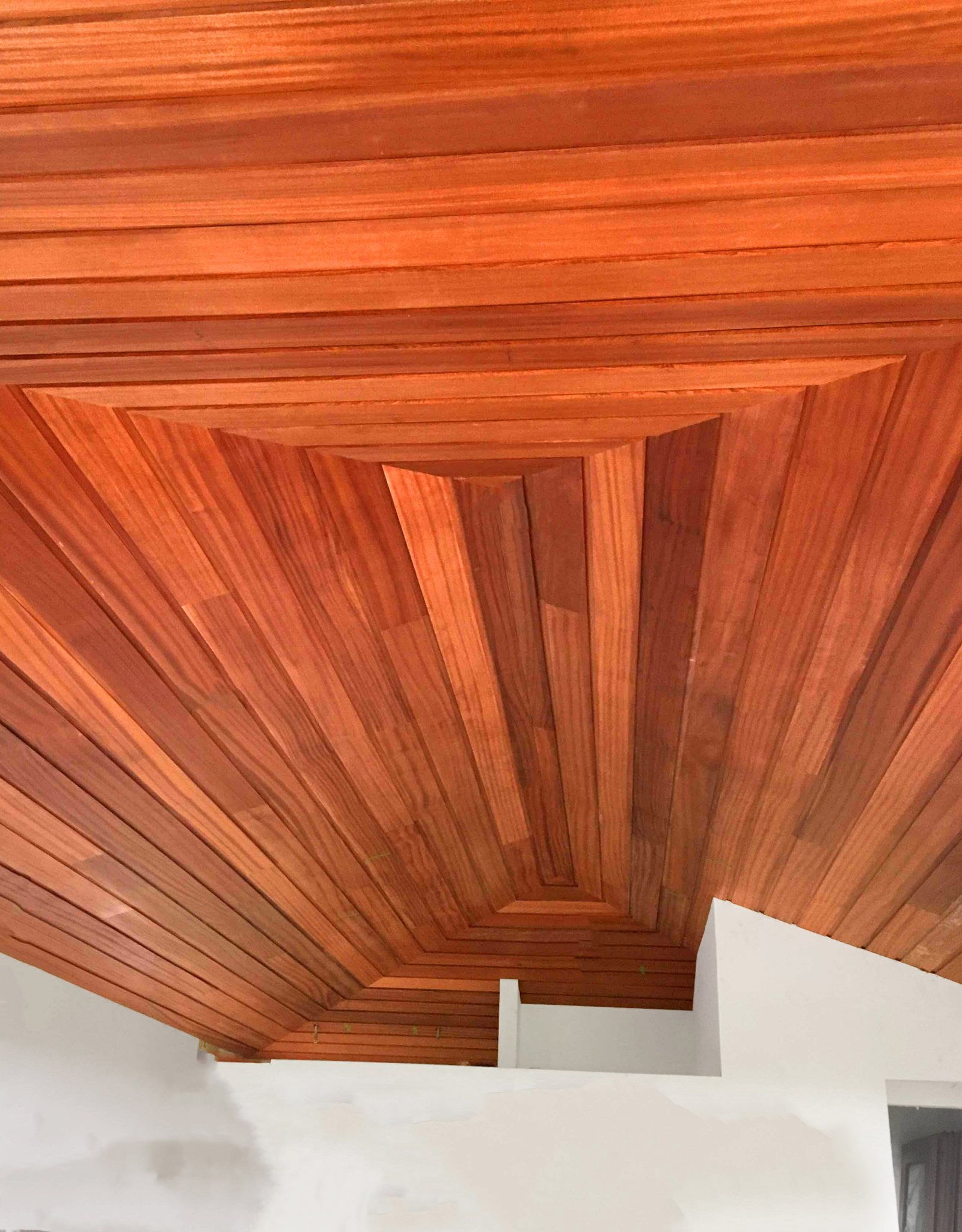
One clean cross section of the original moulding is enough to originate a matching knife, provided the piece has at least one square cut end and has not been chewed up by the demolition crew. The physical sample is the drawing. Everything downstream, the template, the ground steel, the setup piece and the production run, is a chain of copies that begins with whatever arrives in the box.
A few inches of length is plenty. What matters is that the end is cut square through the profile rather than snapped, splintered or hacked off at an angle, since an angled break stretches every curve in the section and quietly widens the whole profile. A carpenter with a sharp fine tooth saw can produce a usable end in about a minute. Send the offcut, not a photograph of it.
Photographs have their place for a first conversation about scope and quantity. They are close to useless as a grinding reference, because a lens flattens the depth of a cove, hides an undercut entirely and gives no reliable scale. Where a building has several related runs, a casing, a backband, a chair rail and a base cap, each one needs its own sample, and it helps to label which room each came from. Old houses rarely used a single profile throughout, and the second floor often carries a lighter version of the first floor pattern.
Reading Wear, Paint and Sanding on an Old Piece
The profile on a salvaged sample is never quite the profile that left the original mill, and the first real work is deciding which parts of the shape are design and which are damage. A hundred and twenty years of paint, scrubbing, sanding and seasonal movement all show up in the cross section. Someone has to read them out of it.
Paint is the loudest distortion. Eight or ten coats of oil paint round every sharp arris, fill the bottom of a quirk and turn a crisp fillet into a soft bump. Stripping a short piece of the sample back to bare wood, or taking the section from a spot that was always hidden behind a stop or a plinth block, gives a far more honest shape than working from the painted face.
Wear is quieter and easier to miss. The top edge of a chair rail gets forty years of hands and furniture, the leading bead of a casing gets vacuum cleaners, and both wear flat in ways that look intentional in a tracing. Shrinkage does something similar across the width, since a four inch face on a hundred year old piece of quartersawn stock may sit noticeably narrower than the day it was installed. The overall width of the sample is therefore a starting point rather than a target.
| Condition of the sample | What it hides from the tracing | How the shop resolves it | Decision the buyer owns |
|---|---|---|---|
| Heavy paint buildup | Sharp arrises, quirk depth, small fillets | Strip a short section to bare wood or section a concealed area | Whether the new run is painted to the same film thickness |
| Worn leading edge | Original radius of a bead or ovolo | Rebuild the curve to a true arc and confirm against a second sample | Restore the crisp original or replicate the worn look |
| Refinished and sanded face | Flats that were never flat, reduced overall depth | Compare with an unsanded sample from a closet or attic run | Which sample is the reference of record |
| Broken or angled end | True cross section, accurate width | Recut square before tracing | Supplying a second piece if none is left to cut |
| Shrunk across the width | Original milled width | Reconcile against opening sizes and adjacent trim | Matching the existing run or returning to original dimension |
| Back cut, relieved or sprung | Plow depth, spring angle, back bevel | Record the back geometry as part of the profile, not as an afterthought | Whether new material meets the same wall and ceiling condition |
That last row causes more field trouble than any of the others. A crown that was sprung at one angle will not land on the same two lines if the new run is sprung at another, and a base that was plowed on the back to clear an old plaster bulge sits proud on flat drywall. The back of a moulding is part of the profile.
Checking Thousands of Ground Knives Before Cutting New Steel
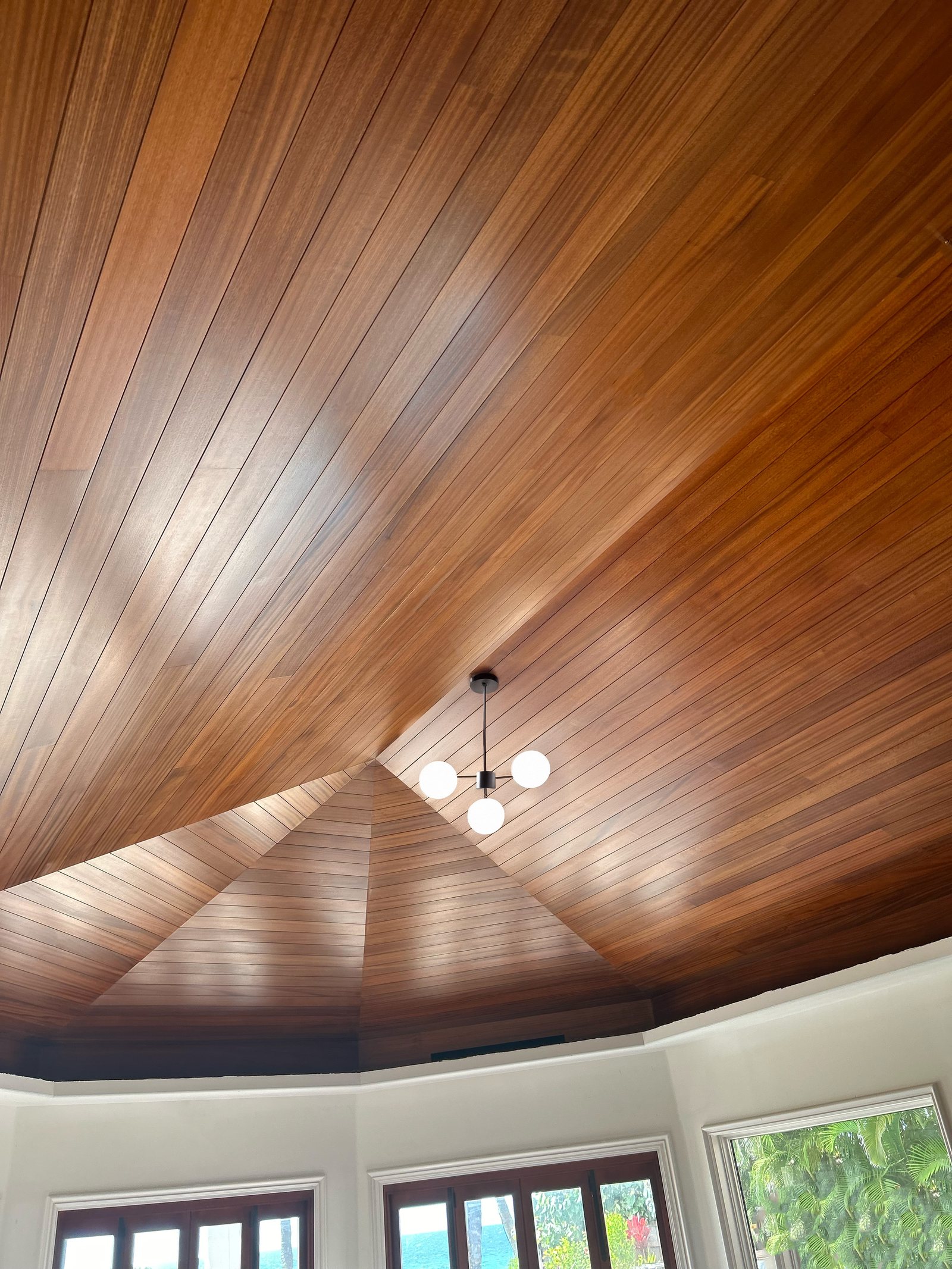
The first move after the tracing is not grinding at all, it is searching the existing library, because a great many salvaged samples turn out to match steel that is already on the rack. J. Gibson McIlvain holds a moulding profile library running to thousands of ground knives, built up across decades of custom orders and historical work, and grinds new knives every week for the profiles that are not in it.
A hit in the library changes the schedule and nothing else about the quality of the result. The tracing still gets checked against the archived profile at full scale, and the setup piece still gets run and compared to the sample, because two casings can look identical in outline and differ by a sixteenth in the depth of one cove. Near enough is not a match when two runs meet at an inside corner.
A miss is routine. Custom knife grinders sit on the same floor as the moulders, so originating a profile is ordinary production work rather than an outside errand with a queue in front of it. Difficult historical restoration profiles and unusual contemporary shapes both come through that door.
"People send us a scrap of casing in a shoebox and expect a shrug. We pull the tracing, check it against the library, and about half the time we already have the steel. The other half we grind it, run a setup piece, and put it up against their sample under raking light before anybody talks about a production run."
Brett Miller, President, J. Gibson McIlvain
Turning the Tracing Into Ground Steel
The shape ground into the knife is not the shape of the finished moulding, and understanding why is the single most useful thing a specifier can know about custom profile work. Knives sit in a cutterhead at a rake angle rather than flat to the workpiece. The arc each cutting edge sweeps is what produces the profile, so the steel has to be ground to a corrected outline that only becomes the drawn shape once it is spinning.
Shops handle that correction as part of template making. The traced profile is drawn out, corrected for the hook angle of the head it will run in, and transferred to a template that guides the grinder against the corrugated back knife blank. Get the correction wrong and the run comes off with a cove slightly too shallow and a fillet slightly too wide, which is exactly the sort of error that only shows when the new material butts the old.
Depth of cut matters too. A deep profile with a tight radius asks more of the steel and more of the feed rate, and very tight inside radii have a practical floor set by the geometry of the head. A tracing taken from a soft old piece of pine sometimes shows details a sharp knife will reproduce better than the original ever did, which is a good problem and worth flagging before the run.
The standard catalog shapes are a useful reference point in all of this. The Wood Moulding and Millwork Producers Association maintains the WM series that most stock trim follows, and a salvaged sample that lands close to a WM number but not on it is the normal case in pre war housing. Close is why the knife gets ground.
Proving the Knife on a Setup Piece
No custom profile is finished at the grinder, it is finished when a run sample sits edge to edge with the salvaged original and the shadow lines agree. The setup piece is the proof, and it is worth insisting on one before a thousand feet moves.
The test that catches the most is simple. Butt the new piece against the old with the faces coplanar, then throw a light across both at a low angle. Shadow lines exaggerate any difference in the depth of a cove or the height of a fillet far better than the eye does straight on. A small mismatch in a bead reads instantly under raking light and disappears under a ceiling fixture.
Run the setup piece in the species that will be used for production, not in whatever scrap is handy. A profile cut in Poplar and a profile cut in Sapele from the same knife will not present the same crispness, because the two woods tear and compress differently at the arris. Approve what you are actually buying.
Species Choice Changes How Sharp the Detail Holds
A knife can only give back detail that the wood is capable of holding, which is why the millwork palette leans on Sapele, Iroko, Afrormosia, Teak and Utile. Those five machine cleanly, hold an arris, glue reliably and come in the sizes that deep profiles and long runs need.
Sapele sits at roughly 1,410 lbf on the Janka scale and takes a moulded edge about as well as anything in the building, with the caveat that its interlocked grain wants sharp steel and a moderate feed rate to avoid tearout on the ribbon figure. Utile behaves similarly with a calmer grain. Iroko and Afrormosia both run well and hold up outdoors, and Teak remains the reference for exterior stability. The published working properties for Sapele line up with what the moulders show on the floor.
Domestic choices behave predictably. White Oak at roughly 1,360 lbf and Hard Maple at roughly 1,450 lbf both take fine detail, Cherry at roughly 950 lbf mills beautifully and dents easily in service, and Genuine Mahogany at roughly 800 lbf is soft enough that a delicate bead can bruise during handling. Grading matters as much as species on a long run, and the National Hardwood Lumber Association rules are the common language for what a given grade guarantees in clear cutting area.
Cedar deserves a straight answer where the salvaged sample came from an exterior run. It is a legitimate default for exterior trim and shutters, and the grade decides how much detail a knife can leave in it. Clear vertical grain, CVG, takes a fine bead and a tight quirk without complaint. Select tight knot, STK, carries sound knots that can blow out under a delicate cutter, so a profile reproduced in STK should keep its members heavier.
The tropical decking species are a different conversation. Ipe, botanically Tabebuia spp, along with Cumaru, Garapa, Jatoba and Red Balau, are extremely hard and carry high oil content, which makes them difficult to glue and hard on knives. A millwork house reaches for Sapele, Iroko, Afrormosia, Teak or Utile instead, and leaves the decking species to decking, where their density is the point.
Moisture, Grain and the Blank Behind the Profile
The blank is specified before the knife ever touches it, and moisture content and sawing pattern decide whether the profile you approved is the profile still sitting there in February. A perfect match that cups out of its reveal is not a match.
J. Gibson McIlvain mills interior trim to an in-service moisture content near 6 to 8 percent and exterior work near 12 to 16 percent, which are different targets for different environments rather than a quality difference. The Wood Handbook from the Forest Products Laboratory lays out the equilibrium relationships behind those numbers in more detail than most specifications ever need.
Sawing pattern is the other lever. Quartersawn and rift stock moves less across its width than plainsawn, which is why it gets specified where a wide painted member or a panelized surface has to stay flat. On a restoration match it carries a second benefit, since much pre war trim was quartersawn to begin with and the ray fleck on a White Oak casing is part of what the eye is matching.
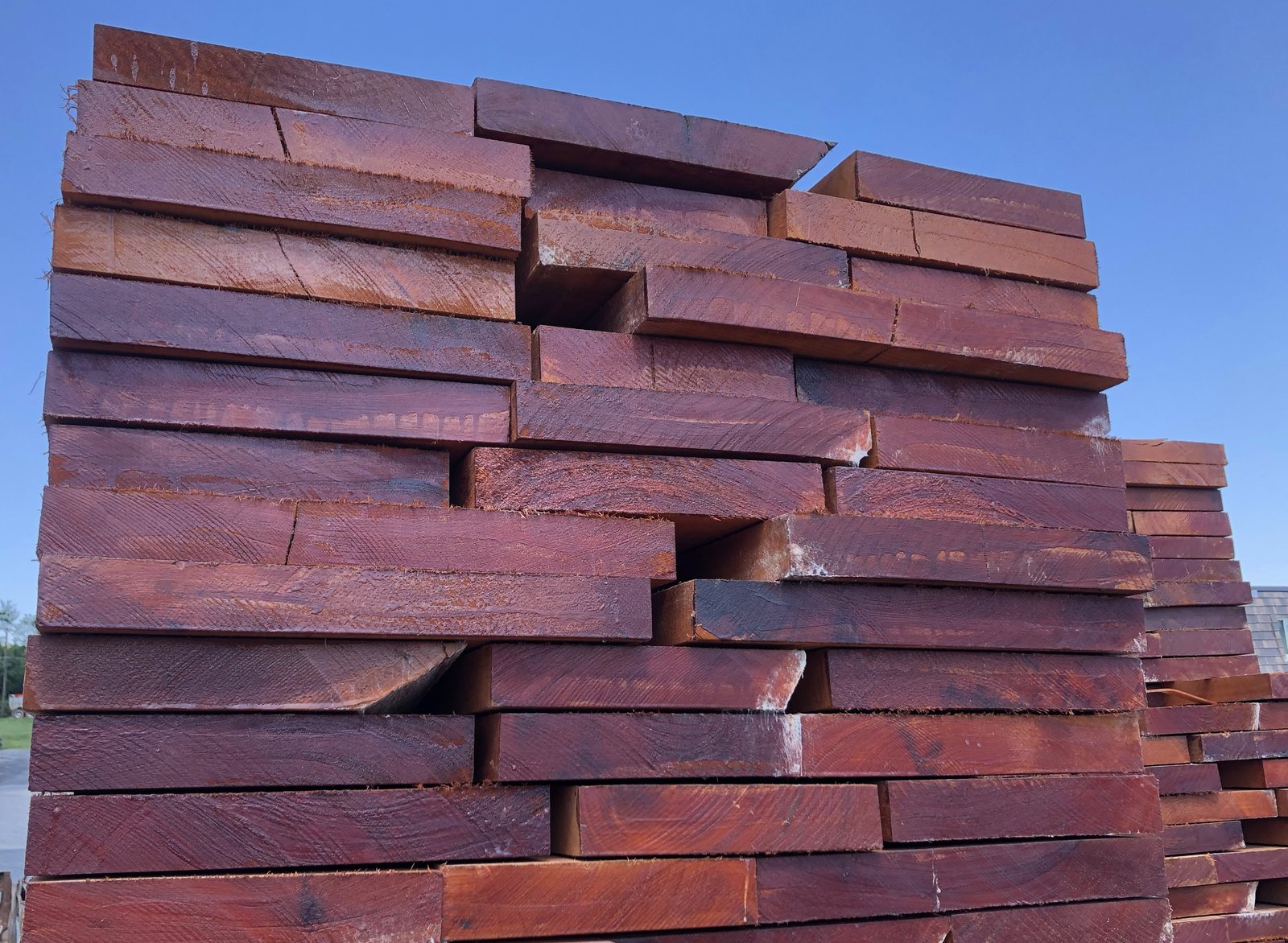
Blank size is where inventory depth stops being an abstraction. Over seven million board feet of exotic and domestic lumber sits at the Maryland yard, which is what makes it possible to pull long clear lengths and wide widths for a deep profile without splicing a run in the middle of a wall. Short sticks are the enemy of a clean match.
Historic District Work and Like for Like Replacement
In a regulated historic district the salvaged sample is not just a convenience, it is the evidence that the replacement matches, and the review board will look at both. That changes the record keeping around the knife as much as the grinding.
The federal framework is worth reading before the submission goes in. The Standards for Rehabilitation published by the National Park Service set the expectation that deteriorated features are repaired rather than replaced, and that where replacement is necessary the new work matches the old in design, texture and material. A knife ground from the original piece is the cleanest way to satisfy the design half of that sentence.
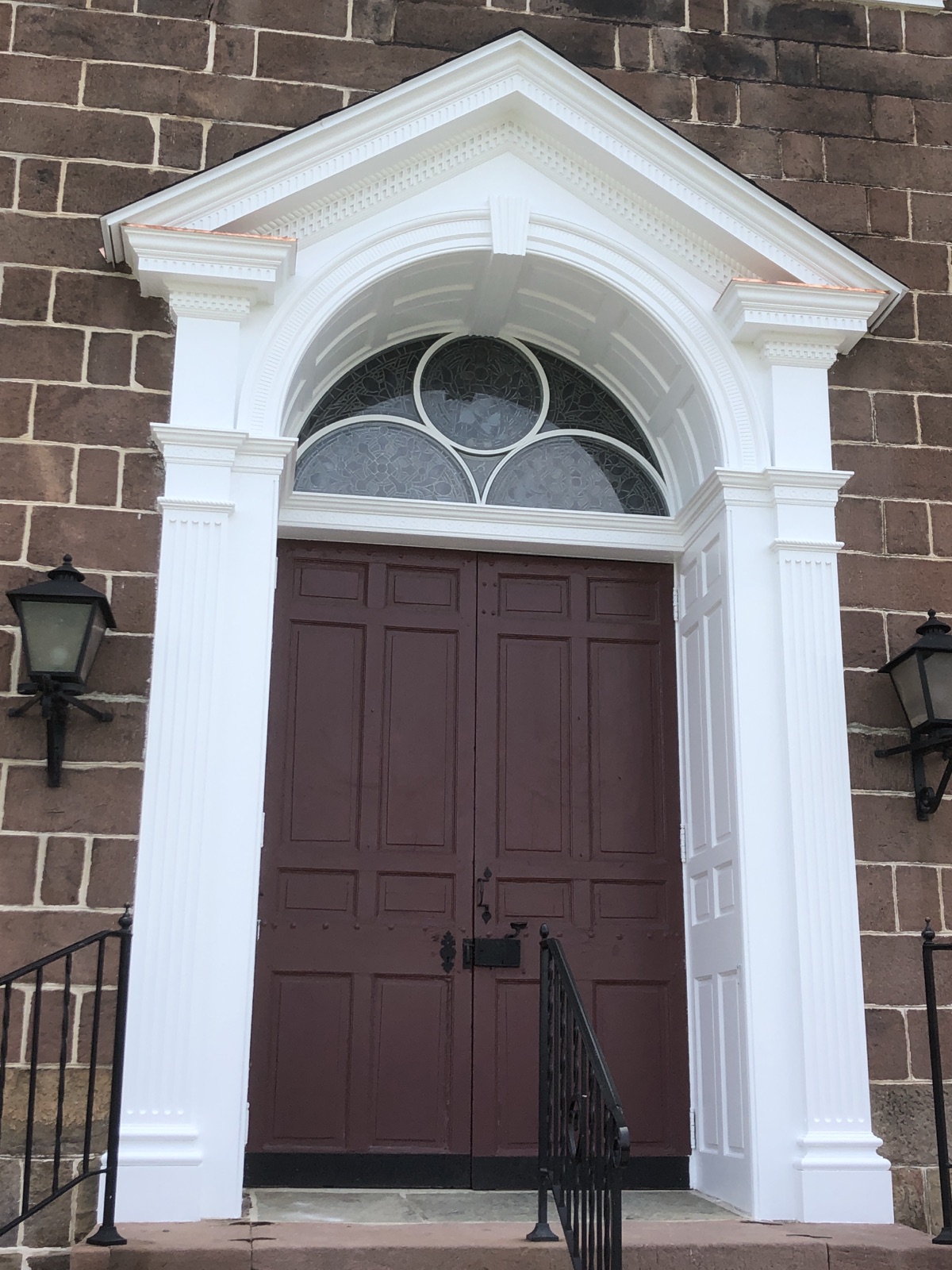
Species matching handles the material half. ICD, the architectural millwork division of J. Gibson McIlvain, builds wood shutters in both louver and panel styles with complete historical matching for style and species, which is the specific case where a district requires like for like replacement rather than a visual approximation. The same logic applies to radius trimwork and radius millwork over arched openings, where the curve and the profile have to be developed together.
Documentation travels with the material on the sourcing side. J. Gibson McIlvain is an FSC certified importer and miller, and where a CITES listed species is involved the permits and chain of custody move with the lumber rather than being reconstructed later. Projects carrying FSC requirements in the specification are handled the same way, as a paperwork chain that starts at the import rather than at the shipping dock.
Priming and Protecting a Freshly Run Profile
A crisp profile can be ruined between the moulder and the wall, which is why finishing and packaging belong in the custom profile conversation rather than at the end of it. The knife work is only as good as what survives the trip.
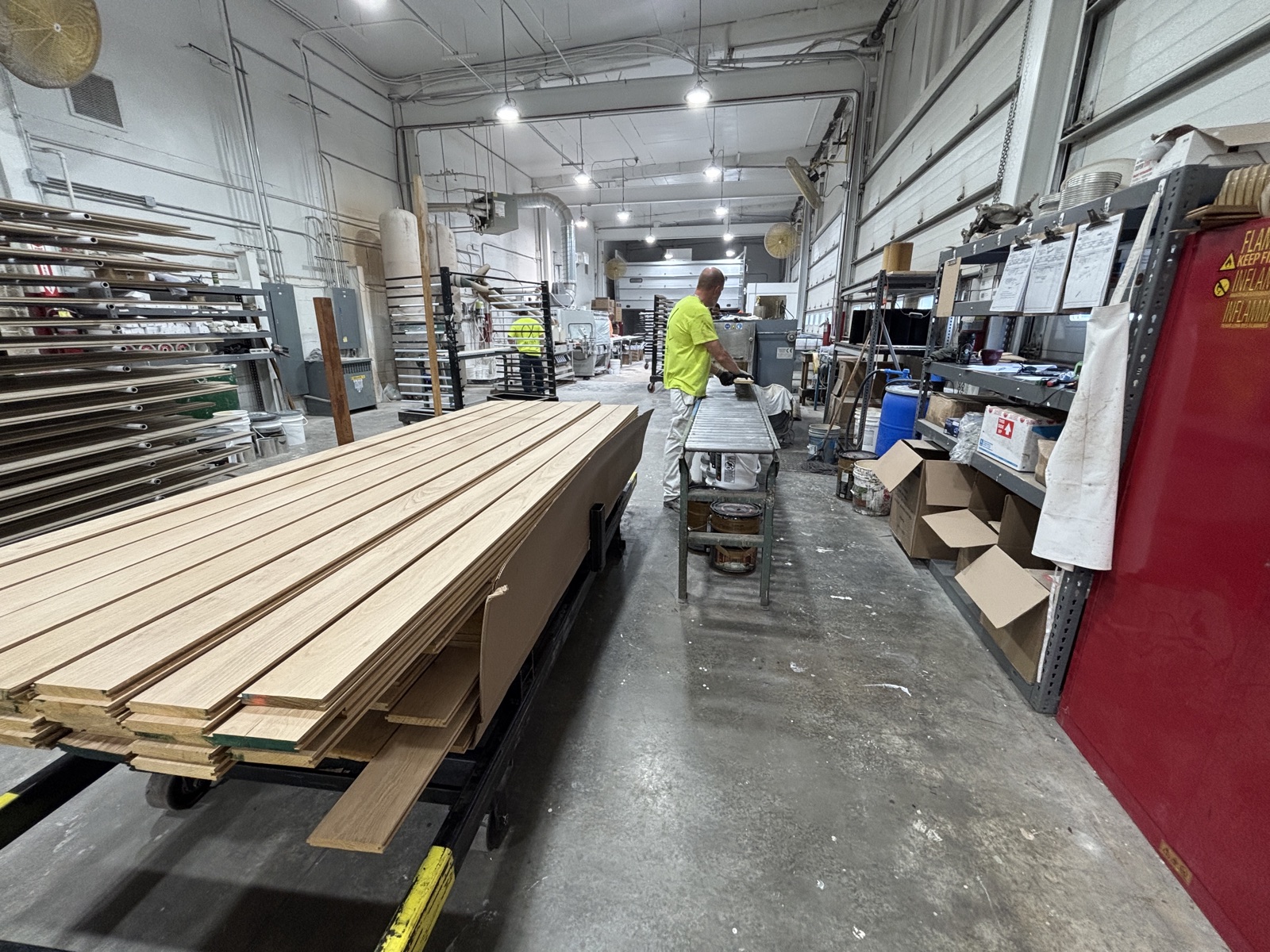
Priming happens in three levels at J. Gibson McIlvain, in both oil-based and water-based systems, and exterior primed trim carries a fungicide additive. Open-grained and oily species absorb a great deal of finish, so a primer coat evens out the eventual painted surface instead of leaving the finish coat to disappear into the wood in patches. Sanding or buffing after priming knocks back grain raising while keeping the moulded detail crisp, which matters most on the small fillets and quirks that a heavy film would otherwise soften.
Species selection for painted exterior work follows from the same reasoning. Sapele is preferred over Genuine Mahogany for painted exterior trim, since it holds paint better and comes in a wider range of sizes and longer lengths, though it is not milled 1x8 for exterior use because that width is too wide to stay stable. Cupping in service is driven by installation and back ventilation rather than by species, and the detailing guidance from Building Science Corporation on drainage and drying behind exterior wood is the reference worth handing to the installer.
Where the specification calls for a modified product, Thermory and Abodo Vulcan are both carried, along with Accoya at roughly 1,600 lbf, where acetylation gives dramatically reduced shrinkage and swelling. Modified woods top out around 16 ft, most sold on metric lengths just under 16 ft, because of kiln size. Thermally modified Ash is not available wider than 8 inches, so a wide board in a modified product means Accoya or Abodo Vulcan. Warranties exist only on those modified products. It is not possible to warranty solid unmodified wood, an organic material responding to its environment.
Protection in transit is handled by a section of the mill dedicated to packaging, and J. Gibson McIlvain runs its own fleet of trucks, with shipping nationwide and regularly out to California. Finished millwork can also be stored for inventory control and released in stages as a job opens up. The company supplies and mills rather than installing, so the fitting, scribing and coping at the wall belong to the buyer's own carpenter, and the material is prepared with that handoff in mind.
Keeping the Knife on File for the Next Phase
The knife outlives the order, and on a phased project that is the whole point of having it ground by a shop that keeps records. Phase one gets a profile. Phase two, three years later, gets the same profile off the same steel rather than a second reverse engineering exercise from a worse sample.
Continuity is the practical argument for a seventh generation family run business in operation since 1798. A profile ordered for one wing of a building can be rerun for the next wing without renegotiating what the shape was, and the record sits with the knife. Anyone who has tried to match a run against a five year old sample that has since been painted twice understands the difference.
The same file supports service work. A single damaged casing after a plumbing repair is a short run off an existing knife, not a project. Storage of finished millwork lets a general contractor keep a modest stock of the more vulnerable profiles without turning a job trailer into a warehouse.
Shop practice around approvals follows the same discipline that the Architectural Woodwork Institute quality standards describe for custom millwork, where the approved sample becomes the control for everything produced afterward. The sample you sign is the sample the run is measured against.
How J. Gibson McIlvain Would Specify This
A custom profile order that runs smoothly is specified in six lines, and every one of them exists to remove a decision from the shop floor. Write them into the submittal and the rest of the process takes care of itself.
Name the reference sample and where it came from, room by room, and send the physical piece with one end cut square. State the species and grade, leading with Sapele, Iroko, Afrormosia, Teak or Utile for the millwork palette, or the domestic that matches the existing work. Give the in-service moisture target, near 6 to 8 percent for interior and near 12 to 16 percent for exterior. Call out sawing pattern where flatness matters, quartersawn or rift on wide painted members. Specify the priming level and the system, oil-based or water-based, and note the fungicide additive on anything going outside. Require a setup piece for approval before the production run, and say plainly that it will be compared to the reference sample under raking light.
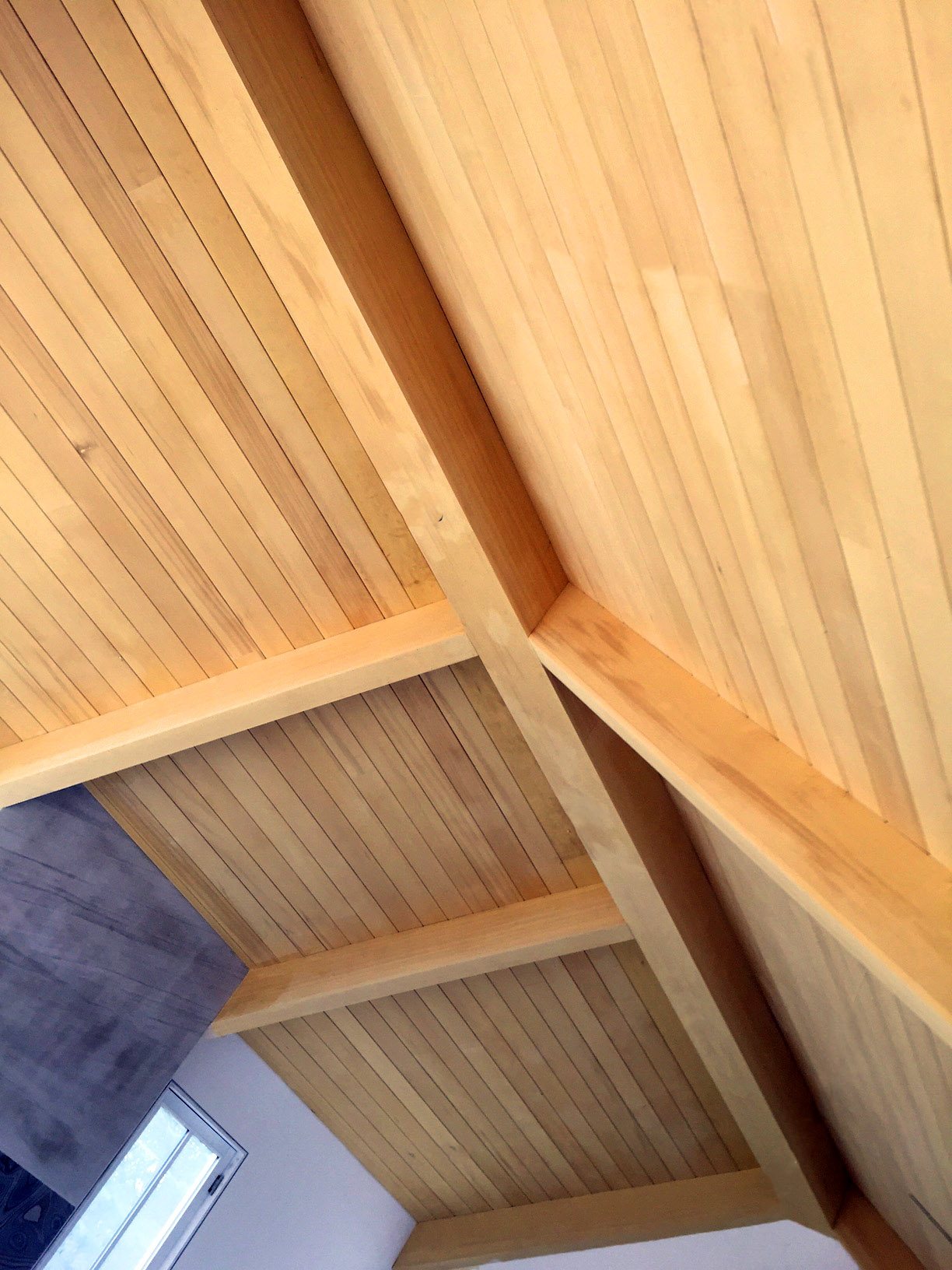
J. Gibson McIlvain checks the tracing against a library of thousands of ground knives, grinds new steel when the profile is not there, mills the blanks to the specified moisture content, primes in three levels in oil-based or water-based systems, packages the finished profile in a dedicated section of the mill and ships it on its own trucks. Linear trimwork, finished cladding and primed trim come from the millwork service at the lumber yard. True custom work planned around a specific space, including custom trim profiles, radius millwork, shutters, box beams, custom doors, benches and railings, comes through ICD, the architectural millwork division, whose working process starts from the space rather than from a catalog.
Send the sample and get an answer on whether the steel already exists. Call 800-638-9100 to reach the millwork team, or use the contact form at mcilvain.com to start a profile match with your drawings and photographs attached.
Frequently Asked Questions
How much of the old moulding do I need to send, and does it have to be stripped?
A piece a few inches long with one end cut square through the full profile is enough. Stripped is better than painted, since heavy paint rounds arrises and fills quirks, but a painted sample still works if there is a hidden area that can be sectioned or a short stretch that can be taken back to bare wood. If the only sample left is the piece still on the wall, cut a short return from behind a plinth block or inside a closet where nobody will miss it.
Can a knife be ground from a photograph or a CAD section if the original piece is gone?
From a dimensioned section, yes. A photograph alone is not enough, because it gives no reliable scale and flattens the depth of coves and undercuts. Where the original is gone entirely, a full scale drawn section with dimensions on every element, the overall width and thickness, and the back geometry noted, is a workable substitute. Expect the setup piece to matter more in that case, since there is no original to butt it against.
Why does the ground knife look different from the finished moulding?
Knives sit in the cutterhead at a rake angle rather than flat, so each cutting edge sweeps an arc through the stock. The steel is ground to a corrected outline that only produces the drawn shape once the head is spinning. That correction depends on the hook angle of the head the knife will run in, which is why a template is made rather than the tracing being copied straight onto the blank.
Will the new run match the old work exactly where they meet?
On a well read sample it will match closely enough that a butt joint under raking light reads as one continuous profile, which is the standard worth holding. Perfect is not the target on old work, since the existing material has shrunk and worn in ways the new material has not. The choice a buyer owns is whether to reproduce the original crisp shape or replicate the worn condition of the adjacent run, and that decision belongs at the setup piece rather than on site.
What happens if the old profile has an undercut a moulder cannot reach?
It gets built up out of more than one member. A cutter reaches the shape from outside in, so any part of the section that overhangs what sits beneath it cannot be produced by a straight pass. Splitting the drawn profile into a main member plus an applied piece reproduces the same shadow line, and the glue line gets placed in a quirk or at a change of plane where it disappears. The elevation does not change, only the number of sticks.
Is the ground knife kept for a later phase of the same project?
Yes. The knife goes into the profile library with a record tied to the order, so a second wing, a later phase or a single replacement casing after a repair runs off the same steel rather than a fresh reverse engineering exercise from a sample that has since been painted twice. That continuity is one practical benefit of ordering from a seventh generation family run business that has been operating since 1798.
Does the shop install the matched trim once it is milled?
No. J. Gibson McIlvain supplies and mills, and the fitting, coping, scribing and fastening at the wall belong to the buyer's own carpenter or installer. What the shop controls is what arrives, material milled to the right in-service moisture content, primed to the specified level if that is part of the order, packaged in a dedicated section of the mill and delivered on the company's own trucks.
Sources and Standards Referenced
- Wood Handbook, Wood as an Engineering Material (FPL-GTR-282), USDA Forest Products Laboratory
- Wood Moulding and Millwork Producers Association
- The Secretary of the Interior's Standards for Rehabilitation, National Park Service
- National Hardwood Lumber Association
- Architectural Woodwork Institute
- Sapele, The Wood Database
- Durable Wood Siding Installations, Building Science Corporation
- CITES, Convention on International Trade in Endangered Species of Wild Fauna and Flora
- Forest Stewardship Council