Garapa Is the Lightest Tropical Decking Sold in Volume, and Jatoba Is the Lightest One You Can Get in 2x
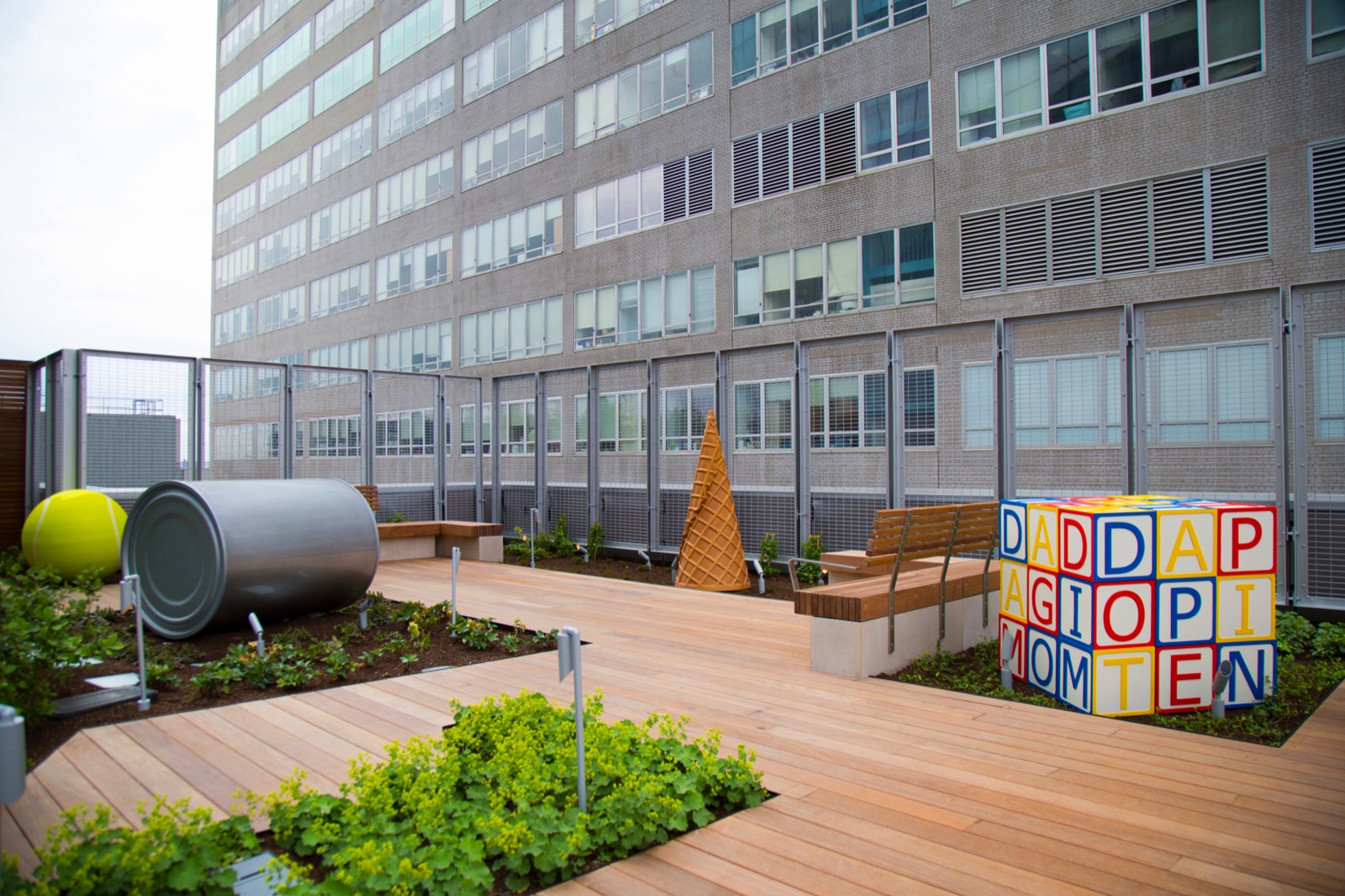
Garapa carries the lowest air dry density of any tropical hardwood decking species available in commercial quantity, landing near 855 kg/m3 against roughly 1,050 kg/m3 for Ipe. That gap is about eighteen percent. On a 5/4x6 surface it works out to roughly 4.4 pounds per square foot for Garapa versus 5.3 for Ipe. Nine tenths of a pound per square foot sounds trivial until it is multiplied across a 4,000 square foot amenity deck, at which point the species decision has moved almost two tons off the roof structure.
The problem is that a roof does not weigh boards. It weighs assemblies. Sleepers, pedestals, slip sheets, railing posts, planters and the fasteners all land on the same structural deck, and on most retrofits the framing under the boards contributes as much dead load as the walking surface does. A specifier who swaps Ipe for Garapa and then tightens joist spacing to control deflection can give back more than half the weight saved. This article works the whole calculation, names the species that survive it, and separates the residential rooftop problem from the commercial one, where the 2x thickness convention quietly removes Garapa from the list and makes Jatoba the lightest legitimate answer.
The Number Your Engineer Gave You Is an Assembly Allowance, Not a Board Allowance
Get the remaining dead load allowance in pounds per square foot from the structural engineer before any species conversation starts, and confirm whether that number is above or below the roofing assembly. Existing roofs on renovation projects rarely have generous margin. The structure was designed for a membrane, insulation, a live load set by the occupancy classification in the adopted building code, and a snow or rain load appropriate to the site. Adding an occupied deck on top of that stack changes both the dead load and, frequently, the live load classification, since an assembly-occupancy amenity terrace is not the same design case as an unoccupied roof. The International Code Council publishes the model code language, and the American Wood Council maintains the design standards and span provisions that the wood portion of the assembly gets checked against.
Build the takeoff line by line. Walking surface. Sleepers or pedestals. Any secondary framing. Protection board and slip sheet. Guardrail posts and their bases, which are a point load, not a distributed one. Planters, which are the single most common cause of a roof deck exceeding its allowance after occupancy. Only then compare the species options, because the difference between the heaviest and lightest tropical hardwood on the list is usually smaller than the difference between two framing approaches.
Weight, Durability and 2x Availability, Species by Species
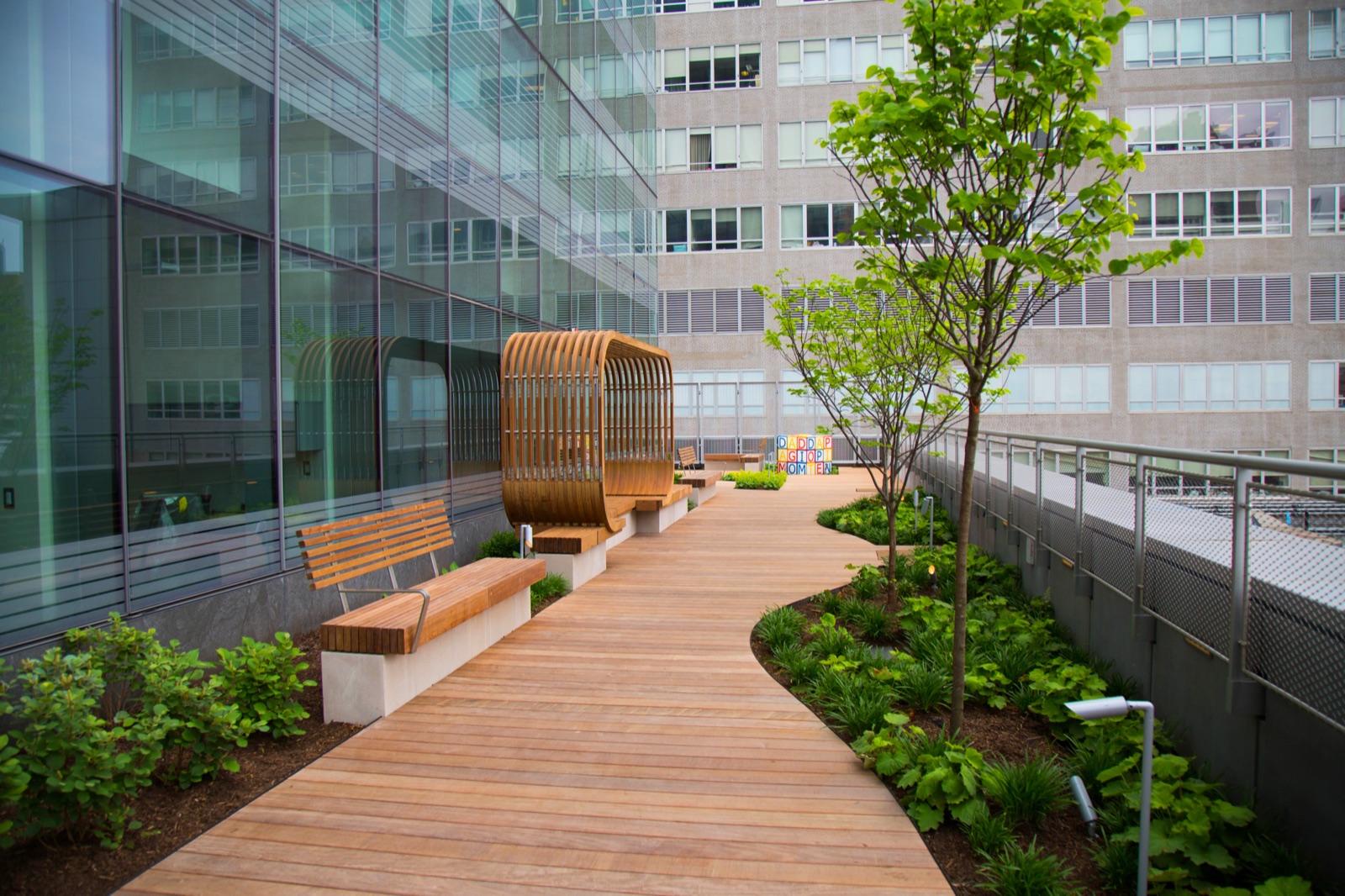
Density at twelve percent moisture content is the only species property that feeds directly into a load calculation, and Janka hardness has no place in it. Janka measures resistance to indentation. It correlates loosely with density, which is why the two lists look similar, but a structural engineer cannot use a Janka number for anything. Weight per square foot of installed surface is the figure to hand over. The values below assume a dressed 5/4x6 board at one inch net thickness with a 1/8 inch gap, which is why coverage runs about 2.1 linear feet per square foot. EN 350 durability classes vary between published sources for several of these species, so treat the column as a durability band rather than a certificate.
| Species | Air dry density (kg/m3, 12% MC) | Installed weight, 5/4x6 surface (lb per sq ft) | EN 350 durability | Sourceable in 2x decking | Rooftop role |
|---|---|---|---|---|---|
| Garapa | ~855 | ~4.4 | Class 1 to 2 | No | Lightest practical surface. Residential and engineer-approved 5/4 amenity work. |
| Red Balau | ~865 | ~4.5 | Class 2 | No | Light residential option with a warm red tone. Not for commercial deck specs. |
| Jatoba | ~910 | ~4.6 | Class 2 | Yes | Lightest species available in 2x. The commercial rooftop answer under a tight allowance. |
| Ipe (Tabebuia spp.) | ~1,050 | ~5.3 | Class 1 | Yes | Benchmark for wear, movement and Class A fire performance where the allowance permits. |
| Cumaru | ~1,070 | ~5.4 | Class 1 to 2 | Yes | Near-Ipe performance and near-Ipe weight. No load advantage over Ipe. |
| Massaranduba | ~1,150 | ~5.9 | Class 1 | Comparison only | Heaviest of the group. Listed for reference. Not supplied by J. Gibson McIlvain. |
| Teak | ~670 | ~3.4 | Class 1 to 2 | Not typical | Lightest of the tropicals but a marine and feature material, not a volume deck surface. |
Two things fall out of that table. Garapa, Red Balau and Jatoba sit within about a quarter pound per square foot of each other, so choosing between them on weight alone is chasing noise. The meaningful jump is from that cluster up to Ipe and Cumaru, and the meaningful restriction is the 2x column. Published density and mechanical property data for these and hundreds of other species is documented in the USDA Forest Products Laboratory Wood Handbook, and species-level summaries including Garapa are worth reading before a submittal goes out.
Design to Wet Weight, Because the Table Value Is a Dry Board on a Dry Day
Published density figures are stated at twelve percent moisture content, and an exterior deck in service runs at twelve to sixteen percent with transient spikes well above that after rain. The honest way to handle this is to add a moisture allowance to the calculated dead load rather than pretend the table number is what sits on the roof in March. Four to six percent covers normal seasonal equilibrium movement in mass. A saturated surface after a long storm carries more than that for a day or two, and a deck that drains poorly carries it for longer.
Ponding is the version of this problem that actually damages buildings. A deck surface that traps water above a low spot in the membrane adds standing weight exactly where the structure is already deflecting, and deflection deepens the low spot. Open the board gaps, slope the framing, and give the water somewhere to go. Guidance on drainage and drying in exterior assemblies from Building Science Corporation applies to a rooftop deck the same way it applies to a wall. The assembly needs to dry from both faces, which means the underside of the decking cannot be packed tight against insulation or a protection board with no air path.
Going Lighter in the Board Can Add the Weight Back in the Framing
Garapa is less stiff than Ipe, so the joist spacing that carried Ipe comfortably may not carry Garapa at the same deflection limit, and tightening the grid puts weight back onto the roof. Work the arithmetic. Sleepers at 16 inches on center consume about 0.75 linear feet of sleeper per square foot of deck. A dressed 2x4 in Garapa weighs roughly 1.95 pounds per linear foot, which is about 1.46 pounds per square foot of deck. Move to 12 inches on center and the sleeper run goes to 1.0 linear foot per square foot, or roughly 1.95 pounds per square foot. That change costs about half a pound per square foot.
The species swap from Ipe to Garapa saved about nine tenths of a pound. Tightening the grid to control deflection gives back more than half of it. The net saving is four tenths of a pound per square foot, which is real but is not the eighteen percent the density comparison implied. Sixteen inches on center is the working default for dense hardwood decking, and it holds for Garapa in most residential layouts, but it holds because someone checked the span against the actual design values rather than because it is a habit. Pull the reference design values and let the engineer run the deflection check. Diagonal layouts shorten the effective span and force tighter spacing, which is a weight decision disguised as an aesthetic one.
On a Roof, a Deck Can Be Too Light
Loose-laid rooftop decks depend partly on their own mass to stay put, and stripping weight out of the assembly to satisfy a dead load limit can create a wind uplift problem at the same time. This is the trade almost nobody mentions in the species conversation. Corner and perimeter zones on a roof see substantially higher uplift pressure than the field, and a lightweight loose-laid sleeper grid in a corner zone is a candidate for lifting, sliding or becoming debris. The board gaps relieve some pressure, which helps, but they do not make the problem disappear.
There are three ways out and they are not mutually exclusive. Tie the sleeper grid together into a continuous mat so the whole field resists as one unit rather than as loose pieces. Add restraint or ballast in the perimeter and corner zones specifically, which is a targeted weight addition rather than a blanket one. Or use a pedestal system rated by its manufacturer for the wind exposure, with the interlocking or restraint accessories that rating depends on. Whichever route the project takes, the roof consultant and the membrane manufacturer both need to sign off, because penetrating or mechanically restraining anything above a membrane is their territory.
Pedestals Concentrate Load. Sleepers Spread It. The Roof Cares Which.
A distributed dead load in pounds per square foot is not the whole check when the deck sits on pedestals, because each pedestal delivers a concentrated point load into a specific spot on the structural deck. On a concrete deck that is usually a non-issue. On a steel deck with a lightweight topping, or on a wood-framed roof where the pedestal grid does not align with anything below, it is a conversation with the engineer. Pedestal manufacturers publish load ratings for the pedestal itself. That rating says nothing about what the roof underneath can accept at a point.
Pedestals earn their place on a roof for reasons unrelated to weight. They adjust for slope, so the finished walking surface can be dead level over a roof pitched for drainage. They hold the assembly up off the membrane, so water moves freely underneath and the underside of the decking dries. Sleepers spread load more evenly and cost less in complexity, but they sit low, they need a continuous slip sheet or protection layer between wood and membrane, and they interrupt drainage unless they run with the slope or are notched to let water pass. Neither approach is the correct one in general. Both are correct in the right roof.
On Commercial and Public Roof Decks, the 2x Rule Deletes Half the List
Commercial boardwalk, plaza, pier and public amenity decks get specified at 2x thickness to control deflection, and no professional goes first with a thinner board on a public job even where the strength math on 5/4 works. That convention is not negotiable in practice, and it has a hard consequence for this question. Only Ipe, Cumaru and Jatoba can be sourced consistently in 2x decking thickness. Garapa and Red Balau cannot, which removes them from commercial deck specs regardless of how attractive their density looks in a table.
So the commercial version of this question has a different answer than the residential one. At 1.5 inches net, Jatoba runs about 6.9 pounds per square foot, Ipe about 8.0, and Cumaru about 8.2. Jatoba is the lightest species a commercial rooftop spec can actually use, and it saves roughly a pound and a tenth per square foot against Ipe. Across a large plaza deck that is a number the structural engineer will notice. What Jatoba gives up is a durability class and a fire rating, both covered below. Garapa and Red Balau belong in residential rooftop work and in engineer-approved 5/4 applications where a stamped calculation supports the thinner board.
"Everyone calls asking for the lightest board. What they actually need is a number they can hand their engineer, and that number includes the sleepers, the pedestals and the railing posts. I have seen jobs where switching species saved less weight than deleting one row of planters would have. We will run the assembly weight with you before you commit to a species, and if the answer is that Jatoba in 2x is the only thing that fits, we would rather tell you that up front than sell you Ipe you cannot use." Norm Moton, Director of Sales, J. Gibson McIlvain
Fire Rating, Checking and the Details That Decide Rooftop Performance
Ipe carries an ASTM E84 Class A rating, meaning a flame spread index of 25 or less, and that rating belongs to the tested species rather than to tropical hardwood as a category. If the project requires a Class A walking surface on a roof, and many high-rise amenity decks do, ask for the test report on the exact species being specified. Do not assume the rating transfers from Ipe to a lighter species because both are dense. This is one of the places where the weight-optimized choice can lose a code argument, and it is better to lose it during design than during plan review. Local requirements around combustible construction on roofs come out of the adopted code and, in wildland urban interface jurisdictions, out of additional standards from bodies like the National Fire Protection Association.
Surface checking is the second thing to settle honestly. Dense tropical decking checks. The surface heats and dries faster than the core, tension releases, and small checks open. Those checks do not weaken the board, and their presence is consistent with properly seasoned material rather than evidence of a defect. Nobody can promise a rooftop deck in full sun will not check. What does help is a penetrating oil stabilizer applied before the boards ever reach the site, which is why J. Gibson McIlvain factory coats tropical decking with Cutek. Site practice does the rest. Take delivery at a reasonable moisture content, seal every field cut end, keep air moving under the boards, and the checks stay small.
Fastening is installation work, done on site, against the frame as built. Never order decking pre-drilled or pre-countersunk and never ask a mill to drill fastener holes before shipping, because field cuts and layout adjustments invalidate any factory hole pattern the moment the first board is trimmed. Pilot every hole. Two fasteners per board per joist, roughly 3/4 inch from the edge, with full pilots near the board ends where splitting risk is highest. Butt joints land on doubled bearing, not on a single joist edge. A self-centering combination bit makes the pilot, countersink and clearance in one pass. Use 316 stainless on any coastal or high-exposure roof. If the design includes wood skirting or screening around the deck perimeter, remember that shiplap takes visible fasteners and only tongue and groove works with hidden fasteners, that the material goes on furring strips, and that grooves face down so water drains out instead of sitting in the joint.
What to Hand the Structural Engineer
A clean submittal turns the species question from an argument into an arithmetic check that takes the engineer ten minutes. Include the species and, where it matters for documentation, the botanical name. Ipe is Tabebuia spp. Include the profile and net dressed dimensions, not the nominal call-out, since the difference between one inch net and 1.5 inch net is the largest single variable in the calculation. Include the density at twelve percent moisture content along with the in-service moisture assumption. Include the framing plan with spacing, the sleeper or pedestal detail, the fastener schedule, and the guardrail post detail with its base plate footprint.
Two more items belong in the package. Accessibility requirements govern the walking surface on most commercial roof decks, and openings in the surface generally cannot exceed one half inch with the long dimension running perpendicular to the direction of travel, which is a gap-width decision made at layout. The current standards are published by the US Access Board. Second, sourcing documentation. Chain of custody paperwork under FSC is available on certified material, and when using a CITES-listed species, documentation is required and needs to travel with the shipment. The CITES Secretariat maintains the current appendices. Sort this during procurement rather than at the loading dock.
How J. Gibson McIlvain Would Specify This
For a residential or light commercial rooftop with a tight dead load allowance, specify Garapa in 5/4x6, factory coated with Cutek, over a sleeper or pedestal grid sized by the engineer, and budget the assembly at roughly 4.4 pounds per square foot for the surface plus the framing contribution. Verify the deflection check at 16 inches on center before assuming the default spacing holds. If the check pushes to 12 inches, rerun the weight, because the framing addition eats into the species saving. Red Balau is an equivalent-weight alternative when the client wants the warmer red tone over Garapa's honey color.
For a commercial, public or high-traffic roof deck, specify Jatoba in 2x6. It is the lightest species that can be sourced consistently at the thickness a commercial deck spec demands, and at about 6.9 pounds per square foot it comes in more than a pound under Ipe in the same profile. Where the allowance has room and the project wants the longest service life and the Class A rating, Ipe in 2x remains the reference standard, and J. Gibson McIlvain holds a vast Ipe inventory across every standard and custom dimension, so thickness is a design decision rather than an availability question. Detailed Ipe decking profiles and dimensions are documented on the product pages.
Where the load allowance defeats tropical hardwood entirely, there are two honest directions. Thermally modified decking from Thermory and Abodo Vulcan runs far lighter than any tropical species, carries a manufacturer warranty that solid unmodified wood does not and cannot, and tops out around 16 feet in length because of kiln size, with metric lengths landing just under 16 feet. Accoya sits in the same category with the same length ceiling and the same warranty position. Western Red Cedar is the other legitimate answer and it is a good one, at roughly a third the weight of Ipe. Specify clear vertical grain for the walking surface where traffic and stability matter, and select tight knot where the knot pattern is acceptable and the application is less demanding. None of these are consolation prizes. They are different assemblies with different maintenance profiles.
J. Gibson McIlvain mills and stocks Garapa, Jatoba, Cumaru and Ipe decking in the profiles and thicknesses rooftop projects call for, and ships nationwide to jobsites from the Northeast to California. Call 800-638-9100 with the roof's dead load allowance, the deck square footage and the framing approach, and the sales team will run the assembly weight against each species option before anything is ordered. General company and product information is at mcilvain.com.
Frequently Asked Questions
How do I calculate the dead load of a tropical hardwood rooftop deck in pounds per square foot?
Take the species density at twelve percent moisture content, convert it to pounds per cubic foot, divide by twelve for each inch of net board thickness, then multiply by the coverage factor that accounts for board gaps. A 5/4x6 board dresses to about one inch net and covers roughly 2.1 linear feet per square foot with a 1/8 inch gap, so Garapa at 855 kg/m3 lands near 4.4 pounds per square foot and Ipe at 1,050 kg/m3 lands near 5.3. Then add the sleepers or pedestals, protection board, slip sheet, fasteners, guardrail posts and anything else sitting above the membrane. Add a four to six percent allowance for in-service moisture. The surface is usually less than half the assembly total.
Which tropical hardwood is lightest among the species available in 2x for a commercial roof deck?
Jatoba. Commercial boardwalk, plaza and public amenity decks are specified at 2x thickness to control deflection, and only Ipe, Cumaru and Jatoba can be sourced consistently at that thickness. Garapa and Red Balau are not available in 2x, which removes them from commercial deck specs no matter how good their density looks. At 1.5 inches net, Jatoba runs about 6.9 pounds per square foot against roughly 8.0 for Ipe and 8.2 for Cumaru.
Can a rooftop deck be too light?
Yes. Loose-laid decks over a membrane rely partly on their own mass to resist wind uplift, and uplift pressures in roof corner and perimeter zones run well above the pressures in the field. A very light sleeper grid in a corner zone can lift or slide. The fixes are to tie the sleeper grid into a continuous mat, add restraint or targeted ballast at the perimeter and corners, or use a pedestal system with a manufacturer wind rating and the restraint accessories that rating depends on. The roof consultant and the membrane manufacturer both need to review the approach.
Does tightening joist spacing from 16 to 12 inches cancel out the weight saved by switching species?
It eats a large share of it. Sleepers at 16 inches on center consume about 0.75 linear feet of sleeper per square foot of deck. At 12 inches on center that becomes 1.0 linear foot, which adds roughly half a pound per square foot in a 2x4 grid. Switching from Ipe to Garapa in 5/4x6 saves about nine tenths of a pound. The net after tightening is around four tenths. Have the engineer confirm the deflection check at 16 inches before you assume the tighter grid is required.
Should the deck sit on pedestals or sleepers when the load allowance is tight?
It depends on the structural deck below. Sleepers distribute load evenly and are simpler, but they sit low, they need a continuous slip sheet between wood and membrane, and they block drainage unless they run with the slope or are notched. Pedestals hold the assembly clear of the membrane, adjust for roof pitch so the walking surface is level, and let water and air move underneath. What pedestals do is concentrate load at points. On concrete that is rarely an issue. On a steel deck with lightweight topping or a wood-framed roof, the engineer needs to check the point load, and the pedestal manufacturer's own rating does not answer that question.
How much extra weight should I allow for rain and in-service moisture?
Published density values are stated at twelve percent moisture content. Exterior decking in service runs at twelve to sixteen percent, so adding four to six percent to the calculated board weight covers normal seasonal conditions. A fully saturated surface after a long storm carries more for a day or two. The more important moisture issue is ponding, where trapped water sits above a low spot in the membrane and adds standing weight exactly where the structure is already deflecting. Open gaps, sloped framing and a clear drainage path under the boards handle it.
Will factory coating change the load calculation?
No. A penetrating oil stabilizer such as Cutek soaks into the wood rather than building a film, and the added mass is negligible against the board weight. It is worth specifying for a different reason. Dense tropical decking on a sunny roof checks as the surface dries faster than the core, and no product or practice prevents that entirely. A factory-applied penetrating oil significantly reduces checking, and small surface checks do not weaken a board.
Can Garapa or Jatoba decking be delivered to a jobsite in California?
Yes. J. Gibson McIlvain ships decking nationwide and delivers to California regularly. It is a commercial and contractor-volume supplier rather than a retail yard, so the conversation starts with the deck square footage, the profile and thickness, the framing approach and the schedule. Call 800-638-9100 with the roof's dead load allowance and the assembly weight can be run against each species option before the order is placed.
Sources and Standards Referenced
- USDA Forest Products Laboratory (Wood Handbook, wood physical and mechanical properties)
- American Wood Council, Codes and Standards
- International Code Council
- US Access Board, ADA Accessibility Standards
- The Wood Database, Garapa (Apuleia leiocarpa)
- CITES Secretariat
- Forest Stewardship Council
- National Fire Protection Association
- Building Science Corporation