What a Standing Teak Order Fixes in Advance
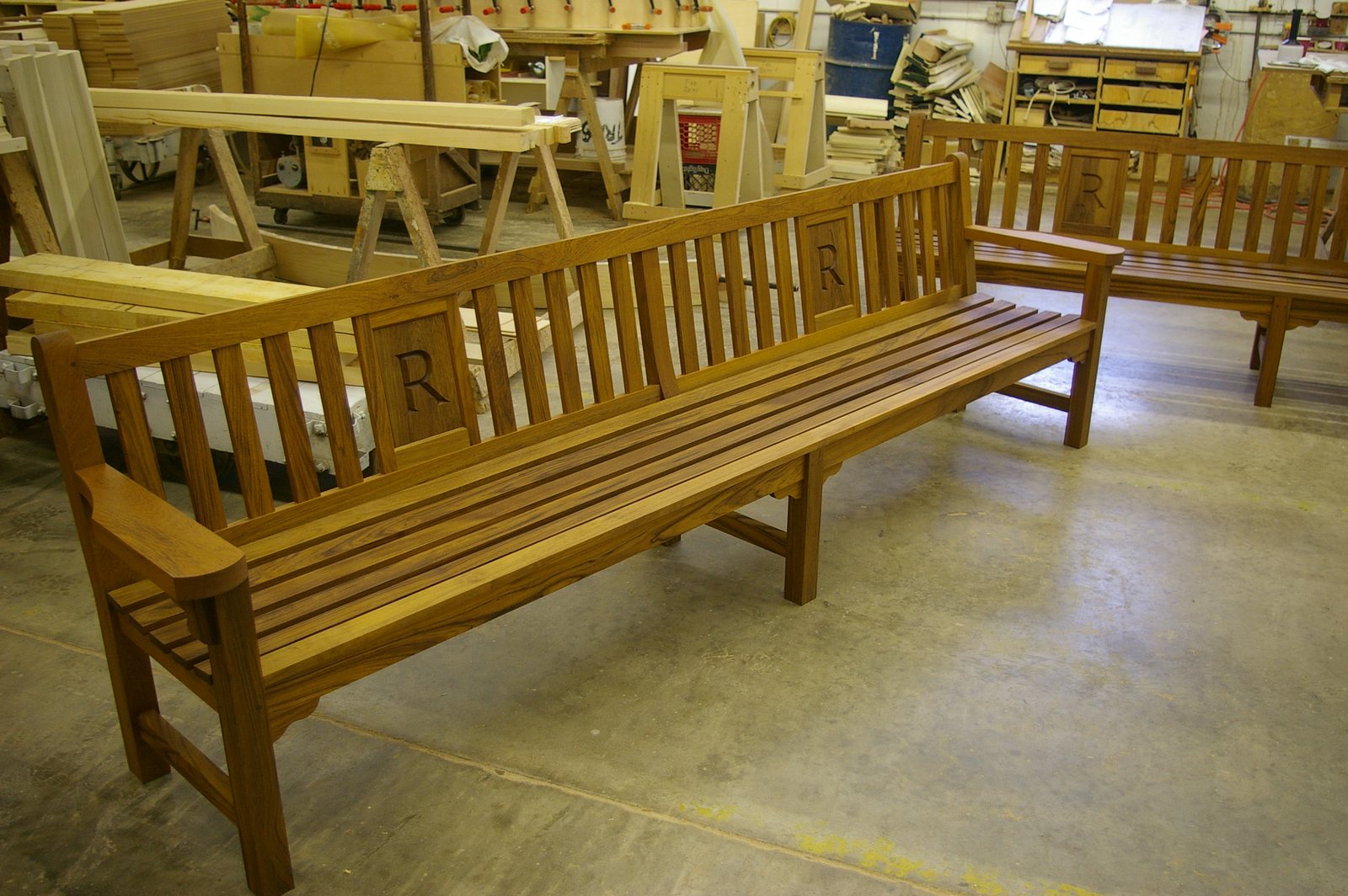
A one-off teak order buys boards, while a standing order across a production season buys a written specification that neither side gets to quietly revise. The difference shows up in the third or fourth batch, never the first. A shop running exterior benches, dining tables and loungers through a season cuts batch one from material it picked over by eye, then cuts the last batch from material bought months later out of a different shipment. Whether those two batches read as one product line was decided before the first board came off the pile.
What belongs on the order is more than a species and a quantity. Rough section sizes, the length bracket each part needs, a target moisture content, an agreed tone band, the number of releases and the interval between them. The Architectural Woodwork Institute publishes quality standards for woodwork for the same underlying reason. A verbal understanding of grade and surface between two shops never survives a second batch.
A standing order commits the buyer too. Material set aside against a schedule is material nobody else can have, and a build calendar that slips by a few months turns a reservation into dead weight at the yard. Shops that run repeat work well treat the release calendar as part of the design package, alongside the joint schedule and the finish schedule.
The two buying methods differ mostly in what each one leaves unsettled.
| Decision | One-off purchase order | Standing order across a season |
|---|---|---|
| Section sizes | Set per order, usually from whatever the bench drew that month | Fixed once in rough thickness and width, machining allowance written in |
| Tone band | Judged on arrival, accepted or sent back board by board | Agreed as a band up front, with a retained sample as the reference |
| Lot pool | Whatever shipment is on the ground that week | Drawn from a named pool of lots held for the run |
| Release timing | Buyer reorders when the rack runs dry | Dates and quantities set against the build schedule |
| Cutting list changes | Absorbed by the buyer, usually by buying extra | Handled as an amendment both sides sign, not a silent substitution |
| Storage | Buyer's shop carries the whole season from day one | Held at the yard and released in stages, keeping the floor clear |
| What stays on file | An invoice and a packing list | Lot, shipment, moisture target, release dates, sample reference |
| Risk at batch four | The match is whatever the market offers that month | The match is against material already set aside |
The Joinery Decides the Stock List
In a repeat furniture program the joint details in the drawing generate the stock list, and a stock list written first forces the joinery to compromise around whatever was bought. That ordering gets reversed constantly, usually by a shop that found good material and worked backwards from it. It survives one batch. It does not survive four.
Start with the joints that carry load. A through-wedged tenon in a chair back or a bench arm wants straight grain running clean through the tenon cheeks and a shoulder line with nothing in it. Grain runout that would be invisible in a slat becomes a failure at a wedge. So the part list for those members carries a clear-length requirement above the finished length, and that requirement, not the finished dimension, is what gets ordered.
Mortised members have a different demand. The mortise wall has to stay put across its width or the joint opens at the shoulder after a season outdoors. Quartersawn and rift stock moves less across its width than plainsawn, which is why a mortised leg or stile gets specified that way even when nobody will ever see the face. The visible face of a table top is a separate call, made on appearance.
Loose tenon joinery changes the stock list in a useful direction. It asks for flat faces and accurate thickness rather than long clear runs, which puts shorter boards back into play for frame parts. A season's worth of corner blocks, stretchers, cleats and slat ends can come out of the shorter and narrower material in the same lots, so the cutting list stops competing with itself for the best boards.
Glue lines deserve their own line in the production sheet. Teak carries natural oils, and a surface that machines clean loses bonding quality as those oils migrate back. The interval between machining and glue-up becomes a written step with a number on it, not a habit that varies with how busy the bench is. The Forest Products Laboratory's Wood Handbook sets out why surface condition governs an adhesive bond, and the same logic is why the oil-heavy tropical decking species, Ipe, Cumaru, Garapa, Jatoba and Red Balau, are difficult to glue and rarely show up in machined, glued furniture components. Teak, Sapele, Iroko, Afrormosia and Utile, sold as Sipo, are the stock a furniture or millwork bench actually reaches for.
Section Sizes Get Locked Before Batch One

Rough section sizes have to be fixed against the worst board the season will deliver, not the best board in the first batch. Thickness is quoted in quarters of an inch of rough thickness, and surfaced dimensions come off those rough numbers. The allowance between the two is where a repeat order is won or lost.
A shop that sets its allowance by milling batch one will find batch three short. The first batch came out of a pack somebody hand-picked. Later releases carry the normal spread of cup and twist that any stack develops, and taking that out costs thickness. Write the allowance so the thinnest acceptable board in the pool still yields the finished section after machining, then hold that number for every release.
Width is the constraint people design themselves into. Plantation teak comes off a rotation-length log, so the tree is younger and boards run narrower and shorter than old growth stock ever did. A part that needs one wide board in batch three is a problem created in the drawing, months earlier. Either design the widest member to a width the lots will carry through four releases, or build it up from two pieces and put the joint where the design wanted a line anyway.
Lengths want the same treatment. Nest the part list so long parts come out of the long boards and nothing in the schedule hangs on a single outlier length that may not repeat. J. Gibson McIlvain resaws and mills teak to the rough section sizes a furniture program asks for, and holding those sizes constant across a season is easier than renegotiating them at every release.
Tone Is a Lot Question Before It Is a Finish Question
Tone matching across successive batches is handled at the lot and the assembly, not at the board and not in the finish room. Freshly machined teak runs golden brown to a medium brown, with some darker streaking depending on the stock. Left outdoors it darkens first and then silvers. Inside one lot the band is tight. Across shipments it steps, and no amount of oil closes a step.
Plantation material helps here more than people assume. A younger tree carries lower extractive content, so the material reads lighter and more even, with less of the heavy figure and dark streaking that made old growth stock so variable. The starting band is narrower, and a repeat program wants little else. The species data for teak covers the working properties behind that.
Match at the assembly level. All four legs of one table come from one pack. Arms get paired. A bench back and its matching seat frame come from the same release rather than from whatever is nearest the saw. Scattering one lot across 12 assemblies guarantees that every piece shows the full range, while concentrating it means each piece is internally consistent and the variation lands between pieces, where a customer is far less likely to see it.
J. Gibson McIlvain matches later releases against the retained reference sample rather than against the previous delivery. The previous delivery is a moving target. Material delivered in the spring is already a slightly different color by the fall, even stickered under cover.
Reserving a Season Instead of Buying Four Times
The cleanest way to hold a match across a production season is to buy the season's volume out of one pool of lots and release it in stages. That is a different transaction from buying four times, and it is the reason a standing order exists at all.
Depth of inventory is what makes it possible. J. Gibson McIlvain holds over seven million board feet of exotic and domestic lumber at the Maryland yard, which means a season's teak requirement can be drawn from a defined set of lots rather than assembled from four separate buys. J. Gibson McIlvain imports Indian plantation teak for this product category, so the material arriving in release three comes from the same sourcing pattern as release one.
Staged release solves a problem the furniture shop feels every day. Floor space. A season of rough teak in the shop is a season of rough teak somebody has to stack, sticker, move and protect. J. Gibson McIlvain holds reserved material in storage for inventory control, so the volume stays at the yard until the build schedule calls it forward and the bench only carries what it is cutting.
Set the release quantities against assemblies, not against board feet. A release sized to complete 14 benches is useful. A release sized to fill a truck is an accounting convenience that leaves the shop half an assembly short at the end of the batch.
Batch Four, Six Months Later
A batch bought six months after the first is matched against a retained sample, because the first batch is no longer available to compare to. It has been machined, finished, crated and delivered, and if the product sits outdoors it has already started moving toward gray. Comparing new stock to shipped product is comparing against something that no longer exists in the condition it shipped in.
Keep two references from batch one. Machine and finish a sample to the production schedule and store it out of light in a drawer, which gives a fixed point for every future release. Put a second identical sample outside with the product, which tells the finish room what the customer is actually looking at. The exposed sample governs customer conversations. The dark-stored sample governs incoming material, and since teak is imported rather than graded under the National Hardwood Lumber Association rules that govern domestic hardwood, that sample plus the written description on the order is what later releases get held to.
Other things move in six months. The crew has changed, the shop has a new jig, somebody has decided the arm detail could be better, and the finish room has quietly switched product. Any one of those does more visible damage to the match than the lumber does. A standing order narrows the material variable so the shop can see which of its own changes caused a difference.
"A repeat order lives or dies on what we wrote down the first time. If I have the section sizes, the moisture target and a retained sample on file, batch four is a phone call. If all I have is an invoice from six months ago, we are starting over, and so is the shop's finish room."
Norm Moton, Director of Sales, J. Gibson McIlvain
Where a step in tone is unavoidable, put it at a product boundary. Finish the last bench of batch three before the first bench of batch four goes together, keep each assembly inside one release, and the shift lands between pieces that will never stand side by side. A shop asked to match the teak on an older vessel or an older building is a different job, since that material is already installed or salvaged and cannot be ordered, so the match is made with current plantation stock and the finish schedule rather than with a matching purchase.
Moisture Through a Production Season
Every release on a standing order carries the same written moisture target, because a section machined at one moisture content will not match the same section machined at another. Exterior work runs near 12 to 16 percent. Interior millwork lands near 6 to 8 percent. Exterior marine furniture belongs in the first bracket, and a shop that takes it down to interior numbers has built a product that will swell at its joints in its first season.
A season crosses weather. Material milled and delivered into a heated shop in February sits in very different air from material delivered in August, and wood moves toward the equilibrium moisture content of wherever it is. Building Science Corporation's work on moisture and materials covers the mechanism. Practically, it means the shop needs a stable staging area and the same acclimation window before machining on every batch, not just the first.
Meter technique matters as much as the target. Resistance readings need a species correction and a temperature correction, and the test methods standardized through ASTM Committee D07 on wood are what those corrections come from. Reading teak on an uncorrected setting and chasing a number is a good way to reject material that was right.
Write the target into the order the way the trade writes it for interior work. The Wood Moulding and Millwork Producers Association publishes moisture practice for millwork for the same reason furniture programs need it. A number on paper is auditable. A conversation is not. J. Gibson McIlvain mills and delivers each release to the moisture target stated on the order rather than to whatever the stack happens to read.
Where Repeat Teak Orders Come Apart
Repeat teak programs fail in a short list of predictable ways, and every one of them is a records or scheduling failure rather than a material failure. Read the list below before batch two leaves the drawing board.
Cutting list drift is the most common. The bench improves a detail in batch two, the member grows by 1/4 inch, and the stock reserved for the season no longer yields it. The fix is procedural. Treat a drawing change as a change to the material order and check it against the reserved sizes before it reaches the saw.
Width substitution is the second. A part gets built from two narrower pieces in one batch because that is what arrived, then from one wide piece in the next because that arrived instead. Now the product has two constructions and two movement behaviors in the field. Pick one and hold it, even when the wide board is sitting right there.
Buying the same thing from a second source mid-season is the third, and it is the one that produces the worst surprise, since the description can match while the lot, the origin pattern and the tone band do not. Ordering by finished dimension instead of rough is the fourth, which works until storage and remachining eat the allowance nobody wrote down.
The last two are quiet. Losing the record of which pack went into which assembly removes any ability to diagnose a complaint a year later. Letting the release schedule slip without telling the supplier turns reserved material into material that has been sitting. That is a storage question rather than a supply question, and it arrives at the bench the same way.
Finishing Decisions That Belong to the Furniture Shop
The finish path has to be chosen at the same time as the stock specification, because it decides how tight the tone band across batches needs to be. Teak is not a paint grade species and never has been. It is oiled, varnished, given a penetrating topcoat, or left alone to silver.
An oiled piece shows tone differences most clearly and keeps showing them, since the color stays in the range it started in and the owner maintains it on a cycle. That path demands the narrowest band across batches. A varnished piece builds a film, which means tight joints, sealed end grain and a surface prepared immediately before coating, since the natural oils interfere with a film that goes on days later.
Letting the furniture silver is the most forgiving path of the three. Weathered teak converges on a fairly uniform gray regardless of where each board started, so a tone step between batch one and batch four disappears within a season of exposure. Shops selling into that expectation can run a wider band and should say so on the order rather than paying for a match nobody will see.
All of this sits with the furniture shop. Surface preparation, coating schedule, maintenance instructions and the decision about what the product is supposed to look like in year five belong to the fabricator, and the material specification should be written to serve that decision rather than the other way round.
One boundary is worth naming while the scope is on the table. A repeat furniture program is a production order against a fixed part list. Built-in exterior seating or casework planned around one specific space is a different animal, and that work runs through ICD, the company's architectural millwork division, where the working process is built around one specific room rather than a repeating schedule.
Records That Make the Second Run Routine
A repeat order is only as repeatable as the record somebody kept of the first one. This is unglamorous and it is the whole job. The shops that run a clean fourth batch are not luckier about material, they simply wrote more down in week one.
The record that matters holds the lot and shipment each release came from, the rough section sizes with the allowance, the moisture target, the tone band, the retained sample identifier, the release dates and quantities, and which pack went into which assembly. All of it is free to capture at the time and expensive to reconstruct a year later.
Continuity on the supply side is part of it. J. Gibson McIlvain has been buying and selling lumber since 1798 and is still run by the same family, and J. Gibson McIlvain records the lot, the section sizes and the moisture target against a standing order so a release in month seven gets checked against the file rather than against somebody's memory. A furniture program that spans two seasons needs that file to outlive the salesperson, the buyer and the drawing revision.
J. Gibson McIlvain supplies wood product manufacturers running exactly this pattern, where the same part list repeats against successive releases and the match has to hold from the first batch to the last.
How J. Gibson McIlvain Would Specify This
Specify a repeat teak furniture program in the order the decisions actually depend on each other, starting with the joints and ending with the release calendar. The sequence below is what a season's order looks like when it is written to survive four batches.
Begin with the joint schedule. Name every joint in the product, then derive the part list from it, with a clear-length requirement on the tenoned and wedged members and a quartersawn or rift call on mortised members. Only then convert the part list to rough thickness, width and length with the machining allowance written in, sized for the spread of a whole season rather than one hand-picked pack.
State the target moisture content on the order at 12 to 16 percent for exterior furniture and repeat it on every release. Name the tone band in words, name the finish path, and nominate a retained sample from batch one that both sides keep. Then set the release calendar against assemblies completed, with the reserved volume drawn from one pool of lots and held at the yard until the schedule calls it forward.
J. Gibson McIlvain stocks teak lumber for this kind of production work, mills it to the rough sections a furniture program specifies, and ships nationwide to shops running repeat batches. To set up a standing order, call 800-638-9100 or request a quote with the joint schedule and the season's part list in hand. The joinery, assembly and finishing stay with the furniture shop. The material, the match and the release schedule are what the supplier should be holding.
Frequently Asked Questions
Where should a furniture shop source teak for exterior marine furniture production?
From a supplier that will hold a season's volume out of one pool of lots and release it against your build schedule, rather than selling you four separate buys over six months. J. Gibson McIlvain imports Indian plantation teak, mills it to the rough section sizes a furniture program specifies, and keeps the lot, the sizes and the moisture target on file so later releases are checked against a record instead of a memory. Call 800-638-9100 with the joint schedule and the season's part list.
Can I buy Burmese teak to match an older boat or an older building?
No. Burmese teak is not on offer. Where you see it, it is material already installed on an older vessel or an older building, or it is salvaged stock, not something that can be ordered against a production schedule. A match to that material is made with current plantation teak and the finish schedule, using a sample taken from the existing work as the reference rather than chasing an origin.
What moisture content should teak for exterior furniture be milled to?
Exterior work runs near 12 to 16 percent. Interior millwork lands near 6 to 8 percent, and taking exterior furniture stock down to interior numbers builds a product that will swell at its joints in its first season outdoors. Put the number on the order and repeat it on every release, because a section machined at one moisture content will not match the same section machined at another.
How do I keep tone consistent between a batch bought now and a batch bought six months later?
Retain a finished sample from batch one, stored out of light, and match every later release against that rather than against the previous delivery, which has already shifted. Draw the whole season from one pool of lots where the cutting list allows. Then match at the assembly, so all four legs of a table and both arms of a bench come from one pack and any variation lands between pieces rather than inside one.
Should teak for a repeat furniture program be primed or painted?
No. Teak is not a paint grade species. It is oiled, varnished, given a penetrating topcoat, or left alone to silver. Pick the path before the stock is specified, because an oiled piece shows tone differences for years and demands the narrowest band across batches, while furniture allowed to weather to gray converges regardless of where each board started and tolerates a wider band.
Can the whole season be bought at once and held until the shop needs it?
Yes, and on a repeat program that is usually the better arrangement. The volume stays at the yard and comes forward in releases set against assemblies completed rather than against truck capacity, so the shop floor only carries what it is cutting. The commitment runs both ways. Material set aside for your run is material nobody else can have, so a build calendar that slips needs to reach the supplier before the release date does.
Sources and Standards Referenced
- National Hardwood Lumber Association, Grading Rules
- The Wood Database, Teak (Tectona grandis)
- USDA Forest Service, Wood Handbook, Wood as an Engineering Material (FPL-GTR-282)
- Building Science Corporation, BSD-138 Moisture and Materials
- ASTM International, Committee D07 on Wood
- Architectural Woodwork Institute, Standards
- Wood Moulding and Millwork Producers Association