For a commercial boardwalk or pier, Ipe is the answer and Red Balau is not a candidate, because the commercial spec is written in 2x thickness and Red Balau is not milled for that market.
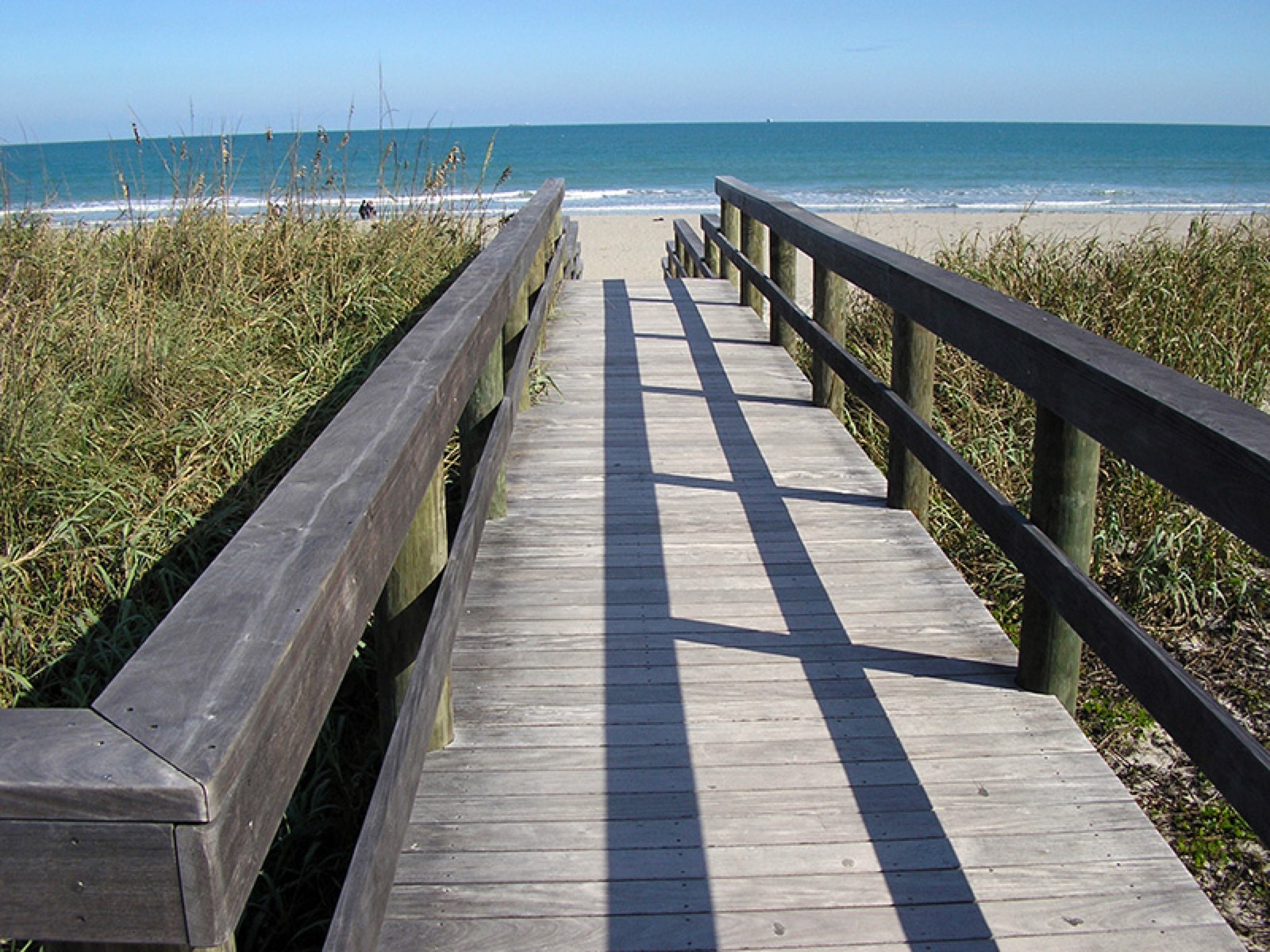
Both species survive an exposed, marine-adjacent walking surface, so durability is not what separates them. Thickness availability is, and it separates them before any engineering discussion begins. The real decision sits one layer down, in the framing, the piles, and the crew that has to reach the deck for the next three decades. A boardwalk is a long-lived public asset. It gets specified once and maintained for a generation, so the metrics that matter are the ones that compound over time: how much the deck weighs, how far it can span before it flexes underfoot, how long the wood holds its surface, and how often someone has to get out there to keep it safe.
Ipe (Tabebuia spp.) is the denser, harder, longer-lived board. Red Balau, a red-hued Shorea from the same trade family as Meranti, is lighter, softer, and easier on both the budget and the substructure. Neither of those facts wins the job alone. The winning spec is the one that reconciles the deck material with the engineering underneath it and the reality of maintaining a structure that sits over water.
Ipe puts roughly a quarter more dead weight on your piles than Red Balau, and on a span-limited pier that number is a design input, not a footnote.
Air-dry Ipe sits near 1,050 kg per cubic meter. Red Balau lands in the range of 800 to 900. Across a full deck field that gap turns into real tonnage on the pile caps and stringers. On a pier extending over soft bottom, or a retrofit where the existing piles are already working near capacity, the lighter deck can be the difference between reusing the substructure and driving new piles. The USDA Forest Products Laboratory documents these species-level density values in its Wood Handbook, and any competent structural engineer will fold them into the dead-load calculation before the deck species is finalized.
This is where hardness charts mislead people. A buyer sees 3,680 lbf of Janka on Ipe and reads it as pure upside. On a pedestrian pier, though, nobody is denting the deck with a forklift. The load case is foot traffic, the occasional maintenance cart, and code-mandated live load. Once the deck comfortably carries that, additional density stops buying performance and starts buying weight your foundation has to absorb. That is the argument for Red Balau on a private dock or a span-limited residential structure, and it has nothing to do with cutting a corner. It is not an argument that survives a public pier spec, for reasons of thickness rather than performance.
On the residential dock work where Red Balau does belong, its lower modulus of elasticity means the substructure has to be designed around it, not assumed.
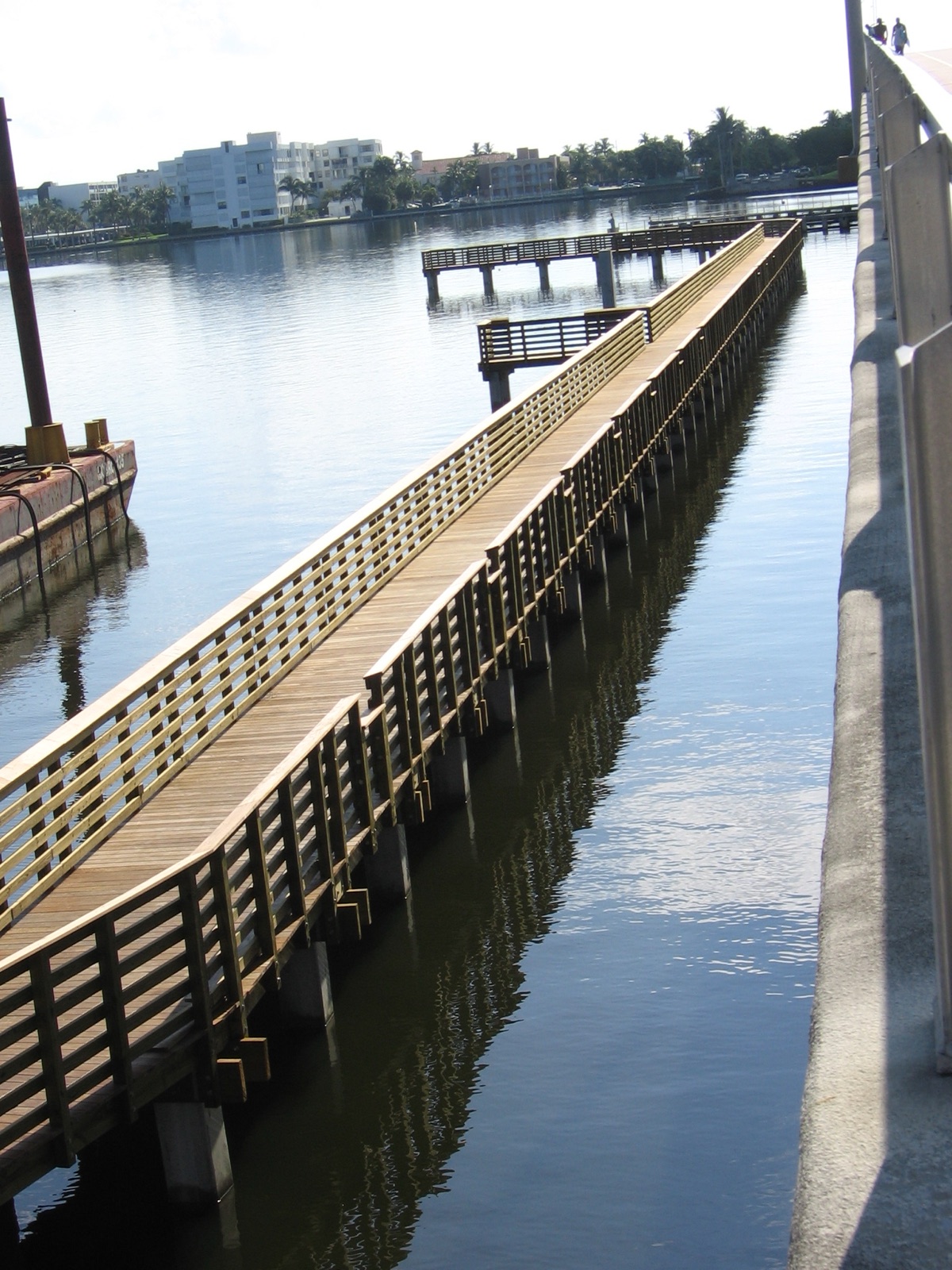
Deflection is what a pedestrian feels as bounce. It is governed by the board's stiffness, its thickness, and the clear span between joists. Ipe's high modulus lets a 5/4 board feel dead solid over joists at 16 inches on center. Red Balau, being less stiff, gives up some of that rigidity. At the same 16-inch spacing and the same 5/4 thickness, a Red Balau deck reads slightly livelier underfoot. On a private dock that is a comfort question the owner can weigh. It is one more reason the species does not get written into public work, where the 2x spec exists precisely to take that question off the table.
The fix is design, not disqualification. Tightening the joists to 12 inches on center, or specifying a thicker board, brings a Red Balau field back to the firmness of an Ipe deck. What a specifier cannot do is drop Red Balau into a joist layout that was drawn for Ipe and expect an identical walk. The American Wood Council's design provisions in the National Design Specification govern how these spans get sized, and the substructure has to be drawn to the species, not swapped after the fact.
The 2x thickness rule, not hardness, is what actually filters species off commercial pier specs.
Commercial boardwalk and pier decks are specified at 2x thickness. The engineering reason is deflection over marine framing, but the practical reason is precedent. The standing spec is 2x, every estimator prices it that way, and no professional puts their name on the first thinner-board public pier even where a 5/4 section pencils out structurally. A specifier can argue the math all day. The bid table will still say 2x.
That turns thickness availability into the real species filter. Only Ipe, Cumaru and Jatoba can be sourced consistently in 2x decking thickness. Red Balau, like most of the less common tropicals, is milled for the 1x and 5/4 market, so the moment a project is written as a commercial pier it effectively leaves the conversation, regardless of how well the species itself performs over water. Where Red Balau belongs is the work that is genuinely specified thinner: private docks, residential waterfront decks, and structures whose engineer of record signs off on 5/4 over tightened joist spacing.
Ipe holds its in-service durability and its finished surface longer than Red Balau, and on a hard-to-reach pier that gap changes the maintenance calendar.
Ipe carries an EN 350 Class 1 rating, the top tier for natural durability, and untreated it tests to ASTM E84 Class A for flame spread. Red Balau is a durable species, but it sits a class below Ipe for decay resistance and does not carry the same fire performance untreated. Above the waterline, on a properly detailed and ventilated deck, both will give long service. The difference shows up at the margins that matter most on a pier: the wet-dry cycling of the splash zone, the areas that stay shaded and slow to dry, and the end grain at every cut.
For an asset where the maintenance crew reaches the deck by boat or by walking out a long approach, the longer interval Ipe buys between interventions has real value. Fewer trips, fewer closures, fewer opportunities for a small problem to become a board replacement over open water. Red Balau will still perform. It just asks to be watched a little more closely, and that inspection cost is part of the honest comparison. Neither species is a set-and-forget material, and any supplier who implies otherwise is selling, not specifying.
| Species | Janka (lbf) | Air-dry density (kg/m3) | EN 350 durability | Relative dead load on substructure | Refinish interval to hold color |
|---|---|---|---|---|---|
| Ipe | ~3,680 | ~1,050 | Class 1 | Highest | Longest |
| Cumaru | ~3,540 | ~1,070 | Class 1 to 2 | Highest | Long |
| Massaranduba (comparison only) | ~3,190 | ~1,150 | Class 1 to 2 | Very high | Long |
| Jatoba | ~2,690 | ~910 | Class 2 to 3 | Moderate | Moderate |
| Red Balau | ~1,700 to 2,000 | ~800 to 900 | Class 2 | Lower | Shorter |
| Garapa | ~1,700 | ~830 | Class 3 | Lower | Shorter |
Both species move seasonally and both will surface-check, so the gapping and detailing decide the deck's appearance more than the species choice does.
Dense tropical hardwoods shrink and swell across the grain as humidity swings. Ipe and Red Balau both do this, and both will develop fine surface checking over years of sun and rain. That is normal for the material and not a defect. What controls how the deck looks and performs is the moisture content at installation and the gaps the installer leaves. Decking should arrive and go down at an in-service moisture content around 12 to 16 percent, acclimated to the site, so the boards are near their equilibrium before they are fastened.
Gap the boards for drainage and for the swelling that follows the first wet season. A field that is butted tight in dry, kiln-fresh condition will cup, pinch fasteners, and shed water poorly once it takes on moisture. Ipe's greater density means it can generate more force when it moves, so tight installation punishes an Ipe deck harder than a Red Balau one. The Wood Database profiles the movement behavior of both species, and the practical takeaway is the same either way: acclimate, gap, and detail for water to leave the surface fast.
Profile drives the fastening method on both species, and getting it wrong shortens the deck's life faster than picking the softer wood ever would.
The board profile is a structural decision, not a look. Tongue-and-groove decking is the only profile that accepts a hidden fastener system. Shiplap and square-edge boards take visible, face-driven fasteners. On a coastal pier, specify 316 stainless steel for both the screws and any hidden clips, because 304 stainless and coated carbon steel will not survive salt exposure the way the deck will. The deck rides on furring strips or joists, and where boards are grooved for a drainage detail, the grooves face down so water runs out rather than collecting in the channel.
Pilot drilling on site is mandatory on Ipe and strongly advised on Red Balau. Ipe's hardness will snap or strip an unpiloted screw. Red Balau is more forgiving but still dense enough to split at board ends without a pilot hole. None of this changes between the two species in principle. The tolerances are just tighter on Ipe, and a crew that has only run softwood decking needs to plan for slower fastening and carbide tooling on either wood.
"People ask me to name the winner between Ipe and Red Balau, and I turn it around on them. Show me the pile plan and the joist spacing, and tell me how the maintenance crew gets out to the deck. On a signature pier where the owner wants the longest possible surface life and the structure can carry the weight, I am putting Ipe under them every time. On a span-limited retrofit, the answer is 2x Ipe, and Cumaru or Jatoba if the budget needs it, because those are the three we can put on a truck in 2x. Red Balau I sell all day for private docks and waterfront decks where the engineer has signed off on 5/4, and it performs. It just is not a boardwalk board, and that is a sourcing fact rather than a knock on the wood." Norm Moton, Director of Sales, J. Gibson McIlvain
Wet-surface traction on a pier comes from the finished grain and the maintenance regimen, and Ipe's density asks for a little more attention there.
A pier deck is wet a lot of the time. Slip resistance is a genuine safety obligation on a public walkway, and it interacts with the accessibility requirements laid out in the U.S. Access Board's ADA standards. Very dense, hard-wearing woods can polish smooth in high-traffic lanes, which reduces traction when the surface is wet. Ipe's density makes this worth watching. A lightly textured or brushed surface, or a periodic maintenance sanding, restores grip. Red Balau's slightly more open surface keeps a bit more natural traction as it wears, which is worth knowing on a private dock ramp.
Either way, slip resistance is a detailing and maintenance question, not a reason to pick one species over the other outright. Specify the surface texture, the gap width for drainage, and the inspection cadence, and both woods make a safe, code-compliant deck. Leave those to chance and the hardest board on the market can still become a hazard when it rains.
The species that do clear a commercial boardwalk spec can be supplied FSC-certified with clean chain-of-custody documentation, which matters on public and institutional projects chasing credits or facing procurement scrutiny.
Public piers are frequently funded and reviewed in ways that private decks are not. That puts sourcing documentation on the critical path. Legally and responsibly imported tropical hardwood should arrive with a verifiable chain of custody, and FSC certification is the recognized standard for that. On projects pursuing green-building credits, the material's certification and origin feed directly into the documentation reviewed under programs like LEED. When a project uses a species that appears on a protected list, documentation is required to move and sell the material legally, and that paperwork should be settled with the supplier before the order ships rather than discovered at the receiving dock. The CITES framework governs those listed species internationally.
The fire performance also lives in the documentation. Ipe's ASTM E84 Class A rating, meaning a flame-spread index of 25 or less, is testable and specifiable, and on a covered or code-scrutinized public structure that rating can settle the species question before durability ever enters the discussion. ASTM publishes the E84 test method that defines it.
How J. Gibson McIlvain Would Specify This
Start with the structure, not the board. Get the pile capacity, the stringer sizing, and the joist spacing from the engineer of record, then choose the deck species that the substructure can carry and that the maintenance plan can sustain. For a signature pier where surface longevity and fire rating lead the priorities and the framing can take the load, specify Ipe in 2x thickness over the engineer's joist layout, boards acclimated to 12 to 16 percent moisture content, pilot-drilled on site and fastened with 316 stainless. Cumaru and Jatoba are the alternates that can also be sourced consistently in 2x. For a private dock or a span-limited residential structure where the spec genuinely allows thinner decking, Red Balau is a sound choice as long as the joists are drawn for it, which usually means tightening to 12 inches on center to match the firmness underfoot.
Detail both the same disciplined way. Grooves down for drainage, generous gapping for the first wet season, tongue-and-groove only where hidden fasteners are wanted, and a specified surface texture and inspection cadence for wet-weather traction. Where a modified product is on the table for railings, trim, or transition framing, Thermory and Abodo Vulcan are options, though their kiln size caps board length at around 16 feet, so plan long runs around that limit.
J. Gibson McIlvain mills and stocks Ipe decking in a vast inventory across standard and custom dimensions, supplies Cumaru and Jatoba as the other two species available in 2x for commercial boardwalk and pier work, and carries Garapa and Red Balau for residential dock and deck work. The company ships full contractor and specifier volumes nationwide, including regularly to California, and can supply either species FSC-certified with the documentation a public project needs. Send the takeoff, the span, and the joist layout, and the sales desk will price both species against the structure carrying them. Call 800-638-9100 to start that conversation, and see the current Ipe decking program online.
Frequently Asked Questions
How much more dead weight does an Ipe deck add versus Red Balau on a pier?
Air-dry Ipe runs near 1,050 kg per cubic meter against roughly 800 to 900 for Red Balau, so across a full deck field Ipe adds on the order of a quarter more weight for the piles and stringers to carry. On a span-limited pier or a retrofit where the existing substructure is near capacity, that difference is a genuine design input and should be handed to the engineer of record before the species is locked.
Does Red Balau need tighter joist spacing than Ipe?
Often yes. Ipe's high stiffness lets a 5/4 board feel solid over joists at 16 inches on center. Red Balau is less stiff, so at the same thickness and spacing it can read slightly livelier underfoot. Tightening the joists to 12 inches on center, or specifying a thicker board, brings a Red Balau field back to the firmness of an Ipe deck. Do not drop Red Balau into a layout drawn for Ipe and expect an identical walk.
Which species holds its finished surface longer between maintenance trips?
Ipe. Its EN 350 Class 1 durability and higher density mean it holds decay resistance and surface appearance longer than Red Balau, which sits a class below for durability. On a pier the maintenance crew reaches by boat or a long approach, that longer interval means fewer trips and fewer closures, which is real value beyond the material cost.
Will both species check and move once installed?
Yes. Both Ipe and Red Balau shrink and swell seasonally and both develop fine surface checking over years of exposure, which is normal and not a defect. Install both at an in-service moisture content around 12 to 16 percent, acclimated to the site, and gap the boards for drainage and swelling. Ipe generates more force when it moves, so tight installation punishes an Ipe deck harder.
What fasteners should a coastal pier deck use, and can I hide them?
Specify 316 stainless steel for screws and any hidden clips on coastal work, because 304 stainless and coated carbon steel will not last. Hidden fasteners only work with a tongue-and-groove profile. Shiplap and square-edge boards take visible face fasteners. Pre-drill Ipe without exception and Red Balau at board ends, and run grooved boards with the grooves facing down so water drains out.
Can J. Gibson McIlvain supply both species with FSC documentation for a public project?
Yes. J. Gibson McIlvain stocks a vast Ipe inventory across standard and custom dimensions supplies Cumaru and Jatoba in 2x for commercial work, carries Garapa and Red Balau for residential dock work, and can provide these species FSC-certified with clean chain-of-custody documentation. The company ships full commercial volumes nationwide. Call 800-638-9100 with your takeoff, span, and joist layout to price both species against the structure.
Sources and Standards Referenced
- USDA Forest Products Laboratory, Wood Handbook (FPL-GTR-282)
- American Wood Council, Codes and Standards (National Design Specification)
- ASTM E84 Standard Test Method for Surface Burning Characteristics of Building Materials
- The Wood Database, Ipe
- U.S. Access Board, ADA Accessibility Standards
- Forest Stewardship Council
- U.S. Green Building Council, LEED
- CITES, Convention on International Trade in Endangered Species