The Trim That Left the Catalog
Picture rail and plate rail disappeared from stock moulding lines because retail inventory consolidated around a few dozen shapes, not because the details stopped earning their place on a wall. Walk through a house built between 1880 and 1930 and the wall is divided into registers. Base at the floor. A dado cap or chair rail above it. Open field. Then picture rail set near the door head, a frieze above that, and a cornice closing the corner. Each member had a job.
Standardization did the rest. The Wood Moulding and Millwork Producers Association WM series gave the industry a shared numbering system for the profiles that moved in volume, and the profiles that did not move in volume stopped being stocked. Picture rail was one of the first to go. Plate rail went with the formal dining room. Bolection mouldings, backbands and wainscot caps survive in houses by the thousand and in catalogs almost nowhere.
That is a sourcing problem, not a design problem. A profile that is out of production is still a profile, and any shop with a grinder and a moulder can put it back into production. ICD, the architectural millwork division of J. Gibson McIlvain, builds this kind of work as true custom millwork planned around a specific room rather than pulled from a module list. J. Gibson McIlvain holds a moulding profile library running to thousands of ground knives, and new knives get ground every week for the shapes that are not in it yet.
What Picture Rail Actually Has to Do
Picture rail is a structural hanging system disguised as trim, and the profile only works if the top edge is shaped to catch a hook. The characteristic section is a small cove or ogee with a rounded, slightly proud bead across the top. That bead is the whole point. An S-hook or a purpose-made picture hook rolls over it and hangs, and the frame hangs from the hook on wire or rod. Nothing goes through the wall.
In a plaster house that matters more than it sounds. Original three coat plaster over wood lath does not take fasteners kindly, and every nail hole in a historic wall is a small permanent loss. Picture rail moves the load off the field of the wall and onto a member that is fastened into framing.
Height is a design decision with a functional floor. Set at the head casing line, picture rail reads as a continuation of the door and window trim and ties the openings together. Set higher, at the frieze line roughly 12 to 18 inches below the ceiling, it shortens the visual wall and gives a taller drop for the hanging wire. Rooms with ceilings under 9 ft usually want the door head line. Above that, the frieze position holds up better.
The load path belongs to whoever installs it. J. Gibson McIlvain mills and supplies the rail. The installer is the one who has to land fasteners in studs or in blocking rather than in plaster alone, and who has to know that a heavy mirror wants two hooks and a cleat instead of one hook and optimism. A rail fastened correctly into framing will carry real weight. A rail nailed to lath will not.
Plate Rail Is a Shelf Before It Is a Moulding
A plate rail carries weight in bending, so it gets specified as a shelf with a moulded edge rather than as a moulding with a flat top. The historic Craftsman and Mission version sits around 5 to 6 ft off the floor, caps a tall wainscot, and projects far enough to hold a dinner plate on edge. Projection of 3 to 5 inches is typical. Less than that and the plate tips forward.
The detail that separates a real plate rail from a decorative shelf is the plate groove. A shallow plow, usually about 3/8 inch wide and set back an inch or so from the front edge, catches the rim of the plate and stops it from sliding. That groove has to be run with the same setup discipline as the moulded edge so it stays parallel to the front over a long wall.
Support comes from below. Some rooms use a continuous bed mould or a heavy cove under the shelf. Others use brackets or corbels at regular spacing, which is the more honest solution when the shelf is loaded with pottery. A 5 inch wide shelf in a species around 950 lbf on the Janka scale will take a set over time if it spans several feet between supports with nothing helping underneath.
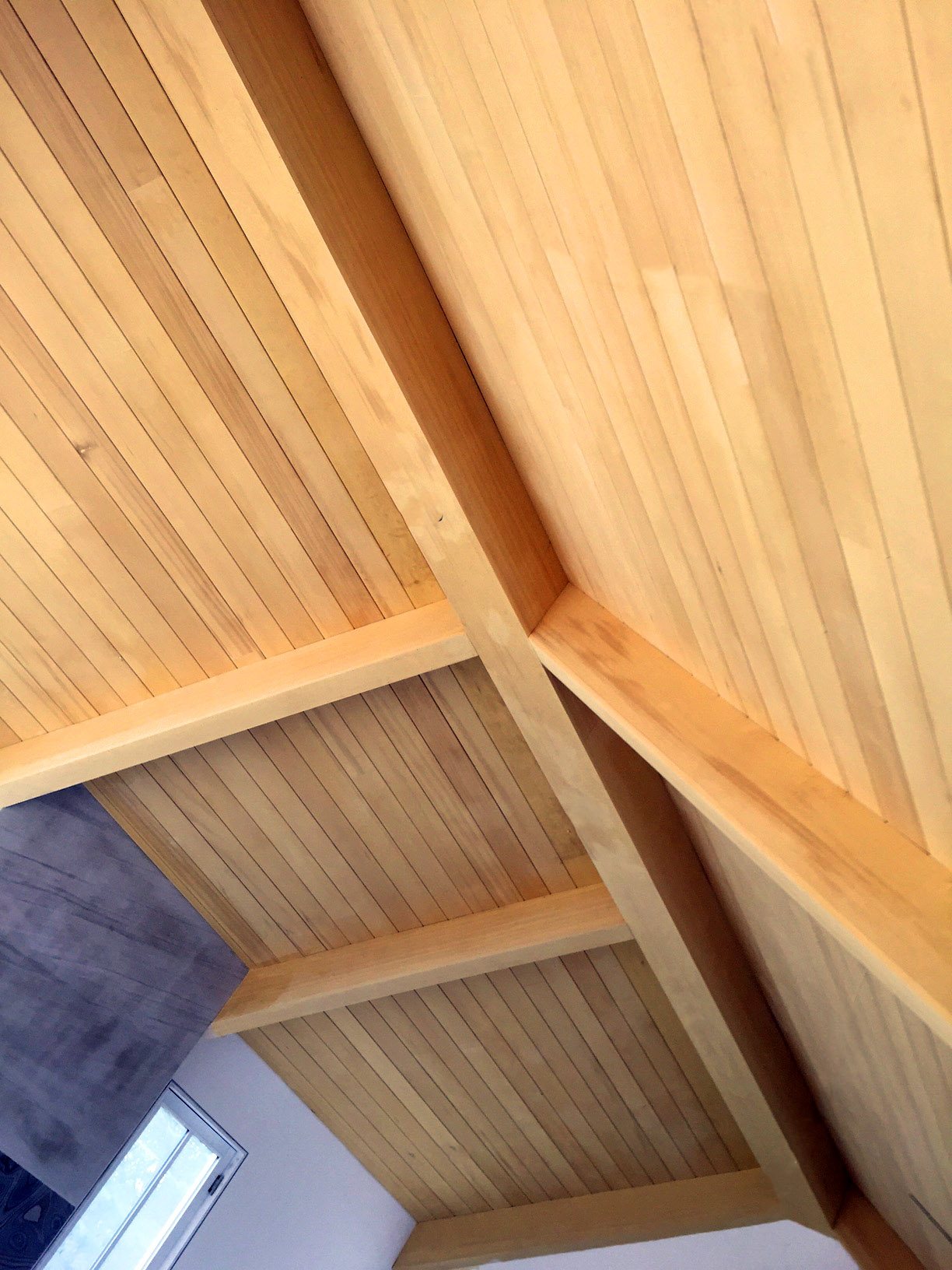
Plate rail also lives next to other custom work. In a dining room with a beamed ceiling, the plate rail, the frieze and the box beams read as one system, and ICD builds box beams with a joinery choice that follows the exposure. Butt joints give the most minimal profile, the fastest turnaround and the easiest on-site assembly, but they leave visible seams and visible end grain and are the weakest. Dado joints are strong and still easy to assemble on site, though the seams and end grain still show. Lock miter joints show no visible seams and are the strongest of the three.
The Rest of the Forgotten Vocabulary
Picture rail and plate rail get the attention, but at least six other trim members have fallen out of common specification and every one of them is a knife-and-moulder problem rather than a rarity problem. Knowing the names is half the battle when you are trying to order them.
Bolection moulding is a raised moulding that laps over the joint between a panel and its frame, standing proud of both faces. It needs a rabbet on the back to seat against the frame, and it is what gives 18th century paneling and fireplace surrounds their depth. A flat applied moulding in the same place looks thin and always will.
Backband is the small L-shaped moulding applied to the outer edge of flat casing. It turns a plain 1x4 casing into something with weight and shadow, and it is how a lot of Victorian and Colonial Revival trim got its scale without a wider board. The rabbet depth has to match the casing thickness exactly or the whole run telegraphs the error.
Wainscot cap, sometimes called a dado cap, is the member that closes the top of a paneled wainscot. It carries a groove or rabbet on the underside to receive the panel top edge, which lets the panel move seasonally without opening a line. Chair rail is its plainer cousin and is the one profile in this group still widely stocked.
Frieze board with a bed mould under it, plinth blocks at door casings, and beaded corner boards all belong on the same list. None are exotic. All are simply absent from the lines most suppliers carry, which is why a profile library matters more than a catalog does.
Reading the Wall Section From Floor to Frieze
Specifying these members goes faster when you describe them by position and function rather than by name, because the names drifted regionally and the functions did not. The table below is the way a shop reads a wall section drawing.
| Member | Position in the wall section | What it has to do | What the shop originates |
|---|---|---|---|
| Picture rail | Door head line, or frieze line 12 to 18 inches below the ceiling | Present a rounded proud bead that an S-hook can roll over and hang from | Knife ground to hold the bead radius exactly, since a flattened bead will not retain a hook |
| Plate rail | Roughly 5 to 6 ft, capping a tall wainscot | Carry plates and pottery in bending without taking a set | Wide flat blank, moulded front edge, and a plowed plate groove held parallel over the run |
| Wainscot cap | Top of paneled wainscot, 32 to 42 inches typical | Close the panel top and let the panel move seasonally without opening a line | Groove or rabbet on the underside sized to the actual panel thickness |
| Bolection moulding | Lapping the panel-to-frame joint on paneling and fireplace surrounds | Stand proud of both faces and throw a deep shadow | Back rabbet cut to the frame face, with the raised profile ground as one knife |
| Backband | Outer edge of flat casing | Add apparent width and a shadow line to plain casing | Rabbet depth matched to the milled casing thickness, not a nominal one |
| Frieze with bed mould | Between picture rail and cornice | Give the cornice something to sit on and close the wall register | Flat frieze stock plus a separate bed mould, run to stack without a gap |
Where a Profile Library Comes From
A library of thousands of profiles is an accumulation of jobs, not a purchase, which is why very few suppliers have one and why the ones that do can run trim nobody stocks. Every custom knife ground for a customer becomes a knife on a shelf with a record attached. Run enough decades of work and the shelf becomes the reason the next customer does not pay to originate a shape twice.
J. Gibson McIlvain has been milling under the same family since 1798 and is in its seventh generation, and the practical value of that continuity is administrative rather than sentimental. A profile run for a first phase is still on file when the third phase gets funded four years later. J. Gibson McIlvain keeps the knife and the record together so the second run matches the first instead of approximately resembling it.
The grinding side is straightforward once a section exists. Corrugated knife stock gets ground to the reverse of the wanted profile, set in the head, and the moulder cuts the shape in one pass or in a planned sequence of passes for deep profiles. J. Gibson McIlvain grinds new knives every week for profiles that are not already in the library, which is the answer to the question of what happens when your picture rail is not one of the thousands on hand.
"People call assuming a discontinued profile means starting over. Most weeks I can tell them we already have the knife. When we do not, we grind it, and then it sits on the shelf for the next person who asks."
Norm Moton, Director of Sales, J. Gibson McIlvain
Both halves of the operation sit behind that. J. Gibson McIlvain runs a millwork shop on site at the lumber yard for linear trimwork, finished cladding and primed trim, and the architectural millwork house, ICD, handles the true custom side including radius work, shutters, doors and cabinetry. Linear runs of picture rail and the curved section over a bay window can come off the same order.
Copying a Profile Off a Salvaged Piece
Reproducing existing trim starts with a physical sample or a full-size section drawing, and a photograph is not a substitute for either. The usable sample is a clean piece at least 12 inches long with one square-cut end that shows the full section. Salvage it from a closet, from behind a radiator, from an attic stair, anywhere the original survived a remodel.
Two adjustments matter when the sample is a century old. Old-growth stock has usually given up some width to long-term shrinkage, so a cap copied dead-on may come up a hair narrow against the original run. Old profiles were also cut with knives that wore, which means a moulding can vary slightly along its own length. The shop picks the intended section rather than averaging a worn one.
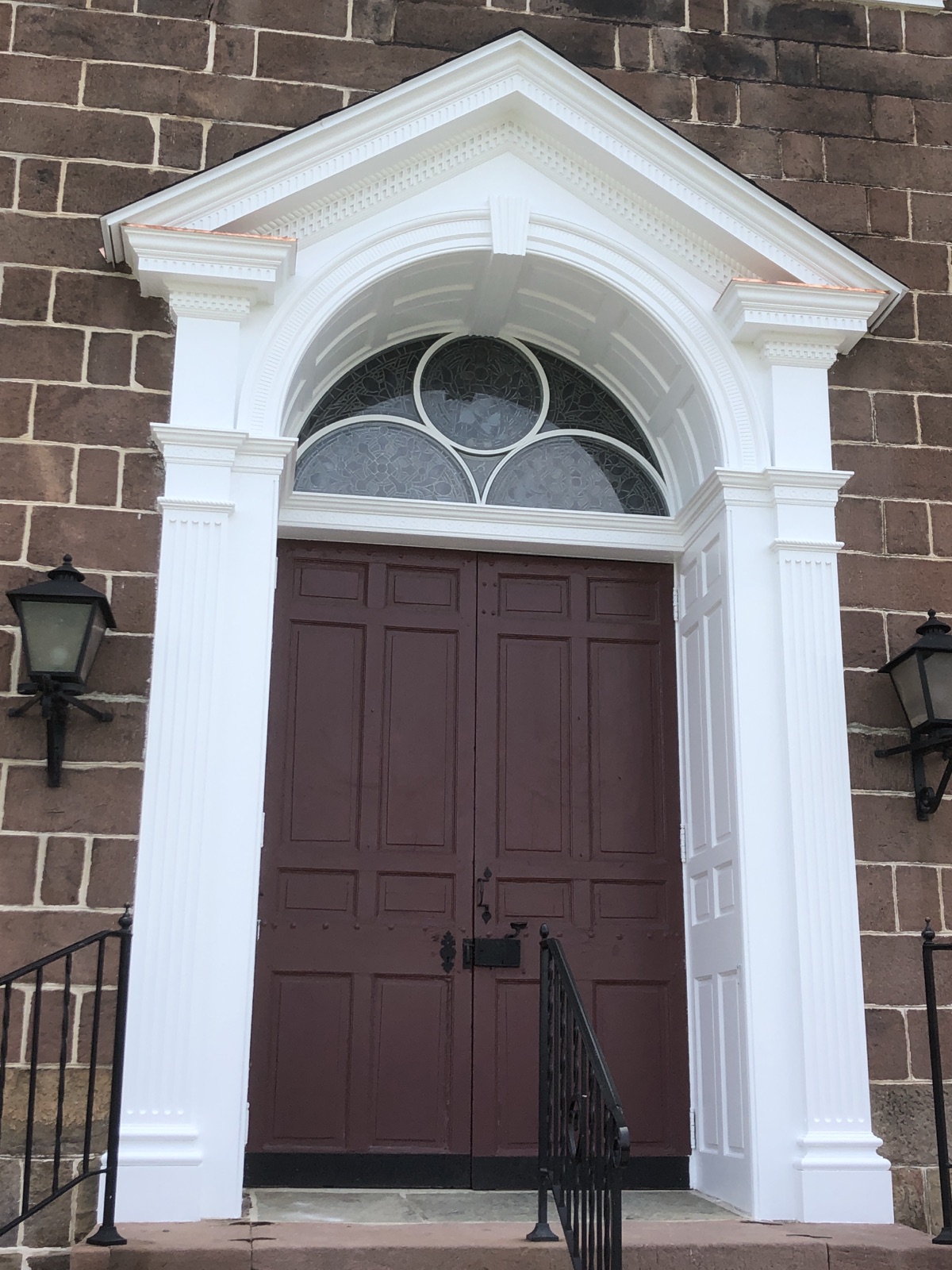
Where the work sits in a historic district, like-for-like replacement is often a condition of approval rather than a preference. The National Park Service Preservation Briefs treat interior trim as a character defining feature, which in a regulated district means matching profile and material, not just dimension. ICD does complete historical matching on shutters in both style and species for exactly this reason, and the same discipline applies to a picture rail or a wainscot cap.
Radius work is the case where a sample gets you only part of the way. A curved picture rail over a bay or a segmental arch cannot be run on a straight moulder, so the profile is developed and the curve is built, and ICD produces radius trimwork and radius millwork to the actual field dimension rather than to a nominal one.
Species That Make Sense for Reproduction Trim
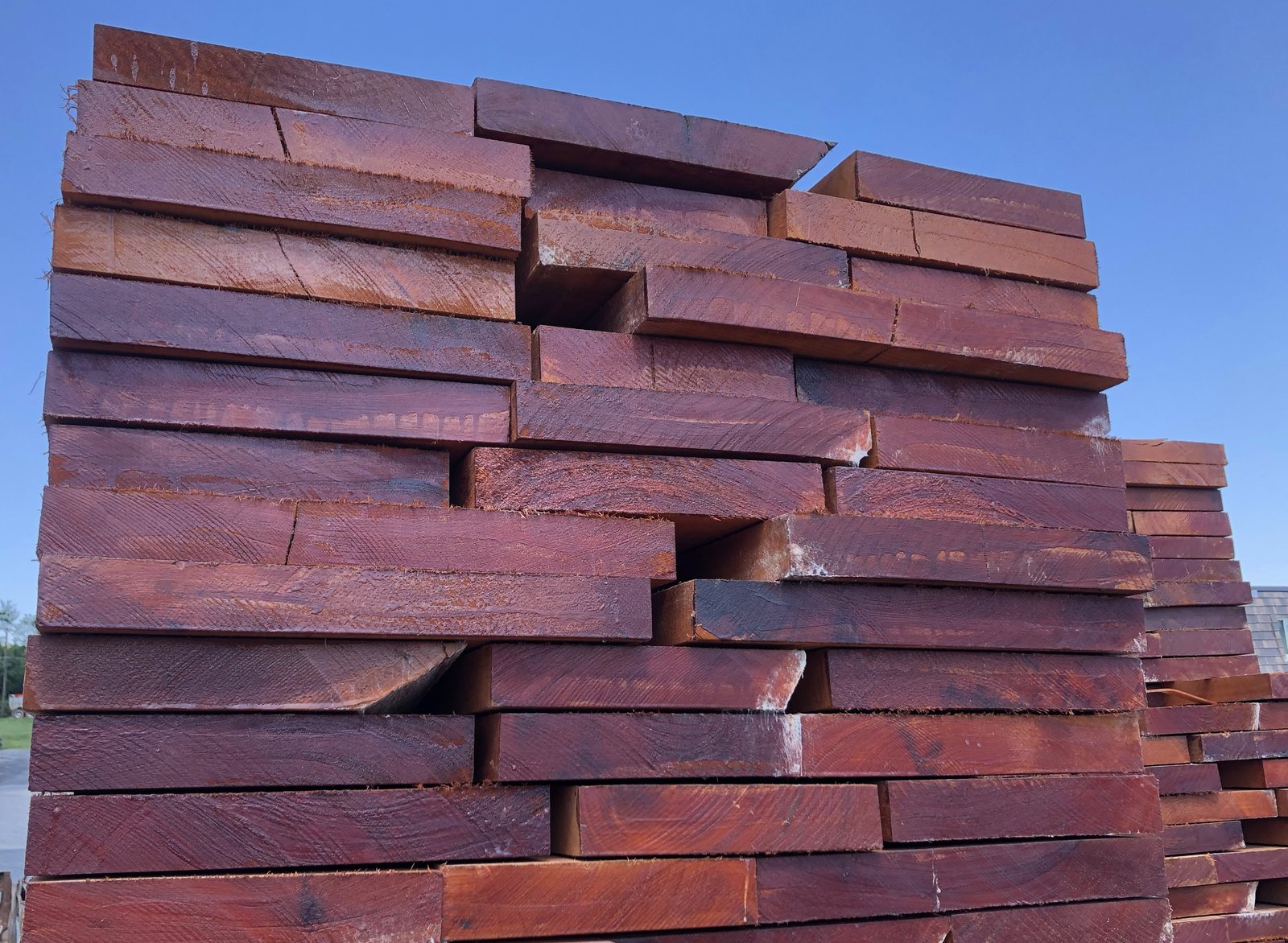
For stained interior trim that has to match old-growth Mahogany-toned woodwork, the practical millwork palette is Sapele, Iroko, Afrormosia, Teak and Utile. These machine cleanly, glue reliably, and come in the widths and lengths that long trim runs need.
Sapele sits around 1,410 lbf on the Janka scale and holds a crisp arris on a moulded edge, which is what a picture rail bead needs if it is going to stay sharp under a hook. Utile is the closer color match to old Mahogany woodwork and is calmer in figure, which helps on wide plate rail shelves where ribbon stripe would read as busy. Iroko brings a warmer golden tone that ages well under an oil finish. Afrormosia and Teak are the choices where the existing woodwork in the room is already Teak-toned and a substitution would be obvious across the doorway.
Genuine Mahogany at roughly 800 lbf is soft for a loaded plate rail edge. It makes a fine picture rail. On a shelf that will hold stoneware, a harder species holds the front edge better over twenty years. Domestic options are legitimate too. Quartersawn White Oak at roughly 1,360 lbf is the historically correct choice for a Craftsman plate rail, Hard Maple runs near 1,450 lbf for paint-grade work that has to stay dead flat, and Cherry around 950 lbf suits Colonial Revival rooms where the trim will darken with the rest of the woodwork.
Exterior versions of this trim, a porch frieze or a bracket run under an eave, change the math but not the palette. The shop still reaches for Sapele or Iroko rather than the tropical decking species. Ipe, botanically Tabebuia spp, along with Cumaru, Garapa, Jatoba and Red Balau, are extremely hard and carry high oil content, which makes them difficult to glue and a poor fit for milled and assembled components. Where a modified product is specified instead, Accoya sits around 1,600 lbf and its acetylation gives dramatically reduced shrinkage and swelling, though modified woods top out around 16 ft and most are sold on metric lengths just under 16 ft because of kiln size. Warranties exist only on those modified products. Solid unmodified wood carries none, since it is an organic material responding to its environment.
Moisture, Grain Orientation and Long Runs
Trim that runs the full length of a wall shows every fraction of seasonal movement at its joints, so moisture content and grain orientation get settled before the profile does. Interior millwork is milled to an in-service moisture content near 6 to 8 percent. Exterior work is milled nearer 12 to 16 percent. Those are not interchangeable numbers, and a piece milled for one condition and installed in the other will move.
The Forest Products Laboratory Wood Handbook tabulates the shrinkage coefficients behind this species by species, and the short version for trim is that tangential movement runs roughly twice radial movement. Quartersawn and rift stock moves less across its width than plainsawn, which is why it gets specified where a painted or panelized surface has to stay flat.
That matters most on the wide flat members. A plate rail shelf. A frieze board. A wainscot cap. On a narrow picture rail the movement is small enough to disappear into the profile, but on a 5 inch shelf it becomes a visible gap at a scarf joint by February. Grain orientation is the cheapest insurance available on the whole trim package.
Conditioning at the site is the other half of it. Trim delivered into a building that has not reached operating temperature and humidity will equilibrate after installation, and the building science literature on moisture and materials is consistent on that point. Architectural Woodwork Institute standards give a common vocabulary for grade and tolerance when a specification needs to name one.
Priming and What Arrives Ready to Hang
Paint-grade reproduction trim gets primed in the shop because a controlled primer coat on a moulded profile is close to impossible to reproduce with a brush in a finished room. J. Gibson McIlvain primes in three levels, in both oil-based and water-based systems, and exterior primed trim carries a fungicide additive.
The technical reason is absorption. Open-grained and oily species absorb a great deal of finish, so a primer coat evens out the eventual painted surface instead of leaving the topcoat to fight uneven suction across the grain. Sapele and Iroko behave very differently under paint than Hard Maple does, and a primed blank levels that difference before the finish coat goes on.
Sanding or buffing after priming is the step that gets skipped in the field. It knocks back the grain raising that the first coat causes while keeping the moulded detail crisp. On a picture rail bead or a bolection profile, that distinction is the difference between a sharp shadow line and a soft one. J. Gibson McIlvain does that work on primed trim and finished cladding before the material leaves the shop.
Species selection interacts with the coating on exterior work. For painted exterior trim, Sapele is the better pick over Genuine Mahogany, since it holds paint better and comes in a wider range of sizes and longer lengths. Sapele is not milled 1x8 for exterior use, which is too wide to stay stable in that application. Cupping on exterior boards is driven by installation and back ventilation, not by species.
How J. Gibson McIlvain Would Specify This
The order that goes smoothly names the position in the wall, the section, the species, the moisture target and the finish state, and leaves the fastening details to the installer. J. Gibson McIlvain supplies and mills. It does not install, so field measurement, blocking and fastening stay with the builder or the millwork installer on site.
Start by sending a sample or a full-size section. A 12 inch clean piece with a square end tells the shop more than a page of description. If nothing survived, a measured section drawing at full scale works. J. Gibson McIlvain checks the profile library first, and where the shape is not already on the shelf the knife gets ground to match, including difficult historical restoration profiles and contemporary ones.
Name the species against the room rather than against a catalog default. Sapele, Iroko, Afrormosia, Teak or Utile for stained work, with quartersawn White Oak where the room is Craftsman. Call out quartersawn or rift for the wide flat members. State 6 to 8 percent for interior and 12 to 16 percent for exterior so nothing gets milled to the wrong target.
Decide the finish state on the order instead of later. Priming level, oil-based or water-based, and whether exterior work needs the fungicide additive. For box beams, name the joinery, since butt, dado and lock miter produce visibly different corners and different strengths. Where a CITES-listed species is involved, documentation and chain of custody travel with the material, and the CITES framework is what that paperwork follows. Grading questions on domestic hardwood fall under National Hardwood Lumber Association rules.
J. Gibson McIlvain also stores finished millwork for inventory control, which is worth using on a phased job where trim for the upper floors should not sit in a dusty corridor for six months. J. Gibson McIlvain ships nationwide, regularly to California. To put a discontinued picture rail, plate rail or wainscot cap back into production, call J. Gibson McIlvain at 800-638-9100 or reach the millwork service team, and for the true custom side see how ICD works through a custom project.
Frequently Asked Questions
How high should picture rail be installed?
Two positions work. At the head casing line the rail reads as a continuation of the door and window trim, which suits rooms with ceilings under 9 ft. At the frieze line, roughly 12 to 18 inches below the ceiling, the rail shortens the visual wall and gives a longer drop for the hanging wire, which suits taller rooms. Pick one and hold it through the whole floor, since a rail that changes height from room to room reads as a mistake at every doorway.
Can picture rail really hold a heavy framed piece?
The rail itself will, provided the profile has a proper rounded proud bead for the hook to catch and the rail is fastened into studs or blocking rather than into plaster alone. J. Gibson McIlvain mills and supplies the rail but does not install, so the fastening schedule belongs to the installer. For heavy mirrors and large frames, the usual approach is two hooks spread apart rather than one hook at the center, which keeps the load out of a single point on the bead.
What is the difference between a plate rail and a chair rail?
Height and function. Chair rail sits around 32 to 36 inches and protects the wall, so it is a moulding with no real projection. Plate rail sits around 5 to 6 ft, caps a tall wainscot, and projects 3 to 5 inches so it can carry plates and pottery. Plate rail is a loaded shelf, which is why it needs support from a bed mould or brackets underneath and a plowed plate groove near the front edge.
Can a shop reproduce a picture rail profile from a broken piece?
Yes, as long as the piece shows a full clean section. Send a length of at least 12 inches with one square-cut end. J. Gibson McIlvain checks its profile library of thousands of ground knives first, and where the shape is not already there the knife gets ground to match, including difficult historical restoration profiles. Expect a small allowance for the width old-growth stock lost to long-term shrinkage, and expect the shop to work from the intended section rather than from a spot where the original knife had worn.
Which species suit stained picture rail and plate rail?
Sapele at roughly 1,410 lbf, Iroko, Afrormosia, Teak and Utile are the working millwork palette. Utile is the closest color match to old Mahogany woodwork and is calm enough in figure for a wide plate rail shelf. Quartersawn White Oak at roughly 1,360 lbf is the historically correct choice in a Craftsman room. Genuine Mahogany at roughly 800 lbf makes a good picture rail but is soft for the front edge of a loaded shelf.
Do these profiles need to be ordered in long lengths?
Long is better on the wide flat members. A plate rail shelf or a frieze board with fewer joints shows less seasonal movement, so specify the longest practical length for the wall and add footage for returns and for cutting waste at corners. Narrow members like picture rail tolerate joints more easily because the movement disappears into the profile. If a modified product is being considered for an exterior frieze, note that modified woods top out around 16 ft, with most sold on metric lengths just under 16 ft because of kiln size.
Should reproduction trim arrive primed or bare?
Primed, for anything that will be painted. J. Gibson McIlvain primes in three levels in both oil-based and water-based systems, and exterior primed trim carries a fungicide additive. Open-grained and oily species absorb a great deal of finish, so a shop primer coat evens out the eventual painted surface, and the sanding or buffing pass after priming knocks back grain raising while keeping moulded detail crisp. That is difficult to reproduce with a brush once the trim is up on the wall.
Can a picture rail be run around a curved wall or bay?
Not on a straight moulder. A curved run is developed as radius millwork, with the profile matched to the straight stock and the curve built to the actual field dimension rather than to a nominal radius. ICD, the architectural millwork division of J. Gibson McIlvain, produces radius trimwork alongside the straight runs so the two meet cleanly at the transition.
Sources and Standards Referenced
- Wood Moulding and Millwork Producers Association
- National Park Service Technical Preservation Services, Preservation Briefs
- USDA Forest Products Laboratory, Wood Handbook: Wood as an Engineering Material
- Architectural Woodwork Institute
- Building Science Corporation, Moisture and Materials
- The Wood Database, Sapele
- National Hardwood Lumber Association
- CITES, Convention on International Trade in Endangered Species of Wild Fauna and Flora
- J. Gibson McIlvain Millwork Service
- ICD Trim Profiles