What the Reveal Is Actually Doing
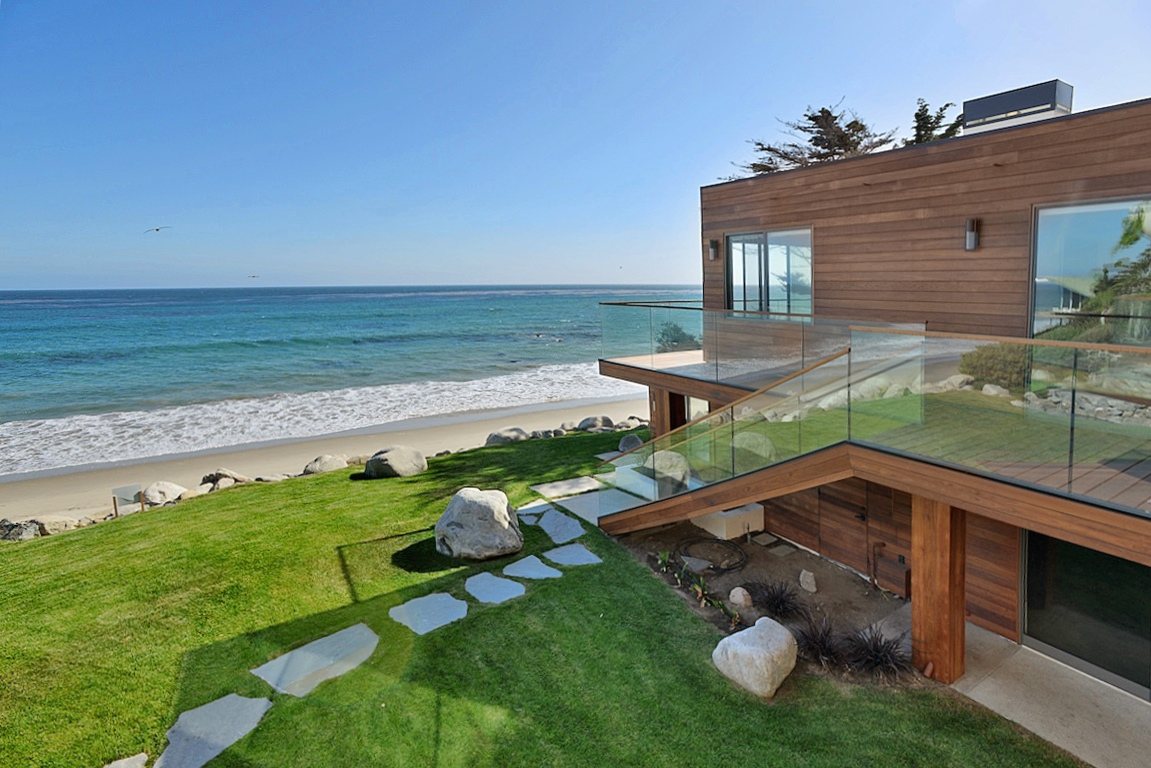
On a teak clad elevation the reveal is the only detail the eye tracks from one end of the wall to the other, and its quality is governed by how much each individual joint moves rather than by how few joints there are. The reveal is the shadow line between boards. It can be an open gap over a drainage cavity, a rabbeted shiplap shadow, or the thin dark line left by a chamfered tongue and groove edge. Whatever the detail, it is read as a straight line.
That line fails in two ways. It goes wavy, which happens when boards cup or crown and the arris no longer sits in one plane. Or it goes irregular, which happens when seasonal movement opens some gaps more than others and the elevation starts to look striped at close range.
Both failures scale with board width. A buyer working out where to order teak cladding for a high end exterior usually opens with a request for the widest board available, on the reasoning that fewer seams means fewer places to go wrong. The physics runs the other way. Fewer seams means each seam carries more movement, and a wider board gives movement more room to show up as a bowed shadow line.
Narrow teak, in 3, 4 and 5 inch faces, is not a compromise forced by supply. It is the board that keeps the reveal straight, and the reason is geometry rather than preference.
Narrow Is What Radial Sawing Gives You
Vertical grain teak comes off the log narrow because the usable width of a radially sawn board is bounded by the radius of the log it came from. Quarter the log, saw toward the pith, and the growth rings stand close to perpendicular to the face. That is the orientation a specifier means by vertical grain or quartersawn, and it is the orientation that moves least across the width of the board.
A wide vertical grain plank requires a large diameter log standing behind it. There is no sawing trick that gets around the radius. So narrow stock and vertical grain are one supply story told twice, and a specification that asks for both a wide face and true vertical grain is asking for the rarest part of the resource.
Plantation teak tightens the same constraint further. Shorter rotations mean smaller logs, and smaller logs cap width and length together. The narrow widths are the part of plantation supply that comes through consistent and repeatable, which is exactly what a phased facade needs when the north elevation goes up a year after the south one. J. Gibson McIlvain matches a run across phases so the second release reads like the first.
Teak is Tectona grandis, and the published property data for the species is worth reading next to the grain orientation question rather than instead of it. Two boards of identical species and identical density behave differently on a wall if one is flatsawn and one is rift.
How Far a Teak Board Travels Across Its Face
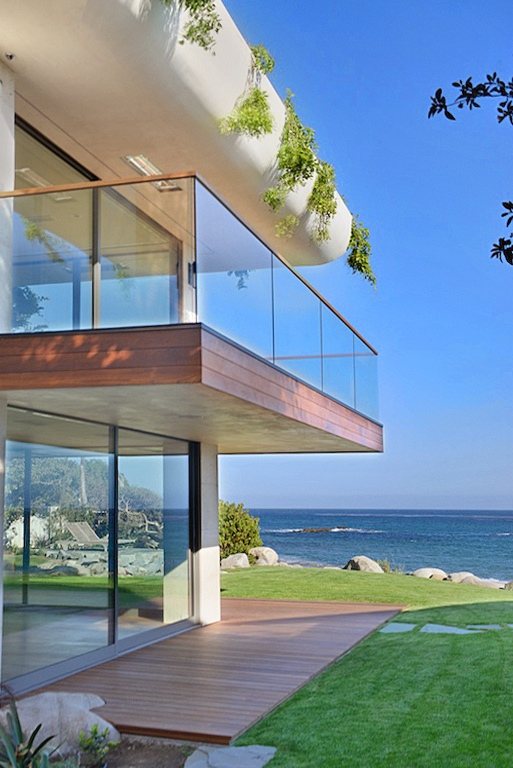
Wood moves several times more tangentially than radially, and the dimensional change a joint has to absorb scales directly with the width of the board feeding it. A 4 inch board moves roughly half as much across its face as an 8 inch board of the same species at the same grain orientation, for the same change in moisture content. Halve the width and you halve the demand on every seam.
That is the whole argument, and it is arithmetic rather than opinion. The Forest Products Laboratory publishes the shrinkage coefficients that sit underneath it, and the radial figure for a given species is always the smaller of the two.
Run the consequence out across an elevation. A 20 ft wide wall clad in 8 inch boards carries about 30 seams. The same wall in 4 inch boards carries about 60. Each of those 60 seams absorbs half the movement, so no single reveal has to open far enough to be noticed from the walk. More seams, each moving less, is a more stable surface than fewer seams each moving more.
Traditional laid decks and caulked strip decks have been narrow by convention for two centuries for the same reason, and the convention came from boats rather than from fashion. The cladding case is the deck case stood on end.
Why the Shadow Line Stays Straighter on a Narrow Board
A narrow board has less width across which to cup, so the arris that casts the shadow stays closer to true and the reveal reads as one continuous line instead of a series of slight curves. Cupping is a width phenomenon. The same differential between the wet face and the dry face produces a deeper dish across 8 inches than across 4, because there is more material on each side of the neutral axis to go into tension and compression.
Vertical grain helps the same detail twice. A rift or quartersawn edge machines to a crisper arris than a flatsawn one, where a chamfer cutting across alternating earlywood and latewood can tear or round unevenly. Crisp arris, clean shadow.
Raking light is the unforgiving test. Late afternoon sun across a south elevation finds a 1/16 inch deviation in a shadow line that nobody would see at noon. Architects who have watched a wide board facade go slightly corduroy in its second summer tend not to specify wide boards again.
Cupping Is an Installation Variable, Not a Species Verdict
Cupping is driven by installation and back ventilation, not by species, and narrow stock reduces the consequence rather than removing the cause. A board that cannot dry from behind sets up a moisture gradient through its thickness, and that gradient is what moves the board. Teak resists decay well without a film finish, and it still responds to a sealed back face like any other piece of wood.
The fix is a drained and ventilated cavity behind the cladding. Building Science Corporation has documented rainscreen assemblies in more detail than any trade publication, and the governing principle is simple enough to state in one line. Air has to get in at the bottom and out at the top.
Narrow boards make that cavity easier to keep honest. Furring runs closer together behind a narrow board, the board sits flatter against it, and the smaller cross section equilibrates faster so the gradient through the thickness never gets steep. On an open joint reveal detail the cavity is doing double duty as the drainage plane, which puts the membrane behind it, not the teak, in charge of water management.
Choosing Between 3, 4 and 5 Inch Faces
The three narrow widths are not interchangeable, and the choice follows the scale of the elevation and the depth of the reveal more than it follows the species. A 3 inch face on a tall wall produces a dense, almost textile reading. A 5 inch face on a small entry pavilion can look coarse. The reveal depth has to be chosen with the width, since a deep shadow on a narrow board starts to dominate the board itself.
| Face width | Reveal and seam density | Cross grain movement per joint | Where it earns its place |
|---|---|---|---|
| 3 inch | Highest seam count, finest shadow rhythm, tolerates a shallow reveal without looking blank | Lowest of the three, so each gap changes least between seasons | Tall uninterrupted elevations, soffit boards, interior slat walls, duckboard and grating, bench and chair slats |
| 4 inch | Balanced rhythm at normal viewing distance, carries a deeper rabbeted or open joint reveal cleanly | About half that of an 8 inch board at the same orientation | General exterior cladding and rainscreen fields, laid and caulked deck surfaces, cabin and cockpit soles, boarding steps |
| 5 inch | Fewest seams of the three, wider board face reads between the reveals | Highest of the three, so reveal spacing and fastening need more attention | Large scale elevations where board face is meant to dominate, swim platforms, stair treads built up from staves, cap rail blanks |
One decision belongs upstream of all three. Pick a single width for the whole elevation and hold it. Mixing 4 and 5 inch boards in one field, even deliberately, gives every joint a different movement budget and the reveal stops reading as a system.
J. Gibson McIlvain rips teak cladding to one consistent width on straight line and gang rip saws, and resaws thickness on band resaws before the moulder sees the board. Consistency across the lot is a machine question, not a sorting question.
"Somebody calls and asks for the widest teak board we can get, and what they are really asking for is an elevation that still looks straight in five years. I walk them back to a 4 inch face most of the time. The narrow board is quietly doing the work that the wide board gets blamed for not doing."
Norm Moton, Director of Sales, J. Gibson McIlvain
The Edge Profile Is the Reveal
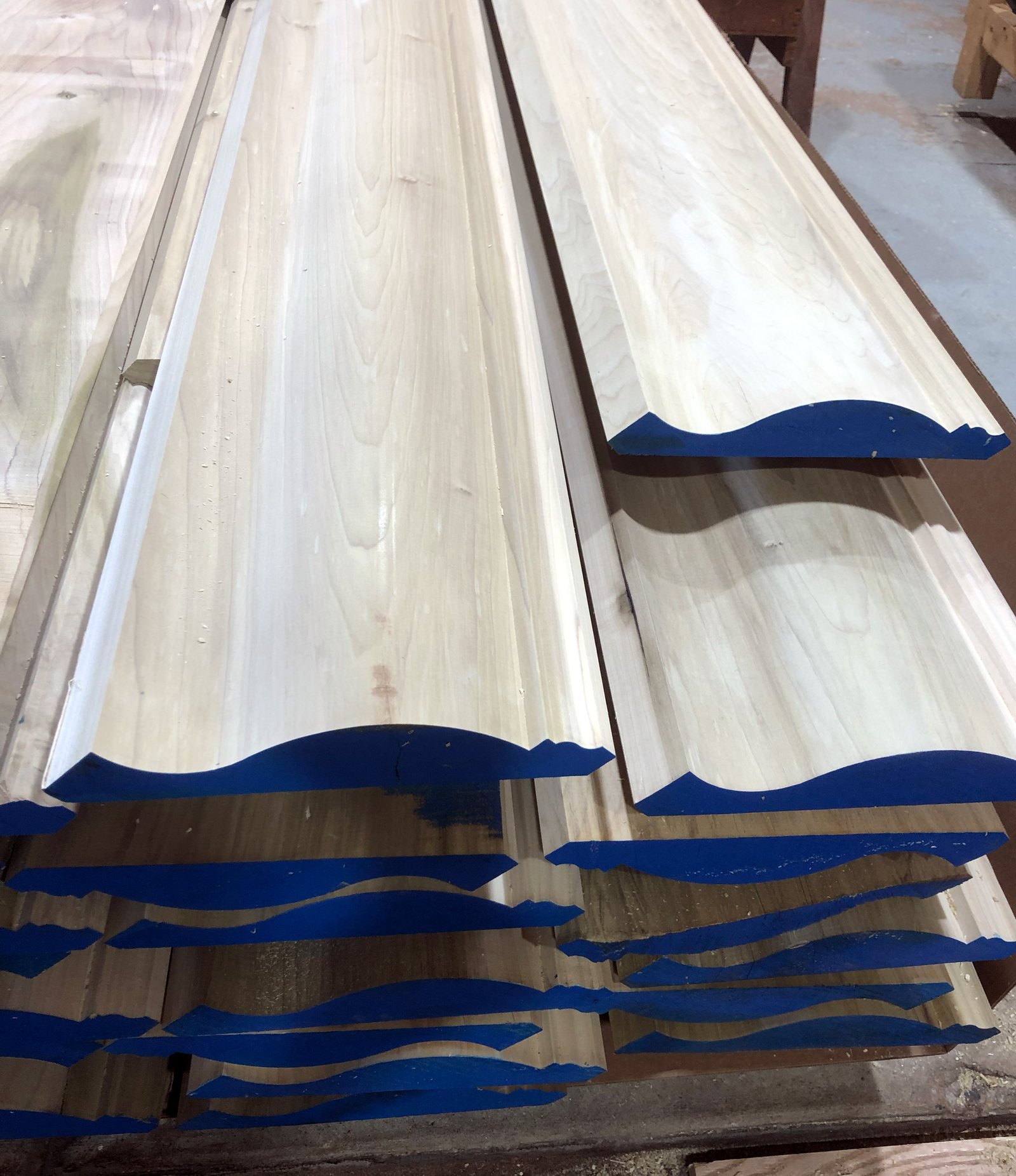
The reveal is machined, not assembled, so the edge profile on the board is the detail that gets built and everything else is just spacing. Four families cover most high end teak cladding. Square edge with an open gap over the cavity. Rabbeted shiplap, which gives a defined shadow and a lap that resists wind driven rain. Tongue and groove with a chamfered or eased edge, which produces a narrow V line. And a rainscreen board with a back relief kerf, which lets the board breathe against the furring.
Each of those is a knife profile. J. Gibson McIlvain grinds the knife when a reveal detail, a cap rail or a trim section has to match something already standing, and the shop keeps a profile library of thousands of ground knives with new knives ground every week. A historic district that requires like for like replacement is a matching problem before it is a milling problem, and the National Park Service technical preservation guidance is where that requirement usually originates.
Profile conventions and tolerances for milled wood are documented by the Wood Moulding and Millwork Producers Association, and the architectural quality grades that a high end specification leans on come from the Architectural Woodwork Institute. Citing a grade in the specification is faster than drawing every section.
One detail is worth drawing anyway. On an open joint reveal, the visible edge of the board is end grain nowhere and long grain everywhere, so the arris wants a small chamfer rather than a hard 90 degree corner. A hard corner looks sharper on the drawing and frays first on the wall.
Moisture Content, Oils and Silica in the Shop
Teak is milled to an in service moisture content, not to a nominal one, and the target changes with where the board ends up rather than with how wide it is. Exterior cladding runs near 12 to 16 percent. Interior slat walls and ceiling boards run near 6 to 8 percent. J. Gibson McIlvain mills exterior teak to a 12 to 16 percent in service moisture content and interior stock to 6 to 8 percent, which is the same discipline at two different numbers.
Thickness is quoted in quarters of rough inches. 4/4 is a nominal 1 inch rough board, 8/4 is 2 inches, and 16/4 is 4 inches. Surfaced dimensions come off those rough numbers, so a cladding board ordered at 4/4 lands thinner than 1 inch once the faces are dressed and the back relief is cut.
The species brings two machining facts with it. Teak carries natural oils, which interfere with adhesion and with any film finish, and it carries silica, which dulls tooling faster than density alone would predict. Both argue for narrow stock on any glued assembly, since a narrow board needs fewer glue lines per square foot of finished surface than a wide one does when staves are built up into a tread, a table top or a cap rail blank.
Grading sits alongside moisture content in the order. North American hardwood grading runs on the National Hardwood Lumber Association rules, which grade a board by the yield of clear face cuttings rather than by appearance. FAS is the top grade and requires a minimum board 6 inches wide by 8 ft long yielding 83 and 1/3 percent clear face cuttings. FAS One Face meets FAS on the better face. Selects meet FAS on the better face at a smaller minimum size. Those rules cover North American hardwood and not an import like teak, so on a cladding order they are the vocabulary a buyer borrows to describe yield while the written order is what actually binds the supplier.
Below that, No. 1 Common requires 66 and 2/3 percent off a minimum board of 3 inches by 4 ft, and No. 2A Common requires 50 percent. Grade describes yield, not defect. A No. 1 Common board is not a damaged board, it simply yields shorter clear cuttings, which makes it the sensible grade for short parts and the wrong grade for a long clear cladding run where every board has to be clean from end to end.
Fastening Narrow Boards and What the Installer Plans For
A narrow board wants one fastener line per furring crossing so it can move symmetrically about its own center, and that single detail protects the reveal more than any amount of extra width ever would. Two face screws across a wide board pin the field in two places and force the movement somewhere else, usually into a cup or into one gap that opens further than its neighbors. One fastener line lets the board breathe without fighting itself.
Fastener edge distance is tighter on narrow stock, which is a real constraint rather than a theoretical one. A 3 inch face leaves less room between the screw and the arris, so pre drilling matters and the fastener pattern has to be laid out rather than eyeballed. Connection design references live with the American Wood Council, and corrosion resistance for exterior fasteners is governed by the relevant ASTM material standards.
Teak oils and stainless hardware are a known pairing for a reason. Carbon steel in teak stains, and the stain migrates into the reveal where it is most visible. Specify stainless and the problem disappears before it starts.
Furring layout, flashing, cavity venting and the fastener schedule are the installer's work and the general contractor's coordination, and the drawings for those come from the project team rather than from the lumber yard. What the yard controls is what shows up on the truck. Consistent width, consistent thickness, a profile that matches the section, the right moisture content and clean ends.
When Another Board Is the Better Answer
Teak is not the only credible high end cladding board, and the comparison is worth making honestly before a specification locks. Where a wide exterior board is genuinely required, a modified product is the cleaner route. Accoya runs around 1,600 lbf on the Janka scale and its acetylation gives dramatically reduced shrinkage and swelling, which is why it holds a wide face and a painted finish where unmodified wood would not.
Thermory and Abodo Vulcan are both carried as thermally modified options. Modified products top out around 16 ft, most of them sold on metric lengths just under 16 ft, because the kiln sets the ceiling. Thermally modified Ash is not available wider than 8 inches, so a wide board in a modified product means Accoya or Abodo Vulcan rather than modified Ash. Published performance data sits with Accoya and Thermory directly.
Warranties follow the same line. Modified products carry them and nothing else does. It is not possible to warranty solid unmodified wood, an organic material that keeps responding to its environment for as long as it is on the wall, and a specifier who understands that writes a maintenance interval into the documents instead of chasing a guarantee.
Cedar remains a legitimate default for exterior cladding, and on cedar the grade call matters more than the species call. CVG, clear vertical grain, is the stable, knot free material that behaves like the narrow teak argument above. STK, select tight knot, is a different product with a different look and a different movement story, and specifying one when the drawings assumed the other is a common and expensive mistake.
Where teak cladding meets painted trim, the trim is a separate species decision. Sapele, roughly 1,410 lbf, holds paint better than Genuine Mahogany, roughly 800 lbf, and comes in a wider range of sizes and longer lengths, which is why it is preferred for painted exterior trim. Sapele is not milled 1x8 for exterior use, since that width is too wide to stay stable outside.
Priming is part of that trim package and not an afterthought. Open-grained and oily species absorb a great deal of finish, so a primer coat evens out the eventual painted surface, and sanding or buffing after priming knocks back grain raising while keeping moulded detail crisp. J. Gibson McIlvain primes the faces that will be unreachable once the assembly closes, in oil based or water based systems, with a fungicide additive on exterior work.
The wider millwork palette behind all of this is Sapele, Iroko, Afrormosia, Teak and Utile, which is sold as Sipo. The tropical decking species, Ipe, which is Tabebuia spp, along with Cumaru, Garapa, Jatoba and Red Balau, are extremely hard and carry high oil content that makes them difficult to glue, so a millwork shop reaches for Sapele, Iroko, Afrormosia, Teak or Utile when a component has to be machined or glued up.
How J. Gibson McIlvain Would Specify This
A narrow teak cladding order that arrives right was specified in six lines, and every one of them is a decision somebody has to make before the first board is milled. Species and grain orientation first. Tectona grandis, vertical grain, with the grain call written in rather than assumed from the word quartersawn.
Second, one face width for the entire field, chosen from 3, 4 or 5 inches and held across every elevation and every phase. Third, the edge profile drawn as a section with the reveal dimension on it, whether that is square edge over an open gap, rabbeted shiplap, chamfered tongue and groove or a back relieved rainscreen board. Fourth, the in service moisture content stated by location, 12 to 16 percent outside and 6 to 8 percent for interior slat and ceiling work.
Fifth, the grade and the clear length requirement together, since a long clear cladding run is a grade decision and not a sorting request. Sixth, the finish schedule, including which faces get sealed before the assembly closes and what the maintenance interval is going to be.
J. Gibson McIlvain has milled to specifications like that since 1798 and is still family run in its seventh generation, which is the practical reason a knife and a profile record can be pulled years later when a phase two release has to match a phase one wall. Where the work goes past linear cladding runs into a true custom assembly planned around a specific space, ICD, the architectural millwork division of J. Gibson McIlvain, builds that assembly. The exterior millwork side of that division is where cap rails, gates and clad entry assemblies get built around a drawing rather than around a catalog.
J. Gibson McIlvain ships the order nationwide, regularly to California, which matters on a teak elevation where the field boards and the trim have to leave the same mill at the same moisture content. Details on the millwork service are on the company site, and the fastest way to get a narrow teak cladding package priced against a drawn section is to call 800-638-9100 and talk to someone who can read the section.
Frequently Asked Questions
What face width should I specify for teak cladding on a high end exterior?
Pick one width from 3, 4 or 5 inches and hold it across every elevation and every phase. A 3 inch face gives the finest shadow rhythm and the least movement per joint, which suits tall uninterrupted walls, soffit boards and interior slat work. A 4 inch face is the general purpose answer for exterior rainscreen fields and carries a deeper rabbeted or open joint reveal cleanly. A 5 inch face is for large scale elevations where the board face is meant to dominate the reveal, and it needs the most attention paid to fastening and reveal spacing. Mixing widths in one field gives every joint a different movement budget and the reveal stops reading as a system.
Does a narrow teak board really move less than a wide one?
Yes, and the relationship is close to linear. Wood moves several times more tangentially than radially, and the dimensional change across a board scales with its width. A 4 inch board moves roughly half as much across its face as an 8 inch board of the same species at the same grain orientation and the same change in moisture content. The practical consequence is that more seams, each moving less, produce a more stable surface than fewer seams each moving more. Shrinkage coefficients for individual species are published by the Forest Products Laboratory.
Can I get wide vertical grain teak cladding if the design calls for it?
Width and vertical grain pull against each other. The usable width of a radially sawn board is bounded by the radius of the log, so a wide vertical grain plank needs a large diameter log behind it, and plantation teak runs to shorter rotations and smaller logs that cap width and length together. Where a genuinely wide exterior board is required, a modified product is the more reliable route. Accoya runs around 1,600 lbf and its acetylation gives dramatically reduced shrinkage and swelling, and Abodo Vulcan is the other wide option. Thermally modified Ash is not available wider than 8 inches.
What moisture content should narrow teak cladding be milled to?
Exterior cladding is milled to an in service moisture content near 12 to 16 percent. Interior slat walls, ceiling boards and similar work are milled near 6 to 8 percent. Width does not change either target. J. Gibson McIlvain mills exterior teak to the 12 to 16 percent range and interior stock to 6 to 8 percent, and the number should be stated by location in the specification rather than left to the mill to guess. Air dried stock settles near the local equilibrium and is not a substitute where an interior tolerance matters.
Is solid teak cladding warrantied against cupping or movement?
No. Warranties exist on modified products and on nothing else. It is not possible to warranty solid unmodified wood, an organic material that keeps responding to its environment for as long as it is on the wall. The right response is a maintenance interval written into the project documents and an assembly detailed correctly from the start. Cupping in particular is driven by installation and back ventilation, not by species, so a drained and ventilated cavity behind the boards does more for long term appearance than any paper guarantee.
Who handles the furring, flashing and fastener schedule?
Those belong to the project team and the installing contractor. Furring layout, flashing, cavity venting and the fastener pattern are drawn by the architect or engineer and executed on site, and J. Gibson McIlvain supplies and mills the material rather than carrying out the installation. What the mill controls is what arrives on the truck, which is consistent width, consistent thickness, an edge profile that matches the drawn section, the correct in service moisture content and clean ends. Specify stainless fasteners, since carbon steel stains teak and the stain shows up in the reveal.
Can a reveal profile or a cap rail be matched to an existing building?
Yes, and matching is the normal case rather than the exception on additions and historic district work. J. Gibson McIlvain grinds the knife when a reveal detail, a cap rail or a trim section has to match something already standing, and the shop keeps a profile library of thousands of ground knives with new knives ground every week. Send a section drawing or a physical sample of the existing profile. Where a like for like replacement is required by a local commission, the National Park Service technical preservation guidance is usually the source of that requirement.
Where do I order narrow teak cladding for a high end exterior?
Call J. Gibson McIlvain at 800-638-9100 with a drawn section rather than a board list. The order that goes well names the species and grain orientation, one face width from 3, 4 or 5 inches, the edge profile with the reveal dimension on it, the in service moisture content by location, the grade with the clear length requirement, and the finish schedule. J. Gibson McIlvain rips the cladding to one consistent width, mills it to the stated moisture content and ships the order nationwide, regularly to California.
Sources and Standards Referenced
- National Hardwood Lumber Association
- USDA Forest Service Forest Products Laboratory
- Building Science Corporation
- The Wood Database, Teak (Tectona grandis)
- American Wood Council Codes and Standards
- Wood Moulding and Millwork Producers Association
- National Park Service Technical Preservation Services
- Architectural Woodwork Institute
- Accoya Modified Wood
- Thermory Thermally Modified Wood