What a Pool House Does to Wood
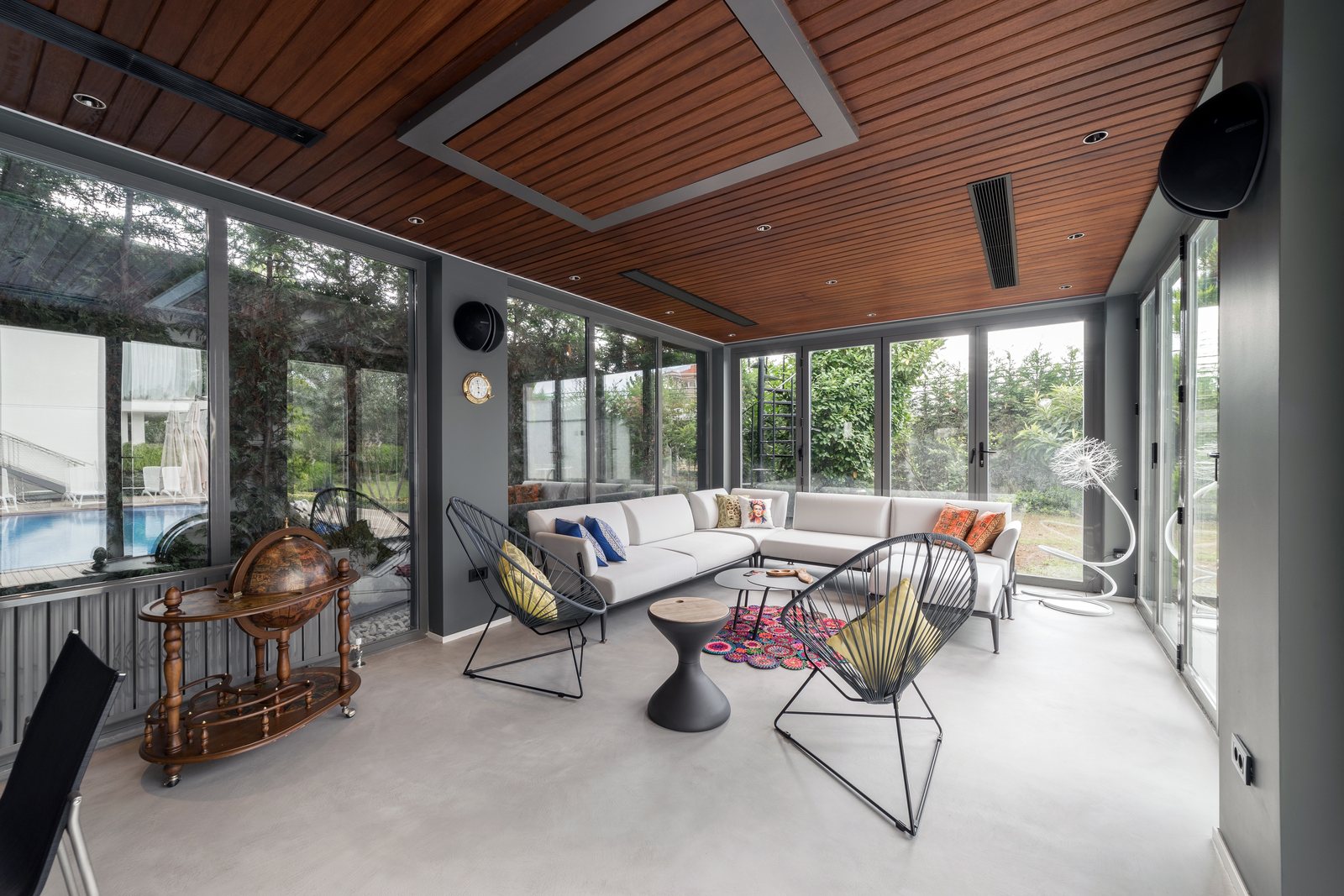
An indoor pool room, spa or steam bath holds the air at a condition that parks wood near 10 to 13 percent moisture content year round, well above the 6 to 8 percent interior millwork is normally milled to. These rooms are kept warm on purpose, often in the low eighties, with relative humidity managed somewhere around 50 to 60 percent so the water surface evaporates slowly and the glazing stays clear. Push those numbers through the equilibrium moisture content tables in the Forest Products Laboratory Wood Handbook and the wood in that room settles high. Trim milled for a dry great room and hung in that air swells. Panels grow and pinch their grooves. Painted casing telegraphs every joint by the second season.
A spa bath behaves differently and is in some ways harder on millwork. It is not a steady high. It spikes to saturation during a shower, then the exhaust fan pulls it back down, and the cabinet door at the end of the vanity run takes that cycle twice a day for twenty years. Steady humidity moves wood once. Cycling humidity moves it over and over, and every cycle works at a glue line, a paint film and a fastener.
Why Modified Wood Belongs Indoors Here
Acetylated and thermally modified lumber is the only wood category that arrives with a manufacturer warranty, and it is the only category whose movement stays predictable when the room never dries out. Acetylation, the process behind Accoya, chemically converts the hydroxyl groups that make wood hygroscopic in the first place. The board stops chasing the room. Shrinkage and swelling drop dramatically, and the finished material runs around 1,600 lbf on the Janka scale, harder than Sapele at roughly 1,410 lbf and harder than White Oak at roughly 1,360 lbf. Thermal modification, the route taken by Thermory and Abodo Vulcan, cooks the hemicellulose sugars out of the cell wall under heat and steam, which lowers the wood's appetite for water and changes its color all the way through.
J. Gibson McIlvain stocks Accoya, Thermory and Abodo Vulcan alongside the unmodified hardwoods, which is what lets a single wet-room package mix categories without mixing suppliers. Say plainly what a warranty is and is not. Warranties exist only on modified products. It is not possible to warranty solid unmodified wood, an organic material that responds to its environment on its own schedule. An architect who writes a warranty requirement into a pool house specification has, without always realizing it, just specified modified wood for those components.
The Size Ceiling on Modified Stock
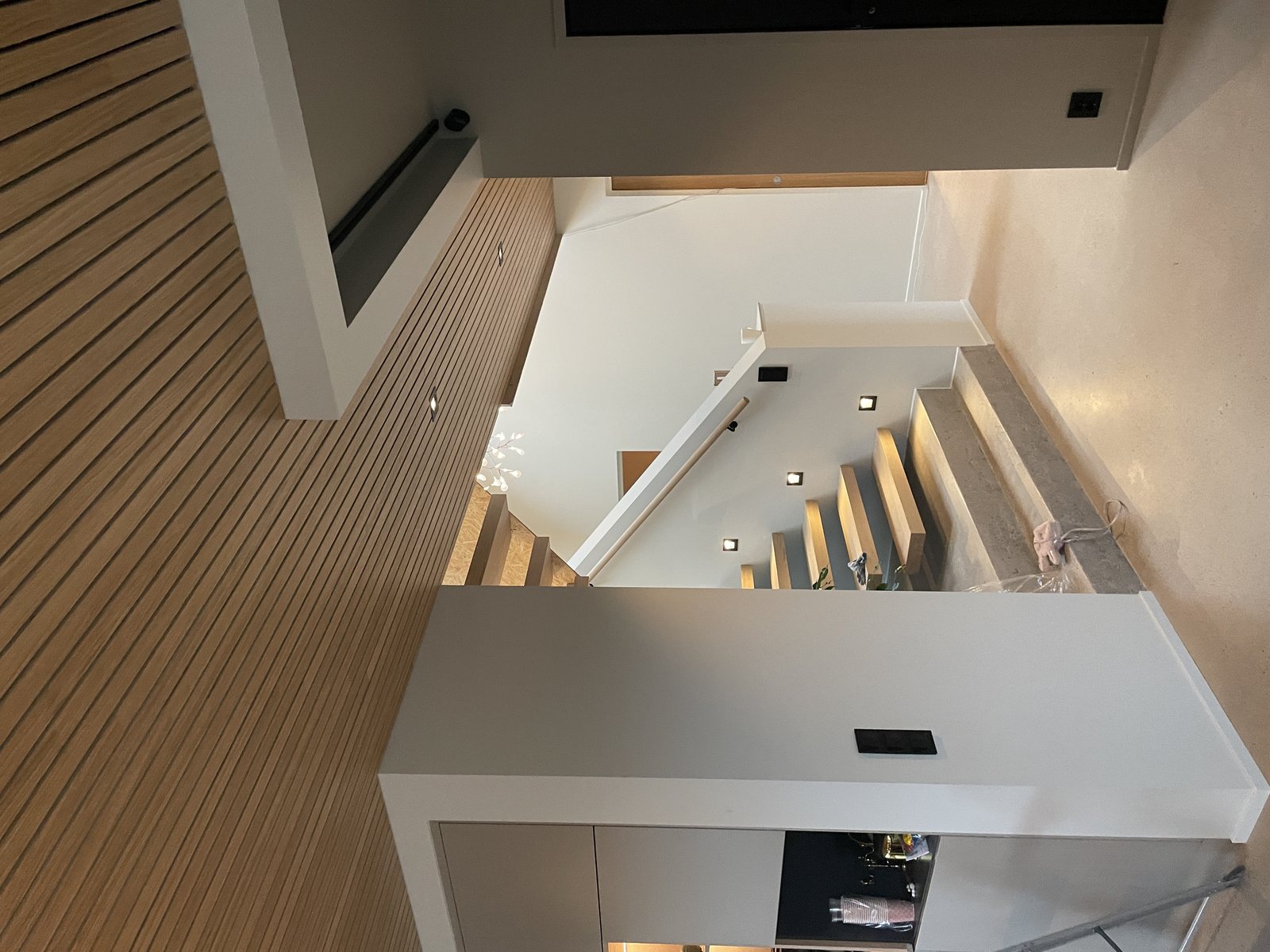
Modified wood tops out around 16 ft, most of it sold on metric lengths just under 16 ft, because the modification vessel is a fixed box and the board cannot be longer than the kiln. This is the single fact that reshapes a pool house drawing more than any other, and it rarely appears on the elevation until someone tries to buy the material. A 22 ft continuous ceiling run in Accoya does not exist. The run either gets a designed joint at a considered location, or it changes species.
Width carries its own limit. Thermally modified Ash is not available wider than 8 inches. When a drawing calls for wide boards in a modified product, the answer is Accoya or Abodo Vulcan, not modified Ash, and finding that out during takeoff rather than during installation is worth a phone call early. The Maryland yard holds over seven million board feet of exotic and domestic lumber, so when a run genuinely has to be longer than the modified ceiling, J. Gibson McIlvain pulls the length out of unmodified stock and the detail changes to suit a material that will move.
The Unmodified Species That Still Work
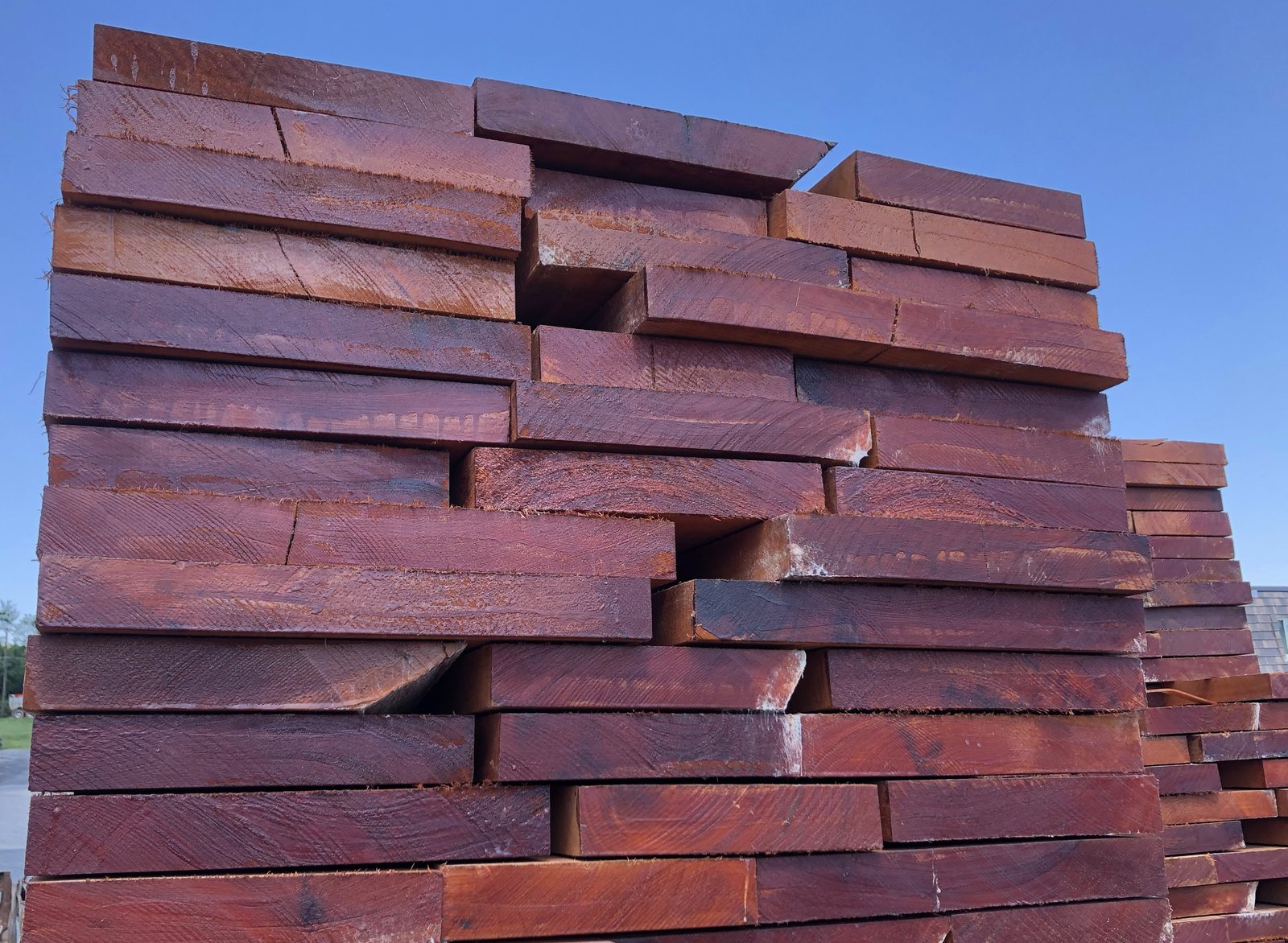
For milled, glued and machined components in a humid room, the millwork palette is Sapele, Iroko, Afrormosia, Teak and Utile, and each of them earns the slot for a different reason. Teak is the traditional answer for anything that gets sat on wet, a shower bench or a spa surround, because its natural oil content and dimensional steadiness hold up under repeated wetting. Iroko and Afrormosia give a similar durability class with a more open grain that takes a finish well. Sapele is the workhorse for painted and clear-finished trim, doors and stiles, and it machines to a crisp arris that survives sanding. Utile runs close to Sapele in working properties and often comes in wider and longer than its cousin. Quartersawn and rift stock moves less across its width than plainsawn, which is exactly why it gets specified where a painted or panelized surface has to stay flat, and in a pool house that reason applies to nearly every vertical surface.
The tropical decking species are a different conversation. Ipe, botanically Tabebuia spp, along with Cumaru, Garapa, Jatoba and Red Balau, are extremely hard and carry high oil content, which makes them difficult to glue. A millwork shop reaches for Sapele, Iroko, Afrormosia, Teak or Utile instead, and saves the decking species for the pool deck itself where boards are fastened rather than bonded. Where a CITES-listed species enters the package, documentation and chain of custody travel with the material, and the CITES Secretariat publishes the appendices that govern which permits apply.
Matching Material to the Zone It Lives In
A pool house is not one environment, it is four, and specifying a single species for the whole building is the most common way these jobs go wrong. The splash perimeter, the wall field above it, the ceiling plane where warm moist air collects, and the covered exterior all sit at different moisture loads. Sorting components by zone before selecting material makes the takeoff shorter and the joinery decisions obvious.
| Zone | Moisture load | Material that suits it | Milling and finishing note |
|---|---|---|---|
| Splash perimeter and coping-adjacent trim | Direct wetting, chlorinated or salt water, standing puddles | Accoya or Abodo Vulcan, Teak where a clear finish is wanted | Bevel or drip the bottom edge, seal all six faces before it leaves the shop |
| Wall field above the splash line | Sustained high relative humidity, occasional condensation | Accoya, Abodo Vulcan, Thermory, or quartersawn Sapele and Utile | Back-relieved profiles and a ventilated cavity behind cladding |
| Ceiling plane and box beams | Warmest, wettest air in the room, condensation risk on cold surfaces | Accoya for painted work, Thermory and Abodo Vulcan for clear finish | Lock miter for seamless corners, milled to the room's in-service condition |
| Doors, jambs and shutters | Humidity on one face, conditioned air on the other | Accoya or Sapele stiles and rails, Teak for a wet-side door | Prime or seal edges and both faces equally to balance the assembly |
| Cabinetry, vanities and benches | Cyclic spikes, plumbing leaks, water sitting on horizontal surfaces | Accoya face frames, Sapele or Utile doors, Teak for wet benches | Sealed toe kicks, sealed sink cutouts, drawer boxes built for the cycle |
| Covered exterior, pergolas and rafter tails | Full weather exposure with sun and wind drying | Accoya, Abodo Vulcan, Iroko, Sapele for painted work | Milled near 12 to 16 percent, primed with a fungicide additive |
Box Beams Over Water
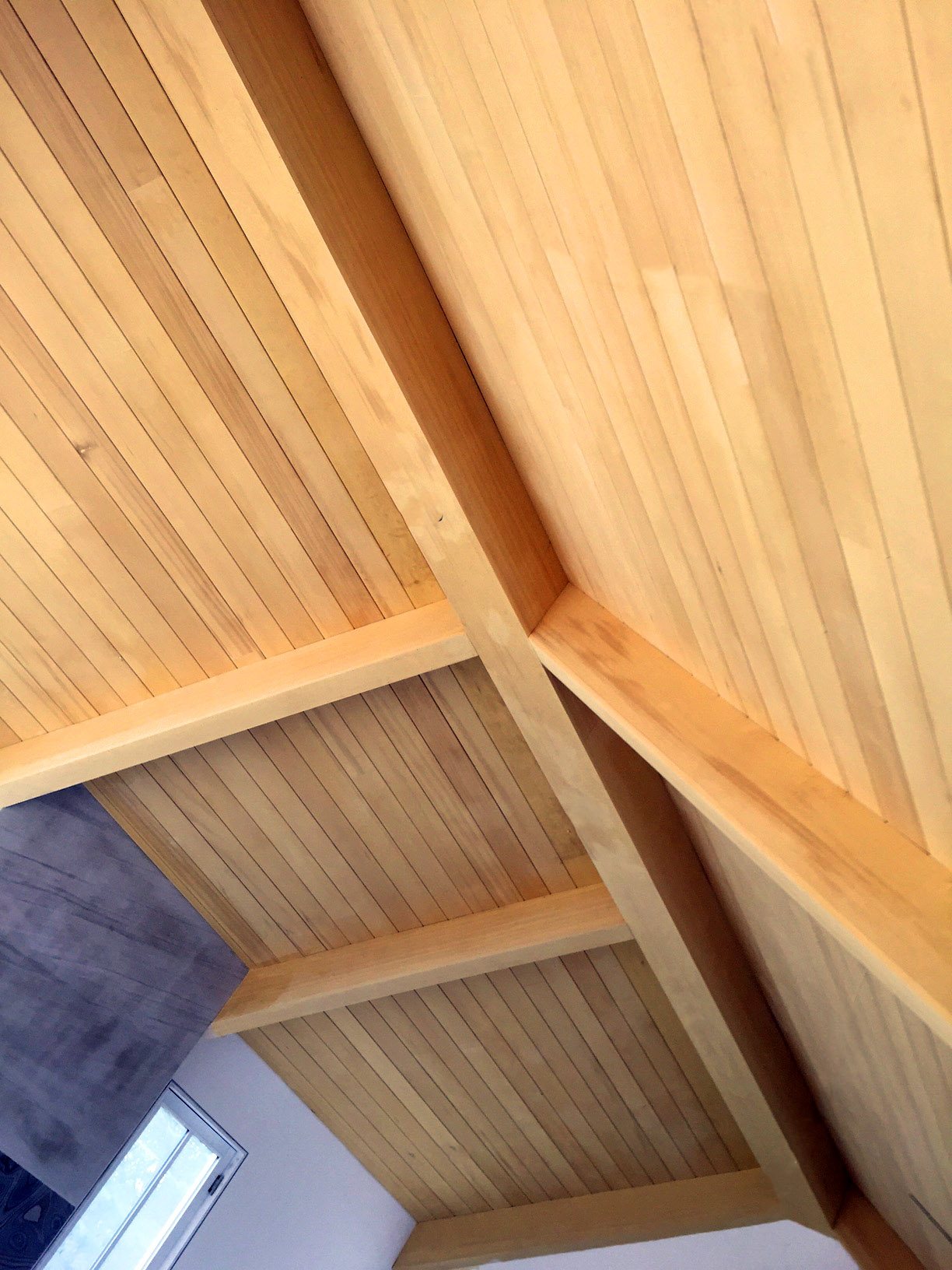
The ceiling of a pool room carries the warmest and wettest air in the building, which makes the joinery choice in a box beam a performance decision rather than an appearance one. ICD, the architectural millwork division of J. Gibson McIlvain, builds box beams three ways, and the three are not interchangeable over a pool. Butt joints give the most minimal profile, the fastest turnaround and the easiest on-site assembly, but they leave visible seams and visible end grain and they are the weakest of the three. Dado joints are strong and still easy for a crew to assemble on site, though seams and end grain still show. Lock miter joints show no visible seams at all and are the strongest.
Over water, exposed end grain is the detail that fails first. End grain takes on moisture many times faster than face grain, and a seam that opens a thirty-second of an inch becomes a wick that no amount of ceiling finish will stop. Lock miter is the detail worth arguing for in this room. It closes the corner, it hides the seam, and it keeps the beam face reading as one piece of wood after a few heating seasons. ICD mills the miter, dry fits the assembly and delivers the beam ready for the installer to lift and fasten to blocking, and the beams arrive at the moisture content the finished room will hold rather than the moisture content a dry warehouse would impose.
Custom Doors, Jambs and Shutters
A door between a pool room and a conditioned hallway lives with high humidity on one face and dry air on the other, which is the most reliable way there is to cup a slab that was not balanced in the shop. The fix is symmetry. Equal coating build on both faces, sealed top and bottom edges, and stile and rail stock selected so the growth rings oppose each other across the assembly. ICD builds custom doors and windows to the opening rather than to a catalog size, which matters in a pool house where the header height is usually driven by glazing and the door is whatever is left.
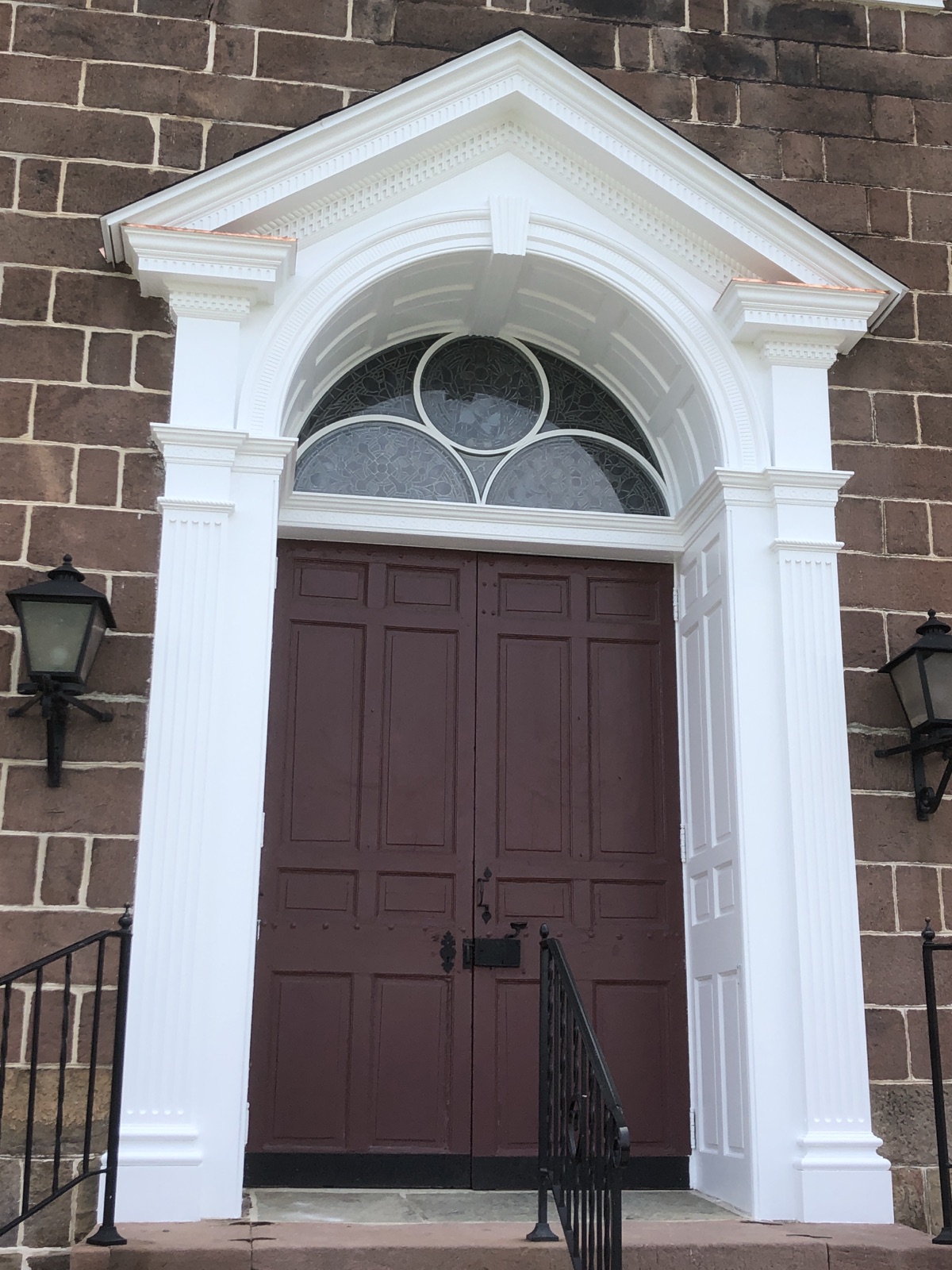
Shutters come up more than people expect on these projects, both on the pool house exterior and on a spa room where privacy matters more than a curtain can deliver. ICD builds them in louver and panel styles, including complete historical matching for style and species, which is what a historic district requires when a like-for-like replacement is the only approved path. The National Park Service technical preservation standards are the document a reviewer will cite, and a shop that can match a nineteenth century louver spacing is the difference between an approval and a redesign.
Cabinets, Benches, Railings and Radius Work
Stock modular cabinets fail in a wet room at the filler strips and the toe kick, which is precisely where a box built for the space has no seams to fail at. ICD engineers cabinetry and case work around how a space is used rather than assembling it from standard modules, and the modular approach is what produces filler strips and mismatched face frames in the first place. In a pool house that difference is functional. Storage gets worked around plumbing and mechanical obstacles instead of boxed away from them. Specialty drawers get built for wet towels and pool chemicals rather than for cutlery. Construction gets tailored to the countertop material being carried, which matters when a slab of stone sits over a cabinet run that will see humidity swings.
Benches, railings and radius trimwork round out the interior scope. A curved wall following a spa or a rolled soffit around a skylight needs radius millwork bent or laminated to the drawn radius, not a straight profile cheated into a curve with saw kerfs. ICD builds freestanding benches, railings and radius trim to the same detail the rest of the room carries, and the Access Board's ADA accessibility guidelines govern graspable railing dimensions wherever the pool deck counts as an accessible route.
Priming, Sealing and What Arrives Ready to Hang
Coating failure in a wet room almost always traces back to a surface that was finished on five faces instead of six, or primed after installation instead of before. J. Gibson McIlvain primes wood in three levels, in both oil-based and water-based systems, and exterior primed trim carries a fungicide additive that matters on a pergola or a covered porch where the surface stays damp under shade. Open-grained and oily species absorb a great deal of finish, so a primer coat evens out the eventual painted surface, and sanding or buffing after priming knocks back grain raising while keeping moulded detail crisp. The J. Gibson McIlvain millwork service covers the linear trimwork, finished cladding and primed trim that surrounds the custom work.
The profile side of this is worth understanding. The shop floor runs moulders, custom knife grinders, straight line and gang rip saws, band resaws and trimming saws, and the moulding profile library holds thousands of ground knives with new ones custom ground every week. If the profile a pool house needs is not in the library, J. Gibson McIlvain grinds a knife to match it, whether that means a difficult historical restoration profile or a contemporary one drawn last month. Vapor control behind all of it belongs to the wall assembly, and Building Science Corporation's work on vapor barriers is the reference that keeps a cladding detail from trapping moisture it cannot release.
Documentation, Lot Matching and Getting It There Intact
A wet-room package is a matching problem as much as a material problem, because the trim, the beams, the doors and the cabinet faces all have to read as one room under the same light. Pulling those components from one yard at one time is how color and figure stay consistent, and seven generations of family ownership since 1798 is why a profile and a knife stay on file when a second phase of the same house comes back three years later. J. Gibson McIlvain is an FSC certified importer and miller, so when a specification carries sourcing requirements, the chain of custody documentation is already part of the transaction rather than a scramble at submittal. The Forest Stewardship Council publishes the certification structure a reviewer will check against, and Architectural Woodwork Institute standards are the usual reference for grade and construction on the custom side.
"The projects that go smoothly are the ones where we get the ceiling, the doors and the cabinet stock on the same order. I can match a lot across the whole room when it comes off one yard, and I can hold finished pieces here until the site is actually ready for them instead of letting them sit in a wet building."
Norm Moton, Director of Sales, J. Gibson McIlvain
Getting finished millwork to a job site undamaged is its own discipline. J. Gibson McIlvain runs its own fleet of trucks and keeps a section of the mill dedicated to packaging, which is what protects a primed face and a crisp moulded edge on a run to California or anywhere else in the country. The company also stores finished millwork for inventory control, so a pool house package can be built once and released in stages as the building closes in. J. Gibson McIlvain supplies and mills. It does not install, so sequencing, field measurement and the fastening schedule belong to the buyer's own installer or fabricator, and the shop's job is to deliver components that are square, dry to the right number and ready to hang.
How J. Gibson McIlvain Would Specify This
The forest to finished answer is one order covering linear trim, finished cladding and primed trim from the millwork shop on site at the lumber yard, plus the true custom components from ICD, the architectural millwork division, so the whole wet-room package comes from one place. Start by writing the room's actual design condition into the specification, temperature and relative humidity both, because that number drives the moisture content every component gets milled to. J. Gibson McIlvain mills interior millwork near 6 to 8 percent for conditioned space and exterior work near 12 to 16 percent, and a pool room sits between those two, which is a conversation to have before the order is cut rather than after.
Specify Accoya or Abodo Vulcan wherever a component takes direct wetting or sits in the ceiling plane, and hold the length limit at 16 ft in the drawing so no elevation promises a run that cannot be built. Use Sapele, Utile, Iroko, Afrormosia or Teak for the components that want a hardwood look, quartersawn where flatness matters. Call for lock miter box beams over the water. Have ICD build the cabinetry, benches, railings and radius work to the space rather than to a module. Then let the shop prime and seal all six faces before anything ships.
To scope a pool house, spa or wet bath package, call J. Gibson McIlvain at 800-638-9100 or reach the company through mcilvain.com. Bring the drawings, the room's design humidity and the finish schedule, and the material list and the profile work can be sorted out in one conversation.
Frequently Asked Questions
What moisture content should millwork be milled to for an indoor pool room?
Not the 6 to 8 percent used for ordinary conditioned interiors, and not the 12 to 16 percent used for exterior work. A pool room held warm with managed humidity sits between the two, and the wood in it settles somewhere around 10 to 13 percent depending on how the dehumidification is run. The practical step is to put the room's design temperature and relative humidity into the specification so J. Gibson McIlvain can mill to the condition the components will actually live in rather than to a generic interior number.
Can I get a continuous 20 ft ceiling run in Accoya or another modified product?
No. Modified wood tops out around 16 ft, and most of it is sold on metric lengths just under 16 ft, because the modification kiln is a fixed size. A longer run needs either a designed joint placed where it reads intentionally, or a switch to an unmodified species detailed to accommodate movement. The Maryland yard holds over seven million board feet, so long unmodified lengths are usually available when the drawing truly requires them.
Is thermally modified Ash a good choice for wide wet-room paneling?
Not for wide boards. Thermally modified Ash is not available wider than 8 inches. When a paneling or cladding drawing calls for wide material in a modified product, the options are Accoya or Abodo Vulcan. Thermory and Abodo Vulcan both cover the thermally modified category, and Accoya covers the acetylated one.
Do any of these materials come with a warranty?
Modified products do. Solid unmodified wood does not, and it is not possible to warranty it, since it is an organic material that keeps responding to its environment. If a project specification requires a warranted material for the components exposed to the wettest conditions, that specification has effectively selected modified wood for those parts of the package.
Which species would you use for a shower bench or a spa surround?
Teak is the traditional pick for surfaces that get sat on wet, for its oil content and dimensional steadiness. Iroko, Afrormosia, Sapele and Utile round out the millwork palette for the rest of the room. The tropical decking species such as Ipe, botanically Tabebuia spp, along with Cumaru, Garapa, Jatoba and Red Balau, are extremely hard and very oily, which makes them difficult to glue, so a millwork shop reaches for the Sapele and Teak family instead and reserves those species for the deck itself.
Why does the box beam joint matter more over a pool than in a dry room?
Exposed end grain absorbs moisture far faster than face grain, and the ceiling of a pool room holds the wettest air in the building. Butt joints assemble fastest and read most minimal but show seams and end grain and are the weakest. Dado joints are strong and still easy to put together on site, though the seams still show. Lock miter joints show no visible seams and are the strongest, which is why they are the detail to specify above water.
Does J. Gibson McIlvain handle installation or field measurement?
No. J. Gibson McIlvain supplies and mills, and ICD, its architectural millwork division, builds the custom components. Field measurement, sequencing and installation belong to the buyer's own installer or fabricator. What arrives is square, milled to the agreed moisture content, primed or sealed as ordered and packaged to reach the site intact, including on nationwide runs to California.
Can primed linear trim and custom cabinetry come on the same order?
Yes, and that is the main reason to buy the package in one place. The millwork shop on site at the lumber yard produces the linear trimwork, finished cladding and primed trim, while ICD handles the true custom work such as doors, cabinets, benches, railings, radius millwork and box beams. Pulling everything from one yard at one time is how color and figure stay matched across the room, and finished millwork can be stored and released in stages as the building closes in.
Sources and Standards Referenced
- Wood Handbook: Wood as an Engineering Material, USDA Forest Products Laboratory
- BSD-106: Understanding Vapor Barriers, Building Science Corporation
- Accoya Acetylated Wood
- Thermory Thermally Modified Wood
- CITES Appendices and Permit Requirements
- Forest Stewardship Council
- Architectural Woodwork Institute
- The Secretary of the Interior's Standards, National Park Service Technical Preservation Services
- ADA Accessibility Guidelines, US Access Board
- J. Gibson McIlvain Millwork Service