
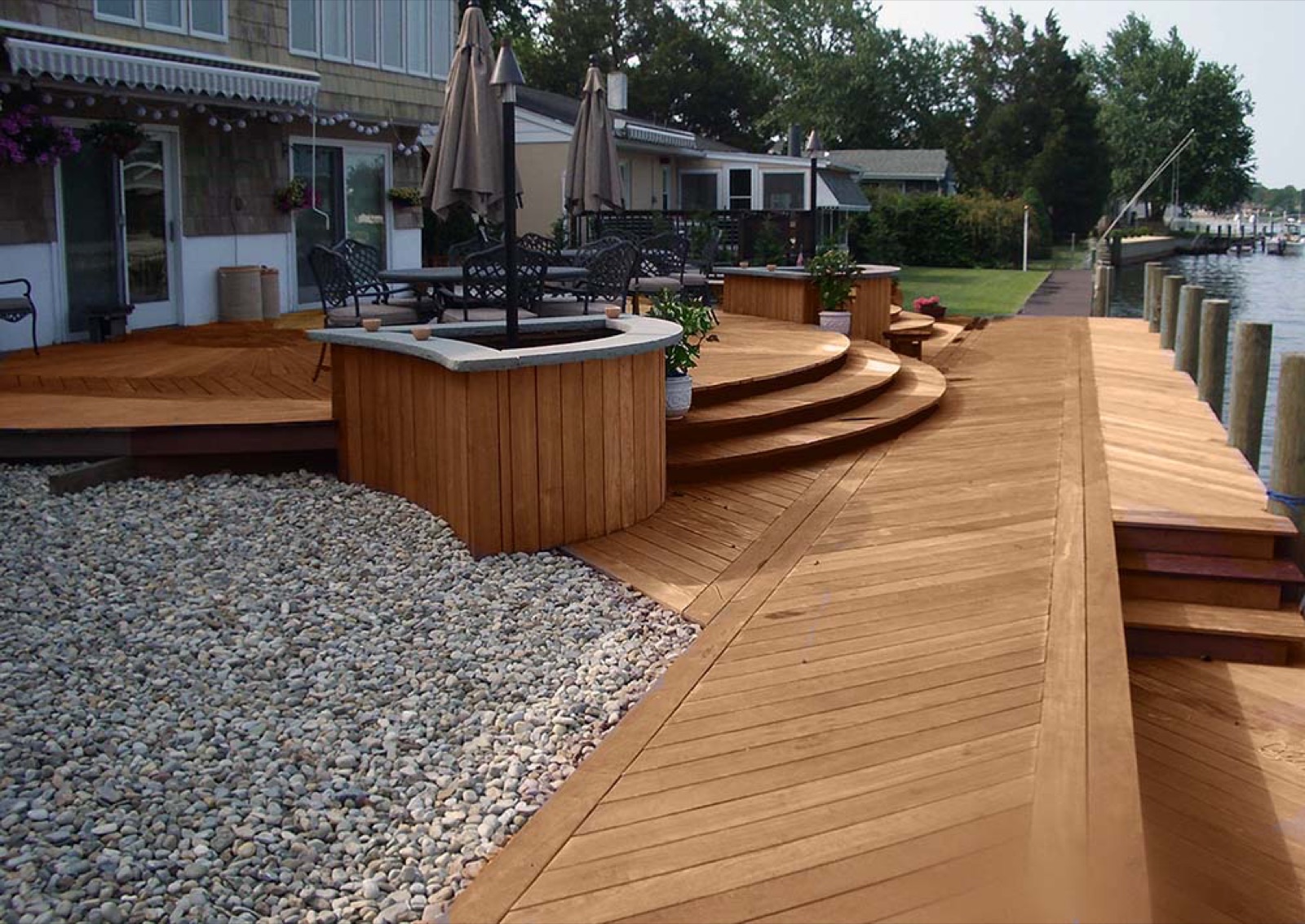
Ipe decking routinely reaches 40 to 75 years in service, while most composite decking is engineered and warrantied for a 25 to 30 year life.
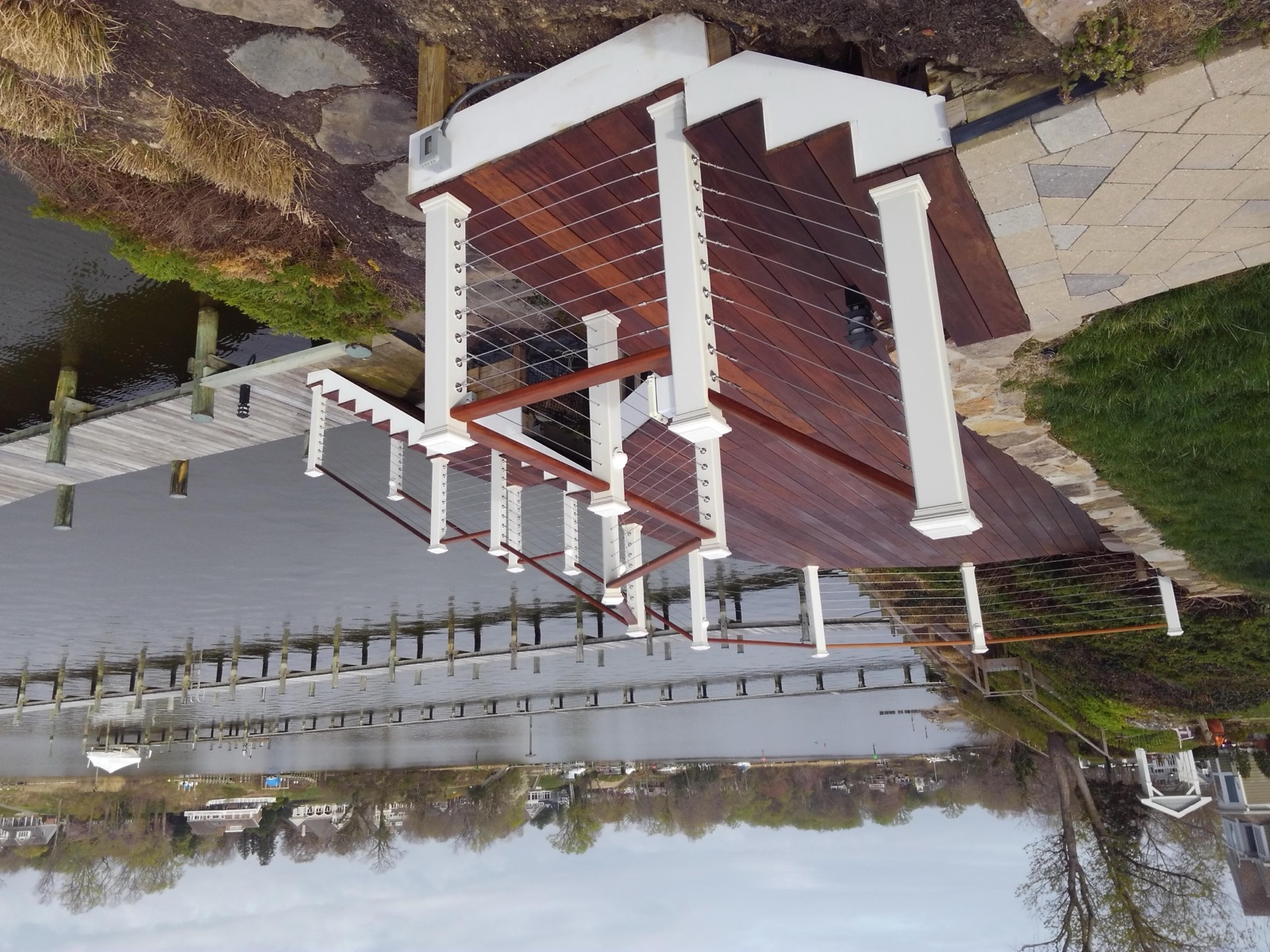
Put the two on the same twenty-year timeline and the gap is obvious. At year twenty, a correctly installed Ipe deck is barely middle-aged. The boards have hardened, the surface has taken on whatever finish schedule the owner chose, and the structure is sound. A composite deck at the same age is inside or near the back half of its rated life. It may still look acceptable. It is also closer to replacement than the Ipe deck is to its first sign of real wear.
That is the headline. The rest of this article is the detail behind it, because "how long does it last" is a question with several answers depending on what you mean by last, how the deck was built, and where it lives.
"Lasting" for a deck means three separate things, and Ipe and composite fail differently on each.
Structural life is the first measure. Will the board still carry a load, hold a fastener, and span the joist without soft spots or splits. Appearance life is the second. How long before fade, scuffing, staining, or surface breakdown pushes an owner to refinish or replace on looks alone. Serviceability is the third. Can a single damaged board be pulled and swapped without the repair announcing itself for the next decade.
Ipe wins structural life outright. It is dense hardwood with a Janka hardness near 3,680 lbf and a density around 1,050 kg per cubic meter, rated Class 1 for durability under the European EN 350 standard, which is the top natural-durability class. The USDA Forest Products Laboratory groups this kind of tropical hardwood among the most decay-resistant material available without treatment, and you can review their durability framing in the Wood Handbook. Composite is a manufactured product built to hit a target service window, and it is engineered well for that window. The question is whether the window is twenty years or fifty.
Ipe over twenty years graduates from new deck to seasoned deck without losing structural integrity.
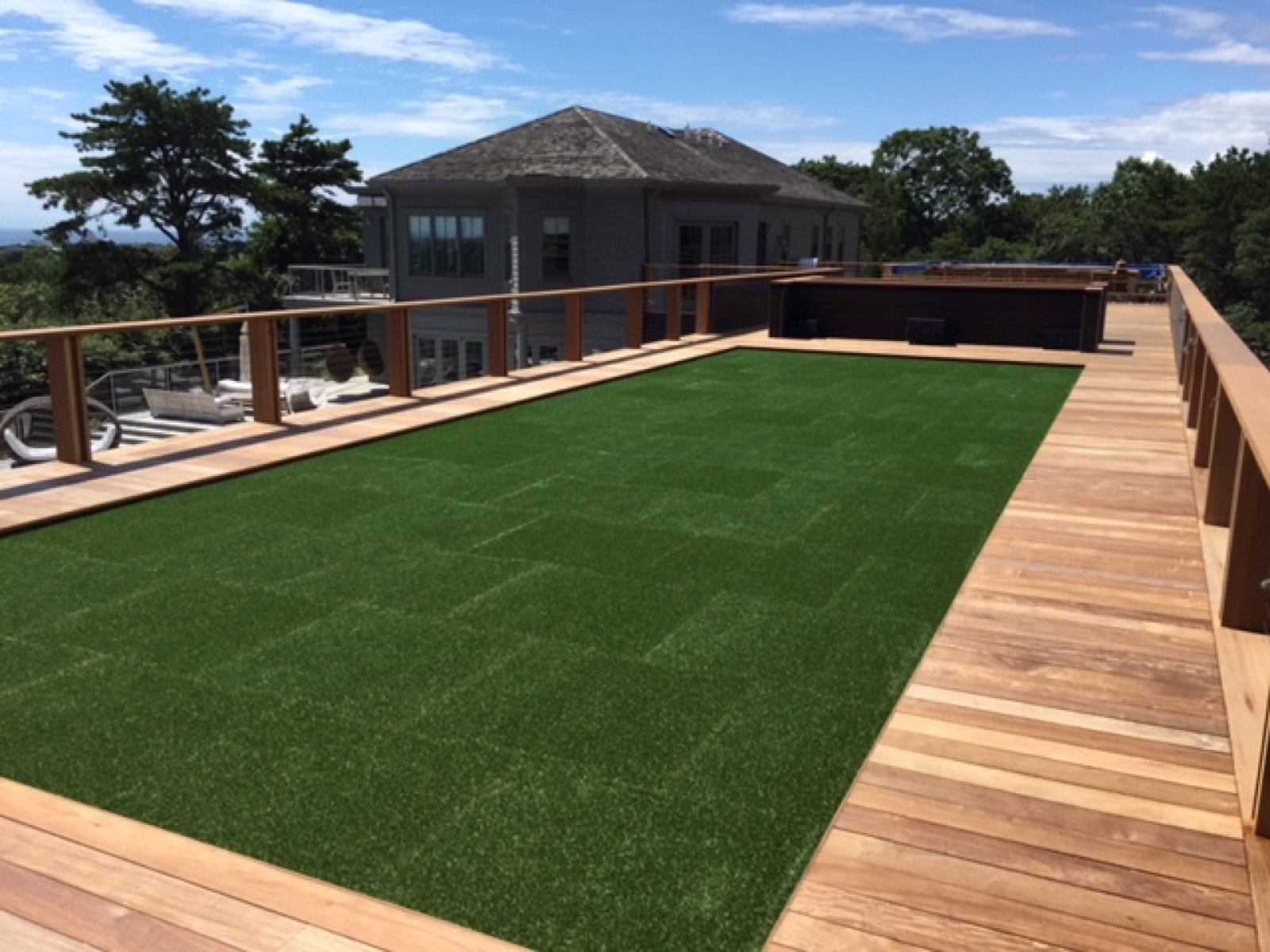
Left unfinished, Ipe weathers to a silver-gray patina in the first year or two of sun exposure. That is a surface color change, not decay. The board underneath is unchanged. Owners who want the deep brown to stay apply a UV-inhibiting penetrating oil on a schedule, often once a year at first and then as needed. Neither path shortens structural life in any meaningful way.
What actually threatens Ipe over decades is water that cannot leave. Trapped moisture at a poorly ventilated joist, end grain sitting in standing water, or boards installed too tight to move are the failure modes, and every one of them traces back to installation rather than the species. Get the build right and the wood does its job. The Wood Database entry for Ipe documents the hardness and dimensional numbers that make this material behave the way it does in service. In-service moisture content for exterior decking settles into a 12 to 16 percent range as the boards equilibrate with the local climate, and that seasonal movement is normal and planned for.
Two more things carry over the full twenty years. Ipe holds an ASTM E84 Class A flame-spread rating, meaning a flame-spread index of 25 or less, which matters for elevated decks, rooftop amenity spaces, and any assembly a code official is reviewing under the International Building Code. And it does not soften, sag, or grow brittle with age the way some manufactured products can under repeated thermal and UV cycling.
Composite decking is a genuinely good product inside its rated life, and its rated life is the point of the comparison.
Modern capped wood-plastic composite is a real improvement over the first-generation uncapped boards that generated fade and mold complaints in the 2000s. The polymer cap resists staining and slows UV fade, and the core carries the load. Manufacturers back these boards with limited warranties, frequently in the 25 to 50 year range for the cap and structure, and those warranties are a legitimate part of the value. Solid Ipe carries no warranty, and it does not need one to outlast the framing it sits on.
Read the warranty language, though, and the picture sharpens. Limited warranties are prorated, cover specific failure modes, and often exclude the labor to tear out and reinstall. A twenty-year-old composite deck that fades outside the fade tolerance, or whose cap delaminates, is frequently a partial-credit claim, not a free new deck. Composite also expands and contracts with temperature more than wood does across a day, which is why gapping and fastening instructions are strict. And dark composite boards get hot underfoot in direct sun, a comfort issue that does not shorten life but shapes where the product fits.
None of this makes composite a bad choice. It makes composite a twenty-five-year choice competing against a fifty-plus-year one, which is exactly the trade a specifier needs to price into the decision.
Side by side, the durability numbers and service expectations separate cleanly.
| Material | Janka (lbf) | Density (kg/m3) | EN 350 durability | Typical service expectation | Best fit |
|---|---|---|---|---|---|
| Ipe (Tabebuia spp.) | ~3,680 | ~1,050 | Class 1 | 40 to 75 years | High-traffic commercial and premium residential decks, rooftops, boardwalks |
| Cumaru | ~3,540 | ~1,070 | Class 1-2 | 25 to 40+ years | Strong Ipe alternative where a warmer tone is wanted |
| Jatoba | ~2,690 | ~910 | Class 2-3 | 20 to 30 years exterior | Covered decks, shaded exposures |
| Red Balau | ~1,700-2,000 | ~850-950 | Class 2-3 | 15 to 25 years | Value hardwood decking projects |
| Garapa | ~1,700 | ~800 | Class 3 | 15 to 25 years | Lighter-toned decks, pool surrounds |
| Massaranduba (comparison only) | ~3,190 | ~1,150 | Class 1-2 | 25 to 40 years | Dense hardwood reference point |
| Capped wood-plastic composite | Not applicable | Varies | Not rated (manufactured) | 25 to 30 years (warrantied) | Low-maintenance residential decks |
The hardwoods carry a natural-durability class because they are a natural material tested against a recognized standard. Composite is not rated on the EN 350 scale because it is not wood; its longevity is a manufacturing spec backed by warranty, which is a different kind of promise.
The surfaces age in opposite directions, and knowing how helps set owner expectations.
Ipe fades toward silver and can be brought back to brown with oil more or less indefinitely, because you are refinishing a solid material with color all the way through. Sand a scuff out of Ipe and you find more Ipe. Composite fades within a manufacturer-defined tolerance and cannot be refinished the same way, because the color lives in a thin cap. A deep gouge in a capped board exposes the core and that spot stays visible.
Heat behaves differently too. Dense hardwood absorbs and releases heat, and while a dark Ipe deck in full sun is warm, many dark composite boards run hotter because the polymer surface holds heat aggressively. For a barefoot pool deck or a south-facing rooftop, that difference drives real specification choices. Neither factor changes structural life. Both change how the deck feels at year one and year twenty.
Installation decides lifespan as much as material choice, and a great board on a bad frame still fails early.
Dense hardwood decking wants joists at 16 inches on center. Wider spacing invites deflection and long-term movement that no species survives gracefully. The substructure has to shed water, breathe, and let each board move seasonally. A 5/4x6 board covers roughly 2.1 linear feet per square foot of deck, which is the number you build your takeoff from, and correct gapping between boards is what lets air and water pass instead of pooling.
Ventilation under the deck is not optional. Air has to move across the underside of the boards, or trapped humidity drives cupping and accelerates the one failure mode dense hardwood is actually vulnerable to. The building-science case for drainage and drying is laid out well by Building Science Corporation, and it applies to composite framing as much as to hardwood. Composite carries its own strict install rules, particularly around thermal gapping at board ends, and skipping them voids the very warranty that justified the product.
"We see decks come back to us at fifteen and twenty years, and the ones that are still perfect are never a surprise. They were built on 16-inch centers, gapped right, and ventilated. The species matters, but I have watched a beautiful Ipe order underperform because someone ran the joists too wide and choked off the airflow. Spec the whole assembly, not just the board." Norm Moton, Director of Sales, J. Gibson McIlvain
Fasteners and profile choices are longevity decisions, not just cosmetic ones.
The profile you choose dictates the fastening method. Tongue-and-groove decking is the only profile that works with a hidden fastener system, clipping into the groove so the surface stays clean. Shiplap and square-edge boards take visible fasteners driven from the top, pre-drilled to keep dense hardwood from splitting. Material goes down on furring strips or joists, and where a grooved profile is used on a wall or soffit detail, the grooves face down so water drains rather than collects.
Coastal and marine-adjacent projects need 316 stainless fasteners. Lesser hardware corrodes, streaks the boards, and loosens over the decades you are trying to protect. This is a small line item that quietly determines whether the deck is sound at year twenty or spotted with rust bleed. The American Wood Council publishes the fastening and connection guidance that governs code-compliant exterior assemblies, and it is worth reading before finalizing a fastener schedule.
Responsible sourcing and fire rating hold up across the full service life, and both belong in a real spec.
Ipe can be supplied FSC-certified, which matters for LEED projects and for any owner who wants documented chain of custody. The Forest Stewardship Council maintains the certification system, and green-building teams can map decking choices to credits through the USGBC LEED framework. When a project uses a CITES-listed species, documentation is required and the paperwork travels with the material, so specifying a supplier that handles that compliance is part of the durability story too, because a legal, documented deck is one that does not get torn out over an import problem.
On fire, the Class A ASTM E84 rating that Ipe carries is a code asset for elevated and commercial assemblies. The test method itself is published by ASTM, and fire-performance expectations for exterior wood are covered further by the NFPA and in design resources from WoodWorks. A flame-spread index of 25 or less is a number a plan reviewer recognizes on sight.
Over twenty years the value question is really a replacement-cycle question.
Ipe costs more up front than composite and far more than a softwood deck. That is the honest starting point. Run the clock forward, though, and the math shifts. A composite deck approaching the end of its warrantied life inside the twenty-year window is on a replacement schedule the Ipe deck simply is not, because the hardwood is engineered by nature to outlast two or three composite cycles. Refinishing Ipe with penetrating oil is a maintenance line, not a replacement line, and an owner who lets it gray out pays nothing to maintain it at all and loses no structural life.
For a commercial owner amortizing a rooftop amenity deck or a municipality maintaining a boardwalk, the fewer-replacements arithmetic is the entire reason Ipe keeps winning specs. The material costs more per board foot and less per decade of service. That is the trade to put in front of the client in plain terms.
How J. Gibson McIlvain Would Specify This
Start with the exposure and the owner's tolerance for maintenance. For a high-traffic commercial deck, a rooftop, or any project where a fifty-year horizon is the goal, we point to Ipe, and J. Gibson McIlvain supplies Ipe decking in a vast inventory across every standard and custom dimension, milled to your profile and shipped nationwide, including regularly to California. For a warmer tone at a similar durability tier, Cumaru is the alternate. Where budget leads and a shorter horizon is acceptable, Red Balau or Garapa earn their place, and the table above shows what you trade for the savings.
Spec the assembly, not just the species. Call out joists at 16 inches on center, a ventilated substructure, correct board gapping, and 316 stainless fasteners on any coastal work. Choose the profile deliberately: tongue-and-groove if you want hidden fasteners, square-edge or shiplap with pre-drilled top-fixing otherwise, and grooves facing down wherever drainage matters. Set the finish expectation with the owner in writing, oil-maintained brown versus natural silver, so nobody is surprised at year two.
If a project genuinely needs a manufactured board, that is a real option and worth pricing against the hardwood on a full-lifecycle basis rather than up-front cost alone. As a commercial and contractor-volume supplier, J. Gibson McIlvain mills and ships decking across the country, and the sales team will spec the whole package with you. Call 800-638-9100 or start at the Ipe decking page to get the material and the details right the first time.
Frequently Asked Questions
Does Ipe really last 40 to 75 years, or is that just the maximum?
It is the realistic in-service range, not a best case. Ipe is Class 1 durable under EN 350, the top natural-durability rating, with a Janka hardness near 3,680 lbf and density around 1,050 kg per cubic meter. Structural life at the long end of that range assumes a correctly built deck: joists at 16 inches on center, a ventilated substructure, and boards that can shed water. Boards left unfinished still last structurally; they simply weather to gray.
Will my composite deck fail at twenty years?
Not necessarily fail, but twenty years puts most composite inside the back half of its engineered and warrantied life, commonly rated 25 to 30 years. Modern capped composite ages better than first-generation uncapped boards. Read the warranty closely, since coverage is typically limited, prorated, and often excludes tear-out and reinstall labor. Ipe at twenty years, by contrast, still has decades of structural life remaining.
Can Ipe be refinished if it fades or scratches, the way composite cannot?
Yes. Ipe has color throughout the board, so a scuff or gouge sands out and reveals more Ipe. Faded gray boards come back to brown with a UV-inhibiting penetrating oil. Composite color lives in a thin surface cap, so a deep gouge exposes the core permanently and the board cannot be refinished the same way. That refinishability is a large part of why Ipe's appearance life stretches so long.
Why does installation matter as much as choosing Ipe?
Because the one failure mode dense hardwood is vulnerable to is trapped moisture, and every version of that traces to the build. Joists spaced wider than 16 inches on center, a substructure that cannot breathe, boards gapped too tight, or the wrong fasteners will shorten the life of any species. A great board on a bad frame still fails early. Spec the whole assembly, including ventilation and fastening, not just the wood.
Does Ipe come with a warranty like composite does?
No, and that is by design. Solid unmodified hardwood is not warrantied, because it does not need a warranty to outlast the framing it sits on. Composite carries a manufacturer warranty as part of its value proposition, since it is an engineered product built to a target service window. Only modified wood products such as Accoya, Thermory, and Abodo Vulcan reference warranties in the solid-board category.
Can J. Gibson McIlvain ship Ipe decking to my project out of state?
Yes. J. Gibson McIlvain is a commercial and contractor-volume supplier that ships nationwide, including regularly to California, and holds a vast Ipe inventory across standard and custom dimensions. The material can be milled to your profile before it ships. Call 800-638-9100 to spec dimensions, profile, and fastening for your project.
Sources and Standards Referenced
- USDA Forest Products Laboratory, Wood Handbook (Durability and Decay Resistance)
- The Wood Database, Ipe
- ASTM E84, Standard Test Method for Surface Burning Characteristics of Building Materials
- American Wood Council, Codes and Standards
- International Code Council
- Forest Stewardship Council
- WoodWorks, Wood Products Council
- Building Science Corporation


