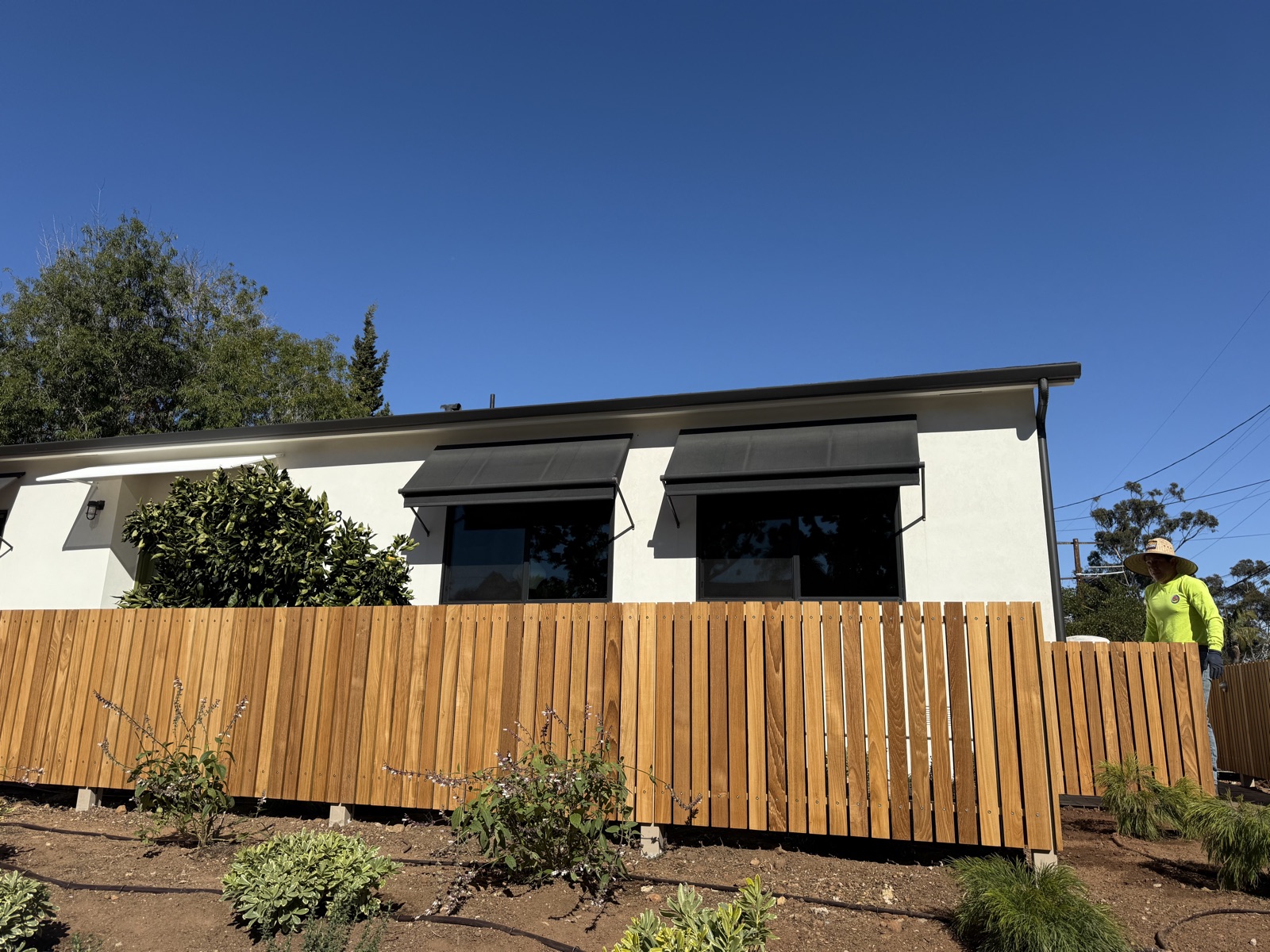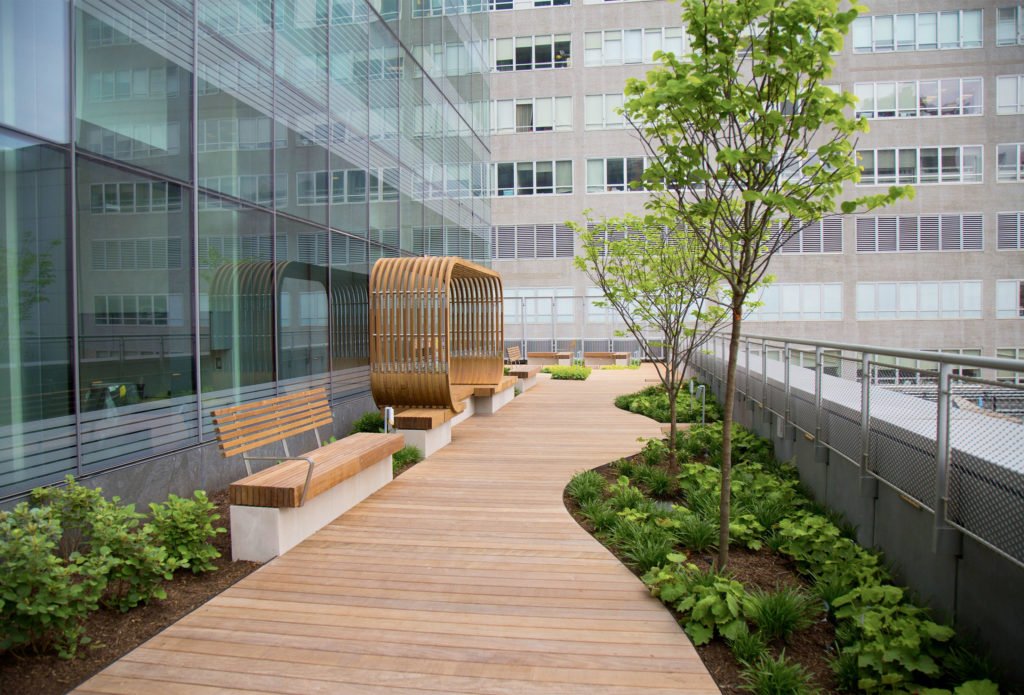

For a commercial deck taking heavy, continuous foot traffic, the working answer is 5/4 Ipe over joists at 16 inches on center.
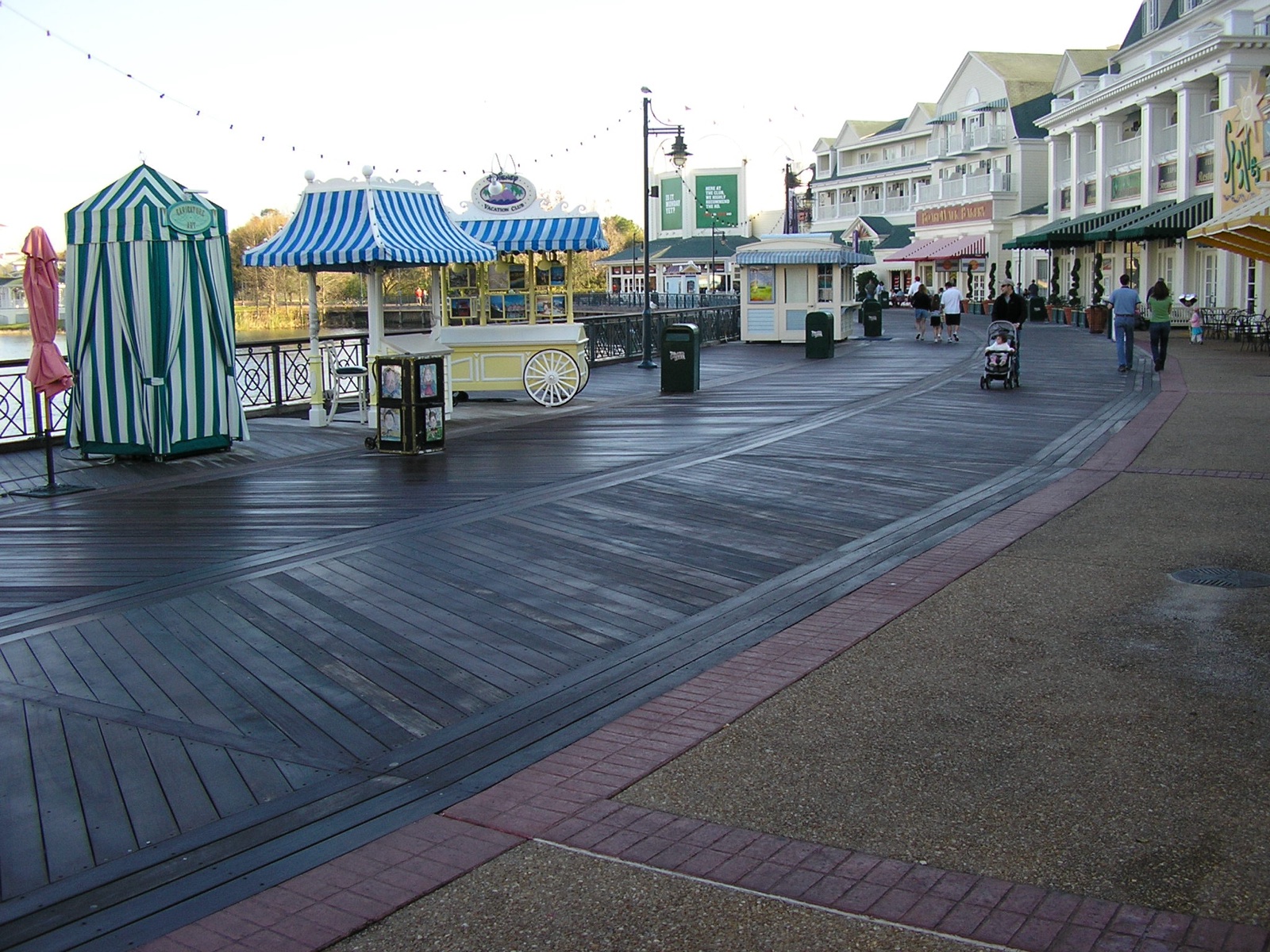
That covers the large majority of plaza decks, boardwalks, restaurant patios, hotel pool surrounds, and rooftop amenity spaces built on conventional framing. A 5/4 board is nominally one and a quarter inches. After surfacing it lands close to a full inch of actual thickness, and some mills run a metric equivalent right around 21mm. On a 16-inch joist layout, that one inch of Ipe carries assembly-level pedestrian loads with almost no perceptible deflection.
The thickness question is really two questions wearing one coat. The first is structural, how far the board has to span between supports and how much live load it carries. The second is practical, whether the profile you chose has enough meat in it to hold a fastener the way you intend. Get both right and a 5/4 board is plenty. Get the joist spacing wrong and no reasonable thickness rescues it.
Nominal thickness and actual thickness are different numbers, and only the actual number carries load.
A specifier who writes "one inch Ipe" and a supplier who reads "1x Ipe" may be talking about two different boards. Rough green lumber shrinks and loses material at the planer. A 1x board (nominal one inch) surfaces to roughly three quarters of an inch. A 5/4 board (nominal one and a quarter) surfaces to about one inch. A 2x board (nominal two inches) surfaces to roughly one and a half inches. Those surfaced dimensions are what your span calculation must use.
Commercial drawings should call the profile by its real surfaced thickness plus width, then reference the joist spacing in the same note. "5/4x6 Ipe decking, 1 inch actual, over joists at 16 inches o.c." leaves no room for a substitution that quietly drops you to three quarter inch stock. J. Gibson McIlvain stocks Ipe in a vast inventory across 1x, 5/4, and heavier profiles in every standard and custom width, so the profile you draw is the profile you can actually buy.
5/4 is the commercial workhorse because Ipe is dense enough to do more with less thickness.
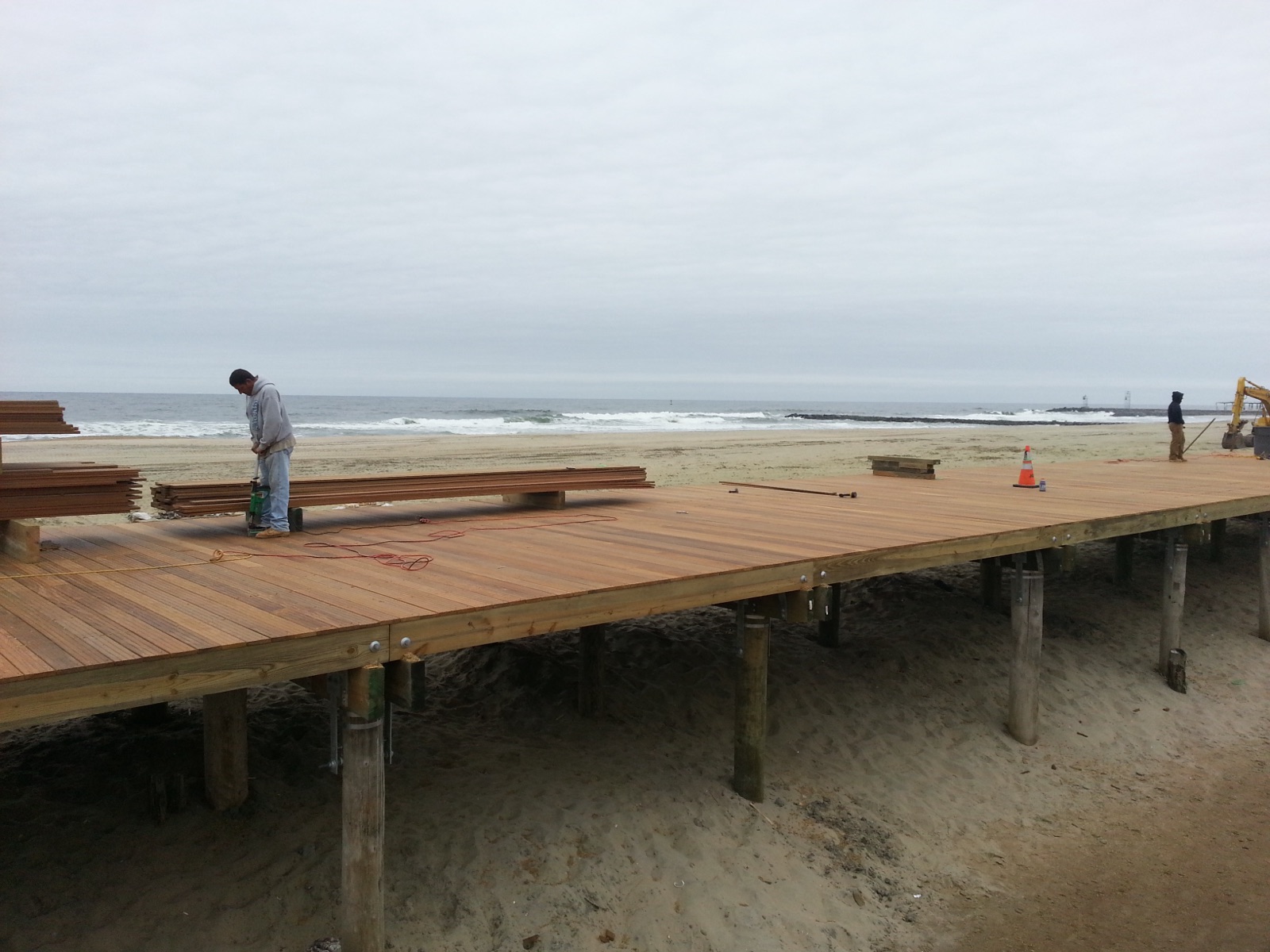
Ipe (Tabebuia spp.) is one of the hardest and stiffest decking materials in commercial use. Its Janka hardness sits near 3,680 lbf and its air-dry density runs around 1,050 kg per cubic meter, figures documented in the wood technology literature and confirmed in field data at the Wood Database. Stiffness scales with the cube of thickness, so the density and modulus of elasticity that Ipe brings let a one-inch board resist bending that would flex a much thicker cedar or treated pine plank.
That is why you rarely need to jump to 2x on standard framing. A softwood deck might reach for a two-inch board to feel solid underfoot. Ipe delivers the same rigid, drum-tight feel at 5/4 because the fiber is doing more work per inch. For a plaza that will see thousands of footfalls a day, 5/4 on tight joist spacing gives you a surface that does not bounce, does not telegraph movement, and wears for decades.
Joist spacing, not board thickness, is the first lever you pull on a heavy-traffic deck.
Thickness and support spacing trade against each other. Tighten the joists and a thinner board works. Widen the joists and you must add thickness. For dense tropical decking under commercial load, 16 inches on center is the baseline, and demanding installations tighten to 12 inches on center for a stiffer feel or for diagonal and herringbone board layouts, where the effective span across a diagonal is longer than the joist spacing suggests.
Framing spans themselves should follow the prescriptive provisions and load path guidance published by the American Wood Council, and the deck as a whole has to satisfy the live loads in the building code. The International Code Council sets assembly and public-access live loads well above residential values, with many occupied commercial and assembly decks designed to 100 pounds per square foot rather than the 40 pounds per square foot common to a backyard deck. Higher design load is a second reason commercial work leans toward tighter joist spacing and, where spans grow, thicker boards.
Deflection, not raw strength, is the number that actually pairs thickness with span.
Ipe will not break under foot traffic at any sane thickness. Long before strength is in doubt, a board can feel springy, and springy is what owners notice. The controlling criterion is deflection, held for most decking to L over 360 of the span under live load. A board spanning 16 inches should sag well under a tenth of an inch when someone stands on it, and a one-inch Ipe board meets that easily on 16-inch centers. Open the same board to a 24-inch bay and it still carries the load, but the deflection creeps past what a walking surface should have, which reads underfoot as bounce. That is the real reason thickness and span are chosen together rather than one at a time. The prescriptive span provisions from the American Wood Council are built around holding deflection inside that limit, and a stiff commercial deck is one that respects it with room to spare.
| Profile | Actual thickness | Typical max joist spacing | Best commercial use |
|---|---|---|---|
| 1x (nominal 1 in) | ~3/4 in | 12 in o.c. | Light commercial, straight layouts, well supported |
| 5/4 (nominal 1-1/4 in) | ~1 in | 16 in o.c. | The default for heavy foot traffic on standard framing |
| 2x (nominal 2 in) | ~1-1/2 in | 24 in o.c. or unsupported pedestal spans | Wide framing, cantilevers, rooftop pedestal systems, stair treads |
Move up to 2x Ipe when the boards must span wider or float on a pedestal system.
Two conditions push you past 5/4. The first is a wider framing bay. If architectural or mechanical constraints force joists out to 24 inches on center, a one-inch board is working too hard and 2x stock (roughly one and a half inches actual) restores the safety margin. The second is a rooftop or plaza deck set on adjustable pedestals, where the decking spans between pedestal heads with no continuous joist beneath it. Those unsupported spans behave like short beams, and 2x Ipe, sometimes in a purpose-milled paver format, is the correct call.
Stair treads are the other place thickness earns its keep. Treads take concentrated edge loading and often overhang the stringer, so many commercial detailers step treads up to 2x even when the field deck is 5/4. Ramps built to accessibility standards deserve the same attention to a firm, stable walking surface. The U.S. Access Board requires that openings in a walking surface not pass a half-inch sphere, and that elongated gaps run perpendicular to the dominant direction of travel, which affects how you gap and orient boards on any public deck.
Thickness protects the structure, but Ipe's natural durability protects the board.
A commercial deck fails two ways, structurally and biologically. Thickness answers the structural half. Species durability answers the other half. Ipe is rated Class 1, the most durable category, under the EN 350 framework for natural decay resistance, and it holds a Class A flame-spread rating under ASTM E84, meaning a flame-spread index of 25 or less, a property that matters on many commercial and multi-family projects. Density and durability are why Ipe can run thin and still last, where a less durable species might need more section just to survive surface checking and rot.
The USDA Forest Products Laboratory Wood Handbook is the standard reference for the mechanical and decay properties that underlie these ratings. Where a project seeks credit under a green building program, the material can be sourced FSC-certified, and the Forest Stewardship Council chain-of-custody documentation is what auditors will ask to see. If a project instead calls for a CITES-listed species, documentation is required at import and should be requested from the supplier before the material ships.
"On heavy commercial work the first thing I ask is what the joists are doing, not what the board looks like. I have watched crews order beautiful 1x Ipe and then set it on 16-inch centers and wonder why it feels lively underfoot. Give me 5/4 on tight framing and I will build you a plaza deck that still feels like a slab of stone twenty years out. When the frame goes wide or it is a pedestal roof, we step up to 2x and stop guessing." said Norm Moton, Director of Sales at J. Gibson McIlvain.
Board thickness has to be great enough to hold the fastener system you have chosen.
Profile and fastener are locked together with thickness. A face-screwed deck, where the screw goes through the top of the board, works on any thickness but leaves a visible, plugged fastener. Pre-drill, counterbore, and plug with Ipe bungs for the cleanest result. Hidden fastener systems ride in a groove milled into the edge of the board, and that groove needs adequate wall thickness above and below it. A 5/4 board (one inch actual) takes a standard side groove comfortably. A three quarter inch 1x board is marginal for some clip systems, which is one more reason 5/4 is the safer commercial default.
Remember the profile rules that govern how fasteners can be applied. Shiplap edges take visible face fasteners. Only a tongue and groove profile hides fasteners fully within the joint. Whatever the profile, the material must land on furring strips or joists, never on a solid substrate that traps water, and any milled grooves face down so the board drains. For coastal and pool-adjacent commercial decks, specify 316 stainless fasteners to resist chloride corrosion. Guidance from Building Science Corporation on drainage and back-ventilation applies directly to how a dense hardwood deck should be detailed.
Bring the boards to service moisture and gap them correctly, or thickness will not save the deck from movement.
Ipe moves with moisture like any wood, and a heavy-traffic deck that was installed too wet or too dry will cup, gap unevenly, or pinch its fasteners. Target an in-service moisture content of 12 to 16 percent and let the material acclimate on site before fastening. Gap boards for drainage and airflow, keep the framing ventilated top and bottom, and do not butt board ends tight. A one-inch board that is properly dried and gapped stays flatter than a thicker board that skipped acclimation.
Coverage math helps when you order. A 5/4x6 board covers roughly 2.1 linear feet of decking per square foot of surface once you account for the gap and the coverage width, so a specifier can convert deck area to linear footage quickly and add waste for the layout. For diagonal or picture-frame patterns, add more, because the cuts consume material and the effective spans grow.
How J. Gibson McIlvain Would Specify This
Write the deck as a system, not a single line item. For a standard commercial deck under heavy foot traffic, specify 5/4x6 Ipe, one inch actual thickness, kiln-dried and acclimated to 12 to 16 percent, over pressure-treated or steel joists at 16 inches on center, tightening to 12 inches for diagonal layouts. Call out the fastener explicitly, either a hidden clip in a milled side groove or face screws pre-drilled and plugged, and require 316 stainless in any coastal or pool environment. Note that grooves face down and that boards are gapped for drainage on a ventilated frame.
Move to 2x Ipe where joists exceed 16 inches on center, where the deck sits on pedestals with no continuous support, and for overhanging stair treads. Where a project needs a modified alternative, both Thermory and Abodo Vulcan are available, with the practical caveat that modified boards top out around 16 feet in length because of kiln size, and those modified products are the only ones that carry manufacturer warranties. Solid unmodified Ipe is sold on its properties, not on a warranty. J. Gibson McIlvain is a commercial and contractor-volume supplier that ships nationwide, and a project manager can call 800-638-9100 or review profiles at the Ipe decking page to build a package sized to the actual load case and joist plan rather than a generic thickness.
Frequently Asked Questions
Is 5/4 Ipe strong enough for a commercial deck, or should I use 2x everywhere?
On conventional framing at 16 inches on center, 5/4 Ipe (about one inch actual) is strong enough for assembly-level foot traffic and is the standard commercial choice. Ipe's density and stiffness let a one-inch board stay rigid where a softwood would need a two-inch plank. Reserve 2x stock for wider joist spacing, pedestal or rooftop decks with unsupported spans, cantilevers, and stair treads.
What joist spacing should I use under Ipe decking for heavy foot traffic?
Sixteen inches on center is the baseline for 5/4 Ipe under commercial load. Tighten to 12 inches on center for a stiffer feel or for diagonal, herringbone, and picture-frame layouts, where the effective span across the board is longer than the joist spacing implies. Framing spans and live loads should follow American Wood Council guidance and the applicable building code, which sets many commercial and assembly decks at 100 pounds per square foot.
What is the difference between 1x, 5/4, and 2x Ipe?
Those are nominal designations. A 1x board surfaces to about three quarters of an inch actual, a 5/4 board surfaces to about one inch, and a 2x board surfaces to roughly one and a half inches. Only the surfaced actual thickness carries load, so specify the real dimension on your drawings, for example 5/4 at one inch actual, to avoid a substitution that drops you to thinner stock.
Can I use hidden fasteners on thinner Ipe decking?
Hidden fastener systems ride in a groove milled into the board edge, and that groove needs enough wall thickness above and below it. A 5/4 board handles a standard side groove comfortably. A three quarter inch 1x board is marginal for some clip systems, which is one more reason 5/4 is the safer default on commercial work. Only tongue and groove profiles hide fasteners fully; shiplap takes visible face fasteners.
Does J. Gibson McIlvain stock Ipe in the thickness my commercial deck needs?
Yes. J. Gibson McIlvain holds a vast Ipe inventory across 1x, 5/4, and heavier profiles in standard and custom widths, and ships nationwide, regularly to California. A project manager can call 800-638-9100 to match profile and thickness to the joist plan and live load rather than ordering a generic size.
How much Ipe do I need to order for a given deck area?
A 5/4x6 board covers roughly 2.1 linear feet of decking per square foot of surface once you account for board width and the drainage gap, so convert your deck area to linear footage and add waste. Add more for diagonal or picture-frame layouts, because angled cuts consume material and lengthen the effective spans.