What Hewn and Rough Sawn Actually Describe
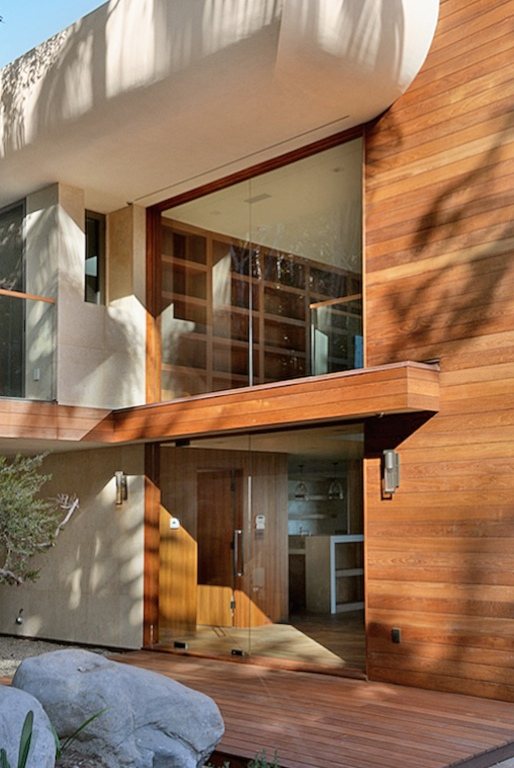
Rough sawn and hewn are not one texture with two names, they are two different tool signatures with different depths, different repeat patterns and different consequences for paint. Rough sawn means the face still carries the marks left by the blade that cut it, and nothing has planed those marks away. Hewn means the face carries scallops and facets left by a tool that removed wood in bites rather than in one continuous kerf. Two drawings using those two words are asking a shop for two unrelated operations.
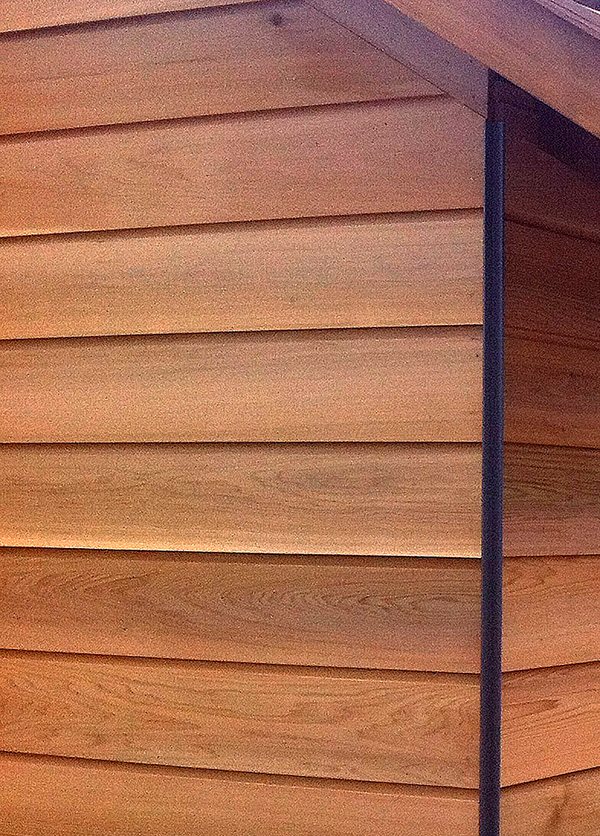
Specifiers use the words loosely. A designer who writes "rough sawn cedar siding" is usually picturing a shallow, even, fibrous face that scatters light and holds a stain. A designer who writes "hewn oak panel" is picturing something else entirely, a face with visible relief you can read from across a room and feel with a flat hand.
The gap between those two pictures is roughly an order of magnitude in depth. Saw texture lives in thousandths of an inch up to about 1/32 in. Hewn relief is normally cut 1/16 in to 3/16 in deep, sometimes more. Depth is the number that drives everything downstream, including how much coating the face drinks and where that coating will fail first.
Texture Comes Off a Blade or Off a Knife
Every honest production route for these faces falls into one of two families, sawn texture left by a blade and cut relief shaped by a ground knife, and the two behave nothing alike. ICD, the architectural millwork division of J. Gibson McIlvain, builds custom cladding, wall panels and radius millwork around whichever of those two the drawing actually needs.
Sawn texture is subtractive and unplanned. The blade leaves what the blade leaves. Feed speed, tooth pitch, blade tension and the species itself decide the pattern, and the shop controls it by controlling those variables rather than by designing the pattern outright.
Cut relief is the opposite. A knife is ground to a shape, the shape is what appears on the wood, and it appears again every time the cutterhead comes around. That repeatability is the reason a hewn look can be produced across a full elevation of siding instead of one feature wall. It is also the thing a careful architect will notice first, so it has to be managed rather than ignored.
Worth saying plainly, because buyers ask. These faces are not produced here by CNC carving. They come off a band resaw or off a moulder running a custom ground knife, which is why the depth, the pitch and the grain direction of the result are all traceable to a machine setting somebody wrote down.
What a Band Resaw Leaves on the Face
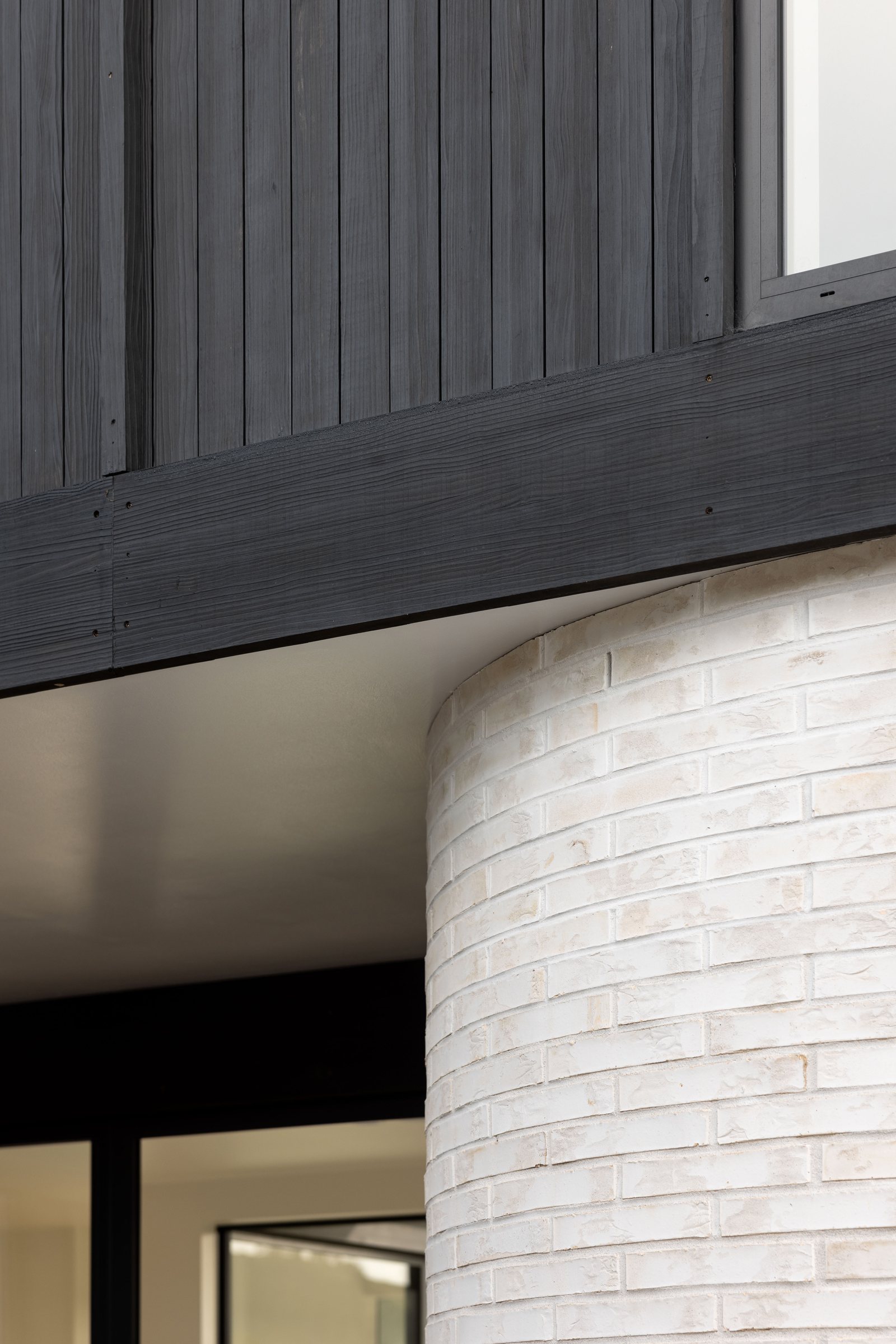
A band resawn face is the simplest texture to produce and the most honest one, since it is simply the cut surface of the board with nothing done to it afterward. J. Gibson McIlvain runs band resaws on the floor alongside straight line and gang rip saws and trimming saws, so a resawn face is a stock operation rather than a special order.
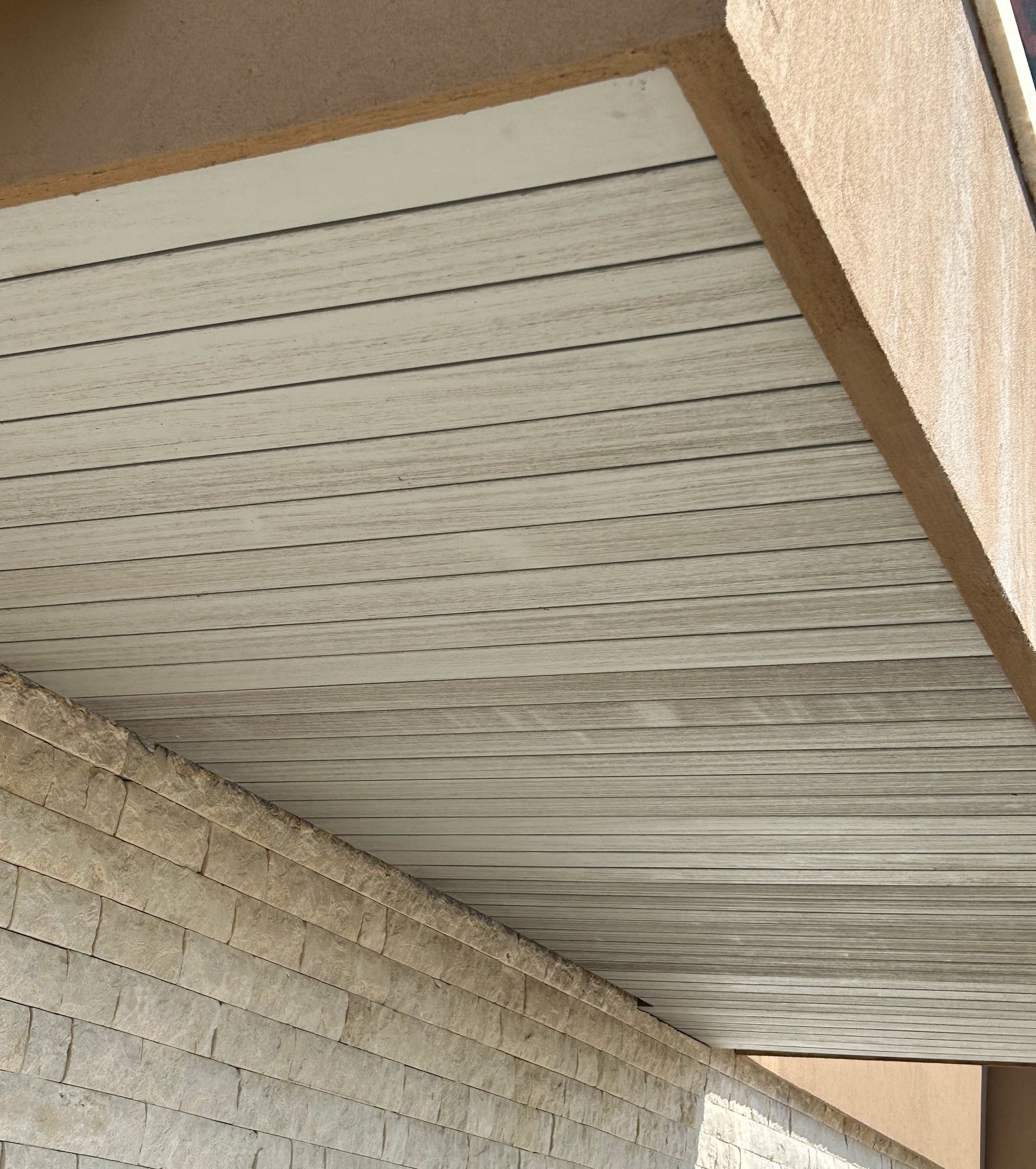
The signature is fine and directional. A thin band blade leaves closely spaced marks running across the board, faint waviness where the blade wanders in a dense growth ring, and a fibrous nap where the teeth pull fiber rather than shear it. Under a raking light it reads as grain plus a soft haze. Under flat light it can nearly disappear, which is why a sample should always be viewed in the light the finished wall will actually get.
Resawing also buys yield. Splitting a thicker board into two thinner faces produces two textured faces from one piece, and it opens the possibility of running matched faces off one flitch for a panelized wall. That matters most when a wall has to read as one piece of wood rather than a collection of boards.
What a band resaw cannot give you is the deep arc pattern people associate with old circular headrig lumber, or the broad facet of a hewn timber. Those are different tools doing different work. Asking a band resaw for them produces a disappointed sample and a lost week.
Hewn Relief Starts at the Knife Grinder
A hewn face on production millwork is a profile, not a hand operation, and it begins as a shape ground into steel. J. Gibson McIlvain grinds new moulder knives every week and holds a profile library running to thousands of ground knives, so a hewn relief becomes one more profile in that library once it has been cut and approved.
The mechanics are the same as any moulded profile. The cutterhead spins, the knife takes a bite each revolution, and the stock advances. Feed speed against cutterhead speed sets the pitch of the marks, meaning the distance between one bite and the next. Slow the feed and the facets tighten and shorten. Speed it up and they stretch out and read coarser.
That repeat is the honest limitation of the method, and a good drawing accounts for it. A hewn relief cut on a moulder repeats at a fixed interval down the length of every stick. Hand work does not repeat, and that is exactly why it stays a one-off operation rather than a production one. The usual fix is to specify a repeat long enough that the eye does not lock onto it, then break the rhythm at installation by varying board lengths and staggering joints.
Historical restoration is the harder version of the same problem. A sample of original siding or paneling arrives, the shop reads the tool signature off it, and a knife gets ground to match the facet depth and spacing. Profile matching of this kind is routine work for a shop that already grinds its own knives, and the resulting knife stays on file for the next phase of the same building. Anyone working inside a historic district should read the National Park Service preservation briefs before committing to a replacement texture, since like-for-like is often the standard being enforced.
What Resawing Does to a Board Before Any Finish Touches It
Cutting a board open releases growth stress and exposes fresh interior wood, and both of those move the piece before a coating ever reaches it. Skip this step in the schedule and the texture will be perfect while the board is a banana.
Resawn stock wants to be stickered and given time to come back to equilibrium. Moisture targets for architectural woodwork are not a shop opinion, and the quality standards published by the Architectural Woodwork Institute are the usual reference point on a commercial job. Interior millwork is milled to an in-service moisture content near 6 to 8 percent. Exterior work runs wetter, near 12 to 16 percent, because it will live in outdoor air. Those two targets are not interchangeable, and a panel milled to interior numbers and then hung outside will move hard in its first season.
Quartersawn and rift stock earn their premium here. They move less across the width than plainsawn, which is why a painted or panelized face that has to stay flat gets specified that way. On a textured face the benefit is doubled, since cupping does not just distort the plane, it changes the angle every facet presents to the light.
Interlocked grain deserves its own note. Sapele and Iroko both carry grain that reverses direction in alternating bands, which is what produces the ribbon figure in Sapele and also what tears when a knife cuts against it. Sharper knives, a shallower pass and a slower feed handle it. A textured face made of torn fiber rather than cut fiber will never take a coating evenly.
Why Texture Changes the Coating Film
Texture does not simply make a coated surface look different, it redistributes the coating film, thinning it on every peak and pooling it in every valley. Paint and stain fail where the film is thinnest, so texture relocates the failure points before the first coat is even dry.
The mechanism is straightforward. A wet film applied to a sloped or ridged surface drains toward the low points under its own surface tension. Peaks end up with less material than the same coating would leave on a flat board. Valleys end up with more, and thick film in a narrow valley is slower to cure and more prone to wrinkling. The finish system has not changed. The geometry has.
A textured face also has more surface area to wet, so a given quantity of coating covers fewer square feet than the label rate suggests. Deep hewn relief is worse in this respect than shallow saw texture, and open-grained species are worse than closed ones. Anyone ordering finish for a textured elevation should plan for that or run short in the middle of a wall.
The trade going the other way is real too. Texture hides lap marks, hides minor surface defects and holds a penetrating stain better than a planed face, since the broken fiber gives the stain somewhere to sit. For a stained exterior wall, texture is often working for the coating rather than against it. For a high-gloss painted interior panel, it is working against it.
| Operation | Surface signature | Typical relief | What the coating does on it |
|---|---|---|---|
| Band resawn face | Fine directional blade marks, fibrous nap, faint waviness | Thousandths of an inch up to about 1/32 in | Holds penetrating stain well, raises grain under waterborne primer, film stays reasonably even |
| Skip planed face | Planed islands with sawn low spots left intact | Varies with how much stock the planer removes | Two different absorbencies on one board, so color reads uneven under a thin stain |
| Knife ground hewn relief | Repeating facets and scallops at a fixed pitch | 1/16 in to 3/16 in, deeper on request | Film drains off facet crowns and pools in valleys, so crowns are the first place a painted surface fails |
| Primed then lightly buffed | Texture intact, raised fiber knocked back | Unchanged from the operation above it | Most even painted result, since buffing removes the fuzz that would otherwise telegraph through the topcoat |
Priming a Face You Cannot Sand Flat
Priming is where a textured order is won or lost, and it has to be done before the boards leave the shop rather than on a scaffold in April. J. Gibson McIlvain primes in three levels, in both oil-based and water-based systems, and exterior primed trim carries a fungicide additive.
Open-grained and oily species absorb a great deal of finish, so a primer coat evens out the eventual painted surface. On a textured face that evening out matters more, not less, because the raw absorbency difference between a crown and a valley is already working against uniform color. The primer is what gives the topcoat a consistent substrate to sit on.
Sanding or buffing after priming knocks back grain raising while keeping moulded detail crisp. That is a real operation with a real judgment call attached on textured stock. Buff a hewn face and the abrasive touches only the crowns, which is usually what you want, since the crowns are where the fuzz shows. Push harder and you flatten the facets the drawing asked for.
"The question I get from architects is whether a rough face can be primed at all, and the answer is that it has to be. A textured board takes more finish than a smooth one and it takes it unevenly, so we prime all six faces here where the conditions are controlled and the stock is lying flat, then the painter is putting a topcoat on a known surface instead of guessing."
Norm Moton, Director of Sales, J. Gibson McIlvain
All six faces means all six. Backs and edges included. A textured exterior board primed on the face and left raw on the back has an open moisture path on one side and a sealed one on the other, and the board will do exactly what physics says it should do about that imbalance.
Species That Hold Texture and Still Take a Coating
The millwork palette for textured cladding and wall panels is Sapele, Iroko, Afrormosia, Teak and Utile, and each of them cuts and coats differently. J. Gibson McIlvain holds over seven million board feet of exotic and domestic lumber at its Maryland yard, which is what makes it realistic to pull matched stock for a full elevation rather than piecing an order together.
Sapele is the workhorse for painted exterior work, at roughly 1,410 lbf on the Janka scale. It holds paint better than Genuine Mahogany, which sits near 800 lbf, and it comes in a wider range of sizes and longer lengths. One limit to know going in. Sapele is not milled 1x8 for exterior use, since that width is too wide to stay stable in that thickness. Cupping in service is driven by installation and back ventilation, not by the species on the invoice.
Iroko and Afrormosia both take a cut face cleanly and weather to a settled gray if left bare. Teak and Utile round out the palette where a specific color or a specific exterior track record is being matched. Where a CITES listed species is involved, documentation and chain of custody travel with the material.
The tropical decking species are a different animal and belong on a deck, not in a panel layup. Ipe, botanically Tabebuia spp, along with Cumaru, Garapa, Jatoba and Red Balau, are extremely hard and carry high oil content, which makes them difficult to glue. A millwork shop reaches for Sapele, Iroko, Afrormosia, Teak or Utile instead precisely because those five machine, glue and prime predictably.
Cedar remains a legitimate default for textured siding and is nobody's compromise. Distinguish the grades when you write the spec. CVG, clear vertical grain, gives a tight even face for a painted or lightly stained wall. STK, select tight knot, carries sound knots and is the traditional choice where a rough sawn face is meant to look rustic rather than refined.
Modified woods are the other honest option. Accoya runs about 1,600 lbf, and acetylation gives it dramatically reduced shrinkage and swelling, which is a genuine advantage on a deep textured face that has to stay dimensionally quiet. Thermory and Abodo Vulcan are both carried. All of the modified products top out around 16 ft, and most are sold on metric lengths just under 16 ft, because of kiln size. Thermally modified Ash is not available wider than 8 inches, so a wide textured board in a modified product means Accoya or Abodo Vulcan.
One more thing buyers ask about. Warranties exist on modified products only. It is not possible to warranty solid unmodified wood, an organic material responding to its environment, and no reputable supplier will pretend otherwise.
Interior Panels and Exterior Cladding Are Two Different Orders
The same texture, cut on the same machine, becomes two different products the moment you decide which side of the wall it lives on. Moisture target, coating system, species shortlist and panel layout all fork at that decision.
Interior wall panels are milled near 6 to 8 percent, usually finished clear or lightly toned so the tool signature stays legible, and laid out so the texture direction runs consistently across a wall. A hewn panel behind a reception desk is read at close range under controlled light, so repeat length and facet consistency are under real scrutiny. ICD plans that work around the specific room rather than fitting standard modules into it, which is the same reason its cabinets and case work avoid filler strips and mismatched face frames.
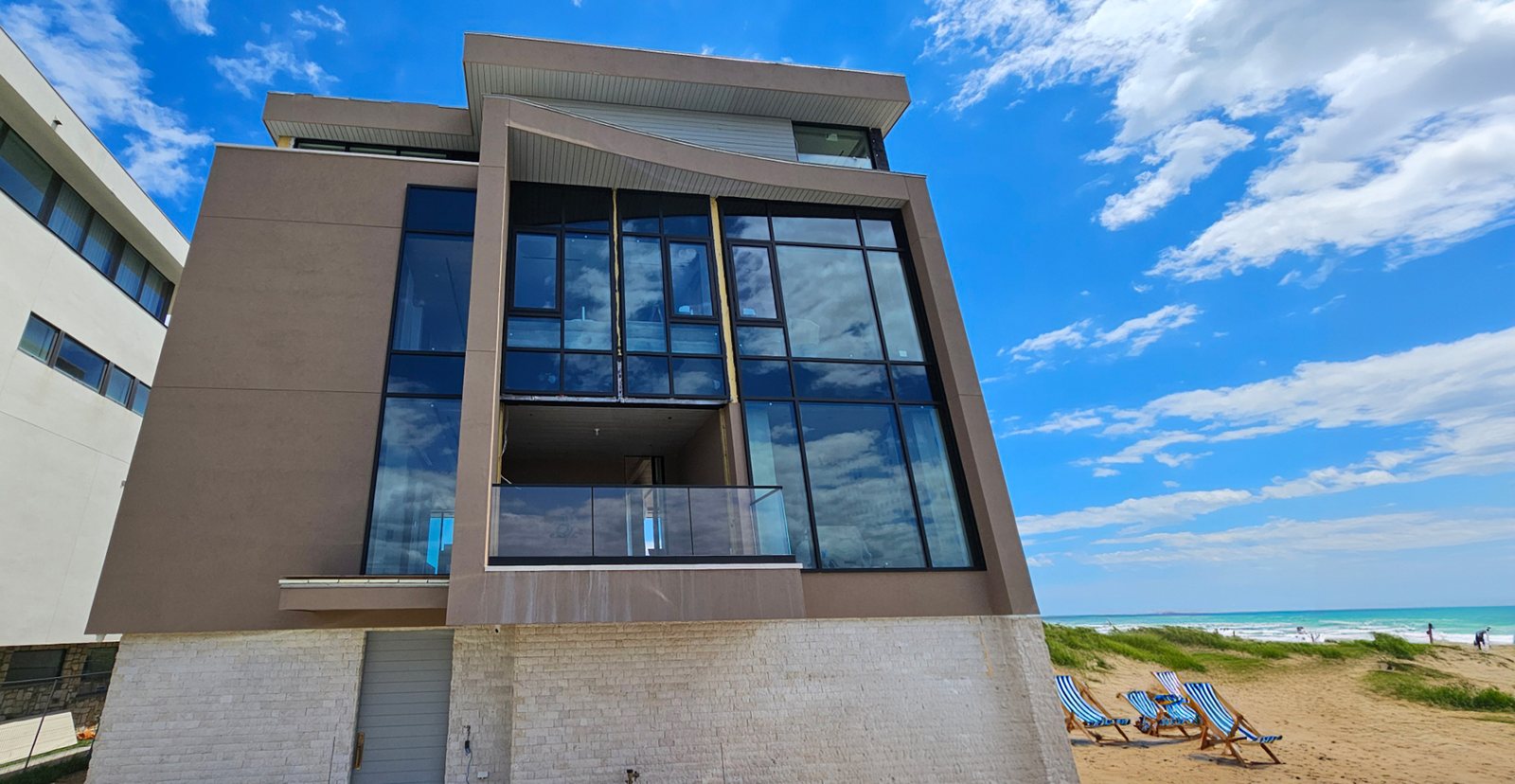
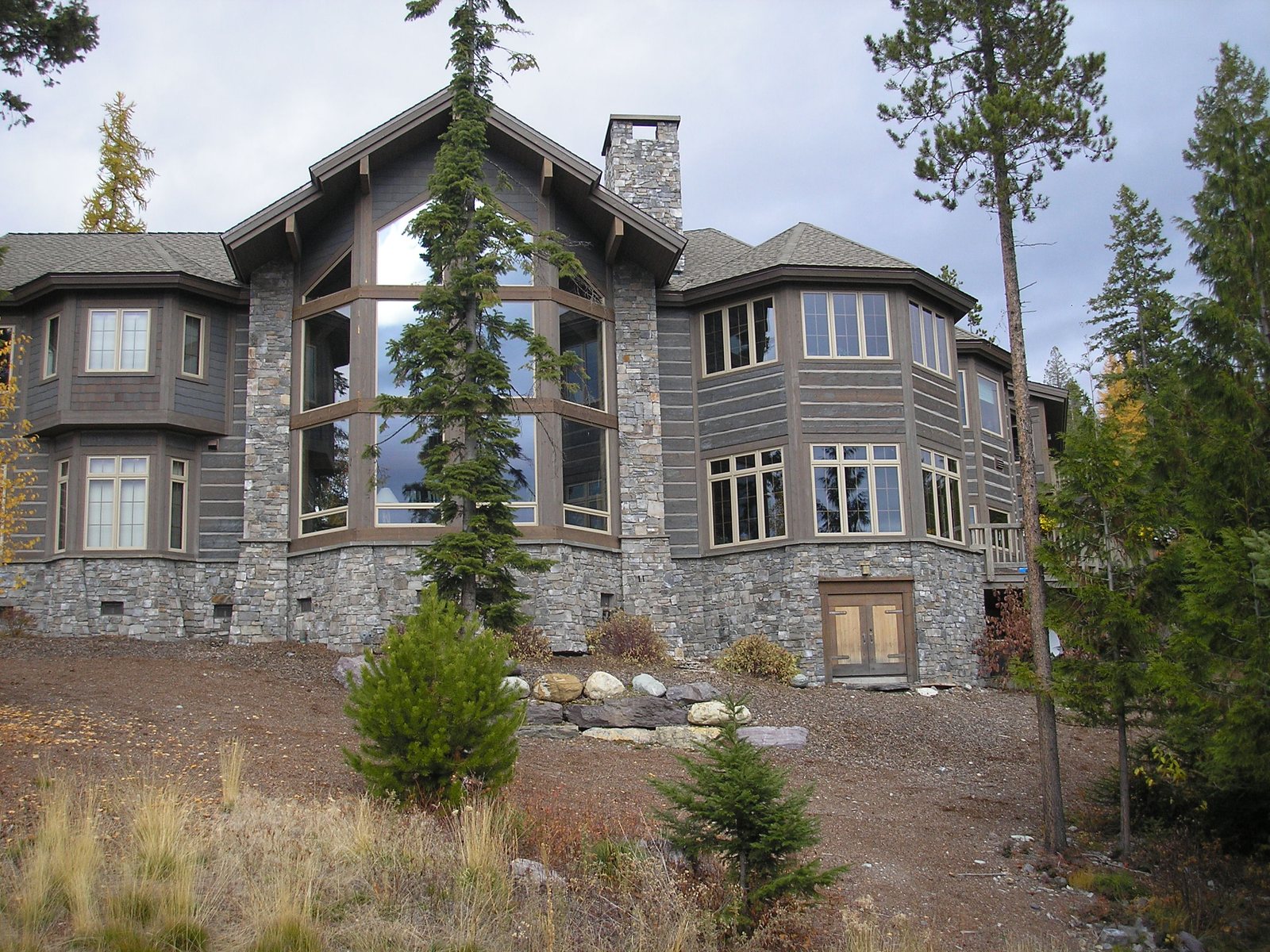
Exterior cladding is milled near 12 to 16 percent and primed on all six faces with the fungicide additive, and the tool signature gets read at 30 ft rather than 3 ft. Depth can go coarser because distance flattens it. The exterior millwork side of ICD is also where rafter tails, pergolas and gates come from, and matching a textured cladding face to the rafter tails above it is a single-shop problem rather than two vendors guessing at each other.
Radius work changes the calculation again. A curved textured panel cannot be bent from a flat textured board without distorting the facets, so the texture goes on after the shape is established. Sequence that backwards and the relief telegraphs every stress point in the curve.
What Ships and What the Installer Owns
J. Gibson McIlvain supplies and mills, and it does not install, so the useful question is what arrives on the truck and what the installer still has to do with it. The company ships nationwide, regularly to California, and stores finished millwork for inventory control when a job runs long.
What arrives is stock milled to a stated moisture target, textured to an approved sample, primed to the specified level on all six faces, and packaged to protect the finished surface. A textured primed face is more vulnerable in transit than a smooth one, since crowns take the impact first and a crushed facet cannot be sanded out without erasing the texture around it.
What the installer owns is fastening, flashing, and the back ventilation that decides whether a board cups. That last one bears repeating, because it gets blamed on species constantly. A rain screen cavity, a consistent gap behind the cladding and a drainage plane are installation decisions. Guidance from Building Science Corporation on rain control in buildings and the finishing chapters of the Wood Handbook from the USDA Forest Products Laboratory both land on the same point, which is that coating performance on exterior wood is mostly a water management problem.
Field touch-up is the installer's job too. Cut ends need to be sealed before they go up, and any crown that gets scuffed during handling needs spot priming before topcoat. None of that is difficult. It just has to be somebody's assigned task rather than an assumption.
How J. Gibson McIlvain Would Specify This
A textured cladding or panel order that goes smoothly is specified in six lines, and every one of them is a question the shop will ask anyway. Answering them up front turns a sample cycle into a production run.
Name the operation, not the adjective. Write band resawn face, or knife cut hewn relief at a stated depth and repeat, rather than writing rustic. Name the species from the millwork palette, and name the grade where grade matters, which for cedar means choosing CVG or STK on purpose.
State the moisture target that matches the location, near 6 to 8 percent inside and near 12 to 16 percent outside. State the priming level and whether the system is oil-based or water-based, and confirm the fungicide additive on anything going outside. State whether the texture gets buffed after priming, since that is a decision with a visible outcome.
Approve a physical sample under the light the finished wall will have, and keep it. J. Gibson McIlvain records the knife and the machine settings that produced it, and the knife stays in the profile library, which is what makes phase two of a building match phase one three years later. For linear runs, primed trim and finished cladding on the J. Gibson McIlvain millwork service side, and for true custom work through ICD, the same order can carry both because the shops sit inside one company. ICD's working process and trim profile pages are the fastest way to see how a custom face gets from a drawing to a knife.
Call 800-638-9100 with the elevation, the species, the depth you want and the finish system you intend to use. Bring the sample board if there is one. A five minute conversation about facet depth and primer level at the front of a job prevents the phone call about a wall that looks wrong in October.
Frequently Asked Questions
Can a rough sawn or hewn face be primed, or does the texture have to stay bare?
It can be primed, and on exterior work it should be. The concern people raise is that primer will fill the texture, which does not happen at the film thicknesses used on architectural millwork. What does happen is uneven absorption, since a textured face drinks more finish than a smooth one and drinks it unevenly between crowns and valleys. J. Gibson McIlvain primes in three levels in oil-based or water-based systems, with a fungicide additive on exterior work, and primes all six faces so the back is not left as an open moisture path while the face is sealed.
Does a knife cut hewn texture repeat, and will anyone notice the repeat?
Yes, it repeats. A moulder knife takes one bite per revolution of the cutterhead, so the facet pattern recurs at a fixed pitch set by feed speed against cutterhead speed. Whether anyone notices depends on viewing distance and repeat length. On exterior cladding read at 30 ft it disappears. On an interior panel read at arm's length it is visible, so the repeat should be specified long enough that the eye does not lock onto it, and board lengths should be varied at installation to break the rhythm.
How much thickness does a textured face take off the finished board?
Saw texture takes almost nothing, since it is the cut face itself and lives in thousandths of an inch up to about 1/32 in. Knife cut hewn relief is different, because the valleys are cut into the board and the stated thickness has to be measured from the crowns down. A 1/8 in relief on a nominal board leaves less net section than the same board planed smooth, which matters for fastener holding and for how a board meets a trim edge. State the depth on the drawing and the shop works back from finished thickness.
Is thermally modified Ash a good choice for wide textured siding?
Not if the boards need to be wide. Thermally modified Ash is not available wider than 8 inches, so a wide textured board in a modified product means Accoya or Abodo Vulcan instead. All the modified products, Thermory, Abodo Vulcan and Accoya, top out around 16 ft, and most are sold on metric lengths just under 16 ft because of kiln size. Accoya at roughly 1,600 lbf with dramatically reduced shrinkage and swelling is the usual answer where a deep textured face has to stay dimensionally quiet.
Is rough sawn cedar a lower grade than smooth cedar?
No. Rough sawn describes the surface, not the grade, and the two are specified separately. CVG, clear vertical grain, gives a tight even face and is the choice for a painted or lightly stained wall. STK, select tight knot, carries sound knots and is the traditional pick where a rough sawn face is meant to read rustic. Both are legitimate. Write the grade and the texture as two separate lines in the spec so nobody has to guess which one you meant.
Will a textured panel match a smooth one in the same species on the same job?
Color will differ even when the boards come off the same lot, because a textured face scatters light and absorbs more finish, so it reads darker and flatter than a planed face in the same stain. Plan for that rather than fight it. Approve both samples side by side under the lighting the finished space will have. J. Gibson McIlvain holds over seven million board feet at its Maryland yard, which makes it realistic to pull both the textured and the smooth stock from matched material rather than from two different shipments.
Does J. Gibson McIlvain install textured siding or wall panels?
No. J. Gibson McIlvain supplies and mills. It does not install and does not coordinate installation or field measurement. What ships is stock milled to the stated moisture target, textured to the approved sample, primed on all six faces and packaged to protect the surface. Fastening, flashing, the rain screen cavity and back ventilation are the installer's work, and those installation decisions are what determine whether a board cups in service.
Sources and Standards Referenced
- Wood Handbook, Wood as an Engineering Material (FPL-GTR-190), USDA Forest Products Laboratory
- Preservation Briefs, National Park Service Technical Preservation Services
- BSD-013, Rain Control in Buildings, Building Science Corporation
- Architectural Woodwork Institute
- Sapele, The Wood Database
- CITES, Convention on International Trade in Endangered Species of Wild Fauna and Flora
- Accoya Acetylated Wood
- Thermory Thermally Modified Wood