
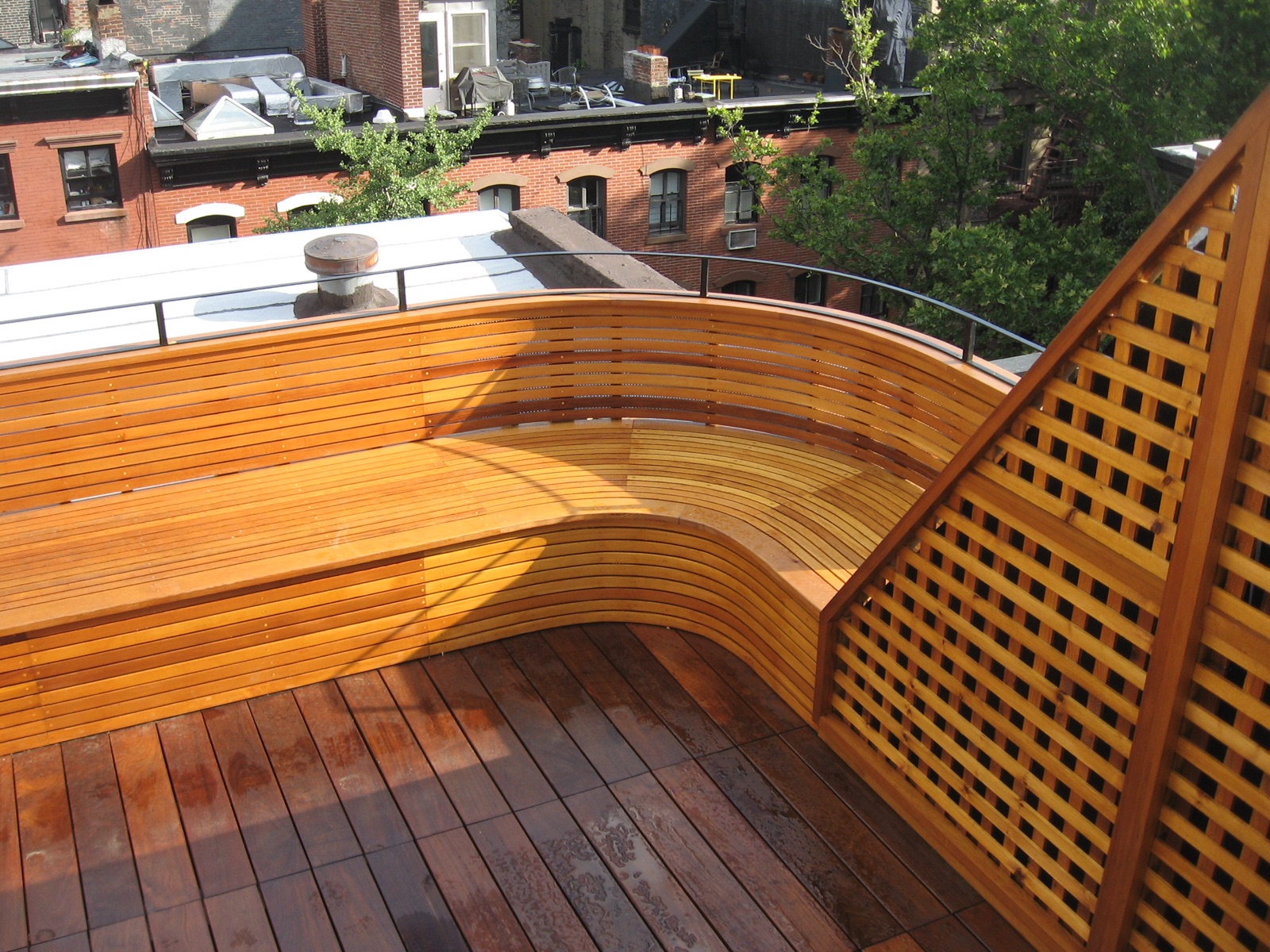
Pick the species by how you will use the deck, not by the Janka number alone.
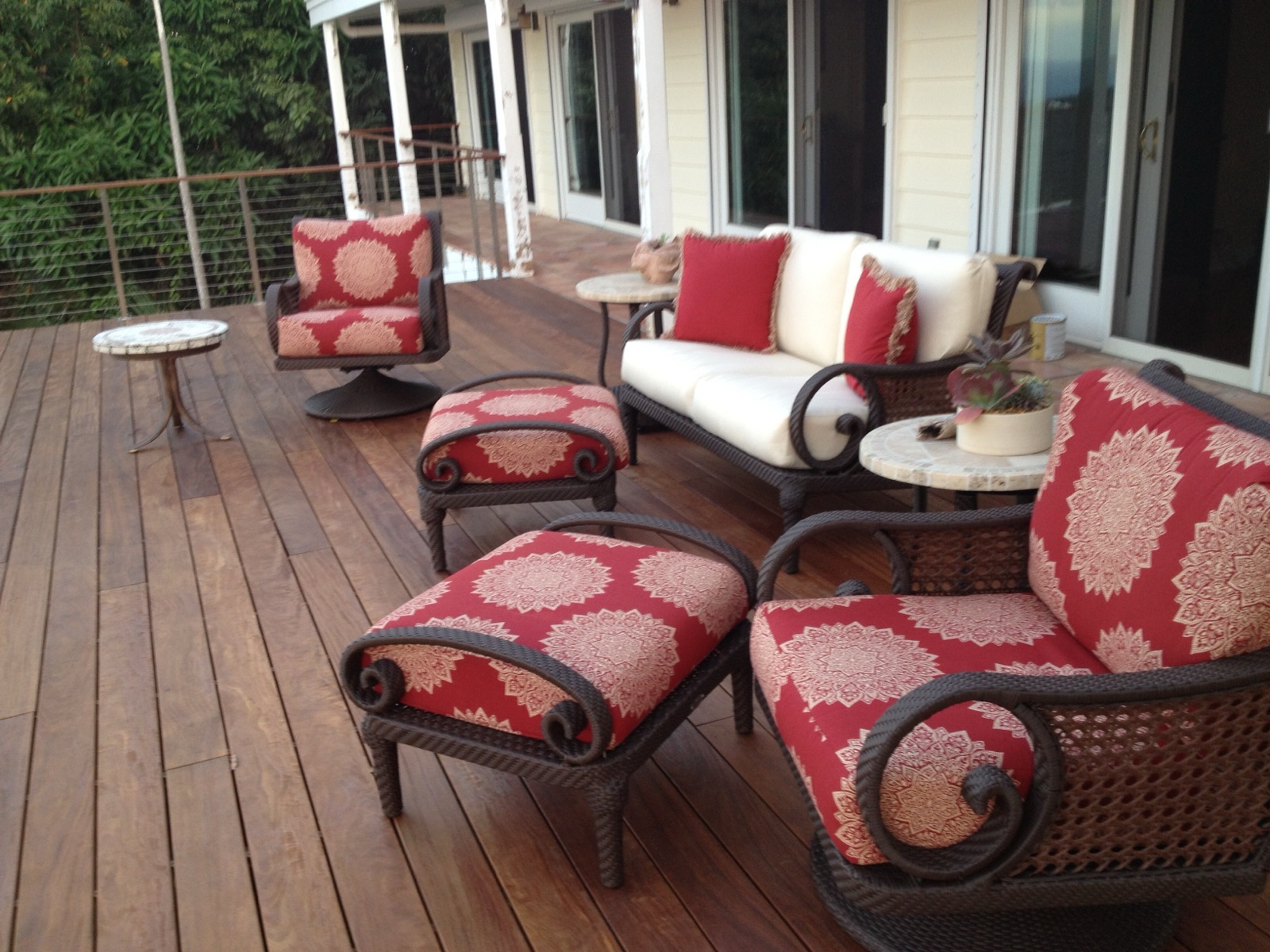
Three woods keep landing on the shortlist for a serious backyard deck: Garapa, Ipe, and Cumaru. Every comparison you find leads with hardness, and hardness is real. It is also the wrong place to start if you have never lived on a tropical deck. Hardness tells you how the surface resists a dropped grill tool. It says nothing about whether the boards scorch your feet in August, whether two people can move a bundle across the yard, or how many weekends a year the deck will ask for your attention.
Start instead with a short list of what you value. Do you want the lowest possible upkeep, and will you accept a silver-gray finish to get it? Ipe. Do you want a warm honey deck you can carry, cut, and maintain without dreading it, and are you fine with a surface that is hard enough for family life but not bulletproof? Garapa. Do you want something between the two, closer to Ipe on wear but with a redder cast and a little more open grain? Cumaru. Those three answers cover most backyards. The rest of this guide fills in why.
Garapa is the only one of the three a two-person crew can move and cut all day without special equipment.
Weight is the difference nobody mentions until the delivery arrives. Ipe lands near 1,050 kilograms per cubic meter, and Cumaru is heavier still at roughly 1,070. Garapa sits around 830. That gap changes the whole jobsite. A full-length Ipe 5/4x6 is a two-hand lift that fights you on a ladder or across a soft lawn. The same Garapa board is something one person carries without theatrics.
Cutting tells the same story. All three of these woods are dense enough to dull a standard blade fast, so plan on carbide-tipped blades and expect to swap them more than you would on cedar or pine. Ipe and Cumaru both demand pilot holes for every fastener at the board ends, or the wood splits. Garapa still rewards pre-drilling, especially near ends, but it is more forgiving of the occasional screw driven without a pilot. If your backyard build is a weekend crew of two working off sawhorses, Garapa saves your shoulders and your afternoons. If you have a full contractor crew with a track saw and a screw gun for every hand, the weight of Ipe stops mattering. Match the wood to the muscle you actually have.
A darker board runs hotter in full sun, so exposure should steer the color you choose.
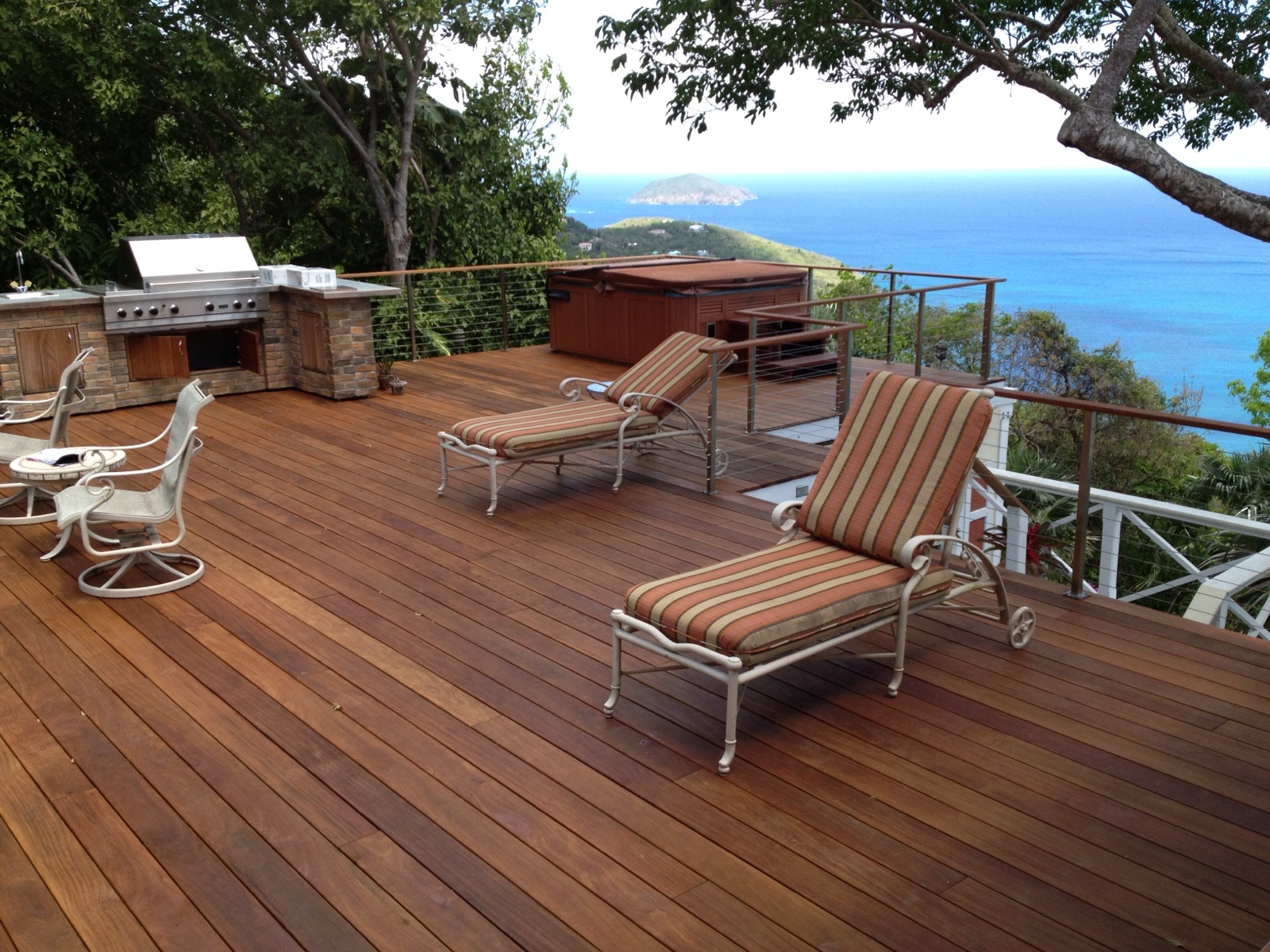
Bare feet do not read a durability rating. They read surface temperature, and surface temperature tracks color more than species. Ipe weathers dark and, in direct summer sun with no shade, gets genuinely uncomfortable at midday. Cumaru, redder and medium in tone, runs warm but less punishing. Garapa, pale gold when finished and silver when weathered, reflects more of what hits it and stays the most tolerable of the three underfoot.
None of this is unique to tropical wood. Any dark surface in full sun absorbs more solar radiation, a basic building-science point the team at Building Science Corporation makes about roofs and cladding alike. Translate it to a deck: a south-facing patio with zero shade and a family that lives barefoot is a strong argument for Garapa, or for keeping a darker wood shaded by a pergola or umbrella. A deck that sits under mature trees or only sees morning sun removes heat from the equation, and you can pick on looks and longevity instead. Walk your yard at 2 p.m. before you decide.
All three last for decades bare, so the real question is how often you want to chase the color.
Left unfinished, Ipe, Cumaru, and Garapa all weather to a soft silver-gray and keep their structural life for decades. The USDA Forest Products Laboratory rates these dense tropical hardwoods among the most naturally durable timbers available, and the Wood Database entries put Ipe and Cumaru in the top class for decay and insect resistance. Durability is not what separates them in the yard. Appearance upkeep is.
If you want the deck to stay its original warm color, you commit to a penetrating UV-blocking oil finish, and you recoat on a rhythm the sun dictates. In a hot, exposed backyard, that means a fresh coat most seasons. Garapa, with its lighter tone, shows the transition to gray more gracefully than the darker woods, so a missed year is less jarring on Garapa than on Ipe, where the contrast between fresh and faded is stark. If you are honest with yourself and know the deck will go gray because you are not going to oil it every spring, all three accept that fate well, and Garapa arguably wears the silver look the most evenly. There are no warranties on any solid unmodified hardwood, and none of these needs one to outlast the framing under it. The maintenance choice is cosmetic, and it is yours to make with open eyes.
| Factor | Garapa | Ipe | Cumaru | Massaranduba (comparison only) |
|---|---|---|---|---|
| Janka hardness (lbf) | ~1,700 | ~3,680 | ~3,540 | ~3,190 |
| Density (kg/m3) | ~830 | ~1,050 | ~1,070 | ~1,150 |
| Board weight to handle | Lightest; one-person lift | Heavy; two-hand lift | Heaviest of the three | Very heavy |
| Surface heat in full sun | Coolest; pale reflective tone | Hottest; weathers dark | Warm; medium red tone | Warm to hot |
| Finished color | Honey gold to amber | Deep olive to brown | Reddish brown | Deep red-brown |
| EN 350 durability class | Class 1 to 2 | Class 1 | Class 1 | Class 1 |
| Pre-drilling for fasteners | Recommended at ends | Required | Required | Required |
Every dense tropical board moves with the seasons, and how you dry and detail it decides whether that movement shows.
Density does not make wood immune to moisture. These species take on and give off water with the weather, and they can surface-check and end-check if they dry too fast or sit at the wrong moisture content when installed. Aim for boards at 12 to 16 percent moisture content in service, which is what you get from properly kiln-dried tropical decking acclimated on site before fastening. Ipe and Cumaru, being denser, hold more internal stress and can check harder at the ends if left unsealed, which is why sealing freshly cut ends with a wax-based end sealer is not optional on those two. Garapa checks less dramatically but still deserves sealed ends.
Movement across the width is what opens gaps or buckles a deck. All three shrink and swell seasonally, so gapping between boards is a design decision, not an afterthought. In a humid backyard, boards installed tight will swell and can cup or push against each other. Give them room. The exact gap depends on the moisture content at install and your climate, and it is worth getting right, because the failure mode here is entirely preventable and entirely on the installer.
The best species for your deck depends on your specific corner of the yard, not on a universal ranking.
There is no silver-bullet species, and any supplier who hands you one without asking about your site is guessing. A few site conditions should steer the choice. Full, unshaded southern exposure with barefoot kids points to Garapa for heat and weight. A high-traffic entertaining deck that takes furniture drags and dog claws all summer leans toward Ipe or Cumaru for the extra hardness. A coastal backyard within reach of salt spray changes the fastener spec before it changes the wood: use 316 stainless steel fasteners near the ocean, because lesser stainless and coated screws corrode and streak.
A damp, shaded corner where the deck sits low over slow-draining soil is the hardest case. Ventilation matters more than species there. Whatever wood you choose needs air moving under it, joists kept off the dirt, and boards installed with the grooves facing down so water drains rather than pools. Ipe and Cumaru give you the highest decay class for that punishing spot, but even they will fail early if you trap moisture under a poorly ventilated frame. Get the airflow right first, then pick the wood.
"People walk in fixated on the Janka number, and I steer them straight back to how they live outside. A family that never wears shoes on the deck and builds with two guys and a drill is happier on Garapa nine times out of ten. The customer running a big outdoor kitchen with foot traffic all summer wants Ipe. We stock all of it, so I would rather match the wood to the yard than sell the hardest board on the shelf."
Norm Moton, Director of Sales, J. Gibson McIlvain
Framing and fastening decide the outcome more than the choice between these three species.
You can buy the best boards on the continent and build a deck that fails in five years if the structure under it is wrong. Dense tropical decking wants joists at 16 inches on center, and for some patterns and board thicknesses you tighten that further. The frame carries the wood, and a bouncy or over-spanned frame telegraphs through even the hardest deck. Follow your local code and the span guidance in the American Wood Council standards, and confirm your inspector's requirements before you cut.
Fasteners follow the board profile, and this trips up more homeowners than any species question. A square-edge or shiplap board takes visible fasteners driven through the face into pre-drilled holes. Only a grooved-edge board, the kind milled for a tongue-and-groove or side-groove system, works with hidden fasteners that clip into the groove. You cannot hide fasteners on a board that was not milled for it. Whatever system you run, the material sits on furring strips or joists with airflow beneath, and grooved boards go down with the groove facing the ground so the channel sheds water instead of holding it. Get the profile decision made before you order, because it changes what you buy.
Garapa gives you the widest color range over time, from bright honey to soft silver, depending only on your finish schedule.
Color is where Garapa earns its following. Fresh and oiled, it is a clean honey gold that reads warm and bright, closer to a domestic hardwood floor than the deep browns of the other two. Ipe finishes olive to chocolate and weathers nearly black-brown before it silvers. Cumaru lands in the middle with a reddish-brown cast that some love and some find busy against certain house colors. Hold a finished sample of each against your siding and your stone before you commit, because these tones sit next to your house for twenty years.
Whatever you choose, use a penetrating oil finish made for dense tropical hardwoods, not a film-forming deck paint or a general-purpose stain that will peel. Film finishes fail on oily tropical woods and leave you sanding. If you want the color held, plan the recoat rhythm honestly. If you want zero finish work, skip it entirely and let all three silver out. Both are legitimate. What does not work is oiling once, walking away, and expecting the honey color to stay.
J. Gibson McIlvain mills and stocks Garapa, Ipe, and Cumaru in the full range of decking dimensions and ships them nationwide.
Sourcing and paperwork matter as much as the boards. J. Gibson McIlvain carries a vast Ipe inventory across every standard and custom dimension, holds Garapa and Cumaru in depth alongside it, and ships to jobsites across the country, California included, as a commercial and contractor-volume supplier rather than a walk-in retail yard. That scale is why a backyard order and a large deck order pull from the same graded, kiln-dried stock. You can see the tropical decking lineup at mcilvain.com.
Two documentation points are worth raising before you order. First, responsible sourcing: J. Gibson McIlvain is FSC-certified, and buyers who need chain-of-custody material for a green-building project can request it. The Forest Stewardship Council and the U.S. Green Building Council both publish what that certification covers. Second, species regulation: when a project calls for a CITES-listed species, documentation is required to move the material legally, and a supplier who handles the import routinely is the one to ask. The CITES framework and the grading references from the National Hardwood Lumber Association are worth a look if you want to understand what sits behind a clean order. If fire rating enters your spec, note that Ipe carries an ASTM E84 Class A rating, meaning a flame-spread index of 25 or less, and you can read the test method through ASTM and the code context through the International Code Council.
How J. Gibson McIlvain Would Specify This
Here is the practical path a specifier at J. Gibson McIlvain would walk a homeowner down. Start with your site: stand on the deck footprint at midday and note sun, shade, and how close you are to salt water. Full sun and bare feet push you toward Garapa for heat and handling. A hard-use entertaining deck pushes toward Ipe or Cumaru for wear. Coastal air means 316 stainless fasteners regardless of species.
Next, be honest about upkeep. If you will oil every spring, any of the three holds its color and Garapa gives you the brightest starting point. If you will not, choose for the silvered look, and all three deliver it. Then lock the profile before ordering: square-edge or shiplap with visible pre-drilled fasteners, or a grooved board for a hidden-fastener clip system. That decision changes the boards you buy. Frame at 16 inches on center for these dense woods, keep air moving underneath, seal every cut end with wax emulsion, run grooves down for drainage, and acclimate the boards on site to 12 to 16 percent moisture content before you fasten anything.
If low maintenance outranks the tropical look entirely, ask about modified alternatives. Accoya, along with Thermory and Abodo Vulcan, offers dimensional stability and, in the case of the modified products, manufacturer warranties that solid tropical wood does not carry. Those modified boards top out around 16 feet because of kiln size, so long single runs still favor solid tropical decking. Call J. Gibson McIlvain at 800-638-9100 with your dimensions, your exposure, and your crew size, and the sales team will match the wood to your yard instead of selling you the hardest board on the shelf.
Frequently Asked Questions
Which of these three stays coolest underfoot in full summer sun?
Garapa. Surface temperature tracks color more than species, and Garapa's pale honey-to-silver tone reflects more solar radiation than the darker Ipe or the medium-red Cumaru. Ipe weathers dark and gets genuinely hot on an unshaded south-facing deck at midday. If your patio has no shade and your family lives barefoot, Garapa is the most tolerable choice, or shade a darker wood with a pergola or umbrella.
Can a two-person crew handle Garapa without renting equipment?
Yes. Garapa runs around 830 kilograms per cubic meter against roughly 1,050 for Ipe and 1,070 for Cumaru, so a full-length Garapa board is a comfortable one-person carry where the same Ipe board is a two-hand lift. All three dull blades fast and reward carbide-tipped saws, and all three want pilot holes at board ends, but Garapa is the friendliest of the three for a weekend crew working off sawhorses.
How much maintenance does each really need over ten years?
Structurally, none of the three needs finishing to last decades; all silver to gray and keep their durability bare. The maintenance is purely cosmetic. If you want to hold the original warm color, you apply a penetrating UV-blocking oil and recoat on a rhythm the sun sets, which in a hot exposed yard often means most seasons. Garapa shows a missed recoat more gracefully than Ipe because its lighter tone transitions to gray with less contrast.
Does Garapa check and split less than Ipe or Cumaru?
Garapa carries less internal stress than the two denser woods, so it tends to end-check less dramatically. That does not make sealing optional. Seal every freshly cut end with a wax-based end sealer on all three species, install boards acclimated to 12 to 16 percent moisture content, and gap them for seasonal movement. Most checking and cupping failures come from skipped end-sealing or boards installed too wet or too tight, not from the species.
Do I have to pre-drill all three species?
Ipe and Cumaru require a pilot hole for every fastener, especially near board ends, or they split. Garapa is more forgiving but still deserves pre-drilling at the ends. This applies to face-fastened square-edge and shiplap boards. If you run a grooved board with a hidden-fastener clip system, the clips seat in the side groove instead, but only boards milled with that groove work with hidden fasteners.
Which species handles a shady, damp backyard corner best?
Ipe and Cumaru carry the highest decay class for a wet, low-sun spot, but ventilation matters more than the wood you pick. Keep joists off the soil, move air under the deck, and install grooved boards with the groove facing down so water drains. Even the most durable tropical hardwood fails early over a poorly ventilated frame that traps moisture, so fix the airflow first, then choose the species.
Is there a lower-maintenance alternative if I do not want to oil a tropical deck?
Yes. Modified woods like Accoya, plus Thermory and Abodo Vulcan, offer strong dimensional stability and, for the modified products, manufacturer warranties that solid unmodified tropical wood does not carry. They top out around 16 feet because of kiln size, so long single runs still favor solid tropical decking. J. Gibson McIlvain carries both the tropical and modified options and can walk you through the tradeoff at 800-638-9100.


