What a Rainscreen Asks of the Cladding
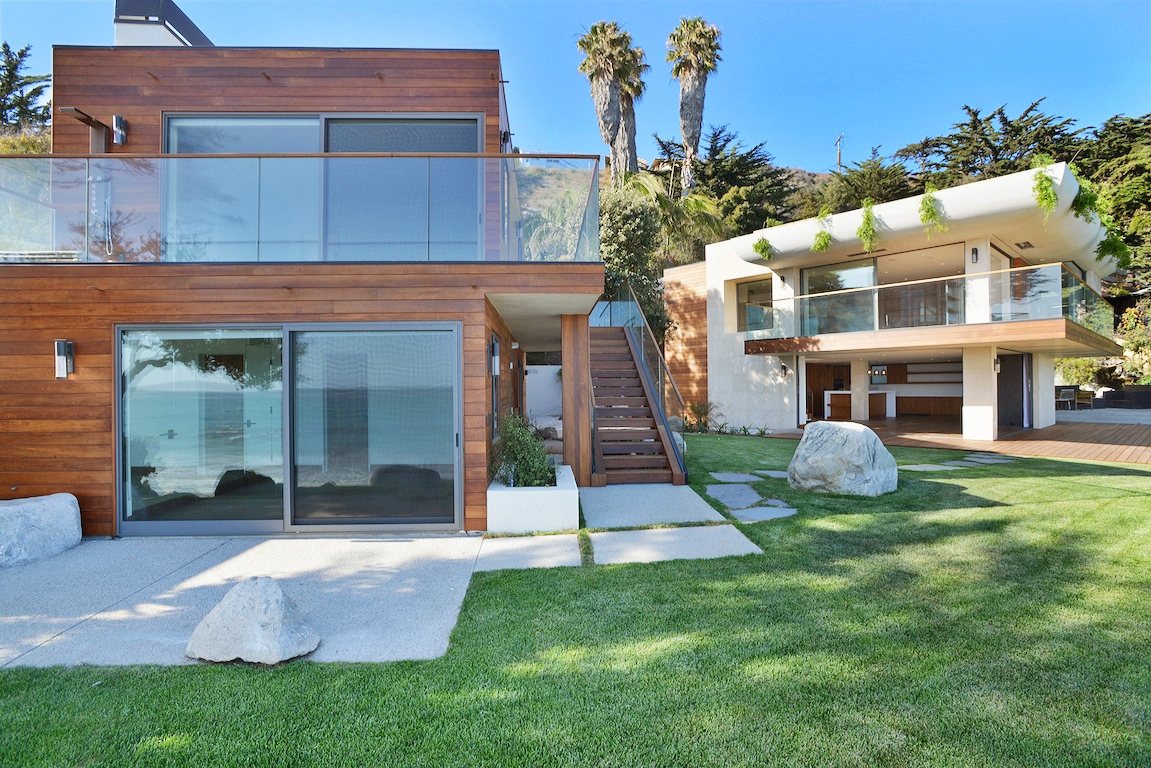
A rainscreen hands the weather job to the cavity behind the board, which means the furring layout and the fastening pattern decide how long a teak wall holds its line. The boards shed bulk water and take the sun. Everything that gets past them is handled by the drainage plane, the cavity and the vents at the top and bottom of the wall. Building Science Corporation has documented the drained and back ventilated wall for decades, and the principle has not changed. Dry the gap and the cladding stops being the last line of defense.
That changes what a lumber order has to cover. A buyer who specifies teak and then leaves the furring and the fasteners to be sorted out on site is buying one layer of a four layer assembly and hoping the other three cooperate. The cavity depth sets the fastener length. The furring direction sets the board direction. The board direction sets the profile and the length sort.
There is a clean division of labor here. J. Gibson McIlvain mills the cladding profile on its own moulders, resaws the stock to the thickness the detail calls for, and kiln dries exterior material to an in service moisture content near 12 to 16 percent. The crew on site sets the water resistive barrier, the furring, the flashing and the fasteners. Knowing which half belongs to whom before the order goes in prevents most of the arguments that happen later on a ladder.
Furring Depth, Cavity Airflow and Board Direction
A nominal 3/4 inch furring space is the working minimum for a wall that has to drain and also dry by air movement, and the furring direction dictates which way the cladding can run. Thinner gaps drain. They do not ventilate well. On a high end exterior where the teak is the finish and there is no second chance, the deeper cavity is the cheap insurance.
Horizontal cladding goes over vertical furring. Water runs down the back of the board, hits the strip, and keeps going to the flashing. Vertical cladding is where assemblies get ruined, because horizontal furring alone dams the cavity and holds water at every strip. The fix is crossed furring, a horizontal layer over a vertical layer, which keeps a continuous drainage path while giving the vertical boards something to land on.
Screen the openings. An insect screen at the bottom vent and at the top keeps the cavity working as a chimney instead of a nest. Where the furring sits over continuous exterior insulation, the fastener has to reach past the foam into framing, and the structural provisions for that connection live in the wood design standards published by the American Wood Council. That is an engineering question about the attachment, not a question about the teak.
Fastening Approaches Behind a Teak Wall
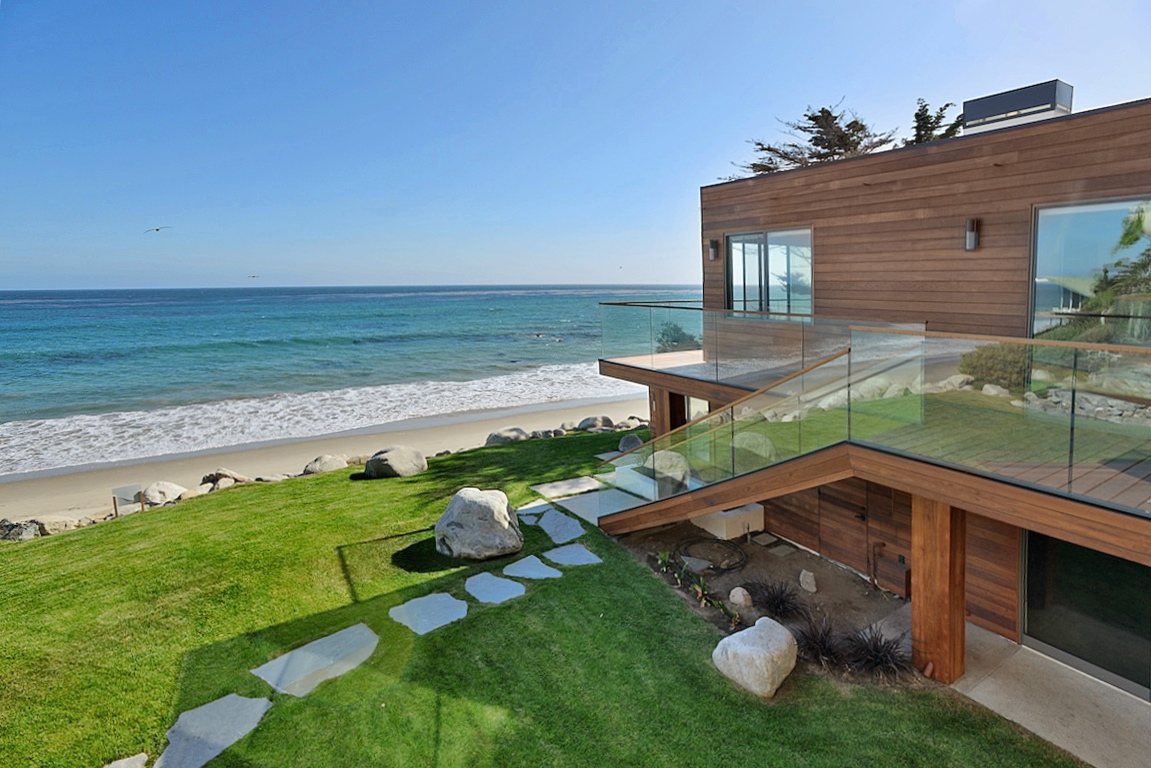
Every concealed fastening method buys a cleaner face at the cost of either a milled profile, a tighter furring tolerance, or both. Face screwing is the most forgiving and the most visible. A blind fastened lap hides the head but gives up some of the board's ability to move. A kerfed board on a clip gives the flattest face of the group and the least tolerance for sloppy furring.
The choice is not purely aesthetic. Each method puts a different demand on how the board is milled, which is why the fastening decision belongs in the conversation before the profile is ground rather than after the lumber lands on the job.
| Approach | What the board has to be milled for | Furring and cavity demand | What shows on the finished face |
|---|---|---|---|
| Face screwed, stainless | Square edge or shiplap, no special machining | Most forgiving of furring that is slightly out of plane | Two fastener heads per bearing on wide boards, one on narrow boards |
| Blind nailed shiplap or rabbet | Rabbeted edge with enough lap to cover the fastener | Furring must be flat, since the lap cannot be shimmed later | No heads, continuous shadow line at each lap |
| Blind nailed tongue and groove | Matched tongue and groove run on the moulder | Consistent bay spacing, since each course locks the next | No heads, tight joint with no reveal unless a V is milled in |
| Kerfed board on a concealed clip | Machined kerf on both edges, held to tight tolerance | Least tolerant of furring error, clip plane must be true | Nothing, with an even reveal set by the clip |
Fastener Metal in a Wet Cavity
Stainless is the only sane fastener for a teak rainscreen, and the grade of stainless is a function of how close the building sits to salt air. Type 304 covers most inland work. Coastal exposure, where chloride is in the air every day, is where specifiers move to 316. Plated and galvanized fasteners corrode in a cavity that wets and dries on a cycle, and the bleed from a corroding head leaves a dark streak down a board that no amount of sanding fully removes.
Density changes the work at the wall too. Teak is harder on tooling than its weight suggests, largely because of silica in the wood, and the species data at The Wood Database is the right reference for its mechanical properties. Pre drill near ends. Hardwood cladding does not forgive a nail driven into the last inch of a board the way cedar sometimes will.
Withdrawal values and the behavior of nails and screws in wood of a given specific gravity are published by the USDA Forest Products Laboratory, and fastener material standards are maintained through ASTM. A spec that names the alloy, the length and the spacing is a spec that gets built the same way on every elevation.
Board Width, Thickness and Seasonal Movement
Width drives movement, movement drives the fastener count, and both are settled at the mill rather than on the wall. A narrow board moves less across its face, holds a flatter plane and tolerates a single fastener per bearing. Go wider and the same board needs two fasteners per bearing, which is not a style choice. It is what keeps the board from pivoting and cupping as the face and the back take on moisture at different rates.
Sawing pattern matters as much as width. Quartersawn and rift stock moves less across its width than plainsawn, which is why it gets specified where a surface has to stay flat. On a cladding run that is reading as one continuous plane in raking afternoon light, that difference is visible from the street.
Thickness is quoted in quarters of an inch of rough thickness. 4/4 is a nominal 1 inch rough board, 8/4 is 2 inches, and the surfaced dimension comes off those rough numbers after the moulder takes its cut. Most solid wood rainscreen details land in the 4/4 to 5/4 range, heavy enough to stay flat over the bay spacing and light enough that the fasteners are not fighting the weight of the board.
Grading a Teak Order for Clear Length
Hardwood grade describes the yield of clear face cuttings a board will give, not whether the board is good or bad, and a rainscreen is a long clear run application. North American hardwood grading runs on the rules published by the National Hardwood Lumber Association. FAS is the top grade and requires a minimum board of 6 inches wide by 8 ft long yielding 83 and 1/3 percent clear face cuttings. FAS One Face, written F1F, meets FAS on the better face. Selects meet FAS on the better face at a smaller minimum size.
No. 1 Common requires 66 and 2/3 percent and a minimum board of 3 inches by 4 ft. No. 2A Common requires 50 percent. Neither one is a defective board. They simply yield smaller clear cuttings, which makes No. 1 Common the economical grade for short parts and the wrong grade for a wall that wants 12 ft and 14 ft runs with no joint in the field of view. Teak comes in on the exporting mill's own description rather than under those rules, so a cladding order has to put the clear length it needs in writing.
Read that against your own elevation. A wall of short bays between windows can take a mixed sort and lose nothing. A long unbroken run on a street facing elevation needs the clear length bought up front, because the yield is not there to be found later in a pile that was graded for something else.
Lengths, Lot Matching and Order Depth
The single thing that separates a good teak cladding order from a bad one is whether the whole elevation came out of the same material at the same time. Teak varies in color from golden brown to a darker, more olive cast depending on where it grew and where in the log it was cut. Two lots bought three months apart will weather at different rates and read as two different walls for the first two years.
J. Gibson McIlvain holds over seven million board feet of exotic and domestic lumber at its Maryland yard, which is what makes it possible to pull a full elevation, plus the overage a careful contractor insists on, from one body of material rather than from whatever arrives next. J. Gibson McIlvain also sorts and bundles the run by elevation before it leaves, so the crew is not cherry picking lengths out of a single stack in the mud.
As an FSC certified importer and miller, J. Gibson McIlvain keeps the sourcing documentation with the material, which matters on imported teak where a project has sourcing language in the specification. J. Gibson McIlvain delivers nationwide on its own fleet of trucks, including regular runs to California, so a staged release that follows the framing schedule does not depend on a common carrier's idea of a delivery window.
"I ask for the furring layout before I pull the boards. If I know the batten spacing and whether the wall runs horizontal or vertical, I can sort lengths against the real bay dimensions instead of shipping a pile and letting the crew make all the decisions with a saw."
Norm Moton, Director of Sales, J. Gibson McIlvain
Teak Against the Other Exterior Species
Teak earns its place on an exterior wall for stability and natural durability, but it is one of five species a millwork house reaches for, and the others answer some walls better. The working palette is Sapele, Iroko, Afrormosia, Teak and Utile, which is sold as Sipo. Sapele runs roughly 1,410 lbf on the Janka scale and comes in a wide range of sizes and long lengths. Iroko and Afrormosia both machine cleanly and hold up outdoors.
For painted exterior trim the call is Sapele rather than Genuine Mahogany, which sits near 800 lbf. Sapele holds paint better and comes in a wider range of sizes and in longer lengths. Sapele is not milled 1x8 for exterior use, too wide to stay stable in that application. Cupping on an exterior board is driven by the way it goes on the wall and by the back ventilation, not by the species on the label, which is the whole reason this article starts with the furring.
Cedar remains a legitimate default and the grade call carries more weight than the species call. CVG, clear vertical grain, gives a quiet uniform face that takes a coating evenly. STK, select tight knot, gives a knotted character face that reads as a different building. Specify which one you want and the conversation is over.
The tropical decking species are a separate conversation. Ipe, botanically Tabebuia spp, along with Cumaru, Garapa, Jatoba and Red Balau, are extremely hard and carry high oil content, which makes them difficult to glue and slower to machine. They belong on a deck. A millwork shop running a profile and a glue line reaches for Sapele, Iroko, Afrormosia, Teak or Utile instead, and the properties behind that preference are documented species by species at The Wood Database.
Modified Wood and the Warranty Question
Warranties exist on modified wood products and on nothing else, so a specification that demands a warranty has already narrowed itself away from solid teak. It is not possible to warranty solid unmodified wood. It is an organic material responding to its environment, and no honest supplier will put a term of years on that behavior.
Where the warranty language is non negotiable, the options are modified. Accoya runs roughly 1,600 lbf, and acetylation gives it dramatically reduced shrinkage and swelling, which is why it goes into painted exterior work where dimensional stability drives the detail. Thermory and Abodo Vulcan are both carried as well, and either one answers a wall that wants a darker tone and a modified product's documentation behind it.
Two hard limits shape the detail. Modified products top out around 16 ft, and most are sold on metric lengths just under 16 ft, because of kiln size. Thermally modified Ash is not available wider than 8 inches, so a detail that calls for a wide board in a modified product means Accoya or Abodo Vulcan. Draw the elevation against those numbers before the joint layout gets approved.
Finish, Weathering and End Grain
A teak rainscreen will go silver grey on its own, and the decision to fight that or accept it has to be made before the boards are milled, not after they are up. Left alone, the surface weathers to a soft grey that many architects want. Held at the golden brown, it needs a maintenance coating on a cycle, and the first coat has to go on before the boards ever reach the wall.
Finish absorption on this material surprises people. Open-grained and oily species absorb a great deal of finish, which is why a coating schedule written for a softwood underestimates what a teak elevation will drink on the first pass. Plan the coverage from the real surface area, including the back face if the detail calls for it, and sand or buff between coats to keep the surface even.
End grain is where cladding fails first. Every field cut, every mitered corner and every scarf exposes end grain that pulls moisture faster than a face ever will, and sealing those cuts belongs to the finisher on the crew, on the day the cut is made. A shop can deliver boards sealed on all faces and still watch a wall fail at a dozen unsealed field cuts. Say it in the submittal so nobody treats it as optional.
How J. Gibson McIlvain Would Specify This
A teak rainscreen specification that works names the cavity, the furring direction, the fastening method, the grade, the sawing pattern, the length sort and the moisture content, in that order. Start with a nominal 3/4 inch drained and back ventilated cavity, screened top and bottom. Fix the furring direction, and if the boards run vertical, call for crossed furring. Then pick the fastening method, since that is what determines the profile.
From there the lumber order writes itself. J. Gibson McIlvain mills the profile the fastening method requires, grades the run for clear length against the real bay dimensions rather than against a nominal footage, and ships exterior stock at an in service moisture content near 12 to 16 percent. Specify stainless, name the alloy, and state in the submittal that field cut ends get sealed as they are cut.
Where the wall runs into true custom components, doors, windows, brackets or a soffit detail that has to resolve against the cladding plane, that work goes through ICD, the company's architectural millwork division, which builds custom exterior millwork planned around a specific opening. The linear cladding and the custom pieces come off one order and one conversation. Details on the millwork service are on the company site, along with the species and sizes currently on the ground, and sourcing documentation requirements for imported material are explained by FSC.
Bring the drawing and the furring layout to the first call rather than a board footage. Call 800-638-9100 to get the elevation worked out against real lengths, real grades and a delivery schedule that matches the framing.
Frequently Asked Questions
How deep does the furring cavity behind teak cladding need to be?
A nominal 3/4 inch cavity is the working minimum for a wall that has to both drain and dry by air movement. Shallower gaps will drain but they do not ventilate well, and ventilation is what dries the back of the board after a wind driven rain. Screen the vent at the bottom of the wall and at the top so the cavity works as a chimney instead of becoming a nest.
Can teak cladding run vertically on a rainscreen?
Yes, but the furring has to change. Vertical boards need something horizontal to land on, and horizontal furring on its own dams the cavity and traps water at every strip. The correct assembly is crossed furring, a horizontal layer over a vertical layer, which keeps the drainage path continuous while still giving the vertical boards bearing. Expect the fastener length to grow by the thickness of the second layer.
What fasteners should be specified for a teak rainscreen?
Stainless, and the spec should name the alloy. Type 304 covers most inland work and 316 is the move in salt air, where chloride is in the air daily. Plated and galvanized fasteners corrode through the wet and dry cycling inside a cavity, and a corroding head bleeds a dark streak down the face that does not sand out. Pre drill near board ends, since dense hardwood does not forgive a fastener driven into the last inch.
Which hardwood grade should be ordered for long cladding runs?
FAS or F1F. The National Hardwood Lumber Association grades a board by the yield of clear face cuttings, and FAS requires a minimum board of 6 inches wide by 8 ft long yielding 83 and 1/3 percent clear face cuttings. No. 1 Common, at 66 and 2/3 percent, is not a defective grade, it simply yields shorter clear cuttings, which makes it the economical choice for short parts and the wrong choice for a 14 ft run with no joint in the field of view.
At what moisture content should exterior teak cladding arrive?
Near 12 to 16 percent for exterior work. Interior millwork is milled to an in service moisture content near 6 to 8 percent, and shipping interior dry stock onto an exterior wall sets it up to take on moisture and move. J. Gibson McIlvain kiln dries exterior material into the 12 to 16 percent range and ships it there.
Is there a warranty on solid teak cladding?
No. It is not possible to warranty solid unmodified wood, which is an organic material responding to its environment. Warranties exist on modified products. Where the specification requires one, the options are Accoya, which runs roughly 1,600 lbf and gets dramatically reduced shrinkage and swelling from acetylation, or Thermory and Abodo Vulcan, both of which are carried.
What are the length limits if the project switches to a modified wood instead of teak?
Modified products top out around 16 ft, and most are sold on metric lengths just under 16 ft, because of kiln size. Thermally modified Ash is also not available wider than 8 inches, so a detail that wants a wide board in a modified product means Accoya or Abodo Vulcan. Draw the joint layout against those two limits before the elevation gets approved rather than after.
Who handles the furring, flashing and fastening on site?
The buyer's own crew. J. Gibson McIlvain supplies and mills the cladding, grades it for clear length, kiln dries it for exterior service and delivers it sorted by elevation. Setting the water resistive barrier, the furring, the flashing, the fasteners and sealing the field cut ends is work for the contractor and the finisher on site.
Sources and Standards Referenced
- Building Science Corporation, rain control and drained wall assemblies
- USDA Forest Products Laboratory, wood properties and fastening research
- National Hardwood Lumber Association, hardwood grading rules
- American Wood Council, codes and standards for wood construction
- The Wood Database, Teak species data
- The Wood Database, Sapele species data
- ASTM International, fastener and material standards
- Accoya, acetylated wood performance data
- Thermory, thermally modified wood product data
- Forest Stewardship Council, chain of custody and certification