
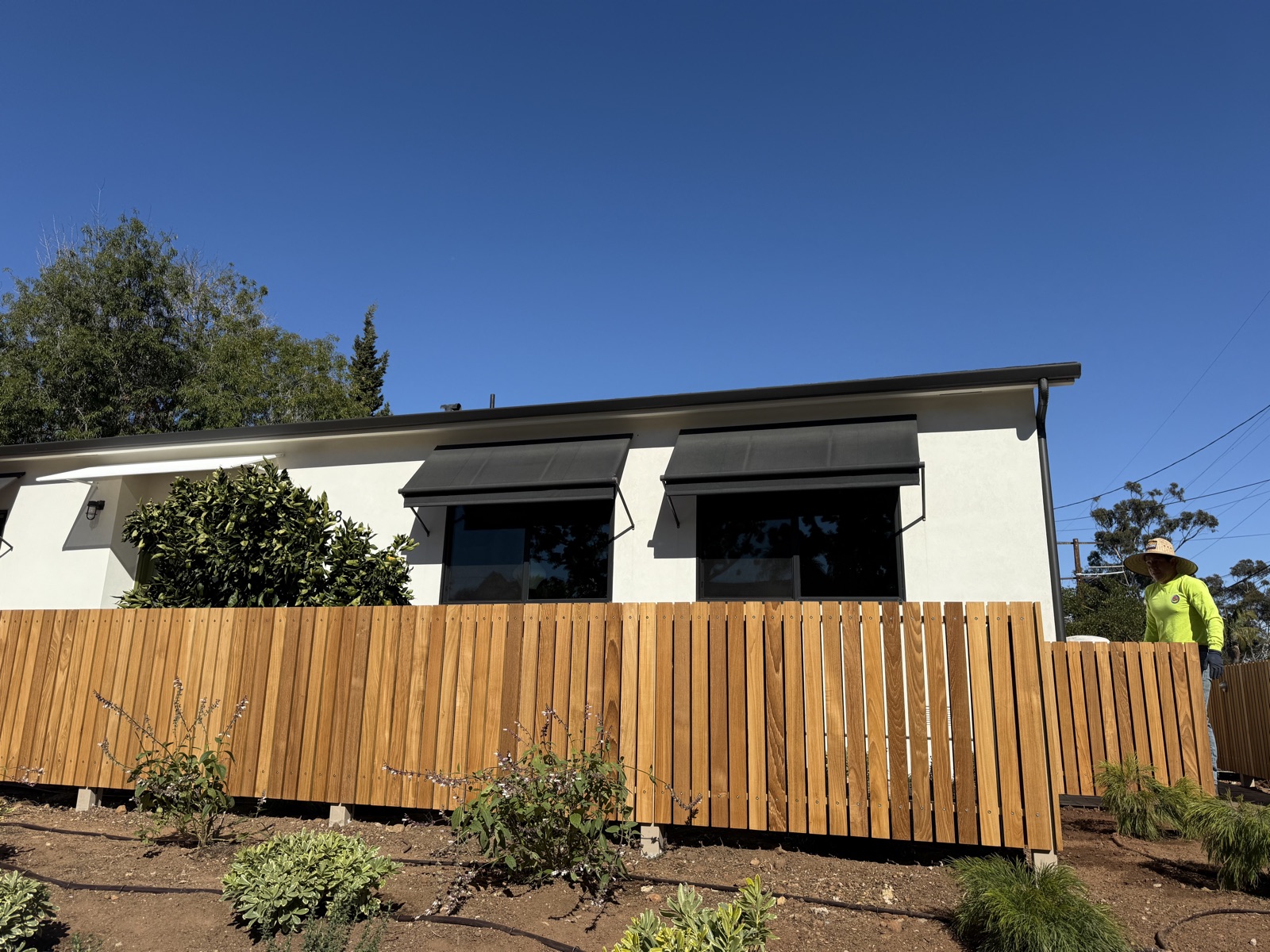
Three Panel Families, Three Different Places They Break
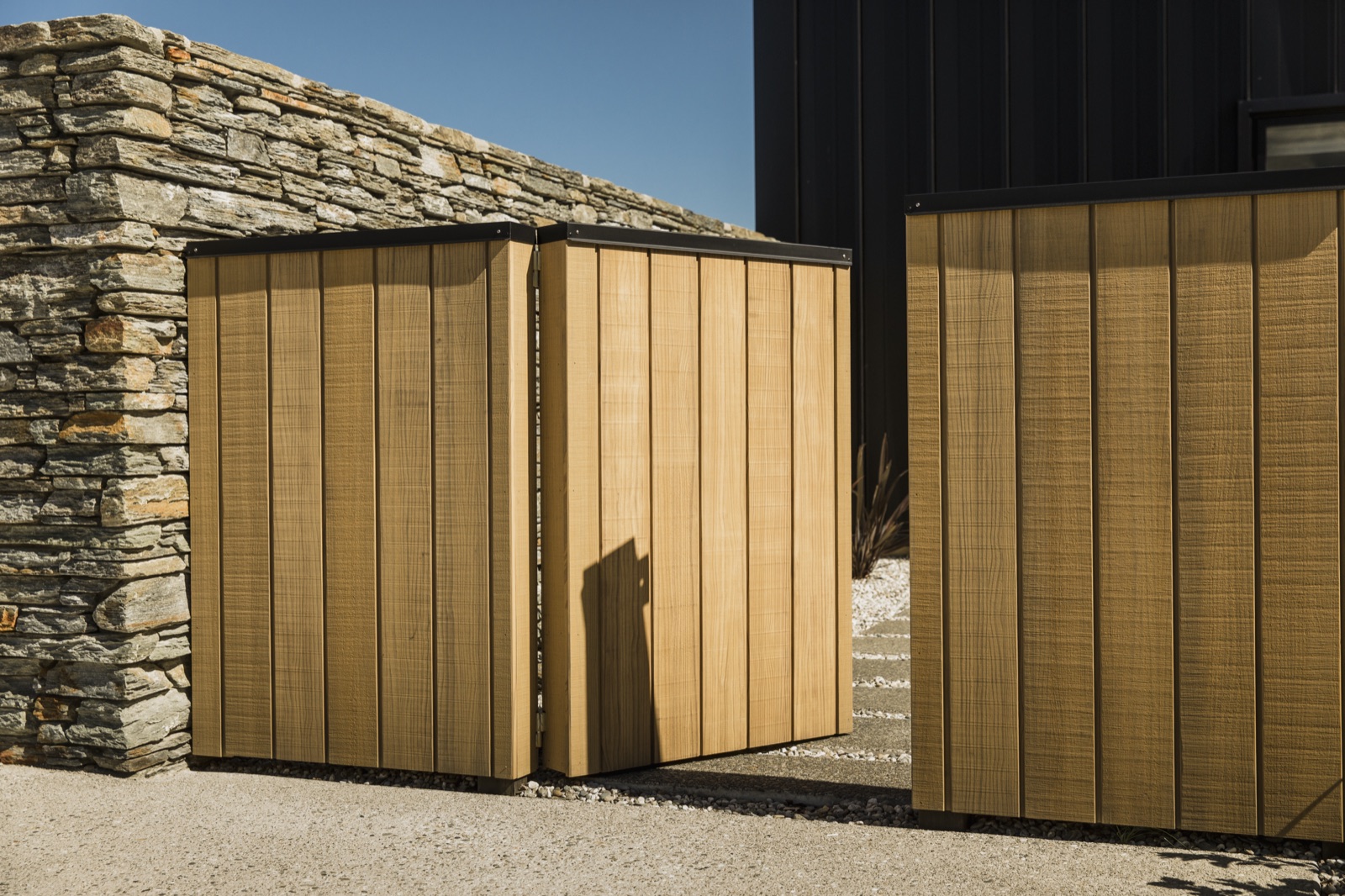
Privacy, picket and louvered fence panels each fail in a predictable spot, and a drawing either prevents that failure or bakes it in. Privacy panels fail at water and wind, because a solid face traps moisture behind it and catches every gust that crosses the property. Picket panels fail at exposed end grain and at narrow stock that splits around a fastener. Louvered panels fail at the blade seat, where an angled housing turns into a small reservoir if the slope runs the wrong way. None of those are exotic problems. They show up on ordinary residential and commercial jobs within the first three seasons, and almost all of them trace back to a detail nobody dimensioned.
Custom milling is what closes the gap. A panel drawn once and milled to that drawing can carry a back bevel, a drip kerf, a shed angle on a picket top and a chamfered blade seat, all cut in the moulder rather than improvised by an installer with a block plane. ICD, the architectural millwork division of J. Gibson McIlvain, builds fence and gate panels as true custom assemblies planned around a specific run of wall, grade and sightline, and the lumber yard that feeds it holds over seven million board feet of exotic and domestic stock so a long privacy run comes out of matched material instead of whatever three suppliers had left.
What a Fence Panel Drawing Has to Carry Before a Knife Is Ground
A fence panel drawing that only shows elevation and spacing is not buildable as custom millwork. Elevation tells the shop what the client wants to see. It says nothing about how the assembly survives weather. The drawings that mill cleanly carry six things beyond the elevation.
First, a section through the panel at the rail, showing whether boards sit in a groove, on the face of the rail, or captured between two rails. Second, the intended air path behind the panel, because ventilation on the back side is what keeps a wide board flat. Third, the drainage intent at every horizontal surface, including rail tops, blade seats and the bottom rail. Fourth, the fastener schedule, since stainless versus coated steel changes what happens to tannin-rich species. Fifth, the moisture target for the milled parts. Sixth, the profile, dimensioned, with a radius called out on anything eased or bull-nosed.
J. Gibson McIlvain mills exterior parts to an in-service moisture content near 12 to 16 percent rather than the 6 to 8 percent used for interior millwork, because a fence board equilibrated to interior conditions will swell the moment it meets a humid site. The USDA Forest Products Laboratory Wood Handbook lays out the shrinkage coefficients that govern how much a given species moves between those states, and those numbers are the reason a 1x6 tongue and groove privacy board needs a different groove depth than a 1x4.
Privacy Panels Fail at Water and at Wind, Not at the Boards
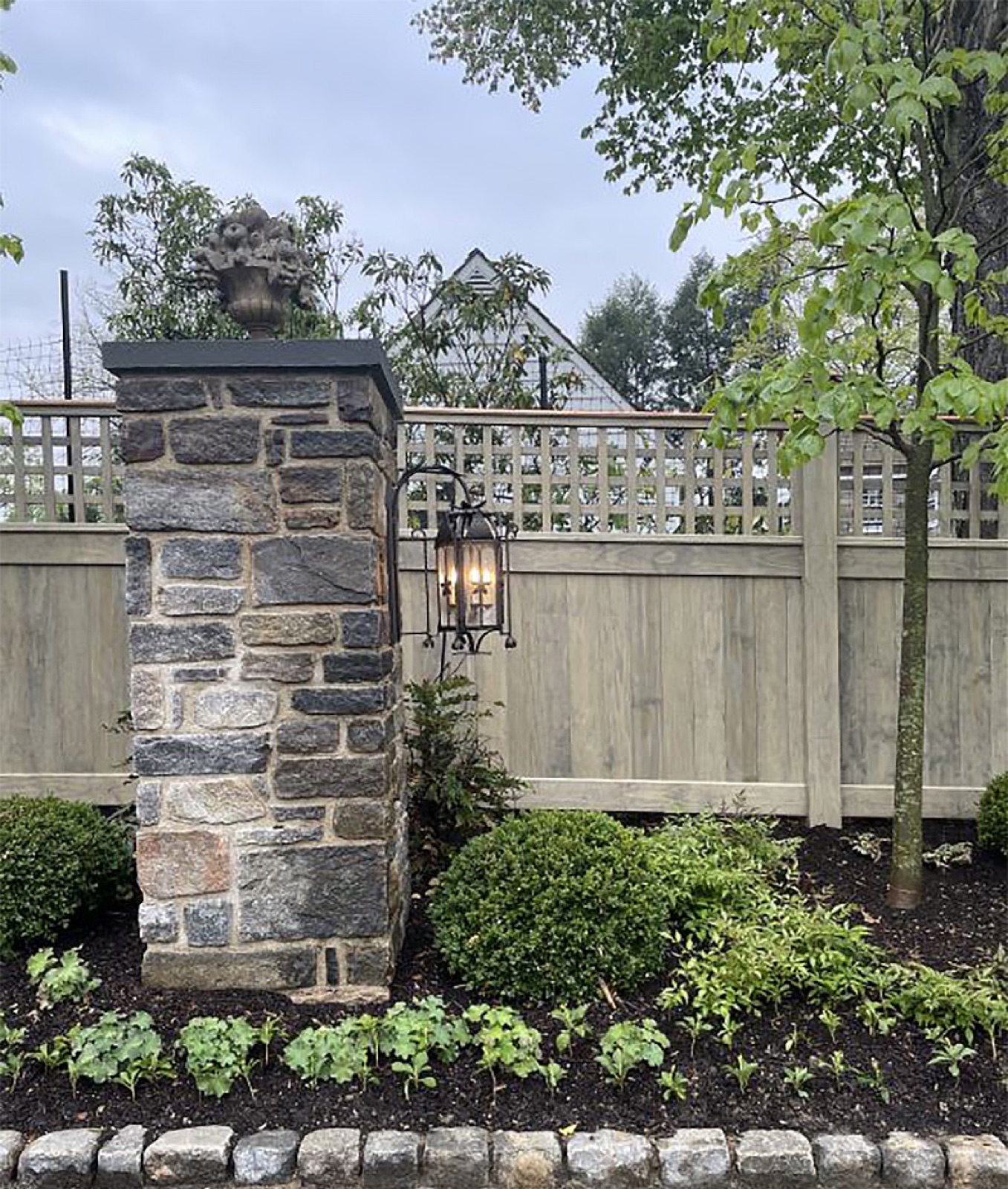
A solid privacy panel is a wall, and it inherits every problem a wall has. The board field is rarely what fails first. The frame, the hinge side and the back face of the boards go first.
Trapped moisture is the common one. Boards fastened tight to a rail with no relief behind them wet from the front, dry slowly from the front, and cup toward the exposed face. Cupping on exterior boards is driven by installation and back ventilation, not by the species anyone blames afterward. Milling a shallow relief kerf on the back of a wide board, or detailing a furring strip so air moves behind the field, fixes more cupping than switching wood ever will. Rain control logic for cladding applies almost directly here, and Building Science Corporation's rain control digest is the clearest published treatment of why a drained, back-ventilated assembly outlives a sealed one.
The second failure is seasonal gapping. Tongue and groove privacy boards milled in summer at high moisture content shrink in winter and open a sight line right through the panel. The fix is dimensional, not magical. Deepen the tongue engagement so the groove still covers after shrinkage, or switch to board and batten where the batten hides movement by design. A shiplap with a generous lap does the same job with less machining.
The third failure is wind. A solid panel is a sail. Six feet tall by eight feet wide of Sapele delivers a real load into the posts and, on a gate leaf, into the hinges. The American Wood Council codes and standards library is where the engineering references for wood connections and lateral load live, and any panel over roughly six feet tall on an exposed site deserves a look at that math before the post schedule gets set. ICD builds privacy panels with the stile and rail frame sized to the span rather than to a catalog default, and heavy driveway gate leaves get engineered rather than only crafted, because size and weight stop being a joinery question past a certain leaf width.
Picket Panels Fail at End Grain and at the Fastener
Every picket top is exposed end grain, and end grain drinks water many times faster than face grain. That single fact explains most picket failures. A flat-topped picket holds standing water on a surface that absorbs it eagerly. Two or three winters of freeze and thaw later, the top checks, the checks widen, and the finish fails from the top down while the rest of the picket still looks new.
The profile work is the answer, and it is cheap to mill while the stock is running anyway. A dog ear, a shed angle, a French gothic top or a simple back-sloped chamfer all shed water instead of holding it. ICD mills decorative picket tops to the drawing, including historically matched profiles pulled from a photograph or a salvaged original, and J. Gibson McIlvain grinds new knives every week against a profile library holding thousands of ground knives, so a top profile from a 1920s district fence can be reproduced instead of approximated. When a homeowners association or a historic district requires like-for-like replacement, that matters more than any other spec on the sheet. The National Park Service Standards for the Treatment of Historic Properties is the document most review boards lean on for that language.
The second picket failure is splitting at the fastener. Narrow stock, a fastener too close to the edge, no pilot hole, and the picket cracks on the first hard swelling cycle. Milling pickets slightly thicker than nominal 3/4 helps. So does specifying stainless fasteners on Iroko, White Oak and other tannin-heavy species, where ordinary steel produces black staining that streaks down the face and never washes off.
The third is the bottom rail. A flat bottom rail is a shelf. Leaves and dirt sit on it, hold moisture against the picket bottoms, and rot starts from below while everyone watches the tops. A back-sloped or beveled bottom rail solves it in one pass on the moulder.
Louvered Panels Fail at the Blade Seat and the Slope
A louvered fence panel is a shutter turned into a fence, and it fails the way a badly built shutter fails. The blades are set in dadoes cut into the stiles. Cut those dadoes square and flat on an exterior panel and each one becomes a small trough that holds water against end grain of the blade. That joint is the single most common rot origin in louvered exterior work.
The correction is geometric. Angle the blade seat so it drains outward, ease the bottom edge of the dado, and give the blade a slight back bevel where it enters the stile. ICD cuts louver seats to the blade angle on the drawing rather than to a standard 45, which matters because the privacy the client wants depends on a sight line, not on a convention. A louver set for privacy from a neighbor standing at grade eight feet away needs a different angle and overlap than one set for privacy from a second-story window. Draw the vantage point on the section and the angle falls out of the geometry.
Blade sag is the second failure. A thin blade spanning wide between stiles will bow under its own weight and under snow load, and a bowed blade opens the overlap and kills the privacy that justified the panel. Either thicken the blade, shorten the span with an intermediate mullion, or accept a deeper blade section. J. Gibson McIlvain resaws and mills blade stock on band resaws and straight line rip saws in-house, so a nonstandard blade thickness is a setup rather than a special order.
Third, louvers are the panel type most sensitive to species movement. A blade that swells across its width in a fixed dado will bind and eventually split the stile. Leave expansion room in the seat depth, or specify a dimensionally stable material. Acetylated Accoya, at roughly 1,600 lbf Janka, gives dramatically reduced shrinkage and swelling, which is exactly the property a fixed-blade louver wants. Details on the process are published by Accoya.
| Design variable | Privacy panel | Picket panel | Louvered panel |
|---|---|---|---|
| First place it fails | Cupping and back-face moisture on wide boards, plus hinge-side load on gate leaves | End grain at the picket top and splitting at the fastener | Water standing in the blade dado, then rot at blade end grain |
| Wind load on frame and posts | Highest, a solid sail across the full panel | Lowest, air passes between pickets | Moderate, varies with blade angle and overlap |
| Water management detail to draw | Back relief kerf, ventilated cavity, sloped rail tops | Shed or gothic picket top, beveled bottom rail | Sloped blade seat, eased dado edge, drained bottom rail |
| Movement tolerance | Moderate, gapping shows as a sight line | High, spacing hides seasonal movement | Low, a swelling blade binds in a fixed seat |
| Profile work usually milled | Tongue and groove, shiplap, board and batten, back kerf | Decorative tops, chamfers, beaded faces, sloped rails | Angled blades, rabbeted stiles, capped top rail |
| Species that suit it | Sapele, Utile, Iroko, CVG Western Red Cedar, Accoya | Sapele, Iroko, STK or CVG Cedar, Accoya, Abodo Vulcan | Accoya, Sapele, Teak, Afrormosia, Abodo Vulcan |
| Maximum practical length constraint | Solid hardwood runs long, modified woods stop near 16 ft | Short components, length rarely governs | Blade span governs, mullions extend the panel |
The Millwork Species Palette for Fence and Gate Panels
Sapele, Iroko, Afrormosia, Teak and Utile are the working palette for milled, glued and machined exterior panels, and there is a reason the decking species are not on that list. Ipe (Tabebuia spp), Cumaru, Garapa, Jatoba and Red Balau are extremely hard and carry high oil content, which makes them difficult to glue and hard on knives. Those properties are an advantage on a deck surface and a liability in a stile and rail assembly that depends on glue lines, mortises and moulded profiles. A millwork house reaches for Sapele, Iroko, Afrormosia, Teak or Utile instead, because they machine to a crisp profile, hold glue, and take a coating.
Sapele runs roughly 1,410 lbf on the Janka scale and is the first call for painted exterior work, ahead of Genuine Mahogany at roughly 800 lbf, because it holds paint better and comes in a wider range of sizes and longer lengths. Sapele is not milled 1x8 for exterior use, since that width is too wide to stay stable outdoors. Species data for each is published on the Wood Database, and Iroko is the one to reach for when a client wants a Teak look on a fence-scale budget of material.
Western Red Cedar remains a legitimate default and should not be talked out of a job that suits it. Specify the grade honestly. CVG, clear vertical grain, is the stable, knot-free option for louver blades and wide privacy boards. STK, select tight knot, is the character grade that reads well on a rustic picket run and costs less material to produce. They are different products, not better and worse versions of one.
Modified woods belong in this conversation too. Accoya and Abodo Vulcan and Thermory all top out around 16 ft, with most sold on metric lengths just under 16 ft, a limit set by kiln size rather than by the tree. Thermally modified Ash is not available wider than 8 inches, so a wide blade or a wide privacy board in a modified product means Accoya or Abodo Vulcan. The Thermory technical library covers the thermal process itself. One thing to be clear about with any solid unmodified wood is that no warranty exists on it. It is an organic material responding to its environment, and no supplier can warranty that behavior. Warranties live only on modified products.
Decorative Profiles Are Where a Milled Panel Stops Looking Like a Fence Kit
The profile is the difference between a custom panel and a stack of boards, and it is also a functional detail, not only a decorative one. A beaded picket face breaks up a flat plane so seasonal movement reads as shadow rather than as a gap. A chamfered top rail sheds water. A cove under a cap rail creates a drip edge that stops water from wicking back into the joint below.
J. Gibson McIlvain runs moulders, custom knife grinders, straight line and gang rip saws, band resaws and trimming saws on the floor, and holds a moulding profile library with thousands of profiles on file. If a profile is not in the library, it gets ground to match, whether that is a difficult historical restoration profile or a contemporary reveal that has to line up with an adjacent metal panel. Being seventh generation and family run since 1798 is what makes a profile hold across phases, since the knife and the record stay on file when phase two arrives two years after phase one. Standards for moulding profile nomenclature and grading come from the Wood Moulding and Millwork Producers Association, and ICD's trim profile work shows how that library gets applied to a specific drawing.
"Most of the fence drawings that reach us are elevations. Beautiful elevations, no sections. I ask for one section through the rail and one through the blade seat, and that single sheet decides whether the panel is still tight in five years. We would rather grind a knife for a sloped seat now than hear about a rotted stile later."
Norm Moton, Director of Sales, J. Gibson McIlvain
Prefinished Panels Outlast Site-Finished Panels Because of the Back and the Ends
A panel finished after assembly leaves the back faces, the blade ends and the rail joints bare, and those are the surfaces that fail. Prefinishing before assembly is the only way to coat all six faces of a component. It is also the only way to get finish into the end grain of a picket top or a louver blade before that end grain is buried in a joint.
J. Gibson McIlvain primes wood in three levels, in both oil-based and water-based systems, and exterior primed trim carries a fungicide additive. Open-grained and oily exterior species absorb a great deal of finish, so a primer coat evens out the eventual painted surface rather than letting it go blotchy. Sanding or buffing after priming knocks back the grain raised by a water-based system while keeping the moulded detail crisp, which is exactly what a beaded picket face or a fine cove needs.
Two practical notes. On a dark painted privacy panel in full sun, surface temperature drives movement as hard as moisture does, so a lighter color or a back-ventilated cavity is worth arguing for. On Iroko and White Oak, extractives can bleed through a light-colored water-based primer, and a stain-blocking oil-based first coat solves it. Either way, the panel arrives ready to hang, and the installer's job becomes hanging rather than finishing.
Gate Leaves and Fence Panels Should Come Off the Same Order
A gate is not a fence panel with hinges on it, but it has to look like one. The gate leaf sees loads no fence panel sees. It hangs off two or three points, it swings, it gets slammed, and it has to stay square while the fence beside it is free to move with the posts. Sag is the universal gate complaint, and it comes from an undersized frame, a weak corner joint, or a leaf too wide for its hinge schedule.
ICD builds pedestrian, garden, courtyard and estate entry gates, plus large driveway swing gates, and matches the panel treatment across both so a louvered gate leaf reads continuous with the louvered fence run beside it. Large swing gates require engineering rather than only craftsmanship, because size and weight change the problem. Frame joinery on a gate leaf wants a through-tenon or a deep mortise, not a butt joint, and a diagonal brace running from the low hinge corner up to the latch side does more than any hardware upgrade. Cross-reference ICD's exterior millwork and working process pages for how a custom leaf gets planned around the opening it actually has.
One boundary worth stating plainly. J. Gibson McIlvain supplies and mills. It does not install, coordinate installation, or field measure. Post setting, footing depth, hinge anchoring and final hanging belong to the buyer's own contractor or fabricator. What the shop controls is that the parts arrive dimensioned to the approved drawing, primed, labeled and packaged so the installer is assembling instead of correcting.
Documentation, Lot Matching and Getting the Panels There Intact
Long fence runs succeed or fail on lot consistency, and prefinished panels succeed or fail in the truck. A two hundred foot privacy run pulled from three different lots of Sapele will show color banding that no finish evens out. J. Gibson McIlvain holds over seven million board feet of exotic and domestic lumber at the Maryland yard, which is what makes it possible to pull a long run, or a gate leaf and its flanking panels, from matched material rather than from whatever arrives next.
Sourcing documentation travels with the material. J. Gibson McIlvain is an FSC certified importer and miller, and where a CITES-listed species is involved, documentation and chain of custody travel with the shipment. The CITES secretariat publishes the current appendices, and a specification with sourcing requirements on a public or institutional project usually needs that paperwork in the submittal package rather than after delivery.
Delivery is its own risk to a prefinished panel. J. Gibson McIlvain runs its own fleet of trucks and dedicates a section of the mill to packaging, ships nationwide and regularly to California, and stores finished millwork for inventory control when a site is not ready. Staged release matters on fence work more than most people expect, since a panel run delivered eight weeks before the posts are set is a panel run sitting in the weather.
How J. Gibson McIlvain Would Specify This
Start from the failure mode, pick the panel type that fails in the place you can live with, then draw the details that prevent it. For a boundary that has to block sight and sound on an exposed site, specify a privacy panel in Sapele or CVG Western Red Cedar, boards milled as shiplap with a generous lap, back relief kerfs on anything 1x6 or wider, a back-ventilated cavity, sloped rail tops, and a frame sized for the wind load rather than for a catalog. For a street-facing fence in a district with review, specify a picket panel with the top profile ground to the original, a beveled bottom rail, stainless fasteners and a full prime on all six faces. For a screen that has to breathe, specify a louvered panel in Accoya or Abodo Vulcan with the blade angle set from a drawn sight line, sloped blade seats, eased dado edges and a mullion wherever the blade span gets long.
Then let one shop carry it. J. Gibson McIlvain runs a full millwork shop on site at the lumber yard for linear trimwork, finished cladding and primed trim, and a complete architectural millwork house off site, which is ICD, for true custom work planned to fit a specific space. Rafter tails, box beams, radius trimwork, benches, railings, pergolas and shutters come off the same relationship as the fence panels and the gate leaves, which is how a whole exterior stays consistent in species, color and profile. Details on the lumber and milling side are at the J. Gibson McIlvain millwork service page, and the custom side at ICD.
Send the elevation, the section and the site photographs, and ask for a takeoff on the panel type and species you are weighing. Call 800-638-9100 to get a drawing in front of the millwork group, and bring the profile question with it, since a knife that already exists in the library can change which detail you choose.
Frequently Asked Questions
Which fence panel type holds up best in a high-wind coastal setting?
Picket panels take the least wind load, since air passes between the boards and the frame never acts as a sail. Louvered panels sit in the middle and vary with blade angle and overlap. Privacy panels take the most, which is why a six foot or taller solid panel on an exposed site needs a post schedule and a frame sized to the actual load rather than to a standard catalog detail. If privacy is non-negotiable on a windy site, the usual compromise is a louvered panel with a tight overlap angle, or a privacy panel broken into shorter bays with more posts. Coastal exposure also argues for stainless fasteners throughout and for species that take a coating well, such as Sapele, Iroko or Accoya.
Can a picket top profile be matched to an existing historic fence?
Yes. J. Gibson McIlvain holds a moulding profile library with thousands of ground knives and grinds new knives every week, so a picket top, a cap rail or a bead can be reproduced from a measured drawing, a photograph with a scale in it, or a salvaged original sent to the shop. Historic district review boards usually want like-for-like replacement in both style and species, and that is a matching exercise rather than an approximation. Send the original piece if one survives, since a physical sample removes all guesswork from the grind.
Why does a louvered panel rot at the stile when the blades still look fine?
The blade seat is the culprit. A square, flat dado cut into a stile holds water against the end grain of the blade, and end grain absorbs water far faster than face grain. Water sits in that seat after every rain and the joint stays wet long after the visible surfaces have dried. Cutting the seat at a slope so it drains outward, easing the lower edge of the dado, and priming the blade ends before assembly fixes it. On a panel already built, the only real remedy is rebuilding the stiles.
Do prefinished fence panels really outlast panels finished on site?
They do, and the reason is the surfaces a site finisher cannot reach. Once a panel is assembled, the back faces of boards, the tenons, the blade ends and the seated edges are buried and will never see a coating. Priming components on all six faces before assembly is the only way to protect them. Exterior primed work should also carry a fungicide additive, and open-grained or oily species absorb enough finish that a primer coat is what makes the eventual painted surface look even rather than blotchy.
What is the longest fence panel that can be milled in one piece?
That depends on the material. Solid hardwoods such as Sapele, Iroko and Utile come in long lengths, and the Maryland yard holds over seven million board feet of exotic and domestic stock, which is what makes long, color-matched runs possible. Modified woods are different. Accoya, Abodo Vulcan and Thermory all top out around 16 ft, with most sold on metric lengths just under 16 ft, a limit set by kiln size. On louvered panels the governing dimension is usually the blade span rather than the overall panel, since a long unsupported blade will bow. An intermediate mullion solves that without changing the elevation much.
Should tropical decking species such as Ipe be used for milled fence panels?
Usually not. Ipe (Tabebuia spp), Cumaru, Garapa, Jatoba and Red Balau are extremely hard and carry high oil content, which makes them difficult to glue and hard on knives. Those traits suit a deck surface and work against a stile and rail panel that depends on glue lines, mortises and crisp moulded profiles. A millwork shop reaches for Sapele, Iroko, Afrormosia, Teak or Utile instead, because they machine cleanly, hold glue and take a coating. Western Red Cedar in CVG or STK grade is also a legitimate choice depending on whether the job wants clear stock or character.
Is there a warranty on custom milled fence panels?
On modified products such as Accoya, Abodo Vulcan and Thermory, warranties exist and come from the manufacturer of the modification process. On solid unmodified wood there is no warranty and no supplier can offer one, because wood is an organic material that responds to its environment. What can be controlled is the specification, the moisture content at milling, the finishing schedule and the detailing, which together account for most of the difference in how long a panel lasts.
Does J. Gibson McIlvain install fence panels and gates?
No. J. Gibson McIlvain supplies lumber and mills millwork, and ICD, the architectural millwork division, builds true custom panels, gates, shutters, railings and other components planned to fit a specific space. Installation, field measurement and installation coordination belong to the buyer's own contractor or fabricator. What arrives is dimensioned to the approved drawing, primed on all six faces where specified, labeled and packaged for transit, shipped on the company's own trucks nationwide. Call 800-638-9100 to review a drawing with the millwork group.
Sources and Standards Referenced
- Wood Handbook, Wood as an Engineering Material (FPL-GTR-282), USDA Forest Products Laboratory
- BSD-013: Rain Control in Buildings, Building Science Corporation
- Codes and Standards, American Wood Council
- The Secretary of the Interior's Standards for the Treatment of Historic Properties, National Park Service
- Sapele, The Wood Database
- Forest Stewardship Council
- Convention on International Trade in Endangered Species of Wild Fauna and Flora
- Accoya Acetylated Wood
- Wood Moulding and Millwork Producers Association
- J. Gibson McIlvain Millwork Service