Why a Drawing Arrives Unmillable
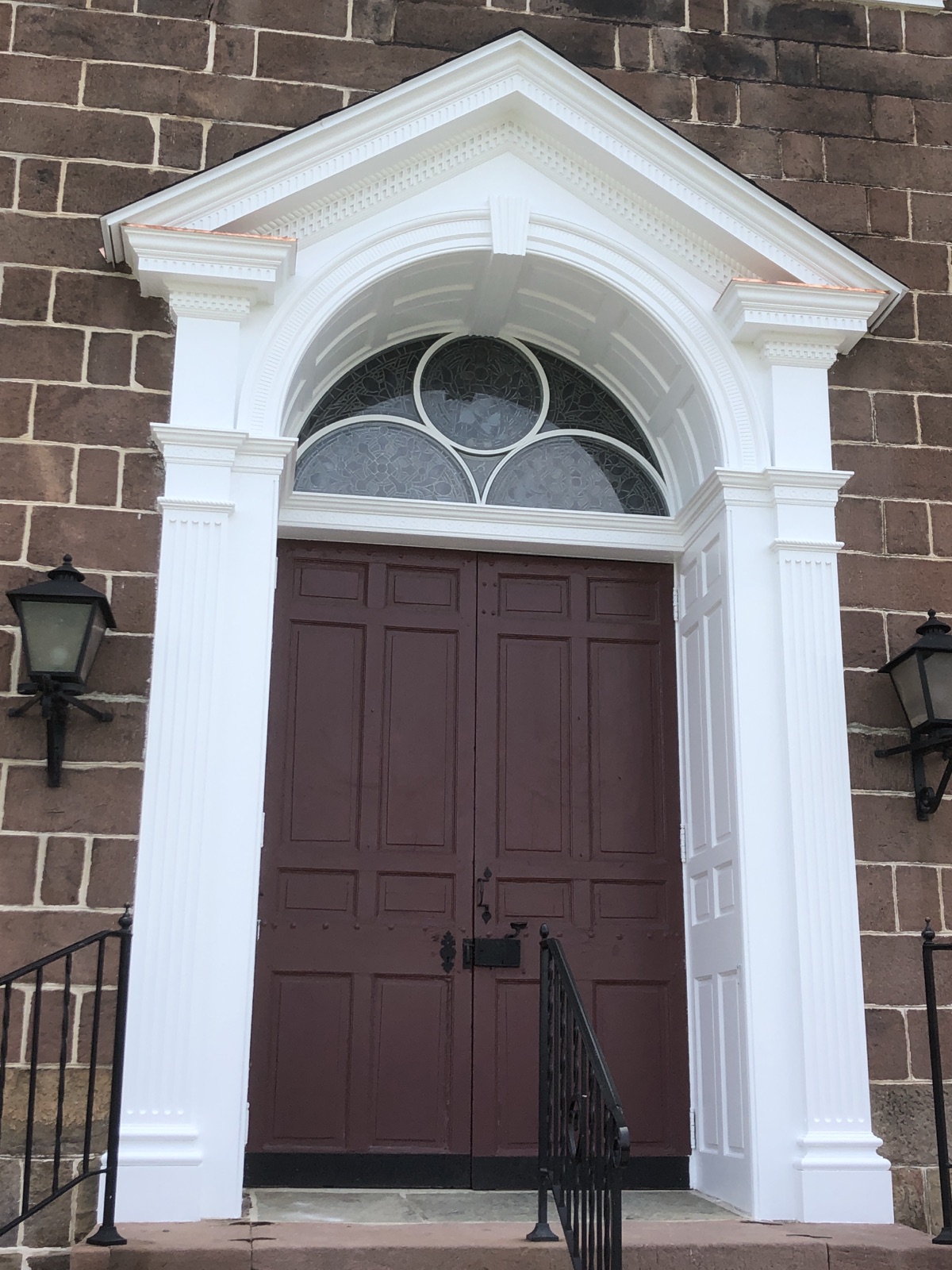
A section drawn in CAD is not automatically a section a moulder knife can cut. The drawing is a static outline. The knife is a ground steel profile spinning on a head at several thousand rpm, cutting a shape that has to release cleanly while the stock feeds past it. Those are not the same geometry problem. Profiles that look ordinary on a sheet turn out to be impossible in one piece, or possible only in a way that wrecks the detail the architect drew.
This is rarely a design failure. Architects draw the section the eye is meant to read, and they should. Trouble surfaces on the shop floor, where a cutter reaches into the shape from one direction only, where a thin element has to stay rigid while it is being cut, and where grain running under the head does not care what the elevation looked like.
J. Gibson McIlvain grinds new knives every week and keeps a moulding profile library holding thousands of ground knives, so the first move on a hard section is a search, not a redraw. A large share of what arrives labeled custom is already on the shelf or sits one grind away from something that is, and some of it turns out to be a standard WM series profile redrawn by hand. This article is about the rest, the drawings that come back with questions attached.
Geometry a Knife Cannot Reach
The most common reason a profile cannot be run is that part of the drawn shape is hidden from the cutter. A moulder head cuts from the outside in. Anything that overhangs what sits beneath it, an undercut, a reentrant curve, a dovetailed reveal, cannot be produced by a knife travelling in a straight line past the stock. The cutter would have to bend around its own path to get there.
Interior corners are the quieter version of the same limit. A ground knife carries a tip radius, so a drawing showing a razor corner where a fillet meets a cove will produce a small radius instead. On a painted casing nobody will ever find it. On a clear-finished Sapele cap under raking light it reads, and the architect who drew a crisp quirk sees a soft one.
Depth is the third limit. A cove drawn deep relative to its width asks for knife projection past what the head will safely carry, and pushing it produces chatter, burn and a wavy surface that no amount of sanding rescues. Fragile elements do the same thing from the other direction. A bead standing on a neck thinner than roughly an eighth of an inch vibrates, then tears out, especially in ring-porous stock.
What the shop proposes for each of these is usually the same family of answers. Run the shape in two passes off two knives. Split the member so the undercut becomes a separate applied piece. Open the corner to a stated radius the architect approves on paper rather than discovers on site. None of that changes the drawn elevation. It changes how many sticks of wood build it.
Width, Thickness and Length the Stock Will Not Give
A profile can be perfectly cuttable and still be unmillable because no board exists that will yield it. A cornice drawn thirteen inches on the face in one piece needs a blank wider than thirteen inches after milling, in a species and grade that comes that wide, in the length the run requires. Those four conditions fail together more often than any knife problem.
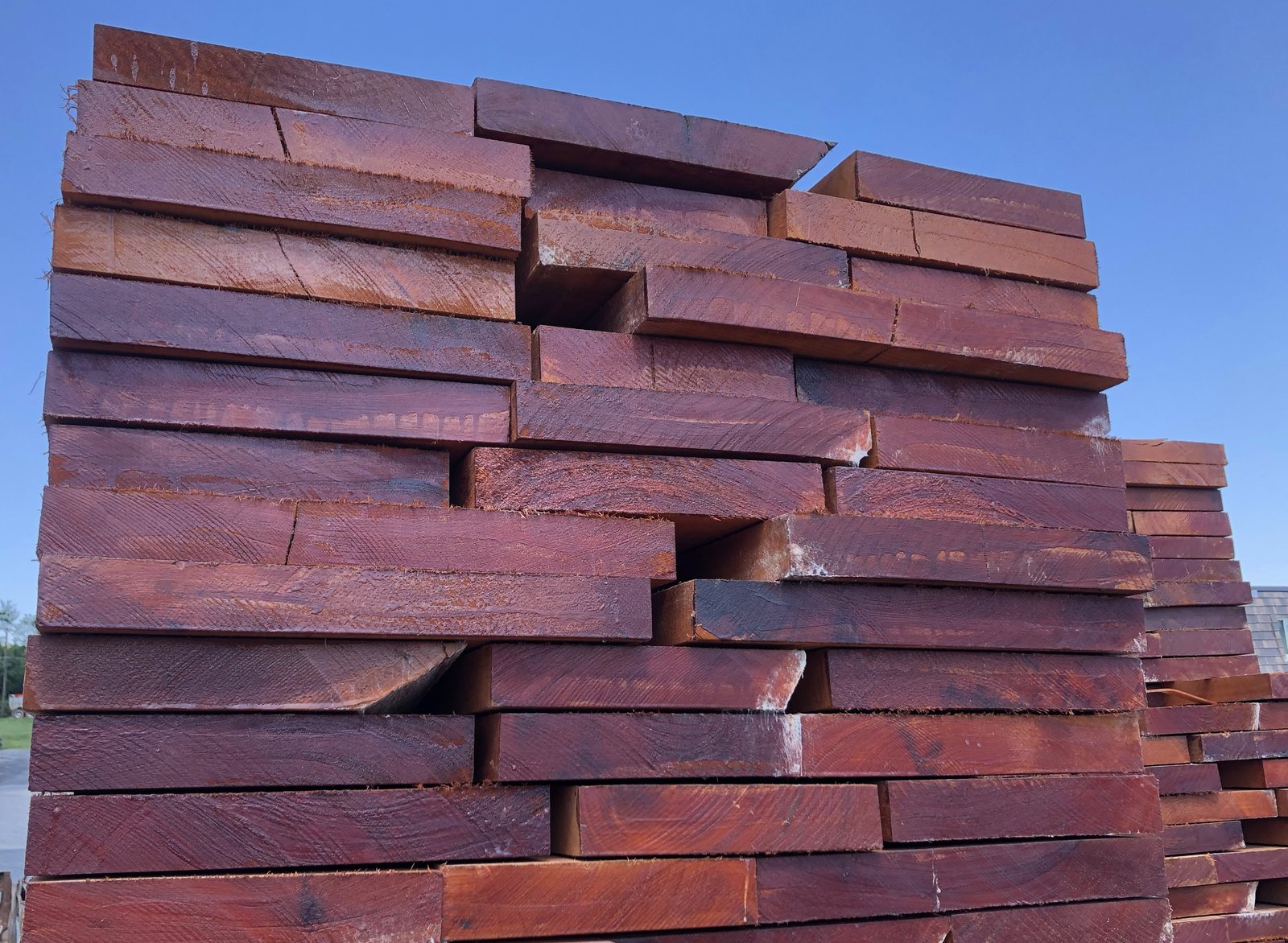
J. Gibson McIlvain holds over seven million board feet of exotic and domestic lumber at the Maryland yard, which is why the width question gets a real answer rather than a shrug. Wide Sapele, Utile and Iroko in long lengths are ordinary stock there. When a species on allocation elsewhere is the specified one, the honest answer is whether the yard has it, not whether it exists in theory.
Modified woods carry a harder ceiling. Thermory and Abodo Vulcan, both carried, along with Accoya, top out around 16 ft, and most of it sells on metric lengths just under 16 ft because of kiln size. Thermally modified Ash is not available wider than 8 inches at all. A drawing calling for a wide modified board means Accoya or Abodo Vulcan, and a drawing calling for a twenty foot one-piece modified run means the drawing changes or the species changes.
Species That Will Not Hold the Detail
Fine detail survives in some species and disappears in others, and the millwork palette exists for that reason. Sapele, Iroko, Afrormosia, Teak and Utile machine cleanly, glue predictably and hold an arris. Sapele runs roughly 1,410 lbf on the Janka scale, hard enough to keep a crisp edge through handling and finishing without fighting the knife. Utile behaves similarly with a calmer figure, which matters on a painted or lightly stained run.
Softer stock changes what is drawable. Cherry at roughly 950 lbf and Genuine Mahogany at roughly 800 lbf take a beautiful surface, but a sharp raised bead on either will show dents from the shop, the truck and the installer's hand before the space is ever occupied. White Oak near 1,360 lbf and Hard Maple near 1,450 lbf hold detail well, and quartersawn or rift stock in either moves less across its width than plainsawn, which is why panelized and painted faces get specified that way.
The tropical decking species belong in a different conversation. Ipe, botanically Tabebuia spp, along with Cumaru, Garapa, Jatoba and Red Balau, are extremely hard and carry high oil content, which makes them difficult to glue. A millwork house reaches for Sapele, Iroko, Afrormosia, Teak or Utile instead, because built-up profiles, box beams and door stiles depend on glue lines holding. Those decking species earn their place on a deck, not in a laminated cornice.
Cedar deserves a straight answer too. It is a legitimate default for exterior trim and shutters, and the grade decides what detail it will carry. Clear vertical grain, CVG, takes a fine bead and a tight quirk without complaint. Select tight knot, STK, carries sound knots that will blow out under a delicate cutter, so the profile drawn for STK stock should be simpler and heavier in its members.
Building One Drawn Profile Out of Several Members
Most impossible profiles become possible the moment they stop being one piece of wood. A built-up assembly of a back band, a bed member and a cap reproduces the drawn shadow line exactly while giving every cutter clean access. It also lets each member run in the grain orientation that suits it, and it keeps the yield per board sane instead of hogging a twelve inch blank down to a three inch face.
Glue lines are the thing to place deliberately. A seam hidden in a quirk, behind a reveal or at a change of plane vanishes under paint and stays invisible under clear finish. A seam left in the middle of a flat field announces itself forever. The redraw the shop sends back should show where every joint lands, because that is the drawing decision, not a shop detail to be discovered later.
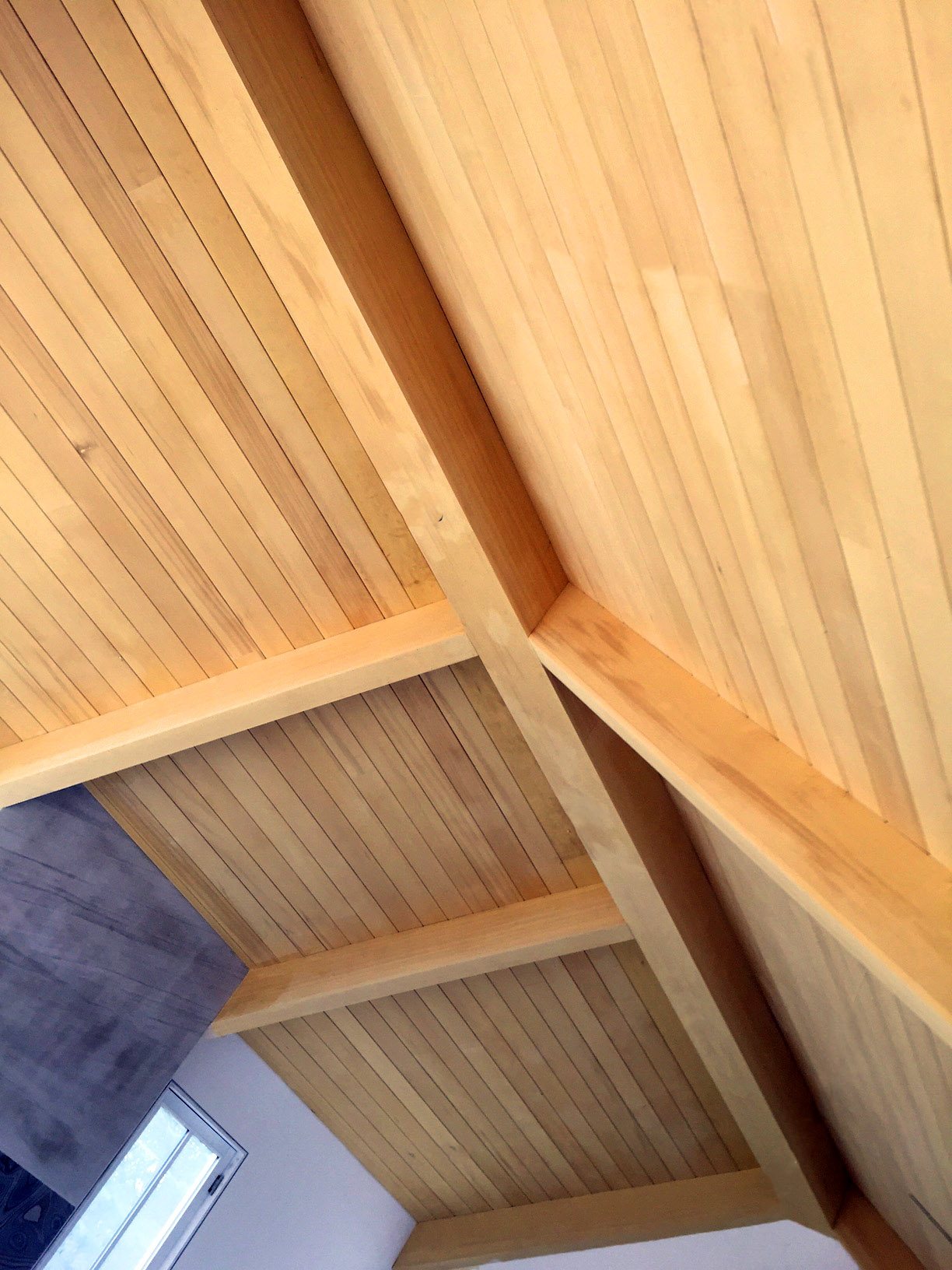
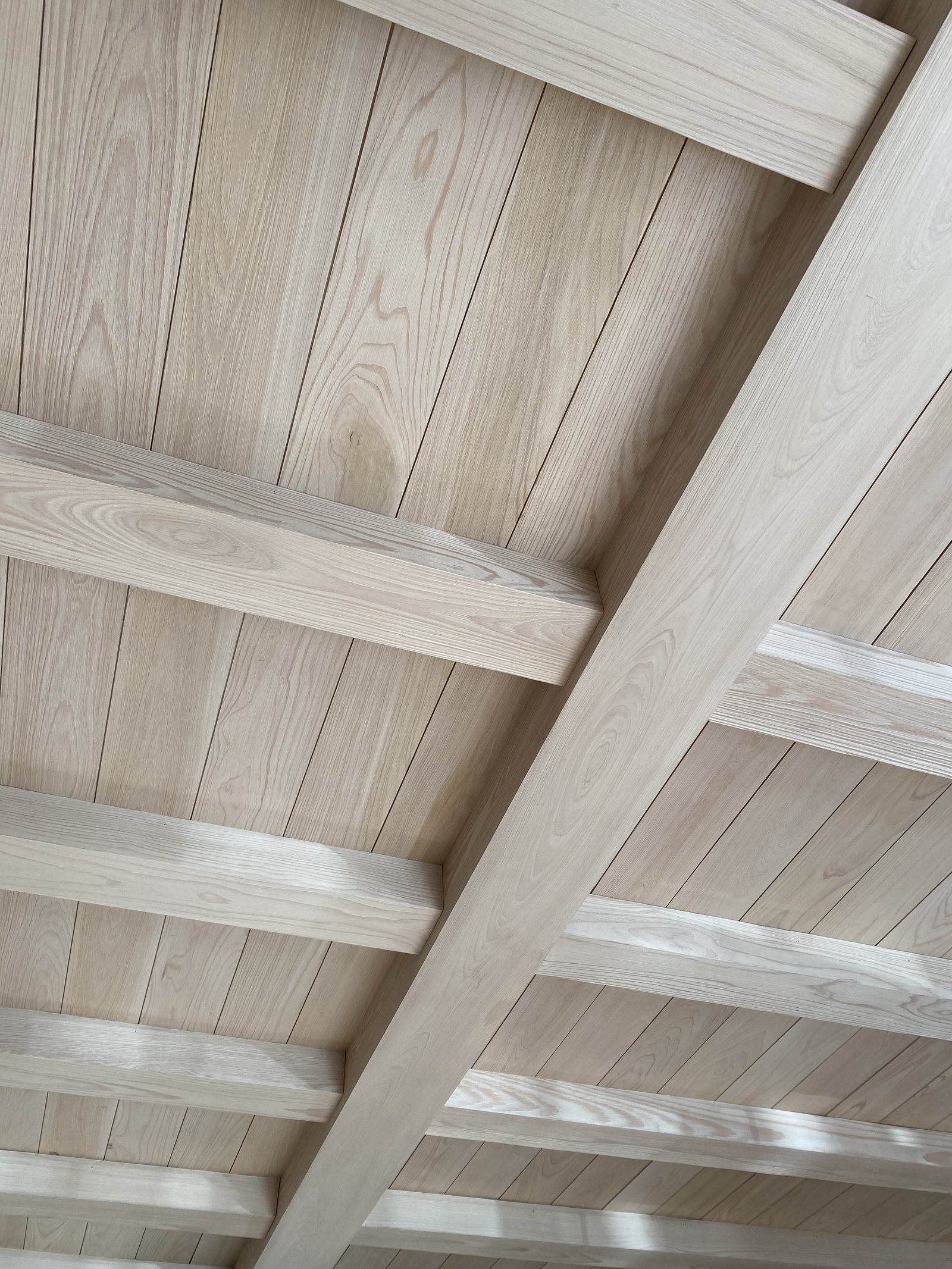
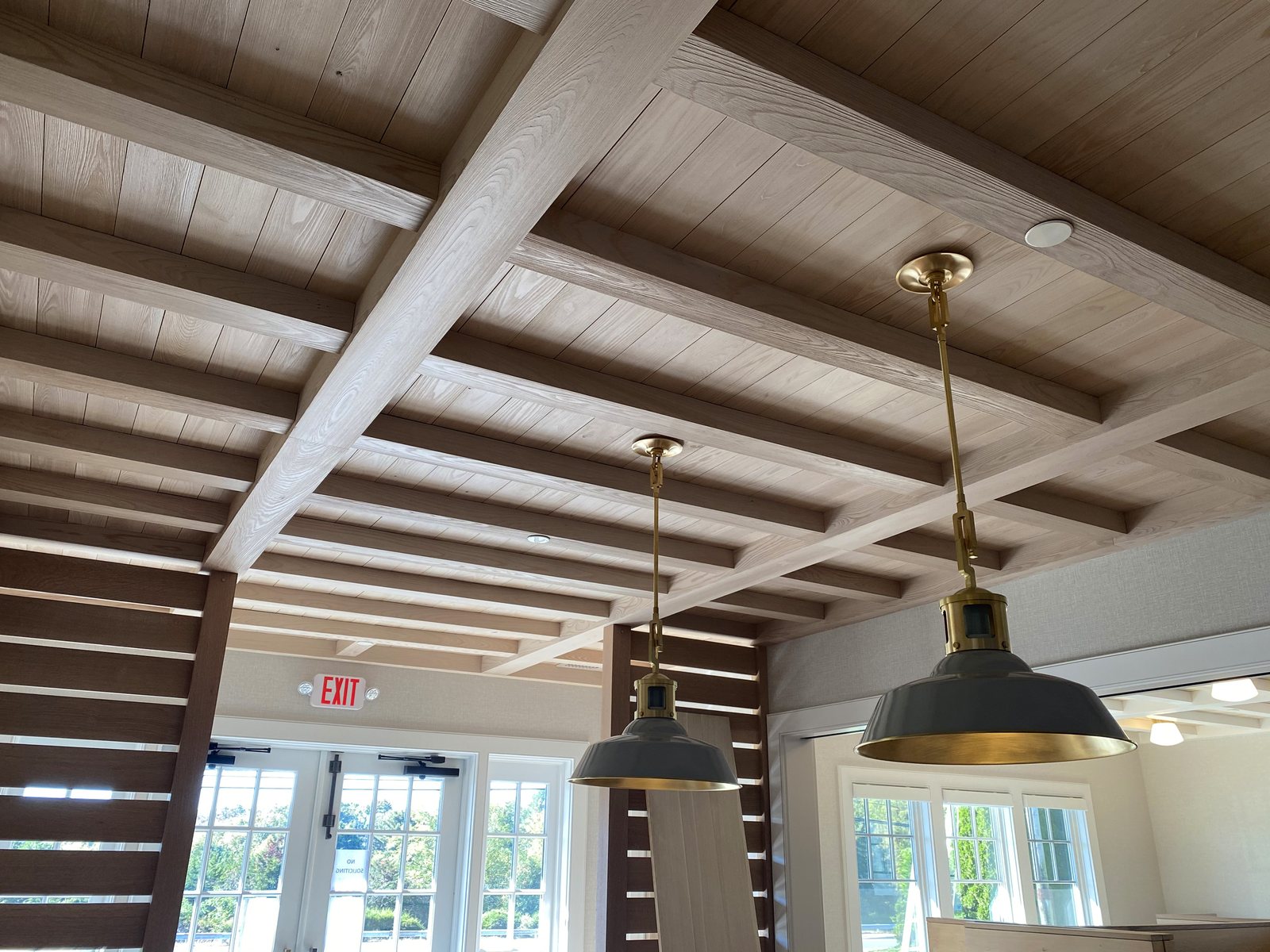
Box beams make the tradeoff explicit, which is why they are a useful teaching case. Butt joints give the most minimal profile, the fastest turnaround and the easiest on-site assembly, but they leave visible seams and visible end grain and are the weakest of the three. Dado joints are strong and still easy to assemble on site, though seams and end grain still show. Lock miter joints show no visible seams and are the strongest, and they are what a clear-finished beam in a great room should carry.
Radius Work Rewrites the Section
A curved version of a straight profile is not the same profile, and pretending otherwise is the most expensive mistake on this list. Curved members cannot feed through a straight moulder, so radius trimwork and radius millwork get shaped from laminated or segmented blanks on a different set of operations. The drawn section has to survive that change or be adjusted to it.
Two things shift. Segmented blanks expose end grain and short grain around the curve, which limits how delicate a projecting element can be, and a profile that springs off a wall at an angle projects a distorted section when it is bent in plan. A crown that reads perfectly on a straight run will not close cleanly at a curved springline unless the section is drawn for the sprung condition.
ICD, the architectural millwork division of J. Gibson McIlvain, builds radius trimwork, radius millwork, custom doors, rafter tails, pergolas, benches and railings as true custom work planned around a specific space, which is the setting where these adjustments get made once instead of three times. Its trim profile work and its working process both start from the space rather than from a catalog page.
Moisture and Movement Decide Which Details Survive
A detail that holds at the right moisture content will open at the wrong one, so the drawing and the drying target are one decision. Interior millwork is milled to an in-service moisture content near 6 to 8 percent. Exterior work sits near 12 to 16 percent. Running an exterior profile at interior moisture content guarantees swelling, and running interior trim wet guarantees open miters in February.
Movement also caps how wide a single flat field should be inside a profile. A six inch plainsawn face carrying a fine fillet along one edge will cup enough across a heating season to crack a paint line at that fillet. Quartersawn or rift stock moves less across its width, which is the reason painted panel stiles and long flat casings get specified that way rather than as an aesthetic preference. The Forest Products Laboratory Wood Handbook remains the reference for the shrinkage numbers behind that, and the Architectural Woodwork Institute standards are where most specifications pick up their tolerance language.
Modified wood changes the arithmetic on exterior work. Accoya runs roughly 1,600 lbf on the Janka scale, and acetylation gives dramatically reduced shrinkage and swelling, which lets a finer exterior detail hold its line. That stability is also why modified products can carry warranties. Solid unmodified wood cannot. It is an organic material responding to its environment, and no honest supplier warranties that.
What Paint Does to a Drawn Detail
Paint has thickness, and a profile drawn for clear finish will lose its smallest moves under three coats. A sixteenth inch quirk fills. A tiny fillet rounds over. The redraw for a painted run usually deepens the small reveals slightly so the shadow line still reads after primer, sealer and topcoat have all landed in the same groove.
Priming is where the surface is really decided. J. Gibson McIlvain primes wood in three levels, in both oil-based and water-based systems, and exterior primed trim carries a fungicide additive. Open-grained and oily species absorb a great deal of finish, so a primer coat evens out the eventual painted surface, and sanding or buffing after priming knocks back grain raising while keeping moulded detail crisp. That last step is what separates a sharp painted bead from a fuzzy one.
Species choice follows the same logic on painted exterior work. Sapele is the better call over Genuine Mahogany, because it holds paint better and comes in a wider range of sizes and longer lengths. Sapele is not milled 1x8 for exterior use, since that width will not stay stable in service. Cupping on exterior trim is driven by installation and back ventilation, not by the species on the tag, so a redraw that fixes the profile still depends on the installer leaving the back of the board able to dry.
What the Shop Sends Back Instead
The useful answer to an unmillable drawing is a redrawn section with the reasons written on it, not a phone call saying no. A counter proposal shows the revised section at full scale, marks every glue line and joint, states any corner radius that changed, names the species and the grade the revision assumes, in NHLA terms where the stock is hardwood, and flags the moisture target. The architect approves or rejects a document, which is a very different conversation from approving a sample and hoping the run matches.
Historic work raises the stakes on that document. Where a historic district requires like-for-like replacement, the section is the deliverable and a substitution is a review problem, not a shop preference. J. Gibson McIlvain grinds knives to match difficult historical restoration profiles as well as contemporary ones, and builds wood shutters in louver and panel styles with complete historical matching for both style and species. The National Park Service Preservation Briefs set the expectations most review boards work from.
Sourcing requirements ride along in the same package. J. Gibson McIlvain is an FSC certified importer and miller, and where a CITES listed species is involved, documentation and chain of custody travel with the material. A specification that names both a profile and a sourcing standard gets one answer from one supplier rather than two answers that have to be reconciled.
| Condition in the drawing | Why the knife fails | What the shop proposes instead |
|---|---|---|
| Undercut or reentrant curve | The cutter travels a straight path past the stock and cannot reach behind an overhang | Split the member so the undercut becomes a separate applied piece, with the seam placed in a quirk |
| Razor sharp interior corner | Every ground knife carries a tip radius, so the corner arrives softened | State an approved corner radius on the redraw, or form the corner where two members meet |
| Deep narrow cove | Knife projection exceeds safe head capacity, producing chatter and burn | Two passes off two knives, or a built up assembly that creates the same shadow |
| Thin bead on a slender neck | The element vibrates and tears out, worse in ring porous stock | Thicken the neck, or run the bead as its own member and apply it |
| Face wider than available stock | No board in that species and grade yields the finished width and length | Build the face from two members, or move to a species the yard carries wide and long |
| Long one piece modified wood run | Kiln size caps modified lengths around 16 ft | Design a joint into the run, or specify unmodified stock for that element |
| Straight profile applied to a curve | Segmented and laminated blanks expose short grain, and sprung sections distort in plan | Redraw the section for the radius and the spring angle before the straight run is released |
| Fine quirk on painted work | Primer and topcoat fill the smallest reveals | Deepen the reveal slightly, prime, then sand or buff to keep the detail crisp |
One Order That Carries Both the Trial Run and the Job
Resolving an unmillable profile is worthless if the approved version has to move to a different shop for production. The knife that cut the trial stick is the knife that should cut the job. Moving between vendors introduces a second grind, a second interpretation of the redraw and a second species lot, and every one of those shows up as a visible difference between the mockup on the architect's table and the material on the wall.
J. Gibson McIlvain runs a full millwork shop on site at the lumber yard and a full architectural millwork house off site, which is ICD, so a linear trimwork package, finished cladding, primed trim and the true custom components all come off the same order. The millwork service covers the linear side. ICD covers the work planned around a specific space, including custom doors, cabinets and case work, custom kitchen cabinets, gates, box beams, shutters and exterior millwork.
Continuity is the practical reason this matters over a long job. J. Gibson McIlvain is seventh generation and family run, in business since 1798, and keeps the ground knife and the record on file, so phase two of a building matches phase one even when the two are separated by a year. Kitchens through ICD get engineered around how the space is used rather than assembled from standard modules, which is what produces filler strips and mismatched face frames, and that includes specialty drawers, storage worked around plumbing and mechanical obstacles, and construction tailored to the countertop material being carried.
Delivery is part of the same package. J. Gibson McIlvain runs its own fleet of trucks plus a section of the mill dedicated to packaging, stores finished millwork for inventory control, and ships nationwide, regularly to California, which is how a finished and primed surface arrives intact and on the phase schedule rather than all at once.
"When a drawing comes in that we cannot run as one piece, the worst thing we can do is quietly change it. We send back the section redrawn, with the joints marked and the reason written next to each one, and we let the architect decide. I would rather have that argument on paper in week one than on a scaffold in month six."
Norm Moton, Director of Sales, J. Gibson McIlvain
How J. Gibson McIlvain Would Specify This
Send the section early, name the finish, and let the shop answer with a redraw before the package goes out to bid. A profile reviewed at design development costs a conversation. The same profile reviewed after award costs a change order and a schedule. The shop can tell within a day whether a knife exists, whether a grind will produce the drawn shape, and whether any board in the specified species will yield it.
Specify the species from the millwork palette when the component is milled, glued or machined. Sapele, Iroko, Afrormosia, Teak and Utile carry the detail and glue reliably. Call the grade, and on cedar call CVG or STK deliberately, because the grade decides how fine the profile can be. State the in-service moisture content, near 6 to 8 percent inside and near 12 to 16 percent outside, and state whether the run is painted or clear finished, since that single line changes the depth of every small reveal.
Ask for the joint layout on any built-up assembly, and for box beams name the joinery rather than leaving it to the shop, since butt, dado and lock miter produce three different visible results. On radius work, submit the plan radius and the spring angle with the straight section. On exterior work, decide the priming level and confirm the fungicide additive, and remember that the installer still owns back ventilation and fastening, since J. Gibson McIlvain supplies and mills rather than installs. Field measurement and installation stay with the buyer's own contractor.
Send drawings, a species list and a schedule to J. Gibson McIlvain at 800-638-9100 and ask for the millwork group. Bring the impossible profile first. It is the one that decides the rest of the package.
Frequently Asked Questions
What actually makes a drawn profile impossible to mill in one piece?
Five conditions cover almost all of it. An undercut or reentrant curve hides part of the shape from a cutter that can only travel in a straight line past the stock. A drawn interior corner sharper than the tip radius of a ground knife will arrive slightly softened. A cove drawn deep relative to its width needs knife projection past safe head capacity, which brings chatter and burn. A bead standing on a neck thinner than roughly an eighth of an inch vibrates and tears out. And a face wider than any board available in the specified species and grade cannot be yielded at all, no matter how good the knife is. Each of those has a fix that preserves the drawn elevation.
If the shop splits my one-piece moulding into two members, will the seam show?
Not if the joint is placed on purpose. A glue line hidden in a quirk, behind a reveal or at a change of plane disappears under paint and stays invisible under clear finish. A seam left in the middle of a flat field will read forever. That is why the joint layout belongs on the redrawn section for the architect to approve rather than being decided quietly at the bench. On box beams the same logic is explicit, since butt joints leave visible seams and end grain, dado joints still show seams, and lock miter joints show none and are the strongest of the three.
Can a historic profile be reproduced when the original knife is long gone?
Yes. J. Gibson McIlvain grinds new knives every week against a library of thousands of ground profiles, and when a section is not in the library it gets ground to match, including difficult historical restoration work. Bring a physical sample of the original if one can be salvaged, or a measured full scale section if it cannot. Where a historic district requires like-for-like replacement, the matched section and the matched species are both part of the review, which is also why wood shutters get built in louver and panel styles with complete historical matching for style and species.
Does a curved run need a different drawing than the straight run of the same profile?
It does. Curved members cannot feed through a straight moulder, so radius trimwork gets shaped from laminated or segmented blanks, which exposes short grain and limits how delicate a projecting element can be. A profile that springs off the wall at an angle also projects a distorted section once it is bent in plan, so a crown drawn for a straight wall will not close cleanly at a curved springline. Submit the plan radius and the spring angle along with the straight section so both versions get resolved at the same time.
Which species should I specify if the detail is very fine?
Stay in the millwork palette. Sapele at roughly 1,410 lbf, along with Iroko, Afrormosia, Teak and Utile, machine cleanly, glue predictably and hold an arris through handling and finishing. Cherry near 950 lbf and Genuine Mahogany near 800 lbf take a lovely surface but will show dents on a sharp raised bead. The tropical decking species such as Ipe, botanically Tabebuia spp, plus Cumaru, Garapa, Jatoba and Red Balau, are extremely hard and high in oil, which makes them difficult to glue, so a millwork shop keeps them off built-up and laminated components. On cedar, call CVG for fine detail and keep profiles heavier when the stock is STK.
Can a long one-piece run be done in modified wood?
Only up to a point. Thermory, Abodo Vulcan and Accoya top out around 16 ft because of kiln size, and most of that material sells on metric lengths just under 16 ft. Thermally modified Ash is not available wider than 8 inches, so a wide modified board means Accoya or Abodo Vulcan. If the drawing calls for a run longer than that, design a joint into it or move that element to unmodified stock. Warranties, where they exist, are on the modified products. Solid unmodified wood is an organic material responding to its environment and cannot be warranted.
Does J. Gibson McIlvain install the millwork it produces?
No. J. Gibson McIlvain supplies and mills. Field measurement, installation and installation coordination stay with the buyer's own contractor or fabricator. What arrives is milled to the agreed in-service moisture content, primed to the specified level where priming is ordered, packaged in a section of the mill dedicated to that work, and delivered on the company's own trucks nationwide. Back ventilation, fastening and flashing details on exterior trim remain the installer's responsibility, and they drive cupping far more than the species on the tag does.
How early should a questionable profile be sent to the shop?
During design development, before the package goes out to bid. A profile reviewed then costs a conversation. The same profile reviewed after award costs a change order and a schedule. The shop can usually say within a day whether a knife already exists, whether a grind will produce the drawn shape, and whether any board in the specified species and grade will yield the finished width and length. Send drawings, a species list and a schedule to 800-638-9100 and ask for the millwork group.
Sources and Standards Referenced
- Wood Handbook: Wood as an Engineering Material (FPL-GTR-190), USDA Forest Products Laboratory
- Wood Moulding and Millwork Producers Association
- Architectural Woodwork Institute
- National Hardwood Lumber Association
- Preservation Briefs, National Park Service Technical Preservation Services
- Forest Stewardship Council
- Convention on International Trade in Endangered Species of Wild Fauna and Flora
- Accoya Acetylated Wood
- Sapele, The Wood Database