What Modification Changes and What It Does Not
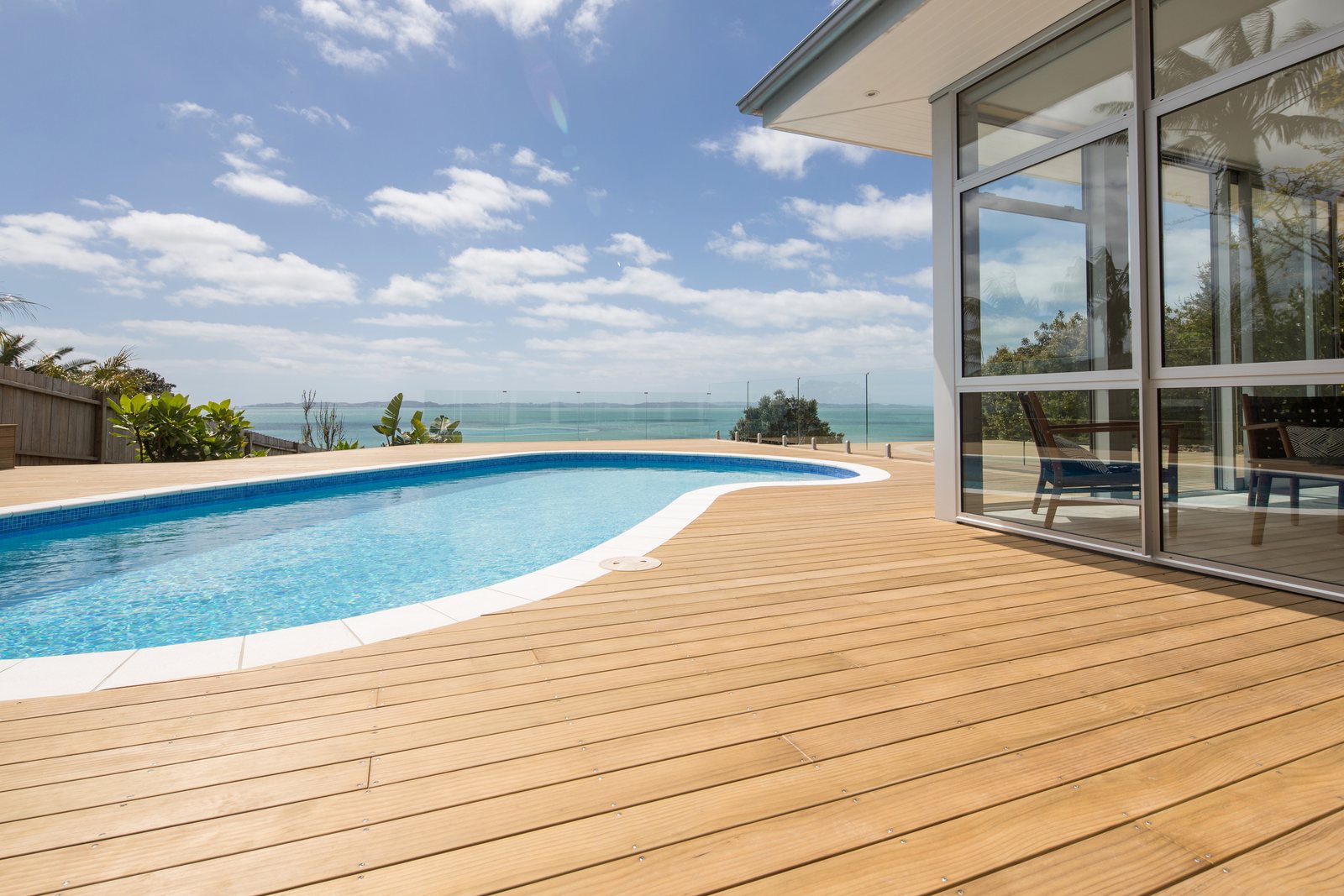
Modification changes how wood handles moisture and decay, and it does close to nothing about ultraviolet light. That one split explains most of the confusion about finishing modified wood. Acetylation and thermal modification both go after the chemistry that fungi feed on and that water grabs onto. Neither process protects lignin, the polymer ultraviolet radiation breaks down at the exposed surface. A modified board resists rot with no coating on it at all, and it still silvers, fuzzes and erodes without one.
Accoya is acetylated, not heat treated. Acetic anhydride replaces free hydroxyl groups in the cell wall, the wood stops taking on water the way it used to, and shrinkage and swelling drop dramatically. Accoya runs around 1,600 lbf on the Janka scale, harder than Sapele at roughly 1,410 lbf and harder than White Oak at roughly 1,360 lbf. The distinction between a chemical process and a thermal one gets blurred in specifications constantly, and it changes what the material can be asked to do.
Thermal modification is a different mechanism. Heat and a low oxygen atmosphere degrade hemicellulose, which is the most hygroscopic fraction of the cell wall and the easiest food source for decay organisms. Thermory and Abodo Vulcan both come out of that route. What it buys is decay resistance and dimensional stability. What it costs is toughness and bending strength.
That cost matters in the field. Thermally modified stock is more brittle than the same species untreated, it splits more readily at a fastener, and it does not carry published structural design values the way framing species listed with the American Wood Council do. Use it as cladding, trim, decking and appearance millwork. Do not use it as a beam because a supplier called it stable.
Does Modified Wood Need a Finish at All
No coating is required to keep modified wood from rotting, and a coating is still the right call on most jobs. Those two statements are not in conflict. Durability and appearance are separate performance requirements, and modification only answers one of them.
Left bare, acetylated and thermally modified cladding will keep its decay resistance for decades in above grade exposure. The rot resistance is in the cell wall, not in a film on top of it. Nothing about skipping a finish reopens the wood to fungal attack in the way it would on untreated Pine or untreated Ash.
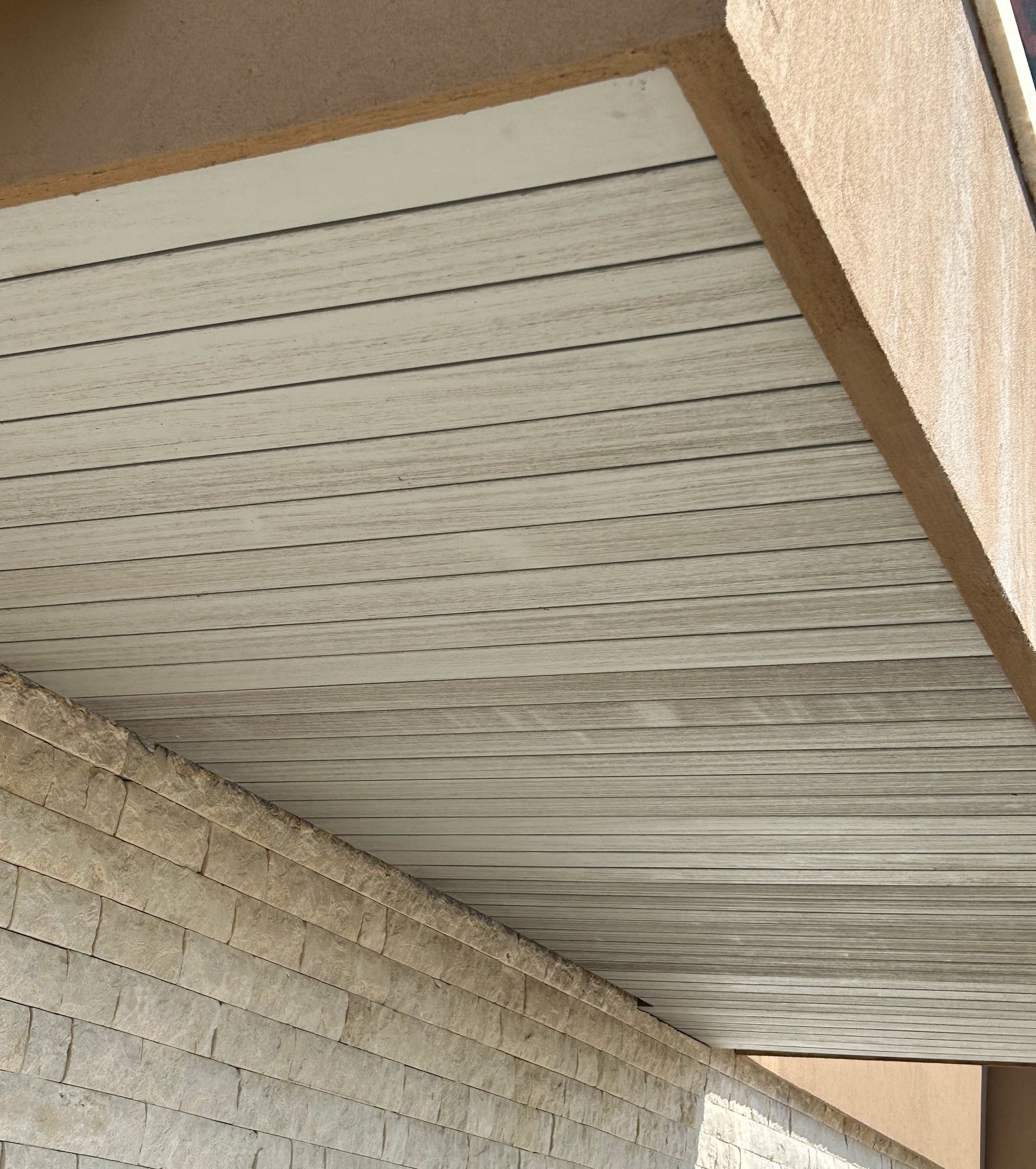
What skipping the finish does is hand the surface over to the weather. Ultraviolet light breaks down surface lignin, rain rinses the degraded fibers away, and airborne spores colonize the roughened face as harmless surface mold. The board goes gray. The rate depends on orientation, overhang and rainfall, and the Wood Handbook from the USDA Forest Products Laboratory puts unprotected surface erosion in the range of a small fraction of an inch per century, which sounds trivial until you look at what the first year does cosmetically.
So the real question is never "will it fail." It is "will the owner accept what bare weathering looks like in year three, and will it look the same on the north wall as on the south."
What Actually Happens When You Skip It
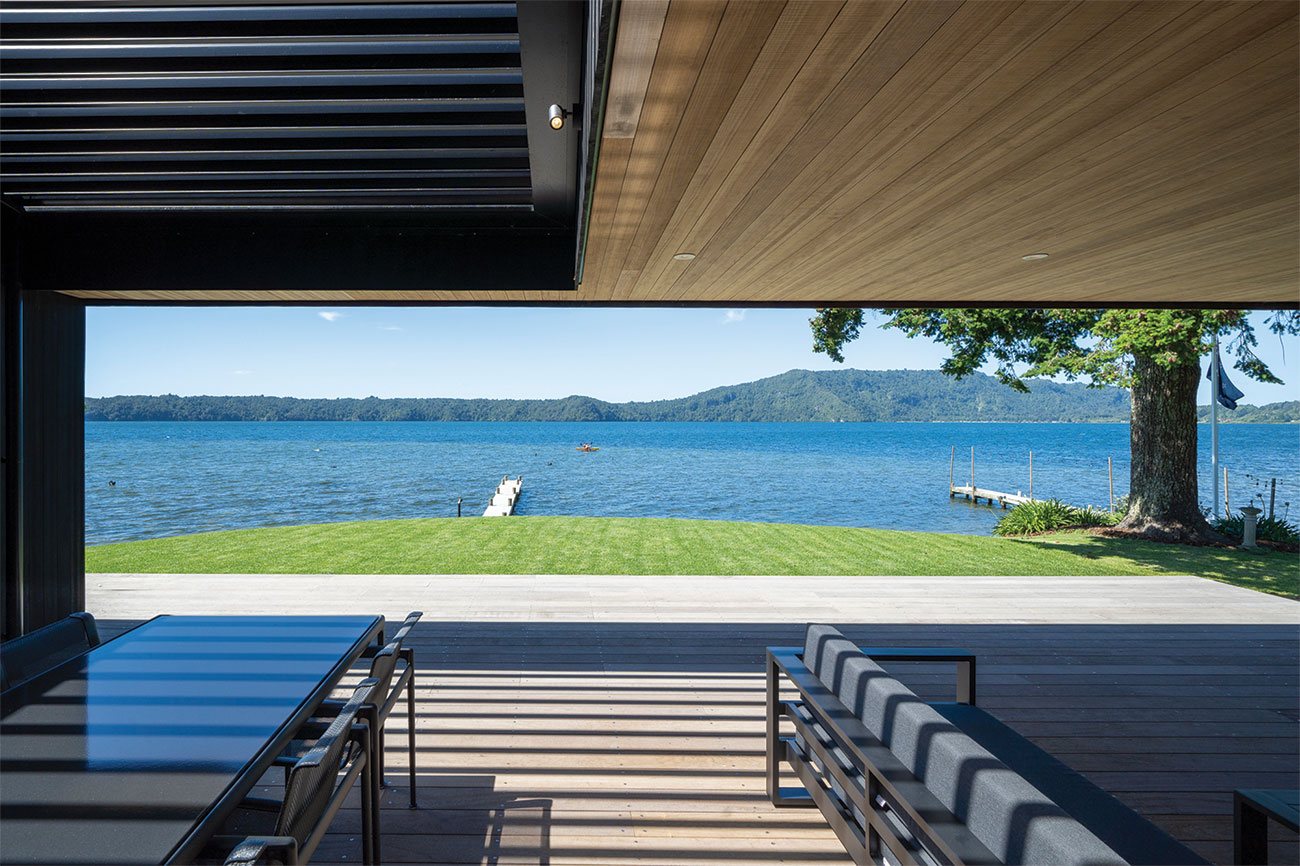
Bare modified wood does not rot, it goes patchy. That is the complaint that comes back, and it comes back about appearance almost every time.
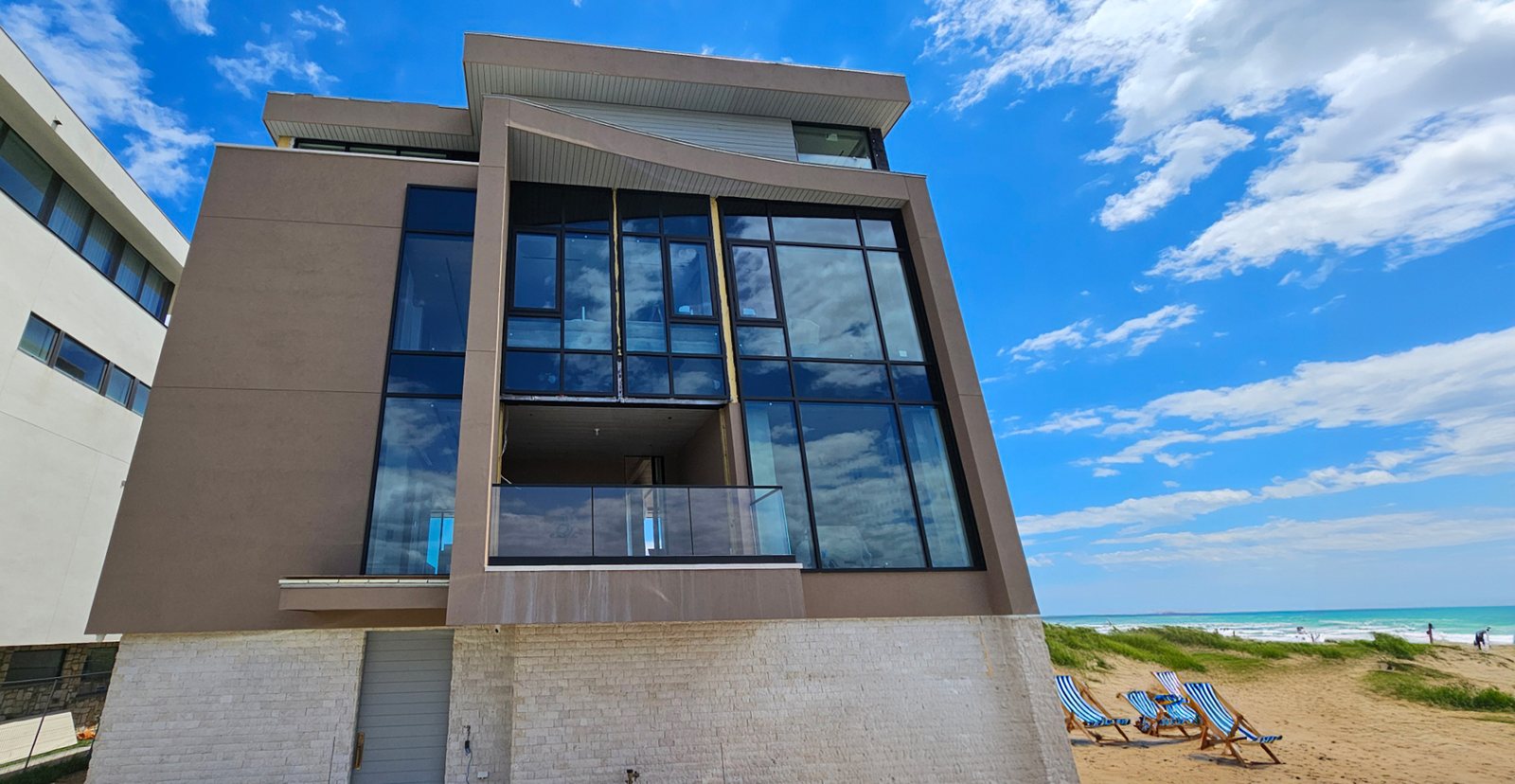
Silvering happens fast on exposed elevations and slowly under a deep overhang. A single facade can carry three visibly different tones within 18 months, and the transition lines follow the roof geometry rather than the board layout. Thermally modified stock starts dark brown, so the contrast between weathered and sheltered areas reads harder than it does on cedar.
Surface checking is the second thing. Repeated wetting and drying cycles at the exposed face open fine checks even in stable material, because the outer few cells still move relative to the bulk of the board. A pigmented coating slows the wetting cycle and the checking with it. On thermally modified wood the checks matter more than they would otherwise, since the material is already lower in toughness.
Extractive and tannin staining is the third. Rain running off a bare face carries extractives onto whatever sits below it. Stone sills, painted trim and light stucco all show it. Iron staining around a non stainless fastener is the same story in miniature, and it shows up worse on bare wood than under a film.
None of that is a durability failure. All of it is a callback.
Why a Finish Lasts Longer on Modified Wood
The main argument for coating modified wood is not that the wood needs it, it is that the coating performs far better there than on unmodified stock. This is the part buyers underestimate.
Paint and stain fail mostly from substrate movement. The film is comparatively rigid, the wood under it swells and shrinks with every wetting and drying cycle, and the differential shear cracks the film at the weak points. Acetylated wood barely moves, so the film barely gets worked. Coating intervals on Accoya stretch well past what the same coating would give on a softwood substrate, which is why it keeps showing up on high exposure sunshades, louvers and window components. The manufacturer's own coating guidance at Accoya covers system compatibility in detail and is worth reading before a paint schedule gets locked.
Thermally modified wood gains some of the same benefit through reduced hygroscopicity, though not to the same degree. Coating adhesion on thermally modified surfaces also behaves differently, because the surface chemistry has changed and the material is drier at equilibrium than the substrate a coating was formulated against. Thermory and Abodo Vulcan both publish finishing direction for their own products, and the two systems are not interchangeable.
Translucent and oil based penetrating finishes on modified wood need maintenance recoating on a real schedule. Film forming pigmented systems last longer between cycles but fail more visibly when they do. Neither is wrong. The owner's tolerance for a maintenance interval decides it.
"The question I get is always whether the modified product can go bare, and the honest answer is yes, it will not rot on you. What I tell people to look at instead is the elevation drawing. If half that wall sits under a six foot overhang and half of it faces southwest, bare wood is going to tell you about it in two years. We ship it primed when the finish schedule calls for paint, and we ship it raw when the owner actually wants the silver."
Norm Moton, Director of Sales, J. Gibson McIlvain
Bare and Coated Behavior Side by Side
The decision changes by product, not just by whether a coating is present. Acetylated and thermally modified material respond differently to the same exposure, and cedar remains a legitimate benchmark for both.
| Material | Modification | Left bare, above grade | What a finish adds | Size ceiling to plan around |
|---|---|---|---|---|
| Accoya | Acetylated, chemical process, roughly 1,600 lbf Janka | Silvers evenly, holds decay resistance, minimal movement | Longest coating intervals of any wood substrate on the yard, color control, no extractive bleed | Around 16 ft, most stock on metric lengths just under 16 ft, wide widths available |
| Thermory | Thermally modified, hemicellulose degraded under heat and low oxygen | Dark brown weathers to gray unevenly by exposure, decay resistance retained above grade | Holds the original dark tone, slows surface checking, evens out sheltered versus exposed areas | Around 16 ft, and thermally modified Ash is not available wider than 8 inches |
| Abodo Vulcan | Thermally modified, same mechanism, different species base | Weathers gray, stable in service, decay resistance retained above grade | Same benefits, and the substrate takes factory priming cleanly for painted work | Around 16 ft, most stock on metric lengths just under 16 ft, wider boards available than modified Ash |
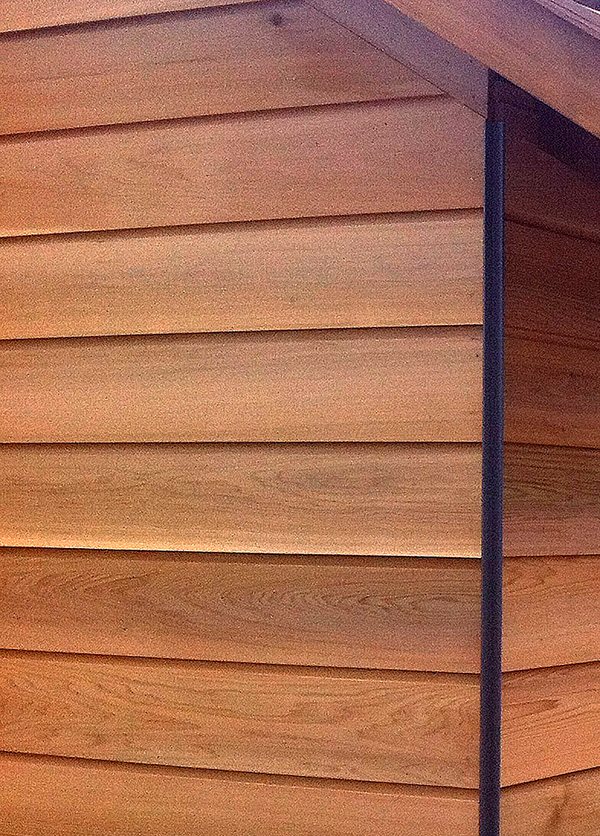
| Western Red Cedar, CVG | None, naturally durable heartwood | Weathers gray, rarely fails as cladding, moves more than modified stock | Substantially longer coating life than on knotty grades, no knot bleed through paint | No kiln driven length ceiling, grade call drives the result |
| Western Red Cedar, STK | None, naturally durable heartwood | Weathers gray, knots read through as the surface ages | Needs knot sealing under paint, performs well under semi transparent stain | No kiln driven length ceiling, knot size and frequency vary by lot |
Cedar belongs in that table because it is the default cladding species for most contractors in this country and it rarely fails. Where cedar comes up against a modified product, the grade call usually matters more than the species call. Clear vertical grain cedar under paint is a different material from select tight knot cedar under paint, and the two get quoted against each other as though they were the same thing.
Decking Asks More of a Finish Than Siding Does
A horizontal surface that holds water and takes foot traffic is a harder finishing problem than a vertical surface that sheds. Buyers researching this subject usually lump siding and decking together, and the two should be separated.
Siding drains. Water hits it, runs off, and the drainage plane behind it handles what gets past. Building Science Corporation's work on rain control in buildings lays out why the assembly behind the cladding does more for durability than the cladding species does. Bare modified siding on a properly drained wall is a defensible choice.
Decking is wetted from above, dries from one side, and gets walked on. Film forming coatings on a deck surface abrade at traffic lanes and fail in a pattern nobody likes. Penetrating oils are the normal answer, and they are a maintenance commitment rather than a one time operation. Many modified decks are simply left bare and allowed to gray, which works, as long as the framing and flashing below are detailed for it.
One distinction has to stay sharp. Do not assume thermally modified wood behaves like acetylated wood below grade or in ground contact. The two materials perform differently in soil contact and in permanently damp conditions, and thermally modified product should not be specified for ground contact on the strength of its above grade record. Keep posts, sleepers and anything buried on a material rated for that use.
On the tropical decking side, Ipe, botanically Tabebuia spp, along with Cumaru, Garapa, Jatoba and Red Balau, are extremely hard and carry high oil content, which is exactly why they hold up bare and exactly why they resist adhesives and film finishes. A millwork shop reaches instead for Sapele, Iroko, Afrormosia, Teak and Utile when components have to be glued, moulded or machined, since those species take adhesive and coating predictably. Where a species on a project carries a CITES listing, the documentation and chain of custody travel with the material, and CITES paperwork has to be in order before the lumber ships.
Priming Is a Separate Decision From Finishing
Priming happens in the shop under controlled conditions, and it does work that no site applied topcoat can go back and do. This is where the finish question gets practical.
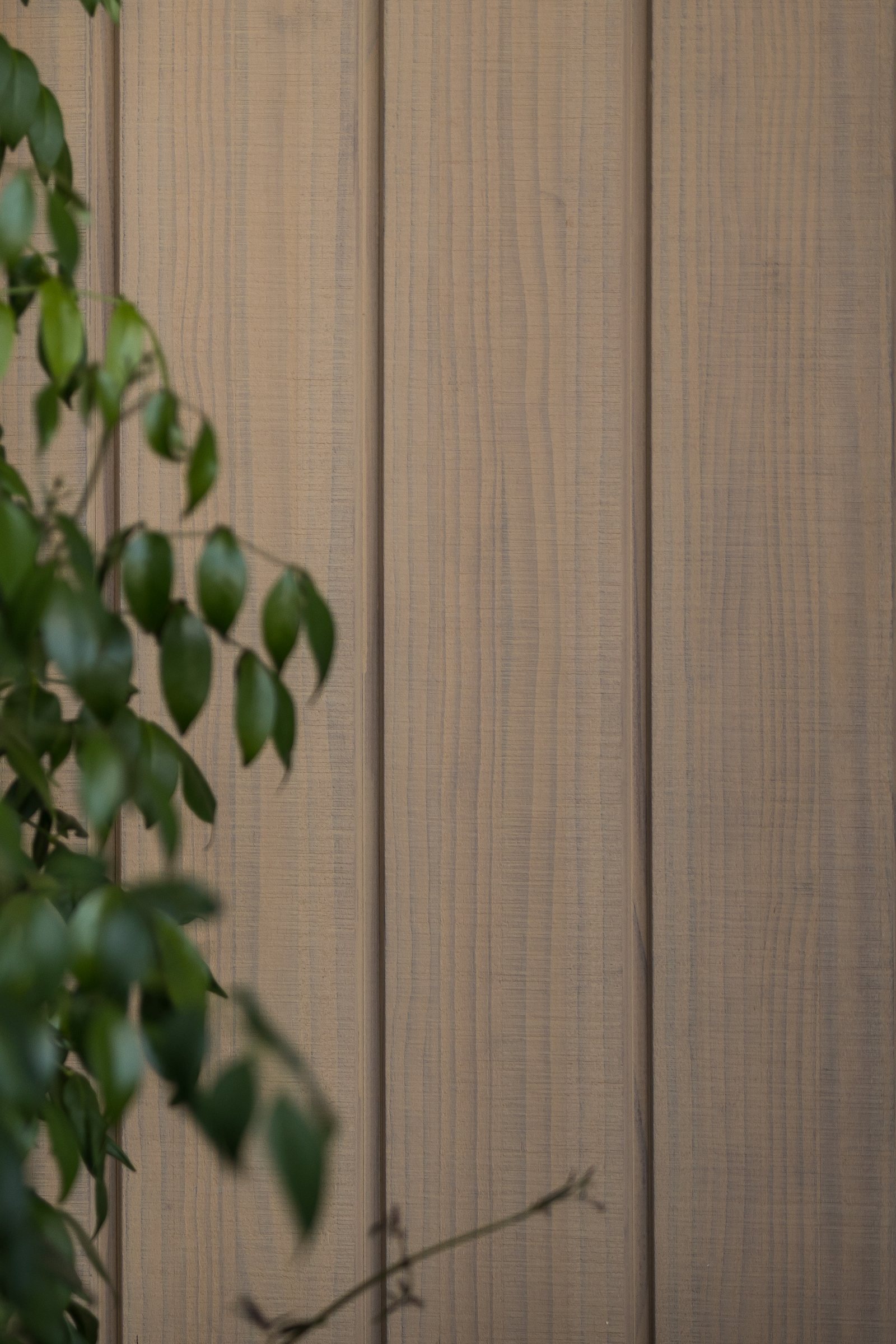
Open-grained and oily species absorb a great deal of finish, so a primer coat evens out the eventual painted surface rather than leaving a topcoat to sink unevenly into vessels and resin pockets. Sanding or buffing after priming knocks back the grain raising while keeping moulded detail crisp, which is the difference between a sharp profile and a soft one on a painted run.
J. Gibson McIlvain primes in three levels, in both oil based and water based systems, and exterior primed trim carries a fungicide additive. Back and end priming matter as much as face priming on exterior work, since an uncoated back face and an unsealed field cut are the two routes moisture uses to get behind a film. Every cut made on site should get the same end treatment the shop applied, and that falls to the installer.
Modified substrates take priming well, with one caveat. Coating systems have to be compatible with the modified surface, and a primer chosen for softwood is not automatically right for acetylated or thermally modified stock. Confirm the system against the product manufacturer's guidance before the schedule is set.
Fasteners, Ventilation and Failures Blamed on Finish
Most of what gets called a finish failure on modified wood is a detailing failure with a coating on top of it. Two items account for the majority.
Cupping is driven by installation and back ventilation, not by species. A board that dries only from the face cups regardless of what it is made of or what is painted on it. A drained and vented rainscreen cavity behind cladding is the fix, and no coating substitutes for it. Modified wood is far less prone to this than unmodified stock, and it is not immune.
Fastening is the other one. Thermally modified wood is more brittle and splits more easily at the ends, so pre drilling and correct fastener placement back from board ends are not optional. Stainless fasteners avoid the iron staining that shows immediately on bare or lightly finished exterior wood. Where a species carries high extractive content, the fastener call has more visual consequence than the coating call.
For restoration work the coating decision inherits constraints from the approval process rather than from performance. The National Park Service preservation briefs cover exterior woodwork and paint problems on historic buildings, and a historic district review board may require a specific finish appearance whether or not the substrate technically needs one.
Sizes and Species Limits That Shape the Detail
Kiln size, not market demand, sets the length ceiling on every modified product, and that ceiling changes how a bare or coated elevation gets laid out. Designers regularly draw runs that no modified product can supply in one piece.
Modified products top out around 16 ft. Most of what is sold arrives on metric lengths just under 16 ft, because the modification vessels are a fixed size. Longer runs need a joint, and the joint detail has to be resolved on the drawing rather than improvised on the wall. A bare weathering elevation shows a scarf or butt joint more plainly than a painted one does, which is a real argument for coating a long horizontal run.
Width has its own limit. Thermally modified Ash is not available wider than 8 inches. A wide board in a modified product means Accoya or Abodo Vulcan, and a drawing calling for 10 or 12 inch modified cladding has to be resolved against that fact early. Quartersawn and rift stock moves less across its width than plainsawn, which is why it gets specified where a painted or panelized surface has to stay flat.
Moisture content at delivery is part of the same conversation. Interior millwork is milled to an in service moisture content near 6 to 8 percent. Exterior work runs near 12 to 16 percent. Modified products sit lower at equilibrium than unmodified stock of the same species, and a finish applied at the wrong moisture content fails no matter how good the product is.
Warranties Follow the Modification, Not the Board
Warranties exist on modified products and on nothing else. That is a real difference between a modified specification and a natural durability specification, and it should be understood before a coating decision gets made on warranty grounds.
It is not possible to warranty solid unmodified wood. It is an organic material responding to its environment, and no supplier can guarantee how a given board will behave in a given wall. Naturally durable species like cedar and the tropical hardwoods perform, they just perform without paper behind them.
Modified products come with published warranty terms from their manufacturers, and those terms address above grade and in ground use separately. Read which one applies to the product being specified. A coating schedule sometimes interacts with those terms, so the finish decision and the warranty decision should be made together rather than three months apart.
For projects with sourcing requirements, certification travels separately from warranty. FSC chain of custody documentation covers where the fiber came from, not how it will behave once modified, and specifications sometimes conflate the two. Grading references from the National Hardwood Lumber Association similarly describe the lumber, not its in service performance.
How J. Gibson McIlvain Would Specify This
J. Gibson McIlvain stocks Accoya, Thermory and Abodo Vulcan at its Maryland yard, mills them into linear trimwork, finished cladding and primed trim, and ships them either raw for bare weathering or primed for a painted schedule, depending on what the finish schedule actually says. The first question on any modified wood order is which of those two outcomes the owner wants.
For a painted exterior, J. Gibson McIlvain ships the run primed with backs and ends coated rather than faces alone, which leaves the installer only the field cuts to seal. For a bare weathering elevation, the order ships unfinished and the conversation shifts to joint layout and back ventilation, since those two items determine whether the wall reads evenly at year three.
Availability drives the rest. J. Gibson McIlvain holds over seven million board feet of exotic and domestic lumber at the Maryland yard, which is what makes lot matching and wide width calls possible on a modified product where the width ceiling is real. Where a run exceeds the roughly 16 ft modified ceiling, the joint gets planned against stock actually on the ground rather than against a catalog.
The company runs a full millwork shop on site at the lumber yard for linear runs, and its architectural millwork division, ICD, handles true custom components off site. ICD builds rafter tails, pergolas, shutters, gates, box beams, custom doors and radius millwork from the same modified stock, which is how a project keeps one material across cladding, trim and exterior millwork without introducing a second supplier and a second finish system.
J. Gibson McIlvain ships nationwide on its own fleet of trucks, regularly to California, and runs a section of the mill dedicated to packaging, which is what keeps a primed face intact between the Maryland yard and a job site 3,000 miles away. The company supplies and mills. It does not install, coordinate installation or field measure, so fastener selection, cut end sealing, rainscreen furring and the finish maintenance schedule stay with the installer.
To specify modified wood for a siding or decking package, or to get a coating and priming schedule reviewed before it goes into a submittal, reach the J. Gibson McIlvain millwork team at 800-638-9100. Bring the elevation drawing and the exposure conditions. Those two documents settle the finish question faster than any product datasheet will.
Frequently Asked Questions
Does thermally modified wood need to be sealed or finished for exterior siding and decking?
Not for decay resistance. Thermal modification degrades hemicellulose under heat and low oxygen, which removes the easiest food source for decay organisms and lowers the moisture the wood holds, so above grade cladding and decking will resist rot bare. A finish is about appearance and maintenance. Without one, the dark brown tone weathers to gray, unevenly between sheltered and exposed areas of the same wall, and the surface develops fine checking from wetting and drying cycles. On decking, penetrating oils rather than film forming coatings are the practical choice, since films abrade at traffic lanes.
Is Accoya a thermally modified wood?
No. Accoya is acetylated, a chemical process in which acetic anhydride replaces free hydroxyl groups in the cell wall. That is why shrinkage and swelling drop dramatically and why Accoya runs around 1,600 lbf on the Janka scale. Thermory and Abodo Vulcan are thermally modified, meaning heat and a low oxygen atmosphere with nothing added. The two get described interchangeably in submittals, and they carry different limits, particularly around ground contact and mechanical properties.
Can thermally modified wood be used in ground contact if it is finished?
A finish does not change that answer. Acetylated wood and thermally modified wood behave differently below grade and in permanently damp conditions, and thermally modified product should not be specified for ground contact on the strength of its above grade record. Keep posts, sleepers and buried components on a material rated for that use, and confirm any below grade application against the product manufacturer's own published position.
How long can I get modified siding and trim?
All modified products top out around 16 ft, and most of what is sold arrives on metric lengths just under 16 ft, because the modification vessels are a fixed size. Longer horizontal runs need a joint, and the joint should be laid out on the drawing rather than improvised on the wall. Bare weathering shows a joint more plainly than a painted surface does, which is one argument for coating long runs.
What is the widest modified board available?
It depends on the product. Thermally modified Ash is not available wider than 8 inches. A wide board in a modified product means Accoya or Abodo Vulcan. A drawing calling for 10 or 12 inch modified cladding should be reconciled with that before the submittal goes out, since substituting a narrower board changes the reveal and the coursing.
Is modified wood worth it compared with clear cedar?
Cedar is the default cladding species for most contractors in this country and it rarely fails, and the grade call usually matters more than the species call. Clear vertical grain cedar, CVG, holds paint and reads differently from select tight knot cedar, STK, which needs knot sealing under paint. Modified products earn their place where dimensional stability drives the detail, where a coating has to last as long as possible, or where a warranty is required, since warranties exist on modified products and on nothing else.
Why do modified boards cup if they are supposed to be stable?
Cupping is driven by installation and back ventilation, not by species. A board that can only dry from its face will cup no matter what it is made of. A drained and vented cavity behind cladding, correct fastener placement, and end sealing at field cuts do more for a flat wall than any coating. Modified wood is far less prone to cupping than unmodified stock, and it is not immune.
Can J. Gibson McIlvain supply modified wood already primed?
Yes. J. Gibson McIlvain primes in three levels in both oil based and water based systems, and exterior primed trim carries a fungicide additive. Open-grained and oily species absorb a great deal of finish, so the primer evens out the eventual painted surface, and sanding or buffing after priming knocks back grain raising while keeping moulded detail crisp. Orders ship raw when the intent is bare weathering. The company supplies and mills rather than installs, so field cuts, fasteners and the maintenance schedule stay with the installer. Call 800-638-9100.
Sources and Standards Referenced
- Wood Handbook: Wood as an Engineering Material (FPL-GTR-282), USDA Forest Products Laboratory
- Accoya: Acetylated Wood Technology and Coating Guidance
- Thermory: Thermally Modified Wood Products
- BSD-013: Rain Control in Buildings, Building Science Corporation
- American Wood Council: Codes and Standards, National Design Specification
- National Park Service Preservation Briefs, Technical Preservation Services
- CITES: Convention on International Trade in Endangered Species of Wild Fauna and Flora
- Forest Stewardship Council
- National Hardwood Lumber Association