The Real Answer Is a Protocol, Not a Can
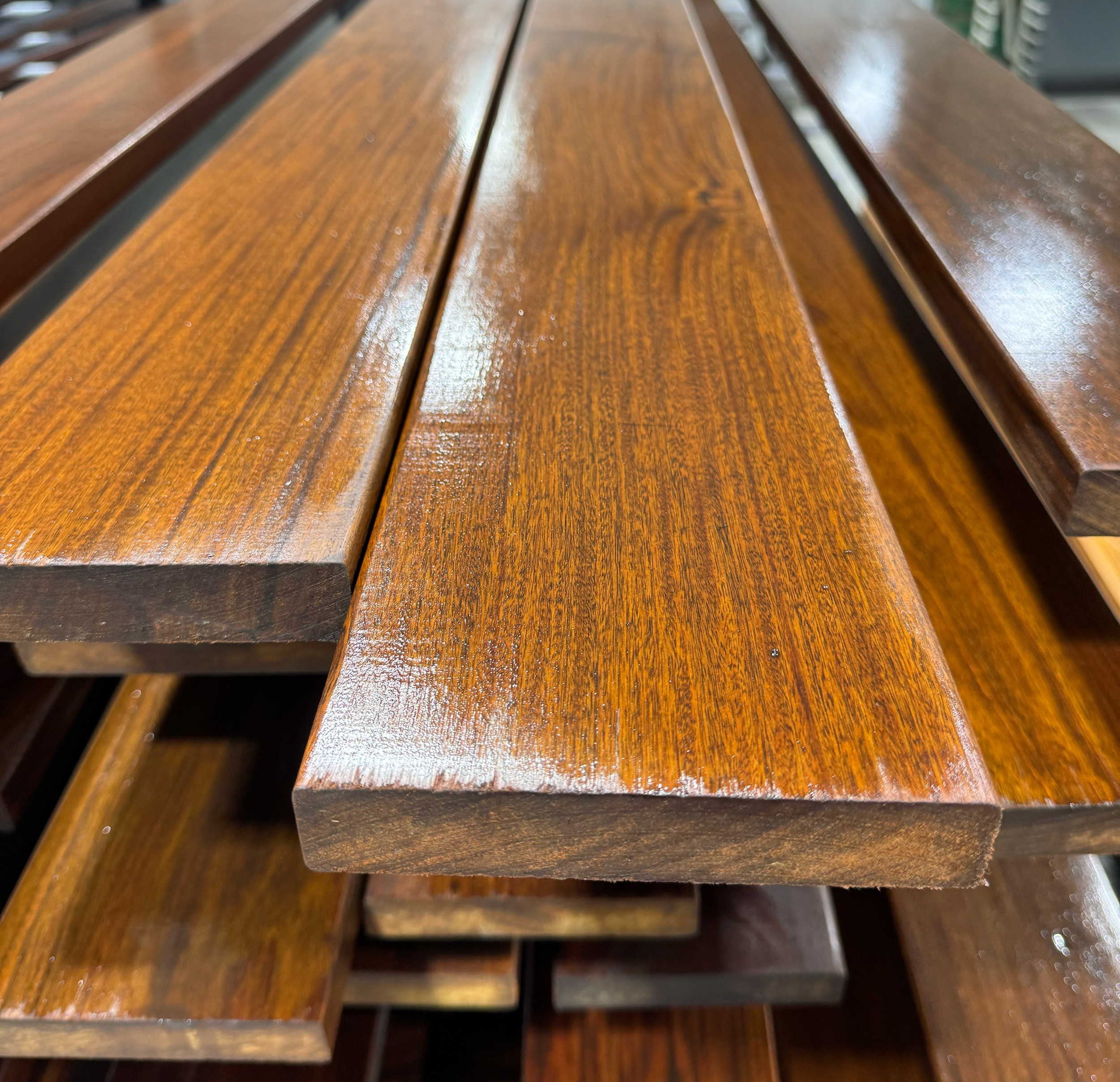
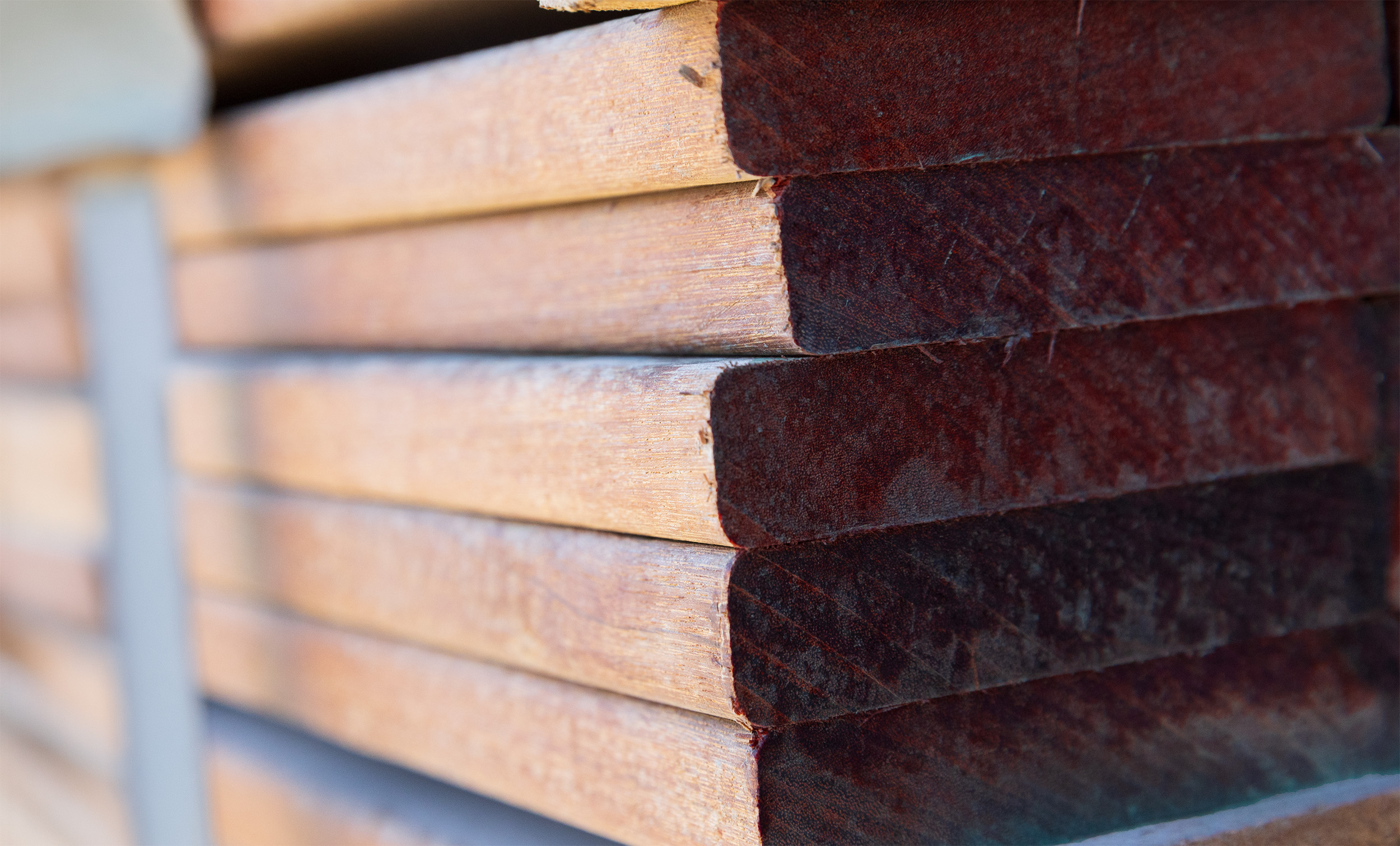
The best end sealer for tropical hardwood decking is a paraffin wax emulsion brushed onto every fresh crosscut within minutes of the saw, backed by a penetrating oil stabilizer such as Cutek on any end that stays visible in the finished deck. That settles the product question in one sentence. It does not settle the cracking question. End checks open when the sealer sits in the trailer while the crew races a rain window, or when boards get trimmed to length on Tuesday and somebody remembers the can on Friday. The chemistry matters. The workflow around the chemistry decides the outcome, and on dense tropical stock the margin between the two is measured in minutes, not days.
So this article treats end sealing the way a commercial spec writer should treat it. It is a site protocol with a physics basis, a species variable, a thickness variable, and a paper trail. The wax gets its due. The remaining sections cover what no can of wax can fix on its own, from cut station layout to acceptance criteria for the checks that show up anyway.
End Grain Loses Moisture an Order of Magnitude Faster Than the Face
Water travels along the grain far faster than across it, which is why a deck board dries from its ends first and cracks there first. A hardwood board is a bundle of vessels running lengthwise. A crosscut opens every one of them like a handful of cut straws, and the exposed cells begin trading moisture with the air immediately. The USDA Forest Products Laboratory Wood Handbook puts longitudinal moisture movement at roughly ten to fifteen times the transverse rate. The last two inches of a board can reach equilibrium with a dry afternoon while the core a foot in is still holding transit moisture. That mismatch sets up tension across the grain, and in species as stiff as Ipe (Tabebuia spp.) the tension builds instead of relaxing. When it exceeds the wood's strength perpendicular to the grain, the surface lets go. That release is the check.
Two conclusions follow, and both belong in the spec. First, a check is tension relief, not structural failure. A small end check does not weaken the board, and seasoned inspectors read light surface checking as evidence the material dried the way dense stock dries. Second, no coating repeals the gradient. A good end sealer slows the exchange enough that end and core dry on close to the same schedule, which keeps checks small, shallow and rare. The physics of wood and moisture guarantees that any product literature promising zero checking on tropical decking is literature, not field experience.
What Arrives on the Truck Before the First Field Cut
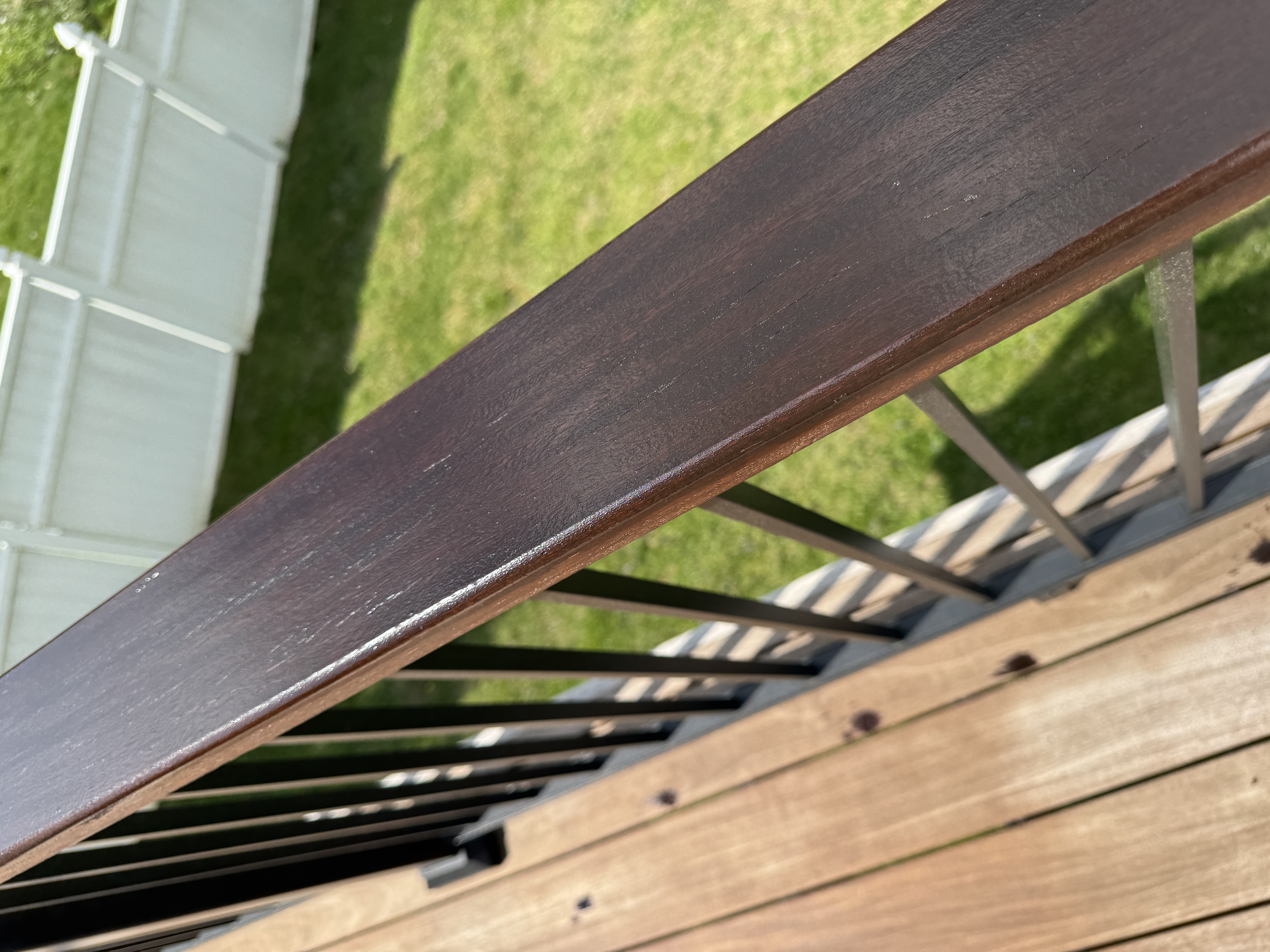
J. Gibson McIlvain mills Ipe, Cumaru, Jatoba, Garapa and Red Balau decking and ships it nationwide with a factory-applied Cutek coating already on the boards. Cutek is a penetrating oil wood stabilizer, and putting it on at the facility rather than on site means the boards ride out transit, staging and their first weeks of sun with moisture exchange already slowed. Factory coating significantly reduces checking across the whole board, faces and ends alike. It is the biggest head start a project can buy, and it happens before the crew unloads a single stick.
What the factory cannot protect is the end grain a chop saw opens on site. Every trimmed butt end, every miter on a picture frame border, every stair cut exposes fresh vessels the mill never saw. Delivered ends arrive protected. Field cuts belong to the contractor, and a deck of any size produces hundreds of them.
"Boards leave our yard coated, so the protection is real right up until the first saw cut. I tell every contractor the same thing. Put the sealer can on the saw table before the first board gets cut, give it one owner, and your field ends will look like ours did. The crews that call me about end checks are the crews that found the can in the trailer on day three." Norm Moton, Director of Sales, J. Gibson McIlvain
Density Sets How Much Forgiveness an Unsealed End Gets
The denser the species, the steeper the internal moisture gradient and the shorter the window before an unsealed end starts to open. Ipe (Tabebuia spp.) runs about 1,050 kg/m3 with a Janka hardness near 3,680 lbf, and that mass is exactly what makes an open end unforgiving in direct sun. Cumaru sits right behind it at roughly 3,540 lbf and 1,070 kg/m3, and its interlocked grain gives released tension more directions to travel, so raw Cumaru ends deserve the fastest response on the job. Jatoba, at about 2,690 lbf, is dense by any domestic yardstick yet dries a shade more evenly. Garapa and Red Balau, in the 1,700 to 2,000 lbf range, tolerate a missed hour better than Ipe tolerates a missed morning, though they earn the same protocol. Massaranduba appears in the table strictly for comparison. It combines high density with some of the largest shrinkage numbers in the tropical decking trade, and it has a reputation for hard checking in dry climates that keeps many East Coast importers away from it.
| Species | Janka (lbf) | Density (kg/m3) | Unsealed end-check tendency | Consistent 2x availability | Protocol note |
|---|---|---|---|---|---|
| Ipe (Tabebuia spp.) | ~3,680 | ~1,050 | High in sun, opens fast on raw crosscuts | Yes | Seal in the same work period, every cut, no exceptions |
| Cumaru | ~3,540 | ~1,070 | High, interlocked grain compounds it | Yes | Tightest window on the list, seal at the saw |
| Jatoba | ~2,690 | ~910 | Moderate to high | Yes | Same protocol, slightly wider window |
| Garapa | ~1,700 | ~830 | Moderate | No, residential and engineer-approved 5/4 work | Seal in the same shift, forgiving of brief delay |
| Red Balau | ~1,700 to 2,000 | ~850 | Moderate | No, residential and engineer-approved 5/4 work | Seal in the same shift, forgiving of brief delay |
| Massaranduba (comparison only) | ~3,190 | ~1,150 | Severe, worst of this group in dry climates | Inconsistent | Shown for reference, not a species J. Gibson McIlvain stocks |
Thickness Multiplies the Problem, and Commercial Work Runs Thick
A 2x board cracks harder at an unsealed end than a 5/4 board of the same species, and commercial work is exactly where 2x is mandatory. More mass behind the end grain means a longer path to equilibrium and a steeper gradient between the drying end and the wet core. Boardwalks, piers and plaza decks are specified at 2x thickness to control deflection under crowd loading, and no professional goes first with a thinner board on a public job even where the 5/4 span math works on paper. The design standards published by the American Wood Council govern the framing side of that decision. The supply side is simpler. Only Ipe, Cumaru and Jatoba can be sourced consistently in 2x decking thickness, which is why commercial specifications converge on those three and why Garapa and Red Balau stay in residential and engineer-approved 5/4 territory.
Put those facts together and the conclusion writes itself. The projects with the least tolerance for callbacks run the thickest, most gradient-prone stock. On a public boardwalk the end sealing protocol belongs in the written specification with a named product and a timing clause, not in a toolbox talk that evaporates when the crew rotates.
The Cut Station Is Where the Best Sealer Wins or Loses
A dedicated cut station with the sealer open next to the saw beats any premium product applied at the end of the day. Freshly opened vessels take sealer readily for a short window, then the surface starts to dry and case over, and penetration drops with every hour of delay. The layout is not complicated. One miter saw station. The wax emulsion within arm's reach, with a fitted brush or dauber so nobody hunts for an applicator. One crew member who owns sealing the way another owns layout, so responsibility never diffuses across the crew. Two liberal coats on each crosscut, worked in until the end grain stops drinking, and a third pass on Ipe and Cumaru butt ends that will face south. Rip cuts along the grain expose face and edge structure, where exchange is slow, and need no treatment. Miters are the trap. A picture frame miter is partly end grain and cracks like end grain, so it gets sealed like end grain.
The cut station is also where drilling lives, and it lives on site by design. No mill drills fastener holes before shipping, and no buyer should ask for it, since hole layout follows the frame as built and field cuts would invalidate any factory pattern anyway. Pilot every hole with a self-centering combination bit. Run two fasteners per board per joist, hold about 3/4 inch edge distance, and drill full-depth pilots near board ends, where a screw driven into drying end grain will start the very split the sealer was bought to discourage. Land butt joints on doubled bearing so both ends get full support and a full pilot. A sealed end plus a proper pilot is how tropical ends stay clean for years, and joists at 16 inches on center keep the dense stock from working those ends loose.
Exposure and Climate Set the Difficulty, Not the Chemistry
The protocol that coasts through a shaded mid-Atlantic install has to tighten up on a south-facing deck in high sun or dry wind. Dark, dense boards run surface temperatures well above ambient in full exposure, and every added degree steepens the drying gradient at an open end. In hot dry regions the staging rules carry as much weight as the sealer. Keep bundles strapped and covered until the day they go down, stage them off the ground with air beneath, and seal cuts as they happen rather than in batches. J. Gibson McIlvain ships to contractors nationwide and regularly to California, where inland jobs pair intense sun with single-digit humidity and give an unsealed Cumaru end its hardest test in North America.
Ventilation under the deck belongs in the same conversation. Boards need airflow beneath so both faces track the same conditions, whether the material lands on joists or on furring strips over a membrane, and the building physics resources at Building Science Corporation explain why one-sided drying distorts and cracks material in any climate. If the deck uses profiled boards, grooves face down for drainage. On coastal work the sealing chemistry does not change, the fastener spec does, and 316 stainless is the floor for anything in salt air.
Acceptance Criteria, Because Some Checks Will Appear Anyway
Small surface and end checks are normal seasoning behavior in dense tropical decking, and a spec that treats every hairline as grounds for rejection will fail every delivery from every mill on earth. Checking is the wood relieving tension as the surface dries ahead of the core. It does not weaken the board, and a sealed, well-staged deck will still show the occasional fine check after its first summer. The professional move is to write acceptance criteria instead of promises. Hairline end checks that close under a fingernail and run shorter than the board width sit within normal behavior. Through-splits visible on both faces, checks paired with cup or twist beyond flatness tolerance, and ends that were never sealed and opened wide are handling or installation defects and can be back-charged as such. The grading discipline of the National Hardwood Lumber Association rests on exactly this habit of separating natural character from true defect.
Moisture content at delivery decides most of what the criteria will ever catch. Tropical decking serves at 12 to 16 percent in exterior use, and boards that arrive near that range have little drying left to do, so their ends carry less stored tension. Boards installed wet chase equilibrium out on the deck, and no sealer applied at the saw can absorb that much movement after the fact.
Writing End Sealing Into the Project Documents
End sealing survives value engineering only when it appears in the specification as a named product, a timing requirement and a submittal line. Four clauses do the work. Name the materials, a paraffin wax emulsion for concealed cut ends and a penetrating oil stabilizer for ends exposed to view. Fix the timing, application in the same work period as the cut, never held overnight. Require re-treatment after any subsequent trimming. And require documentation, meaning moisture readings at delivery within the 12 to 16 percent service range, FSC chain of custody where the project pursues FSC certification credit, and, when using a CITES-listed species, the permits and import documentation required under CITES kept on file and available for review.
Commercial specifiers should add the fire performance line while they are in the section. Ipe carries a Class A rating under ASTM E84, meaning a flame-spread index of 25 or less, which matters on egress paths, rooftop amenity decks and public boardwalks. For quantity takeoff, a 5/4x6 board covers about 2.1 linear feet per square foot of deck, and the count of board ends that number implies is the honest basis for how much sealer the job needs waiting at the saw.
How J. Gibson McIlvain Would Specify This
Specify the species for the duty, the thickness for the traffic, factory Cutek coating on every bundle, and a wax emulsion end sealer with a same-shift application clause covering every field cut. On a residential deck, that means 5/4 Ipe, Garapa or Red Balau over joists at 16 inches on center, fastening matched to the profile, and the cut station protocol running from the first board. On a commercial boardwalk, pier or plaza, it means 2x Ipe, Cumaru or Jatoba, doubled bearing at every butt joint, 316 stainless fasteners near salt water, and end sealing written into the submittal schedule where an inspector can hold the contractor to it.
Supply is the part the specifier should not have to think about. J. Gibson McIlvain stocks a vast Ipe decking inventory across all standard and custom dimensions, so the 2x6 field boards, 2x12 stair stock and matching fascia for a public job come out of one yard, factory coated with Cutek, with Cumaru, Jatoba, Garapa and Red Balau programs behind it. Projects that want thermally modified material instead can run Thermory and Abodo Vulcan, both stocked, in lengths just under 16 feet, a limit set by modification kiln size, and both take the same end-seal discipline on site cuts. Everything ships nationwide at contractor and commercial volume. Call 800-638-9100 with the deck area, the exposure and the traffic load, and the sales team will spec the species, the thickness, the fastener system and the end-seal quantity for the job in one conversation.
Frequently Asked Questions
Do rip cuts need end sealer, or only crosscuts?
Only crosscuts and miters. A rip along the length of the board exposes face and edge grain, where moisture exchange is slow, so ripped edges need no treatment. A crosscut opens the vessels that run the length of the board and demands sealer within the work period. Miters are the case crews miss. A picture frame miter is partly end grain, it cracks like end grain, and it should be sealed before the board goes down.
Should board ends be sealed before or after the board is fastened down?
Before, at the saw. Sealing at the cut station means the end never waits, the applicator never touches finished decking, and the coat has a few minutes to penetrate before handling. The rare end that must be cut in place, such as a scribe against a wall, gets sealed immediately after the pilot holes are drilled and before the fasteners go in.
What weather is too cold or too wet for wax emulsion end sealer?
Wax emulsions are water-borne, so they will not set up below freezing and most labels want surface temperatures of about 40 F or higher. Rain within the first hour can wash an uncured coat off. In cold snaps, move the cut station into a heated staging area or garage bay and bring sealed boards out to the deck, or switch the day's exposed ends to a penetrating oil stabilizer, which tolerates cold application better.
How much end sealer does a full deck project actually need?
Less than most estimators guess. The end of a 5/4x6 board is under seven square inches, so a single gallon of wax emulsion handles hundreds of cuts even at two coats. Count the board ends from the takeoff, add the miters on any border, and one to two gallons covers most residential decks. The real constraint is never quantity. It is whether the can is sitting at the saw when the cut happens.
Is end cracking worse on 2x commercial decking than on 5/4 boards?
Yes. A 2x board carries more mass behind the end grain, so the gradient between the drying end and the wet core is steeper and the stored tension is higher when the end lets go. Commercial boardwalk and pier decks run 2x Ipe, Cumaru or Jatoba for deflection control, which puts the most check-prone geometry on the most visible public work. That is the argument for making end sealing a written submittal item on commercial jobs rather than a verbal instruction.
Do stair treads and fascia ends need a different treatment than field boards?
Same chemistry, higher standard of care. Stair tread ends and fascia corners stay visible for the life of the deck, so use a penetrating oil stabilizer there instead of wax, since wax can show as a dull film on an exposed end. Tread ends also see fasteners close to the cut, so drill full-depth pilots with a self-centering bit and hold edge distance. A cracked tread end is the failure guests notice first.
Sources and Standards Referenced
- Wood Handbook: Wood as an Engineering Material (FPL-GTR-190), USDA Forest Products Laboratory
- Wood and Moisture, The Wood Database
- Ipe, The Wood Database
- Codes and Standards, American Wood Council
- ASTM E84 Standard Test Method for Surface Burning Characteristics of Building Materials
- Forest Stewardship Council
- CITES, Convention on International Trade in Endangered Species
- National Hardwood Lumber Association