Pick the Fabrication Method Before You Pick the Species
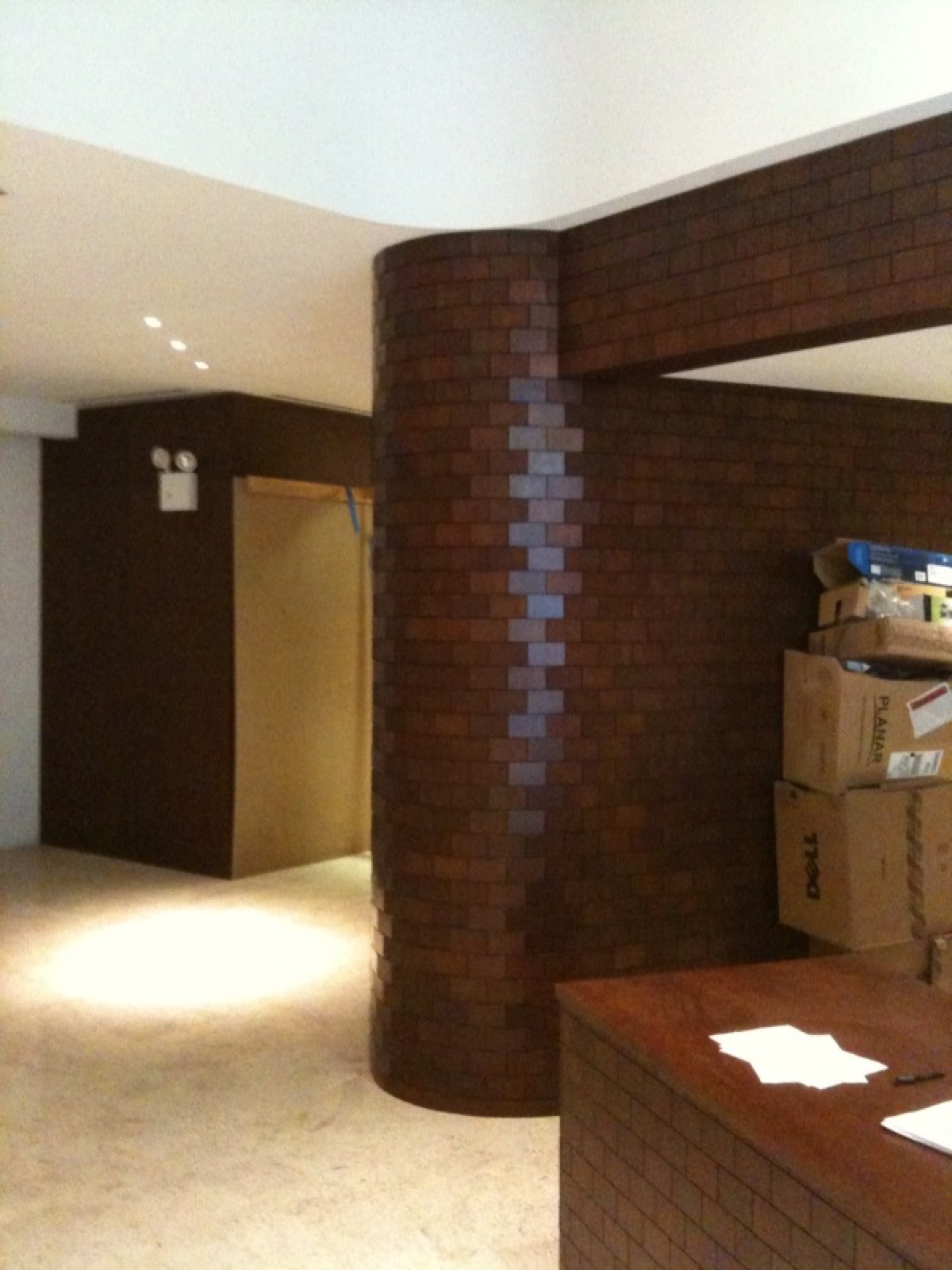
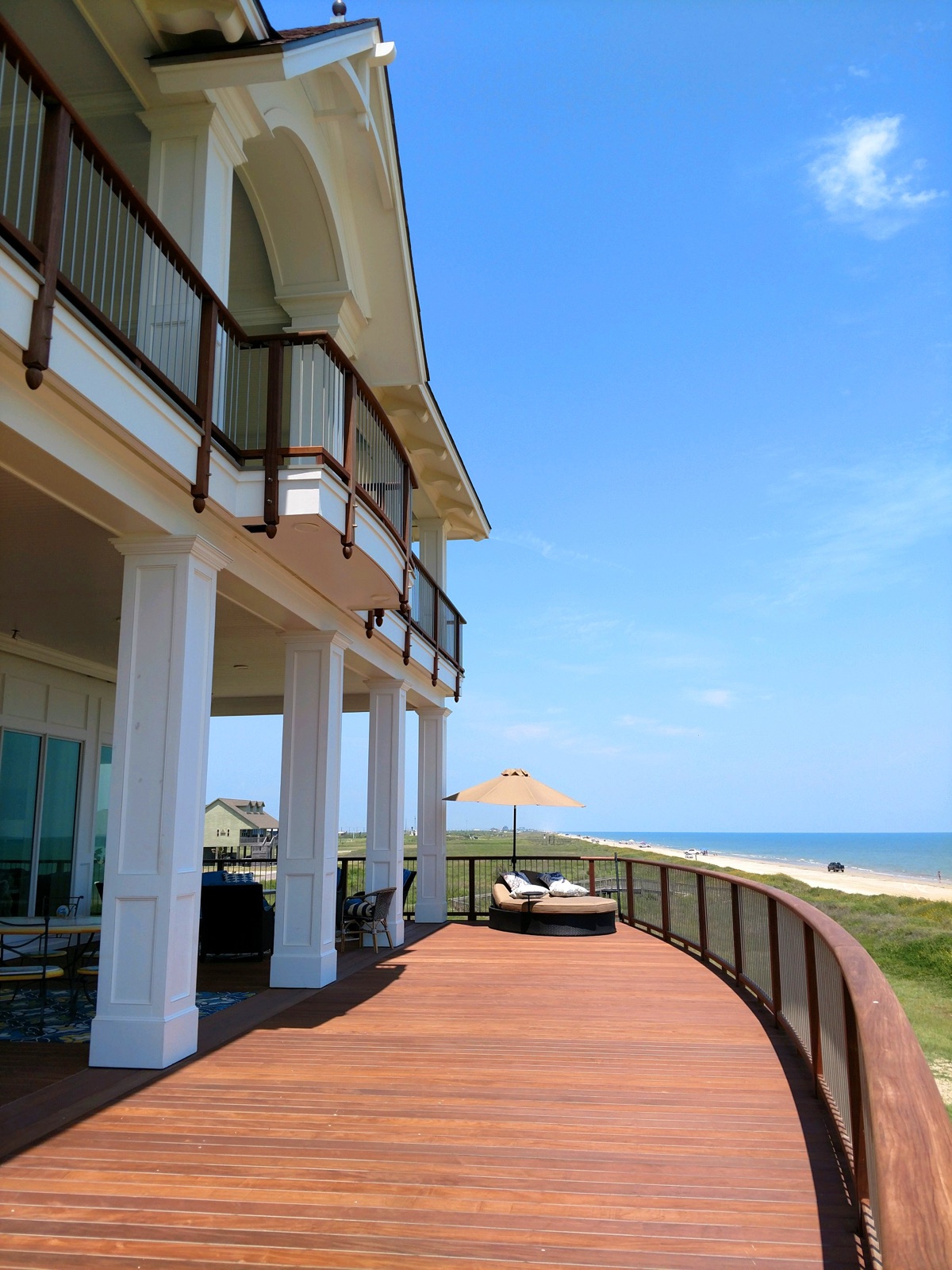
The species question on a curved deck cannot be answered until the fabrication method is chosen, and on most curved decks the boards are sawn to shape, not bent. That surprises people who arrive at the drawing board picturing steamed planks wrapped around a form. In dense tropical decking there are four ways to produce a curve. You can saw it from wider flat stock. You can kerf the back of a board and pull it around a radius. You can rip thin plies and glue them into a cold lamination. Or you can steam bend, which sits at the bottom of the list for a reason this article will spend some time on. Each method suits a different element of the deck. Field boards that sweep across a radius are almost always straight boards with the curve cut into the border around them. Fascia gets kerfed or laminated. Bench rails and handrail caps get laminated. Once you know which elements on the drawings actually need curved material, the species conversation gets much shorter, and it usually lands on Ipe or Cumaru in wide sawn stock with a laminated fascia to match.
The Properties That Predict Bending Behavior
Density, interlocked grain and extractive content decide whether a board will accept a curve, and in tropical decking all three work against you. The classic steam bending species in the USDA Forest Products Laboratory Wood Handbook are ash, white oak and elm, temperate hardwoods with straight grain, moderate density and lignin that softens readily under steam. Ipe (Tabebuia spp.) is a different animal. At roughly 3,680 lbf on the Janka scale and around 1,050 kg/m3 in density, it is close to three times as hard as white oak, and its grain is frequently interlocked, reversing direction from one growth layer to the next. Interlocked grain distributes tension unevenly across the convex face of a bend, so failures come without warning. The extractives that make Ipe an EN 350 Class 1 durability species also fill the cell structure, which slows steam penetration and interferes with adhesive cure. Cumaru, at about 3,540 lbf and 1,070 kg/m3, behaves the same way with even more pronounced interlocking. The takeaway for a specifier is blunt. The properties that make a species a fifty year deck are the same properties that make it a miserable bending candidate, so the design should lean on methods that do not ask the wood to plasticize.
Sawing Curves From Wide Stock Is How Most Curved Decks Get Built
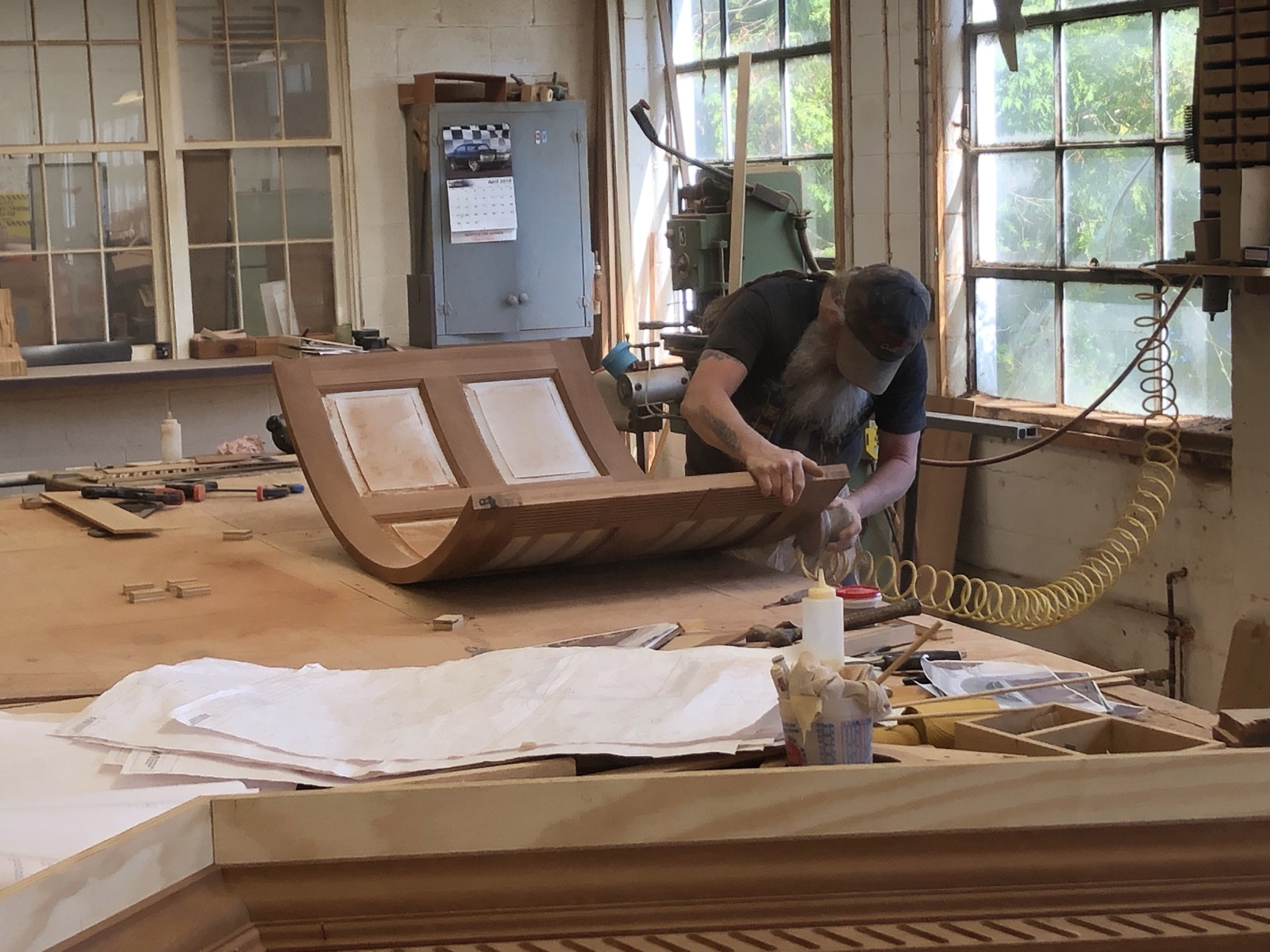
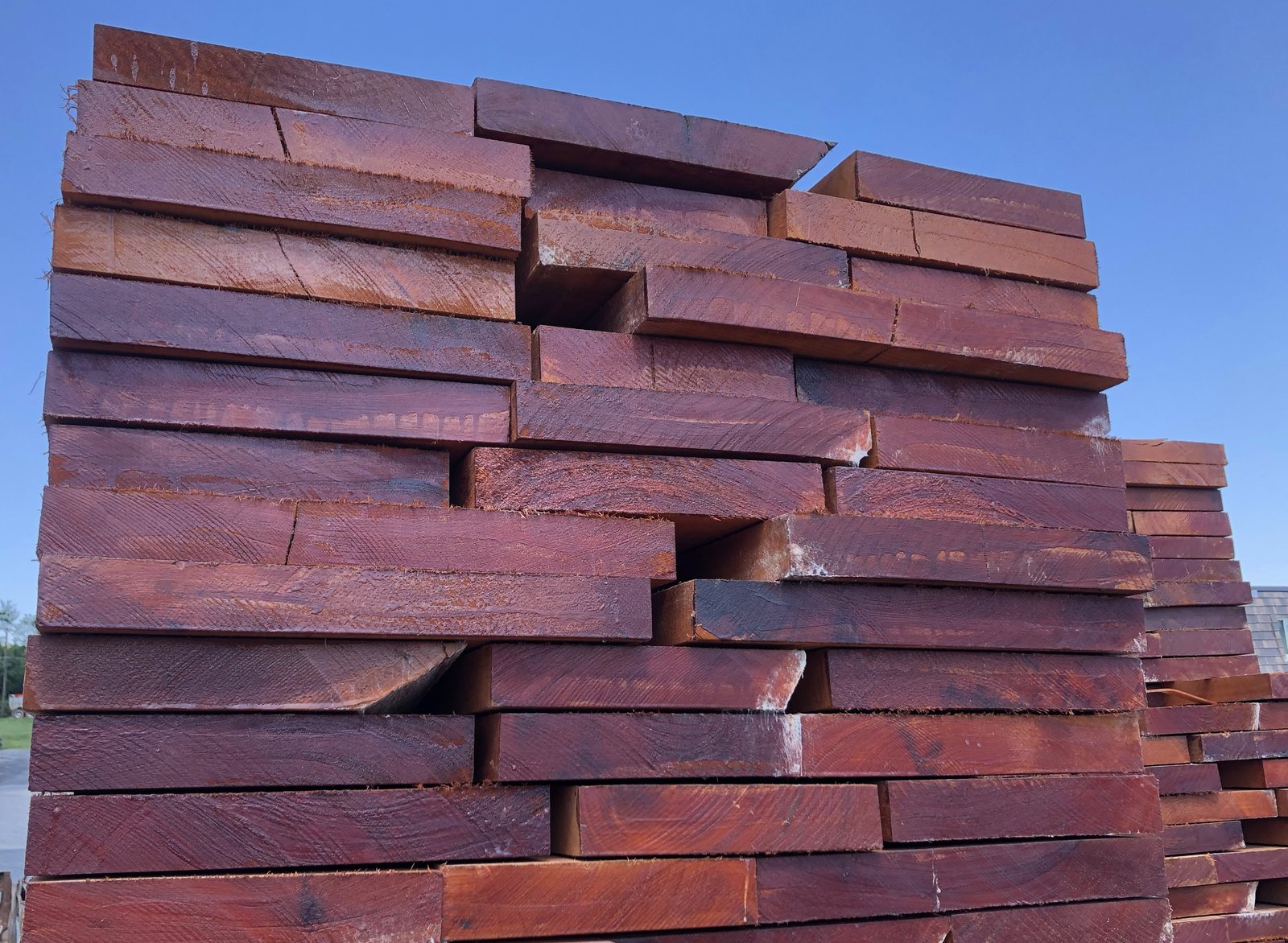
Cutting the curve out of wide flat boards is the default method for curved borders, picture frames and stair nosings, and it works in any species you can buy wide enough. The technique is old boatbuilding practice. The border is drawn full scale, divided into segments, and each segment is templated and bandsawn from 2x10 or 2x12 stock so the curve falls inside the width of the board. Segment ends land on doubled joists or solid blocking so every butt joint has full bearing. Two rules govern the layout. Keep grain runout shallow, since a segment whose grain exits the curved edge at a steep angle will be weak at the tip and will splinter at the sawn arris. And nest segments on the stock before anyone cuts, since a curved border consumes wide material fast and a 30 to 50 percent overage on the border stock is normal on tight radii. This is where supply becomes the real constraint. Wide 2x tropical stock is not a commodity item at most yards. J. Gibson McIlvain stocks Ipe decking in every standard dimension and mills wide 2x Ipe and Cumaru stock that curved borders and segments are sawn from, shipping it nationwide from its own yard, California jobs included.
On curved work the takeoff is everything. When a contractor calls us about a radius deck, the first thing we ask for is the drawing, not the species. We figure the segment layout against the widths we have on the ground, and nine times out of ten the answer is wide Ipe or Cumaru sawn to the curve, with the bending saved for the fascia. Buyers who order curved jobs as if they were straight decks run out of material in the second week.
Norm Moton, Director of Sales, J. Gibson McIlvain
Steam Bending Dense Tropicals Has a Narrow Legitimate Role
Steam bending earns its place on a curved deck only for gentle sweeps in the milder species, and it should never be the plan for Ipe or Cumaru at decking sections. The Forest Products Laboratory protocol is steam at atmospheric pressure for about one hour per inch of thickness, wood at 20 to 25 percent moisture content, and a steel strap backing the convex face to keep the tension side from rupturing. Air dried stock bends better than kiln dried because the cell structure has not been set by high heat. Every one of those conditions is hard to meet with dense tropical decking, which arrives kiln dried near its in-service moisture range and resists steam penetration. In practice, Red Balau at around 1,700 to 2,000 lbf and Garapa at roughly 1,700 lbf will take a long, gentle sweep at 1x sections with a strap and a stout form, which makes them workable for residential bench rails and eased fascia curves. Push either into a tight radius and the failure rate climbs steeply. Ipe at a 5/4x6 section is, for any radius a deck designer would draw, not a steam bending proposition at all. Budget the time for lamination instead and the schedule stops depending on luck.
Kerf Bending Belongs on Fascia, Never on a Walking Surface
Kerfing is a concealment technique for vertical trim, and a kerfed board must never carry foot traffic. The mechanics are simple. Saw kerfs across the back of the board, leave roughly a quarter inch of intact face, and pull the board around the radius so the kerfs close. Each kerf can close by about its own width, so the spacing between kerfs sets the minimum radius. Tighter curve, closer kerfs. On a 1x8 fascia in Cumaru, kerfs on centers between half an inch and one inch handle the fascia radii most deck plans call for. Three details keep kerfed fascia from becoming a callback. The kerfed face goes inward against continuous blocking, never exposed. The voids get filled with a flexible exterior adhesive so the board is bonded to its backing along its whole length, not hanging on fasteners alone. And the cavity behind the fascia gets vent gaps top and bottom, since a kerfed skin over a sealed cavity cups in the first season. A kerfed board has surrendered most of its stiffness by design. It is cladding at that point. Treat it as cladding.
Glue Lines on Oily Hardwoods Make or Break a Laminated Curve
Cold lamination from thin ripped plies is the strongest way to produce a tight tropical curve, and the adhesive procedure matters more than the clamping. The method is to rip plies at a quarter inch or thinner for tight radii, dry bend the stack around the form to confirm it closes without force, then glue and clamp. Thinner plies mean less spring-back, and building one or two degrees of over-bend into the form absorbs the spring-back that remains. The hard part with Ipe and Cumaru is the glue line. Extractive-rich surfaces blunt adhesion, so the plies must be freshly machined, glued the same day, and wiped with solvent minutes before spread. A slow-cure structural epoxy is the reliable choice at these densities, and clamp pressure should seat the plies without starving the joint. The Wood Database flags Cumaru's gluing difficulty for exactly this reason. Jatoba, at about 2,690 lbf, and Garapa both bond more forgivingly than Ipe or Cumaru, which is one honest argument for switching species on a heavily laminated element of a residential deck. For exterior laminations, verify the epoxy system against the manufacturer's exterior exposure data and the relevant ASTM test methods rather than assuming an interior woodworking glue will survive a deck.
Six Species Through the Curved-Work Lens
Judged on curved fabrication rather than straight decking, the species list sorts into wide-stock species you saw, mid-density species you can bend, and one comparison species that does not belong on the order at all. The table below reads the familiar decking species against the axes that matter on a radius. Note that Massaranduba appears for comparison only. It shows up in overseas literature on dense decking, but its brittleness and heavy in-service movement make it a poor curved-work candidate, and J. Gibson McIlvain does not handle it.
| Species | Janka (lbf) | Density (kg/m3) | Grain and bending character | Glue line reliability | Curved-deck role |
|---|---|---|---|---|---|
| Ipe (Tabebuia spp.) | ~3,680 | ~1,050 | Interlocked, will not steam bend at deck sections | Demanding, fresh machining plus solvent wipe and epoxy | Sawn segments from wide stock, laminated fascia, commercial 2x decks |
| Cumaru | ~3,540 | ~1,070 | Strongly interlocked, saw it rather than bend it | Demanding, same protocol as Ipe | Sawn borders and segments, commercial 2x decks |
| Jatoba | ~2,690 | ~910 | Moderately interlocked, laminates well in thin plies | Good with epoxy | Laminated rails and treads, commercial 2x decks |
| Garapa | ~1,700 | ~830 | Fine grain, accepts gentle steam sweeps at 1x | Good | Residential curved work, 5/4 decks with engineer approval |
| Red Balau | ~1,700 to 2,000 | ~850 | Best steam candidate of the group for long sweeps | Good | Residential curved fascia, bench rails, 5/4 decks |
| Massaranduba (comparison only) | ~3,190 | ~1,150 | Brittle in bending, high movement in service | Poor to fair | Not suited to curved work, not stocked by J. Gibson McIlvain |
Curved Commercial Decks Still Answer to the 2x Rule
A curved boardwalk, pier or plaza deck must be specified at 2x thickness, and that filters the species list down to Ipe, Cumaru and Jatoba before any bending question is asked. Public decks carry 2x material to control deflection under crowd loading, and no professional will go first with a thinner board on a public job, whatever the span math says a 5/4 board could survive. Only Ipe, Cumaru and Jatoba can be sourced consistently in 2x decking thickness, so Red Balau and Garapa drop out of commercial curved work regardless of how nicely they bend. Their place is residential decks and engineer-approved 5/4 assemblies. Curved public work adds one constraint that straight boardwalks rarely trip over. Board gaps on an accessible route may not exceed half an inch, per the surface openings provisions summarized by the U.S. Access Board, and on a radius the gaps taper. Set the gap at the outside of the curve and confirm the inside stays open enough to drain. Ipe carries a Class A flame spread rating under ASTM E84, an index of 25 or less, which matters on commercial and multifamily curved decks where the code official asks for documentation. Fire performance is a property of the species and section, and sawing a curve does not change it.
Movement and Checking on a Curved Assembly
Curved elements concentrate wood movement in ways straight decking hides, and surface checking cannot be prevented in any dense tropical species, only kept small. A sawn segment exposes end grain and rising grain along its curved edges, and those surfaces exchange moisture faster than a milled face. A lamination locks plies against each other, so seasonal movement shows up at the glue line if the assembly was built wet or dried too fast. Hold the material at its in-service range of 12 to 16 percent moisture content at delivery, sticker it on site out of the sun, and seal every fresh end cut the day it is made. Checking itself needs to be understood honestly at the submittal stage. A check is the surface releasing tension as it heats and dries faster than the core. It does not weaken the board, and small surface checks are normal in Ipe and Cumaru, even a sign of properly seasoned stock. J. Gibson McIlvain factory coats its tropical decking with Cutek, a penetrating oil stabilizer that significantly reduces checking, and disciplined site practice keeps checks small on the sawn edges of curved segments. No supplier and no finish eliminates them, and a spec that promises a check-free deck is a spec written to fail inspection.
Every Hole on a Radius Is Drilled on Site
Fastener holes on a curved deck are drilled against the frame as built, never before shipping, since segment layout and field cuts invalidate any pattern set at a mill. The drilling discipline for dense hardwood tightens on a curve. Pilot every hole, no exceptions at 3,680 lbf. Run two fasteners per board per joist, hold about three quarters of an inch of edge distance, and drill full-depth pilots near board ends where the sawn tips of curved segments are most prone to splitting. Land every butt joint on doubled bearing. A self-centering combination bit that drills and countersinks in one pass keeps hundreds of holes consistent, and 316 stainless fasteners are the standard for coastal work, where lesser alloys tea-stain the wood. Profile choice follows the same rules as straight decking. Shiplap takes visible fasteners. Only tongue and groove works with hidden fasteners, and hidden clips struggle on tight radii where board edges converge, so most curved decks are face-screwed with plugged heads. Grooved or profiled undersides face down for drainage. Under it all, keep joists at 16 inches on center for dense hardwood, add blocking under every segment joint, and maintain the ventilation the frame needs, since a curved border tends to box in the perimeter and starve the substructure of airflow. The American Wood Council deck construction provisions cover the framing side of that conversation.
How J. Gibson McIlvain Would Specify This
The workable spec names a method for each curved element, then matches species and stock to that method. For a residential curved deck, specify straight 5/4x6 field boards, a border of sawn segments cut from 2x10 or 2x12 Ipe or Cumaru, a laminated or kerfed fascia in the same species, and laminated bench and rail members, with Garapa or Red Balau as the alternates where the design leans on bending. A 5/4x6 board covers about 2.1 linear feet per square foot, and the border segments deserve their own overage line in the takeoff, ordered as wide stock, not as decking. For commercial boardwalks and plazas, hold the field at 2x6 Ipe, Cumaru or Jatoba, keep the same sawn-segment border logic at 2x, and attach fire and accessibility documentation to the submittal. Require FSC certification through the Forest Stewardship Council chain of custody where the project targets LEED credit, and when a CITES-listed species appears anywhere on the project, documentation is required with the shipment, so ask the supplier for it up front. Send the deck drawings, not just a lumber list, when pricing the package. J. Gibson McIlvain runs curved takeoffs against its own inventory, mills custom widths and profiles in house, and ships mixed loads of Ipe decking, wide stock and fascia material to job sites nationwide. Call 800-638-9100 or start at mcilvain.com with the radius drawings in hand, and the segment layout conversation can happen before the first board is cut.
Frequently Asked Questions
Can curved deck boards be sawn from wider Ipe stock instead of bending them?
Yes, and that is how most curved borders and picture frames are actually built. The curve is drawn full scale, divided into segments, and each segment is bandsawn from 2x10 or 2x12 stock so the arc falls inside the board width. Segment joints land on doubled joists or blocking. The method works at any radius the stock width allows, needs no steam or glue, and keeps the full strength of the board. Order 30 to 50 percent extra wide stock on tight radii to cover the nesting waste.
Does kerfing weaken a tropical hardwood fascia board?
Yes, by design. A kerfed board keeps only a thin intact face, roughly a quarter inch, and gives up most of its stiffness. That is acceptable on fascia because the board becomes cladding bonded to continuous blocking, with the kerfs facing inward and the voids filled with flexible exterior adhesive. It is never acceptable on a walking surface or any element that carries load between supports.
Does Garapa or Jatoba glue more reliably than Ipe for laminated curves?
Yes. Jatoba and Garapa carry less extractive load than Ipe or Cumaru, so epoxy bonds to them more forgivingly. Ipe and Cumaru laminate successfully too, but only with strict procedure: plies machined fresh, a solvent wipe minutes before glue spread, slow-cure structural epoxy, and clamping that seats the plies without starving the joint. On a residential element that is mostly lamination, switching to Jatoba or Garapa is a defensible design move.
Why do curved commercial boardwalks exclude Red Balau and Garapa?
Commercial boardwalk, pier and plaza decks are specified at 2x thickness to control deflection under crowd loads, and no professional will put a thinner board on a public job even where the strength math for 5/4 works. Only Ipe, Cumaru and Jatoba can be sourced consistently in 2x decking thickness. Red Balau and Garapa are fine species for residential curved decks and engineer-approved 5/4 work, but the 2x requirement filters them out of public projects before bending behavior is even discussed.
Should stock for steam bending be kiln dried or air dried?
Air dried, at roughly 20 to 25 percent moisture content, bends far better than kiln dried material because high-heat drying sets the cell structure and makes the wood resist plasticizing. Standard tropical decking arrives kiln dried near its 12 to 16 percent in-service range, which is one of the reasons steam bending dense decking stock fails so often. If a design truly depends on steam bent members, discuss air dried stock with the supplier at the takeoff stage, and confine the bends to milder species like Red Balau or Garapa on gentle sweeps.
Can surface checking be prevented on curved Cumaru or Ipe borders?
No. Checking is the surface releasing tension as it heats and dries faster than the core, and it happens in every dense tropical species. Small surface checks do not weaken the board and are a normal sign of seasoned stock. The real mitigation is a penetrating oil stabilizer; J. Gibson McIlvain factory coats its tropical decking with Cutek, which significantly reduces checking. On sawn curved segments, seal fresh end cuts the day they are made and keep the material stickered out of direct sun before installation to keep checks small.
Sources and Standards Referenced
- Wood Handbook: Wood as an Engineering Material, USDA Forest Products Laboratory
- Cumaru, The Wood Database
- Massaranduba, The Wood Database
- ASTM E84 Standard Test Method for Surface Burning Characteristics of Building Materials
- U.S. Access Board Guide to ADA Standards, Chapter 3: Floor and Ground Surfaces
- American Wood Council Codes and Standards
- Forest Stewardship Council