
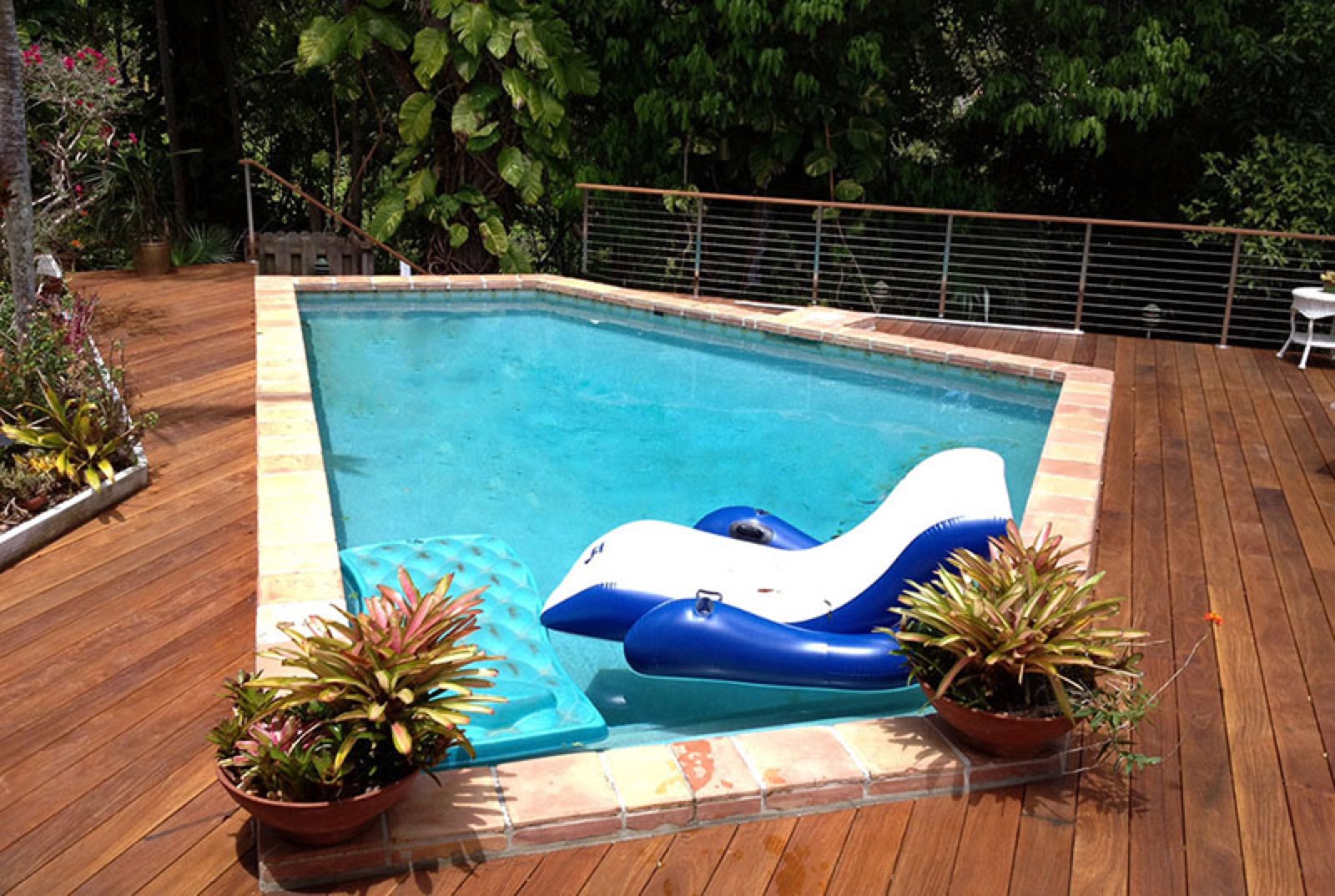
The tiebreaker is the finish you will keep up, not the hardness number.
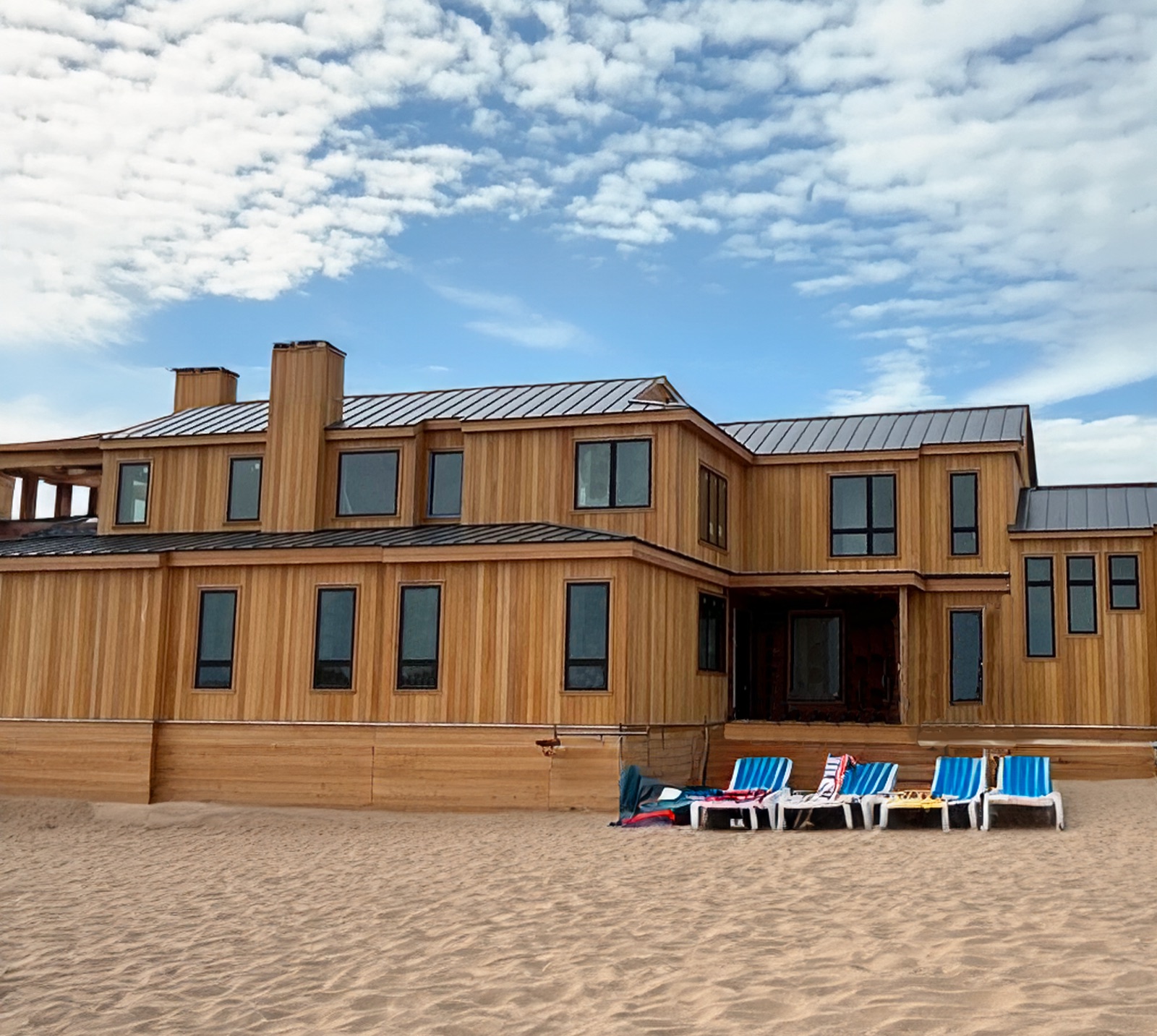
Both Cumaru and Garapa will outlast most of the hardware you fasten them with. Salt air does not rot either one. So the specifier who spends the decision on rot resistance is answering a question the wood already settled. The real fork in the road is what the deck should look like in year five, and how much maintenance the owner will actually perform to keep it there.
Pick Cumaru when the client wants a dark, dense floor with a rich brown tone and is either committed to periodic oiling or content to let it settle into a deep charcoal gray. Pick Garapa when the client wants a lighter, cooler board, a honey-gold surface fresh from the mill, and a lower-effort path to a soft pewter patina. That is the short version. The rest of this guide is the reasoning a professional needs to defend the call to a client who will walk on the result every summer for two decades.
Each species writes a different weathering story across the first two coastal seasons.
Unfinished tropical hardwood on the coast goes through a predictable arc. UV breaks down the surface lignin, wind-driven salt and grit scour it, and the board shifts color. What differs is where each species lands.
Cumaru starts a warm reddish brown, sometimes with olive streaking. Left bare, it moves toward a dark, even gray that reads almost slate in strong sun. The high density means the shift is slow and the surface stays tight. Garapa starts a clean golden yellow. Bare, it silvers faster than Cumaru does, landing on a light pewter that many oceanfront owners prefer precisely because it hides salt haze and does not fight a gray sky. The USDA Forest Products Laboratory documents this surface weathering process for dense hardwoods in its Wood Handbook, and the takeaway for a specifier is simple. Neither species is failing when it grays. It is doing what exposed wood does.
The first two seasons also expose how each board handles the moisture swing of a shoreline. Fog rolls in wet, then a dry offshore wind pulls the surface moisture back out within hours. That daily cycle raises the grain and can check the surface on any dense species. Cumaru, being harder and heavier, shows tighter but occasionally deeper surface checks. Garapa checks more finely and shallowly. Both are cosmetic when the framing and fastening are right, which is a point we return to below.
The oil-refresh cadence, not the species, decides how much work the deck becomes.
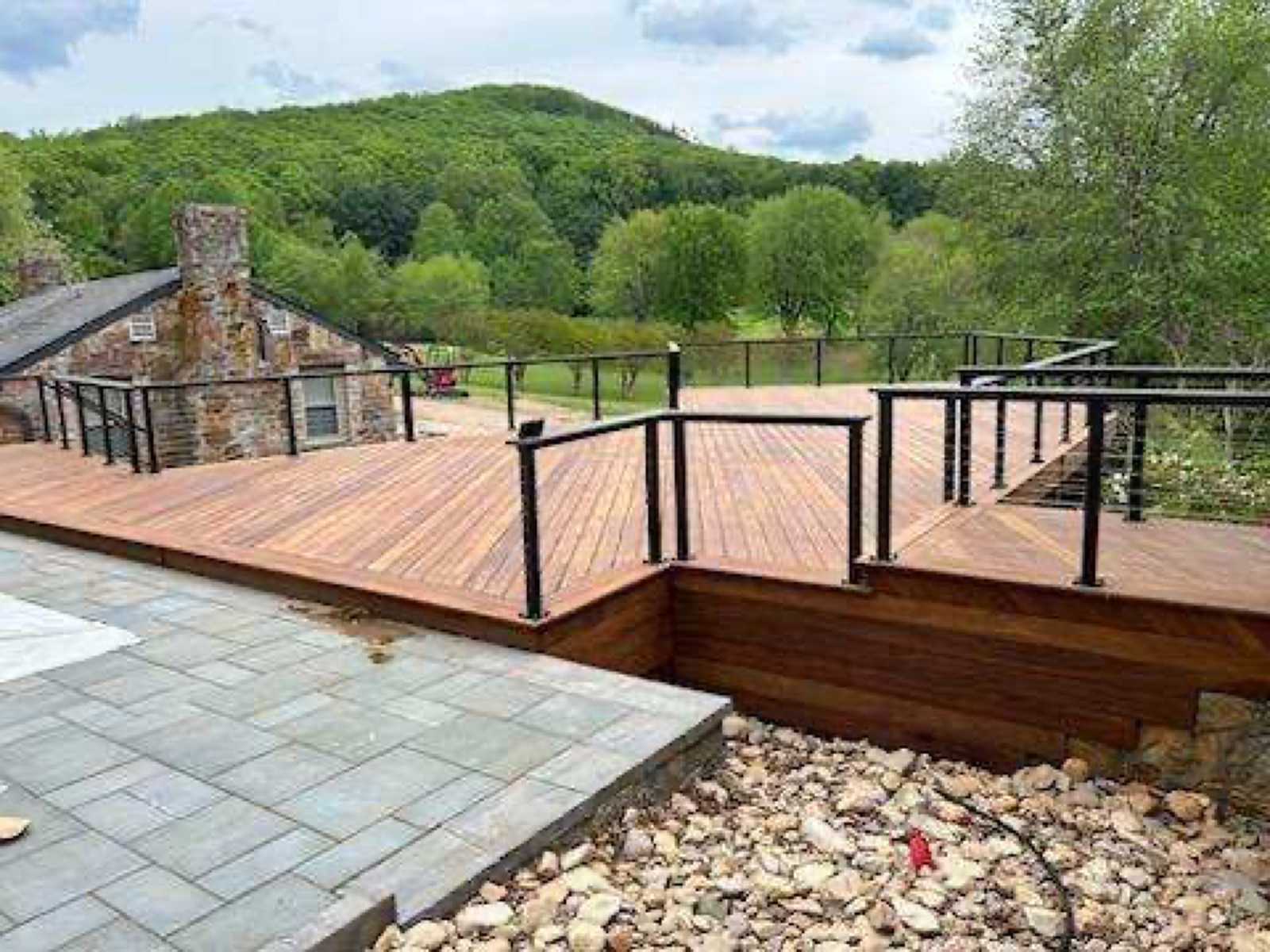
If the client wants to hold the original color, a penetrating UV-inhibiting deck oil is the tool, and here the two species diverge in a way that matters to the maintenance contract.
Cumaru is dense and oily by nature. It accepts a thin coat of penetrating oil but rejects anything film-forming, and on a full-sun coastal exposure that coat burns off. Expect to strip and re-oil a south or west-facing Cumaru deck on a tight cadence to keep the brown. Garapa is less dense and more absorbent. It takes oil more readily and more evenly, so the first application looks superb, but it also thirsts for the next one sooner. Neither species lets you oil once and forget it near the water. The honest conversation with an owner is about whether they will hire that maintenance or accept the gray. Many choose gray after the first refresh, and there is no harm in it.
A note that saves callbacks. Any film-forming exterior coating over either species will fail on a coastal deck. The moisture drive from below lifts it, and the salt-laden UV cracks it from above. Building Science Corporation covers the physics of coatings and moisture drive on exterior wood assemblies in its published resources, and the practical rule is to specify a penetrating oil or specify nothing. Do not let a client talk you into a deck sealer that promises a permanent finish. It does not exist for bare tropical hardwood by the sea.
Tannin runoff during the first rains can stain everything below the deck.
New tropical hardwood leaches tannins, and the coast makes this a design problem because so many shoreline decks sit above light concrete, pavers, pool coping or a painted foundation. Cumaru, being darker and denser, carries heavier extractives and can drop a noticeably brown runoff for the first several rains. Garapa leaches too, but its lighter extractives read as a paler stain that is easier to rinse before it sets.
Two moves protect the surfaces underneath. First, sequence the build so the deck weathers through a few rain cycles before any adjacent hardscape or paint is finished, when the schedule allows. Second, when the deck sits directly over a prized surface, plan to rinse runoff promptly rather than let it dry and bind. This is a real coastal detail, not a footnote, and it is one the existing literature on these two species tends to skip. Garapa gives you more margin here, which is a genuine point in its favor over a white pool deck.
| Species | Fresh color | Bare weathered color | Oil-refresh demand (full-sun coast) | Tannin runoff | Relative movement | Best coastal role |
|---|---|---|---|---|---|---|
| Cumaru | Warm reddish brown, olive streaks | Deep slate gray | High, dense surface sheds oil | Heavier, darker | Moderate to high | Dark main field, high-traffic runs |
| Garapa | Clean golden yellow | Soft light pewter | High, absorbs and thirsts again | Lighter, easier to rinse | Lower to moderate | Light, cool deck over concrete or pool |
| Ipe (reference) | Rich brown to near black | Silver gray | High | Moderate | Low to moderate | Premium dark field, very long boards |
| Red Balau (reference) | Red to reddish brown | Gray | Moderate to high | Moderate | Moderate | Warm-toned budget-conscious field |
Board dimension and span suitability follow from density, and the two species do not sit at the same point.
Cumaru runs about 3,540 lbf on the Janka scale and roughly 1,070 kg per cubic meter in density. Garapa runs about 1,700 lbf and near 850 kg per cubic meter. That gap changes how you size and space the deck.
For open-joist framing that carries dense hardwood, hold joists at 16 inches on center for a 5/4 board. A 5/4x6 profile covers about 2.1 linear feet for every square foot of deck, which is the number your material takeoff runs on. Cumaru's extra density lets a nominal 1x board feel dead solid underfoot even on a slightly generous span, which is why it wins on high-traffic runs and stair treads. Garapa, softer and lighter, is entirely adequate for residential foot traffic but rewards the tighter joist spacing and the thicker 5/4 stock in a heavy-use area. The American Wood Council publishes the structural framework that governs residential deck framing, and dense hardwood decking should be detailed inside that framework, not by feel.
Width is the other lever. Narrower boards move less across their face than wide ones, and on the coast that matters. A 4-inch or 6-inch face is the safer coastal choice in either species than a wide plank that will cup harder through the wet-dry cycle. The wood-database entries for Cumaru and Garapa give the shrinkage and movement figures that justify keeping the boards narrow near the water.
Garapa earns its place where hardness is not the constraint, and Cumaru is the safer pick where it is.
The smartest coastal specs do not always pick one species for the whole job. A specifier can put Garapa across the main field, where the light color runs cool and the traffic is ordinary, and reserve Cumaru or Ipe for the stair treads, the dock transition and the high-wear threshold zones. That two-tier approach spends density where feet actually pound and buys the lighter, cooler surface everywhere else.
On raw material cost, Garapa comes in below Cumaru, and Cumaru comes in below Ipe. None of these are cheap, and none should be sold as such. What Garapa buys the budget-conscious coastal client is a genuine tropical hardwood deck at a lower entry point than Cumaru, with the trade-off being a softer surface and a lighter tone. What Cumaru buys is density that rivals Ipe at a step down in cost, with a warmer brown that some clients prefer over Ipe's darker face. The decision is a design and value conversation, and both species are legitimate answers depending on which one the site and the owner reward.
"On a shoreline deck I ask the client one thing before we ever talk species. Are you going to keep oiling it, or do you want to walk away and let it gray? Their honest answer picks the wood as much as the hardness chart does. If they want the dark and they will maintain it, Cumaru. If they want light and low-fuss, Garapa. Then we size the frame and the fasteners for salt, and that is where the deck actually lives or dies." Norm Moton, Director of Sales, J. Gibson McIlvain
Grading and documentation travel with the order, and a nationwide coastal delivery has to account for both.
A coastal deck deserves clear, well-dried stock, not whatever fell off a container. J. Gibson McIlvain mills and stocks Cumaru and Garapa decking and inspects it before it ships, which matters more than usual near the water because moisture content at delivery sets up the movement you fight for the life of the deck. Target an in-service moisture content of 12 to 16 percent, and let the boards acclimate on site to the local coastal humidity before fastening.
For projects seeking FSC-certified material, the chain-of-custody documentation is available and travels with certified stock. The Forest Stewardship Council maintains the standard behind that paperwork. Separately, when a project calls for a CITES-listed species, documentation is required to move the material legally, and that paperwork should be confirmed as part of the order rather than assumed. The CITES framework governs those cases. Cumaru and Garapa purchasing should always confirm the current status and the documentation that comes with the specific lot.
J. Gibson McIlvain ships nationwide and delivers to coastal jobs from the Atlantic shore to California on a regular basis. This is contractor and commercial volume, not a weekend retail counter, so the right way to start is a conversation about the deck's dimensions, the framing and the finish plan. Call 800-638-9100 to spec it, and review the Cumaru decking options while you plan the takeoff.
The frame, the fasteners and the profile decide whether the boards ever get to finish their weathering arc.
A perfect species over a bad frame is a deck that fails on schedule. Installation carries as much weight as the wood choice near salt water, and there is no silver-bullet board that rescues a compromised assembly.
Fasteners first. Use 316 stainless for coastal work, not 304 and never coated deck screws, because chloride-driven corrosion on the wrong metal will streak and loosen a hardwood deck within a few seasons. The profile choice governs the fastening method. A shiplap or square-edge board takes visible face fasteners, pre-drilled and plugged or set clean. Only a tongue-and-groove profile works with a hidden fastener system, and hidden clips demand a dead-flat joist plane to seat correctly. When a board is grooved for a hidden clip, the grooves face down so water drains out rather than pooling in the channel. Get that orientation wrong and you build a moisture trap into every board.
Ventilation is the quiet killer. A dense hardwood deck needs air moving under it so the underside dries at a similar rate to the top. A deck skinned tight to a solid surface, or one with no airflow beneath, cups because the two faces reach different moisture levels. Keep the assembly open, gap the boards for drainage and expansion, and mount everything on proper joists or furring so air circulates. Where the deck meets a guardrail or a change in level, follow the dimensional requirements in the accessibility and building guidance the project is designed to, including the surface and opening rules the U.S. Access Board publishes for accessible routes where they apply.
A modified wood changes the maintenance math when the client will not commit to any upkeep.
If the owner flatly refuses to oil and also refuses to accept a natural gray, the honest move is to reframe the whole decision toward a modified product rather than push Cumaru or Garapa into a role they cannot fill. Thermally modified and acetylated woods weather more uniformly and come with something solid wood cannot offer, a manufacturer warranty.
Thermory and Abodo Vulcan cover the thermally modified path, and Accoya covers the acetylated path. All three carry warranties on the modified product, which no unmodified solid hardwood does. The trade-off on the coast is length. Modified boards top out around 16 feet, with metric-run stock landing just under 16 feet, because the modification kilns cap the board length. If the design needs longer continuous runs, solid Cumaru, Garapa or Ipe is the answer, and Ipe in particular ships in the long lengths a big coastal deck sometimes calls for. Match the product to whether the client values the warranty and uniform aging or the long board and the deeper natural character. The ASTM test standards behind fire and material performance, published by ASTM International, apply across all of these when a project has a fire-rating requirement, and dense tropical hardwoods like Ipe reach a Class A flame-spread rating, meaning an ASTM E84 flame-spread index of 25 or less.
How J. Gibson McIlvain Would Specify This
Start the spec with the maintenance plan, then let the site and the species fall into place. The order in which a professional makes these calls is what separates a deck that ages well from one that generates callbacks.
First, pin the finish commitment. A client who will oil and wants dark gets Cumaru in a 5/4x6 profile, narrow face, milled and dried to a 12 to 16 percent target and acclimated on site. A client who wants light, cool and low-fuss gets Garapa in the same 5/4 stock, sized generously on the joist plan because it is the softer of the two. A client who will do nothing at all gets a modified product with a warranty, Thermory or Abodo Vulcan or Accoya, on the understanding that boards stop around 16 feet.
Second, engineer the frame for the density you chose. Joists at 16 inches on center, 316 stainless throughout, tongue-and-groove with hidden clips only over a flat joist plane and grooves facing down, or a shiplap face with pre-drilled visible fasteners. Keep the underside vented and the boards gapped.
Third, protect what sits below during the tannin-shedding weeks, and confirm the grading and any FSC or CITES documentation travels with the lot. Then call J. Gibson McIlvain at 800-638-9100 with the deck dimensions, the framing and the finish plan, and let a coastal order ship nationwide from a company that has been milling hardwood since 1798.
Frequently Asked Questions
Which ages to a color that hides coastal salt haze better, Cumaru or Garapa?
Garapa. It silvers to a light pewter that masks salt film and blends with an overcast shoreline sky, so a bare Garapa deck reads cleaner between rinses. Cumaru weathers to a deep slate gray that looks striking but shows dried salt more against its darker surface. If the client wants a low-maintenance bare deck that stays visually clean near the water, Garapa is the easier surface to live with.
How often will a Cumaru deck need re-oiling on a full-sun oceanfront exposure?
On a south or west-facing coastal deck, expect to strip and re-oil Cumaru on a tight cadence to hold the brown, because the dense surface sheds penetrating oil and coastal UV burns it off quickly. There is no film-forming finish that lasts on bare tropical hardwood by the sea. Most owners re-oil once or twice, then decide whether to keep chasing the color or let the deck settle into its natural gray, which is a legitimate and maintenance-free outcome.
Will Garapa or Cumaru stain the pool deck or concrete underneath during the first rains?
Both leach tannins when new. Cumaru drops a heavier, darker runoff for the first several rain cycles. Garapa leaches a paler extract that is easier to rinse before it sets. Over a white pool deck or light pavers, Garapa gives you more margin. Protect the surface below by sequencing the build so the deck weathers through a few rains before adjacent hardscape is finished, and rinse runoff promptly rather than letting it dry and bind.
Can I mix Cumaru and Garapa on the same coastal deck?
Yes, and it is often the smartest spec. Run Garapa across the main field for the light, cool surface and the lower material cost, then use Cumaru or Ipe on stair treads, dock transitions and high-wear thresholds where the extra density pays off. This two-tier approach spends hardness where feet actually pound and buys the lighter tone everywhere else. Keep fastener grade and joist spacing consistent across both species.
What joist spacing and fasteners does a coastal Cumaru or Garapa deck need?
Hold joists at 16 inches on center for 5/4 decking, and tighten that up in heavy-traffic areas for the softer Garapa. Use 316 stainless fasteners throughout for coastal work, never coated screws or 304 stainless, because chloride corrosion will streak and loosen the wrong metal. Tongue-and-groove profiles accept hidden clips only over a flat joist plane with grooves facing down for drainage, while shiplap and square-edge boards take pre-drilled visible fasteners.
If my client will not maintain the deck at all, should I still use Cumaru or Garapa?
Only if they will accept the natural gray, since no unmodified solid hardwood holds its original color without upkeep. If they want uniform aging plus a warranty and will not oil, reframe toward a modified product like Thermory, Abodo Vulcan or Accoya, all of which carry manufacturer warranties. The trade-off is length, since modified boards top out around 16 feet. For long continuous runs, solid Cumaru, Garapa or Ipe remains the answer.


