Deflection Sets the Section Before Species Enters the Conversation
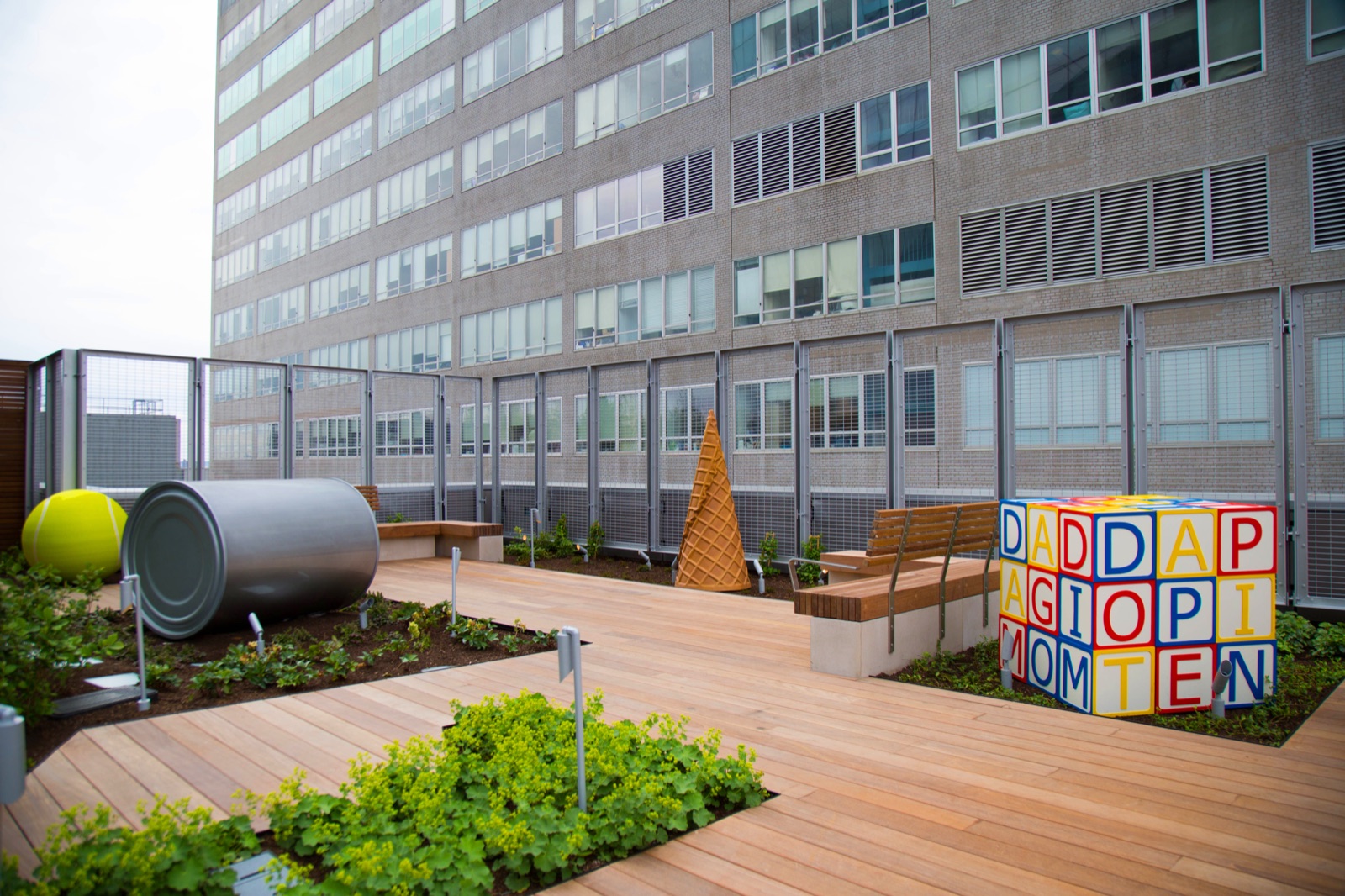
A commercial tropical hardwood deck is specified at 2x nominal thickness first, and the species list narrows to whatever can be sourced in that thickness second. Boardwalks, piers, plaza decks, pool surrounds over structure and any walking surface open to the public carry live loads that residential framing never sees, and the governing complaint is almost never rupture. It is bounce. A board that passes the strength math can still feel alive underfoot, and a deflection that reads as acceptable on a calculator reads as a defect to the owner walking the mockup.
Design professionals working to International Code Council requirements are usually holding a 100 psf uniform live load for assembly-adjacent exterior walking surfaces, with concentrated load checks at the same time. The American Wood Council publishes the design values and deflection framework the structural engineer will apply. Those numbers are the floor. The specification decision sitting on top of them is a professional judgment call, and it is settled in practice. No experienced specifier goes first with a thinner board on a public job, even where the 5/4 or 1x strength math works out on paper.
That single decision filters the species schedule. Only Ipe, Cumaru and Jatoba are consistently available in 2x decking thickness at commercial quantities and lengths. Red Balau and Garapa are legitimate decking species with real service records, but they belong to residential work and to engineer-approved 5/4 applications. Writing either one into a boardwalk spec at 2x sets up a procurement problem that surfaces at buyout, when there is no schedule left to solve it.
| Species | Janka (lbf) | 2x decking availability | EN 350 durability | Where it belongs in a commercial document |
|---|---|---|---|---|
| Ipe (Tabebuia spp.) | ~3,680 | Consistent, all standard and custom dimensions | Class 1 | Boardwalk, pier, plaza, rooftop. Default where ASTM E84 Class A is required |
| Cumaru | ~3,540 | Consistent | Class 1 to 2 | Boardwalk and plaza work where a warmer brown tone is wanted |
| Jatoba | ~2,690 | Consistent | Class 2 to 3 | Covered commercial walkways and protected exterior decks |
| Red Balau | ~1,700 to 2,000 | Not a 2x commercial item | Class 2 to 3 | Residential decks and engineer-approved 5/4 work only |
| Garapa | ~1,700 | Not a 2x commercial item | Class 3 | Residential decks, light-toned 5/4 applications |
| Massaranduba (comparison only) | ~3,190 | Regional, inconsistent | Class 1 to 2 | Cited in comparison tables. Not a species J. Gibson McIlvain supplies |
Name the Species So a Bidder Cannot Substitute Sideways
A trade name alone is an invitation to swap, so the spec has to carry the botanical name, the grade description and the tolerance for what may be offered as equal. Trade nomenclature in tropical hardwood is loose by habit. Several distinct woods have been marketed under a single familiar name, and the substitution that lands on site is usually legal, cheaper and materially different in density, movement and durability class.
Write Ipe as Tabebuia spp. Write Cumaru as Dipteryx odorata, Jatoba as Hymenaea courbaril, Garapa as Apuleia leiocarpa, Red Balau as Shorea spp. The Wood Database entries are a reasonable cross-check when a submittal arrives with a name nobody on the team recognizes, and the USDA Forest Products Laboratory remains the reference of record for mechanical properties and identification.
Grade needs its own sentence. NHLA rules were written for lumber destined to be cut up for interior products, graded off the poor face, and they do not describe an exterior deck board. Specify the appearance requirement directly. Clear one face and better, no through checks, no unsound knots, sapwood excluded on the face, and a stated allowance for pin-sized surface characteristics. Then state what may be rejected on arrival and what may not, so the field has a written test rather than an argument.
Length and Tally Language Decides Whether the Drawings Get Built
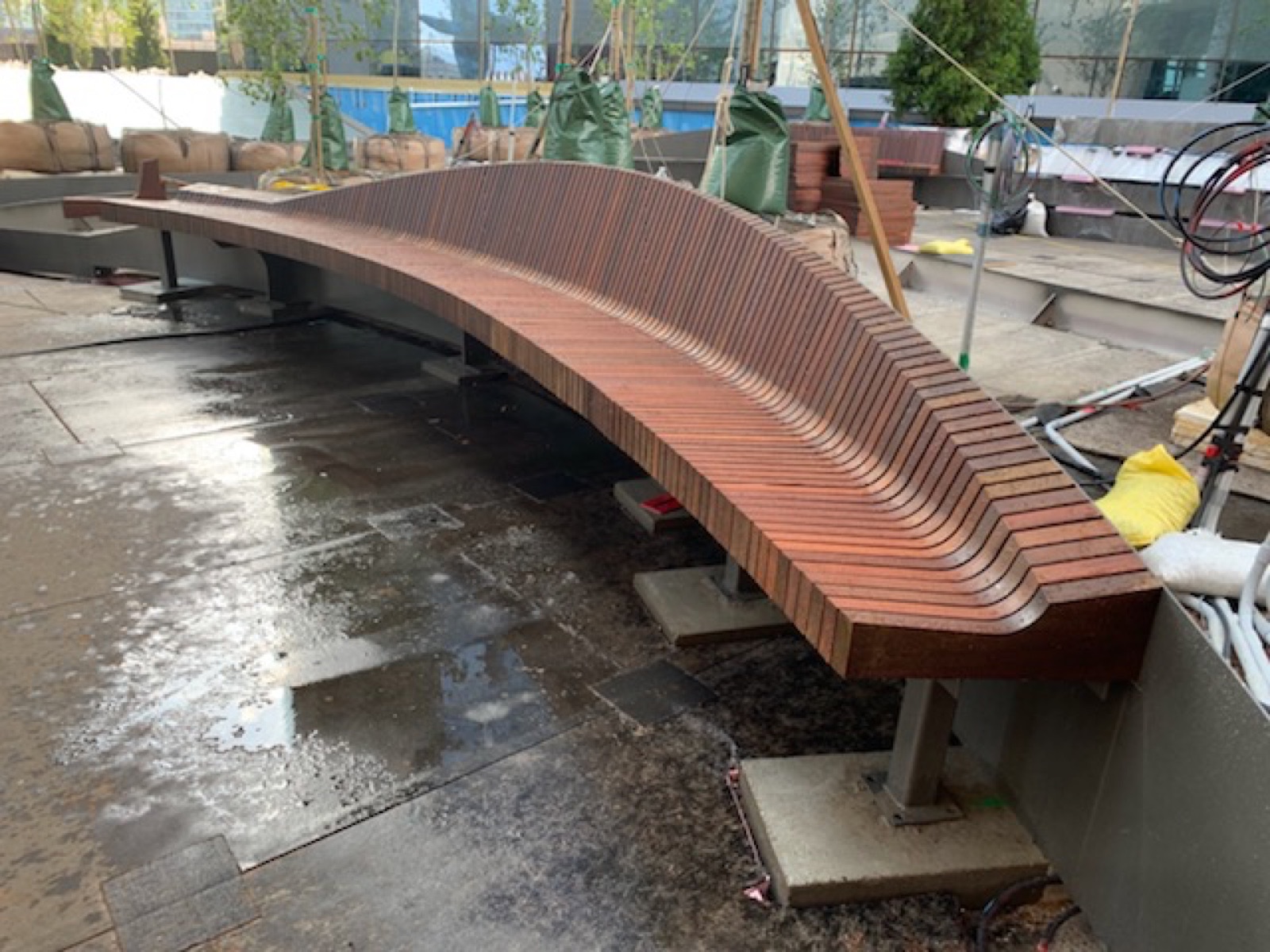
Tropical decking ships in random lengths, and a spec that ignores tally will produce a deck that looks nothing like the elevation drawn. A run of boards shown continuous from edge to edge on a plaza plan requires long stock, and long stock arrives as a percentage of any given pack rather than on demand.
Handle it in the document. State the acceptable length range, state the minimum percentage of the order that must fall in the upper range, and state where butt joints are permitted. Butt joints belong over doubled bearing, never over a single joist edge, and the drawing should show that condition rather than leaving it to the installer. Where a pattern is drawn, note that the pattern governs and that the supplier will be asked to pull to a length schedule.
Quantity math is worth doing at the spec stage rather than at buyout. A 5/4x6 deck board covers roughly 2.1 linear feet per square foot of surface at a standard gap, and 2x6 runs the same coverage with more weight and more freight. Add a waste allowance for field cuts, pattern breaks and end trim. Under-ordering a tropical species and reordering three months later is the fastest way to introduce a color mismatch that nobody can correct, since air and sun move these woods toward silver on a schedule of their own.
Moisture Content Is a Number the Spec Must Actually Carry
Exterior tropical decking should be specified at 12 to 16 percent moisture content in service, and the submittal should require a meter reading at delivery. Dense tropical hardwoods are kiln dried to a range rather than a point, and the range matters more than the point. A board delivered wet shrinks in place and opens gaps beyond what was drawn. A board delivered too dry swells and closes them.
Gap width follows from the delivery moisture reading, not from a fixed rule of thumb. Boards arriving at the dry end of the range get set tighter, boards at the wet end get set wider, and a spec that publishes one gap dimension without a moisture qualifier is asking the installer to guess. Note the seasonal condition at time of installation as well. A deck installed in a humid August on the Gulf coast behaves differently from the same package installed in a Colorado February.
Storage language belongs in the same section. Material stays banded and covered, off the ground, stickered if it is opened, out of direct sun, with airflow. Anything less and the top boards of the pack dry and cup while the boards underneath sit at delivery moisture, which produces a mixed-behavior deck out of a single uniform shipment.
Surface Checking Belongs in the Specification, Not in the Punch List
Checking cannot be prevented in dense tropical decking, and a spec that implies otherwise creates a rejection fight the project cannot win. A check is the wood releasing tension. The surface heats and dries faster than the core, the outer fibers shrink against a core that has not moved yet, and the wood relieves the difference. It does not reduce the strength of the board. Small surface checks are normal in tropical decking and are frequently a sign that the material was seasoned properly rather than rushed.
What the specification can do is reduce it and set expectations in writing. J. Gibson McIlvain factory coats tropical decking with Cutek, a penetrating oil wood stabilizer that slows the moisture exchange at the surface and significantly reduces checking. That coating is applied to all six sides of the board before it ships, which is the only practical moment to reach the faces that disappear once the deck is down. Site practice does the rest. End seal every field cut, keep the material out of direct sun before installation, and build in the airflow described below. Those measures keep checks small. They do not eliminate them, and the spec should say so in plain language alongside the acceptance criteria, so a normal surface characteristic is not written up as a defect during closeout.
Fastening Is a Drawing Problem Before It Is a Specification Problem
Profile and fastener are a single decision, and drilling is installation work performed on site against the frame as built. Shiplap takes visible fasteners. Only a tongue and groove profile accepts hidden fastener clips, because the clip needs a machined groove to seat in. Choosing a face-fastened look and a concealed system at the same time is the most common contradiction that shows up in a decking section, and it usually surfaces during the submittal review when the installer asks which one governs.
Never write a requirement for pre-drilled or pre-countersunk boards, and do not accept a submittal that offers them. Hole layout depends on the frame as it was actually built, on field cuts, on pattern breaks and on the joist that ended up an inch off the drawn line. A factory hole pattern is invalidated by the first field adjustment. Drilling happens on site, and the technique is worth calling out in the execution portion of the section. Pilot every hole. Two fasteners per board per joist. Roughly three quarters of an inch edge distance. Full-depth pilots near board ends where splitting risk is highest. Butt joints land on doubled bearing. A self-centering combination bit that drills and countersinks in one pass keeps the heads consistent across thousands of holes, which is what the owner sees.
Metal selection is not negotiable near salt. Specify 316 stainless for coastal work. Dense tropical hardwood and the wrong fastener metal produce staining that migrates into the board face and cannot be sanded out of an oiled deck. Boards on furring strips or joists need the machined groove face turned down so water drains rather than sits, and any framing detail that traps water under the board will outrun the durability of the species above it.
The submittals that go through clean are the ones where the architect already decided the thickness and the fastening method before the drawings went out. When those two are settled, everything else on my side is scheduling. When they are not, we spend six weeks trading RFIs about a groove that was never drawn, and the deck package sits while the rest of the site moves on. I would rather have that conversation in design development than in the field.
Norm Moton, Director of Sales, J. Gibson McIlvain
Fire, Slip and Accessibility Documentation the Reviewer Will Ask For
The plan reviewer is not checking your species choice, but they will check the fire rating, the gap width and the surface at the accessible route. Ipe carries an ASTM E84 Class A rating, which means a flame-spread index of 25 or less under the standard test. That matters on rooftop assemblies, on elevated walkways and anywhere the authority having jurisdiction requires a rated walking surface without added treatment. Cite the standard by designation and require the test report in the submittal rather than a marketing claim. ASTM International publishes the test method, and NFPA documents govern the assembly context on many rooftop projects.
Gap width sits at the intersection of two requirements that pull in opposite directions. Drainage and airflow want a wider gap. The accessibility guidelines limit openings in a walking surface so that a half inch sphere cannot pass in the direction of travel along an accessible route. Resolve it on the drawings, not in the field, and note where the accessible route runs so the installer knows which gap dimension governs where. Slip resistance is worth addressing directly for pool decks and wet-use plazas, where a smooth-planed dense hardwood behaves differently from a lightly textured one.
WoodWorks maintains technical resources on exterior wood assemblies that help when a reviewer pushes back on a detail, and building enclosure guidance from Building Science Corporation is useful where the deck sits over occupied space.
Chain of Custody and Legality Paperwork Attach to the Submittal, Not the Delivery
Certification and legality documentation are submittal items, and asking for them after the truck arrives is too late to be useful. Projects pursuing LEED credits or a sustainability commitment written into the owner requirements need chain of custody records that name the project. FSC certification travels with the supply chain and has to be requested at order placement to appear correctly on the invoice.
Import legality is a separate track. When a project uses a CITES-listed species, documentation is required at the point of import and should be requested in the submittal package, and the specification should name the requirement generically rather than attaching it to one species that may or may not apply by the time the project buys. The CITES appendices change. A spec that hard-codes a species into that clause ages badly. Requiring a declaration of legal harvest and import compliance from the supplier covers the project regardless of which appendix listing is active at buyout.
Modified Wood Is a Real Option With a Hard Length Ceiling
Thermory and Abodo Vulcan thermally modified decking and Accoya acetylated wood belong in the conversation, and every one of them tops out around 16 feet. Kiln size sets that limit. The modification process runs in a vessel, the vessel has a length, and the metric-length products land just under 16 feet after conversion. A plaza detail drawn with 20 foot continuous runs cannot be executed in modified wood, and finding that out during shop drawings is expensive.
What modified products bring is dimensional stability and, unlike solid unmodified hardwood, a manufacturer warranty. Solid tropical decking carries no warranty from anyone, which is normal for a natural material and should be stated plainly in the spec so the owner is not promised something the industry does not offer. Modified wood also arrives lighter and easier to work, which matters on rooftop projects with weight limits and on jobs where the crew is fighting a hoist schedule. Color is more uniform out of the pack and moves toward silver on weathering the same way tropical species do.
Delivery Sequencing Is a Specification Item on Any Deck Over a Few Thousand Feet
A large tropical decking package should be released against the construction schedule, and the spec should say who controls that release. Dense hardwood is heavy. Freight, staging space and site storage conditions are real constraints on a tight urban job, and a full package delivered before the substructure is ready sits in the weather absorbing a season it did not need.
Write the release language. Name the party responsible for the delivery schedule, require notice before each release, and require that storage conditions be maintained from delivery to installation. On phased plazas, sequence the release to match the pour schedule so that boards for phase three are not sitting on site through the phase one and two work. J. Gibson McIlvain mills and stocks Ipe decking in 5/4 and 2x thicknesses across all standard and custom dimensions and ships nationwide, including regularly to California, which lets a project on either coast hold one source across every phase rather than matching color across two suppliers a year apart. Single-source language protects the appearance of the finished deck more than any other clause in the section.
How J. Gibson McIlvain Would Specify This
Write the section in this order and most of the field problems disappear before bidding. Start with thickness. 2x nominal for any public walking surface, confirmed by the structural engineer against the governing live load and deflection limit. That decision alone determines whether the species schedule is Ipe, Cumaru and Jatoba or something broader.
Name the species botanically. Tabebuia spp. for Ipe. Add the grade description in performance terms rather than by reference to a grading rule written for interior lumber. State moisture content at 12 to 16 percent with a meter reading required at delivery, and tie gap width to that reading rather than publishing a single dimension.
Pick one profile and one fastening method and draw them together. Tongue and groove if the design wants concealed fasteners, shiplap or square edge if visible fasteners are acceptable, 316 stainless near salt water, and no pre-drilling from the mill under any circumstance. Put the on-site drilling technique in the execution article so the installer has it in front of them. Joists at 16 inches on center for dense hardwood decking, with the framing detailed for airflow underneath and drainage at every interruption.
Require the ASTM E84 report, the chain of custody documentation, the legal harvest declaration and a physical sample from the actual production run in the submittal package. Specify the factory Cutek coating and include acceptance language that recognizes small surface checks as a normal characteristic rather than a defect. State that solid tropical decking carries no warranty, and if a warranted product is required by the owner, move to Thermory, Abodo Vulcan or Accoya with lengths held at or under 16 feet.
Then call before the section goes out for review. A twenty minute conversation about tally, length distribution and release schedule at the design development stage is worth more than any amount of substitution review later. J. Gibson McIlvain has been supplying hardwood since 1798 and works with architects and contractors on commercial volume nationwide. Reach the sales desk at 800-638-9100 for a quote, a length schedule or a review of draft specification language, or start at mcilvain.com.
Frequently Asked Questions
What thickness should commercial deck boards be specified at?
2x nominal. Commercial boardwalks, piers, plaza decks and any public walking surface are specified at 2x thickness to control deflection, and that convention holds even on projects where 1x or 5/4 satisfies the strength calculation. Owners and reviewers judge a public deck by how it feels underfoot, and a thin board that passes the math can still read as bouncy. The practical consequence is that the species schedule narrows to Ipe, Cumaru and Jatoba, which are the tropical species available consistently in 2x decking thickness at commercial quantity and length.
Which species should be kept out of a commercial deck specification?
Red Balau and Garapa. Both are sound decking species with good service records, but neither is a consistent 2x decking item, so they belong in residential work and in engineer-approved 5/4 applications rather than in a boardwalk or plaza spec. Massaranduba appears in comparison tables for its density, though it is not a species J. Gibson McIlvain supplies. Writing a species into a commercial section that cannot be sourced in the specified thickness creates a substitution problem at buyout with no schedule left to absorb it.
What botanical name should appear in an Ipe specification?
Tabebuia spp. Tropical trade names are used loosely across the industry, and more than one wood has been sold under a familiar name, so the botanical name is what prevents a legal but materially different substitution from arriving on site. Pair it with a grade description written in performance terms, since NHLA rules were developed for interior lumber graded off the poor face and do not describe an exterior deck board.
How should a specification address surface checking?
By recognizing it as a normal characteristic and setting an acceptance threshold, not by prohibiting it. Checking is the surface of the board releasing tension as it heats and dries faster than the core. It does not weaken the board, and small surface checks frequently indicate that the material was properly seasoned. The specification can require factory coating with Cutek, a penetrating oil wood stabilizer applied to all six sides before shipment that significantly reduces checking, and can require end sealing of field cuts and ventilated storage. Those measures keep checks small rather than eliminating them.
Can a commercial submittal require pre-drilled decking boards?
No, and a submittal offering them should be rejected. Fastener layout depends on the substructure as actually built, on field cuts, on pattern breaks and on framing that landed off the drawn line, so any factory hole pattern is invalidated by the first field adjustment. Drilling is on-site work. Put the technique in the execution article instead: pilot every hole, two fasteners per board per joist, about three quarters of an inch edge distance, full pilots near board ends, butt joints over doubled bearing, and a self-centering combination bit for consistent countersinks.
How long can modified wood decking boards be specified?
Around 16 feet, with metric-length products landing just under that. Thermory and Abodo Vulcan thermally modified decking and Accoya acetylated wood are processed in a vessel whose length caps the finished board, so a detail drawn with 20 foot continuous runs cannot be executed in modified wood. The offsetting advantages are dimensional stability, lighter weight for rooftop work and a manufacturer warranty, which solid unmodified tropical decking does not carry from any supplier.
How do you write length and tally requirements for a large deck?
State the acceptable length range, the minimum percentage of the order that must fall in the upper portion of that range, and where butt joints are permitted. Tropical decking ships in random lengths, so a plan showing continuous runs across a plaza requires the long stock to be requested as a length schedule rather than assumed. Include a waste allowance for field cuts and pattern breaks, and order the full quantity at once. Reordering months later introduces a color difference that cannot be corrected on a weathering deck.
What fastener metal belongs in a coastal commercial decking spec?
316 stainless. Salt exposure combined with the extractives in dense tropical hardwood will stain a board face around an inadequate fastener, and that staining migrates into the wood where it cannot be sanded out of an oiled surface. Specify the alloy explicitly rather than writing stainless generically, and confirm that any hidden fastener clip system on the submittal uses the same alloy for both clip and screw.