Why Two Species End Up in One Room
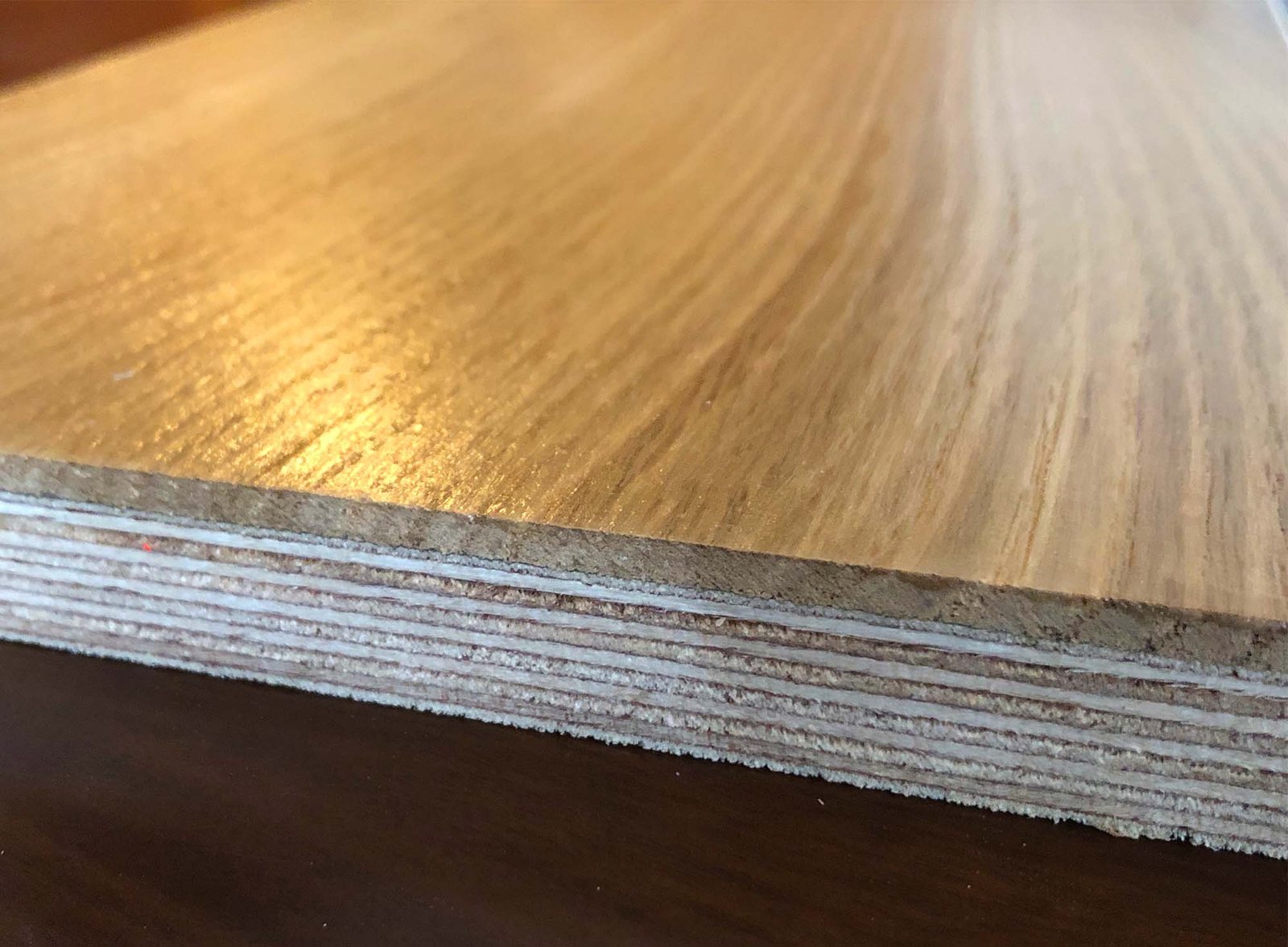
Two species share a room because each one is doing a job the other cannot do, and the color match is the price of that decision. A kitchen wants a species that glues and machines cleanly into face frames and drawer boxes. A curved header over a cased opening wants stock that laminates without telegraphing its layers. An exterior door on the same elevation wants dimensional stability and rot resistance that the interior species was never asked for. Nobody sets out to build a two-species room. The room arrives that way once the drawings get honest about what each part has to survive.
Availability drives it just as often. A designer who wants 16 ft casing runs and 12 inch wide panel stock in one species may find the long lengths in one and the wide widths in another. Historic districts force it too, where a replacement shutter has to match an original species that the new interior work will not use anywhere else.
ICD, the architectural millwork division of J. Gibson McIlvain, builds the cabinets, doors, radius trimwork and box beams that usually sit on one side of this problem, while the linear trimwork and finished cladding come off the millwork shop at the lumber yard. Both sides can be pulled from the same order, which is the first thing that makes a match possible. You can see how that custom side is organized at ICD's working process.
The room does not read as species. It reads as one continuous surface interrupted by shadow lines. A viewer standing in the doorway is comparing a cabinet stile to a door casing four feet away in the same light, and the eye is very good at catching a near miss.
What You Are Actually Matching
A color match is four variables stacked on top of each other, and only one of them is color. Value is lightness, and it is the variable the eye catches first from across a room. Hue is the undertone, the red in Sapele against the yellow-brown in Iroko. Chroma is saturation, how loud that undertone is once a finish wets the surface. The fourth variable is grain scale, and no amount of stain adjusts it.
Finishers working to a spec measure the first three with a spectrophotometer reading L*a*b* coordinates and a color difference calculation, the method described in the ASTM D2244 practice for calculating color tolerances. That instrument reading is useful for approving a repeat batch against a retained control. It is close to useless for predicting whether two species will look like one room, because the instrument averages a small spot and the eye integrates pore texture, figure and sheen across a whole plane.
Sheen belongs in the conversation from the start. The same pigment under a 25 sheen and a 40 sheen reads as two different values, and a satin cabinet door against a semi-gloss casing will look mismatched even when the color numbers agree. Lock the sheen before anyone argues about the stain.
Pore Structure Is the Match Stain Cannot Fix
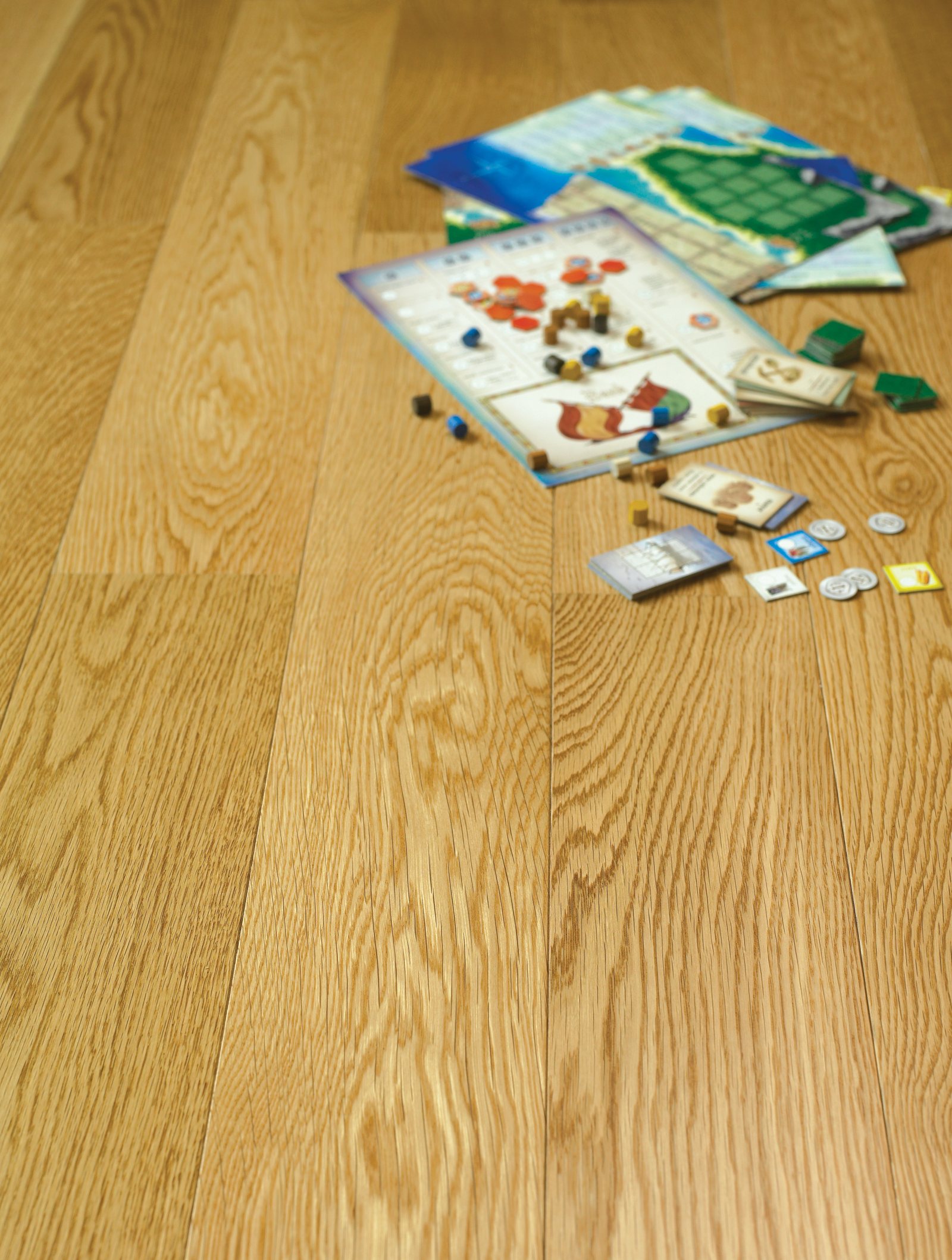
Value and undertone can be corrected in the finish schedule, but pore size and grain scale cannot, so the species pairing has to be right before a single sample panel gets sprayed. A stain works by leaving pigment in the open pores and wiping it off the flat. Put the same wiping stain on a coarse-pored species and a fine-pored one and the coarse species goes darker and busier while the fine one goes flat and muddy. They will never converge.
The millwork palette at J. Gibson McIlvain is Sapele, Iroko, Afrormosia, Teak and Utile, and those five pair with each other far better than any of them pairs with a fine diffuse-porous domestic. Sapele and Utile are close cousins in the same family, both with interlocked grain and medium pores, and they are the easiest two-species match in the whole group. Afrormosia runs finer and more even, which makes it the bridge species when the partner is Hard Maple or Cherry.
Interlocked grain adds a complication that pore size does not explain. Sapele and Utile both produce a ribbon figure on quartered faces, and that ribbon flips light and dark as the viewer moves. A quartersawn Sapele cabinet door next to plainsawn Sapele casing can read as two species under raking light even though it is one. Match the cut, not just the name on the packing list.
| Species | Pore texture and grain scale | Undertone and how it shifts with age | What the color schedule has to solve |
|---|---|---|---|
| Sapele | Medium pores, interlocked grain, pronounced ribbon on quartered faces | Pink-red when fresh, deepening to a settled red-brown | Control the ribbon flip by matching the cut, and expect the red to arrive on its own |
| Utile | Medium to slightly coarse pores, interlocked, quieter ribbon than Sapele | Brown with less red than Sapele, darkens moderately | Usually the easier half of a Sapele pairing, needs only a small hue correction |
| Iroko | Medium to coarse pores, irregular interlocked grain | Yellow-gold when fresh, moving to a medium brown fairly quickly | Do not match it fresh, it will walk away from the sample within months |
| Afrormosia | Fine, even pores, straight to mildly interlocked | Yellow-brown darkening to a deeper brown with a slight green cast | The natural bridge to fine-grained domestics, takes dye evenly |
| Teak | Uneven pore bands, high natural oil and silica content | Golden brown ambering indoors, greying outdoors without a UV coating | Solvent wipe and adhesion testing before any coating goes on |
| White Oak, quartersawn | Ring-porous with large earlywood pores and visible ray fleck | Tan to light brown, comparatively stable | Grain filling if it has to sit next to anything fine-pored |
| Hard Maple | Very fine diffuse pores, nearly featureless | Near white with a faint yellowing under oil-based coatings | Washcoat or dye to prevent blotch, and accept it will never look coarse |
| Cherry | Fine diffuse pores with occasional gum flecks | Light salmon darkening dramatically and quickly under light | Match to the aged state, not the milled state |
Both Species Keep Moving After Delivery
A two-species match approved on raw stock will fail within a year, because each species ages at its own rate and in its own direction. Photo-oxidation is the mechanism. Light and oxygen alter the extractives sitting in the cell walls, and the rate depends entirely on which extractives the species carries. The Forest Products Laboratory Wood Handbook covers the chemistry in its weathering and finishing chapters.
Cherry is the worst offender and the best teaching case. A freshly milled Cherry panel is pale salmon, and the same panel six months into a sunlit room is a deep reddish brown. Anyone who matches a partner species to fresh Cherry has matched to a color that no longer exists by the time the punch list closes.
Iroko does something similar in a different direction. It leaves the mill a bright yellow-gold and settles into a medium brown, which is why an Iroko gate matched on day one to a Sapele entry door drifts apart through the first season. Sapele moves too, toward red, so the two are chasing each other.
The practical answer is to age the samples before approving them. Expose the step panels to daylight for a few weeks, or use the finisher's accelerated exposure, and approve the pair at the state they will both hold. Retain one panel in a dark drawer as the control for phase two.
Dye, Stain, Glaze and Toner Do Different Jobs
The four coloring tools are not interchangeable, and using the wrong one is the most common reason a two-species match stalls at sample number six. Dye is dissolved, not suspended, so it colors the fibers themselves without loading the pores. That makes it the right tool for correcting value and undertone, which is exactly what a species pairing needs. Dye is where the match is won.
Pigment wiping stain is suspended solids. It lodges in open pores and exaggerates grain contrast, which is useful when the goal is to make a fine-pored species look busier and dangerous when the two species already disagree on pore size. Reach for it after the dye has brought the two into the same neighborhood.
Glaze goes on between clear coats and sits on the surface rather than in the wood. On a two-species job it is the tool for pushing the quieter species toward the busier one, and for killing the last bit of hue disagreement without touching the substrate. A toner is pigment or dye carried in the clear coat itself, sprayed as a full coat, and it is the final nudge when one species has come out a half step light.
Blotch control belongs at the front of the schedule, not the back. Cherry and Hard Maple both blotch, and a thin washcoat or a sealer applied before any color goes on evens the absorption rate. Skipping it means the fine-grained half of the room develops cloudy patches that no glaze will hide.
Tropical species bring their own chemistry to the schedule. Teak and Iroko carry enough natural oil and extractives to interfere with cure on some coatings, which is why a solvent wipe and a real adhesion test on production stock come before a finisher commits to a system. Afrormosia and Iroko can also push yellow extractives into a light-colored partner if the two are finished in contact before sealing.
Clear Coats Shift the Color Before Anyone Notices
The clear coat is a color decision, not a protective afterthought, and two species matched under one clear system will not match under another. Oil-based alkyd and oil-modified polyurethane carry an amber cast that deepens over time. Waterborne acrylics stay close to water-clear. Put the same approved stain under both and the oil-based side pushes the yellow-heavy species further yellow while barely touching the red-heavy one. The match that was approved on a panel comes apart on the wall.
Exterior and waterfront work runs a different schedule. A long-oil spar varnish, the nautical system, is formulated to stay flexible as the substrate moves and carries ultraviolet absorbers to slow the photo-degradation underneath. It buys appearance and it demands maintenance. A bright-finished Teak or Iroko gate on a coastal elevation needs scheduled recoats, and a specification that treats marine varnish as a one-time application is writing a failure into the drawings.
Epoxy shows up on the same jobs as a sealing and building layer rather than a finish. Penetrating epoxy stabilizes end grain and fills pore on exterior components, and it does it without color of its own. What it does not have is ultraviolet resistance, so epoxy left bare chalks and yellows. It has to be topcoated with a varnish carrying UV absorbers, every time.
One scope note keeps projects honest. J. Gibson McIlvain mills, matches and primes. The pigmented and clear topcoat schedules, the dye and glaze steps, the spar varnish and any epoxy sealing are executed by the buyer's own finisher or fabricator, on production stock, against retained samples. The shop's job is to deliver two species that a finisher can bring together, and that is mostly a matter of what happens before the first drop of color.
Radius Work, Box Beams and End Grain
End grain drinks two to four times the stain that face grain does, so joinery choice is a color decision on any component that shows a joint. Box beams are the clearest example. ICD mills box beams three ways. Butt joints give the most minimal profile, the fastest turnaround and the easiest on-site assembly, but they leave visible seams and visible end grain and they are the weakest of the three. Dado joints are strong and still easy to assemble on site, and they still show seams and end grain. Lock miter joints show no visible seams and are the strongest.
On a stained beam the difference is not subtle. A butt-jointed corner picks up a dark line at every seam, and that line runs the length of the room at eye level. Lock miter carries the face grain around the corner, so the color schedule only ever has to solve one surface. Where a beam sits in the same room as cabinetry in a second species, the lock miter is usually worth the extra machining for color reasons alone, before durability enters the argument.
Radius trimwork has a related problem. A curved casing presents the grain at a continuously changing angle to the light, and on an interlocked species like Sapele or Utile that means the ribbon figure shifts along the arc. A radius header can read a full value step darker than the straight casing it dies into, in the same species, from the same lot. Dye handles that better than pigment stain, because it colors fiber rather than depending on how the pores are presented.
Sanding sequence matters more than most specifications admit. Stock sanded to 150 grit accepts noticeably more color than the same stock sanded to 220, and two species finished at two different grits will not match no matter how carefully the stain was adjusted. Fix the final grit for both species and write it on the sample tag. ICD's trim profile work covers the curved and straight runs that have to agree with each other.
Cabinetry Set Against Trim
The hardest match in the room is usually cabinetry against casing, because the cabinet carries both solid and sheet stock in the same species while the trim carries only solid. A veneered door panel and a solid stile milled from the same log still take color differently. Veneer is sliced, sanded thinner and often sealed at the panel plant, so its absorption rate is not the absorption rate of the solid rail beside it. That mismatch is an inside-the-cabinet problem before it is a two-species problem, and it has to be solved first.
Modular cabinetry makes everything worse. Standard boxes come in fixed widths, so the installer fills the leftover with filler strips, and those strips are often a different production run with different color. ICD builds kitchen cabinetry around how the space is actually used rather than from standard modules, which removes the filler strips and the mismatched face frames from the color conversation entirely. That work is described at ICD cabinets and case work.
There is a design answer that deserves more airtime than it gets. A near miss reads as a mistake and a clear separation reads as a decision. When the two species are close enough that a viewer expects them to match but far enough apart that they never quite will, the better move is often to push them further apart on purpose, with a deliberate value difference, rather than to spend eight sample rounds chasing a match that will drift anyway.
Where the cabinetry has to carry a stone or sintered countertop, construction changes underneath. Heavier tops want more substantial box construction and different support, and that structural decision happens before any finishing decision. Specialty drawers and storage worked around plumbing and mechanical obstacles come out of the same planning step.
Exterior Runs Where Both Species Weather
Outside, the color match has to survive two species weathering at different rates under the same sun, which is why exterior two-species work leans on paint and on modified products far more than interior work does. Exterior millwork gets milled to an in-service moisture content near 12 to 16 percent, against 6 to 8 percent for interior, and that difference alone changes how the two halves of a job take coating.
J. Gibson McIlvain primes in three levels, in both oil-based and water-based systems, with a fungicide additive on exterior primed trim. Open-grained and oily species absorb a great deal of finish, so a primer coat evens out the eventual painted surface, and sanding or buffing after priming knocks back grain raising while keeping moulded detail crisp. Priming all six faces before the material leaves the shop is the single most useful thing a supplier can do for an exterior paint match.
For painted exterior trim, Sapele is the better specification than Genuine Mahogany. It holds paint better and it comes in a wider range of sizes and longer lengths, which matters when one species has to run long while its partner runs short. Sapele is not milled 1x8 for exterior use, too wide to stay stable in that application. Cupping, when it shows up, is driven by installation and back ventilation rather than by species.
Modified woods change the color math because the modification is part of the color. Thermory thermally modified stock and Abodo Vulcan are both carried, and thermal modification colors the board through rather than on the surface. That color fades toward grey without a pigmented or UV-absorbing coating, so a modified component matched to an unmodified one needs a maintenance coating plan from day one. Modified woods top out around 16 ft, and most are sold on metric lengths just under 16 ft, limited by kiln size. Thermally modified Ash is not available wider than 8 inches, so a wide board in a modified product means Accoya or Abodo Vulcan. Accoya runs roughly 1,600 lbf on the Janka scale and its acetylation gives dramatically reduced shrinkage and swelling.
Warranties follow the same line. Modified products carry them. Solid unmodified wood does not, and it is not possible to warranty an organic material that keeps responding to its environment.
One more distinction saves arguments on mixed exterior packages. The tropical decking species, Ipe (Tabebuia spp), Cumaru, Garapa, Jatoba and Red Balau, are extremely hard and carry high oil content, which makes them difficult to glue. A millwork shop building a gate, a pergola or a bench reaches for Sapele, Iroko, Afrormosia, Teak or Utile instead, because those machine, glue and hold a coating in ways the decking species do not. Matching a milled pergola to an adjacent deck is a job for the coating schedule, not for milling the pergola out of deck stock. ICD's exterior millwork covers the gate, pergola and shutter side of that work.
Shutters carry a historical requirement of their own. Louver and panel styles can be matched for both style and species where a historic district requires like-for-like replacement, and the National Park Service Preservation Briefs set out what review boards usually expect. Large driveway swing gates are a separate animal, where size and weight demand engineering rather than craftsmanship alone.
Sample Approval and Repeating It Across Phases
A two-species match is only real when it is approved on production stock, signed, retained and reproducible on the next phase of the job. Sample panels cut from a random board prove nothing. The panel has to come from the lot that will be milled, at the final sanding grit, with the full schedule including the clear coat and the sheen that will actually ship.
J. Gibson McIlvain holds over seven million board feet of exotic and domestic lumber at its Maryland yard, which is what makes lot reservation possible on a phased job. Color within a species varies by log and by region, and a room finished from two lots six months apart can miss a match that was never about the second species at all. Pulling both species from held stock removes that variable.
Profile continuity is the other half of repeatability. J. Gibson McIlvain keeps a profile library holding thousands of ground knives and grinds new knives every week, so a casing profile run in one species in phase one can be run again in the partner species in phase two without redrawing anything. If a profile is not in the library it gets ground to match, including difficult historical restoration profiles and contemporary ones.
Finished millwork can be stored for inventory control, which matters when the two species come off different schedules and the general contractor does not want the first one sitting on a job site absorbing humidity while the second is still in the shop. Material shipping nationwide, regularly to California, spends time in transit and time in a very different climate, and a matched pair is worth protecting until the room is ready for it.
Where a species on the CITES appendices is part of the package, documentation and chain of custody travel with the material. Full species and sourcing details are worth confirming against independent references such as the Wood Database entry for Sapele and the entry for Afrormosia, and finishing systems against the Architectural Woodwork Institute standards.
"The sample has to come off the same lot we are going to mill, and it has to be signed. I have watched more color matches fall apart over a second lot pulled six months later than over anything a finisher did wrong."
Norm Moton, Director of Sales, J. Gibson McIlvain
How J. Gibson McIlvain Would Specify This
Specify the pairing by pore structure first, approve the match on aged samples from reserved lots, fix the sheen and the final grit in writing, and let the finisher own only the steps that happen after the material arrives. A two-species room that goes smoothly was decided at the species selection stage, not in the spray booth.
The pairing starts inside the millwork palette. Sapele with Utile is the easiest match in the group. Afrormosia bridges to fine-grained domestics such as Hard Maple at roughly 1,450 lbf or Cherry at roughly 950 lbf. Sapele at roughly 1,410 lbf sits close to White Oak at roughly 1,360 lbf on hardness, though their pore structures are nothing alike, so a quartersawn White Oak partner needs grain filling before it will read as one surface with Sapele.
Cut and moisture content get specified next. Quartersawn and rift stock moves less across its width than plainsawn, which is why it belongs anywhere a painted or panelized surface has to stay flat. Interior components come milled to 6 to 8 percent, exterior to 12 to 16 percent, and both species on a job should land in the same range.
Then the paperwork. Reserve the lots for both species across all phases. Name the final sanding grit. Name the sheen. Require aged step panels from production stock with a retained control. Where the exterior half is painted, order it primed on all six faces with the fungicide additive already in the exterior primer, and keep the profile on file so the phase two run matches without a new drawing.
J. Gibson McIlvain has been milling lumber since 1798 and supplies architects, contractors and builders nationwide, with the millwork service handling linear trimwork, finished cladding and primed trim while ICD handles the true custom work planned around a specific space. To talk through a two-species room, including which pairing will hold its match and which will not, call 800-638-9100.
Frequently Asked Questions
Can two different species ever be matched perfectly, or is close the best anyone gets?
Value and undertone can be brought to a point where a viewer stops noticing a difference, but pore size and grain scale cannot be changed by any coloring step. Two species with similar pore texture, such as Sapele and Utile, can be made to read as one material. A coarse ring-porous species such as quartersawn White Oak set against a fine diffuse-porous one such as Hard Maple will always announce itself, no matter how well the color numbers agree. When a pairing is that far apart, grain filling on the coarse species narrows the gap, and a deliberate value separation is often the better design answer than an eight-round chase for a match that will drift anyway.
Should color samples be approved on freshly milled wood or on aged wood?
On aged wood. Photo-oxidation moves each species at its own rate and in its own direction, so a match approved on raw stock can come apart inside a year. Cherry goes from pale salmon to deep reddish brown quickly. Iroko leaves the mill yellow-gold and settles into a medium brown. Sapele moves toward red. Expose step panels to daylight for a few weeks, or use the finisher's accelerated exposure, approve the pair at the state both species will hold, and retain one panel in the dark as the control for later phases.
Does J. Gibson McIlvain apply the stain, clear coat or marine varnish?
J. Gibson McIlvain mills, matches and primes. Priming comes in three levels, in oil-based and water-based systems, with a fungicide additive on exterior primed trim, and material can ship primed on all six faces. The pigmented and clear topcoat schedules, the dye and glaze steps, spar varnish systems and any epoxy sealing are executed by the buyer's own finisher or fabricator on production stock against retained samples. The shop's contribution is delivering two species, at matched moisture content and matched sanding grit, that a finisher can actually bring together.
Which two millwork species pair most easily for a matched room?
Sapele and Utile. They come from the same family, share interlocked grain and medium pores, and both darken toward brown, so the schedule only has to correct a small hue difference rather than rebuild the grain read. Afrormosia is the bridge species when one half of the room has to be a fine-grained domestic such as Hard Maple or Cherry, since its pores are fine and even and it takes dye without blotching. Iroko and Teak both work, but each brings extractive and oil behavior that has to be tested before a coating system is committed.
Why does box beam joinery affect a stained room?
End grain absorbs roughly two to four times the stain that face grain does. A butt-jointed box beam leaves visible seams and visible end grain, so every corner picks up a dark line that runs the length of the room at eye level. Dado joints are stronger and still easy to assemble on site, and they still show seams and end grain. Lock miter joints show no visible seams and are the strongest, which means the color schedule only has to solve one continuous face surface. On a two-species room where the beam is the focal element, lock miter usually earns the extra machining on appearance grounds alone.
Can a thermally modified board be color matched to an unmodified one?
It can be brought close, but the match needs a maintenance plan. Thermal modification colors the board through rather than on the surface, and that color fades toward grey under ultraviolet exposure unless a pigmented or UV-absorbing coating is maintained. Thermory and Abodo Vulcan are both carried. Modified woods top out around 16 ft, most sold on metric lengths just under 16 ft because of kiln size, and thermally modified Ash is not available wider than 8 inches, so a wide board in a modified product means Accoya or Abodo Vulcan. Warranties exist only on modified products, never on solid unmodified wood.
What does epoxy do in an exterior wood finish, and does it replace varnish?
No, it sits underneath one. Penetrating epoxy is a sealing and building layer that stabilizes end grain and fills pore on exterior components without adding color of its own. It has no ultraviolet resistance, so bare epoxy chalks and yellows. It has to be topcoated with a long-oil spar varnish carrying UV absorbers, and that varnish needs scheduled recoats. Any specification treating a marine finish as a one-time application is writing a failure into the drawings.
How does sanding grit affect a two-species match?
Substantially, and it is the variable most often left off the submittal. Stock sanded to 150 grit accepts noticeably more color than the same stock sanded to 220, so two species finished at different final grits will not match even when the stain formula is correct. Fix the final grit for both species, write it on the sample tag and repeat it on every phase. The same discipline applies to sheen, since identical color under a 25 sheen and a 40 sheen reads as two different values.
Sources and Standards Referenced
- Wood Handbook: Wood as an Engineering Material, FPL-GTR-282, USDA Forest Products Laboratory
- ASTM D2244, Standard Practice for Calculation of Color Tolerances and Color Differences
- Architectural Woodwork Institute Standards
- National Park Service Preservation Briefs
- The Wood Database: Sapele
- The Wood Database: Afrormosia
- The Wood Database: Iroko
- Accoya Acetylated Wood
- Thermory Thermally Modified Wood