What Salt Air Does to a Clear Finish
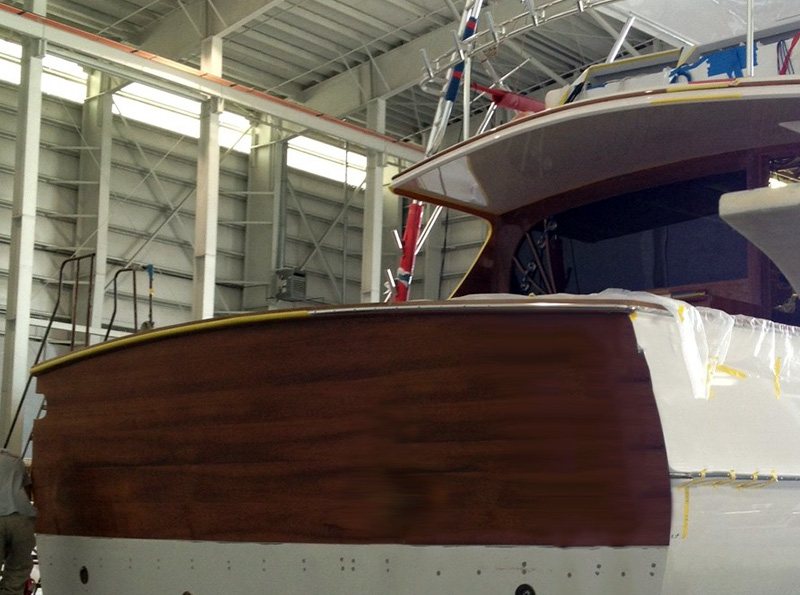
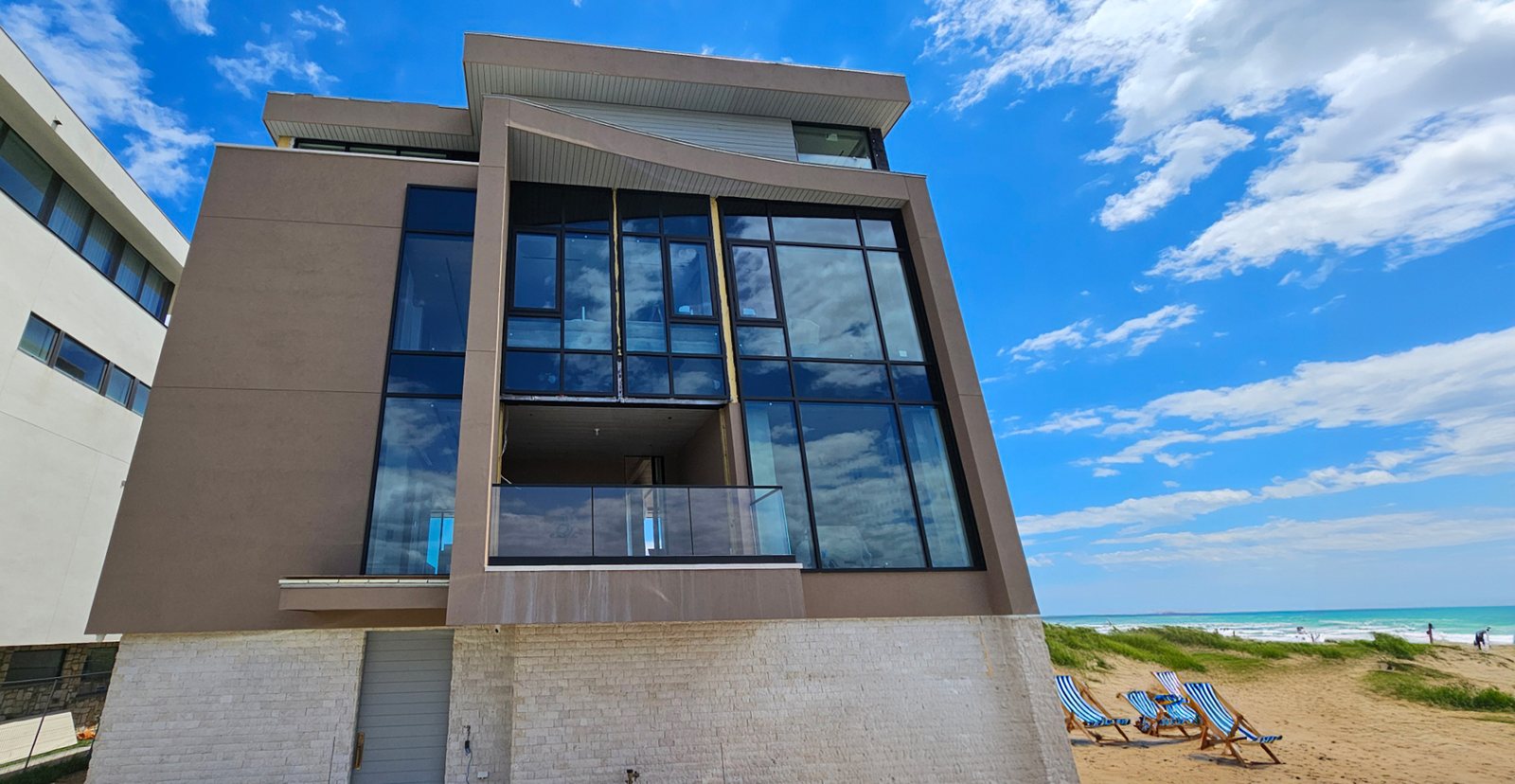
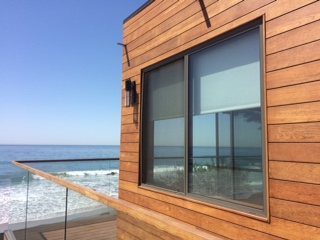
Salt does not dissolve a varnish film, but it holds water against the surface long after the rain has stopped, and that extended wet time is what takes a clear coat apart. Airborne chloride lands on every upward facing surface within a few miles of open water. Chloride is hygroscopic. On a humid night it pulls moisture out of the air and keeps a film damp for hours after an inland site would have dried out.
Ultraviolet light does the rest of the damage. UV degrades lignin in the first few cell layers directly under a transparent film, and once that layer has gone soft and powdery the coating has nothing sound left to grip. The failure is familiar on any coastal job. A finish that looks acceptable from the driveway lifts in sheets the moment a fingernail catches a corner. The Forest Products Laboratory has documented that weathering sequence across species for decades, and salt exposure accelerates every stage of it.
Wind carries the third mechanism. Sand and dried salt crystals driven against a south or west elevation abrade a film the way very fine sandpaper would. Gloss goes first, then the UV package, then the film itself. A gate on an exposed dune lot and the same gate 3 blocks inland behind a hedge are not the same maintenance problem.
Why Clear Coats Fail Before Paint Does
A clear coat has no pigment, so it passes most of the ultraviolet load down into the wood instead of stopping it at the surface. Pigment in paint is a physical block. Transparent films depend on dissolved UV absorbers and light stabilizers, which are consumed as they do their job. That supply is finite, and it runs out faster on a bright elevation facing open water.
So the real decision is not between a finish that lasts and one that does not. It is between a shorter maintenance interval with visible grain and a longer one without it. An architect who specifies a bright finished oceanfront entry and then expects paint intervals will be unhappy in year two.
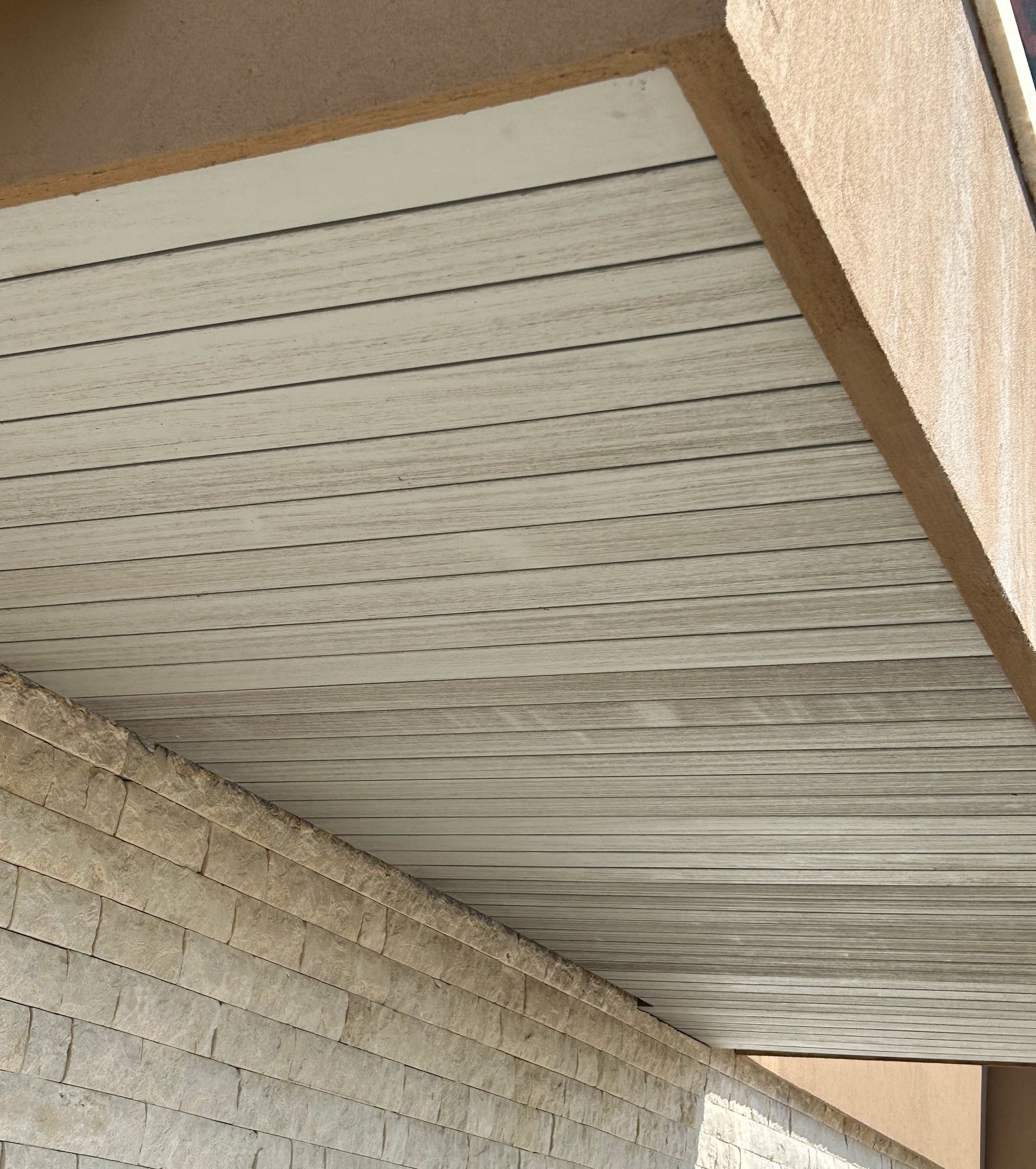
Detailing moves that number more than product selection does. A door set back under a deep covered entry, out of direct sun and driven rain, can hold a clear coat several times longer than the identical door on a flush wall with no overhang. Orientation, overhang depth and reflected light off water or light colored paving are all worth checking before anyone argues about brands. Rain control fundamentals apply to a finished wood assembly exactly as they apply to a wall.
Species That Carry a Coastal Clear Coat
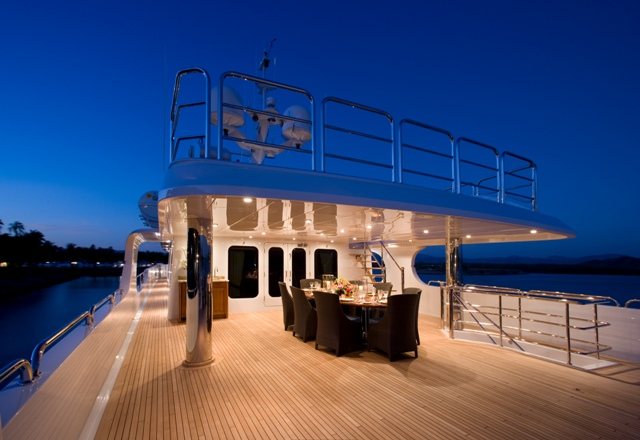
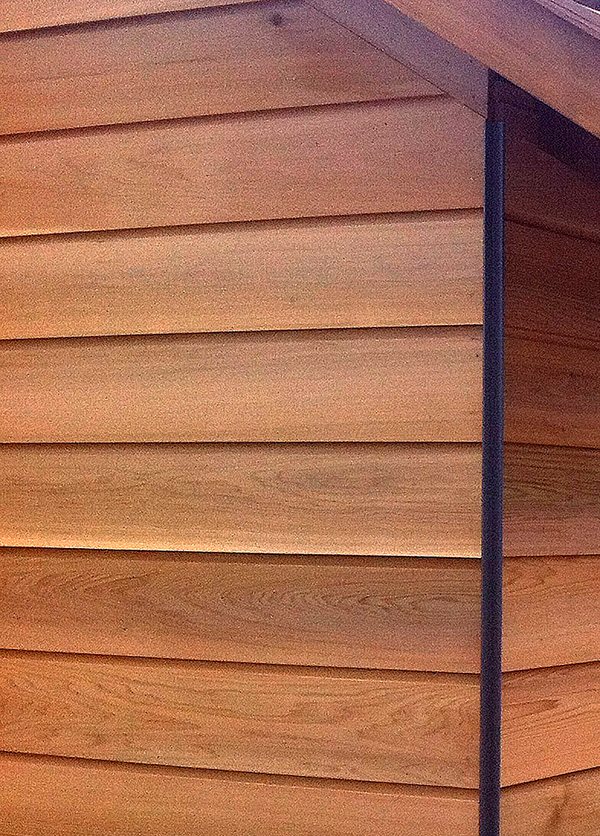
The millwork palette for bright finished exterior work near salt water is Sapele, Iroko, Afrormosia, Teak and Utile. Those five machine cleanly, glue predictably, come in sizes that suit doors, gates and rails, and carry enough natural durability to survive the stretches when a finish is past due.
Sapele is the everyday choice. Janka around 1,410 lbf, good dimensional behavior when it is quartersawn, and available in lengths and widths that let a door stile or a gate rail come out of one piece. Its interlocked grain gives the ribbon figure people want under a clear coat, and that same interlock is why quartersawn stock is the safer pick for any wide component.
Iroko earns its place on exposed exterior work. It is durable, it holds its shape, and it weathers to a settled tone if a clear coat is ever allowed to lapse. Afrormosia behaves like a tighter grained alternative to Teak and takes a bright finish well. Where a species on the CITES appendices is part of the package, documentation and chain of custody travel with the material, which matters on public and institutional work carrying sourcing language in the specification. The CITES appendices are the reference for what that covers.
Teak is the traditional marine answer and still the best performer of the group in standing salt spray. Its oil content is the catch. Surfaces have to be wiped with solvent and coated inside a short window, or the first coat will not bond. Utile rounds out the palette where larger sections and long clear lengths are needed and Sapele is not coming in the right size.
Ipe, botanical name Tabebuia spp, along with Cumaru, Garapa, Jatoba and Red Balau, sits on the decking side of the business for good reason. Those species are extremely hard and carry high oil content, which makes them difficult to glue and hard on knives. A millwork house reaches for Sapele, Iroko, Afrormosia, Teak or Utile instead whenever components have to be machined, glued into an assembly and held to a joint line. Deck with the decking species. Do not build a clear coated door out of them.
J. Gibson McIlvain holds over 7 million board feet of exotic and domestic lumber at its Maryland yard, which is what makes color and figure matching realistic on a clear coated package. Under paint nobody sees the lot. Under a clear coat, a rail pulled from a different shipment than the stiles beside it shows up from across the courtyard.
Moisture Content and Grain Orientation Come First
No clear coat survives on wood that was milled to the wrong moisture content for the exposure it is about to live in. Exterior millwork is milled to an in-service moisture content near 12 to 16 percent. Interior work runs near 6 to 8 percent. A coastal site sits at high relative humidity most of the year, so a piece milled dry and then hung outside will take on water, swell, and crack the film at every joint line before the second season.
J. Gibson McIlvain mills exterior components to that 12 to 16 percent range and interior components to 6 to 8 percent, and the distinction is recorded against the order rather than left to whoever unloads the truck. A coastal project that includes both an entry door and the interior trim on the other side of that opening is really two milling targets inside one package.
Grain orientation is the second control. Quartersawn and rift stock moves less across its width than plainsawn, which is why it gets specified where a panelized or clear coated surface has to stay flat. On a wide gate rail or a door panel, the choice between quartersawn and plainsawn is the difference between a hairline at the panel edge and an open crack that lets water behind the film.
Movement values by species are published and worth checking during design rather than after fabrication. The shrinkage figures for Sapele and its neighbors in the palette explain most of the joint failures that get blamed on the finish.
Coating Families and How They Behave Near the Water
Five coating families show up on coastal millwork, and they fail in five different ways, which is what should drive the choice. None of them is maintenance free on an exposed elevation. What separates them is how they fail and what recoating costs in labor.
Long oil marine varnish remains the reference for bright work because it fails gracefully. It dulls, then thins, and a maintenance coat goes on after a scuff sand. Two component polyurethane is harder and glossier and holds longer before it moves, but when it lets go it lets go at the substrate, and the repair is a strip back to bare wood.
Penetrating oils are the honest low commitment option. They never build a film, so they never peel, and they never protect for long either. Waterborne acrylic urethanes have improved a great deal and hold color well, though film build per coat is lower and the schedule runs longer. Coating exposure and weathering test methods are standardized through ASTM, which is the language most manufacturer data sheets are written in.
| Coating family | Behavior under UV and salt spray | Typical failure mode | Recoat work involved |
|---|---|---|---|
| Long oil marine varnish | Carries the heaviest UV absorber load of the group and stays flexible as the wood moves | Gradual loss of gloss, then film thinning at top edges first | Scuff sand and maintenance coat, no strip needed if caught on schedule |
| Two component polyurethane | Very hard film, strong abrasion and chloride resistance, less forgiving of wood movement | Adhesion loss under the film, then sheet peeling at corners and joints | Full strip to bare wood and a complete reapplication |
| Penetrating oil | Minimal UV protection, no film present to abrade away | Color fade and surface greying, no peeling | Clean and reapply, shortest interval of the group |
| Waterborne acrylic urethane | Good color retention and low yellowing, thinner build per coat | Erosion and dulling well before any adhesion loss | Clean, light abrade and recoat |
| Epoxy seal coat under a UV topcoat | Epoxy blocks moisture well and has no UV resistance of its own, so the topcoat carries all of it | Amber blush and chalking wherever the topcoat has worn through | Recoat the topcoat before breakthrough, or sand the epoxy and rebuild |
Epoxy Belongs Under the Finish, Not On Top
Clear epoxy is a sealer, a moisture barrier and a gap filler, and it is not a finish coat anywhere the sun reaches it. Unprotected epoxy ambers within months and chalks not long after. Marine practice is epoxy seal coats to stabilize the surface and block water, followed by several coats of a UV filtering varnish that everyone treats as the sacrificial layer.
That layering earns its keep on coastal millwork. Sealed end grain stops wicking, and an epoxy saturated bottom rail on a gate or a door is far less likely to go black at the joint. The maintenance coat then renews only the top film, and nobody has to fight their way back to bare wood.
Oily species complicate the bond. Teak and Iroko both want a solvent wipe immediately before the seal coat, and the epoxy formulation has to suit an oily substrate. Skip that step and the epoxy looks fine for a season, then delaminates in a sheet the following summer.
One boundary is worth stating plainly. J. Gibson McIlvain mills, builds and primes. Multi coat marine varnish schedules and epoxy sealing get applied by the finisher on the buyer's side, so the specification should name who owns that scope before the millwork ships. What the shop controls is everything the finish depends on, which is species, grain orientation, moisture content, joinery and profile.
End Grain and Edges Fail First
End grain absorbs water at many times the rate of a face, so every cut end on a coastal piece has to be sealed before the assembly ever sees weather. The bottom rail of a door, the lower rail of a gate, the ends of a pergola rafter tail and the top edge of a handrail are where coastal clear coats break down, and not one of those surfaces is something an owner ever looks at.
Field cuts are the common offender. A gate trimmed on site to suit a post that moved, then hung the same afternoon without sealing the fresh end, has a wick built into it. Anyone cutting finished millwork in the field needs the sealer sitting on the bench next to the saw.
Horizontal and upward facing surfaces deserve extra film build. Water sits on a flat top rail and salt concentrates there as it evaporates. Two additional coats on those surfaces buys more service life than any change of product would.
Back faces count too. Coating five faces and leaving the sixth open turns the piece into a one way moisture valve, and the wood cups toward the uncoated side. That behavior comes from how a piece is coated, ventilated and installed, not from the species on the invoice.
Where a Painted Assembly Beats Bright Work
On a fully exposed coastal elevation with no maintenance program behind it, a properly primed painted assembly outlasts any clear coat by a wide margin. That is not a concession. It is the honest recommendation for a beach house somebody visits twice a year.
For painted exterior trim, Sapele is the better choice over Genuine Mahogany. It holds paint better, it comes in a wider range of sizes, and it runs longer. Genuine Mahogany sits around 800 lbf on the Janka scale against roughly 1,410 lbf for Sapele, though the deciding factor here is coating performance and availability rather than hardness. Sapele is not milled 1x8 for exterior use, since that width is too wide to stay stable in service. Cupping on installed trim is driven by installation detail and back ventilation, not by species.
J. Gibson McIlvain primes in three levels, in both oil based and water based systems, and exterior primed trim carries a fungicide additive, which matters on a humid coastal site where mildew pressure never really drops. Open-grained and oily species absorb a great deal of finish, so a primer coat evens out the eventual painted surface. Sanding or buffing after priming knocks back grain raising while keeping the moulded detail crisp, and that step is the difference between a sharp bead and a soft one after two coats of topcoat.
Modified woods belong in this conversation as well. Accoya runs about 1,600 lbf, and its acetylation gives dramatically reduced shrinkage and swelling, which is why it holds a coating so well on exposed work. Accoya, Thermory and Abodo Vulcan all top out around 16 ft, with most sold on metric lengths just under 16 ft because of kiln size. Thermally modified Ash is not available wider than 8 inches, so wide boards in a modified product mean Accoya or Abodo Vulcan. Coating guidance from Accoya and Thermory is specific about what each product accepts.
There are no warranties on solid unmodified wood. It is not possible to warranty an organic material that responds to its environment. Warranties exist on the modified products, so a coastal specification that needs a written performance backstop has to go that direction rather than hoping a clear coated tropical hardwood will carry one.
Coastal Pieces Built as True Custom Work
ICD, the architectural millwork division of J. Gibson McIlvain, builds the coastal pieces that get clear coated, planned around the actual opening rather than pulled from a catalog. Gates, custom doors, shutters, railings, benches, pergolas, rafter tails, box beams and radius trimwork all turn up on waterfront projects, and each one has a different relationship with the finish.
Gates take the hardest exposure. ICD builds pedestrian, garden, courtyard and estate entry gates, plus large driveway swing gates, and the large swing gates require engineering rather than only craftsmanship because of size and weight. A heavy bright finished swing gate on a salt exposed lot is a maintenance commitment, and it should be discussed with the owner in writing before it is built.
Shutters are the other coastal staple. ICD builds louver and panel styles, including complete historical matching for both style and species, which is what a historic waterfront district needs when the board requires like for like replacement. Louvers are a finisher's headache under a clear coat, since every blade carries two faces and two edges, and the count adds up fast across a full elevation. Preservation guidance from the National Park Service is the standard reference for matching historic exterior woodwork.
Box beams come with a real joinery decision. Butt joints give the most minimal profile, the fastest turnaround and the easiest on site assembly, and they leave visible seams and visible end grain, and they are the weakest option. Dado joints are strong and still go together easily on site, though seams and end grain still show. Lock miter joints show no visible seams and are the strongest, which is the right call on any beam carrying a clear coat where every seam is on display.
"I tell architects to pick the maintenance interval before they pick the finish. A bright gate on an oceanfront lot is a commitment, and if nobody is going to be up on a ladder every 18 months, we should be talking about a painted assembly instead. The species and the joinery we can solve. The ladder is on the owner."
Norm Moton, Director of Sales, J. Gibson McIlvain
The Interval the Owner Is Signing Up For
A clear coat on exposed coastal millwork wants attention on a schedule measured in months, not decades. The maintenance coat is cheap in labor if it goes on while the existing film is still intact. It becomes an entirely different job once the film has broken and water has gotten under it.
Gloss is the useful trigger, not failure. When a surface stops reflecting sharply and starts to look hazy, the UV package is spent and the film is thinning. Scuff sand and recoat at that point and the assembly never goes back to bare wood.
Write the exposure zones into the specification. A gate in full southern sun facing the water, a door under an 8 ft overhang, and interior side trim are three separate schedules, and treating them as one is how the most exposed element gets neglected. Cataloguing them at handover gives the owner or the property manager something to actually follow.
Record the finish system as built. Product, number of coats and date are all it takes, and that record is what lets a future maintenance coat stay compatible with what is already on the wood. Putting an incompatible topcoat over an unknown film is how a simple recoat turns into a strip.
How J. Gibson McIlvain Would Specify This
Specify the species and the exposure first, the joinery second, the moisture content third, and let the clear coat be the last decision rather than the first. A coastal bright finished package specified in that order rarely disappoints. One specified finish first almost always does.
Start with the palette. Sapele, Iroko, Afrormosia, Teak or Utile, quartersawn or rift for any wide or panelized component. J. Gibson McIlvain pulls a clear coated package from matched material wherever grain and color have to agree, which under a transparent film is the difference between an assembly that reads as one piece of work and one that reads as parts.
Set the moisture content against the exposure. Exterior components at 12 to 16 percent, interior components at 6 to 8 percent, called out per item rather than per project. Seal every cut end, coat all six faces, and add film build on horizontal surfaces.
Choose joinery for the finish you intend to apply. Lock miter box beams where seams would show under a clear coat, and engineered construction on any large swing gate. ICD builds that work as true custom millwork planned around the space, and the exterior millwork and custom door and window pages show the range. Linear trimwork, finished cladding and primed trim come from the J. Gibson McIlvain millwork service on the same order.
Protect the surface in transit. J. Gibson McIlvain runs its own fleet of trucks and keeps a section of the mill dedicated to packaging, and it ships nationwide, regularly to California, which keeps a finish ready surface from arriving with handling marks that have to be sanded out before the first coat. Storage of finished millwork is available where a site is not ready to receive it.
Standards references help on institutional work. The quality standards published by the Architectural Woodwork Institute are what most specifications cite for millwork grade and tolerance, and American Wood Council codes and standards cover the structural side where a pergola or a gate frame needs it.
To specify a coastal clear coated millwork package, or to work out whether bright work or a primed painted assembly is the right call for a particular elevation, call J. Gibson McIlvain at 800-638-9100 and ask for the millwork group.
Frequently Asked Questions
How often does a clear coat on an oceanfront door or gate need a maintenance coat?
Watch gloss rather than waiting for visible failure. On a fully exposed elevation facing open water, a bright finish usually starts going hazy inside the first couple of seasons, and that haze is the signal that the UV absorbers are spent and the film is thinning. Recoat at that point and the job is a scuff sand plus a fresh coat. Let it break and water gets under the film, and the next job is a strip back to bare wood. A door set well back under a deep overhang can run several times longer than the same door on a flush wall with no protection.
Can epoxy be used as the finish coat on an exterior door or gate?
No. Clear epoxy has essentially no ultraviolet resistance on its own. Left exposed, it ambers within months and chalks soon after. Epoxy belongs underneath as a seal coat and a moisture barrier, especially on end grain and bottom rails, with a UV filtering varnish over it acting as the sacrificial layer. On Teak and Iroko the surface needs a solvent wipe immediately before the seal coat and an epoxy formulated for oily substrates, or the bond gives way in the second year.
Does a clear coat hold as well on Sapele as it does on Teak near the ocean?
Teak still performs best of the millwork palette in standing salt spray, largely due to its natural oils and stability, and it is also the fussiest to coat because those oils have to be wiped back first. Sapele is the practical everyday choice at roughly 1,410 lbf, and quartersawn Sapele holds a film well because it moves less across its width. Iroko, Afrormosia and Utile all take bright finishes. The gap between species matters far less than moisture content, grain orientation, sealed end grain and the recoat interval.
Is there a warranty on a clear coated exterior wood gate?
Not on solid unmodified wood. It is not possible to warranty an organic material that responds to its environment, and no finish schedule changes that. Warranties exist on the modified products. Accoya, Thermory and Abodo Vulcan all top out around 16 ft, with most sold on metric lengths just under 16 ft because of kiln size, and thermally modified Ash is not available wider than 8 inches, so wide boards in a modified product mean Accoya or Abodo Vulcan. A specification that needs a written performance backstop has to go that direction.
Should coastal shutters be clear coated or painted?
Painted, in most cases. Louvers multiply the surface area enormously, since every blade has two faces and two edges, and recoating a full elevation of louvered shutters by hand is a serious job. A primed painted assembly also blocks ultraviolet light at the surface rather than passing it into the wood. J. Gibson McIlvain primes in three levels in oil based and water based systems, with a fungicide additive on exterior primed work, which is useful on a humid coastal site. Where a historic district requires a bright finish for style matching, ICD builds louver and panel shutters with complete historical matching for both style and species.
What moisture content should coastal millwork be milled to before finishing?
Exterior work is milled to an in-service moisture content near 12 to 16 percent and interior work near 6 to 8 percent. Coastal sites sit at high relative humidity most of the year, so a component milled to interior numbers and then hung outdoors takes on water, swells and cracks the film at the joints. Call the target out per item rather than per project, since a single coastal package frequently includes an exterior door and the interior trim on the other side of the same opening.
Does J. Gibson McIlvain apply the marine varnish schedule?
The shop mills, builds and primes. Priming comes in three levels in oil based or water based systems, with a fungicide additive on exterior work. Multi coat marine varnish schedules and epoxy sealing are applied by the finisher on the buyer's side, so the specification should name who owns that scope before the millwork ships. Everything the finish depends on is controlled at the shop, which is species selection, grain orientation, moisture content, joinery and profile. Call 800-638-9100 to work through a coastal package.
Sources and Standards Referenced
- USDA Forest Service Forest Products Laboratory
- Building Science Digest 013: Rain Control in Buildings
- CITES Appendices I, II and III
- The Wood Database: Sapele
- National Park Service Preservation Briefs
- Architectural Woodwork Institute
- American Wood Council Codes and Standards
- Accoya Modified Wood
- Thermory Thermally Modified Wood
- ASTM International