What Buying Teak by the Lot Means
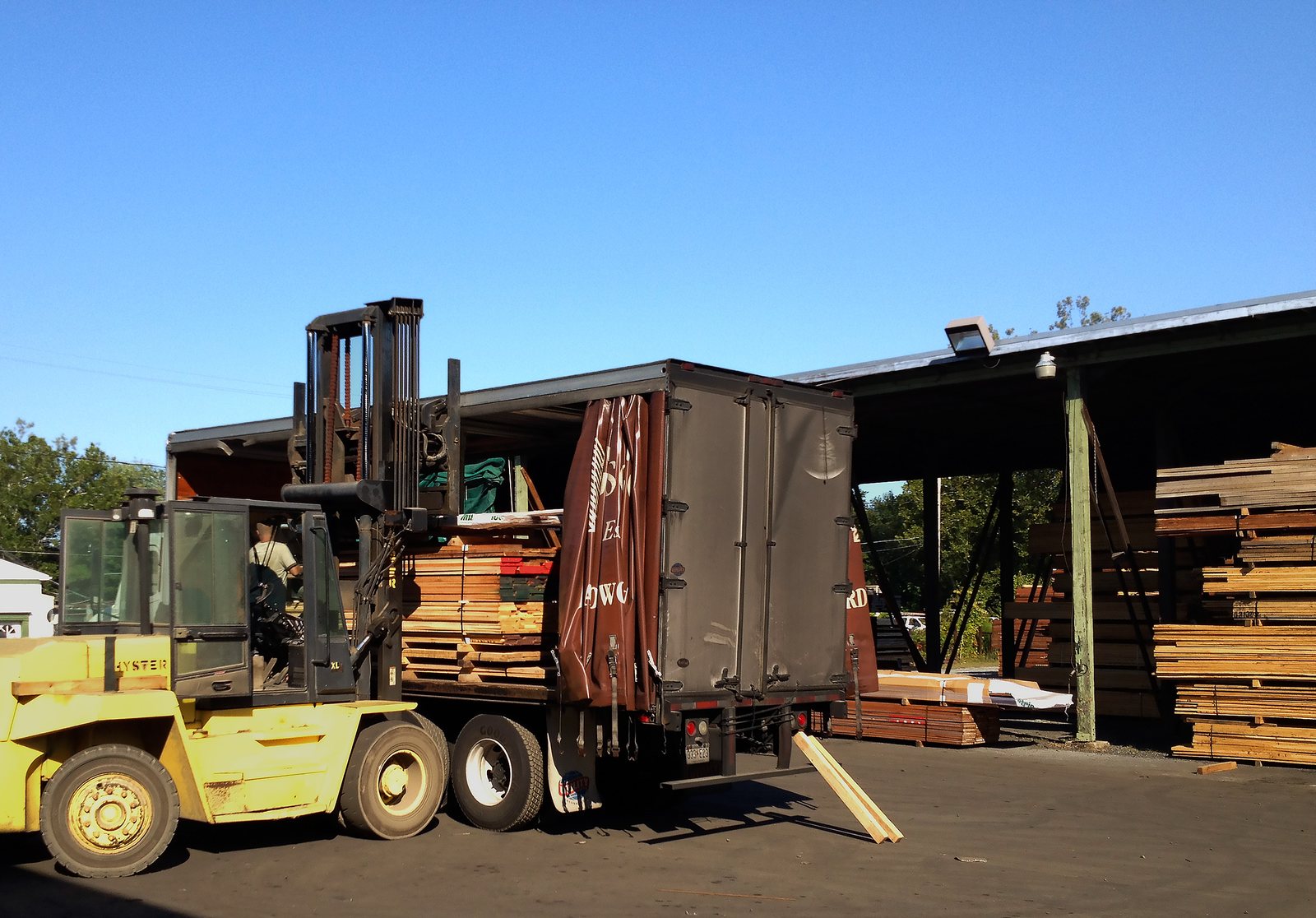
A lot is teak that shares an origin, a sawing run and a color range, and on a large teak job it is the only reliable way to make the finished work read as one job. Teak is not a commodity the way Red Oak is. Two orders of the same species, the same grade description and the same thickness can land three weeks apart and look like two different woods, because they came off different logs, grown in different places, cut at different ages.
The trade vocabulary matters once quantities get real. A pack, also called a lift or a bundle, is the strapped unit the mill builds and ships. A lot is one or more packs that share a provenance and moved through the yard together. A tally is the measured board footage inside the pack, and whether that tally is gross or net changes what actually comes off the truck.
Commercial buyers get burned by splitting a large requirement into tranches. A hospitality project needs 6,000 board feet of 4/4 teak across eleven months, purchasing buys a third at a time to manage cash flow, and the second and third thirds arrive from a different source with a different color cast. Nobody sees the problem until phase three trim stands next to phase one trim under the same lights. That is not a grading failure. Every board can be exactly what the paperwork promised and the wall can still look wrong, which is the part of the problem grade rules were never written to solve.
Why Teak Varies From Pack to Pack
Teak's reputation was built on slow grown old stock, and most of the teak moving through the market now is plantation grown, which changes ring width, density, sapwood proportion and color. Plantation material is harvested younger. Younger trees put on wider growth rings, carry a higher proportion of pale sapwood, and run lighter in both color and weight than the dense, tight ringed stock that built teak's name.
Color is the variable that gets noticed. Fresh teak runs from straw gold to a mid brown with an olive cast, it ambers under light exposure over the first months in service, and left untreated outdoors it weathers to silver grey. A lot that leaves the yard matched will stay matched through that whole progression. Boards from two sources will not, because they started from different baselines and darken at different rates.
Density and figure track with ring width. Tighter ringed teak machines to a crisper edge and holds a tighter radius without crumbling, while fast grown stock is softer under the cutter and fuzzes more on cross grain cuts. Both can be perfectly sound. They do not behave identically at the moulder, and a shop that bid the work on one of them does not want the other showing up in phase two.
Teak's hardness, specific gravity and shrinkage figures are published and worth reading before a species decision gets locked. The Wood Database entry for teak carries the mechanical numbers, and the USDA Forest Products Laboratory publishes the Wood Handbook data behind most of what the trade quotes. Set them against the domestic species a buyer already knows. White Oak comes in around 1,360 lbf on the Janka scale, Red Oak around 1,290 lbf, Black Walnut around 1,010 lbf. Teak was never specified for hardness.
Grading Imported Teak Against NHLA Expectations
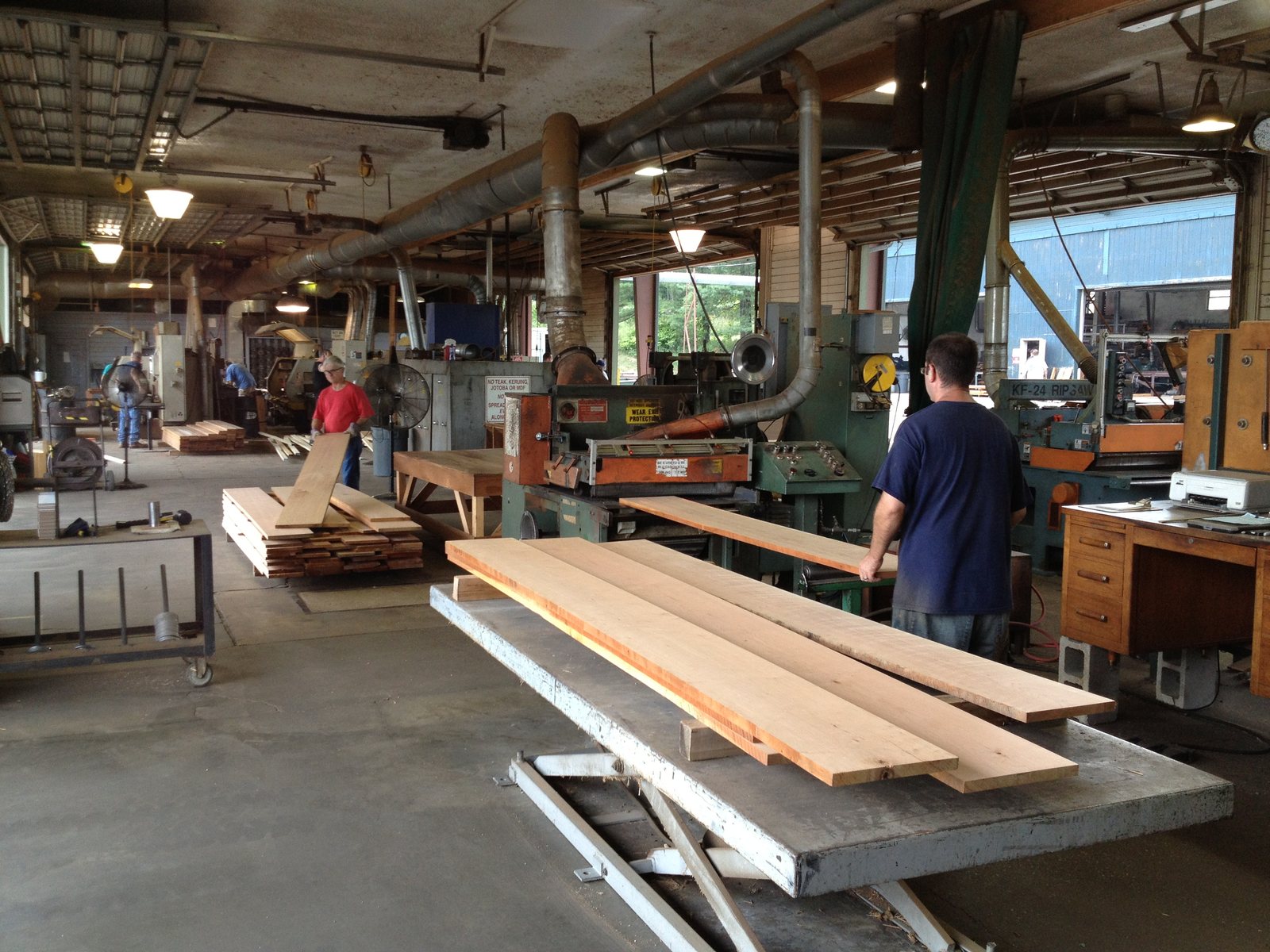
North American hardwood grading runs on National Hardwood Lumber Association rules, imported teak does not arrive under them, and a commercial teak order has to state in measurable terms what a domestic grade letter would have carried. The NHLA rule book grades a board by the yield of clear face cuttings it will produce, not by how handsome the face looks.
Those thresholds are worth holding as a reference point. FAS is the top grade and requires a minimum board of 6 inches wide by 8 ft long yielding 83 and 1/3 percent clear face cuttings. FAS One Face, written F1F, meets FAS on the better face. Selects meet FAS on the better face at a smaller minimum size. No. 1 Common requires 66 and 2/3 percent off a minimum board of 3 inches by 4 ft, and No. 2A Common requires 50 percent.
Grade describes yield, not character. A No. 1 Common board is not a defective board. It yields smaller clear cuttings, which makes it the economical choice for short parts and the wrong choice for long clear runs, and that single distinction is the most useful thing a purchasing agent can carry into a lumber conversation.
Imported teak is frequently offered as FEQ, first European quality. The term has a long history in the trade and no rule book behind it comparable to the NHLA book, so it describes the seller's intent rather than a measured outcome. Treat it as a starting point, then write the order around numbers. Minimum width, minimum length, the share of the lot that has to hit the long end, allowable sapwood on a show face, and whether pin knots or small checks are acceptable on the back.
Thickness, Width and Length Realities
Teak is quoted in quarters of rough thickness, and the hard part of a commercial order is rarely the board footage, it is pulling long clear lengths and wide widths out of one lot. 4/4 is nominal 1 inch rough, 8/4 is 2 inches, 16/4 is 4 inches. Surfaced dimensions come off those rough numbers, so a 4/4 order that has to finish at 13/16 after facing and sanding needs that stated before anything gets milled.
Length and width are where a tally can be technically correct and practically useless. A buyer orders 4,000 board feet and receives 4,000 board feet, most of it between 6 ft and 9 ft, and the door stiles on the drawing need 10 ft clear. The footage balanced. The job did not.
J. Gibson McIlvain holds over seven million board feet of exotic and domestic lumber at its Maryland yard, which is what makes it possible to pull the long and wide end of a teak requirement out of one lot instead of assembling it across three shipments. Depth of inventory is the whole mechanism behind lot consistency. A seller working off a single container cannot hold back the short material and still fill the order.
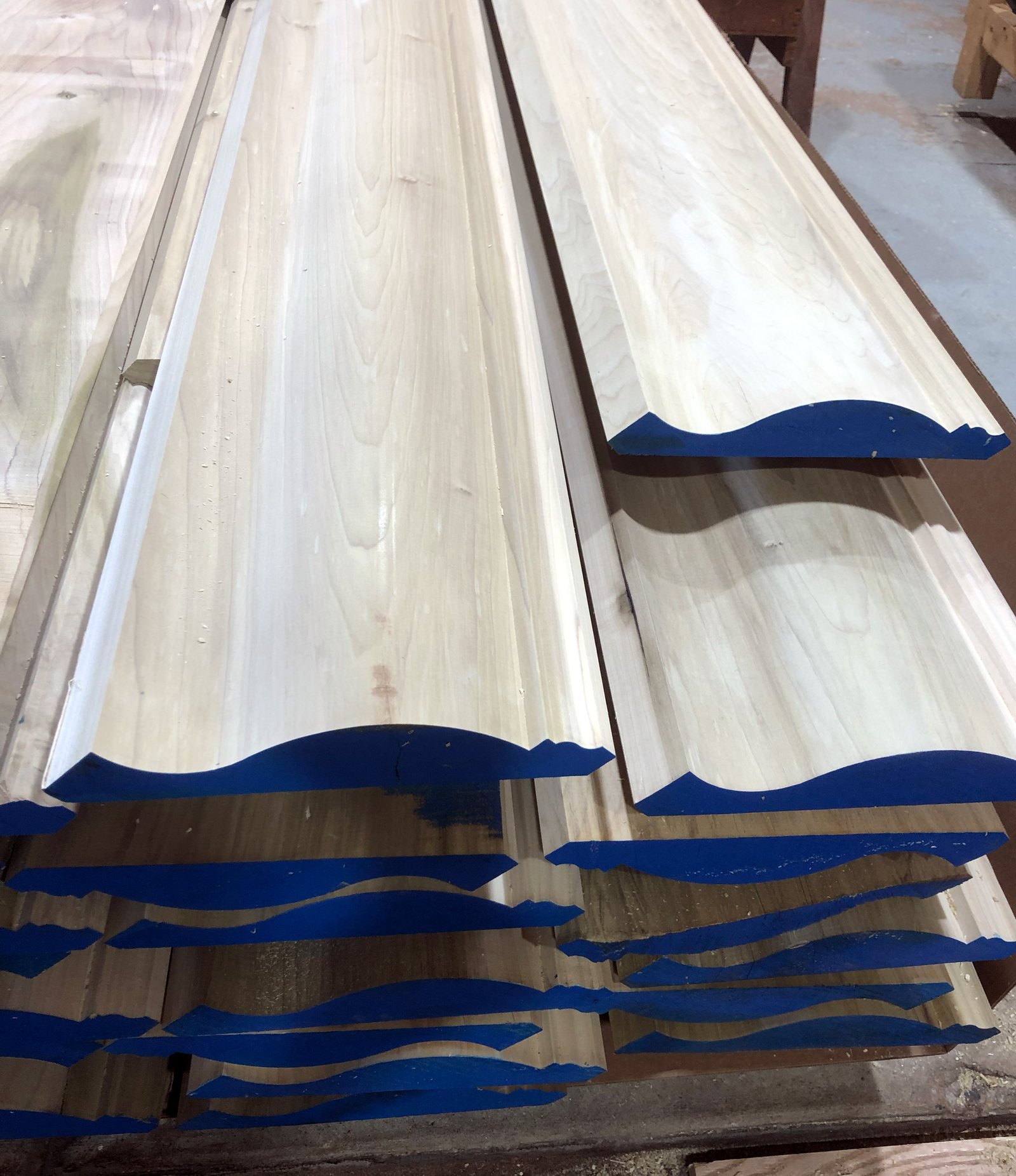
Thicker stock deserves its own line on the order. Resawing 8/4 teak into two thinner pieces yields matched faces off one board, which is useful for paired panels and for door and window components that have to behave the same way. J. Gibson McIlvain resaws teak on band resaws and rips it to width on straight line and gang rip saws, and those millwork services run out of a shop on site at the lumber yard. ICD, the company's architectural millwork division, builds the true custom work planned around a specific space, including custom doors and windows where teak earns its place.
Moisture Content at Delivery and in Service
Interior teak millwork wants an in service moisture content near 6 to 8 percent, exterior work near 12 to 16 percent, and air dried import stock is not a substitute where an interior tolerance governs. Air dried material settles toward the local equilibrium wherever it happened to be stacked, which may be nowhere near the equilibrium of a conditioned building in a dry winter.
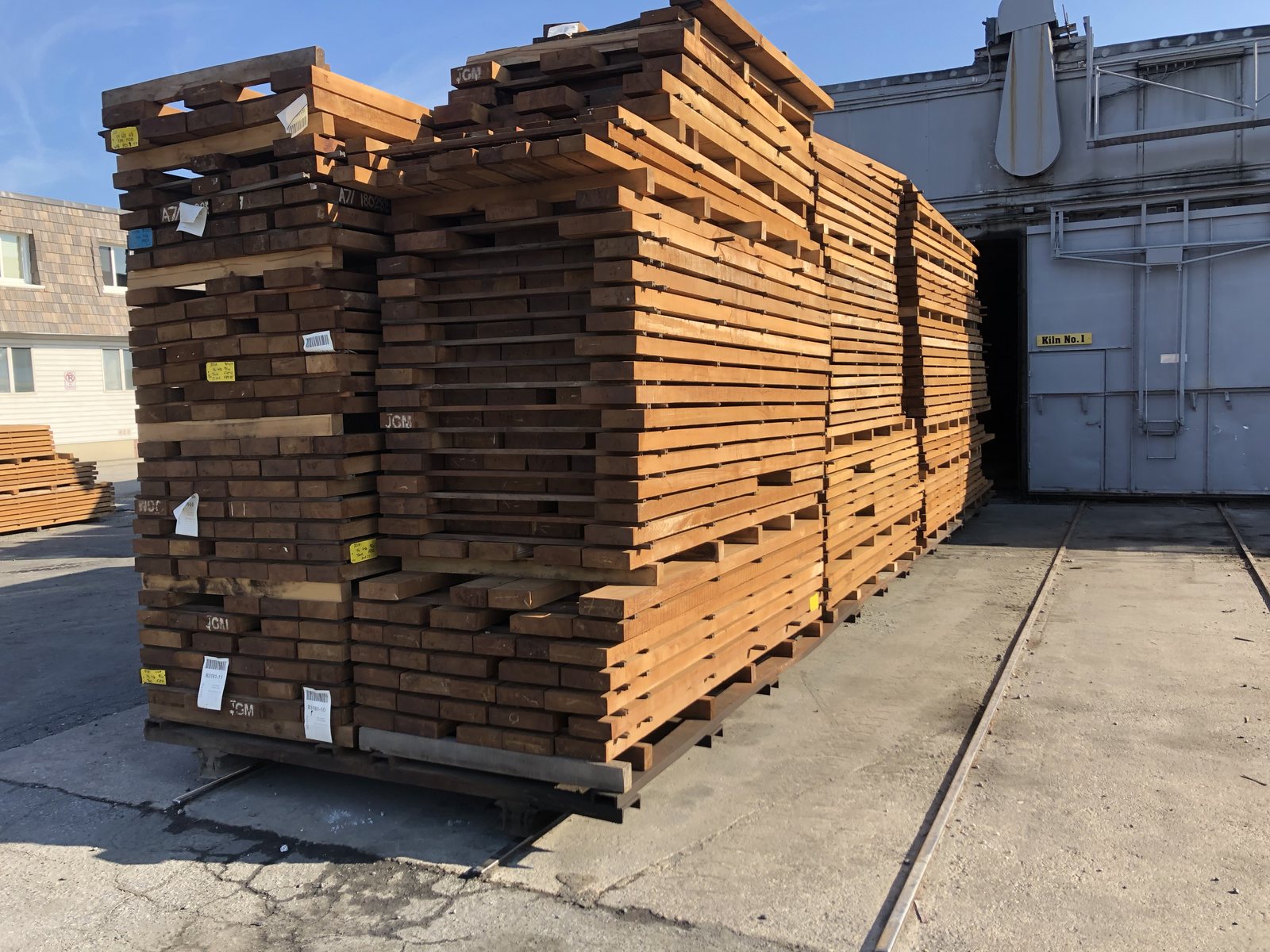
J. Gibson McIlvain kiln dries teak to the range the end use calls for and records the target on the order, so a shop receiving the pack knows what it is cutting rather than guessing from the look of the end grain. That number belongs on the purchase order beside the thickness, not in a phone conversation nobody wrote down.
Equilibrium moisture content is a function of temperature and relative humidity, and the published tables are the right reference rather than regional folklore. Building Science Corporation covers the enclosure side of the same question, and the standard test methods for measuring moisture in wood are published through ASTM. Meter readings taken on arrival cost nothing and settle arguments later.
Receiving belongs to the buyer's shop. Stickered stacks with air on every face, a few days in the space where the material will be machined, and meter readings before anybody breaks down a pack. A teak order that arrives at the right moisture content and then sits strapped on a damp slab for two weeks is no longer at the right moisture content.
Release Schedules and Who Holds the Balance
On a phased job the real question is not whether the teak exists, it is who carries it between phases. A lot reserved on paper and left sitting in general inventory gets sold down. The long boards go first, because every other buyer wants them too, and the balance that comes back to the original job is the short and narrow end of what was once a matched lot.
J. Gibson McIlvain stores finished material for inventory control, which is what makes a staged release work in practice. The lot gets pulled, identified against the job, and released against the phase dates instead of against whoever calls first. Purchasing keeps its cash flow. The shop still gets phase four out of the same logs as phase one.
Write the schedule into the order. Reserved quantity, approximate release dates, who holds the balance, and what happens if the general contractor slides the schedule by two months, which the general contractor will. That last clause is the one buyers forget and the one that decides whether a matched lot survives the job.
"The teak orders that go smoothly are the ones where the buyer tells me up front how much of it has to come out long and clear. I can build a lot around that number. Once a pack is broken and sold down, I cannot put those lengths back."
Norm Moton, Director of Sales, J. Gibson McIlvain
Delivery is part of the same conversation. J. Gibson McIlvain ships nationwide and runs to California regularly, so a staged release is a scheduling exercise rather than a geography problem. A buyer in Los Angeles reserving a lot held in Maryland is doing something ordinary, and the release dates matter more than the mileage.
| Order attribute | What to put on the purchase order | What goes wrong if it is left open |
|---|---|---|
| Species and origin | Teak, Tectona grandis, with country of origin stated | A substitute species arrives under a trade name that sounds like teak |
| Grade basis | Minimum width, minimum length, expected clear face yield, allowable sapwood | The seller's own grade description governs and yield lands under the parts list |
| Rough thickness | Quarters, 4/4 through 16/4, plus the target surfaced dimension | Stock will not reach the finished section after facing and sanding |
| Length and width spread | The share of the lot required at the long and wide end | The tally is correct and the long clear runs are not in it |
| Moisture content | 6 to 8 percent interior, 12 to 16 percent exterior, measured at shipment | Air dried stock keeps moving after it is installed in a conditioned space |
| Grain orientation | Quartersawn or rift where flatness governs the detail | Plainsawn stock cups in a wide panel or a decking strip |
| Tally basis | Gross or net, and the unit, board feet or cubic meters | Delivered footage reads short against the invoice |
| Release schedule | Reserved quantity, phase dates, and who stores the balance | The balance of the lot sells to another buyer between phases |
The Documentation That Travels With Imported Teak
On an imported species the paperwork is part of the material, and a commercial teak order that arrives without it becomes a problem at the submittal review. Specifications on institutional and public work increasingly name a sourcing requirement, and satisfying one after the fact is not possible. The chain has to be intact from the point of harvest forward.
J. Gibson McIlvain is an FSC certified importer and miller, so chain of custody documentation travels with the material rather than being reconstructed from invoices. The Forest Stewardship Council publishes the certification structure and explains what a claim on a shipment actually covers, which is the thing to read before a spec writer leans on a single sentence about certified wood.
Ask for the full set on a commercial teak order. Botanical name, country of origin, the grade basis the seller is working to, the tally with its gross or net basis stated, the moisture content at shipment, and the certification claim where the specification requires one. Imported material is sometimes measured in cubic meters, and one cubic meter runs about 424 board feet, so a conversion error in the purchase order is an easy way to end up badly short.
Keep a record of the lot on the buyer's side as well. Pack numbers, a color reference, and which phase drew from which pack. When phase four comes back around eight months later, that record is the difference between matching the original and guessing at it.
Quartersawn Teak Where Flatness Governs
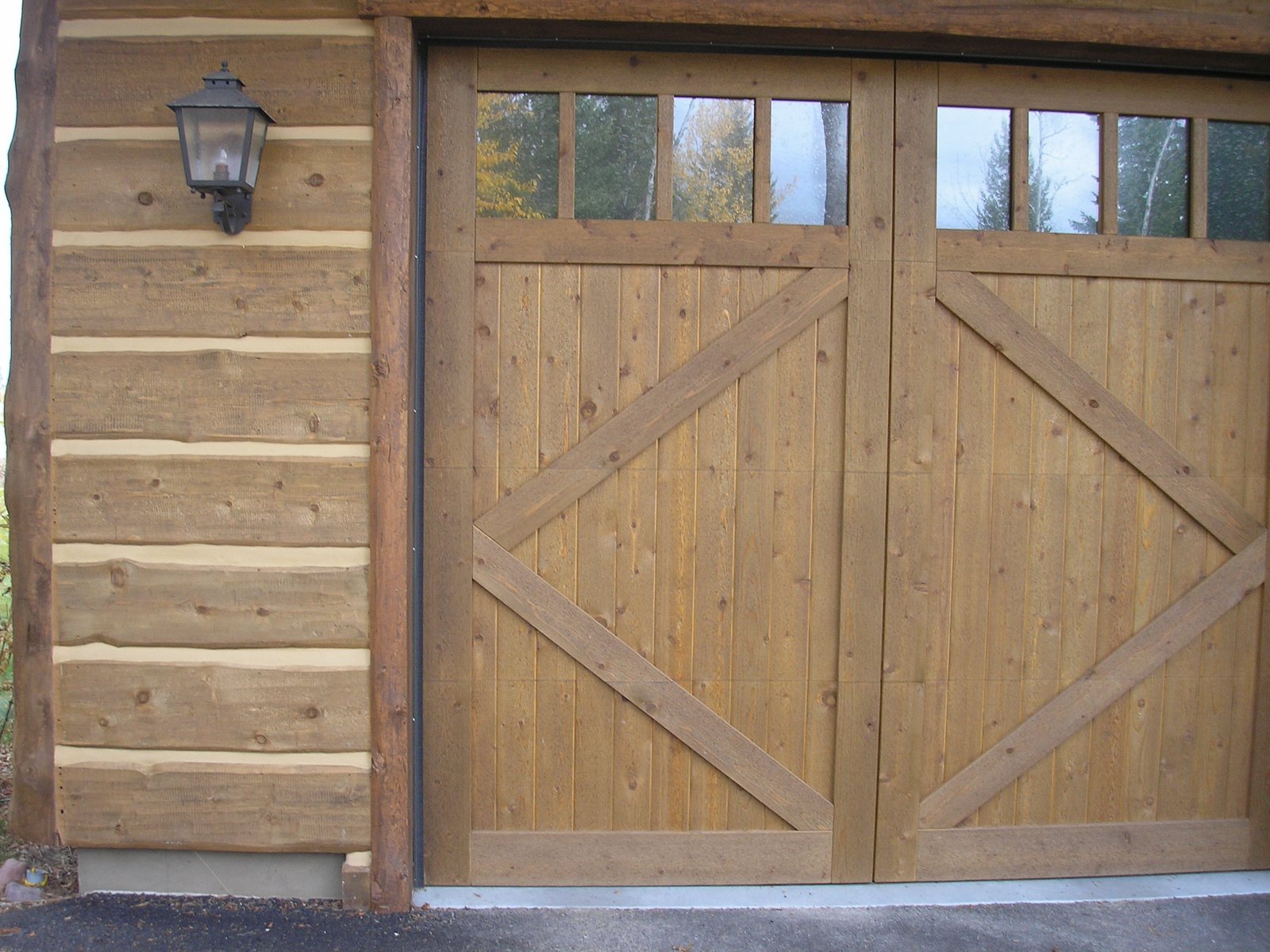
Quartersawn and rift teak moves less across its width than plainsawn, which is why marine decking, exterior door panels and wide panelized surfaces get specified that way. The growth rings run close to perpendicular to the face, so seasonal movement expresses mostly in thickness rather than in width, and a wide member stays flatter through a humidity swing.
Marine decking is the strictest teak specification in the trade. Narrow vertical grain strips, no sapwood, no knots, consistent color across the whole deck, and a straight run of grain so the surface wears evenly underfoot rather than developing ridges where the softer earlywood gives up first. Pulling that out of a mixed lot does not work. It comes out of material selected for it when the lot was built.
The same logic travels indoors. A teak panel 16 inches wide in a plainsawn cut will cup against its growth rings when one face sees conditioned air and the other sees a cold exterior wall. Specify quartersawn, keep the panel floating in its frame, and the detail survives. Cupping on an installed board is driven by the installation and by back ventilation far more than by the species.
What Teak's Oil and Silica Change in the Shop
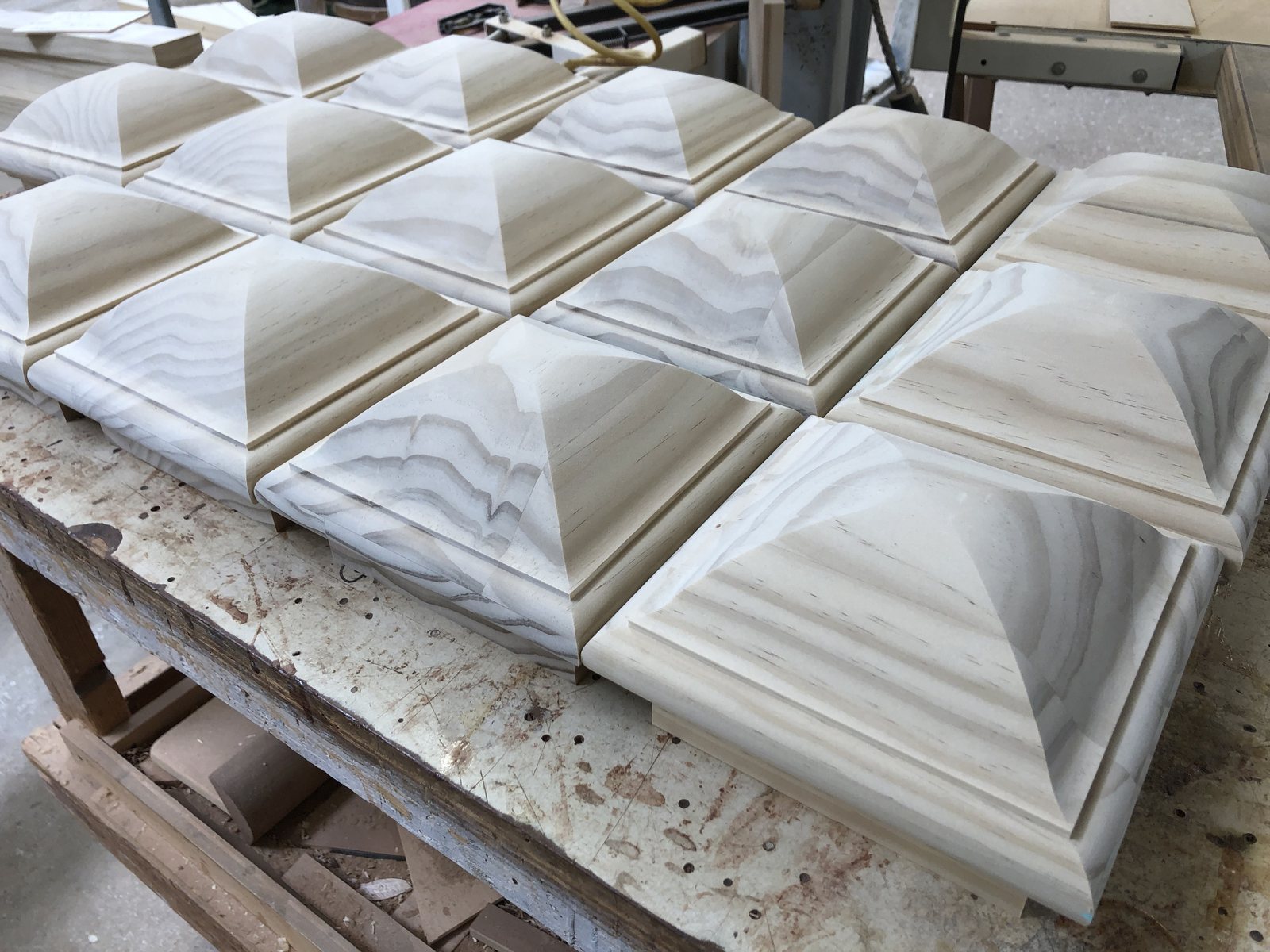
Teak machines to a beautiful surface and glues badly if a shop treats it like oak. Teak carries natural extractives and some silica, the silica dulls cutting edges faster than a domestic hardwood of similar density, and the oils sit right at the surface where adhesives and coatings need to make contact.
Carbide tooling, sharp edges and a willingness to resharpen sooner than the schedule says are the practical answers on the machining side. Feed rates that work in White Oak will burnish teak and leave a polished surface that fights the next operation. A shop running a long teak order should expect to pull and sharpen more often than it budgeted.
Glue-up is the step that punishes shortcuts. Freshly machined faces, assembly soon after machining rather than a week later, a solvent wipe where a face has been sitting, and an adhesive the manufacturer rates for oily tropical hardwoods. Teak remains a far more cooperative glue partner than the tropical decking species, which is part of why it sits in the millwork palette and they do not.
Standards for joinery, panel construction and tolerance are published rather than improvised. The Architectural Woodwork Institute maintains the standards most architectural specifications reference, and the Wood Moulding and Millwork Producers Association publishes the dimensional conventions behind standard trim. Citing a grade of work in the specification settles more arguments than any amount of descriptive language.
When Another Species Serves the Job Better
Teak is one of five species in the millwork palette, and on a large share of jobs Sapele, Iroko, Afrormosia or Utile is the better call. Utile is sold as Sipo. Iroko and Afrormosia both stand in for teak on exterior work with comparable stability and far easier availability in quantity, which on a phased commercial order is the deciding factor more often than any mechanical property.
For painted exterior trim, Sapele is the preferred choice over Genuine Mahogany. It holds paint better, and it comes in a wider range of sizes and longer lengths. Sapele runs about 1,410 lbf on the Janka scale against roughly 800 lbf for Genuine Mahogany. Sapele is not milled 1x8 for exterior use, too wide to stay stable in that application.
Where a painted exterior assembly needs dimensional stability beyond what any unmodified species will give, Accoya is the move. Acetylation gives dramatically reduced shrinkage and swelling, and Accoya comes in around 1,600 lbf. Thermory and Abodo Vulcan are both carried for thermally modified work. Every one of the modified products tops out around 16 ft, most sold on metric lengths just under 16 ft, which is a kiln size limit rather than a stocking decision, and thermally modified Ash is not available wider than 8 inches. A wide board in a modified product means Accoya or Abodo Vulcan. Published technical data sits with Accoya and Thermory.
Warranties follow that same line. Modified products carry them. Solid unmodified wood does not and cannot, because it is an organic material responding to its environment, and a specification demanding a warranty on solid teak is asking for something nobody can issue. Cedar deserves a mention on the exterior side, where the grade call matters more than the species call. CVG, clear vertical grain, and STK, select tight knot, are two different products for two different purposes, and getting that call right does more for the result than swapping species.
The tropical decking species are a separate conversation. Ipe, correctly Tabebuia spp, along with Cumaru, Garapa, Jatoba and Red Balau, are extremely hard and carry high oil content, which makes them difficult to glue and slow to machine. They belong on a deck. A millwork shop reaches for Sapele, Iroko, Afrormosia, Teak or Utile when components have to be milled, glued and assembled, and that is a working decision rather than a preference.
How J. Gibson McIlvain Would Specify This
Write the teak order around the hardest parts first, reserve the whole lot before the first phase ships, and put the release schedule in writing. Start from the parts list rather than from a board footage estimate. Identify the longest clear member and the widest member on the drawings, state what share of the lot has to satisfy them, and let the rest of the tally fall out of that.
Name the species as Teak, Tectona grandis, with country of origin stated, and name the certification claim if the specification carries one. State rough thickness in quarters with the target surfaced dimension beside it. State the moisture content, 6 to 8 percent for interior work and 12 to 16 percent for exterior. Call out quartersawn or rift where a wide panel or a decking strip has to stay flat, and say plainly what sapwood is acceptable on a show face.
Then settle the schedule. Reserved quantity, phase dates, who holds the balance, and what happens when the dates move. Receiving, acclimation, machining and installation sit with the buyer's own shop and installer, so the order should be written such that the shop opens a pack and finds exactly what it bid.
J. Gibson McIlvain mills teak to the moisture content and section the job calls for, resaws and rips it out of one matched lot, and releases it against the phase dates the buyer sets. To put a commercial teak requirement together, including the long and wide material that is hardest to assemble, call 800-638-9100 or reach the J. Gibson McIlvain millwork and lumber team and bring the parts list rather than the footage.
Frequently Asked Questions
Where can I buy teak lumber in commercial quantities?
Buy it from an importer and miller deep enough in the species to reserve a matched lot rather than fill the order out of whatever container landed most recently. J. Gibson McIlvain sells teak in commercial volume, kiln dries it to the range the end use requires, resaws and rips it out of one lot, and releases it against the phase dates a buyer sets. Bring the parts list rather than a board footage estimate, since the long clear members and the wide members are what decide whether a lot can fill the job. Call 800-638-9100 to start that conversation.
Is plantation grown teak as good as old growth teak?
It is sound material, but it is not the same material. Plantation teak is harvested younger, so it carries wider growth rings, a higher proportion of pale sapwood, lighter color and lower density than the slow grown stock that built teak's reputation. The practical consequence is consistency. Mixing plantation and older stock in one job produces visible color and figure differences that no grade rule addresses, which is the argument for buying the whole requirement out of one lot.
What moisture content should a teak order arrive at?
Near 6 to 8 percent for interior millwork and near 12 to 16 percent for exterior work. Put the number on the purchase order next to the thickness. Air dried import stock settles toward the equilibrium of wherever it was stacked and is not a substitute where an interior tolerance governs, so ask for kiln dried material and take meter readings when the pack arrives.
Does imported teak come graded under NHLA rules?
No. National Hardwood Lumber Association rules govern North American hardwoods, and those rules grade a board by the yield of clear face cuttings rather than by appearance. Imported teak arrives under exporter descriptions, frequently FEQ, first European quality, which reflects the seller's intent rather than a measured outcome. Write the order around numbers instead. Minimum width, minimum length, the share of the lot required at the long end, allowable sapwood on a show face, and what is acceptable on the back.
How do I make sure I get the long lengths I need?
State the length and width distribution on the order, not just the total footage. A tally of 4,000 board feet can be delivered in full and still contain nothing over 9 ft, which is useless if the door stiles need 10 ft clear. Identify the longest and widest members from the drawings, state what share of the lot has to satisfy them, and reserve that material before the first phase ships.
Which species substitute for teak on a painted exterior job?
Sapele is the first call for painted exterior trim and is preferred over Genuine Mahogany, because it holds paint better and comes in a wider range of sizes and longer lengths. It runs about 1,410 lbf on the Janka scale against roughly 800 lbf for Genuine Mahogany. Sapele is not milled 1x8 for exterior use, too wide to stay stable in that application. Iroko, Afrormosia and Utile, sold as Sipo, also serve exterior work where teak is not required by the specification.
Can I get a warranty on solid teak?
No. Warranties exist on modified products such as Accoya, Thermory and Abodo Vulcan, and on nothing else. It is not possible to warranty solid unmodified wood, an organic material responding to its environment. Note also that the modified products top out around 16 ft, most sold on metric lengths just under 16 ft because of kiln size, and thermally modified Ash is not available wider than 8 inches, so a wide board in a modified product means Accoya or Abodo Vulcan.