What a Band Resaw Actually Yields
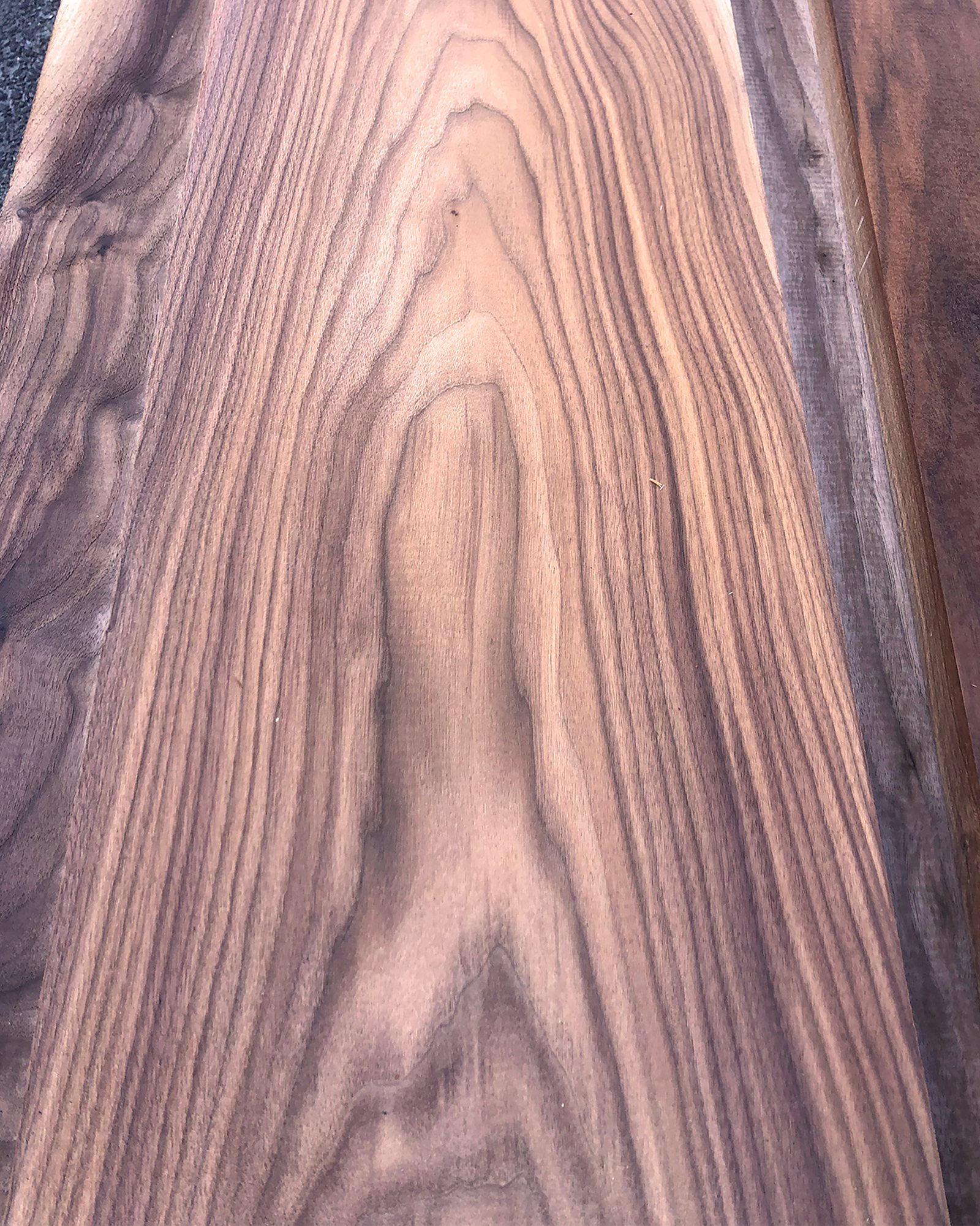
A resaw cut costs the kerf, the cleanup on both new faces, and whatever the board gives back when its internal stress releases, so one 8/4 blank does not turn into two clean three quarter inch panels. Run the arithmetic on rough two inch stock. A wide band blade takes somewhere between a sixteenth and an eighth of an inch depending on gauge and set. Split what remains and each half sits near fifteen sixteenths in the rough, with both halves still needing a pass to true the sawn face and another to clean the original face.
Finished thickness lands near seven eighths when the stock behaves. It lands closer to thirteen sixteenths when the halves cup off the saw and the planer has to chase them flat. That gap between the number on the drawing and the number coming off the moulder is the single most common surprise in a resawn panel order.
4/4 is tighter. Rough one and one sixteenth, minus a kerf, leaves each half under a half inch before cleanup, and a realistic finished face is three eighths. Push for a quarter inch face out of 4/4 and the yield holds, but the panel becomes a face that needs support rather than a panel that stands on its own inside a frame.
J. Gibson McIlvain resaws on band resaws on the mill floor, stickers the halves, and returns them through the moulder only after they have settled, which is why the shop quotes finished thickness rather than nominal thickness on matched work. The Forest Products Laboratory Wood Handbook lays out the shrinkage behavior behind that settling in detail.
Book Match Versus Slip Match
Book matching flips every second piece face over face so the two halves mirror each other, while slip matching slides each piece sideways without turning it, repeating the same grain in the same orientation across the run. Both start from the same flitch and the same resaw cut. What separates them is what happens to the freshly sawn face after the blade comes out of the board.
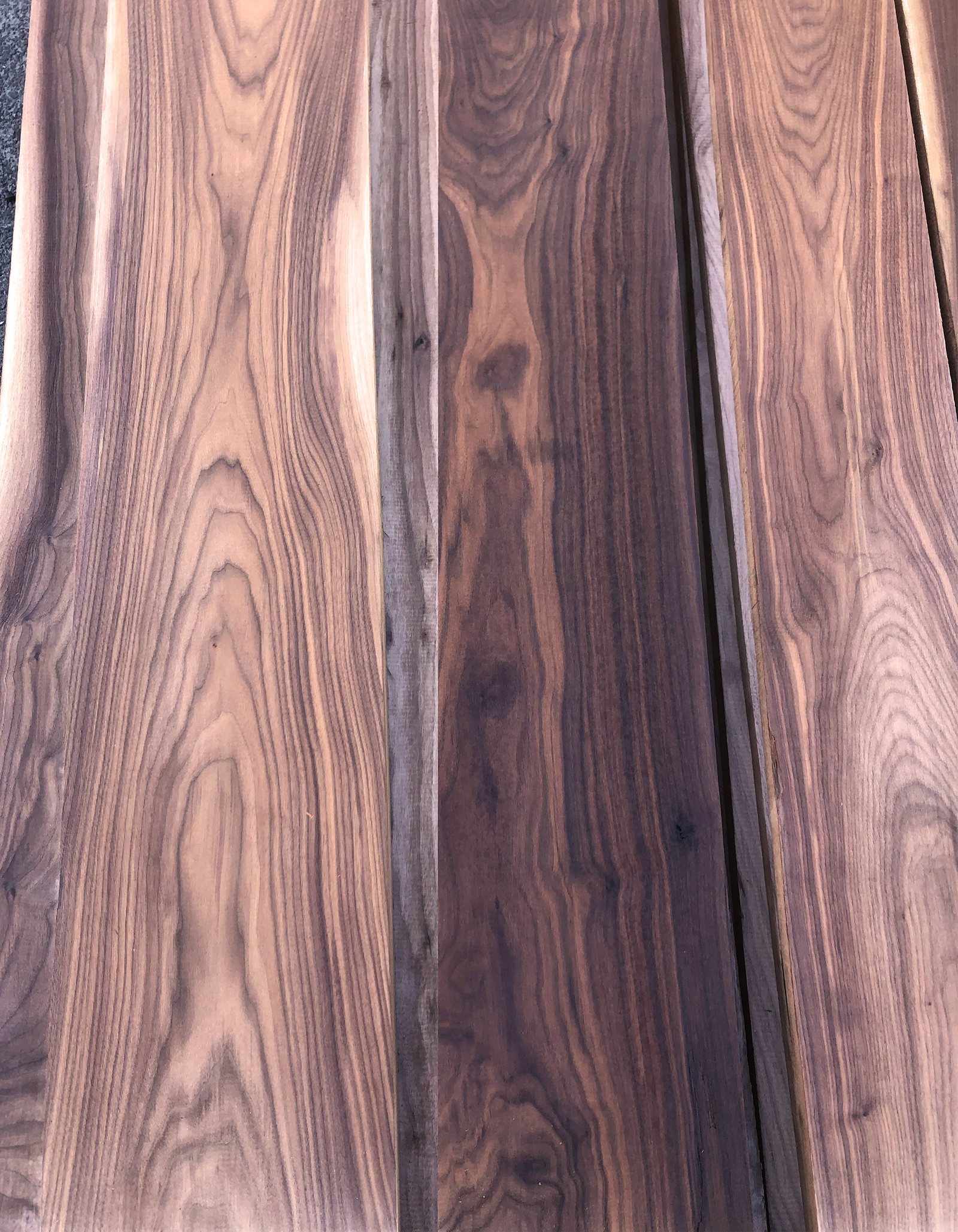
A book match opens like a page. The sawn face of one half meets the sawn face of the next, so the figure at the joint reads as a mirror and the seam looks deliberate. Cathedral grain becomes a symmetrical arch, ribbon figure in quartered Sapele becomes a chevron, and the whole panel reads as one composed surface.
A slip match keeps every face pointing the same direction. Grain still marches across the joint in step, but nothing mirrors, so the panel reads as a rhythm rather than a reflection. Designers reach for it on long runs of wall panels where a row of mirrored arches would start to look like wallpaper.
There is a third option that gets overlooked. A random or plank match ignores the flitch entirely and treats each board as its own element, which is the honest choice for rustic cladding and for species where color varies more than figure does. It asks the least of the log and it is the easiest run to extend later.
| Match method | Grain at the joint | How the face takes light | Demand on the flitch |
|---|---|---|---|
| Book match | Mirrored, symmetrical, seam reads as a design line | Alternating light and dark bands as adjacent faces reflect differently | Highest. Requires the full flitch kept in order with no substitutions |
| Slip match | Repeating, same orientation, grain steps across the joint | Even reflection across the whole panel, no alternation | High. Needs consecutive pieces but tolerates a wider run |
| Random or plank match | Intentionally unmatched, board to board variation | Reads as individual boards rather than one surface | Lowest. Extendable later from general inventory |
| End match within a run | Continues figure vertically where panel height exceeds board length | Horizontal seam is visible unless a rail or reveal covers it | Moderate, but consumes length quickly on tall panels |
Why Book Matched Faces Read Light and Dark
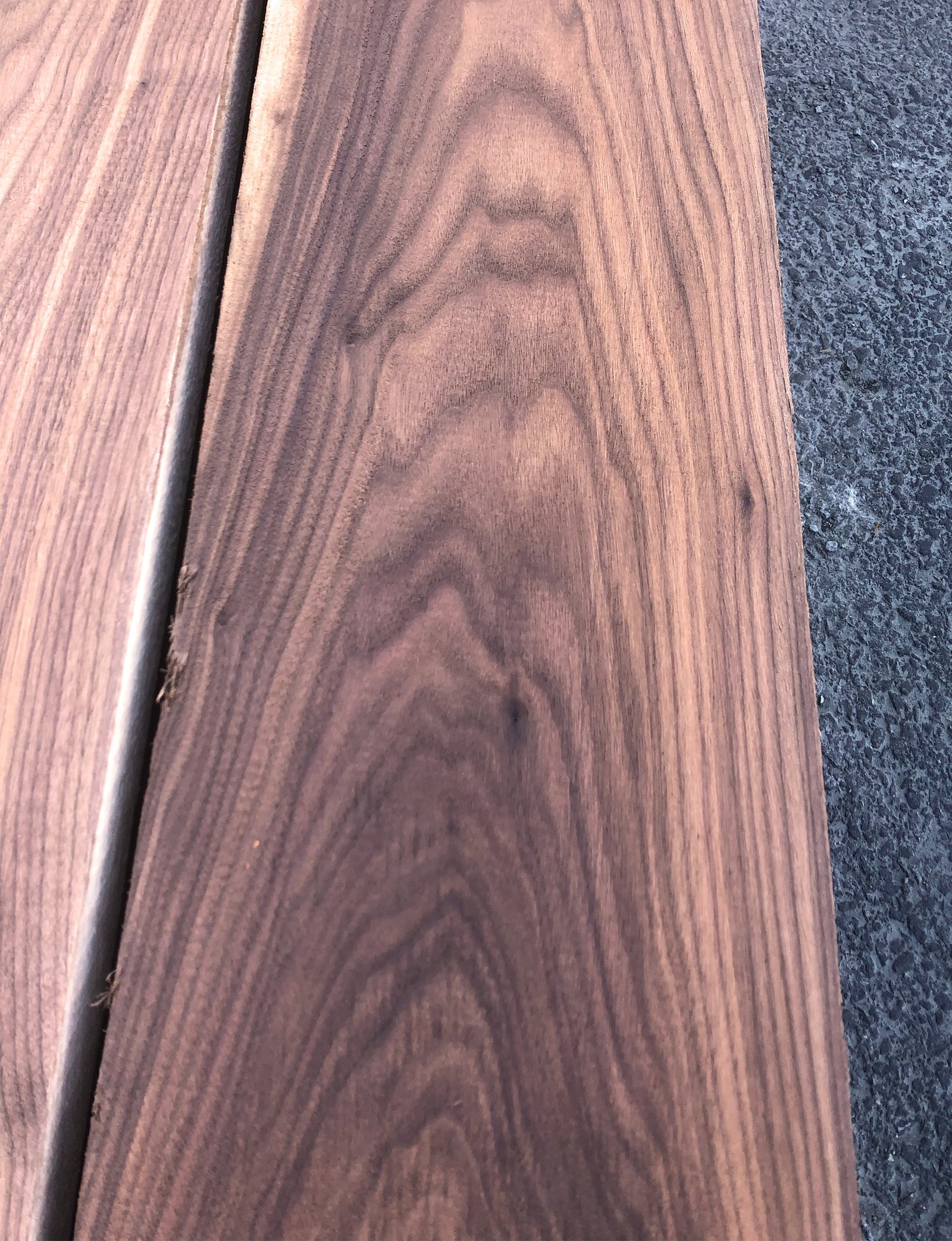
The barber pole effect is not a defect and it is not a finishing failure, it is the physical consequence of mirroring two faces whose fibers now slope in opposite directions. Wood reflects light directionally. Flip one face relative to its neighbor and the fiber angle flips with it, so one panel bounces light toward the viewer while its mirror sends light away.
The effect intensifies with figure. Ribbon striped Sapele is the classic case, and a book matched Sapele panel viewed from an angle will show alternating bands strong enough that an owner unfamiliar with the phenomenon reads it as two different lots of lumber. Move across the room and the light and dark bands swap places.
There are ways to manage it rather than fight it. A slip match removes the alternation entirely. A less directional finish reduces the contrast. Keeping panel widths narrower spreads the alternation into a finer rhythm instead of a few broad bands. What does not work is sanding harder or staining darker, and any shop promising to eliminate barber pole on a highly figured book match is promising something the material will not do.
Set expectations with a sample viewed in the actual room orientation, under the actual light. The Architectural Woodwork Institute treats matching and color variation as specification items precisely because they are subjective decisions that belong in writing before the flitch gets cut.
Keeping the Flitch in Sequence
A book match only exists as long as the pieces stay in order, so sequence control, not saw technique, is the part of this work that most often fails. The moment a piece gets pulled for a repair, swapped into another elevation or set down on the wrong cart, the mirror breaks and it cannot be reconstructed from anything else in the building.
The discipline is simple and unglamorous. Number every piece as it comes off the resaw, keep the numbers through the moulder and the sander, and keep them through packaging. ICD, the architectural millwork division of J. Gibson McIlvain, records the flitch and the sequence against the job so a later phase draws from the same log rather than from whatever matches on a sample board.
Storage matters as much as marking. J. Gibson McIlvain stores finished millwork for inventory control, which is what lets a matched set for a lobby stay intact while the general contractor works through drywall, and it is why a phased project can release panels floor by floor without gambling on a second flitch appearing later.
Seventh generation and family run since 1798, the company keeps records that outlive the individuals who took the original order, which is the practical reason a matched run can be extended years after the first phase closed out.
"The mirror is made at the saw and it is lost in handling. I would rather spend an extra hour numbering and crating a flitch than explain to an architect why panel nine went to another job."
Norm Moton, Director of Sales, J. Gibson McIlvain
Species That Resaw and Glue Well
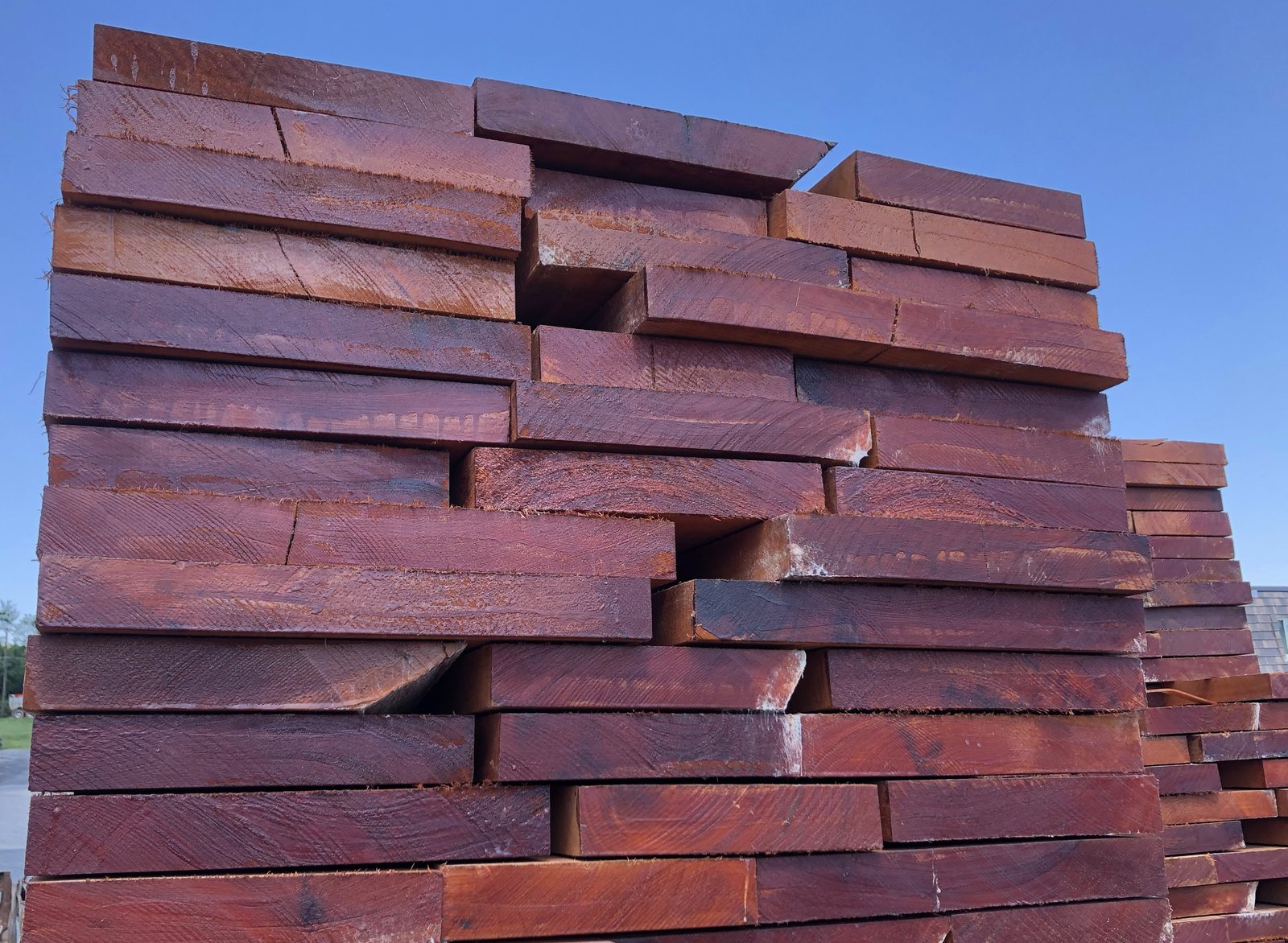
The millwork palette for resawn and matched panels is Sapele, Iroko, Afrormosia, Teak and Utile, and each of them earns the spot for a different reason. Sapele is the workhorse, with a Janka hardness near 1,410 lbf, a ribbon figure on quartered stock that book matches dramatically, and availability in widths and lengths that a matched run needs.
Utile behaves like a calmer relative of Sapele. The figure is quieter, the color runs a touch more uniform, and it is the better call when a designer wants the warmth without the barber pole drama. Iroko brings a coarser, more open texture and a golden brown that darkens with exposure, and it holds its own in panels that will see daylight.
Afrormosia is the fine grained one. Tight pores, good dimensional behavior and a color close to Teak, which is why it shows up in interiors where Teak is specified but the budget or the length schedule will not support it. Teak itself remains the reference for exterior tolerance and for a surface that stays comfortable underfoot and under hand.
The tropical decking species sit on the other side of the yard for a reason. Ipe, botanically Tabebuia spp, along with Cumaru, Garapa, Jatoba and Red Balau, are extremely hard and carry high oil content, which makes them difficult to glue and hard on knives. A millwork shop reaches for Sapele, Iroko, Afrormosia, Teak or Utile when the part will be resawn, glued or machined, and saves the decking species for decking.
Domestic options still belong in the conversation. Quartersawn and rift White Oak, near 1,360 lbf, moves less across its width than plainsawn and holds a flat painted or panelized face. Hard Maple near 1,450 lbf takes a crisp machined edge. Cherry near 950 lbf is soft enough to bruise but book matches beautifully in case work. Species by species figures are easy to check at the Wood Database.
J. Gibson McIlvain holds over seven million board feet of exotic and domestic lumber at the Maryland yard, which is the practical reason a flitch of quartered Sapele wide enough and long enough for a matched lobby exists on the ground rather than on an allocation list somewhere. Where a CITES listed species is involved, documentation and chain of custody travel with the material, and the company is an FSC certified importer and miller for specifications that carry sourcing requirements. The CITES listings themselves are public and worth checking early in design.
Stress Release and Moisture After the Cut
Every board carries internal stress, and resawing is the moment that stress gets a chance to act, which is why the cut half is not the same shape as the board that went into the saw. The interior of a thick board sits at a different moisture content than its surfaces. Open it up and both new faces begin exchanging moisture with the shop air immediately.
Cupping off the saw is normal. So is a gentle bow along the length. Stickering the halves flat with weight on top, then letting them equalize before the final surfacing pass, is what turns a cupped resaw into a flat panel. Skip that step and the planer removes the cup on Tuesday and the panel puts it back on Thursday.
Interior millwork is milled to an in service moisture content near 6 to 8 percent. Exterior work is milled nearer 12 to 16 percent, because an exterior panel that arrives at interior moisture will swell in its first humid season. Thin resawn stock reacts faster than thick stock in both directions, so a three eighths inch face is more sensitive to a job site left open to weather than a solid three quarter inch board would be.
Quartersawn and rift stock is the hedge. It moves less across its width than plainsawn, which is exactly why it gets specified where a painted or panelized surface has to stay flat. That is also why quartered Sapele and rift White Oak carry a premium in matched work, since the figure and the stability arrive together.
Matched Faces in Doors and Case Work
A book matched face rarely stands alone, it lives inside a door, a cabinet run, a box beam or a wall panel system, and the assembly around it decides whether the match survives. Solid resawn panels want to float. Trap one in a rabbet with glue on all four edges and the seasonal movement will either split the panel or open the joint that holds it.
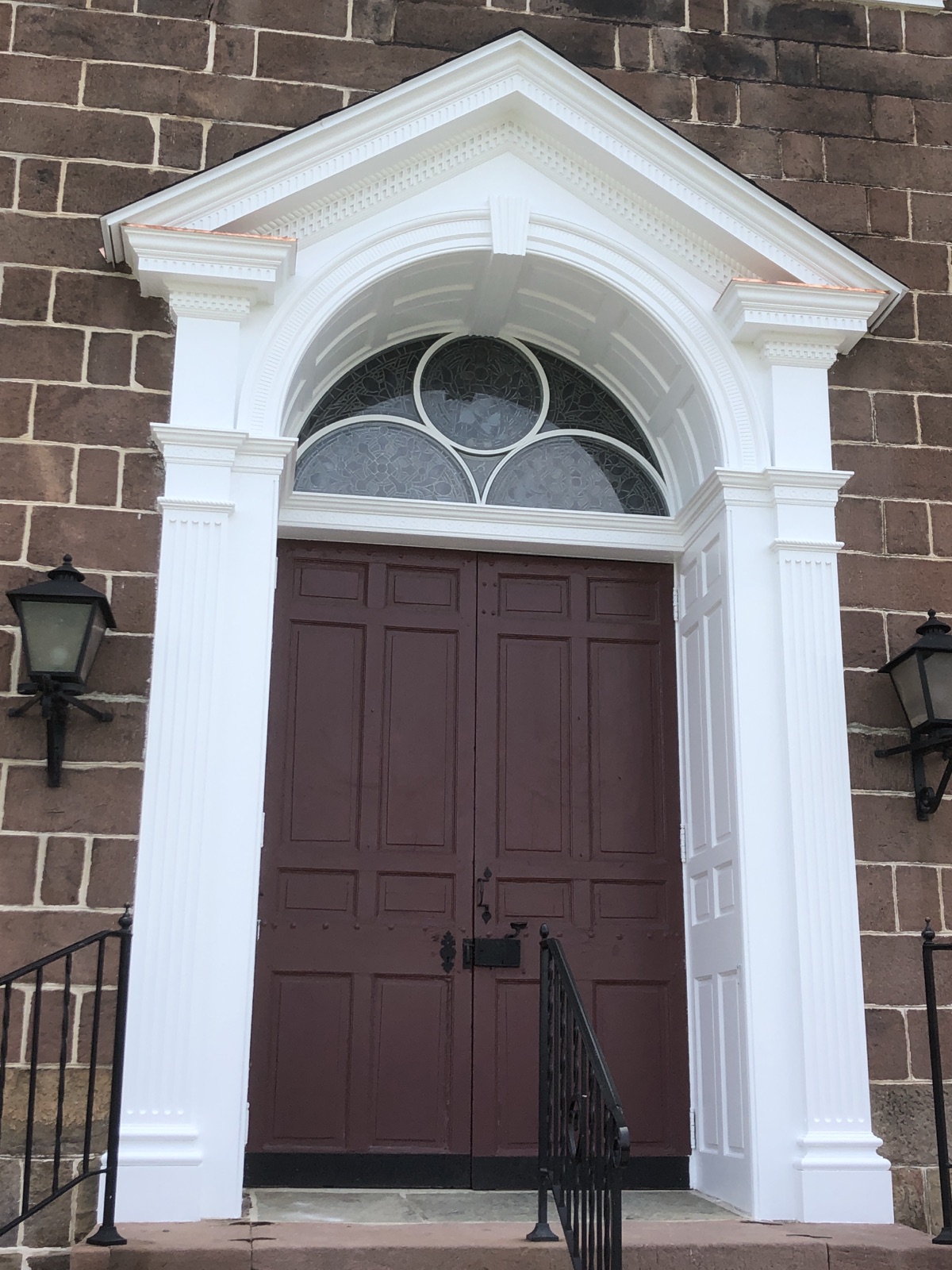
Frame and panel construction solves this the way it has for centuries. The panel floats in a groove, space accounts for seasonal movement, and the stiles and rails carry the structure. ICD builds matched panels into custom doors and into cabinets and case work designed around a specific room rather than assembled from standard modules, which is the difference between a continuous grain run across a wall of cabinet doors and a wall that needs filler strips to close out.
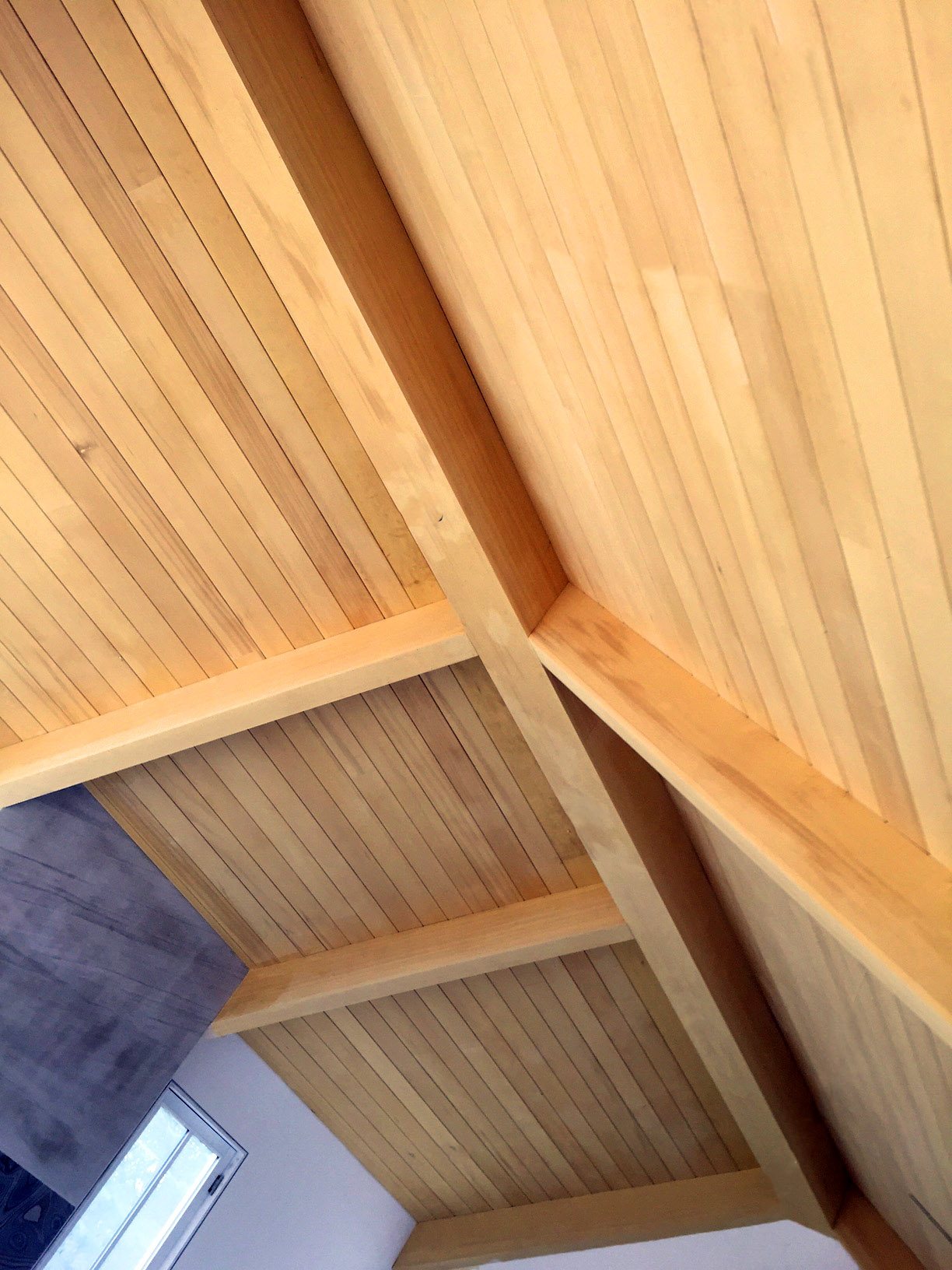
Box beams are their own decision. Butt joints give the most minimal profile, the fastest turnaround and the easiest assembly on site, but they leave visible seams and visible end grain and they are the weakest of the three. Dado joints are strong and still easy to assemble on site, though seams and end grain still show. Lock miter joints show no visible seams and are the strongest, and on a box beam wrapped in book matched faces the lock miter is the only one that lets the match continue around the corner.
Radius work raises the stakes. A curved panel or a radius trim run puts the matched face on a surface that will not tolerate a thickness correction after the fact, so the resaw target and the lamination thickness get settled before the first cut. ICD plans radius millwork and radius trimwork against the actual as built geometry rather than the nominal drawing.
Saw Texture and Hewn Looking Faces
The face a band resaw leaves is itself a texture, and for siding and wall panels it is a legitimate finished surface rather than a stage on the way to sanding. A resaw face carries fine parallel blade marks with a soft tooth pattern that catches raking light. Left unsanded and primed or stained, it reads as honest saw texture, and it holds coating better than a burnished planed face does.
Deeper relief comes from the moulder. A knife ground to a profile can produce a face with intentional undulation, a shadow line, a chamfered reveal or a run of shallow flutes, and that is machine repeatable across thousands of linear feet. J. Gibson McIlvain grinds new knives every week and keeps a profile library holding thousands of ground knives, so a texture developed for phase one gets repeated exactly in phase three.
Be clear about the limit. Hand hewn axe marks, wire brushing and abrasive blasting are surface treatments that a finisher or a specialty texturing house performs, not operations that come off a moulder or a resaw. J. Gibson McIlvain supplies and mills, so the honest answer on a deeply hewn look is that the shop delivers the milled and matched stock at the right thickness and moisture content and the buyer's own finisher applies the texture treatment.
That division matters on historic work. Where a district requires like for like replacement, the Secretary of the Interior's Standards for the Treatment of Historic Properties govern what counts as a match, and a knife ground from a sample of the original moulding is the part of that answer a mill can actually deliver.
Resawn Cladding on the Exterior Side
Matched faces on exterior cladding are a different engineering problem than interior panels, and the decisive variable is not species, it is the wall behind the board. Cupping is driven by installation and back ventilation, not by species. A board that dries on one face and stays wet on the other will cup no matter what tree it came from.
Give the back of the cladding a drainage and drying gap. Rainscreen practice is documented plainly by Building Science Corporation, and it is the single change that does more for a wood cladding installation than any upgrade in species. Fastener pattern and board width interact with that gap, since a wider board wants two fasteners and a drying path more than a narrow board does.
Modified woods have a place here, with limits that get stated up front. Thermory and Abodo Vulcan are both carried, and so is Accoya, whose acetylation gives dramatically reduced shrinkage and swelling at a Janka near 1,600 lbf. All of them top out around 16 ft, most sold on metric lengths just under 16 ft, because of kiln size, and no one should design a run assuming longer.
Width is the other constraint. Thermally modified Ash is not available wider than 8 inches, so a wide board in a modified product means Accoya or Abodo Vulcan. Warranties exist only on modified products. It is not possible to warranty solid unmodified wood, an organic material responding to its environment, and any supplier offering one is selling a document rather than a performance promise.
Priming a Resawn Face
A freshly resawn face is more absorbent than a planed face, so what goes on it first determines how the painted surface looks three years later. Open-grained and oily species absorb a great deal of finish, and a primer coat evens out the eventual painted surface instead of letting some boards drink the topcoat while others reject it.
J. Gibson McIlvain primes in three levels, in both oil based and water based systems, and exterior primed trim carries a fungicide additive. Sanding or buffing after priming knocks back the grain raising that the first wet coat causes while keeping moulded detail crisp, which matters more on a textured or fluted face than on a flat one.
Prime all six faces on exterior work, including the back and both ends. A board primed on the show face only has one absorbent side and one sealed side, which is the same imbalance that drives cupping. The ends are where water finds its way into end grain fastest, and they are the easiest thing to forget on a job site cut.
Clear finished book matched panels follow different rules. Sanding sequence and final grit determine how the barber pole effect reads, since a coarser final grit scatters light and softens the alternation while a fine polished surface sharpens it. Settle the finish schedule against a real sample before the flitch is committed. For painted exterior trim, Sapele is the better call than Genuine Mahogany, near 800 lbf, since Sapele holds paint better and arrives in a wider range of sizes and longer lengths, though Sapele is not milled 1x8 for exterior use because it is too wide to stay stable in that application.
How J. Gibson McIlvain Would Specify This
Specify the match method, the finished thickness, the moisture target and the sequence control, in that order, and the rest of a resawn panel package falls into place. Name book match, slip match or random match explicitly, since a drawing that says only "matched panels" leaves the most consequential decision to whoever is standing at the saw.
Call out finished thickness rather than nominal stock. State the in service moisture content, 6 to 8 percent for interior and 12 to 16 percent for exterior, and state which side of the wall the panels live on. Identify the species from the millwork palette, and where figure matters, say quartered or rift rather than leaving the sawing pattern open.
Require sequence numbering and staged release in the submittal. J. Gibson McIlvain runs its own fleet of trucks and a section of the mill dedicated to packaging, and it ships nationwide, regularly to California, which is what keeps a numbered matched set intact from the crate to the elevation it belongs on. Linear trimwork, finished cladding and primed trim come off the millwork shop at the lumber yard, and true custom work planned around a specific space comes from ICD, the architectural millwork division, so a single order covers both without matching two suppliers to each other.
Leave installation to the installer, and say so in the specification. J. Gibson McIlvain supplies and mills, and it does not install or coordinate installation, so the drawing should be explicit about who sets the furring, who controls the back ventilation gap and who makes the field cuts. Grading language from the National Hardwood Lumber Association and profile conventions from the Wood Moulding and Millwork Producers Association give the rest of the package a common vocabulary.
To talk through a flitch, a match method or a sequence schedule for a specific project, call J. Gibson McIlvain at 800-638-9100.
Frequently Asked Questions
How many matched panels can I expect from one flitch?
Fewer than the raw board footage suggests. Each resaw cut removes a kerf between a sixteenth and an eighth of an inch, and both new faces need a cleanup pass, so a rough 8/4 blank yields two faces finishing near seven eighths of an inch and a 4/4 blank yields two faces near three eighths. On top of that, some pieces cup enough off the saw that they fall below target thickness and drop out of the matched set. Plan the panel schedule with real overage built in, and settle finished thickness before the first cut rather than after. J. Gibson McIlvain quotes matched work on finished thickness for that reason.
Is the light and dark banding on my book matched panels a finishing defect?
No. That is the barber pole effect, and it comes from mirroring two faces whose fibers slope in opposite directions, so adjacent panels reflect light differently. It shows most in strongly figured stock such as ribbon striped Sapele, and it reverses as you walk across the room. A slip match eliminates it because every face keeps the same orientation. A less directional finish and narrower panel widths both soften it. Sanding harder or staining darker will not remove it.
Can resawn wall panels be made from Ipe or another tropical decking species?
It is the wrong tool for the job. Ipe, botanically Tabebuia spp, along with Cumaru, Garapa, Jatoba and Red Balau, is extremely hard and carries high oil content, which makes it difficult to glue and punishing on knives. A millwork shop reaches instead for Sapele, Iroko, Afrormosia, Teak or Utile, all of which resaw cleanly, take adhesive reliably and hold a machined profile. Keep the decking species for decking, where their density and exposure tolerance are the point.
What happens if I need to extend a matched run in a later phase?
It depends entirely on whether the original flitch and its sequence were recorded and whether unused material was held. A random or plank match can be extended from general inventory at any time. A book match cannot be recreated from a different log, so the only reliable path is reserving material from the original flitch at the start. J. Gibson McIlvain stores finished millwork for inventory control and, as a seventh generation family business operating since 1798, keeps the records that make a phase three release possible.
Does a resawn saw texture face need to be sanded before finishing?
Not necessarily. A band resaw leaves fine parallel blade marks that read as an intentional texture on siding and wall panels, and that open surface holds primer and stain better than a burnished planed face. If the design wants that look, specify it and skip the sanding. If the design wants deeper hewn relief, understand that hand hewing, wire brushing and abrasive blasting are finisher operations rather than mill operations. The shop delivers milled and matched stock at the correct thickness and moisture content, and the buyer's own finisher applies that texture treatment.
What moisture content should resawn panels arrive at?
Interior millwork is milled to an in service moisture content near 6 to 8 percent, and exterior work near 12 to 16 percent. Thin resawn faces respond to humidity faster than thick solid stock, so a three eighths inch panel is more sensitive to a building left open to weather than a three quarter inch board would be. Get the building closed and conditioned before interior panels arrive, and store exterior stock flat, stickered and out of direct sun.
Which box beam joint keeps a book match reading around the corner?
The lock miter. Butt joints are the fastest and simplest to assemble on site and give the most minimal profile, but they leave visible seams and visible end grain and are the weakest option. Dado joints are strong and still easy to assemble on site, though seams and end grain still show. Only a lock miter shows no visible seams, which is what lets a matched face continue across the corner of the beam without a line breaking it.
Does J. Gibson McIlvain install matched panels and cladding?
No. J. Gibson McIlvain supplies and mills, and does not install, coordinate installation or take field measurements. What the shop delivers is milled, matched, sequenced, numbered, primed where specified and crated for the run, shipped nationwide on the company's own fleet. Furring, back ventilation gap, fastener pattern and field cuts belong to the installer, and the specification should name who owns each of those. Call 800-638-9100 to talk through a package.
Sources and Standards Referenced
- Wood Handbook, Wood as an Engineering Material, USDA Forest Products Laboratory
- Architectural Woodwork Institute
- National Hardwood Lumber Association
- Wood Moulding and Millwork Producers Association
- Building Science Corporation, BSD-013 Rain Control in Buildings
- Secretary of the Interior's Standards for the Treatment of Historic Properties, National Park Service
- The Wood Database, Sapele
- Forest Stewardship Council
- CITES, Convention on International Trade in Endangered Species of Wild Fauna and Flora
- J. Gibson McIlvain Millwork Service
- ICD Cabinets and Case Work