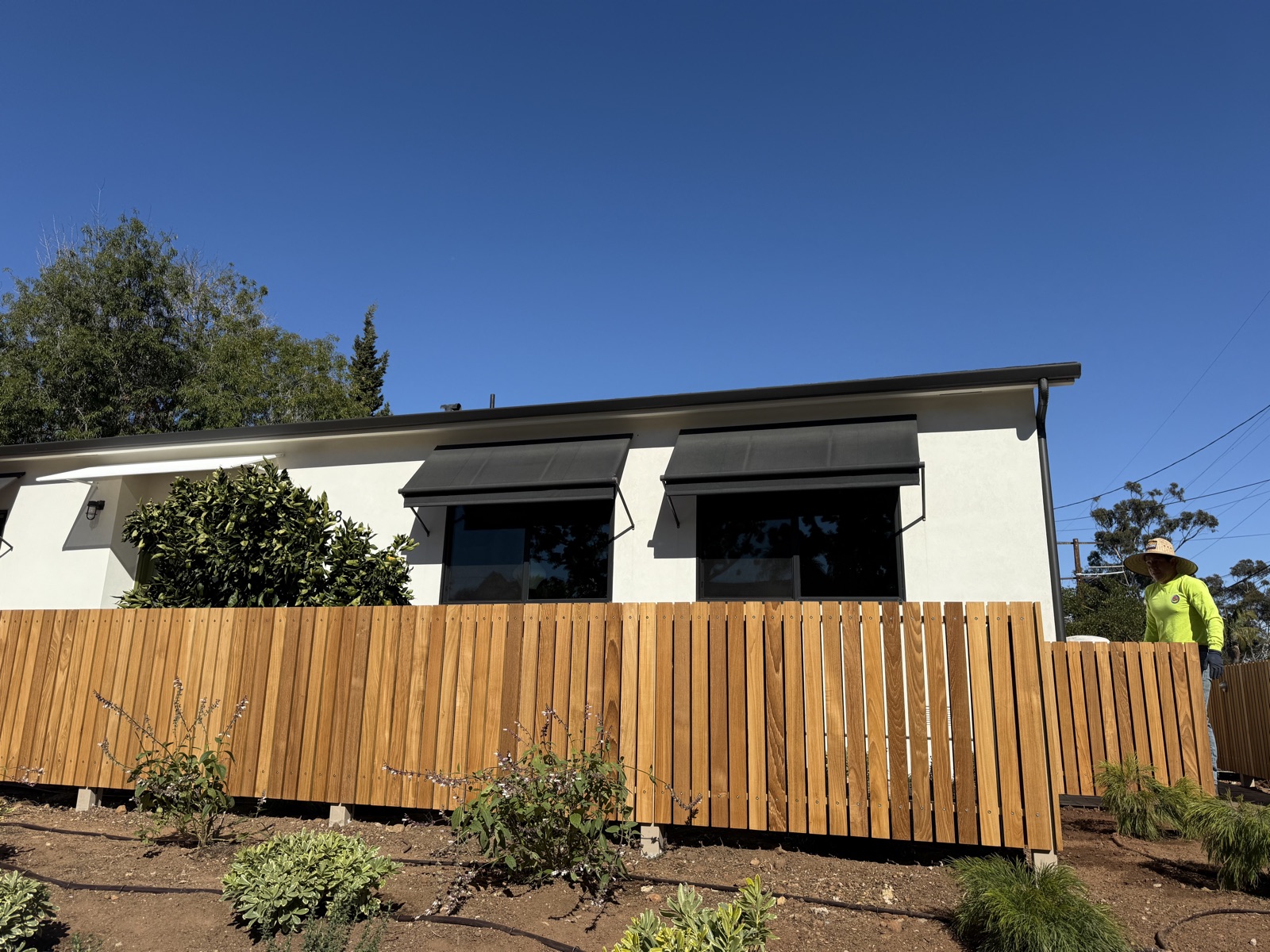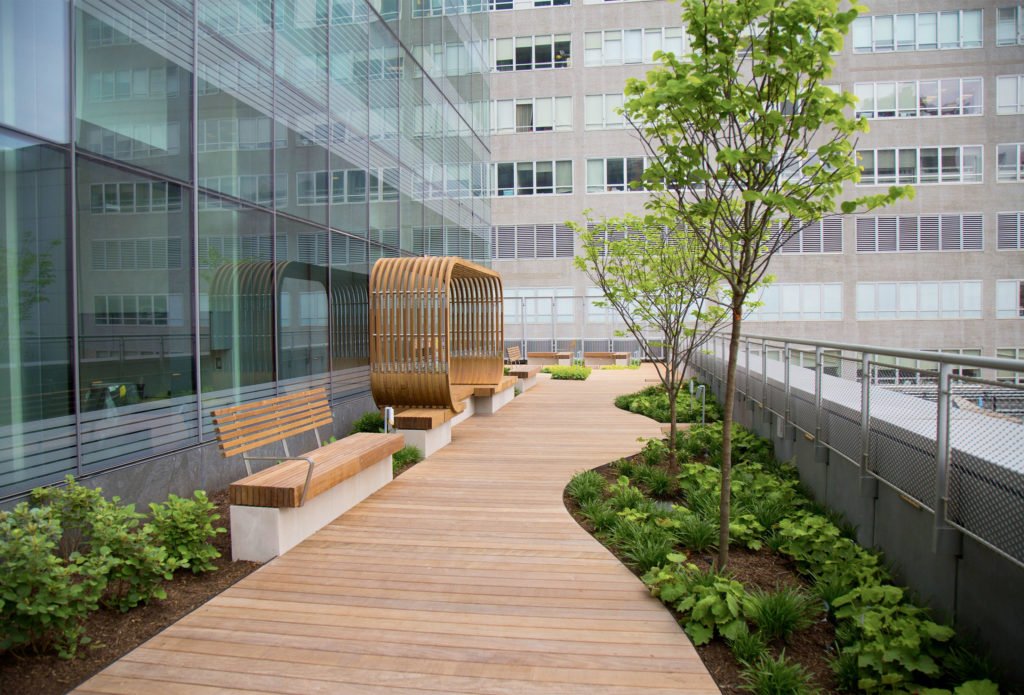
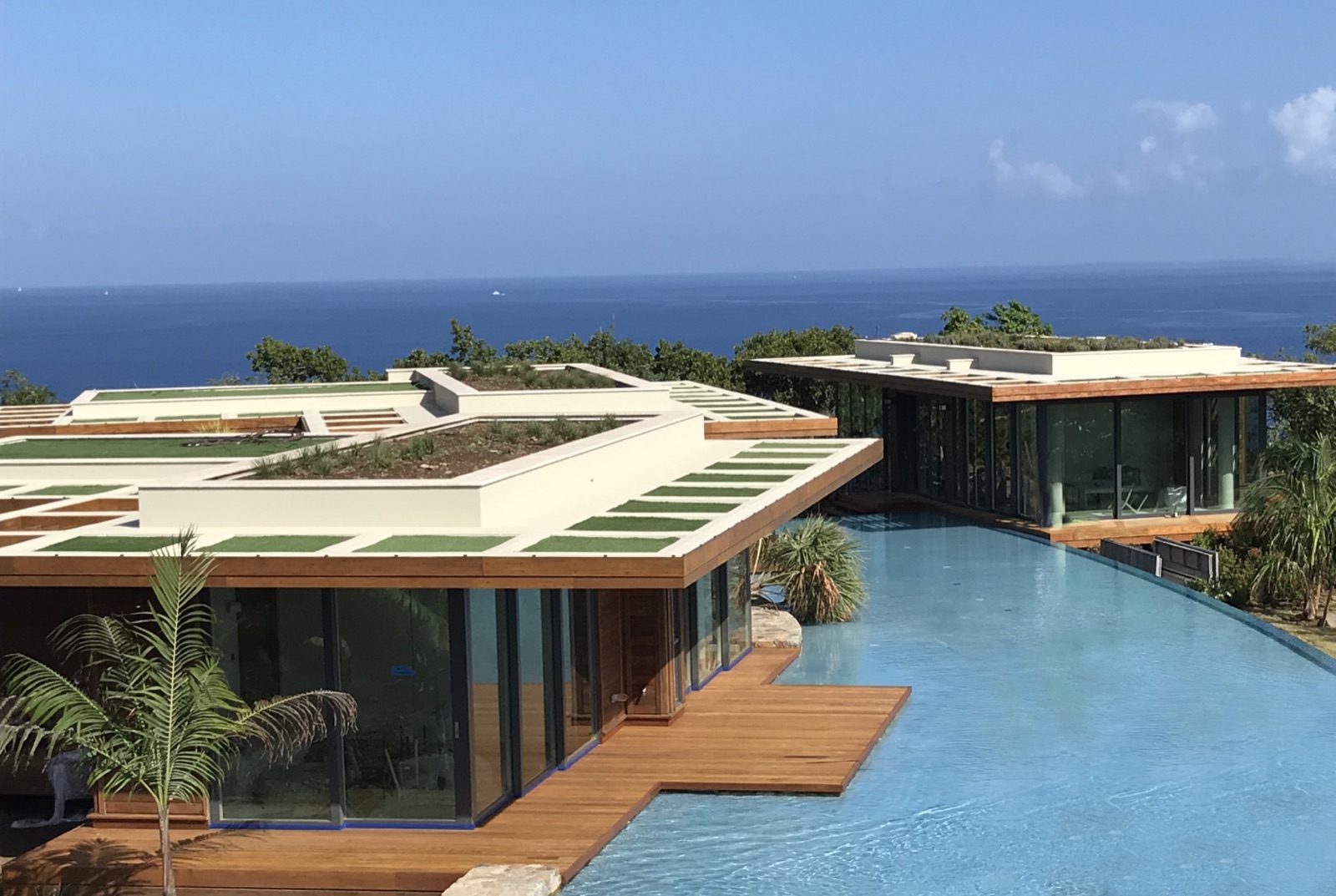
For a high-traffic restaurant patio in a coastal climate, Ipe is the exotic hardwood to specify.
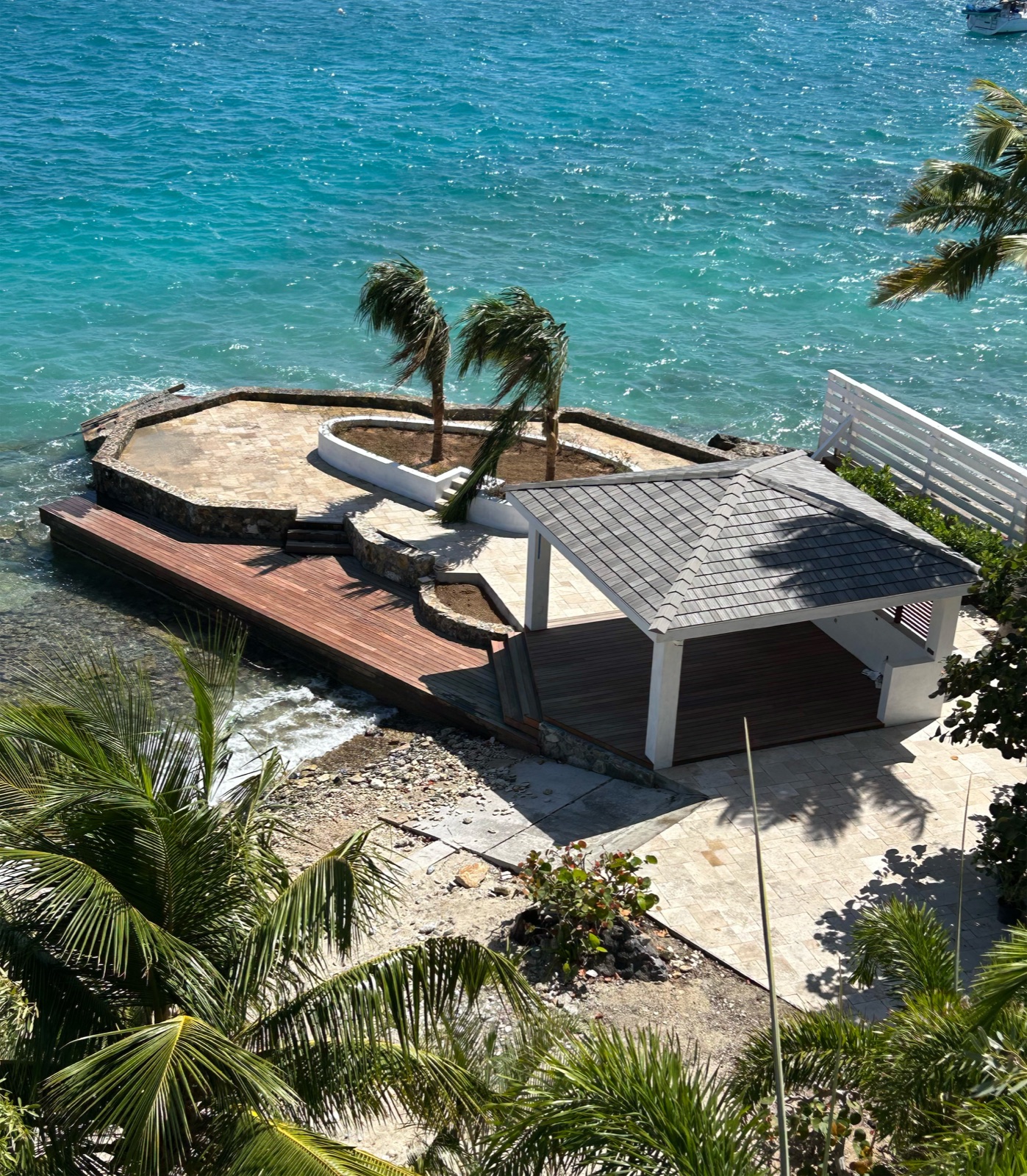
No other commercially available decking hardwood answers all three demands of this job at once. A restaurant patio takes foot traffic that a residential deck never sees. Chairs drag. Bus carts roll. Servers pivot on the same square foot ten thousand times a season. Add salt spray, wind-driven rain, and the humidity swings of a shoreline site, then layer commercial fire code on top, and the list of woods that qualify gets short fast. Ipe sits at the top of that short list.
Ipe (Tabebuia spp.) carries a Janka hardness of roughly 3,680 lbf, a density near 1,050 kg/m3, EN 350 Class 1 durability, and an ASTM E84 Class A flame-spread rating without any chemical treatment. That combination is rare. Most woods give you one or two of those properties. Ipe gives you all four in a single, dense, dimensionally stable board. The rest of this guide explains what each of those demands does to a deck, how the realistic alternatives stack up, and how to detail the installation so the material you paid for actually reaches its service life.
High traffic is a hardness and wear problem, and Janka is the number that matters.
The Janka test measures the force needed to embed a steel ball halfway into the wood. It is the cleanest single predictor of how a deck surface will resist denting from heel strikes, dropped glassware, dragged furniture, and rolling loads. For context, domestic white oak lands around 1,350 lbf. Ipe more than doubles that at approximately 3,680 lbf. On a patio where the same traffic lanes see relentless use, that hardness is the difference between a surface that still looks sharp after five seasons and one that reads worn in the first.
Cumaru is the closest competitor on raw hardness at roughly 3,540 lbf, with a density near 1,070 kg/m3. It wears almost as well as Ipe and moves slightly more in service. Jatoba tests around 2,690 lbf. It is a beautiful, hard wood, but its outdoor durability is a step below the top tier, which matters more on the coast than the hardness gap suggests. Garapa and Red Balau sit lower, near 1,700 lbf and 1,700 to 2,000 lbf respectively, and both are genuinely good decks for the right project. On the busiest restaurant lanes, though, the denser boards earn their place. The USDA Forest Products Laboratory maintains the reference mechanical data behind these numbers in its published wood research, and the Wood Database compiles species-level Janka and durability figures that specifiers can cross-check.
A coastal climate attacks a deck through moisture, salt, and decay organisms, and durability class is the defense.
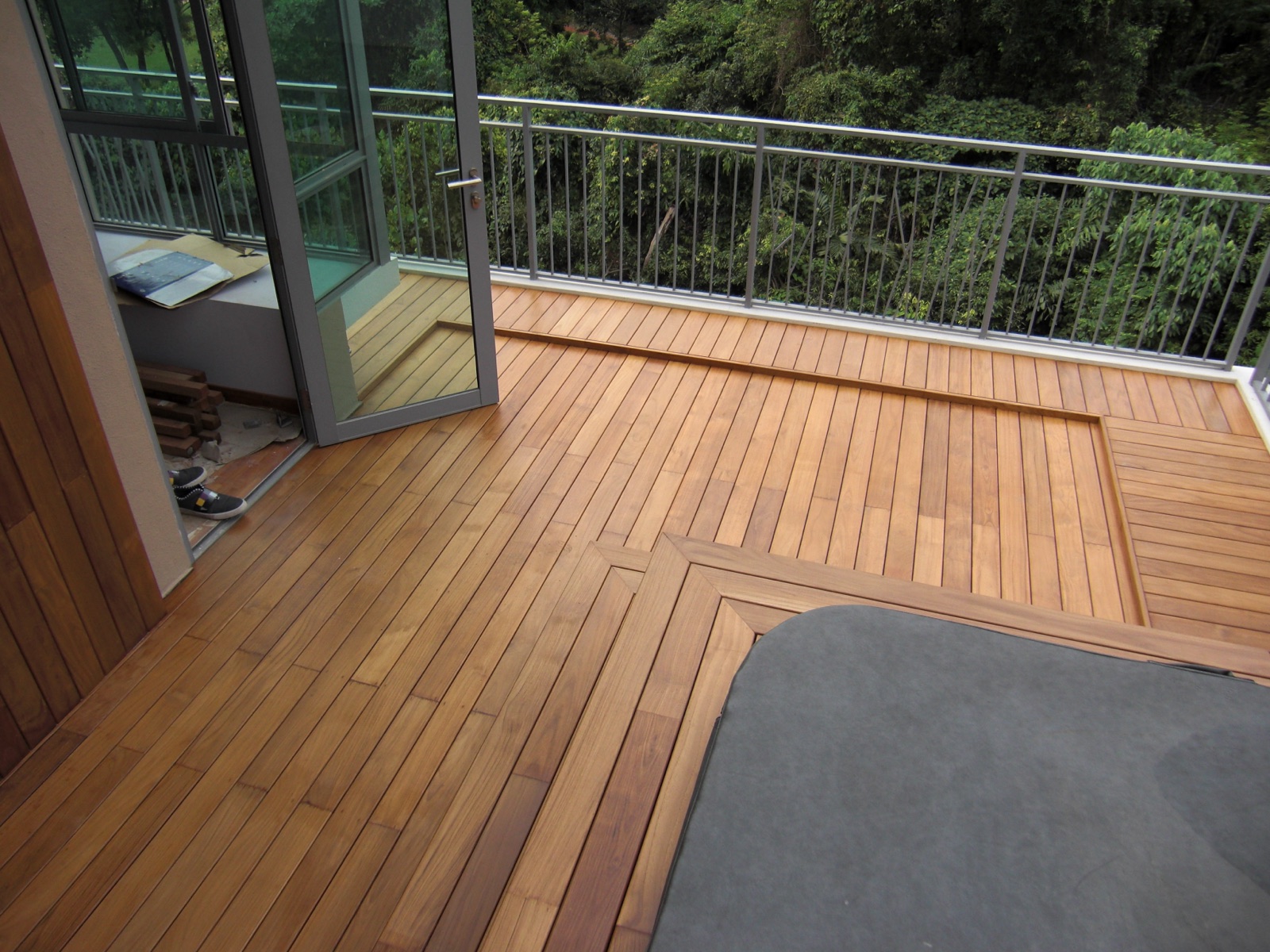
Shoreline air holds moisture the way an inland site never does. Boards cycle through wet mornings and dry afternoons, absorbing and releasing water at the surface while salt crystallizes in the grain. That cycling drives cupping, checking, and end-splitting in woods that cannot handle it. It also feeds fungal decay and, in warmer regions, wood-destroying insects. The property that resists all of this is natural durability, graded under the European standard EN 350.
Ipe is rated EN 350 Class 1, the most durable classification, meaning it resists decay without preservative treatment. Cumaru and Red Balau are durable as well, and Garapa is moderately durable and performs its best when detailing keeps standing water off the surface. The mechanism is Ipe's density and extractive content. Water penetrates slowly, and the compounds in the wood are inhospitable to fungi. That is why Ipe boardwalks along oceanfront promenades routinely outlast the hardware fastening them down. For the corrosive part of the equation, the fasteners matter as much as the wood, which is covered below. The American Wood Council publishes the durability and detailing guidance that governs exterior wood assemblies in its codes and standards library.
A commercial restaurant patio is subject to fire code, and Ipe meets Class A without treatment.
This is the demand homeowners never face and the one that eliminates several otherwise reasonable species. Assembly occupancies, which is what a restaurant is, are held to stricter surface-burning requirements than a private residence. The relevant test is ASTM E84, which measures flame-spread index. A Class A rating means a flame-spread index of 25 or less. Many jurisdictions, especially in wildfire-prone and high-density coastal zones, require Class A materials on commercial exterior surfaces.
Ipe achieves ASTM E84 Class A on its own, with no coating and no fire-retardant impregnation. That is a direct consequence of its density. The dense grain simply does not carry flame the way a lighter softwood does. This single fact is why Ipe shows up on so many municipal boardwalks, rooftop restaurant decks, and pier structures where an inspector will pull the test report. Verify the exact requirement with your local authority having jurisdiction, since amendments vary, and confirm the flame-spread class in the current International Code Council code your project is permitted under. The test method itself is published by ASTM International, and the National Fire Protection Association maintains related life-safety standards worth checking for assembly occupancies.
The realistic contenders trade hardness, durability, color, and surface temperature against one another.
No single species wins every axis. Ipe wins the most axes for this specific job, but a good specifier weighs the tradeoffs against the site and the budget. Garapa runs a lighter honey-blond tone and, being less dense, holds less heat, which is a real consideration for a barefoot-adjacent poolside patio in a hot climate. Red Balau offers a warm red-brown at a friendlier price than Ipe while still delivering solid durability. Cumaru brings hardness within a whisker of Ipe with a slightly busier grain. The table below lays the primary decking candidates side by side. Massaranduba appears for comparison only.
| Species | Janka (lbf) | Density (kg/m3) | EN 350 durability | Color | Best fit / note |
|---|---|---|---|---|---|
| Ipe (Tabebuia spp.) | ~3,680 | ~1,050 | Class 1 | Olive-brown to blackish-brown | Top choice; Class A fire rating, holds heat |
| Cumaru | ~3,540 | ~1,070 | Class 1 to 2 | Medium reddish-brown | Near-Ipe hardness; slightly more movement |
| Red Balau | ~1,700 to 2,000 | ~900 | Class 2 | Warm red-brown | Durable and costs less than Ipe |
| Garapa | ~1,700 | ~800 | Class 2 to 3 | Honey blond | Cooler underfoot; keep water off surface |
| Jatoba | ~2,690 | ~910 | Class 2 to 3 | Rich red-brown | Very hard but less decay-resistant outdoors |
| Massaranduba (comparison only) | ~3,190 | ~1,150 | Class 1 to 2 | Deep red | Hard and dense; shown here for reference |
Read the table by your governing constraint. If fire code is the gate, Ipe is the answer. If surface temperature on a sunny patio is the complaint you keep hearing, Garapa deserves a look. If the budget is fixed and the traffic is heavy but not brutal, Red Balau splits the difference well.
Cedar and modified wood are legitimate options, but they solve different problems than a hardwood deck.
Western Red Cedar is a valid decking material and it should not be dismissed. It comes in two grades worth knowing. CVG, clear vertical grain, is the premium appearance grade with tight straight grain and no knots. STK, select tight knot, is a knottier, more rustic and more economical grade that still performs well when detailed correctly. Cedar is stable and naturally rot-resistant. What it is not is hard. At a fraction of Ipe's Janka number, cedar will show wear on a busy restaurant lane far sooner. It fits a lighter-duty patio, a covered dining area, or vertical accents, better than a high-traffic open deck.
Modified wood is the other category to weigh. Thermory and Abodo Vulcan are thermally modified products, and Accoya is acetylated, all engineered for exterior dimensional stability and rot resistance, and all backed by manufacturer warranties, which solid unmodified hardwood does not carry. These products are worth considering for their stability and for the fact that they arrive with a warranty document. One planning constraint: because of kiln chamber size, modified boards top out at roughly 16 feet, with the metric-cut lengths landing just under 16 feet. If your design calls for longer clear runs, that ceiling matters at the layout stage. For the sustainability paperwork many commercial jobs require, the Forest Stewardship Council chain-of-custody framework applies across both solid and modified material.
Installation is half the deck, and dense hardwood is unforgiving of shortcuts.
The species choice sets the ceiling on performance. The installation decides whether you reach it. Start with the substructure. Dense hardwood decking wants joists at 16 inches on center, and coastal work often calls for tighter spacing on cantilevers and stair treads. Boards go down on joists or on furring strips over a structural surface, never floated loose, and the framing has to be flat because Ipe will not bend to hide a crown.
Ventilation is not optional. Air has to move under and between the boards so the assembly can dry after every wetting. Trapped moisture is what rots a deck from below while the top still looks fine. The Building Science Corporation literature on drying and ventilation of exterior wood assemblies is the reference here. Set the boards to acclimate toward an in-service moisture content in the 12 to 16 percent range for most climates, and gap them for movement per the supplier's schedule for the board width.
Fasteners and profile decisions go together, and getting them wrong is a common failure. Shiplap decking takes visible, face-driven fasteners. Only tongue-and-groove profiles work with a hidden fastener system. When the boards are grooved for hidden clips, the grooves face down so water drains rather than collecting in the channel. On the coast, use 316 stainless steel fasteners, not 304 and not coated carbon steel, because chloride-laden air will corrode lesser hardware and bleed rust stains down the face of an expensive deck. Pre-drill Ipe. It is too dense to drive into reliably without it.
Sourcing and documentation matter on a commercial job, and a specifier should confirm both before the order ships.
A restaurant build usually runs through an architect and a general contractor, which means the deck material has to arrive with the right paperwork, not just the right grade. Two items come up. First, legality and sustainability documentation. Many commercial specs and green-building programs ask for FSC chain-of-custody certification, and the U.S. Green Building Council LEED framework awards credit for certified wood, so confirm certification availability at the quoting stage rather than at delivery.
Second, species regulation. When using a CITES-listed species, documentation is required to move the material legally across borders and often to satisfy the project file, so ask your supplier to confirm the paperwork before you commit a listed species to the spec. The Convention's official listings are maintained by CITES. Ipe, Cumaru, Garapa, and Red Balau give a specifier durable, high-performance options while keeping the documentation path clean. Work with a supplier who mills to order, holds real inventory in the dimensions your drawings call for, and can produce the certificates the project demands.
"On a coastal restaurant deck I tell the specifier to solve three problems in one board, and Ipe is the material that does it: the hardness for the traffic, the Class 1 durability for the salt air, and a Class A fire rating the inspector will accept without a coating. Then we talk fasteners. I have seen beautiful Ipe ruined by the wrong screws in a salt environment, so we specify 316 stainless every time and pre-drill everything. We keep a deep Ipe inventory in every dimension and ship it nationwide, so the size the architect drew is the size that shows up." - Norm Moton, Director of Sales, J. Gibson McIlvain
How J. Gibson McIlvain Would Specify This
Start the spec with Ipe (Tabebuia spp.) as the primary decking material for a high-traffic coastal restaurant patio, and write the alternates deliberately. J. Gibson McIlvain stocks Ipe decking in a vast inventory across every standard and custom dimension and ships it nationwide, including regularly to California, so the drawn size is the ordered size. Call for the board width and length schedule your layout needs, and confirm dimension availability up front at 800-638-9100. See the Ipe decking line for the working profiles and thicknesses.
Detail the assembly, not just the species. Specify joists at 16 inches on center for dense hardwood, tighter on stairs and cantilevers. Require 316 stainless fasteners throughout because the site is coastal. Choose the profile against the fastener strategy: tongue-and-groove if the design wants hidden clips, shiplap if visible fasteners are acceptable, with grooves oriented down for drainage on any grooved board. Call out under-deck ventilation and a drying path, and set an acclimation and gapping schedule targeting a 12 to 16 percent in-service moisture content.
Write the alternates for the specific tradeoff. Garapa where a cooler surface temperature is the priority. Red Balau where the budget is firm and the wood still needs to be durable and hard. Cumaru where near-Ipe hardness is wanted. Where the project values a warranty and dimensional stability over solid-wood tradition, offer Thermory or Abodo Vulcan, remembering the roughly 16-foot length ceiling on modified boards. Confirm FSC certification and any CITES documentation at the quoting stage. J. Gibson McIlvain is a commercial and contractor-volume supplier that mills to order and ships nationwide, and the fastest way to lock a dimension schedule and certification path is to call 800-638-9100 for a project quote.
Frequently Asked Questions
Is Ipe worth the extra cost over Cumaru or Red Balau for a restaurant patio?
For a high-traffic commercial coastal deck, usually yes. Ipe is the only one of the three that combines top-tier Janka hardness near 3,680 lbf, EN 350 Class 1 durability, and an ASTM E84 Class A fire rating with no treatment. On assembly-occupancy projects where fire code is enforced, that Class A rating alone can make the decision. Cumaru costs less than Ipe and comes very close on hardness, and Red Balau costs less again while staying durable, so both are legitimate where the fire class is met another way and the budget is fixed.
Do I need a special fastener for a coastal deck?
Yes. Use 316 stainless steel fasteners on any coastal installation. Chloride-laden salt air corrodes 304 stainless and coated carbon steel over time, which weakens the connection and bleeds rust stains down the face of the deck. Pre-drill dense hardwoods like Ipe and Cumaru before driving, since they are too hard to fasten reliably without a pilot hole.
Why does the fire rating matter on an outdoor deck?
A restaurant is an assembly occupancy, which is held to stricter surface-burning requirements than a private home. Many jurisdictions require a Class A flame-spread rating, meaning an ASTM E84 flame-spread index of 25 or less, on commercial exterior surfaces, particularly in dense urban and wildfire-prone coastal zones. Ipe achieves Class A without any coating or fire-retardant treatment. Always confirm the exact requirement with your local authority having jurisdiction.
Can I use hidden fasteners with Ipe decking?
Only with a tongue-and-groove profile. Hidden clip systems require a grooved edge, so the boards must be milled tongue-and-groove, and the grooves should face down so water drains instead of collecting. Shiplap and square-edge boards take visible, face-driven fasteners. Decide the profile and the fastener strategy together at the spec stage.
How should the deck be framed and ventilated on the coast?
Set joists at 16 inches on center for dense hardwood decking, tighter on stairs and cantilevers, and keep the framing flat because Ipe will not conform to a crown. Ventilation is critical: air must move under and between the boards so the assembly dries after every wetting, since trapped moisture rots a deck from below. Acclimate and gap the boards toward a 12 to 16 percent in-service moisture content.
What about modified wood or cedar instead of a tropical hardwood?
Both have a place. Thermally modified boards like Thermory and Abodo Vulcan and acetylated Accoya offer strong dimensional stability and carry manufacturer warranties that solid unmodified wood does not, though kiln size limits their length to roughly 16 feet. Western Red Cedar is a valid, rot-resistant option in CVG (clear vertical grain) or the more economical STK (select tight knot) grade, but it is far softer than Ipe and will show wear faster on heavy restaurant traffic lanes.