What a Shop Preps on a Bench Component, and What It Does Not
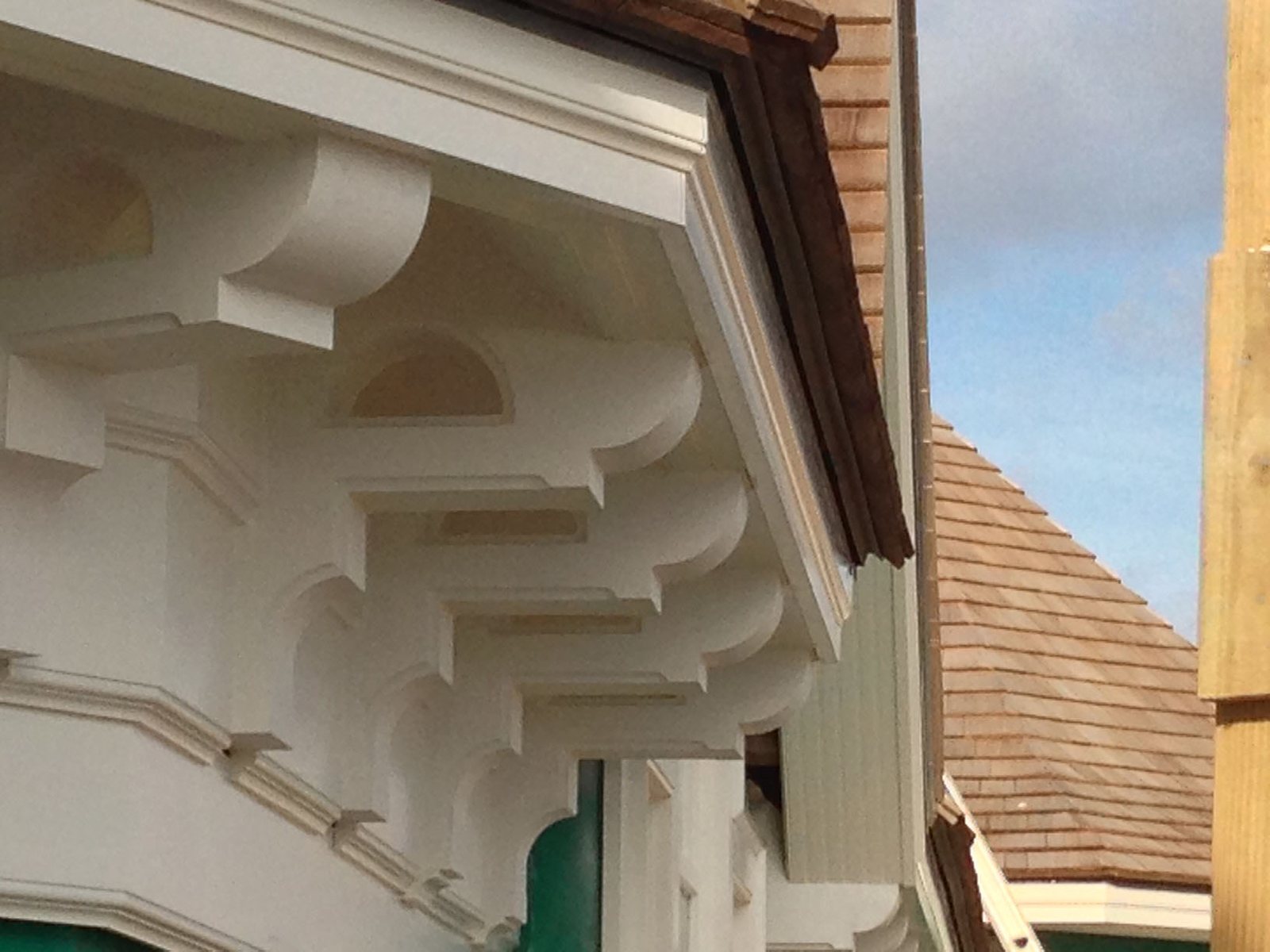
A millwork shop does not supply the bracket. It supplies the wood the bracket has to live inside, machined so the hardware lands exactly where the drawing says while the seat is still free to move the way wood moves. That distinction decides most of what shows up on a bench cut list. Brackets, cleats and standoffs are hardware and blocking, and the parts a shop preps for them are counterbored seats, slotted clearance holes, back-relieved cleat stock, drilled standoff blocks, mortised bracket pockets, sealed end grain and primed hidden faces.
Say the rest plainly. J. Gibson McIlvain supplies and mills. It does not install, it does not field measure, and it does not coordinate a trade on site. The anchors into masonry, the lags into a pergola post, the through-bolts in a gazebo knee wall, all of that belongs to the buyer's own installer or fabricator. What the shop controls is everything that happens before the crate opens, and on a bench that turns out to be most of the failure modes.
An exterior seat is a horizontal surface people sit on with wet clothes, set tight against a vertical surface, fastened through with metal. Three of the four worst things you can do to wood outdoors, all in one assembly. The hardware prep is where you either build in drainage and movement or build in a callback.
Brackets, Cleats and Standoffs Solve Three Different Problems
Brackets carry load, cleats carry load and locate the part, and standoffs carry almost nothing but air. Confusing them is the most common error on a seating submittal, because all three get drawn as a small rectangle in section.
A bracket is a cantilever. Steel angle, a fabricated plate, a bent flat bar under a wall-hung seat, occasionally a sawn wood knee brace on a pergola bench. The load path runs from the seat slats into the bracket and out into the structure, so the wood that touches the bracket is in bearing and needs to be dense, flat and drilled to clearance rather than to a friction fit.
A cleat is different. A cleat is a milled wood member fastened to the vertical surface that the seat frame sits on or hangs from. It carries shear, it sets the seat height, and it is the part that makes a long built-in bench read as one straight line instead of a series of independently sagging segments. French cleats, with mating bevels, are the version most shops build for removable seat boxes around a gazebo perimeter.
A standoff is a spacer. It holds the back of the seat, or the seat frame, off the wall or the post so water drains and air moves. A standoff is usually a small block, sometimes a machined washer stack, and it is the cheapest part in the assembly and the one that most often gets deleted in the field. Delete it and the back edge of a seat stays wet for days after every rain.
Cleat Stock Gets Milled Like Trim, Not Ripped From Offcuts
A cleat is a millwork part with a profile, and it should come out of the same run of stock as the seat it carries. Cleat stock ripped from whatever is left on the cart will not match the seat in density, moisture content or movement, and on a painted seat it will telegraph through.
Run the bevel on a moulder rather than a table saw where the run is long. A moulder-cut bevel is straight over sixteen feet in a way a hand-fed rip is not, and straightness is the whole point of a cleat. Standard French cleat geometry is a matching pair of bevels somewhere between thirty and forty five degrees, with the shallower angles easier to lift off and the steeper angles locking harder against a seat that gets bumped.
Grain orientation on cleat stock matters more than most drawings admit. Quartersawn and rift stock moves less across its width than plainsawn, which is why a shop reaches for it on a cleat that has to keep a painted seat flat across a long wall. J. Gibson McIlvain mills cleat and blocking stock out of the same lot as the visible seating components so the whole assembly moves together, and with over seven million board feet of exotic and domestic lumber held at the Maryland yard, matching a run of secondary stock to a run of face stock does not mean waiting on a new import.
One more detail that gets missed. The top face of an exterior cleat should be back-beveled so water runs off rather than sitting in the corner between cleat and wall. A shop can put that bevel on with the same knife pass that cuts the mating angle. Ask for it, because the default drawing shows a square top and the square top holds water.
Standoffs Exist So the Back of the Seat Can Dry
Every exterior seating assembly needs a deliberate air gap behind and beneath it, and the standoff is the part that guarantees the gap survives the installer. Guidance on drying potential and ventilated claddings from Building Science Corporation applies to a bench back exactly as it applies to a rainscreen wall. Wood that can dry from two faces lasts. Wood trapped against a wet surface does not.
Practical numbers. A gap of roughly three eighths to three quarters of an inch behind a seat back gives enough clearance for drainage and convective drying without making the assembly look like it is floating away from the wall. Under a seat, keep the frame clear of any horizontal ledge that can hold debris. Slat gaps on the seat itself run in the same range, wide enough to shed and narrow enough that a heel does not drop in.
Standoff blocks get machined, not chopped. The shop drills them on the same setup as the seat frame so the hole in the block, the hole in the frame and the hole in the post all line up when the installer arrives with a driver. A block with a slightly oversized through hole and a sealed end grain surface on all four ends will outlive a stack of loose washers by years. ICD, the architectural millwork division of J. Gibson McIlvain, machines standoff blocks and seat blocking as scheduled parts on the cut list rather than leaving them to be improvised on site.
Counterbores and Slots Are Where You Buy Back Seasonal Movement
Wood moves across the grain and steel does not move at all, so every fastener that crosses that boundary needs either a slot or a plan. This is the single most useful thing a shop can do for a bench that will live outdoors for twenty years.
The rule is one fixed point per member and clearance everywhere else. On a seat slat running across steel brackets, the center fastener is the fixed point and every other hole is slotted along the axis of expected movement. A sixteen inch wide glued seat panel in a coastal exposure can move a meaningful fraction of an inch between a wet August and a dry January, and a fastener pattern that pins both ends will split the panel or shear the screw. The Wood Handbook from the USDA Forest Products Laboratory publishes the tangential and radial shrinkage coefficients species by species, and those numbers are what a shop uses to size a slot rather than guessing.
Counterbores need the same discipline. Bore them flat-bottomed so the fastener head or washer bears on a clean machined surface rather than on torn fibers, and bore them deep enough that a plug, if the design calls for one, has real glue surface. On exterior work, do not bury a fastener under a plug in a location that will need service. The plug over a bracket bolt in a public bench is an invitation to destroy the seat when the bracket eventually gets retorqued.
Pilot holes in dense tropical stock are not optional. Iroko, Afrormosia and Teak all drive hard, and the fastener guidance in the American Wood Council standards on connection design assumes proper lead holes for exactly this reason. A shop that pre-drills to the correct lead diameter hands the installer a part that goes together without split ends.
The Species a Millwork Shop Reaches For on Seating Components
Sapele, Iroko, Afrormosia, Teak and Utile are the working palette for exterior seating and for the blocking that carries it, because they machine cleanly, glue reliably and hold a fastener. That last point is where a lot of specifications go wrong.
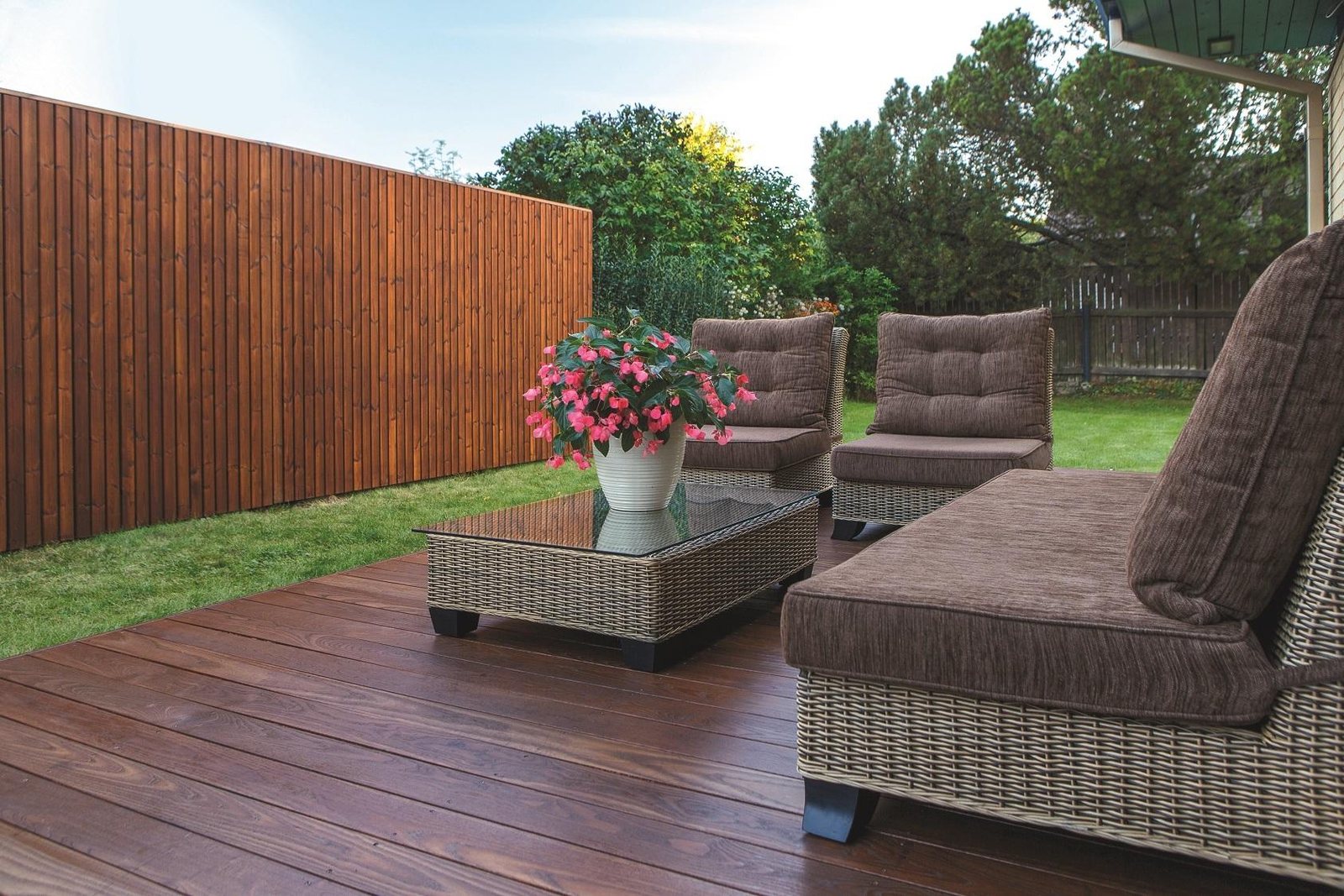
Buyers coming from the deck side of a project often ask for Ipe, botanical name Tabebuia spp, or Cumaru, Garapa, Jatoba or Red Balau. Those are excellent decking boards. They are also extremely hard and carry high oil content, which makes them difficult to glue, and a bench frame, a laminated seat rail, a box-beam bench base or a mitered apron all depend on glue lines. Name a decking species where the subject is genuinely decking. For milled, glued and machined seating components a millwork house reaches for Sapele, Iroko, Afrormosia, Teak or Utile instead, and the parts come together better for it.
Sapele runs about 1,410 lbf on the Janka scale, machines predictably and comes in a wide range of sizes and long lengths. For painted exterior components it is the better choice over Genuine Mahogany, which sits near 800 lbf and does not hold paint as well. Note one limit. Sapele is not milled 1x8 for exterior use, because it is too wide to stay stable in that thickness, so a wide seat surface gets built from narrower boards with drainage gaps rather than from a single wide plank. Cupping, incidentally, is driven by installation and back ventilation, not by species. A cupped seat slat is almost always a slat that could only dry from one face.
Iroko and Afrormosia give you outstanding weathering with a color that silvers gracefully. Teak remains the reference standard for marine-grade seating and the reason is dimensional stability rather than hardness. Utile fills in where you want Sapele character in a slightly softer, easier-machining stock. Species data on all of them is easy to cross-check at the Wood Database before you commit a schedule.
Sourcing paperwork rides along with the species choice. J. Gibson McIlvain is an FSC certified importer and miller, and chain of custody documentation follows the material when a specification calls for it, with certification details published by FSC. Where a CITES-listed species is involved, documentation and chain of custody travel with the material as a matter of course, and the listing appendices are maintained at CITES. Ask at order entry rather than at delivery. Retroactive paperwork is not a thing that exists.
Where a project calls for a modified product, Accoya runs roughly 1,600 lbf with acetylation giving dramatically reduced shrinkage and swelling, which makes it a strong candidate for painted seat frames and cleats. Thermory and Abodo Vulcan are both carried as well. Plan the lengths. Modified woods top out around sixteen feet, most sold on metric lengths just under sixteen feet, a hard ceiling set by kiln size. Thermally modified Ash is not available wider than eight inches, so a wide modified component means Accoya or Abodo Vulcan. And there are no warranties on solid unmodified wood. Warranties exist only on modified products, because it is not possible to warranty an organic material responding to its environment.
Moisture Content Decides When the Hardware Prep Happens
Machine the hardware into exterior seating stock at an in-service moisture content near 12 to 16 percent, not at the 6 to 8 percent that interior millwork targets. Prep a slot at interior moisture content and it closes on the fastener the first humid week outdoors.
Sequence matters. Mill to net section, let the stock sit at exterior equilibrium, then bore and slot. A shop that reverses that order produces parts that measure correctly on the bench and bind on the job. J. Gibson McIlvain mills exterior seating and blocking components to exterior in-service moisture content and records the target on the order, which is the sort of thing that stops being trivia when a bench goes into a covered pavilion in Arizona and another one goes onto an unroofed terrace in the Pacific Northwest.
Covered versus open changes the number. A seat under a solid gazebo roof lives closer to the dry end of that range, while an unroofed bench along a pergola bay sits at the wet end, and blocking buried against a masonry wall can run wetter still. Say which one you have when you place the order. It changes the slot length.
Extractives, Fasteners and What Happens at Every Contact Point
Specify stainless at every point where metal touches an exterior hardwood seat, and isolate the bracket from the wood with a gasket or a coating wherever the detail allows. The tannins and extractives that make Iroko and White Oak durable are the same compounds that turn a plain steel fastener into a black stain running down a seat face.
Type 316 stainless is the default near salt air, 304 inland. Hot-dipped galvanized works in some conditions and fails visibly in others. Aluminum brackets against wet tannin-rich wood are a corrosion problem you will see within a season. Material compatibility and corrosion test methods are documented through ASTM, and the relevant guard and connection provisions for seating that doubles as a railing element sit in the model codes published by the International Code Council.
Coat the bracket where it bears. A powder-coated or galvanized plate sitting directly on a seat rail traps a film of water at the interface. An EPDM or butyl isolation pad, or a bed of sealant at the bearing surface with the edges left open to drain, keeps that interface from becoming a permanent wet spot. Never seal all four edges of a bearing pad. Water gets in regardless and then cannot leave.
Seating Built Into Pergolas, Gazebo Perimeters and Railings
The moment a bench attaches to a pergola post, a gazebo knee wall or a railing system, the seating components and the structural components have to come off the same order and the same profile record. Two suppliers means two moisture histories, two color lots and a seam you will look at forever.
Pergola-integrated seating hangs off the post or off a beam between posts. The shop preps the post with a machined flat where the standoff lands, drills through for the bolt, and supplies the seat frame with matching clearance. Gazebo perimeter seating usually rides a French cleat on the inside face of the knee wall, which lets the whole seat box lift off for maintenance. Railing-integrated seating is the fussiest of the three, because the seat back and the guard are frequently the same element and the guard has code obligations the seat does not.
Rafter tails, brackets and knee braces on the same structure should share a profile record too. The J. Gibson McIlvain profile library holds thousands of ground knives with new knives ground every week, so a bracket profile that matched a rafter tail in phase one can be pulled and run again in phase three. If the profile is not in the library it gets ground to match, including difficult historical restoration work and contemporary shapes. Where a project sits in a historic district, the treatment guidance from the National Park Service expects like-for-like replacement of both profile and species.
Two more items belong on the schedule at this stage. Hardwood grade rules published by the National Hardwood Lumber Association describe clear face yield rather than appearance on a finished seat, so a bench schedule should call out the intended visible face separately from the grade. And where accessible seating is in scope, the bench provisions in the standards administered by the United States Access Board set seat depth, height and back requirements that drive the cleat height before any of the millwork gets drawn.
| Mounting condition | What the shop preps | Drainage and ventilation detail | Set on site by the installer |
|---|---|---|---|
| French cleat on a gazebo knee wall | Matched bevel pair milled from the same lot, back-beveled top face, pre-drilled at layout spacing | Continuous gap behind the seat box, open ends so the cleat cavity drains | Anchors into the wall framing, shimming to level |
| Steel bracket under a wall-hung seat | Flat-bottomed counterbores, slotted clearance holes, lead holes sized to the species | Isolation pad at the bearing face with edges left open | Structural anchors, torque, bracket alignment |
| Standoff block on a pergola post | Machined block with sealed end grain, oversized through hole, matching flat on the post face | Air gap of roughly three eighths to three quarters of an inch behind the seat | Through-bolts, washers, final gap verification |
| Ledger cleat between pergola posts | Moulder-run straight stock in long single lengths, primed on all faces before shipping | Sloped top face, no horizontal ledge that can hold debris | Lags into the post, flashing where required |
| Freestanding leg and stretcher frame | Mortise and tenon or lock miter joinery, end grain sealed, feet held above grade | Open under-seat volume, no closed box that traps moisture | Placement, leveling, any anchoring to paving |
Priming the Faces Nobody Will Ever See
Cleats, blocking and standoffs fail before seat slats do, and the reason is almost always that the hidden faces went out unprimed. A seat face gets six coats of attention and a cleat back gets none, then the cleat back is the surface pressed against a wet wall for two decades.
J. Gibson McIlvain primes in three levels, in both oil-based and water-based systems, and exterior primed trim carries a fungicide additive. Open-grained and oily species absorb a great deal of finish, so the primer coat is what evens out the eventual painted surface rather than letting it go blotchy. Sanding or buffing after priming knocks back grain raising while keeping moulded detail crisp, which on a bevel-cut cleat is the difference between a crisp mating joint and a fuzzy one.
Prime before the hardware prep or after? Prime after boring, and seal the bores. A primed part with raw wood inside every counterbore has a dozen open end grain wicks pointed straight into the section. Ask for bores and slots to be sealed on the same pass.
On clear-finished Teak or Iroko seating, accept that the surface will silver unless someone maintains it, and detail for that outcome rather than against it. What must not be skipped either way is end grain sealing on every cut end, including the ends of standoff blocks and the ends of cleats, which absorb many times faster than face grain.
"The parts people forget to order are the cleats, the blocking and the standoff blocks, and those are the parts that decide whether the bench is still tight in ten years. We put them on the cut list with the seat, mill them from the same lot, prime the hidden faces and ship them in the same crate so nothing gets improvised on site."
Norm Moton, Director of Sales, J. Gibson McIlvain
How J. Gibson McIlvain Would Specify This
Put the brackets, cleats and standoffs on the cut list as named parts with their own species, moisture target, hardware prep and finish schedule, then order them with the seating they carry. That is the whole method, and it is not complicated. It just has to be done before the order goes in rather than after the crate opens.
A working specification reads something like this. Seat slats and rails in Sapele or Iroko, milled to exterior in-service moisture content near 12 to 16 percent. Cleat stock quartersawn from the same lot, moulder-run in single lengths, back-beveled on the top face. Standoff blocks machined with oversized through holes and sealed end grain. Counterbores flat-bottomed and sealed, one fixed fastener per member with slotted clearance everywhere else, lead holes sized to the species. Stainless hardware throughout, 316 near salt air. All hidden faces primed with a fungicide additive in the exterior system.
J. Gibson McIlvain runs a full millwork shop on site at the lumber yard and ICD, the architectural millwork division, handles the true custom side, which is why the linear cleat runs and the shaped bracket and seat components can come off one order and one profile record. J. Gibson McIlvain grinds the knife, mills the parts, primes the hidden faces and stores finished millwork for inventory control when a phased job is not ready to receive everything at once. The company runs its own fleet of trucks along with a section of the mill dedicated to packaging, and ships nationwide, regularly to California, which matters when a primed seat face has to arrive without a scuff across it.
Seventh generation, family run, in business since 1798. That continuity is the practical reason a knife and a record stay on file long enough to matter when phase three of a park or a campus finally funds. Standards for moulding and millwork production are maintained through the Wood Moulding and Millwork Producers Association if you want the industry reference behind the profile work, and the J. Gibson McIlvain millwork service page covers the linear trimwork, finished cladding and primed trim side. For the custom seating, bracket and bench components described here, start with ICD exterior millwork and the ICD working process.
Send the elevation, the section through the seat, the bracket manufacturer's cut sheet and the exposure. Call 800-638-9100 and talk it through with someone who will ask about the gap behind the seat before they ask about anything else.
Frequently Asked Questions
Does J. Gibson McIlvain supply the steel brackets themselves, or only the wood?
The wood. J. Gibson McIlvain mills the seating, cleat, blocking and standoff components and machines them to receive whatever hardware the design calls for, including counterbores, slotted clearance holes and lead holes sized to the species. Send the bracket manufacturer's cut sheet with the order so the hole pattern and bearing surfaces get machined to match. The brackets themselves come from the hardware supplier, and setting the anchors is the buyer's own installer or fabricator. The company supplies and mills, it does not install and does not field measure.
Should the fastener holes in a bench seat be round or slotted?
One round hole per member as the fixed point, slotted everywhere else, with the slots running along the axis of expected cross-grain movement. A seat slat or glued panel crossing steel brackets will change width seasonally and steel will not, so pinning both ends splits the wood or shears the fastener. Slot length gets sized from the published shrinkage coefficients for that species and the difference between the wettest and driest expected in-service moisture content, not from a rule of thumb. Tell the shop whether the bench is covered or fully exposed, since that changes the number.
How much gap should sit behind a wall-mounted or post-mounted bench back?
Roughly three eighths to three quarters of an inch is the working range. That is enough for drainage and convective drying without making the seat look detached from the wall. The gap is only reliable if a machined standoff block enforces it, because a loose washer stack gets compressed or omitted in the field. Keep the under-seat volume open as well, with no horizontal ledge that can collect leaf litter. Most cupped and blackened bench backs are wood that could only dry from one face.
Can I use Ipe for the bench frame since the deck is already Ipe?
For the deck boards themselves, yes. For a milled and glued bench frame, a millwork shop will steer you elsewhere. Ipe, botanical name Tabebuia spp, along with Cumaru, Garapa, Jatoba and Red Balau, is extremely hard and carries high oil content, which makes it difficult to glue, and bench frames, laminated rails, box-beam bases and mitered aprons all depend on glue lines holding. Sapele, Iroko, Afrormosia, Teak and Utile machine cleanly, glue reliably and hold a fastener, which is why they are the working palette for seating components. A visual match between a deck and a nearby bench is usually handled through detailing and finish rather than by forcing a decking species through millwork operations.
What stainless grade should bench hardware be, and does the bracket need isolation?
Type 316 near salt air, 304 inland. Plain steel against tannin-rich species like Iroko or White Oak produces black staining that runs down the visible seat face, and aluminum in contact with wet extractive-rich wood corrodes within a season. Where a bracket bears directly on a seat rail, an EPDM or butyl isolation pad, or a bed of sealant with the edges left open to drain, keeps a permanent film of water out of that interface. Do not seal all four edges of a bearing pad, since water will find its way in and then cannot leave.
Can a continuous cleat run be made from modified wood?
It can, with one planning constraint. Modified woods top out around sixteen feet, and most are sold on metric lengths just under sixteen feet, a ceiling set by kiln size. Accoya runs roughly 1,600 lbf with acetylation giving dramatically reduced shrinkage and swelling, which suits a painted cleat that has to stay straight. Thermory and Abodo Vulcan are both carried as well, though thermally modified Ash is not available wider than eight inches, so a wide modified component means Accoya or Abodo Vulcan. Note also that warranties exist only on modified products. It is not possible to warranty solid unmodified wood, which is an organic material responding to its environment.
Should bench components be primed before or after the hardware is machined?
Bore and slot first, then prime, and ask for the bores and slots to be sealed on the same pass. A primed part with raw wood inside every counterbore has a set of open end grain wicks pointed straight into the section. J. Gibson McIlvain primes in three levels, in both oil-based and water-based systems, with a fungicide additive on exterior work, and the hidden faces of cleats, blocking and standoff blocks matter more than the seat face because they spend their life pressed against a damp surface.
Who handles mounting height, layout and anchoring into the wall?
The buyer's installer. J. Gibson McIlvain mills the components, machines the hardware prep, primes the hidden faces and ships the parts together, and the installer sets the anchors, shims to level and verifies the final gap behind the seat. Where accessible seating is in scope, seat height, depth and back requirements come out of the applicable accessibility standards and should be fixed on the drawings before the cleat height is milled, since the cleat position is what locks the seat height in place.
Sources and Standards Referenced
- Wood Handbook: Wood as an Engineering Material, USDA Forest Products Laboratory
- American Wood Council Codes and Standards
- Building Science Corporation
- ASTM D1761, Mechanical Fasteners in Wood and Wood-Based Materials
- International Code Council
- United States Access Board, ADA Accessibility Standards
- The Secretary of the Interior's Standards for the Treatment of Historic Properties, National Park Service
- National Hardwood Lumber Association
- Wood Moulding and Millwork Producers Association
- Forest Stewardship Council
- CITES, Convention on International Trade in Endangered Species
- The Wood Database, Sapele