The Species Question Has a Short Answer, the Approval Does Not
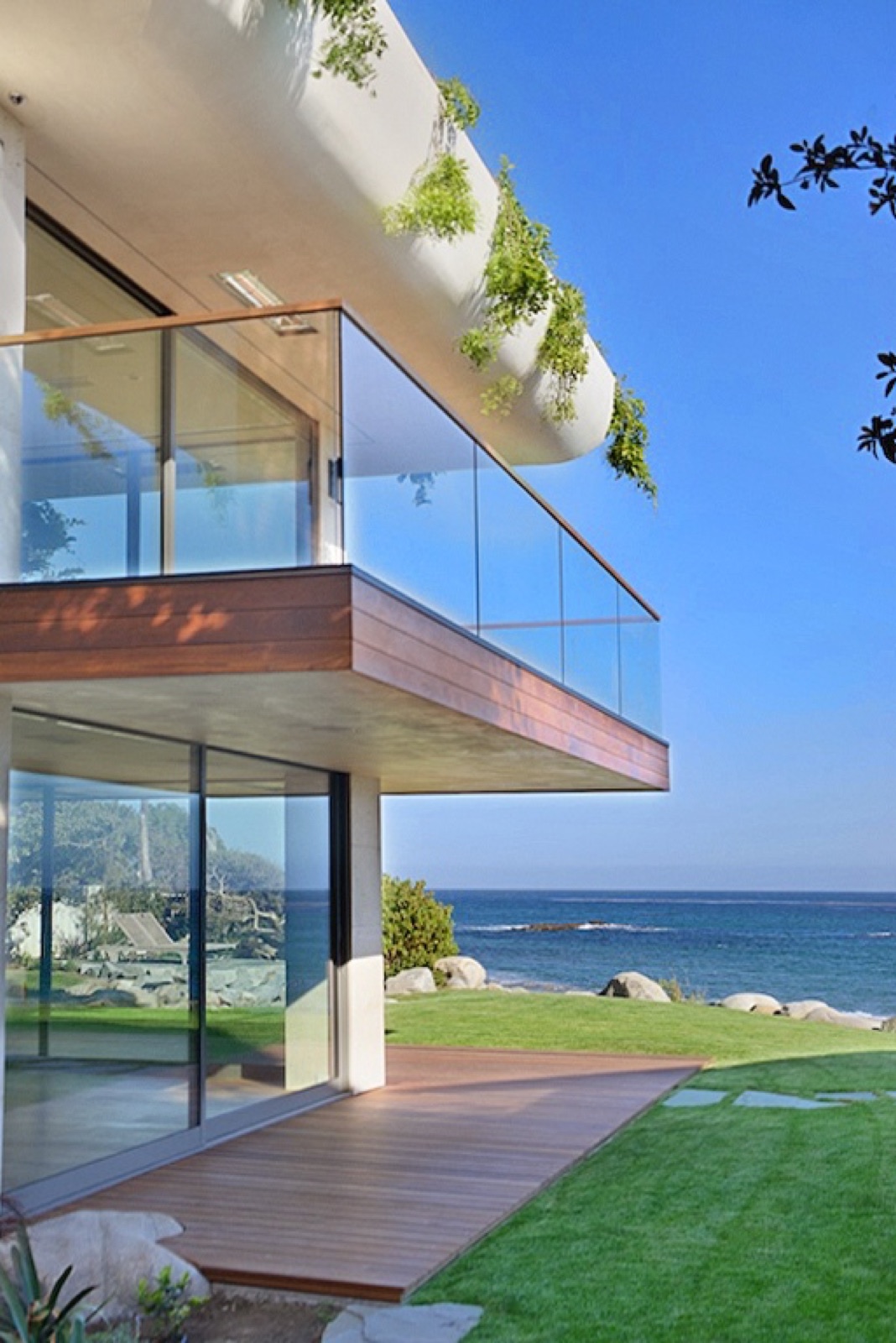
Ipe, Cumaru and Jatoba are the tropical hardwoods that belong on a high-rise balcony governed by wind uplift review, and they clear that review on dead weight, screw-holding and restraint detailing, not on any rating stamped into the board. No deck board on the market carries a wind uplift listing by itself. The plan reviewer approves a load path that runs from board to fastener, fastener to sleeper or joist, and sleeper to slab. What the species contributes to that path is mass and withdrawal capacity. The dense tropicals contribute more of both than anything else you can lay on a balcony floor.
This article works through the numbers a specifier has to produce before that approval lands. Pounds per square foot by species and thickness. What happens to design pressure at the balcony corners. Why a screw behaves differently in wood at 3,680 pounds Janka than in treated pine. What belongs in the submittal folder before anyone releases material. J. Gibson McIlvain stocks Ipe decking in every standard and custom dimension, from 5/4 profiles through full 2x sections, and ships it nationwide from its Maryland yard, regularly onto California high-rise work. Inventory depth matters on these jobs. A balcony package consumes odd length runs and 2x sections that a retail deck yard cannot pull, and a commercial importer can.
Board Density Is a Structural Input, So Run the Dead Load Math First
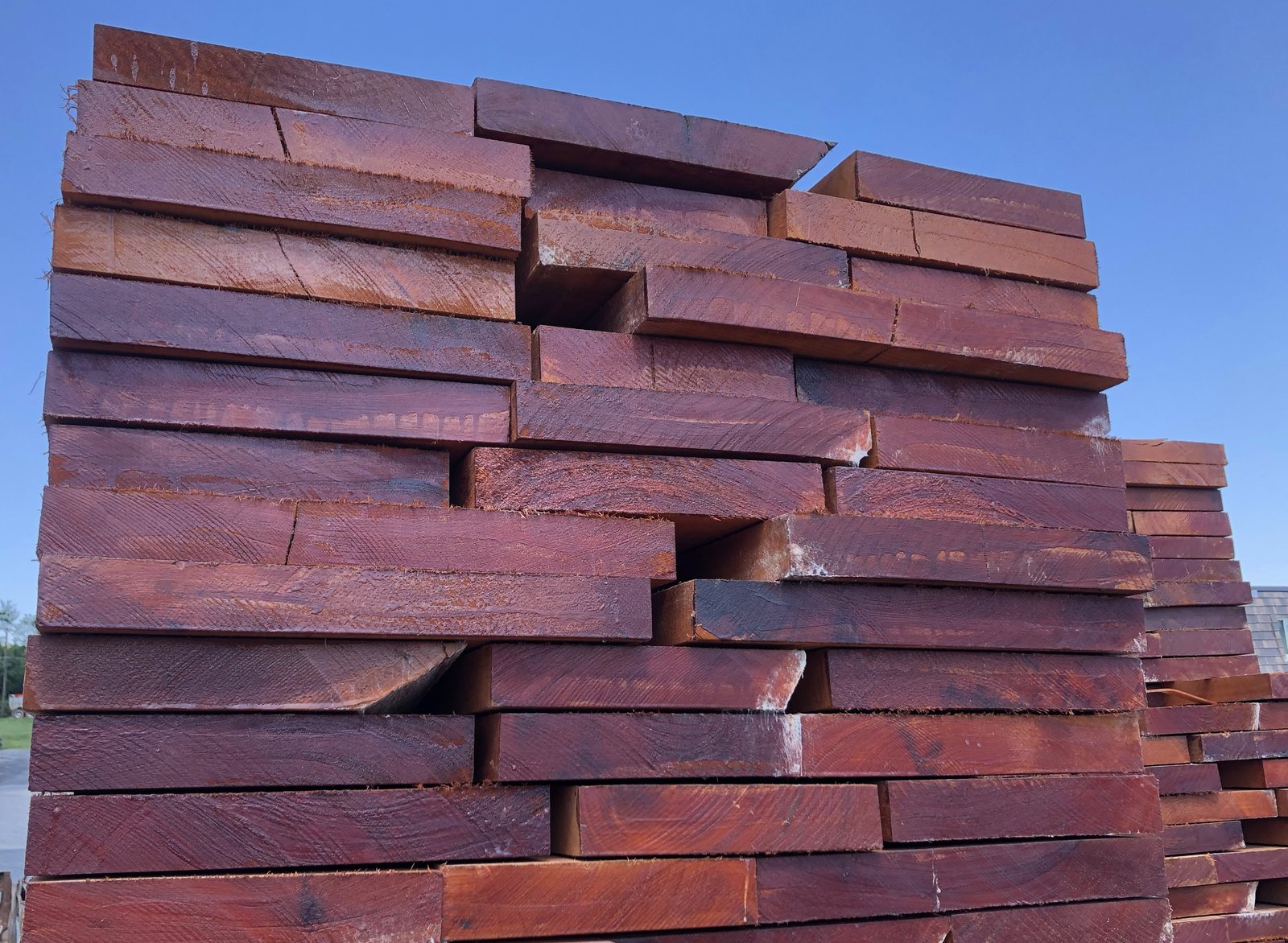
A dense tropical deck board brings roughly four to eight pounds per square foot of dead weight to the assembly, and that single number works for you in the uplift check and against you in the slab dead load allowance, so it goes on paper before the species gets picked. The arithmetic is short. A 5/4x6 board covers about 2.1 linear feet per square foot of finished deck. At a density near 1,050 kg per cubic meter, 5/4 Ipe lands around 5.3 pounds per square foot. Full 2x Ipe runs close to 8. Cumaru sits within a few percent of those figures. Jatoba comes in lighter, around 4.6 pounds in 5/4, and Garapa and Red Balau lighter still. The Wood Database entry for Ipe confirms the density and hardness values behind these figures.
Two engineers on the same project want this number for opposite reasons. The one checking the cantilevered slab wants it low. The one checking a pedestal supported or loose-laid walking surface wants it high, since a surface with no mechanical tie to the structure resists suction with ballast weight alone. Dense hardwood is the rare finish material that helps the ballast check without stacking concrete pavers on the slab. Light species and light thicknesses push the design toward mechanical hold-downs. Heavy species and 2x thickness give the calc room. Neither answer is free, which is why the species table below compares dead load and thickness availability rather than color and grain.
| Species | Density (kg/m3, approx.) | Janka hardness (lbf, approx.) | Dead load, 5/4x6 (psf, approx.) | Consistent 2x availability | High-rise balcony role |
|---|---|---|---|---|---|
| Ipe (Tabebuia spp.) | 1,050 | 3,680 | 5.3 | Yes | First choice for public and amenity decks; ASTM E84 Class A |
| Cumaru | 1,070 | 3,540 | 5.4 | Yes | Close second where budget presses; costs less than Ipe |
| Jatoba | 910 | 2,690 | 4.6 | Yes | Workable 2x option with warmer color |
| Red Balau | 850 | 1,700 to 2,000 | 4.3 | No | Residential balconies, engineer-approved 5/4 work |
| Garapa | 830 | 1,700 | 4.2 | No | Residential balconies, engineer-approved 5/4 work |
| Massaranduba (comparison only, not stocked by J. Gibson McIlvain) | 1,150 | 3,190 | 5.8 | No | Dense but movement-prone; rarely specified on elevated commercial work |
The Corner of the Balcony Is a Different Design Problem Than the Field
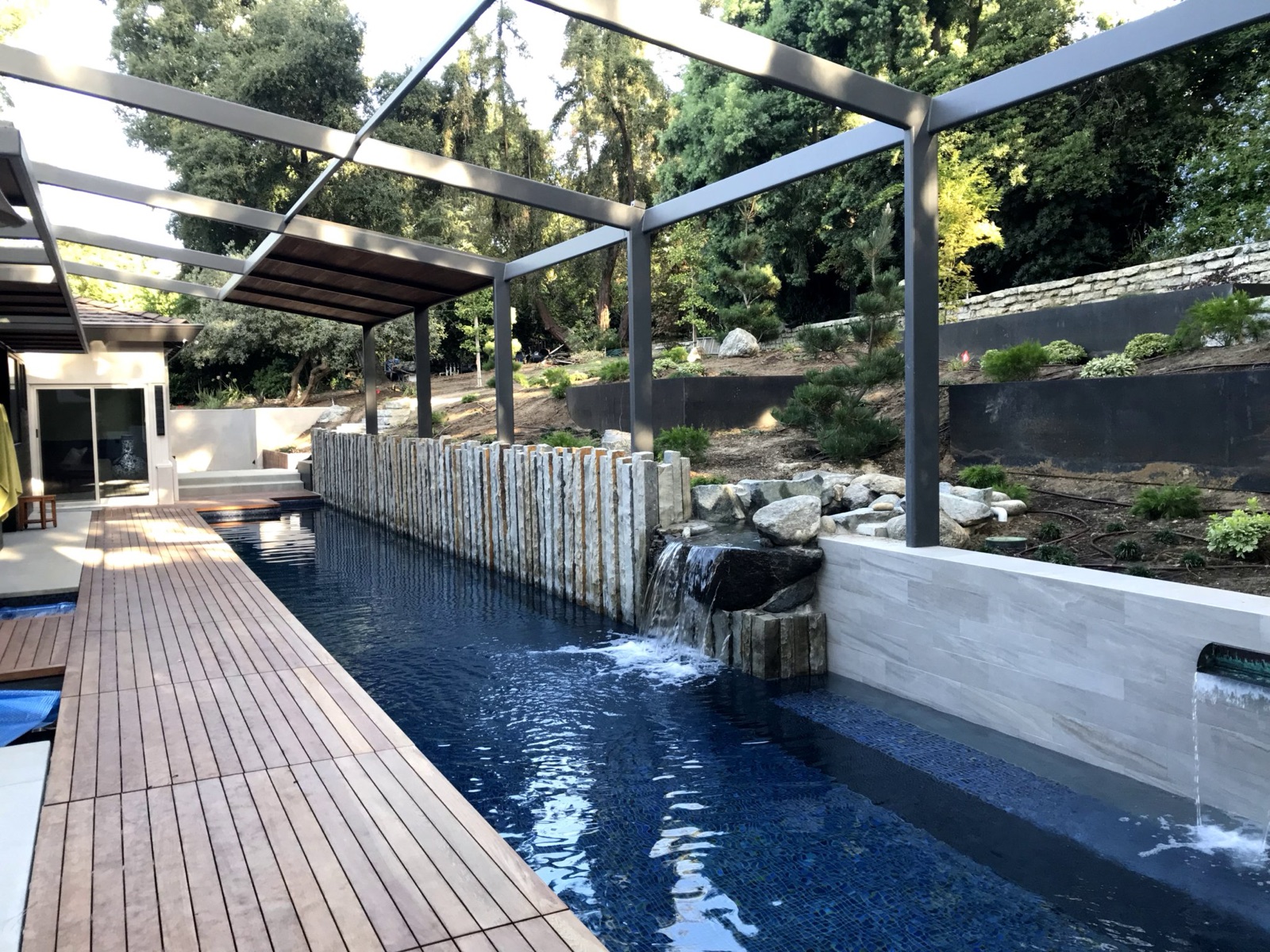
Component and cladding pressures climb sharply in edge and corner zones, and on a tall building a balcony corner can see design suction several times the field value, so the perimeter detailing decides whether the deck passes. ASCE 7 treats a deck surface as a component, not as part of the main wind force resisting system, and the component pressures grow with building height, exposure category and proximity to edges. The International Building Code pulls those provisions in by reference, and the American Wood Council's codes and standards program maintains the wood-side design documents the engineer will lean on when converting pressures into a fastener schedule.
The field of the deck and the perimeter get treated differently in practice. In the field, a pedestal supported surface may float on its own weight if the ballast math clears. At the perimeter and in the corner zone it will not, and the honest detail is mechanical restraint there regardless of what the field does. That means a picture frame border screwed to blocking, tighter fastener spacing over the outer joists, and continuous restraint on any board within the corner zone the engineer defines. Upper floor balconies near the roof line take the worst of it. Specify the corner detail once, on the drawings, and the inspection goes quietly. Leave it to the installer's judgment and it becomes the item that stalls the certificate of occupancy.
Dense Hardwood Turns Every Screw Into a Number the Engineer Can Count
Screw withdrawal capacity rises with the specific gravity of the wood, so a fastener seated in Ipe or Cumaru holds harder than the same fastener in any softwood decking, and that difference is precisely what an uplift calculation can use. The USDA Forest Products Laboratory publishes the withdrawal design relationships in the Wood Handbook, and they scale on density. Wood at a specific gravity near 1.0 grips threads at levels treated lumber never approaches. That is the quiet reason dense tropical decking suits uplift-governed work. Each of the two screws at every bearing point is worth more.
Dense stock demands technique in exchange. Pilot every hole, no exceptions, with a bit sized for the fastener minor diameter. Run two fasteners per board at every joist. Hold about 3/4 inch of edge distance. Drill full depth pilots near board ends, where splitting starts. Land butt joints on doubled bearing so each board end gets its own full seat. A self-centering combination bit keeps the countersink concentric and the depth repeatable across thousands of holes. Within reach of salt air, and most high-rise balcony work qualifies, use 316 stainless fasteners. One more point saves arguments on site. Boards do not arrive pre-drilled, from any mill, and should not. Hole layout only exists once the frame is built, and field cuts would invalidate a factory pattern by the second row. Drilling is installation work, done against the joists as they actually sit.
The Board Profile Decides Your Fastening Options Before the Engineer Does
Face-screwed square edge decking gives the uplift calc a countable connection at every bearing point, which is why it is the default surface on an open high-rise balcony. The profile rules are firm. Shiplap takes visible fasteners through the face. Only tongue and groove works with hidden fasteners, and on an exterior deck it belongs under covered area where standing water never sits in the joint. Any drainage groove milled into a board faces down, so the relief sheds water instead of channeling it. The decking lands on furring strips, sleepers or joists, never directly on a membrane, and the assembly needs air moving across both faces of every board. The building science on drying assemblies is well documented at Building Science Corporation, and it applies to a balcony deck exactly as it applies to a rain screen wall.
Elevation raises the stakes on ventilation. A balcony deck sits in wind, sun and reflected heat off glass, and it dries hard from the top while the underside stays cooler. Sleeper height, open joints near 1/4 inch, and clear drainage at the perimeter keep the moisture cycling survivable. Joists or sleepers at 16 inches on center is the spacing dense hardwood decking wants. Wider spacing invites bounce, and bounce is the complaint that arrives before any code issue does.
Public and Amenity Balconies Get Specified at 2x, and That Filters the Species List
Commercial balcony, boardwalk and plaza surfaces are specified at full 2x thickness to control deflection, and only Ipe, Cumaru and Jatoba can be sourced consistently at that thickness, which quietly removes every other species from the running. The strength math for 5/4 stock over 16 inch centers pencils out on paper. It does not matter. No professional goes first with a thinner board on a public job, and no building owner wants an amenity deck that reads as springy underfoot. The 2x spec is how commercial decks are written, and a species that cannot be supplied in 2x, order after order, cannot be specified for the work. Red Balau and Garapa are honest decking woods with a real place in residential balconies and engineer-approved 5/4 assemblies. On the pool deck of a condominium tower they are the wrong answer, not on merit but on availability at thickness.
The balcony jobs that go sideways are the ones where the deck package got priced before anyone read the wind report. I ask two questions up front. What are the corner zone pressures, and is the perimeter restrained mechanically. Once those answers exist, we can run 2x6 Ipe for a forty story amenity deck as easily as a backyard order, and I can tell the contractor exactly what length package to buy so the butt joints land where the engineer wants them.
Norm Moton, Director of Sales, J. Gibson McIlvain
The Submittal Folder Wins the Approval, So Build It Before Material Ships
A high-rise plan reviewer will ask for a fire test report, a fastener schedule, an uplift calculation and a paper trail on the wood itself, and every one of those documents exists before the order is placed if the supplier is set up for commercial work. Start with fire. Most high-rise balconies sit on noncombustible construction types, and the finish surface will be held to a Class A flame spread rating under ASTM E84, meaning a flame spread index of 25 or less. Ipe carries that Class A rating in its natural, untreated state, which is a genuinely unusual property for an organic decking material and worth stating plainly in the submittal.
Then the sourcing paper. Projects chasing certification credits can request FSC chain of custody material, documented through the Forest Stewardship Council, and those documents feed directly into LEED materials credits. Import compliance rides along with every tropical shipment. When using a CITES-listed species, documentation is required through the CITES permit system, and every shipment needs an accurate Lacey Act declaration of species and country of harvest. A commercial importer handles this paperwork as routine. Confirm it before the material ships, not after, and the reviewer never has a reason to slow the job.
Wind Exposure at Height Accelerates Surface Checking, and No Spec Eliminates It
Surface checking in dense tropical decking is the board releasing tension as its face dries faster than its core, it does not weaken the board, and a balcony deck thirty floors up dries its face faster than any deck on grade, so the spec manages checking instead of promising to prevent it. Anyone who writes a checking-free guarantee into a tropical hardwood spec has set the project up for a claim. Small surface checks are normal in dense material, even a sign of properly seasoned stock. What the buyer can control is how large they get. J. Gibson McIlvain factory coats its tropical decking with Cutek, a penetrating oil stabilizer that slows the moisture swing at the surface and significantly reduces checking in service.
Site practice does the rest. Verify moisture content at delivery against the 12 to 16 percent in-service range the material will live at. Seal every field-cut end the day it is cut, since end grain loses moisture many times faster than face grain. Keep the ventilation paths open under the deck. Let the material acclimate on stickers at the floor it will be installed on, not in a ground level container. Do all of that and the checks stay small and cosmetic. Skip it and the same boards will open up, and the species will take the blame for a storage decision.
Modified Wood Is the Legitimate Alternate, With a Length Ceiling and a Weight Question
Thermory and Abodo Vulcan thermally modified decking, and acetylated Accoya, earn a place on balconies where dimensional stability or a manufacturer warranty drives the decision, but they top out around 16 feet and they weigh far less than the tropical species. The length limit is physical, set by the modification kilns, with metric stock running just under 16 feet, so the layout gets planned around that ceiling from the first drawing. The stability is real. Modified boards move less through the seasons than unmodified wood, and they are the only decking products on this page that can carry a manufacturer warranty, since no responsible supplier warrants solid unmodified lumber against what weather does to it.
The uplift angle cuts the other way. Modified woods run light, which means they contribute little ballast, and a loose-laid strategy that pencils under 2x Cumaru will not pencil under thermally modified pine. Specify modified decking mechanically fastened, with the same perimeter and corner discipline as the hardwoods. J. Gibson McIlvain carries Thermory alongside Abodo Vulcan, plus Accoya, and can quote them against a tropical package on the same takeoff so the design team compares real numbers instead of brochures.
How J. Gibson McIlvain Would Specify This
Write the balcony deck as a complete assembly, species and thickness and restraint together, and the wind uplift review becomes a checklist instead of a negotiation. For a public or amenity balcony, the baseline reads like this. Ipe (Tabebuia spp.), full 2x6, over sleepers or joists at 16 inches on center, face-screwed with two 316 stainless fasteners at every bearing point, pilot drilled, with a mechanically restrained perimeter and tightened fastener spacing through the engineer's corner zones. Cumaru or Jatoba substitute cleanly where the design allows. For a private residential balcony, 5/4x6 Ipe, Garapa or Red Balau works over the same framing with the engineer's sign-off. Grooved drainage profiles face down. Tongue and groove appears only under cover. Every board arrives factory coated with Cutek, and every field cut gets end sealed the same day.
Ask the supplier for the E84 documentation, the density and hardness data behind the dead load line, FSC chain of custody where the project wants it, and a length package planned so butt joints fall on doubled bearing. J. Gibson McIlvain mills Ipe decking to standard and custom balcony profiles and delivers contractor volume nationwide, with the paperwork a high-rise submittal needs riding in the same folder as the tally. Call 800-638-9100 with the wind report and the balcony dimensions, and a sales team that handles this class of project every week will build the package around the numbers.
Frequently Asked Questions
How much does tropical hardwood balcony decking weigh per square foot?
A 5/4x6 board covers about 2.1 linear feet per square foot, so 5/4 Ipe at roughly 1,050 kg per cubic meter installs at about 5.3 pounds per square foot and full 2x Ipe at close to 8. Cumaru is within a few percent of Ipe, Jatoba runs around 4.6 pounds in 5/4, and Garapa and Red Balau are lighter again. Give the structural engineer this number early, since it counts against the slab dead load allowance and counts for the deck in any ballast-based uplift check.
Can the decking come pre-drilled from the mill to speed up installation?
No, and a buyer should be suspicious of anyone offering it. Fastener holes only make sense against the frame as it was actually built, and layout adjustments plus field cuts would invalidate a factory hole pattern within the first rows. Drilling is site work. Pilot every hole, run two fasteners per board at each joist, hold about 3/4 inch of edge distance, drill full pilots near board ends, and use a self-centering combination bit to keep countersinks consistent.
Do the corner boards of a balcony need different fastening than the middle of the deck?
Yes. Component and cladding pressures under ASCE 7 rise steeply in edge and corner zones, so the engineer will define perimeter and corner areas that need mechanical restraint and tighter fastener spacing even where the field of the deck floats on a pedestal system. Detail a face-screwed picture frame border on blocking and restrain every board inside the defined corner zone.
Is Garapa or Red Balau acceptable on a condo tower amenity deck?
Not on the public or amenity surfaces. Commercial balcony and plaza decks are specified at full 2x thickness to control deflection, and only Ipe, Cumaru and Jatoba can be sourced consistently at 2x. Garapa and Red Balau are sound decking species for private residential balconies and for 5/4 assemblies an engineer has approved, which is where they belong.
Can hidden fasteners be used on an open high-rise balcony deck?
Only tongue and groove profiles work with hidden fasteners, and tongue and groove belongs under covered area where water cannot sit in the joint. On an open balcony, face-screwed square edge decking is the default, and it happens to be the connection an uplift calculation can count directly. Shiplap profiles take visible fasteners, and any drainage groove milled into a board faces down.
Does the factory-applied Cutek coating stop surface checking?
It significantly reduces checking, it does not eliminate it, and no honest supplier will promise otherwise. Checking is the board releasing tension as its face dries faster than its core, it does not weaken the board, and small surface checks are normal in dense tropical decking. Verifying moisture at delivery, sealing field-cut ends and keeping the assembly ventilated keeps checks small.
What paperwork should the lumber supplier hand over for high-rise plan review?
ASTM E84 flame spread data supporting a Class A rating where the construction type requires it, species and density documentation behind the dead load line, FSC chain of custody certificates when the project pursues LEED or similar credits, and clean import records. When using a CITES-listed species, documentation is required through the CITES permit system, and every tropical shipment carries a Lacey Act declaration. A commercial importer produces all of this as routine.
Sources and Standards Referenced
- USDA Forest Products Laboratory, Wood Handbook: Wood as an Engineering Material
- International Building Code (IBC 2021)
- ASTM E84, Standard Test Method for Surface Burning Characteristics of Building Materials
- American Wood Council, Codes and Standards
- The Wood Database, Ipe
- Forest Stewardship Council
- CITES, Convention on International Trade in Endangered Species
- U.S. Green Building Council, LEED