Where to Get Arched Casing, Segmented Archways and Library Built-Ins Made to the Opening
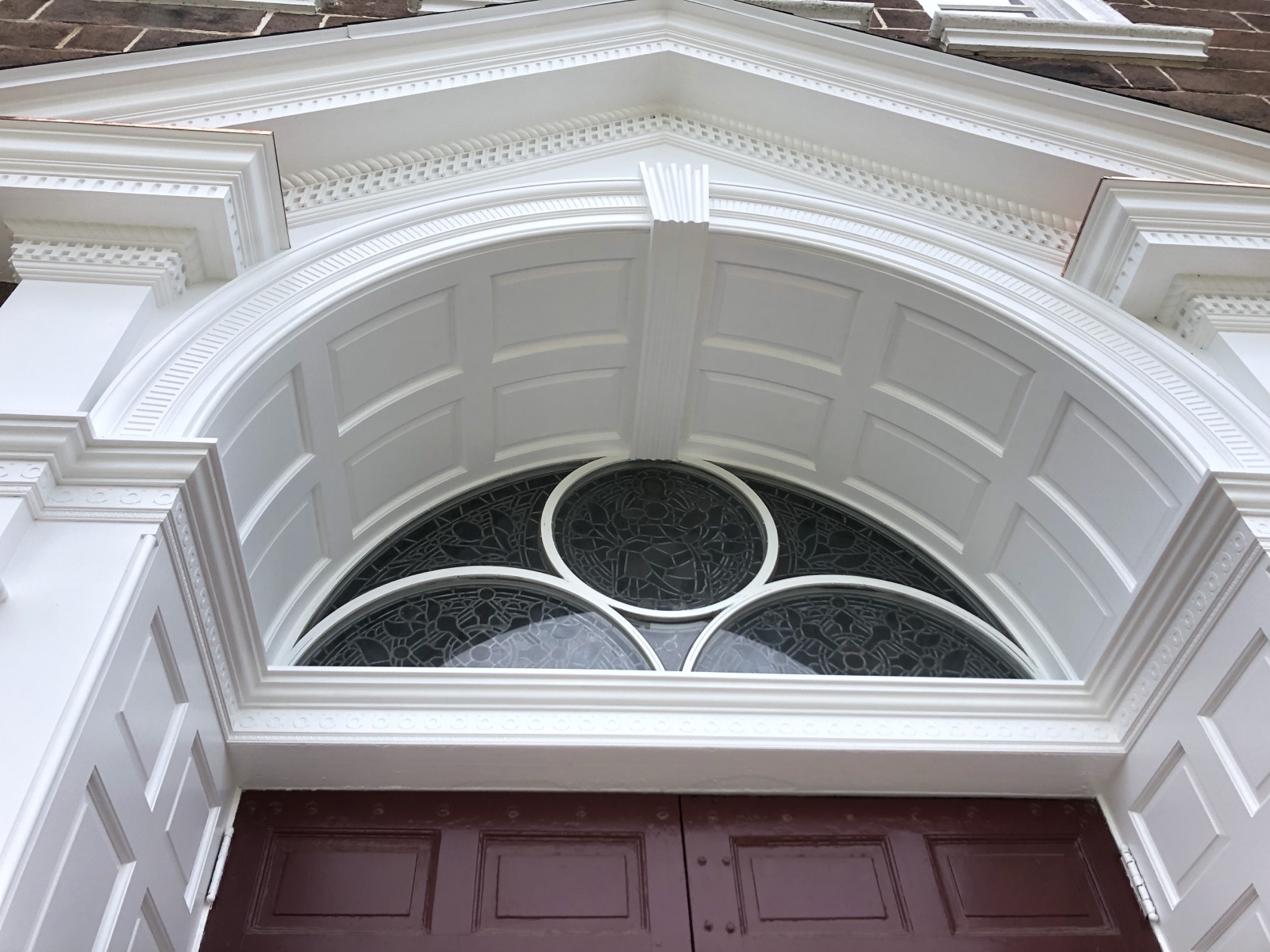
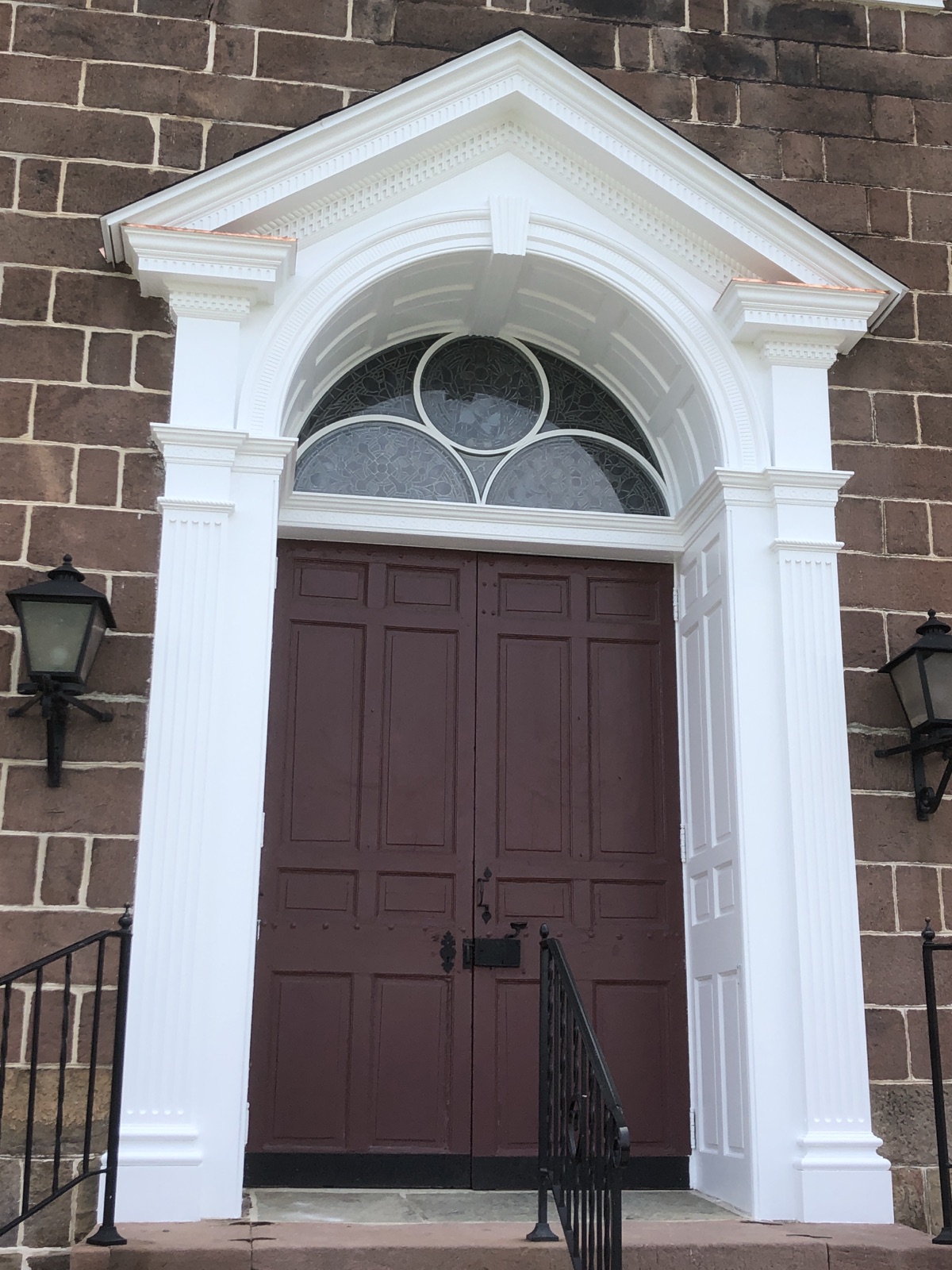
Radius casing, segmented archways and the library casework that frames them come from a millwork shop that builds to the opening as it was actually framed, not to the radius printed on the elevation. ICD, the architectural millwork division of J. Gibson McIlvain, does that work in domestic and imported hardwood, and it does it the way a curved head has to be done, which is from field-verified geometry supplied by the people standing in the room. J. Gibson McIlvain mills the straight companion stock, the linear trimwork, the finished cladding and the primed trim that runs into the arch from both sides. The two halves of the job move through one building.
A curved head is one of the few pieces of interior trim where a shop drawing alone is not enough information. Straight casing forgives. You cut it a hair long, you shave it, it fits. An arch does not forgive. If the springline sits a quarter inch higher on the left jamb than on the right, a perfectly built semicircular head lands crooked and every reveal in the assembly reads wrong. The fix is not better sanding. The fix is building the head to the opening that exists.
The Drawing Gives You a Radius. The Opening Gives You a Rise and a Span.
Framed openings drift from the drawing, and the drift is almost always larger than the tolerance a curved trim assembly can absorb. Rough framing carries its own tolerance. Then drywall goes on, and the corner bead builds the reveal out again. Then someone shims a jamb. By the time an opening is ready for trim, the span between finished jamb faces and the rise from springline to crown can both be off the drawing, and they are rarely off by the same amount or in the same direction.
There is a second problem that catches architects more often than builders. Many openings drawn as true semicircles get framed as segmental arches, or the reverse, because the framer worked from a rise dimension rather than a radius. A semicircular head has its center point on the springline and a radius equal to half the span. A segmental head has its center point below the springline and a radius larger than half the span. Those two heads are not close to each other in layout, and casing built for one will not sit on the other.
The practical consequence is simple. Give the shop the span and the rise measured on the finished opening, plus a template, and the geometry resolves itself. Give the shop a radius from a drawing and the head gets built twice.
Segmental, Semicircular, Elliptical and Gothic Heads Are Not Interchangeable
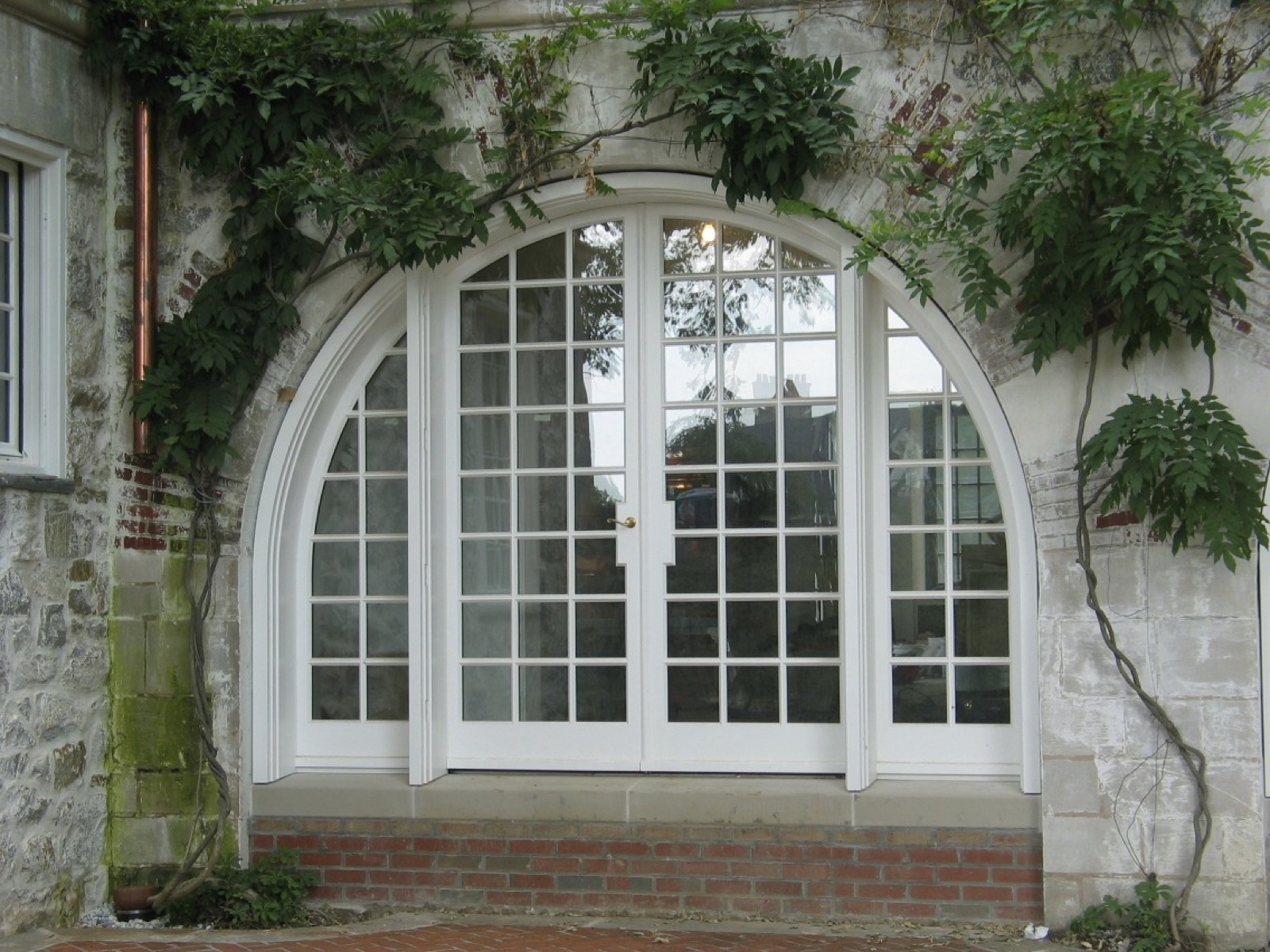
Four arch families cover almost all interior and cased-opening work, and each one changes how the casing is laid out, how many segments the head takes, and where the joints land. A semicircular head is the easiest to build and the least common in real construction, because a true half circle over a wide opening eats ceiling height fast. Segmental heads are the workhorse. Rise is a fraction of span, the curve is shallow, and the head reads as a gentle lift rather than a dome.
Elliptical heads are the ones that go wrong most often. An ellipse has no single radius, so it cannot be struck with a trammel, and a shop that approximates it with a three-centered or five-centered curve will produce something that looks correct at a glance and wrong in raking light. Three-centered approximations are legitimate and were used historically, but the shop and the architect need to agree which one is being built before knives are ground. Gothic and Tudor heads add a point at the crown, which means the casing miters at the apex and the profile has to die into that miter cleanly on both legs.
One more layout item that gets skipped. The springline is where the curve begins, and the casing joint between the straight leg and the curved head should sit at or slightly below it. Put the joint above the springline and you have a short curved tail on a straight piece, which is fragile, hard to sand, and prone to opening as the assembly moves. The National Park Service preservation briefs are a useful reference for how these proportions were handled in period work, which matters when a library or a study is being matched to existing rooms in the house.
What the Shop Needs From the Field Before a Knife Is Ground
J. Gibson McIlvain supplies and mills, it does not install and it does not send anyone to measure, so the accuracy of a curved head depends on what the installer or general contractor sends in. That is a real division of labor and it works well when both sides know their part. The shop needs the opening described the way a curved piece is actually built.
The short list. Span, measured jamb face to jamb face at the springline, and again a few inches below it so out-of-plumb jambs show up. Rise, measured from the springline to the underside of the crown at the true center. Wall thickness at the head, since the jamb and the casing reveal both depend on it. Whether the head is drywall wrapped or has a wood jamb. And whether the two springlines are level with each other, which is the single most useful thing an installer can check and the one most often skipped.
For anything wider than a standard door opening, a physical template beats numbers. A half template in thin plywood or hardboard, scribed to the finished opening and marked with a centerline and both springlines, removes all ambiguity. A story pole marked with the reveal, the casing width and the head joint locations does the same job for the vertical dimensions. Templates ship both ways. ICD's working process is built around that exchange, and the shop will tell you plainly when the information it has is not enough to cut.
How the Curved Head Is Actually Built
There are three real ways to build a hardwood arch head, and the choice drives grain appearance, strength at the crown, and whether the piece can be shipped in one section or has to be joined on site. Bricklaid segment glue-up is the standard for casing and cased-opening trim. Wedge-shaped segments are cut from flat stock and glued up in staggered courses, so joints in one layer land at the middle of the segments in the layer below. The stack is then worked down to the finished curve and thickness.
Bent lamination is the other main path. Thin plies are glued and clamped over a form, which produces continuous grain around the whole sweep and a very strong piece. It costs more shop time and it needs a form, so it earns its place on tight radii, on stain-grade work where continuous grain matters visually, and on handrail and railing components that have to carry load.
Sawing a head from one wide solid board is possible on shallow segmental curves and short spans, and it looks beautiful in a clear species. It also creates short grain at the ends of the sweep, wastes an enormous amount of material, and is limited by the width of board a shop can get. J. Gibson McIlvain runs band resaws and gang rip saws that make the first two methods practical in quantity, which is why they dominate.
| Method | Grain around the sweep | Where it fits | Main limitation |
|---|---|---|---|
| Bricklaid segment glue-up | Runs out at each segment, so the face shows repeating grain direction changes | Paint-grade casing, wide segmental heads, most cased openings | Segment joints telegraph under a thin stain, so paint or an opaque finish is the honest choice |
| Bent lamination over a form | Continuous through the full curve on the face lamination | Stain-grade heads, tight radii, curved railing and handrail parts | Requires a form, more clamp time, and each radius change means a new form |
| Sawn from solid wide stock | Continuous but crosses the grain at the ends of the sweep | Shallow segmental heads, short spans, clear stain-grade species | Short grain at the tails, heavy waste, capped by available board width |
| Flexible applied moulding | None, the material is not wood | Not a hardwood millwork solution and not something the shop runs | Profile detail softens, it will not take a hardwood stain, and it does not match adjacent milled trim |
Carrying the Profile Around the Curve Is the Part Nobody Budgets For
The casing profile has to read identically on the straight legs and on the curved head, and that match is the difference between millwork and carpentry. Straight legs run on a moulder against a ground knife. The curved head cannot run through a moulder, so the same profile has to be produced on a curved blank and then reconciled with the legs at the joint. Small differences in the depth of a cove or the flat of a fillet show up immediately at that joint, because the eye lands there.
This is where an in-house knife grinding operation matters. The moulding profile library at J. Gibson McIlvain holds thousands of profiles, and new knives are ground custom every week. If a profile is not in the library, it gets ground to match, including difficult historical restoration profiles and contemporary ones. A profile taken off a piece of existing casing in a 1920s library can be reproduced and then carried onto a new arched opening in the same room. The Wood Moulding and Millwork Producers Association publishes the standard profile series that a lot of stock trim descends from, which is a useful starting point when nobody has a physical sample.
Reveal discipline matters just as much. The casing reveal on the jamb has to hold constant as the leg turns into the head, and on a segmental opening that reveal is measured on a radius, not on a square. Set it once on the template and the whole assembly falls into line.
"The openings we get sent are almost never the openings on the drawing. When a builder sends us a scribed template with the springlines marked, we build one head and it fits. When we get a radius off an elevation and nothing else, we are guessing, and nobody wants to pay for a second head."
Norm Moton, Director of Sales, J. Gibson McIlvain
Species Choice and Moisture Content Decide Whether the Segment Joints Stay Tight
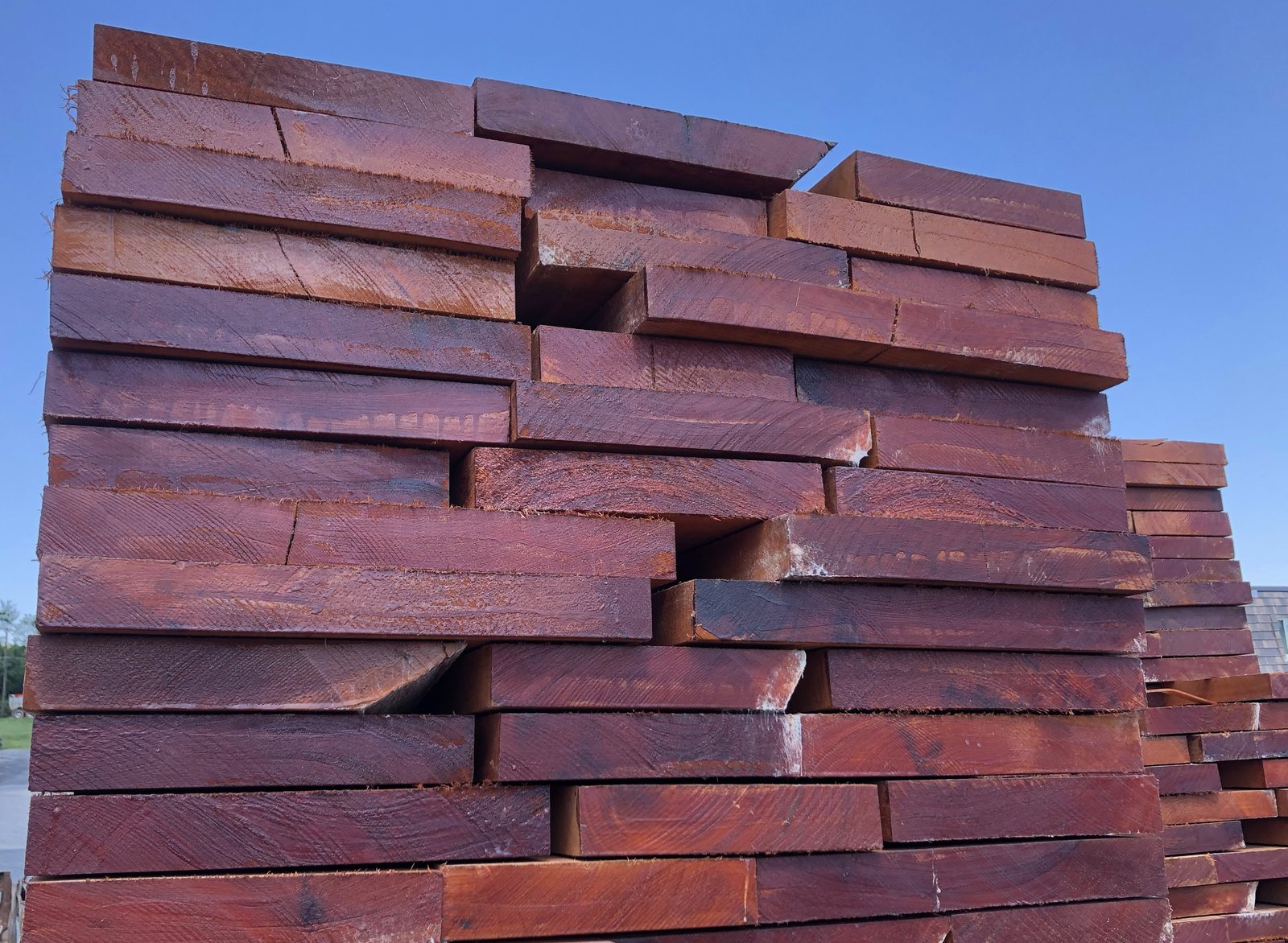
Arched work concentrates every wood movement problem at the glue lines, so the species and the moisture content matter more here than on any straight run in the room. The millwork palette is Sapele, Iroko, Afrormosia, Teak and Utile on the imported side, with White Oak, Hard Maple and Cherry carrying most domestic interior work. Sapele runs roughly 1,410 lbf on the Janka scale and machines predictably, which is why it shows up on so much painted and stained interior trim. White Oak sits near 1,360 lbf, Hard Maple near 1,450 lbf, Cherry near 950 lbf, and Genuine Mahogany near 800 lbf, which is part of why Mahogany stays popular for hand-worked detail.
Note what is not on that list. The tropical decking species, Ipe (Tabebuia spp), Cumaru, Garapa, Jatoba and Red Balau, are extremely hard and carry high oil content, which makes them difficult to glue. A segmented arch head is nothing but glue lines, so a millwork house reaches for Sapele, Iroko, Afrormosia, Teak or Utile instead. Those species take adhesive reliably, mill cleanly against a ground knife, and are available in the lengths and widths that casing and casework need.
Quartersawn and rift stock moves less across its width than plainsawn, which is why it gets specified where a painted or panelized surface has to stay flat, including arch head blanks and the flat panels in library casework. Interior millwork is milled to an in-service moisture content near 6 to 8 percent. Exterior work sits near 12 to 16 percent, which is the relevant number if the arch is an exterior cased opening or a porch detail. The Forest Products Laboratory Wood Handbook gives the shrinkage coefficients behind those targets, and Building Science Corporation covers the interior humidity swings that actually drive movement after installation. Species data for the imported palette is easy to check at the Wood Database entry for Sapele.
Where a CITES-listed species is involved, documentation and chain of custody travel with the material, and FSC-certified stock carries its own paperwork. That matters on institutional and university library projects where the specification requires it. Both CITES and FSC publish the current requirements.
One honest limit. There are no warranties on solid unmodified wood. It is an organic material responding to its environment, and no supplier can warranty that. Warranties exist on modified products such as Accoya, which runs roughly 1,600 lbf and whose acetylation gives dramatically reduced shrinkage and swelling, and on Thermory and Abodo Vulcan. Those products top out around 16 ft, most sold on metric lengths just under 16 ft, because of kiln size. They belong to exterior work, not to an interior library.
Where the Arch Meets the Bookcase
Arched openings inside library casework are a different problem from arched openings in a wall, and the two get confused on drawings constantly. A wall opening is trimmed. A cabinet opening is built. When a library run has an arched center bay, a barrel-back niche or arched upper doors, the curve is part of the case construction and has to be resolved with the face frame, the stile widths and the door rails all at once.
ICD builds this work as true custom casework planned to fit a specific space rather than assembled from standard modules, which is exactly what avoids filler strips and mismatched face frames in a long library wall. Arched upper doors need rails deep enough to hold the curve without leaving short grain at the ends of the rail. Barrel-back niches need a curved back that is either laminated or staved, and shelves inside them have to be scribed to that curve. Radius shelving in a deep bay is heavier than it looks and needs its span checked against the species and thickness before anyone loads it with folios.
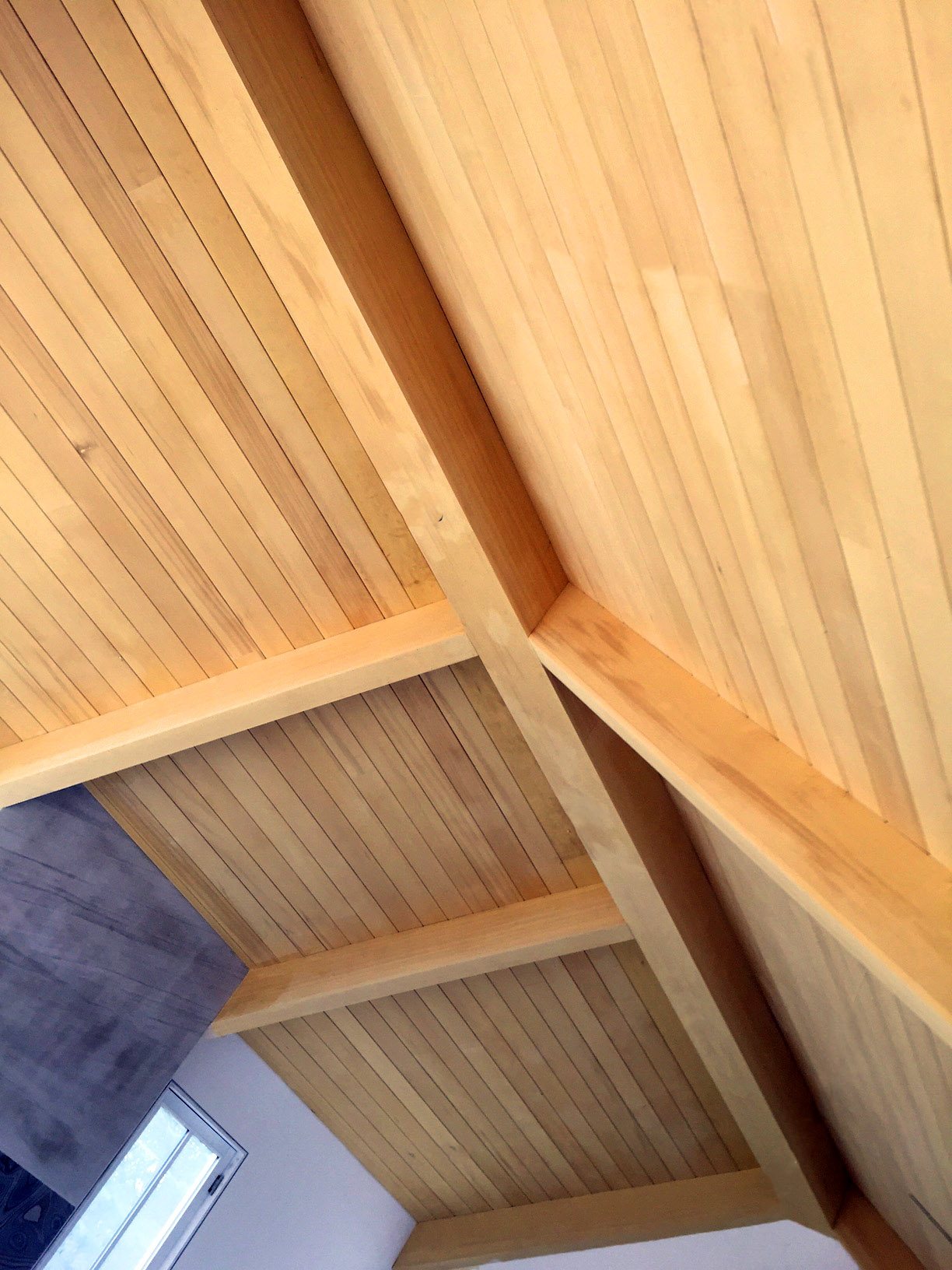
The rest of the room usually comes along with it. Box beams overhead, with a real joinery choice behind them. Butt joints give the most minimal profile, the fastest turnaround and the easiest on-site assembly, but they leave visible seams and visible end grain and are the weakest. Dado joints are strong and still easy to assemble on site, though they still show seams and end grain. Lock miter joints show no visible seams and are the strongest. A gallery railing, a window bench, radius trimwork at a curved wall, and custom doors into the room all sit inside the same scope. ICD's cabinets and case work and trim profile pages show how the two sides of that work connect. Standards language for grades and tolerances comes from the Architectural Woodwork Institute, and hardwood grading language from the National Hardwood Lumber Association.
Priming and Finish Prep on Curved Stock
A segmented head takes finish differently than the straight legs beside it, and priming in the shop is what makes the painted assembly read as one continuous piece. Grain direction changes at every segment, so raw wood absorbs stain and primer unevenly around the sweep. A shop-applied primer coat evens that out before the piece ever reaches the site.
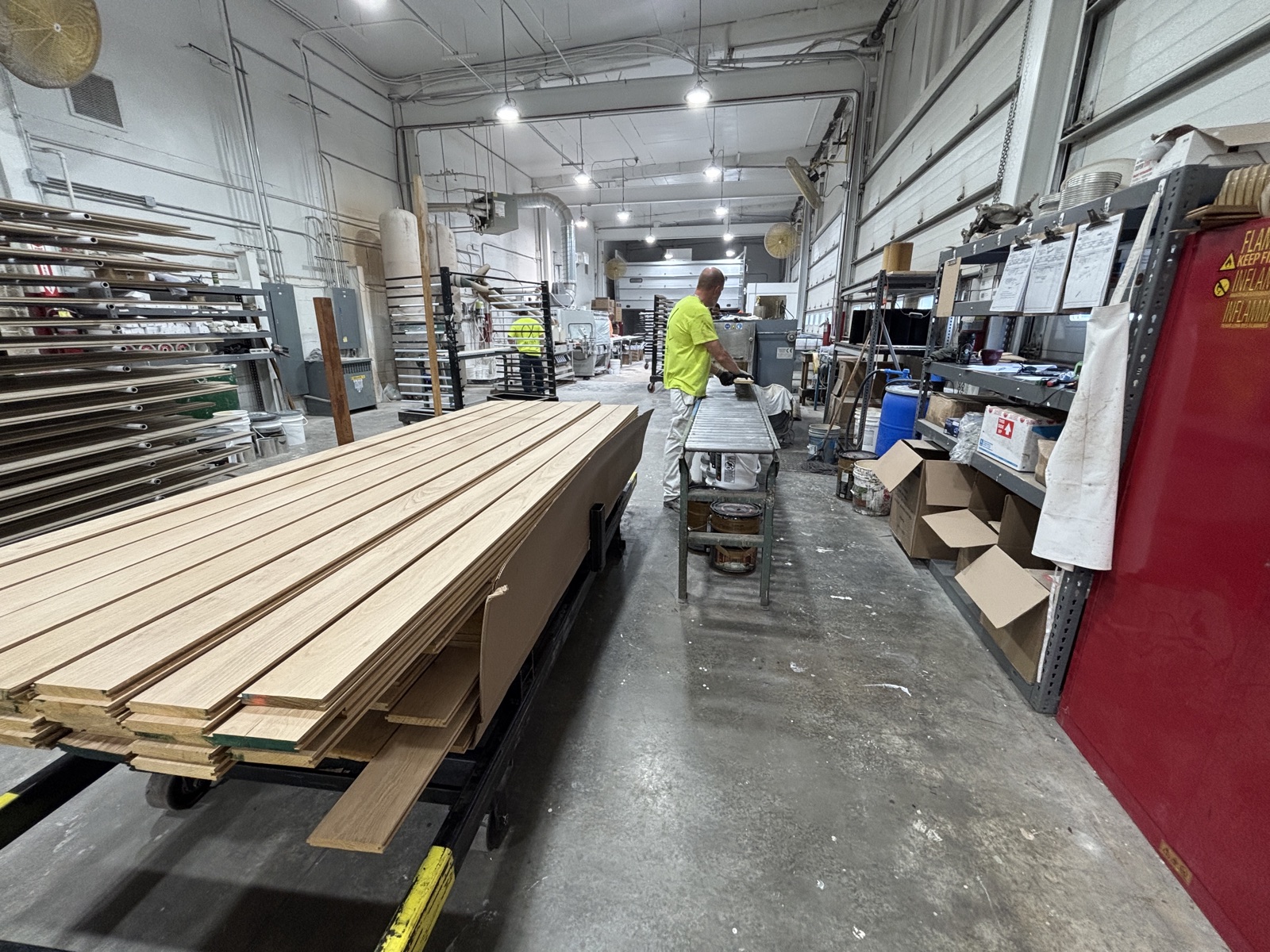
J. Gibson McIlvain primes wood in three levels, in both oil-based and water-based systems. Exterior primed trim should carry a fungicide additive. Open-grained and oily exterior species absorb a great deal of finish, so the primer coat is what evens out the eventual painted surface. Sanding or buffing after priming knocks back grain raising while keeping the moulded detail crisp, which is the whole point on a profile with fine fillets and quirks. Details on that service are on the J. Gibson McIlvain millwork service page.
For stain-grade arched work, be realistic about method. Bricklaid segments will show their joints under a thin oil finish. If the specification calls for a clear or lightly toned finish on a curved head, that head should be bent laminated or sawn from solid, and the species should be one with enough figure to carry the eye past the joint lines.
Sequencing, Storage and Getting It There Intact
Arched millwork is fragile in transit and easy to build too early, so the schedule around it needs more thought than a straight trim package. A curved head has thin sections at the tails and unsupported spans in the middle of the sweep. It ships crated and blocked, not bundled with the straight stock. Large heads for wide openings ship in sections with the joint locations chosen by the shop so the installer has a defined place to bring them together.
Timing matters more than most people expect. Millwork milled to 6 to 8 percent should not land in a building that is still drying out. The building needs to be closed, conditioned and near its in-service humidity before curved work goes in. J. Gibson McIlvain stores finished millwork for inventory control, which is what lets a package sit safely until the site is ready instead of sitting in a garage absorbing moisture. Shipping runs nationwide and regularly to California.
Installation itself belongs to the buyer's own installer or finish carpenter. What the shop can do is make that install as close to assembly as possible, which means head sections cut to the template, legs cut to the story pole, joints located where they can be pulled tight, and a package that arrives labeled to the opening it belongs to.
How J. Gibson McIlvain Would Specify This
Specify the opening, not the radius, and specify the construction method for the head before anyone picks a species. The order matters. Start with a scribed half template of the finished opening plus span and rise measured on site, and note whether both springlines are level. That single deliverable from the field prevents most of what goes wrong.
Next, name the head construction. Bricklaid segments for paint-grade work, bent lamination where the finish is clear or lightly toned or the radius is tight, sawn solid only on shallow segmental heads in a clear species. Then pick the species against that decision. Sapele or Utile for painted and stained interior casing that has to machine cleanly and hold a profile. White Oak in quartersawn or rift for a library where flatness in panels and case sides matters. Cherry or Genuine Mahogany where hand-worked detail and a warm finish are the goal. Teak, Iroko or Afrormosia where the opening is exposed or the room adjoins one.
Confirm the profile. Send a physical sample if the arch is matching existing trim, or a profile number if it is not. Knives get ground to match either way. Confirm the reveal and the head joint location on the story pole. Confirm the priming level and system, oil-based or water-based, and add the fungicide additive if any part of the assembly is exterior.
Then let the two halves of the package be built together. ICD, the architectural millwork division, handles the radius trimwork, the radius millwork, the arched casework, the custom doors and the box beams. J. Gibson McIlvain supplies the linear trimwork, the finished cladding and the primed trim that runs into them. That is one shop, one moisture spec, one profile library and one crate list.
To start a takeoff on an arched opening or a library run, call J. Gibson McIlvain at 800-638-9100 with the opening dimensions in hand, or send the template. More on the custom side of the work is at ICD.
Frequently Asked Questions
Can an arched casing be built from the architect's drawing alone, or does someone have to measure the finished opening?
It can be built from a drawing, but it frequently will not fit. Rough framing tolerance, drywall buildup and shimmed jambs move both the span and the rise away from what was drawn, and a curved head cannot be trimmed to fit the way a straight leg can. The reliable path is a scribed half template of the finished opening plus measured span and rise, taken by the installer or general contractor. J. Gibson McIlvain supplies and mills, it does not install and it does not perform field measurement, so that information has to come from the site.
What actually changes between a semicircular head and a segmental head?
The center point and the radius. A semicircular head has its center on the springline with a radius equal to half the span. A segmental head has its center below the springline with a radius larger than half the span, which produces a shallower curve and a smaller rise. Casing laid out for one will not sit on the other, and openings drawn as one are frequently framed as the other because the framer worked from a rise dimension. Confirming which one exists on site is the first step before any layout.
Can a curved head be finished clear, or does segmented construction force paint?
Bricklaid segment glue-up leaves visible joints and repeated grain direction changes around the sweep, which a thin clear or lightly toned finish will reveal. For stain-grade curved work, bent lamination over a form is the better method because the face lamination carries continuous grain through the whole curve. A shallow segmental head can also be sawn from solid wide stock in a clear species, with the caveat that it creates short grain at the tails and wastes a great deal of material.
Which species make sense for arched casing and library built-ins in the same room?
Sapele and Utile handle most painted and stained interior casing because they machine cleanly against a ground knife and hold a profile. Quartersawn or rift White Oak is the usual pick for library case sides and panels where flatness matters, since quartersawn and rift stock move less across their width than plainsawn. Cherry and Genuine Mahogany suit hand-worked detail and warm finishes. Iroko, Afrormosia and Teak cover exposed or adjoining exterior work. The tropical decking species are extremely hard and high in oil, which makes them difficult to glue, so a millwork shop avoids them on segmented and laminated components.
How is an arched opening inside a bookcase different from an arched opening in a wall?
A wall opening gets trimmed after the fact. A cabinet opening is part of the case itself, so the curve has to be resolved together with the face frame, the stile widths and the door rails. Arched upper doors need rails deep enough to hold the curve without short grain at the ends. Barrel-back niches need a laminated or staved curved back and shelves scribed to it. That work sits on the custom casework side, which is what ICD, the architectural millwork division of J. Gibson McIlvain, builds to a specific space rather than out of standard modules.
Can an existing historical arched casing profile be reproduced?
Yes. The moulding profile library holds thousands of profiles and new knives are ground custom every week. If a profile is not already in the library, a knife gets ground to match, including difficult historical restoration profiles. Send a physical piece of the existing casing when possible, since a photograph or a traced outline loses the small fillets and quirks that make the match convincing on a curve.
Is there a warranty on an arched casing or a library built-in in solid hardwood?
No. There are no warranties on solid unmodified wood, because it is an organic material that responds to the environment it sits in. Warranties exist only on modified products such as Accoya, Thermory and Abodo Vulcan, which belong to exterior applications rather than interior library work. What protects an interior arch instead is correct moisture content near 6 to 8 percent, a building that is closed and conditioned before delivery, and a construction method chosen to suit the finish.
Does the millwork package include installation?
It does not. J. Gibson McIlvain supplies and mills, and ICD builds the custom casework, but the install belongs to the buyer's own finish carpenter or installer. The shop's job is to make that install close to assembly work, with head sections cut to the submitted template, legs cut to the story pole, joint locations chosen by the shop, and crates labeled to the opening each piece belongs to.
Sources and Standards Referenced
- Wood Handbook, Wood as an Engineering Material (FPL-GTR-282), USDA Forest Products Laboratory
- Preservation Briefs, National Park Service Technical Preservation Services
- Moisture and Materials, Building Science Digest 138
- Wood Moulding and Millwork Producers Association
- Architectural Woodwork Institute
- National Hardwood Lumber Association
- Sapele, The Wood Database
- CITES, Convention on International Trade in Endangered Species of Wild Fauna and Flora
- Forest Stewardship Council