Two Modifications, Two Different Materials
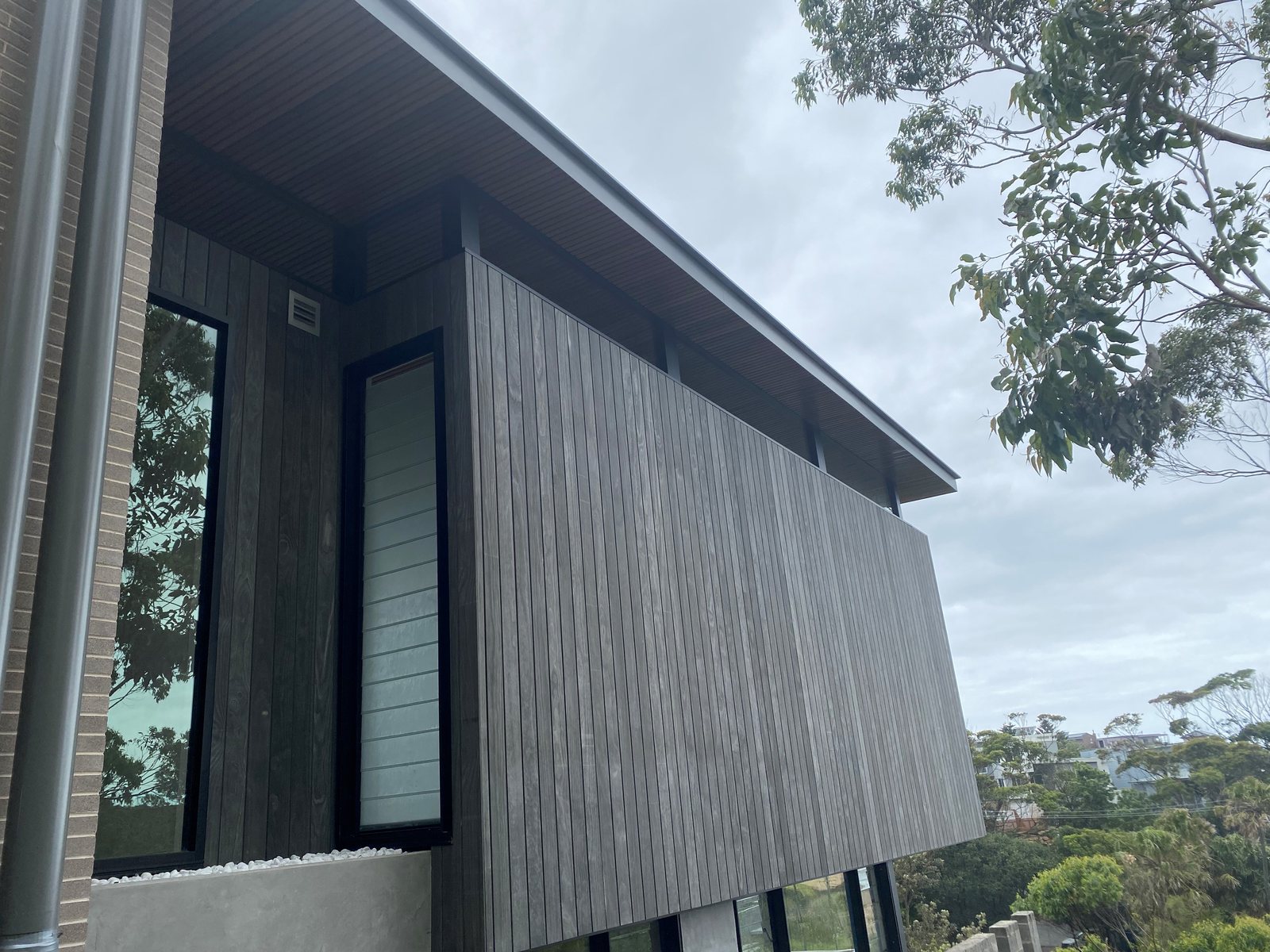
Accoya and thermally modified wood answer the same durability problem through two unrelated mechanisms, one a chemical reaction inside the cell wall and the other controlled heat damage to a single wood polymer. The marketing for both lands in the same bucket, modified wood, and that shared label is where most specification mistakes start.
Acetylation changes the chemistry of the wood permanently. Thermal modification changes the wood by breaking something down. Those are opposite strategies, and they produce boards that behave differently on a deck, behave differently under paint, and fail differently when they are asked to do something outside their range.
A buyer comparing the two for exterior decking is really comparing four things at once. Hardness under foot traffic. Dimensional movement across the width of a board. Available length and width. And what happens at the ground, at a cut end, and under a coating five years in.
J. Gibson McIlvain stocks Accoya, Thermory and Abodo Vulcan at the Maryland yard alongside over seven million board feet of exotic and domestic lumber, which is the reason the comparison below is written from boards that have been run through a moulder rather than from a brochure.
| Property | Accoya | Thermally Modified (Thermory, Abodo Vulcan) |
|---|---|---|
| Modification method | Acetylation, a chemical reaction with acetic anhydride | Heat under low oxygen, nothing added to the wood |
| What changes in the wood | Free hydroxyl groups converted, so the cell wall holds far less water | Hemicellulose degraded, so there is less food for decay organisms |
| Hardness | Around 1,600 lbf on the Janka scale | No hardness gain from the process, the base species governs |
| Shrinkage and swelling | Dramatically reduced | Reduced, though not to the same degree |
| Toughness and bending strength | Retained | Reduced, more brittle than the same species untreated |
| Published structural design values | Not a framing substitute | Not carried the way framing species carry them |
| Maximum length | Around 16 ft, most on metric lengths just under 16 ft | Around 16 ft, most on metric lengths just under 16 ft |
| Wide board availability | Available wide | Abodo Vulcan available wide, modified Ash not wider than 8 inches |
| Below grade | Confirm the application against the manufacturer's own published use class positions | Not a below grade material |
| Coating behavior | Holds coatings well, low movement means less stress on the film | Holds coatings well, dark tone shows through translucent finishes |
| Warranty | Carries a manufacturer warranty | Carries a manufacturer warranty |
What Acetylation Actually Changes in Accoya
Acetylation works on the hydroxyl groups in the cell wall, converting the sites that attract and hold water, which is why Accoya moves so little and why it is not a heat treated product. Calling Accoya thermally modified is the single most common error in a submittal, and it matters because the two materials carry different limits.
Wood swells when water enters the cell wall and pushes the microfibrils apart. The Forest Products Laboratory Wood Handbook lays out the relationship between moisture content and dimensional change in detail, and every exterior detail a builder draws is an attempt to live with that number. Acetylation attacks the cause rather than managing the symptom. Fewer available water sites means less water uptake, and less water uptake means less movement.
The practical result shows up in three places. Wide boards stay flatter across the grain. Painted surfaces crack and peel later because the substrate under the film is not cycling as hard. And joints that would normally open and close through a season stay closer to where they were assembled.
Accoya runs around 1,600 lbf on the Janka scale, which puts it above Sapele at roughly 1,410 lbf and above Hard Maple at roughly 1,450 lbf. That number surprises people who know the base species is a softwood. Acetylation adds mass to the cell wall, and hardness follows. Details of the process are published by Accoya itself.
What Heat and Low Oxygen Do to a Board
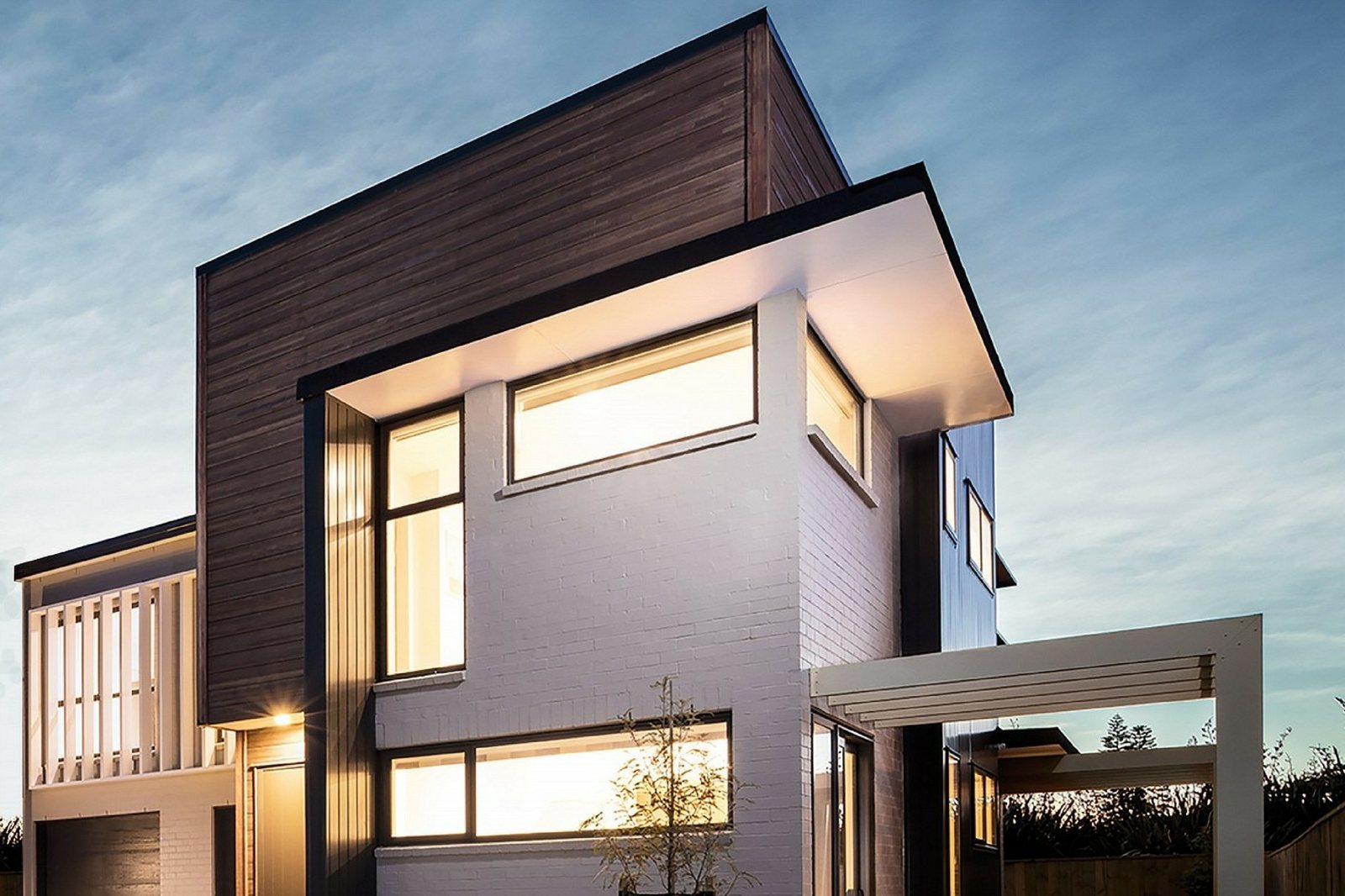
Thermal modification degrades hemicellulose under heat and low oxygen, buying decay resistance and stability while costing toughness and bending strength. Nothing is added to the wood. That is the honest appeal of the process and also the source of its limits.
Hemicellulose is the most water loving and the most digestible of the three main polymers in wood. Cook it off and fungi lose their easiest meal, while the remaining structure holds less water at a given relative humidity. Thermory publishes the temperature ranges it uses, with the higher intensity schedules reserved for exterior products and the milder schedules for interior work. Abodo Vulcan is produced on the same principle.
The cost is mechanical. Hemicellulose contributes to the wood's ability to absorb energy without fracturing, so a thermally modified board is more brittle than the same species untreated. It snaps rather than bends. Pre-drilling matters more. Fasteners set too aggressively will blow out an edge that untreated stock would have tolerated.
Thermally modified stock also does not carry published structural design values the way framing species do. Anyone reaching for it as a joist, a beam or a structural post should stop and look at how design values are actually established, which the American Wood Council documents through the National Design Specification. Modified stock belongs in cladding, decking, trim and non structural millwork.
Hardness and Toughness Are Not the Same Number
A deck specification that looks only at Janka hardness will pick the wrong modified product, because hardness describes dent resistance while toughness describes whether a board survives a dropped planter or a long span. Janka measures the force needed to embed a steel ball halfway into the surface. It predicts how a deck will look after five summers of patio furniture being dragged across it. Accoya at roughly 1,600 lbf holds up well under that specific abuse.
Toughness is a different property entirely, and thermal modification reduces it. White Ash untreated sits around 1,320 lbf on the Janka scale per the Wood Database, and Ash has historically been specified where impact resistance mattered, which is why tool handles and bats were made from it. Thermal modification removes exactly the property that made Ash attractive for that work.
For a deck this changes the span conversation. A more brittle board wants tighter joist spacing and more support at the ends, and a builder who carries over a spacing habit from untreated decking will get deflection complaints and cracked boards. The distinction is easy to hold onto once stated plainly. Hardness is about the surface. Toughness is about whether the board breaks.
Length and Width Limits Set by the Kiln
Every modified product tops out around 16 ft, and most are sold on metric lengths just under 16 ft, because the vessel the wood is modified in sets the limit rather than the log. Accoya, Thermory and Abodo Vulcan all live inside that ceiling.
This is the fact that most often forces a redraw. An architect who has specified a 20 ft continuous cladding run, or a deck laid without a butt joint across a long elevation, is specifying something no modified product can supply. The answer is a designed joint, a change in board direction, or a different material.
Width is the second ceiling and it is species specific. Thermally modified Ash is not available wider than 8 inches. A project that needs a genuinely wide board in a modified product is looking at Accoya or Abodo Vulcan, and that single sentence resolves a surprising number of specification arguments before anyone orders.
J. Gibson McIlvain mills modified stock into linear trimwork, finished cladding and primed trim at the millwork shop on site at the lumber yard, so a run comes off the order already sized to the ceiling rather than being discovered short at the job site.
Ground Contact and Below Grade Exposure
Acetylated wood and thermally modified wood behave differently below grade, and blurring the two is the fastest way to create a claim nobody can settle. Thermally modified wood is not a below grade material. It should not be specified for ground contact.
The reason follows from the mechanism. Thermal modification reduces the wood's appetite for water and removes the easiest food source, and it does not introduce a preservative. Soil contact is a continuously wet, biologically active exposure that eventually finds any organic material. A post buried in soil is a different problem from a deck board drying out in the sun after a rain.
Accoya is a different case, and the accurate instruction is to confirm the specific application against the manufacturer's own published use class positions rather than to assume the two modified categories are interchangeable at grade. The chemistry reaches through the full thickness, which is part of why the material gets discussed for exposures that thermally modified stock is not.
For anything at grade, the detail usually matters more than the material. Standoff hardware, a gravel base, a capped post bottom and a path for water to leave will extend the life of a post far more than a species substitution will.
Choosing Between Them for an Exterior Deck
For a walking surface exposed to sun, rain and furniture, Accoya is the stronger default among modified products, and thermally modified stock earns its place where the color and the warmer tone are the point. Start with the traffic. Decking gets dented, scraped and loaded in ways cladding never does, and hardness combined with retained toughness is what survives it.
Thermally modified decking looks different and many clients prefer it. The rich brown runs through the thickness rather than sitting on the surface as a stain, so a scratch does not read as a light streak. Thermory and Abodo Vulcan both deliver that look, and both hold a stable enough dimension for a tight, consistent gap.
Cupping is the complaint that arrives most often on modified decks, and it is driven by installation and back ventilation rather than by species. A board that cannot dry from its underside will cup no matter what was done to it in a kiln or a reaction vessel. The rain control and drying principles in Building Science Digest 013 apply to a deck as much as to a wall.
One more note on the tropical decking species that this comparison is usually running against. Ipe, botanically Tabebuia spp, Cumaru, Garapa, Jatoba and Red Balau are extremely hard and carry high oil content, which makes them difficult to glue and which is why a millwork house reaches for Sapele, Iroko, Afrormosia, Teak or Utile when a component has to be machined, glued or held flat under paint.
"When a client asks me which modified product to use on a deck, my first question is not about the material. It is how the frame is built and whether the boards can dry from both faces. Get that wrong and the best board on the market will still cup."
Norm Moton, Director of Sales, J. Gibson McIlvain
Coatings, Priming and the Painted Exterior
Both modified categories hold coatings better than the unmodified wood they came from, and the reason is movement rather than adhesion. A paint film fails when the substrate under it swells and shrinks harder than the film can stretch.
Open-grained and oily species absorb a great deal of finish, so a primer coat evens out the eventual painted surface, and sanding or buffing after priming knocks back grain raising while keeping moulded detail crisp. It is why the oily tropical decking species are handled so differently on the finishing side than a modified softwood is.
J. Gibson McIlvain primes wood in three levels, in both oil based and water based systems, and exterior primed trim carries a fungicide additive. Modified stock takes that treatment well. Low movement plus a properly built primer coat is the combination that keeps a painted exterior looking right through more than one repaint cycle.
Translucent and semi transparent finishes behave differently on the two materials. Thermally modified wood arrives already dark through its thickness, so a clear or lightly pigmented finish reads warm and deep. Accoya starts pale and takes color the way a light species does, which gives a designer more range on a painted or tinted scheme. Cut ends deserve their own line in the scope. End grain is where water enters fastest on any exterior board, and sealing freshly cut ends on site is the step installers skip and regret.
Where Cedar Still Belongs in This Conversation
Cedar remains the default cladding species for most contractors and it rarely fails, so a modified product has to earn its place against cedar rather than being assumed to replace it. The decision that actually drives cedar performance is the grade call, not the species call. CVG, clear vertical grain, gives a quiet straight-grained face that stays flat and takes paint evenly. STK, select tight knot, gives a knotty appearance at a different grade and behaves differently under a coating.
Specifying cedar without specifying the grade is how projects end up disappointed with a species that was never the problem. That is a documentation failure rather than a material failure, and it happens on modified orders too when a submittal says only modified wood.
Modified products win on two specific arguments. Dimensional movement, where Accoya sits in a class of its own, and warranty coverage, which is covered below. On appearance, on longevity inside a well detailed wall, and on familiarity to the crew handling it, cedar holds its ground.
Quartersawn and rift stock moves less across its width than plainsawn, and that principle holds whether the material is cedar or a modified board. It is the reason a painted or panelized surface that has to stay flat gets specified that way in the first place.
Warranties, Documentation and What the Modification Buys
Warranties exist on modified products and on nothing else, and that is the clearest commercial difference between this category and the rest of the lumber yard. It is not possible to warranty solid unmodified wood, an organic material responding to its environment.
Accoya, Thermory and Abodo Vulcan all carry manufacturer warranties, with terms that vary by product and by application. Read them against the actual exposure. A warranty written for above grade use does not follow a post into the ground, and coverage written for cladding does not automatically extend to a walking surface.
Documentation is the other half of the value. Where a project carries sourcing requirements in the specification, the paperwork travels with the material rather than being reconstructed afterward, and where a CITES listed species appears anywhere else in the same package, documentation and chain of custody travel with that material too.
Historic work has its own overlay. A historic district that requires like for like replacement may not accept a modified substitute at all, and the treatment standards published by National Park Service Technical Preservation Services are the place to check before a modified product goes on a contributing building.
How J. Gibson McIlvain Would Specify This
The specification starts with the exposure and the size limits, moves to the modification, and only then names a profile. Reversing that order is what produces change orders. For a walking surface with real traffic, Accoya is the first call among modified products, with the length ceiling around 16 ft designed into the layout from the start. For cladding, trim and screening where the warm tone is wanted, Thermory and Abodo Vulcan both work, with the reminder that modified Ash is not available wider than 8 inches and that a wide board means Accoya or Abodo Vulcan. For anything at grade, thermally modified stock comes off the list.
J. Gibson McIlvain mills exterior work to an in-service moisture content near 12 to 16 percent and interior millwork near 6 to 8 percent, and grinds new knives every week against a profile library holding thousands of them, so a modified board can be run to a stock profile or to a matched historical one. That library is also what allows a profile to be repeated on a later phase without a redraw.
ICD, the company's architectural millwork division, builds the components that are not linear runs. Rafter tails, pergolas, gates, box beams, shutters, custom doors, benches, railings and radius millwork all come out of that shop in modified stock. Box beams carry a real joinery choice. Butt joints give the most minimal profile and the fastest turnaround and the easiest on-site assembly, and they leave visible seams and visible end grain and are the weakest. Dado joints are strong and still easy to assemble on site while still showing seams and end grain. Lock miter joints show no visible seams and are the strongest. The ICD exterior millwork pages cover the component range.
J. Gibson McIlvain supplies and mills. It does not install, coordinate installation or field measure, so the back ventilation detail, the joist spacing, the standoff hardware at grade and the sealing of cut ends stay with the builder and the installer. What arrives is stock sized, profiled, primed and held in storage for staged release, ready to hang.
J. Gibson McIlvain ships modified millwork nationwide, regularly to California. To spec a modified wood package, reach the J. Gibson McIlvain millwork service team at 800-638-9100 with the exposure, the longest run on the drawing and the widest board the design needs, and the material call follows from there.
Frequently Asked Questions
For an exterior deck, is Accoya or thermally modified wood the better choice?
Accoya is the stronger default for a walking surface. It runs around 1,600 lbf on the Janka scale and it keeps the toughness of the wood it started as, which is the combination that survives furniture being dragged, planters being dropped and a span between joists. Thermally modified decking from Thermory or Abodo Vulcan earns the job where the appearance is the driver, since the brown tone runs through the full thickness rather than sitting on the surface as a stain. Whichever one is chosen, the frame decides the outcome. Cupping is driven by installation and back ventilation, not by species.
Can modified wood be ordered longer than 16 ft?
No. Accoya, Thermory and Abodo Vulcan all top out around 16 ft, and most are sold on metric lengths that land just under 16 ft. The limit comes from the size of the vessel the wood is modified in, not from the log. A design calling for a longer continuous run needs a designed joint, a change in board direction, or a different material, and it is much cheaper to resolve that on the drawing than after the order lands.
Is thermally modified Ash available in wide boards?
Thermally modified Ash is not available wider than 8 inches. If the design needs a genuinely wide board in a modified product, the answer is Accoya or Abodo Vulcan. This single limit resolves most of the width arguments that come up on cladding, bed boards, wide trim and panelized exterior work.
Can thermally modified wood be used in ground contact?
Thermally modified wood is not a below grade material and should not be specified for ground contact. The process removes the easiest food source for decay organisms and lowers the wood's appetite for water, and it does not add a preservative. Acetylated wood is a separate case, and the correct step is to confirm the specific in-ground application against the manufacturer's own published use class positions rather than assuming the two modified categories behave alike at grade. For any post, the detailing carries most of the load anyway. Standoff hardware, a gravel base and a route for water to leave will do more than a species substitution.
Do modified woods come with a warranty, and does solid wood?
Accoya, Thermory and Abodo Vulcan all carry manufacturer warranties, with terms that vary by product and by application. Solid unmodified wood does not. It is not possible to warranty solid wood, an organic material responding to its environment. When a warranty is part of the reason a modified product is being specified, read the terms against the real exposure, since coverage written for above grade cladding does not follow a member into the ground or automatically extend to a walking surface.
Does modified wood still need to be primed or coated?
Both categories hold coatings better than the unmodified wood they came from, and the reason is reduced movement rather than better adhesion. A paint film fails when the substrate cycles harder than the film can stretch. J. Gibson McIlvain primes wood in three levels in both oil based and water based systems, with a fungicide additive on exterior primed trim, and sanding or buffing after priming knocks back grain raising while keeping moulded detail crisp. Cut ends made on site still need to be sealed by the installer, since end grain is where water enters fastest.
Is cedar still worth considering against modified wood?
Yes. Cedar is the default cladding species for most contractors and it rarely fails. The call that actually drives cedar performance is the grade, not the species. CVG, clear vertical grain, gives a straight-grained face that stays flat and paints evenly, while STK, select tight knot, gives a knotty appearance and behaves differently under a coating. Modified products win specifically on dimensional movement and on warranty coverage. On appearance, on service life inside a well detailed wall and on crew familiarity, cedar holds its ground.
Can thermally modified wood be used structurally?
No. Thermally modified stock does not carry published structural design values the way framing species do, and the process reduces toughness and bending strength, so the board is more brittle than the same species untreated. It belongs in cladding, decking, trim, shutters, screening and non structural millwork. A bending member needs a material with a published design value behind it, which is what the National Design Specification exists to provide.
Sources and Standards Referenced
- Wood Handbook: Wood as an Engineering Material (FPL-GTR-190), USDA Forest Service Forest Products Laboratory
- Accoya: acetylated wood technology and performance data
- Thermory: thermal modification process and temperature schedules
- American Wood Council: Codes and Standards, including the National Design Specification
- The Wood Database: White Ash properties and Janka hardness
- Building Science Digest 013: Rain Control in Buildings, John Straube
- National Park Service Technical Preservation Services: Standards for the Treatment of Historic Properties