What Acclimation Actually Means
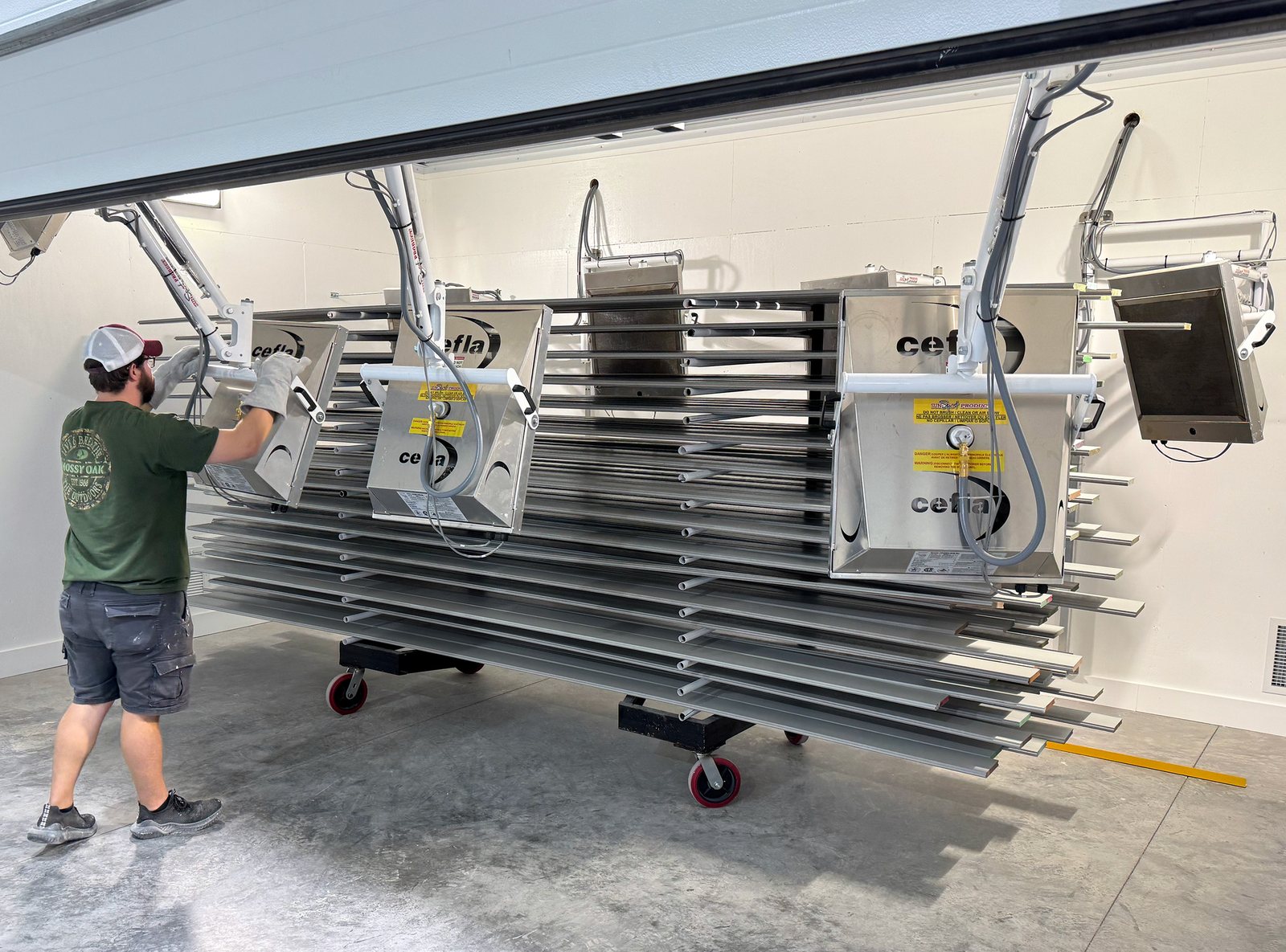
Acclimation is the building arriving at the temperature and humidity it will hold once it is occupied, not a number of days a bundle of millwork spends sitting on a slab. Wood does not count days. It responds to the vapor pressure of the air touching it, and it keeps responding until the moisture in the cell walls balances against that air. Park a stack of Sapele stiles in a building that is still drying out and two weeks of waiting does not calm the wood down. It loads it up.
That distinction decides most of the millwork failures anyone in this trade has been called back to look at. Panels that shrank out of their rails over the first winter. Crown that opened at every miter. Door stiles that grew enough to bind against the jamb in August. In almost every case the parts were milled correctly and delivered correctly, then asked to sit through a construction moisture load nobody measured.
The useful question on a job is never how long the material has been on site. It is what the interior air has been doing, for how long, and whether anything is still adding water to it.
The Number That Matters Is Relative Humidity
Every moisture content target for millwork is really a relative humidity target wearing different clothes. Wood in still air drifts toward an equilibrium moisture content set almost entirely by the relative humidity of that air, with temperature playing a smaller role. The Forest Products Laboratory Wood Handbook publishes the full table, and the shape of it is worth memorizing.
At roughly 70 degrees Fahrenheit, air at 30 percent relative humidity drives wood toward about 6 percent moisture content. At 50 percent it lands near 9 percent. At 65 percent it reaches about 12 percent, and at 80 percent it climbs to roughly 16 percent. Those last two numbers are the ones that ruin interior work, and a gypsum-and-concrete building in month eight of construction sits in exactly that range.
So a specification that says millwork arrives at 6 to 8 percent is also, silently, a specification that the building will be held somewhere around 30 to 45 percent relative humidity. If the building will never be held there, the millwork moisture content was the wrong target from the start, and no amount of on-site waiting fixes the mismatch.
Buy a pin meter and a cheap logging hygrometer. The meter tells you where the wood is. The hygrometer, left running for a week, tells you where the wood is going. Only the second instrument answers the acclimation question.
Wet Trades and Construction Heat
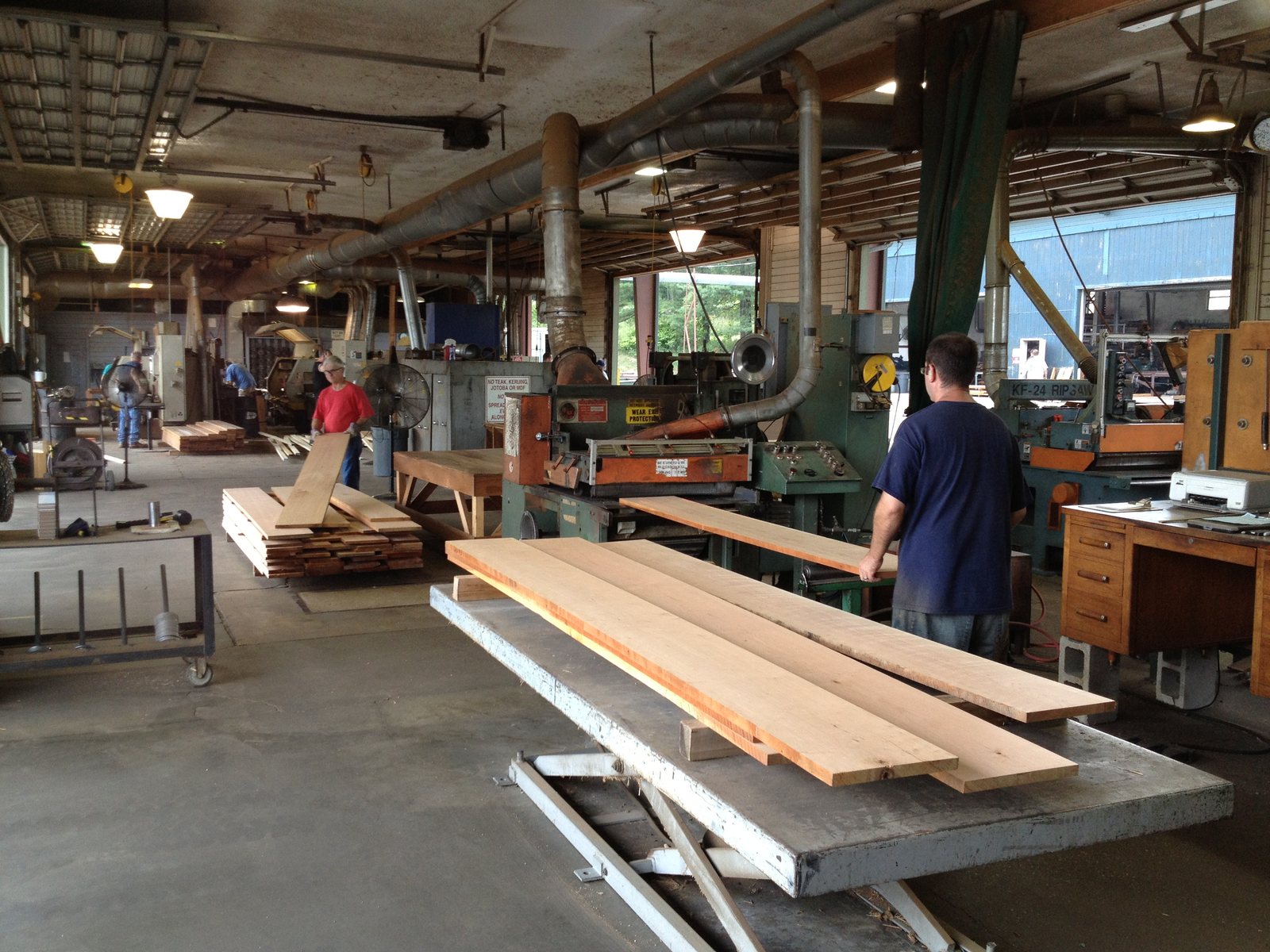
A building under construction is a moisture source, and until that source is shut off there is nothing for millwork to acclimate to. A concrete slab releases water for months. Masonry, plaster, joint compound, self-leveling underlayment, waterborne coatings and the rain that got in before the roof closed all evaporate into the same interior volume, and the work summarized by Building Science Corporation on moisture and materials shows how long that construction moisture keeps moving.
Numbers help here. A slab holds a serious quantity of mix water and does not surrender it on the drywall contractor's schedule. Taping and finishing a large interior puts many gallons of water into the air over a few days. Without mechanical ventilation and dehumidification, interior relative humidity in a closed shell during those weeks routinely sits above 70 percent.
Wood milled to 7 percent, delivered into that, will gain moisture. It gains fastest in end grain and on unsealed backs, unevenly across a wide panel, and it does not give that moisture back symmetrically once the building dries. Cupped panels and bowed jamb legs are usually the record of one bad month, not a defect in the lumber.
Construction heat is the other half of the problem. Unvented propane and kerosene heaters are humidifiers that happen to produce heat, since burning a gallon of propane puts well over a gallon of water vapor into the space. Crews run them to dry a building out, and the interior air gets warmer, wetter and more aggressive toward any wood standing in it.
The opposite failure is just as real. Dry electric or indirect-fired heat with no humidity control, running in a January shell, can pull interior relative humidity into the teens. Panels shrink, glue lines telegraph, and a flat-panel door that was fine in the shop opens a visible line at the sticking. Both extremes come from heating without measuring.
Acclimation begins when the permanent system, or a properly ducted temporary system with dehumidification, holds a setpoint the building will actually live at. Anything before that is storage, not acclimation, and storage is better done somewhere the conditions are known.
Two Targets, Interior and Exterior
J. Gibson McIlvain mills interior millwork to an in-service moisture content near 6 to 8 percent and exterior millwork near 12 to 16 percent, because those two assemblies live in completely different air. Interior parts spend their life in conditioned space. Exterior parts spend theirs in outdoor air that swings with the season, and drying them to interior numbers would only guarantee they swell on the first humid week.
The mistake is treating the two as interchangeable on a job site. Exterior trim staged inside a heated, dehumidified shell dries below its service target. Interior casing staged in a garage or under a tarp climbs above its service target. Both arrive at the wall in the wrong condition, and both were technically on site for the required period.
Keeping the two packages separate on delivery matters more than most schedules allow for. The shop labels and releases them as different batches for that reason, not as a paperwork convenience. Exterior work tolerates a staging area with airflow and cover. Interior work does not.
Anyone writing a millwork section can look at how J. Gibson McIlvain's millwork service handles the split. ICD, the company's architectural millwork division, applies the same two-target logic to true custom work planned around a specific space, from radius trimwork and box beams to custom doors and cabinets.
Reading the Site Before Scheduling the Truck
The site condition at the moment of delivery, not the calendar, decides whether millwork is safe to unload. The table below is a read most project managers can perform in an afternoon with a hygrometer and a walk of the floor.
| Site condition | What the interior air is doing | Effect on millwork at 6 to 8 percent | Better move |
|---|---|---|---|
| Slab green, masonry and joint compound still wet | Relative humidity commonly above 70 percent with no mechanical drying | Rapid uptake toward 14 to 16 percent, worst at end grain and unsealed backs | Hold the package off site and keep the release date open |
| Dried in, no HVAC, unvented fuel-fired heat | Warm and wet, humidity climbing as the heaters run | Swelling, stuck drawers, crowned panels, finish adhesion problems | Deliver exterior work only, and only to a covered, ventilated staging area |
| Dry heat running, no humidity control, winter | Relative humidity in the teens to low 20s | Shrinkage, open miters, panels pulling out of rails | Add humidification or wait for the permanent system |
| Permanent HVAC commissioned, setpoints held two weeks | Stable and near the occupied condition | Little net change, parts stay at their milled dimension | Release interior millwork on a staged schedule by area |
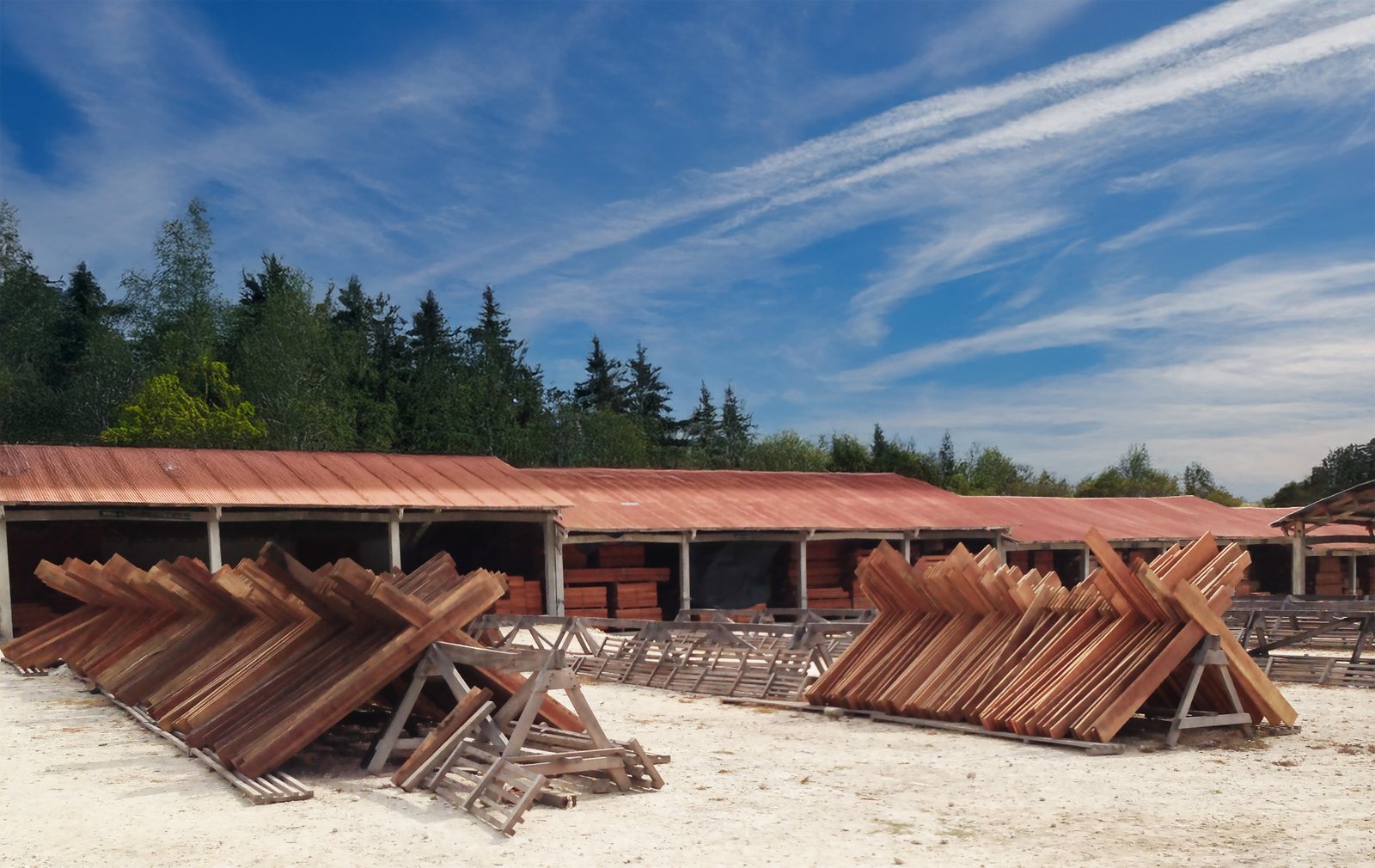
| Exterior trim staged outdoors under cover | Ambient outdoor air, stickered with airflow on all faces | Holds near its 12 to 16 percent target | Correct for exterior work, wrong for anything interior |
One caution on that last row. Covered does not mean wrapped. Plastic sheeting laid tight against a stack traps whatever moisture is already in the pile and creates condensation against the top boards, which is how a well-meaning crew ruins the first two courses of clear trim.
Species and Cut Change the Cost of the Error
A moisture swing the building imposes costs far less on a quartersawn Sapele stile than on the same part in plainsawn stock. Quartersawn and rift material moves less across its width than plainsawn, which is why it gets specified anywhere a painted or panelized surface has to stay flat. The cut is a hedge against the building's behavior.
The millwork palette here is Sapele, Iroko, Afrormosia, Teak and Utile. Sapele runs roughly 1,410 lbf on the Janka scale, machines cleanly, takes paint and clear finish well, and quartersawn it gives the ribbon figure most architects are after. Utile behaves similarly with a calmer figure. Iroko and Afrormosia hold their own outdoors and mill predictably. Teak is the stable end of the group and the most forgiving of a building that never quite settles. Movement and density data for each is easy to check at the Wood Database entry for Sapele.
Domestic choices carry their own numbers. White Oak lands near 1,360 lbf and is commonly specified rift and quartered for exactly the flatness reason above. Hard Maple sits near 1,450 lbf and shows every bit of movement in a painted surface. Cherry, near 950 lbf, moves less dramatically but darkens noticeably, so a delayed install can leave a color difference between what sat in daylight and what stayed boxed.
Genuine Mahogany, roughly 800 lbf, remains a fine interior wood. For painted exterior trim the better call is Sapele, which holds paint better and comes in a wider range of sizes and longer lengths. Sapele is not milled 1x8 for exterior use, since that width is too wide to stay stable in that application. Cupping in exterior trim is driven by installation and back ventilation rather than by species, so a board that cups usually points at a detail, not at a purchase order.
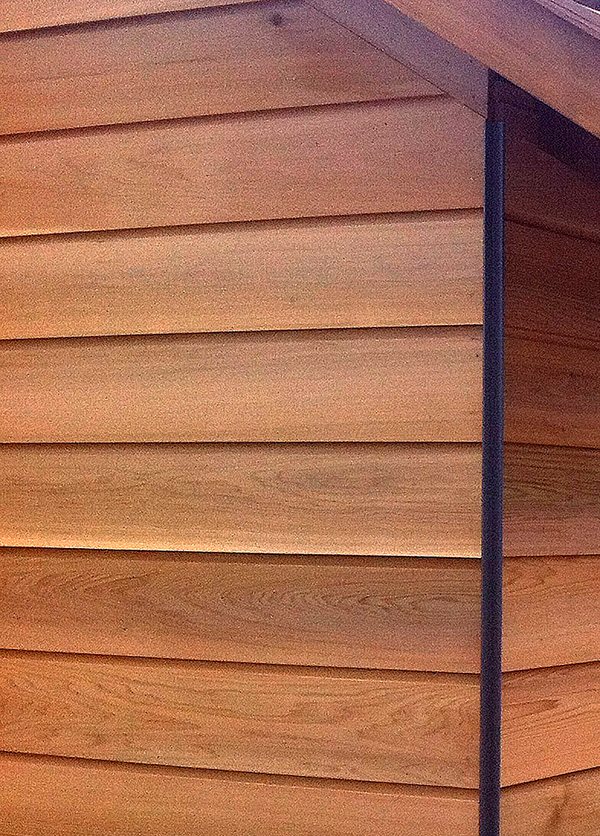
Cedar deserves a straight answer rather than a shrug. It is a legitimate default for exterior trim and siding, dimensionally calm and naturally durable. Specify the grade deliberately. Clear vertical grain, CVG, gives a tight, even face with minimal movement. Select tight knot, STK, gives a knotty character face at a different grade entirely. The two are not substitutes for one another, and grading conventions are worth understanding through bodies like the National Hardwood Lumber Association.
The tropical decking species, Ipe (Tabebuia spp), Cumaru, Garapa, Jatoba and Red Balau, are extremely hard and carry high oil content that makes them difficult to glue. They belong on a deck. A millwork shop reaches for Sapele, Iroko, Afrormosia, Teak or Utile instead, since glued panels, moulded profiles and machined joinery all depend on adhesive performance that oily decking stock fights.
Exterior Work and Modified Wood
Modified wood narrows the moisture swing rather than eliminating it, and it comes with hard size limits that belong in the specification. Acetylated Accoya runs roughly 1,600 lbf and shows dramatically reduced shrinkage and swelling, which makes it the reach for wide exterior components and for painted work facing real weather. Thermory and Abodo Vulcan are both carried, both thermally treated to reduce movement and improve durability, and the process background is documented at Thermory.
Kiln size sets the ceiling. Modified woods, Thermory, Abodo Vulcan and Accoya, top out around 16 ft, and most are sold on metric lengths just under 16 ft. Anyone drawing a continuous 18 ft run in a modified product is drawing a splice, so the joint should be detailed on purpose rather than discovered on the wall.
Width matters as much as length. Thermally modified Ash is not available wider than 8 inches. A wide board in a modified product means Accoya or Abodo Vulcan, and swapping species late to chase a width is how a facade ends up with two colors weathering at different rates.
One honest limit belongs in every conversation about movement. There are no warranties on solid unmodified wood. It is an organic material responding to its environment, and warranting that response is not possible. Warranties exist on modified products, which is a real part of why they get specified on hard exposures.
Priming Slows the Exchange, It Does Not Stop It
A primer is a vapor retarder with a brush handle, and treating it as a seal is how coating failures get written into a job. Film finishes slow moisture exchange by a large factor. None of them stop it. Six-sided priming buys time and evens the rate of exchange between face, back and end grain, which is what actually keeps a part flat while the building finishes drying.
Open-grained and oily species absorb a great deal of finish, so the first coat is doing more than adding color. It evens out how the eventual painted surface reads. Sanding or buffing after priming knocks back grain raising while keeping moulded detail crisp, which matters on any profile with a fine quirk or fillet a heavy coat would fill.
J. Gibson McIlvain primes in three levels, in both oil-based and water-based systems, and exterior primed trim carries a fungicide additive. Choosing the level is a question about exposure and about what the painter does next, not a question of buying the most coats available.
End grain settles the argument. Cut ends on site are raw, and raw end grain takes on water many times faster than a face. Every field cut needs primer or sealer before it goes to the wall, and that task falls to the installer, since no shop can prime a cut that has not happened yet.
When the Building Is Not Ready
The safest place for finished millwork during a wet month is not the job site. A building that is still drying puts moisture into the parts no matter how carefully they were milled, and the only real defense is to not have them there yet. That takes a supplier able to hold finished work and release it against the actual condition of the building.
J. Gibson McIlvain stores finished millwork for inventory control and releases it on the schedule a project needs, which turns a delayed HVAC commissioning into a scheduling conversation instead of a warranty conversation. J. Gibson McIlvain also runs its own fleet of trucks, so a staged release by floor or by area is a routing decision rather than a freight negotiation.
"The call we want is the one that comes before the truck is loaded. A project manager tells us the mechanical system slipped six weeks, we hold the package, and nobody ends up arguing in February about why a panel moved. Holding material costs a lot less than remaking it."
Norm Moton, Director of Sales, J. Gibson McIlvain
Where the parts are true custom work, ICD builds them around the specific space, and the same staged-release thinking applies to a run of radius millwork or a set of kitchen cabinets engineered around plumbing and mechanical obstacles. The ICD working process starts from the drawing and the room rather than from standard modules, which is what avoids filler strips and mismatched face frames when a space is finally measured and the parts go in.
Writing Acclimation Into the Specification
A millwork section that specifies days will be met and will still fail. A section that specifies a building condition protects the work. Language from the Architectural Woodwork Institute and the Wood Moulding and Millwork Producers Association gives useful starting points, and structural and code references sit with the American Wood Council.
Write three things. First, the interior relative humidity band and temperature the building will be held at before delivery and continuously afterward. Second, the duration that condition must be documented before any interior millwork is released, with a logging hygrometer as the evidence. Third, responsibility for humidity control during the gap between substantial completion and occupancy, which is where a lot of expensive work quietly dries out or swells.
Historic work adds a fourth item. A building under preservation review does not always get modern humidity control, and the guidance from the National Park Service Technical Preservation Services is worth reading before assuming a target. Shutters and trim matched for both style and species in a historic district may need to live across a wider moisture range than new construction, and the joinery should be designed for that range rather than fighting it.
How J. Gibson McIlvain Would Specify This
Specify the condition, measure it, then release the material against the measurement. The approach starts by confirming what the finished space will be held at, mills interior parts to 6 to 8 percent and exterior parts to 12 to 16 percent against that answer, and treats the delivery date as the last variable rather than the first.
On species, lead with Sapele, Iroko, Afrormosia, Teak or Utile for milled and glued components, quartersawn or rift wherever flatness is doing structural work in the design. Use cedar where cedar belongs and name the grade, CVG or STK. Move to Accoya or Abodo Vulcan where a wide exterior board has to hold still, and keep every modified-wood run under the 16 ft ceiling.
On finishing, prime all six faces before the parts leave the shop and prime every field cut on site. On joinery, choose the box beam joint for the room the beam will live in, since lock miters show no visible seams and carry the most strength while butt joints trade visible seams and end grain for the fastest assembly and the easiest on-site handling. On scheduling, hold the package until the building has actually held its setpoint, not until a stated number of days has passed.
J. Gibson McIlvain mills, primes and ships this work nationwide, and can hold a finished package until a project is genuinely ready for it. To talk through a specification, a species substitution or a delivery hold on a job whose mechanical system has slipped, call 800-638-9100.
Frequently Asked Questions
How many days does interior millwork need to acclimate on site?
There is no defensible number of days, which is why the question keeps producing failures. Wood moves toward the equilibrium moisture content set by the relative humidity around it, so the meaningful requirement is that the building has been held at its occupied temperature and humidity, roughly 30 to 45 percent relative humidity for interior work, and that the condition has been documented rather than assumed. A logging hygrometer left running for one to two weeks is the evidence. If the shell is still drying, three days and thirty days produce the same bad outcome, just at different speeds.
Can millwork be delivered before the permanent HVAC is commissioned?
Only if a temporary system is providing real humidity control, not just heat. Unvented propane and kerosene heaters add more water to the air than they remove, and dry heat with no humidification can drive interior relative humidity into the teens and shrink panels out of their rails. A properly ducted temporary system with dehumidification, holding a setpoint close to the occupied condition, can qualify. Otherwise the better move is to leave the package with the supplier. J. Gibson McIlvain stores finished millwork and releases it against the building's actual condition.
Does exterior millwork need acclimation too, and to what target?
Yes, but to a different number. Exterior work is milled near 12 to 16 percent in-service moisture content, which matches ambient outdoor air rather than conditioned interior air. Staging exterior trim inside a heated, dehumidified shell dries it below its service target and sets up swelling after installation. Stack it outdoors under cover, stickered so air moves across all faces, and never wrap it tight in plastic, which traps moisture and condenses against the top boards.
If the parts are primed on all six faces, does the building condition still matter?
It matters less, and it still matters. A primer is a vapor retarder, not a vapor barrier. Film finishes slow moisture exchange substantially and even out the rate between face, back and end grain, which is what keeps a part flat during a long dry-down, but moisture still moves. Field cuts are the weak point, since raw end grain takes on water many times faster than a coated face, so every cut end needs primer or sealer before it goes to the wall. That step belongs to the installer.
A moisture meter reads 7 percent on the delivered stock. Is that enough to start installing?
No. That reading tells you where the wood is, not where it is heading. If the interior air is sitting at 70 percent relative humidity, the same board is on its way to 14 to 16 percent and the reading will look very different in three weeks. Pair the pin meter with a logging hygrometer and treat the two readings together. Stable humidity at the occupied setpoint plus a wood reading in range is the green light.
Which species and cut hold up best when the building condition cannot be fully controlled?
Quartersawn and rift stock moves less across its width than plainsawn, so it is the first hedge for any painted or panelized surface that has to stay flat. Within the millwork palette, Teak is the most dimensionally forgiving, with Sapele at roughly 1,410 lbf, Utile, Iroko and Afrormosia all machining predictably. For exterior components where a wide board has to hold still, Accoya at roughly 1,600 lbf shows dramatically reduced shrinkage and swelling, and Abodo Vulcan is the other wide-board option in a modified product. Thermally modified Ash is not available wider than 8 inches.
A panel installed in a wet building has cupped. Can it be dried back flat?
Sometimes partially, rarely completely. Wood that gains moisture unevenly, faster on an unsealed back than on a coated face, develops compression set in the swollen fibers and does not return to its original geometry when the building dries. Removing the part, stickering it with airflow on both faces in the correct humidity, and letting it come back slowly is worth trying. Plan on replacement for anything visible and painted. Note that there are no warranties on solid unmodified wood, since it is an organic material responding to its environment.
What should a millwork specification say about acclimation instead of a day count?
Three clauses. State the interior temperature and relative humidity band the building will be held at, before delivery and continuously afterward. State how long that condition must be documented before interior millwork is released, naming the logging instrument. Assign responsibility for humidity control during the gap between substantial completion and occupancy, which is where a lot of finished work quietly moves. For historic projects where modern humidity control is not available, design the joinery for the wider moisture range the building will actually see.
Sources and Standards Referenced
- Wood Handbook: Wood as an Engineering Material, USDA Forest Products Laboratory
- BSD-138: Moisture and Materials, Building Science Corporation
- Architectural Woodwork Institute
- Wood Moulding and Millwork Producers Association
- National Hardwood Lumber Association
- Sapele, The Wood Database
- Accoya Acetylated Wood
- Thermory Thermally Modified Wood
- American Wood Council Codes and Standards
- National Park Service Technical Preservation Services
- J. Gibson McIlvain Millwork Service
- ICD Our Working Process