
What Due Care Means for a Buyer
The Lacey Act, amended in 2008 to cover plant products, applies a due-care standard, meaning a buyer who takes reasonable steps to confirm legal sourcing is protected while one who ignores the question is exposed to civil or criminal penalty. Due care is not a single form; it is a reasonable, documented effort to verify that the wood was legally harvested and traded. For a buyer of Ipe, that effort is largely satisfied by requiring the right documentation from a credible supplier. The USDA Forest Products Laboratory and federal agencies publish guidance on legal timber sourcing that underpins this standard.
The Documentation to Require
The core records that demonstrate due care for Ipe are an FSC chain-of-custody claim with a certificate code, CITES permits where the species is listed, and a clear species and country-of-origin declaration.
- FSC chain-of-custody claim: on the invoice, referencing the supplier's certificate code, which can be checked against the Forest Stewardship Council public database.
- CITES permits: where the species is CITES-listed, the permits that authorize the trade.
- Species and origin: the botanical species and country of harvest, so the material can be tied to a legal source.
- Supplier certification: proof the supplier itself is FSC-certified and can issue a valid claim.
| Document | What it proves |
|---|---|
| FSC chain-of-custody + cert code | Traceable to a certified responsible source |
| CITES permits | Authorized trade of a listed species |
| Species + country of origin | Ties material to a legal harvest |
| Supplier FSC certificate | Supplier can issue a valid claim |
Why a Certified Supplier Satisfies Due Care
Because the documentation is generated and maintained by the supplier, the single most effective due-care step is buying from an established, FSC-certified company rather than the lowest bidder. An uncertified reseller cannot issue valid FSC chain-of-custody, and a supplier that cannot produce records cannot support the buyer's position if questioned. J. Gibson McIlvain has imported hardwood since 1798, is FSC-certified, and provides chain-of-custody and CITES documentation with its Ipe, so the material and the paperwork come from one accountable source. For the certification detail, see our FSC certification guide.
Reading and Keeping the Records
A valid FSC claim references a certificate code that resolves in the FSC public database, and the buyer keeps the invoice, claim, permits, and origin records as the due-care file. Vague sustainability language without a certificate code is not proof. For institutional and green-building projects, the U.S. Green Building Council recognizes FSC certification toward LEED materials credits, so the same records that satisfy due care also support credit. Keeping the documentation on file is the buyer's record of the reasonable effort the Lacey Act requires. Ipe's durability, a Janka hardness near 3,680 lbf and Class 1 rating under EN 350, and the American Wood Council publishes its construction basis, are separate matters from its legality, which is why documentation, not the wood's quality, is what proves compliance.
The Import Declaration Behind the Wood
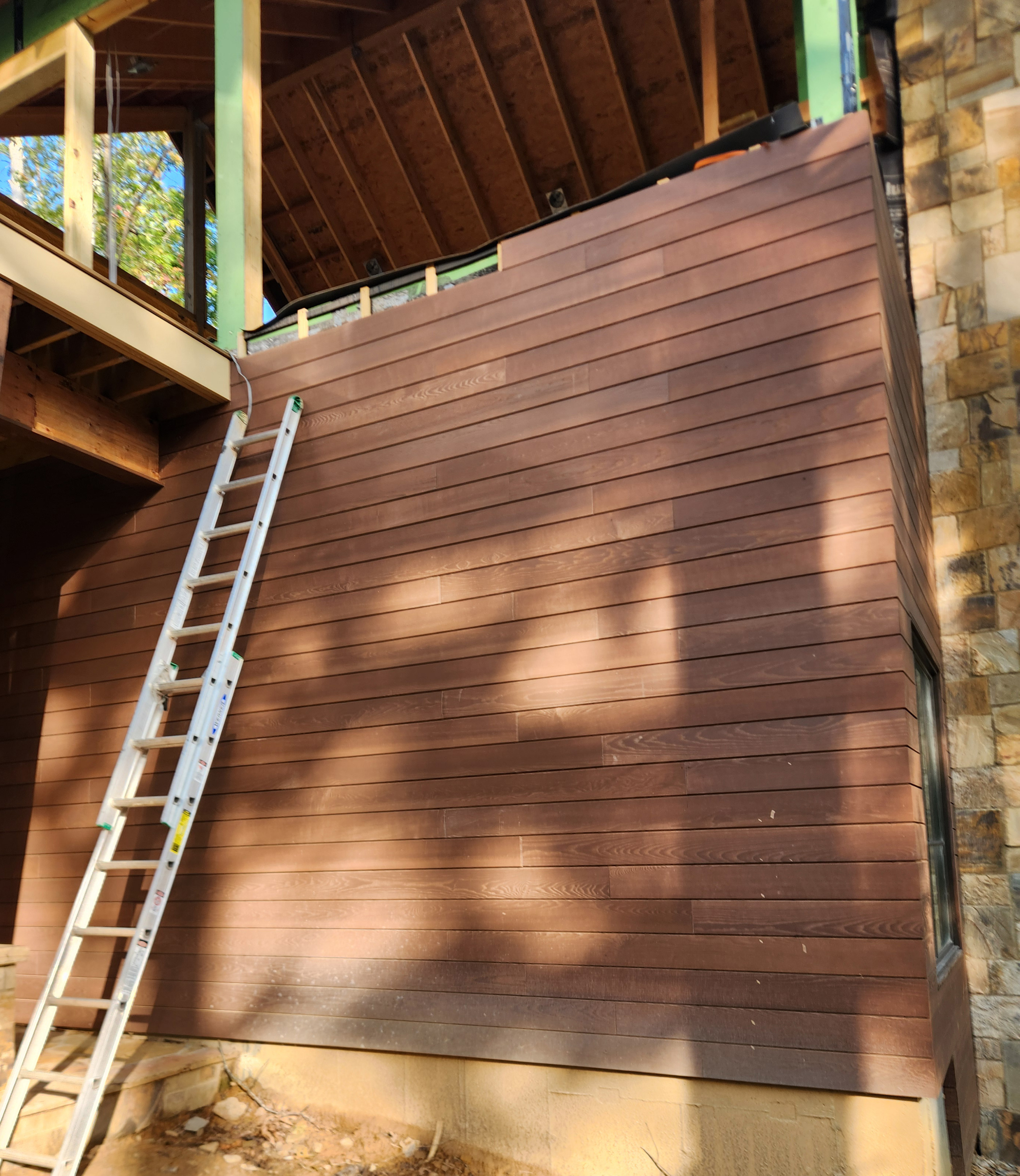
The Lacey Act requires importers of many wood products to file a declaration identifying the species and country of harvest, and a buyer's due care is stronger when the supplier is one that files these declarations as a matter of course. The declaration, administered by the U.S. Department of Agriculture's Animal and Plant Health Inspection Service, records the botanical species and origin at import, which is the upstream record behind the paperwork a buyer receives. A supplier that imports responsibly and files these declarations is exactly the kind of accountable source that supports due care.
For a buyer, the practical takeaway is that the species and origin on the invoice should trace back to a real import record, not appear from nowhere. An established importer that has handled these declarations for decades gives that trail credibility. J. Gibson McIlvain has imported hardwood since 1798 and handles the declarations and documentation that stand behind its Ipe.
Keeping the Due-Care File
Because Lacey Act due care is a documented reasonable effort, the practical habit is keeping a file for each order: the invoice with the FSC claim and certificate code, any CITES permits, and the species and origin record. The file is the buyer's evidence of the care they took, so it matters that the records are retained rather than discarded after delivery. A certificate code that resolves in the Forest Stewardship Council public database, kept with the invoice, ties the specific purchase to a certified supply chain and is the core of the file.
For a business buyer or a contractor purchasing repeatedly, keeping this file per order is a light routine that provides real protection, since the due-care standard looks at whether reasonable steps were taken and documented. A buyer who requires the paperwork, verifies the certificate code, and files it has done exactly what the standard asks. J. Gibson McIlvain provides the documentation in a form the buyer can keep, so building the file is straightforward.
Questions to Ask a New Supplier
The fastest way to test a new supplier's due-care support is to ask three questions: are you FSC-certified with a certificate code I can verify, do you provide CITES permits where the species requires them, and do you state species and country of origin on the invoice. A credible specialty supplier answers all three plainly; a reseller that cannot is the risk the Lacey Act's due-care standard is designed to flag. The CITES framework governs the permit question, and the answers reveal whether the supplier actually maintains the records or merely resells.
These questions also surface capability quickly on a first order, before a large commitment. A supplier that is genuinely set up for legal sourcing will have ready answers and sample documentation; one that hedges is telling the buyer to look elsewhere. J. Gibson McIlvain has imported hardwood since 1798 and answers all three affirmatively, providing the certificate reference, permits where applicable, and species and origin on the paperwork.
"Due care sounds legalistic, but for a buyer it is simple: require the paperwork and keep it. FSC chain-of-custody with a certificate code you can look up, CITES permits when the species needs them, and the species and origin on the invoice. If your supplier cannot hand you that, that is your answer. We are FSC-certified and have been importing hardwood since 1798, so the documentation comes with the wood, and the buyer has their file."
Camden Zacker, Sales Director, J. Gibson McIlvain Company
How J. Gibson McIlvain Supports a Buyer's Due Care
For J. Gibson McIlvain, supporting a buyer's Lacey Act due care means providing the documentation as part of the order: an FSC chain-of-custody claim with the certificate code, CITES permits where the species is listed, and species and origin on the paperwork. As an FSC-certified company, the team can issue valid claims and maintain the records that a buyer keeps as their due-care file, which also supports LEED and institutional requirements.
The team's guidance is that due care is a documentation habit, not a hurdle: require the records, verify the certificate code, and keep the file. A supplier that cannot produce the paperwork is the risk the standard is meant to flag.
Due-Care Documentation Checklist
| Item | Why it matters |
|---|---|
| FSC certificate code | Resolves in the FSC public database; verifiable. |
| Chain-of-custody claim | Traces the Ipe to a certified source. |
| CITES permits | Where the species is listed. |
| Species and origin | Ties material to a legal harvest. |
| Kept on file | The buyer's record of reasonable effort. |
Where Due Care Falls Short
- No certificate code: A claim without a verifiable code is not proof.
- Uncertified supplier: Cannot issue valid chain-of-custody.
- Missing CITES permits: Required where the species is listed.
- Not keeping records: Due care is a documented effort; keep the file.
Ordering Information to Resolve Before Pricing
- Documentation: FSC claim with certificate code, CITES where applicable.
- Species and origin: stated on the paperwork.
- Project needs: LEED or institutional record requirements.
- Dimensions: decking plus matching components.
- Logistics: total square footage, delivery, lead time.
Related J. Gibson McIlvain Guidance and Next Steps
Frequently Asked Questions
What documentation should I require when buying Ipe decking?
Require an FSC chain-of-custody claim with the supplier's certificate code, CITES permits where the species is listed, and a species and country-of-origin declaration on the invoice, plus proof the supplier itself is FSC-certified. Keeping these records is how a buyer demonstrates Lacey Act due care. Because the documentation is generated by the supplier, buying from an FSC-certified company is essential. J. Gibson McIlvain provides this documentation with its Ipe.
What is due care under the Lacey Act?
Due care under the Lacey Act is a reasonable, documented effort by the buyer to confirm that wood was legally harvested and traded. The Act, amended in 2008 to cover plant products, extends the obligation to the buyer, so a buyer who requires and keeps proper documentation is protected, while one who ignores sourcing is exposed to penalty. For Ipe, due care is largely satisfied by requiring FSC chain-of-custody, CITES permits where applicable, and origin records from a certified supplier.
How do I verify an FSC certificate code?
An FSC certificate code on the invoice can be checked against the Forest Stewardship Council public certificate database, which confirms the supplier is genuinely certified and the claim is valid. A claim without a verifiable code, or vague sustainability language, is not proof of certified sourcing. Verifying the code and keeping the record is part of Lacey Act due care. J. Gibson McIlvain provides its FSC certificate reference with documented Ipe orders.
Does the buyer or the importer carry Lacey Act responsibility?
Both. The Lacey Act's due-care standard extends beyond the importer to the buyer, so anyone who buys or sells the wood has a responsibility to have exercised reasonable care that it was legally sourced. That is why the buyer requires and keeps documentation rather than assuming the importer handled it. J. Gibson McIlvain provides FSC chain-of-custody and CITES documentation with its Ipe so the buyer has their own due-care file.
What records prove Ipe was legally harvested?
Legal harvest is proven through an FSC chain-of-custody claim tracing the wood to a certified responsible source, CITES permits where the species is listed, and a clear species and country-of-origin declaration, all maintained by the supplier. Together these records support the buyer's Lacey Act due-care position. J. Gibson McIlvain is FSC-certified and provides this documentation as part of the order, so the buyer can keep it on file.
Do the same records help with LEED?
Yes. The FSC chain-of-custody documentation that satisfies Lacey Act due care also supports LEED materials credits, since the U.S. Green Building Council recognizes FSC-certified wood toward those credits. So the same certificate code and records serve both compliance and green-building goals. Only an FSC-certified supplier can provide them. J. Gibson McIlvain supplies documented FSC-certified Ipe suited to both due care and LEED submissions.
What is a Lacey Act import declaration?
The Lacey Act requires importers of many wood products to file a declaration, administered by the USDA's Animal and Plant Health Inspection Service, identifying the botanical species and country of harvest at import. It is the upstream record behind the species and origin information a buyer receives on the invoice. A supplier that files these declarations as a matter of course is an accountable source that strengthens a buyer's due care. J. Gibson McIlvain handles these declarations for its imported hardwood.
Should the species and origin trace to a real import record?
Yes. The species and country of origin on a buyer's invoice should trace back to a real Lacey Act import declaration filed at import, not appear without a source. An established importer that has handled these declarations for years gives that trail credibility, which is part of what makes a supplier a credible source for due care. J. Gibson McIlvain has imported hardwood since 1798 and maintains the import documentation behind its Ipe.